 Photo courtesy: Robin Lee Graham and Emma Garschagen
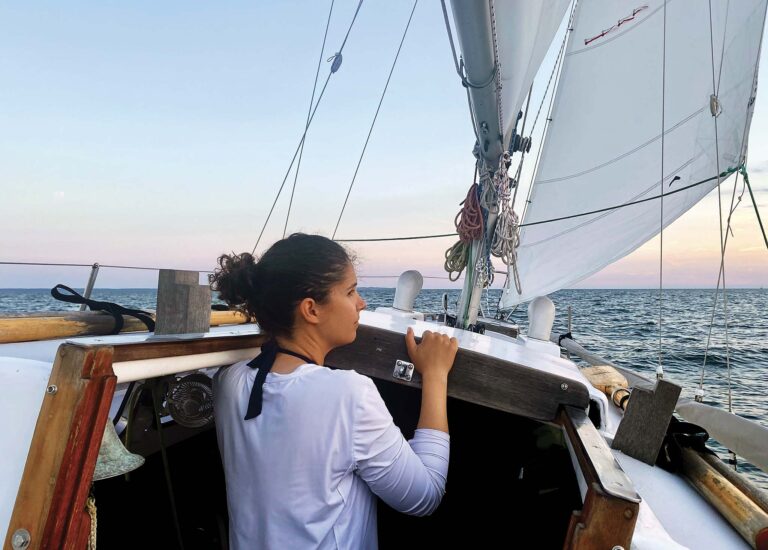
I am sailing with Robin Lee Graham, but there is no wind. It’s a hot day in July and Montana’s Flathead Lake is glass. The mountains around us are blurred by haze. A wildfire burns to our east. Robin’s blue eyes light up—he’s spotted catspaws ahead. The little puff fills our sails just briefly and we glide on the momentum. We are sailing Magnolia, a 20-foot mahogany knockabout that Robin meticulously restored.
Robin is used to sailing alone. We know him from National Geographic covers in the ’70s, or The Boy Who Sailed Around the World Alone on childhood bookshelves, or Dove, the memoir and the movie. In 1965, when he was 16 years old, Robin Lee Graham left southern California to sail around the world alone. On that voyage, which took five years, two boats, and three masts, he met Patti. They married in South Africa, halfway through the circumnavigation. They have now been married for 55 years.
We haven’t traveled far from the dock, where Patti and their daughter Quimby still stand. Robin’s grandchildren, Isaiah and Annika, are aboard with us. Unfazed, they watch their grandfather bounce around us to adjust a halyard, a sheet, the tiller. I am blinking harder and more often than usual to make sure I’m awake. I am sailing with Robin Lee Graham. He asks if I want to take the tiller, adding bashfully, “I know this is no transatlantic.”
I grew up with stories of ocean crossings. My mother sailed across the Atlantic with her family in 1978, when she was 13. On the shelf by her bunk was The Boy Who Sailed Around the World Alone, with a photo of a young Robin Lee Graham across the cover. She flipped through it on their 26-day passage from Maine to Ireland, amazed that a kid could do this by themselves. That book sat on my shelf on our family’s Chris-Craft, the motorboat we lived on during the summers of my adolescence. Parked at a hot August dock on the Hudson River, I read about Robin’s adventures: sailing a wild vast ocean, meeting the love of his life, surviving angry storms, and twice dismasting. It was all incredibly romantic to a kid at the dawn of her adulthood.
 Photo courtesy: Robin Lee Graham and Emma Garschagen
Now a sailor myself, I guest host 59° North Sailing’s podcast called “On the Wind.” I had been interviewing my sailing inspirations, like Tracy Edwards and Liz Clark, and thought of what a dream it would be to interview Robin Lee Graham. I typed his name into Google, hoping he was still around, trying to do the math on how old he would be that year, in 2022.
Interviews with Robin are rare. National Geographic covered his voyage around the world, and there was a flood of media when Robin returned from the trip in 1971. Over the decades, it petered out. In the age of the internet, only a few people have talked to Robin. Forums on sailing sites mention him often, with discussions of how inspiring his story has been for sailors young and old, and speculations about his life now.
Now, floating on Flathead Lake, our circumnavigator is considering our course.
“Usually I cut between those islands, but I think the lake is too low,” Robin says. “It’s historically low right now.”
Flathead Lake is one of the biggest freshwater lakes in the western United States and has a healthy sailing scene. The Thistle Nationals were held on the lake last summer, welcoming 87 teams, one of which included Robin’s son, Ben. Robin took his knockabout out that day to watch the race and take photos of Ben. He said he found himself out in over 20 knots and gusting higher.
“I don’t think I managed to take any photos,” he told me with a grin, “it got a little exciting!”
Patti and Robin make you feel like you’re an old friend. The first time I met them, for the podcast, it was February. Walking down the driveway towards their house on the lake, I noticed anchor-shaped cutouts in the fence. I was shivering—excited, nervous, and chilled by the breeze off Flathead Lake. Knocking on the door, I spotted a stained-glass window of a familiar boat with blue-and-white-striped sails. Inside I saw the nautical theme through this house that Robin built. There are paintings of Dove, portraits of Robin by his brother, and family photos on mountaintops and tropical beaches. Patti took me on a tour, excited to show me the boat-shaped bed in an upstairs room. Midmorning sunlight streamed through the tall windows.
The lake glistened, and Robin commented that the ice was late this year. Dramatic clouds sped west over the distant blue mountains. Driving in around midnight the night before, I had gotten a glimpse of the snow-capped peaks and glimmering lake reflecting the full moon. In the morning, as I stepped out into the cold, a massive golden eagle soared from the trees over my head down to the water. It immediately had a salmon-colored fish in its talons and elevated onto a treetop with one pump of its wings. “Are you kidding me?” I whispered to myself. No wonder our legendary circumnavigator escaped to these shores.
 Photo courtesy: Robin Lee Graham and Emma Garschagen
Patti made us tea while I set up my microphones. She was warm and endlessly hospitable. Robin curled his white mustache up on the ends with wax and had the twinkle in his eye that I imagined. Patti slipped away when I started recording. Both nervous, we started by talking about something in our shared comfort zone: boats. Robin told me about fixing up Magnolia and about the Hobie Cat he used to have on the lake. “My son and I would wait for a storm to come in and then we’d go sailing.” Robin is soft-spoken and shy, but as we talked, he opened up about his depression, their Christian faith, and the power of forgiveness.
After the podcast interview, I sat down for dinner with Robin, Patti, their son Ben, his wife Maggie, and their two kids. Sitting there, part of their family for the evening, I felt a swell of emotion. This man who I was enamored with as a young teenager, whose story opened worlds of possibility for me and countless others, was sitting beside me at dinner, splitting the garlic bread and passing it along, listening intently to his grandkids talk about their days and indulging me in more tales from their times at sea.
We opened the cloth-bound logbook from his circumnavigation. I ran my finger across the yellowed pages, and we laughed at the deep pencil marks where he’d scratched “NO WIND FOR 9 DAYS!!!” in capital letters, and “Solo sailing is for the birds, but I guess my name is Robin!” He precisely drew the ports he stopped in over the five-year voyage around the world.
Robin’s adventurous spirit has not dimmed a bit since his famed circumnavigation. Before meeting the Grahams, I believed the sailors’ gossip that Robin had given up sailing. I didn’t picture the decades of adventures they’ve enjoyed. Each time I talk with him and Patti, I hear another tale about him flying small planes and gliders in Montana or the time they spent bareboating in the South Pacific with Quimby and Ben.
Robin has told me he rarely feels fear. On his voyage around the world, he was only afraid at sea once. He hit a storm near Madagascar with waves taller than 30 feet, breaking at the tops, “like they do on the beach,” he told me. He had a handkerchief of jib out and was towing warps behind the boat. One of his portlights had gotten knocked in, bringing a wave in with it, and the companionway door had split. Robin did what he could, reinstalled the portlight, and then prayed to whoever was listening, anyone. Then he fell asleep. When he woke, the raging wind had died to a 10-knot breeze and the seas had fallen to 4-foot swells. It felt like a miracle.
Robin’s arrival in Los Angeles in 1970 came with sponsorships and book deals and tons of pressure. Robin was incredibly unhappy, overwhelmed by the barrage of media attention. They had a new daughter, Quimby, and the three of them were living aboard Return of the Dove at the dock in Los Angeles. He was completely uncomfortable and felt out of control. Just 22 years old, a new husband and father, and suddenly surrounded by fans after five years of traveling, he was in a new storm. One evening, Patti found Robin sitting on the dock with a gun in his hand, ready to end his life. She knocked it into the water, and they wept together in despair. They needed to make a change.
 Photo courtesy: Robin Lee Graham and Emma Garschagen
Robin and Patti bought a van with the money from selling Return of the Dove, the boat on which Robin completed his circumnavigation. They thought they might move to Colorado, but they kept hearing about the mountains and woods of Montana. They drove with Quimby toward Flathead Lake to start a new life, away from the city and the media. In his book Home is the Sailor, Robin wrote candidly about this transition, as they tried building a home and living off the land through harsh winters.
At the same time, Robin and Patti were starting a new relationship with God. His cousin had brought them to a church before they left Los Angeles, which got them interested in reading the Bible. His aunt prayed for him while he sailed around the world. Robin said that by the time they drove over the mountains in Montana, they were born again Christians.
To be transparent, I am an atheist. I find reverence in nature, in moments with strangers, and in love. Perhaps because I do not believe in God, I am fascinated by those who do and sometimes even envious. Talking to Robin and Patti, it is clear that their faith saved Robin’s life and their marriage. When Robin was scared in that storm off Madagascar, he prayed and awoke to calm seas. When they returned from their round-the-world adventure and found hardship, God brought them hope. Patti said that has been the important thing in their tough times—hope.
At the center of the story Dove is Robin and Patti’s love. You can still feel it when you are talking with them. They make each other laugh, weave stories together, and bicker with a sweet familiarity. Robin and Patti grew up within 20 miles of each other in California. They met when they were young, independent, and on an adventure.
Patti was 22 when she met Robin. She had hitchhiked to Fiji from California via Panama, the Galápagos, and Tahiti. Sick of the men she was meeting in California, she imagined better prospects in Australia, so that’s where she would go. Patti wanted to get married when she was 30, have a family, and stay married. Her parents had divorced, and her brother had special needs. She was unanchored, “footloose and fancy free,” she told me, so she hitchhiked to Panama to find a ride across the Pacific.
Patti found her ride across the Pacific on a 65-foot Swedish schooner. She described the passage as “strange,” but it sounded scary to me. The crew were supplied with meager provisions, while the captain and his girlfriend hoarded their own food stores in the aft cabin. “We had a tin of corned beef per day between the six of us,” Patti told me, “and these peas that you had to cook for hours to even get soft.” The cook developed a bad infection in his thumb from a cut, but the captain refused to give the man penicillin. He insisted that “if you don’t cook, you don’t eat,” banning the other crew members from feeding their injured shipmate.
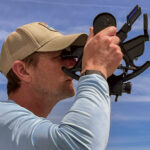
Robin’s son Ben learns celestial in Baja last year.
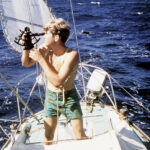
Robin taking a sight on Dove.
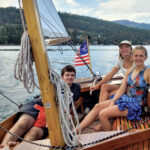
The author helms Magnolia on Flathead Lake with Robin and Patti’s grandkids, Isaiah and Annika.
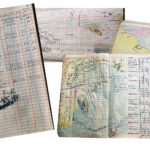
Pages from Robin’s logbook. Along with ship’s notes, he drew elaborate, detailed sketches of ports and waterways and his routes through the oceans.
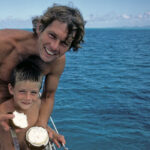
Robin shares a coconut with a young Ben in Tonga.
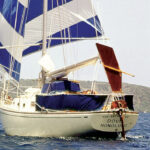
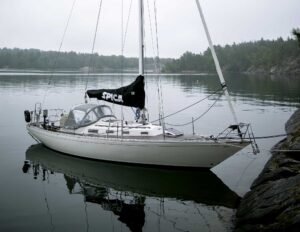
Return of Dove, the 33-foot Allied Luders that Robin completed his circumnavigation on.
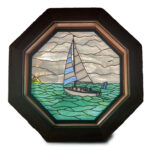
A stained glass window of Dove graces the Graham’s home in Montana, below.
After that voyage, she found herself in Suva, Fiji, and got a job on a small cruise boat. Robin was moored across the island, in Lautoka. Patti was walking down the road there when a bus rolled by with her friend, Richard, hanging out the window, flagging her down. He told her about Robin, his friend who had sailed to Fiji from California, alone. “You have to come meet this guy!”
They were drawn to each other immediately, became friends, and soon fell in love. Patti described Robin scampering up a palm tree to pluck her a coconut: “This is crazy, I thought.” As Robin continued to sail around the world, alone, Patti traveled west too, meeting him in ports along the way. Their relationship created friction with Robin’s father and National Geographic. Robin’s dad and the magazine were the main sources of pressure and funding behind his circumnavigation and weren’t happy seeing Robin distracted by love. Robin and Patti only grew closer, got married, and honeymooned on the South African coast on a motorbike named Elsa. Patti wrote a 12-page letter to Robin’s parents about that trip.
“Without Patti, I don’t know if I would have made it,” Robin said of his circumnavigation. “She was an encourager.”
Adventure is a core value of the Graham family, braided in with their faith and their love for each other.
“Robin has no fear, whatsoever” Patti once told me. “He’s a wild man,” she laughed. Patti does not share Robin’s fearlessness, but not for lack of trying. On the phone with me, they laughed about a time when Robin capsized their Hobie Cat on Flathead Lake, throwing Patti down onto the sail. When their kids were small, they would squeeze a queen-size mattress into the back of Robin’s carpentry work van, stowing their camping supplies below the bed, and drive down to Baja with a Thistle in tow.
“We’d come to an isolated beach and with everybody’s help we could push the trailer down the beach and launch the Thistle, and when we were done sailing, maybe a couple days later, we’d haul it back up together, drive somewhere else and camp and do the same thing,” Robin told me. He described sailing with the kids out of Puerto Escondido between breaching whales and in rough seas, taking water over the bow. “The kids weren’t too excited about that idea.”
Sailing took Robin, Patti, and their two kids all the way to French Polynesia. They did bareboat charters with a group of boats, once in Tonga and once in the Society Islands, when their kids were still preteens. More recently, in the spring of 2023, Robin and his son Ben went sailing on a friend’s boat in Baja, where Robin saw AIS for the first time. He described the boatowner using it on the chart plotter; “He could see other boats around, and he’d click on the boat and tell you, ‘Well, this is a sloop, it’s 38 feet long.’ It was amazing! You could see where all your friends were.”
 Photo courtesy: Robin Lee Graham and Emma Garschagen
While he got a kick out of seeing the AIS, Robin’s still a fan of the old way; of going without a huge battery bank and fancy electronics. He pulled out a sextant on this recent trip to Baja and showed his son how to take a sun sight. At dinner with them last winter, he and I discussed celestial navigation, which I’ve been learning as I sail offshore.
I asked Robin if he ever wanted to do another major sailing voyage, or another circumnavigation. “I used to think that’s what I’d like to do,” he told me. “But, you know, making long passages is a lot of time doing nothing, and I don’t know where I’d put my wood shop on a boat.”
“When Robin had a little airplane,” Patti chimed in, “just flying around the valley would drive him crazy. He liked having a goal, like flying to Tennessee or California, and he loves to work.”
His plane was a Taylor Craft two-seater from 1947. To start the engine, he had to get out of the cockpit and spin the propeller by hand. “Hopefully you didn’t give it too much gas, or else the plane would run you over!” he told me gleefully. “You know, you’re trying to get in, hanging off the wing and the plane’s going around in a circle, driving you. It was pretty fun.”
“He’s edgy,” Patti commented. “That’s what I love about him, but it can be terrifying, too”.
On a hill overlooking Flathead Lake, Robin’s garage is neatly organized and packed with projects. They live on this property for most of the summer, while their larger lakeside house is rented. They have two Shasta campers, each decorated with their own color scheme, and both restored by Robin. He’s rebuilding a larger camper that he bought for a dollar from a farmer. They call their house “The Big Tiny,” because Robin set out to build a tiny house, but it’s a little bigger than that. There’s an RV parked by a shed, set away from The Big Tiny, where Quimby and Annika are staying.
“I love it out here,” Quimby told me, as we looked out at the view of the lake and mountains. Annika was busy repacking a tent. “We’re going backpacking in the park next week,” she said, grinning. Glacier National Park is just north of Flathead Lake. Just a week before, Robin and Patti took Lucy (the lemon-yellow Shasta camper) to the park and spent a few days there, fishing and walking, while their daughter and grandchildren set off on a multiday hike.
Quimby, her husband Doug, and their family live out in Oregon, but the pull back to Montana is strong. Isaiah recently moved to the Flathead Lake region on his own. He’s staying in the basement apartment of one of their rental homes, working at a local restaurant, and is seriously involved in his church group. Quimby’s oldest son, Luke, recently returned from a three-month mission trip in Cambodia and is now training to be in the Air Force. He wants to buy a sailboat and live aboard. His grandfather has been consulting him on that idea.
Back on the lake, I’m sculling Magnolia towards the little marina. As we approach the docks, I ask Robin if he wants to take the tiller. I’d rather not crash Robin Lee Graham’s boat into a piling.
“You can bring her in,” he says. Robin steps over Annika and Isaiah, who have been ready to go swimming for a while now, and strikes our sails. We float into the slip, where Patti and Quimby are ready with our docklines. Robin grins at me and then turns to his family.
“Is it time to go home for some lemonade?”
Emma Garschagen is the founder and captain at Sail Seabird, offering coastal sailing education voyages out of Portland, Maine. sailseabird.com

May 2024