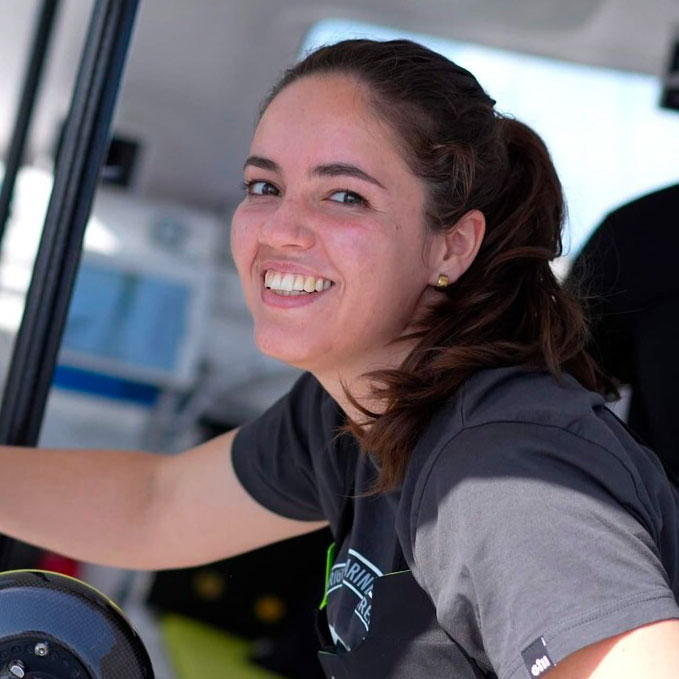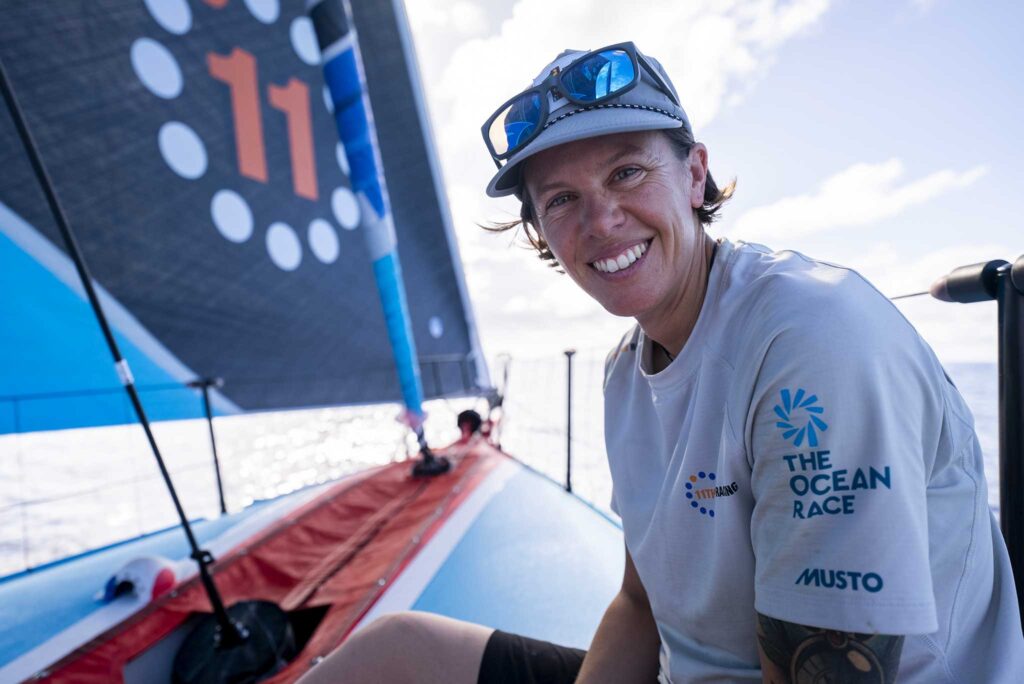
This weekend, the four Transat Café L’Or (formerly the Transat Jacques Vabre) fleets will set off to cross the Atlantic. Among the competitors in the IMOCA fleet is Franchesca Clapcich, winner of The Ocean Race 2023. She spoke with SAIL Magazine about the race, her campaign, and what’s next.
In September, she finished racing in The Ocean Race Europe with a star-studded line up of crewmates aboard Malizia. After a quick refit—including rebranding the boat to 11th Hour Racing livery—she and co-skipper Will Harris will be back on the water this Sunday.
“You can split this race into sections,” she says. “The start in the English Channel mostly, at this time of the year, there’s pretty good wind. Then there’s big current against it until you get to Cape Finisterre, and then you have to cross the Bay of Biscay, which is never a joke at this time of year. Then it’s the Canary Islands, which are key because they’re mountainous, so they have a big wind shadow. And then it’s a bit more of a straight line, gain speed, and then on the approach to Martinique, you have to decide whether to approach from the north or south. And on the way in, the wind can completely shut off.”
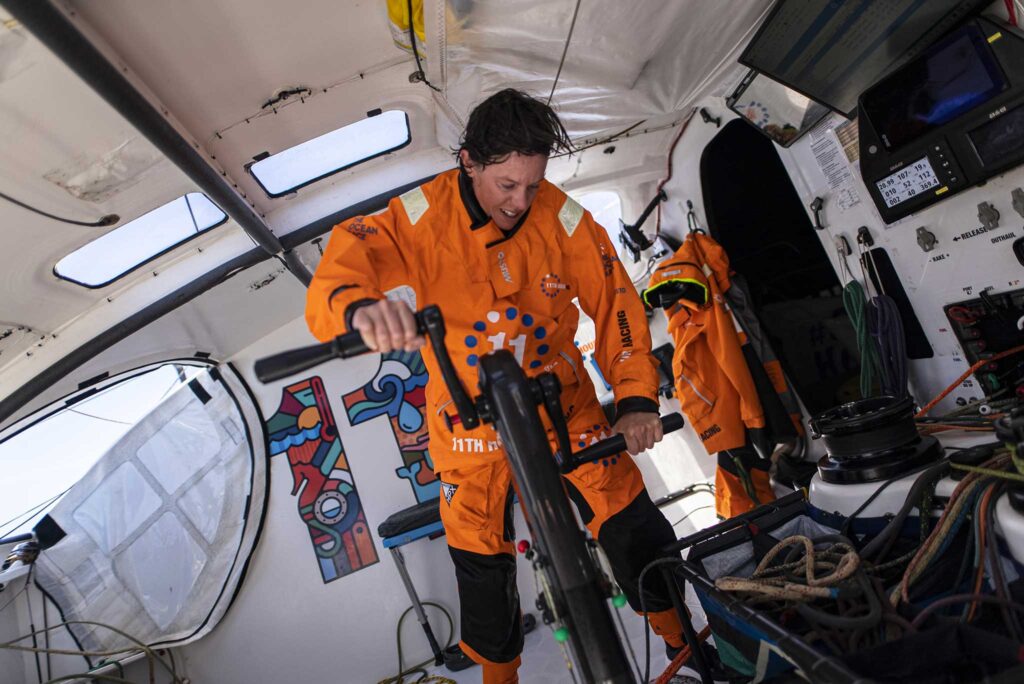
Though much shorter than her around the world efforts, the race is a complex one that requires precise navigation and boat handling. Additionally, there’s the challenge of getting the boat prepped so quickly after the last race, and the tactical decisions that go into setting it up.
“The IMOCA class changed a pretty big rule in the past few months, to go from eight to seven sails onboard, which might sound minimal, but it really limits the options for what sails you can take,” Clapcich says. “It’s quite a heavy, sturdy, big boat. It was built for the Vendée Globe, so sail-wise, our boat is a bit specific. We sail with a soft sail a bit more than the other IMOCAs, but it’s a foiling boat, and you want flatter sails for that.”
She says she was impressed by the boat’s abilities when racing it in The Ocean Race Europe and felt that they’d found a good groove by the end of the summer. Still, it’s a very different IMOCA than Malama, the IMOCA that she won The Ocean Race on.
“The boat can handle a bit more than what Malama was handling. We’re using the reef a bit higher than other IMOCAs, because they pitch pole sooner. How you stack the boat is a bit different. The comfort is also a bit different. It’s a completely different design. But I’m happy to have a comfortable boat.”
And though she’s still somewhat new to this boat, her co-skipper Will Harris has been with it from the start. “He’s done this race twice, so I’m the rookie of the team,” she jokes. “He’s a great navigator, he’s a really great human being, which is what you want. Life it too short to sail with *ssh*les. And it’s a nice way for him to hand over the boat and have a bit of closure on the project.”
For future seasons, she will carry on as the boat’s sole skipper, preparing for her own Vendée Globe campaign in 2028. “He’s been an amazing part of team Malizia, and so much of the boat’s performance is down to him pushing it.”
For the next two seasons, Clapcich will focus on getting as many strategic miles in as possible before the big solo event, starting with this year’s Ocean Race Europe and the Transat Café L’Or. And despite how many other challenging races there are in the class, everything in the IMOCA world revolves around the Vendée Globe schedule.
“Because 2025 is the year after the Vendée, the presence in the IMOCA class is less,” she says of this year’s Transat Café L’Or fleet. “The skippers who did the Vendée Globe last year might be pretty burned out. They also might have sponsors through the end of [the Vendée Globe race cycle], so this year they’re still working on getting them together for next time. But the race gives points, it’s a qualifier, so if you have the boat and the funding to do it, it’s really worth it.”
Next year she plans to do the Route du Rhum, and then the Ocean Race Atlantic, a new addition to the Ocean Race family that will go from New York to Barcelona.
“Racing in the United States is super important to me. I want to inspire curiosity in the American people about The Ocean Race,” she says. “Sports are extremely popular there, but for example, people go to the bar and watch a football game, but sailing doesn’t have that. The nature of the sport, it’s really tricky to get people involved and watching it. It’s important for people to fall in love with us as human beings, not just the foils and the weapons. It’s important to see the personal lives and the stories of the skippers.”
Her campaign, which has a slogan of “Believe, Belong, Achieve,” is focused on communications and the human side of both racing and sustainability. “It’s about awareness, showing what we can do with our sport and our voice.”
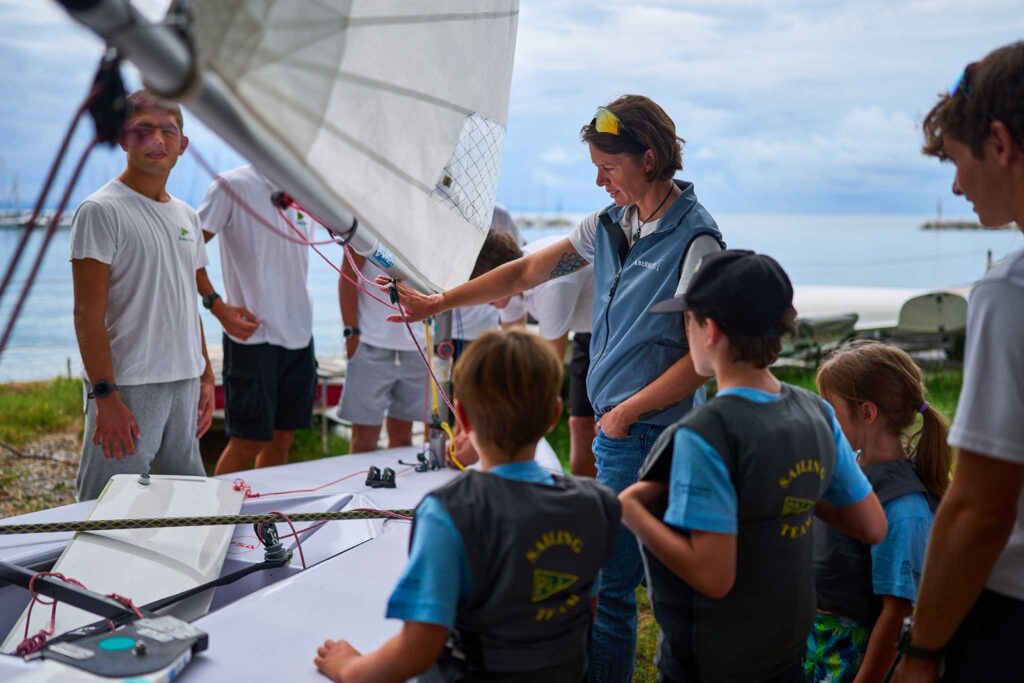
And beyond the campaign, she’s asking the hard questions about the impact of the work they’re doing: “How do we bring more accessibility to the water, more people to this industry? How to do outreach, how do we post jobs to find talent where people haven’t looked before, and how do I use my privilege to lift up other voices? I’d really love if one little girl somewhere can see what I’m doing and find motivation in it.”
“It’s important that the next generation of sailors don’t need to fight the same fight. Other incredible people did it before me, so it’s really important for me to do the same for someone else coming after.”
To follow the Transat Café L’Or, visit transatcafelor.org and for more about Clapcich’s campaign, visit francescaclapcich.com or follow her on social media.