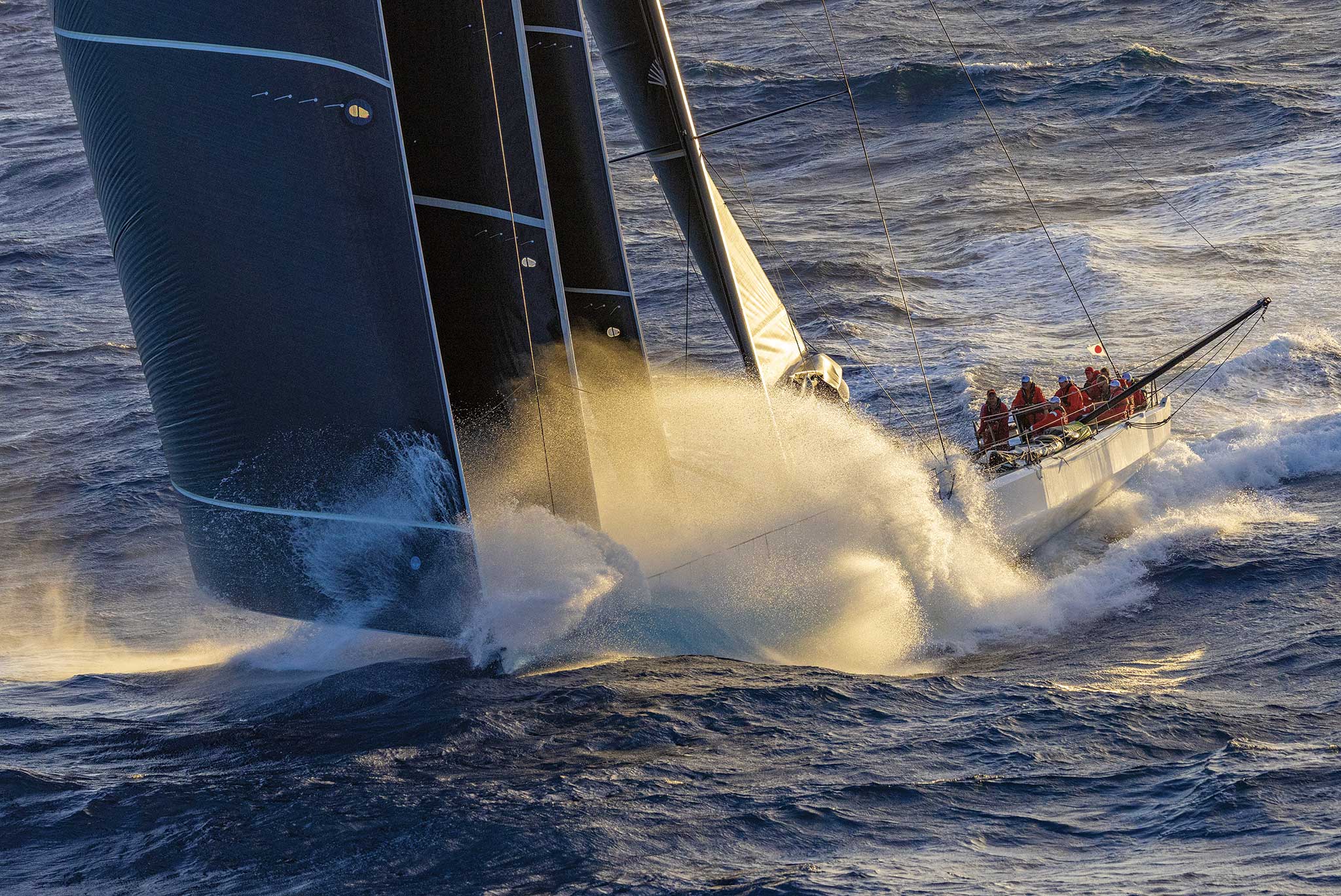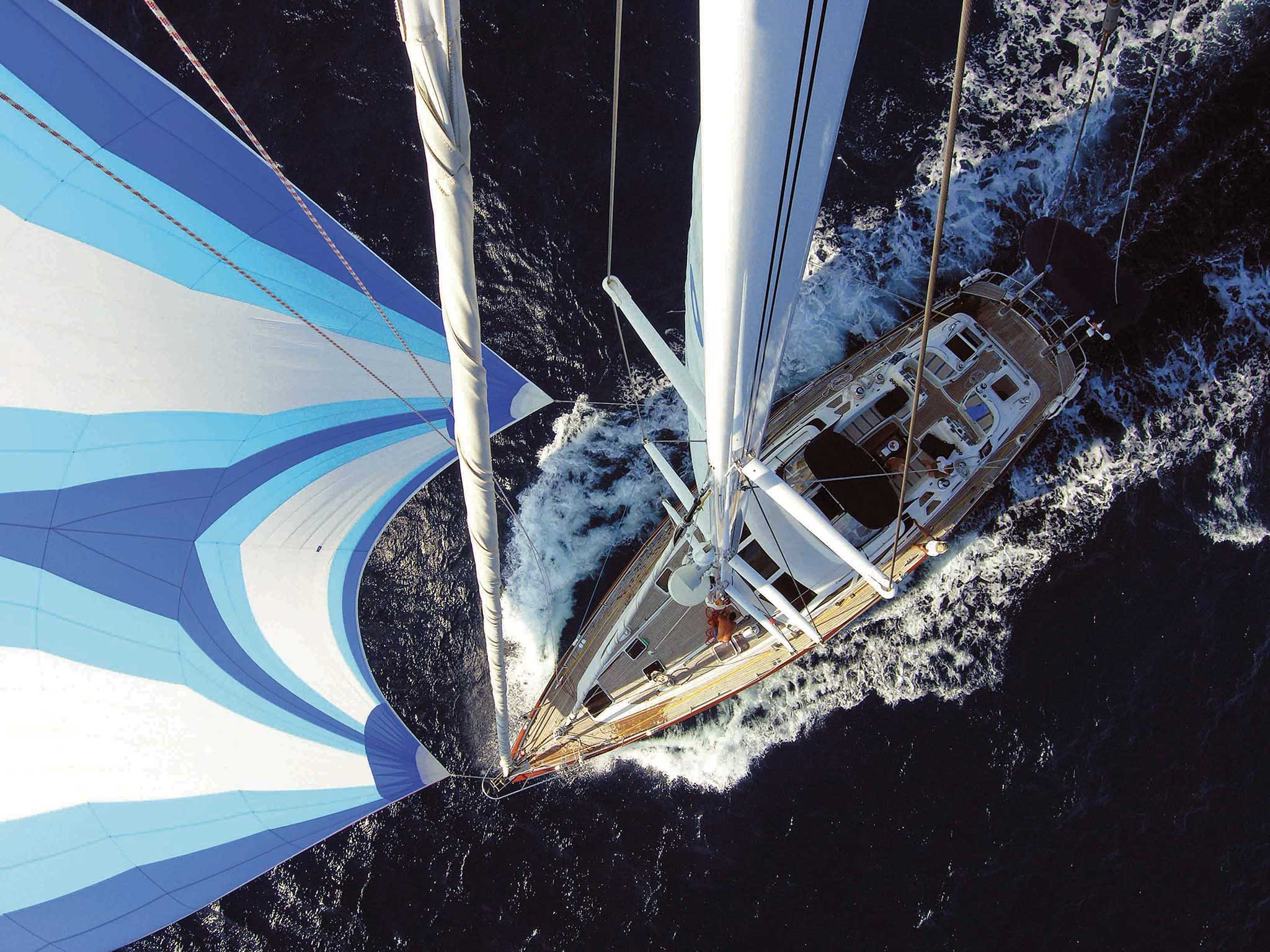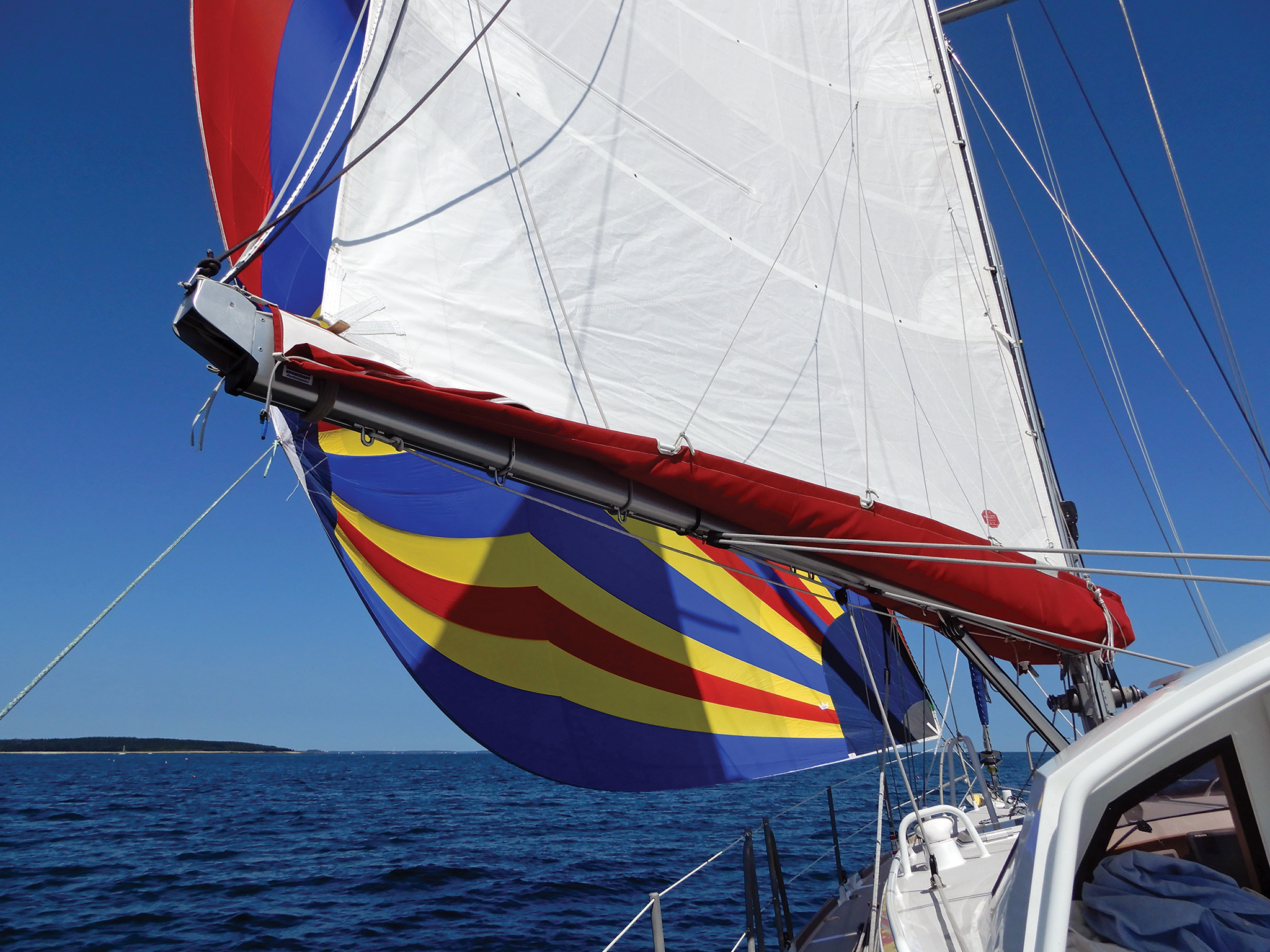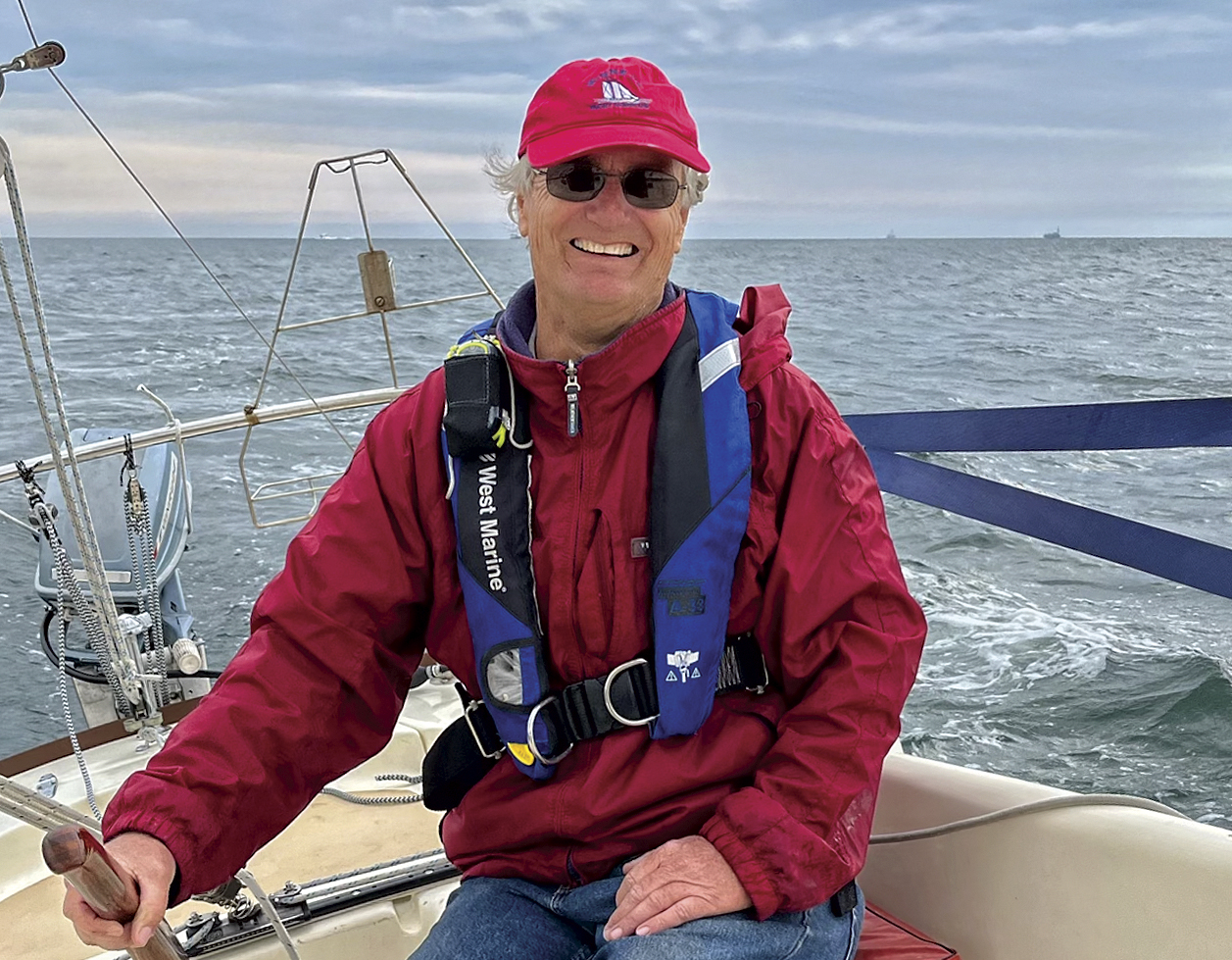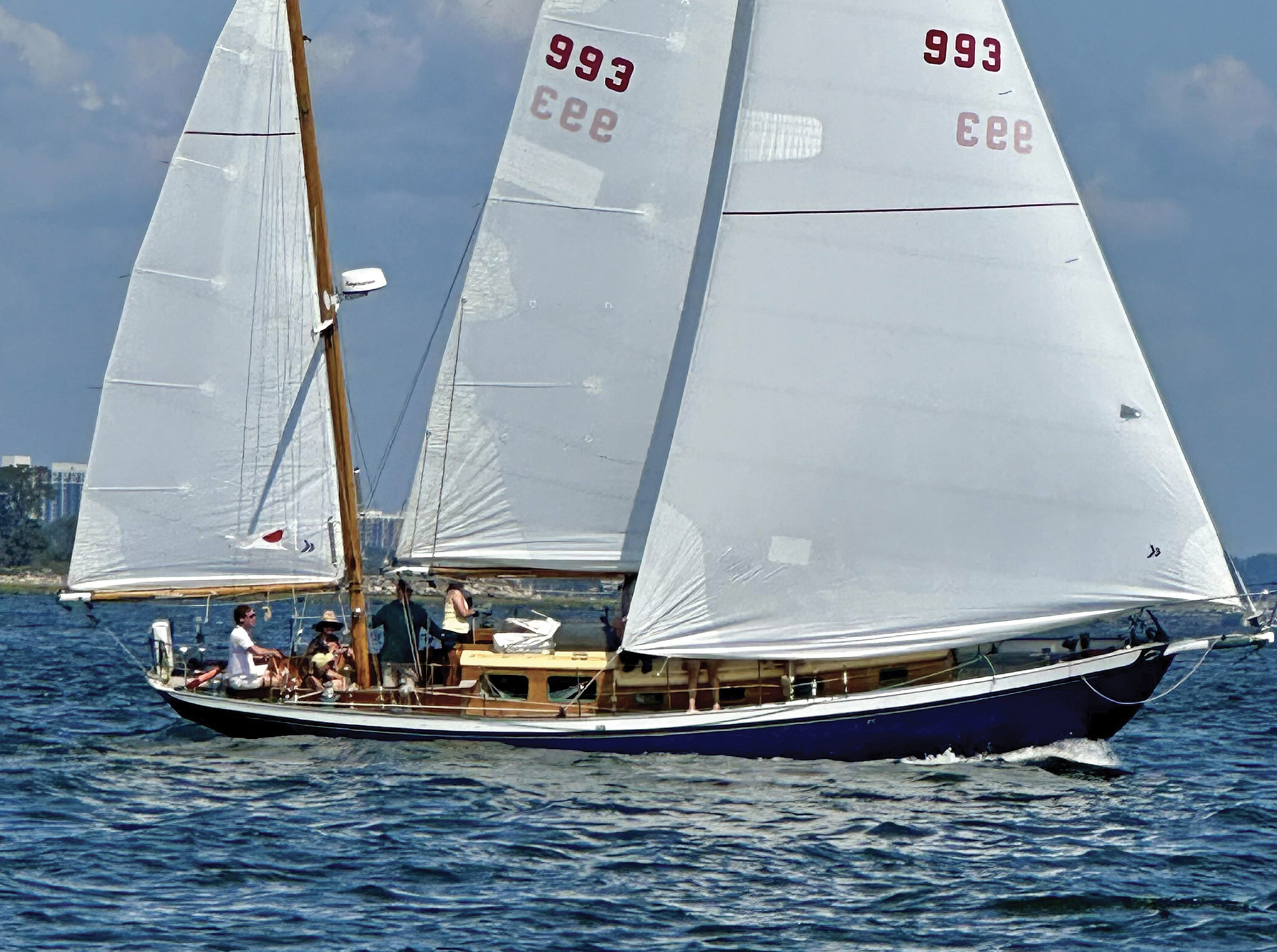
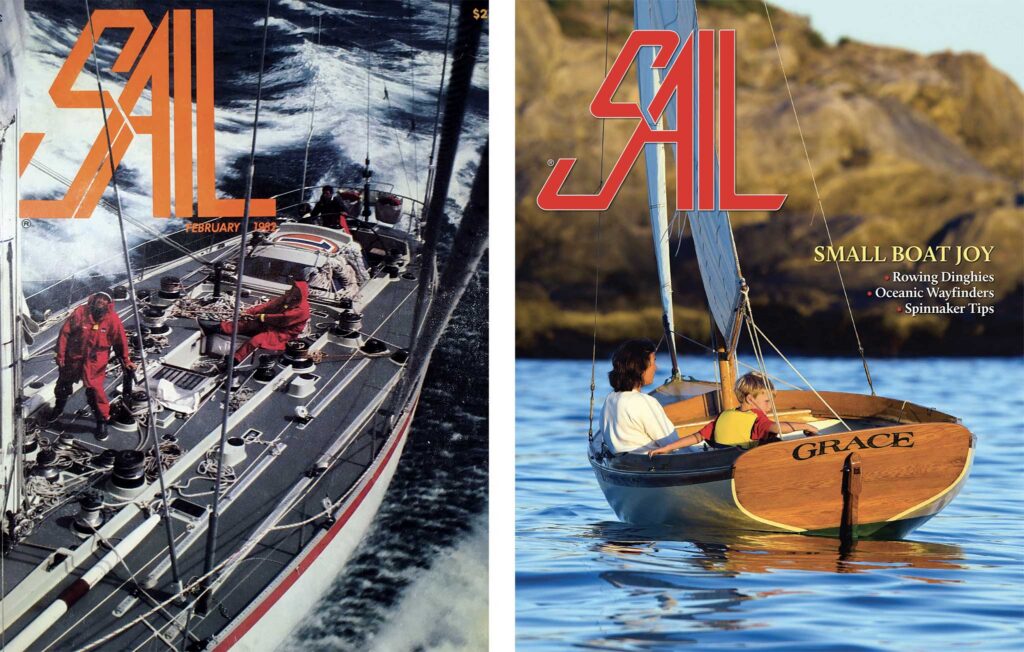
Where you’ve seen his work: On the covers of most sailing magazines, his storefront in Newport
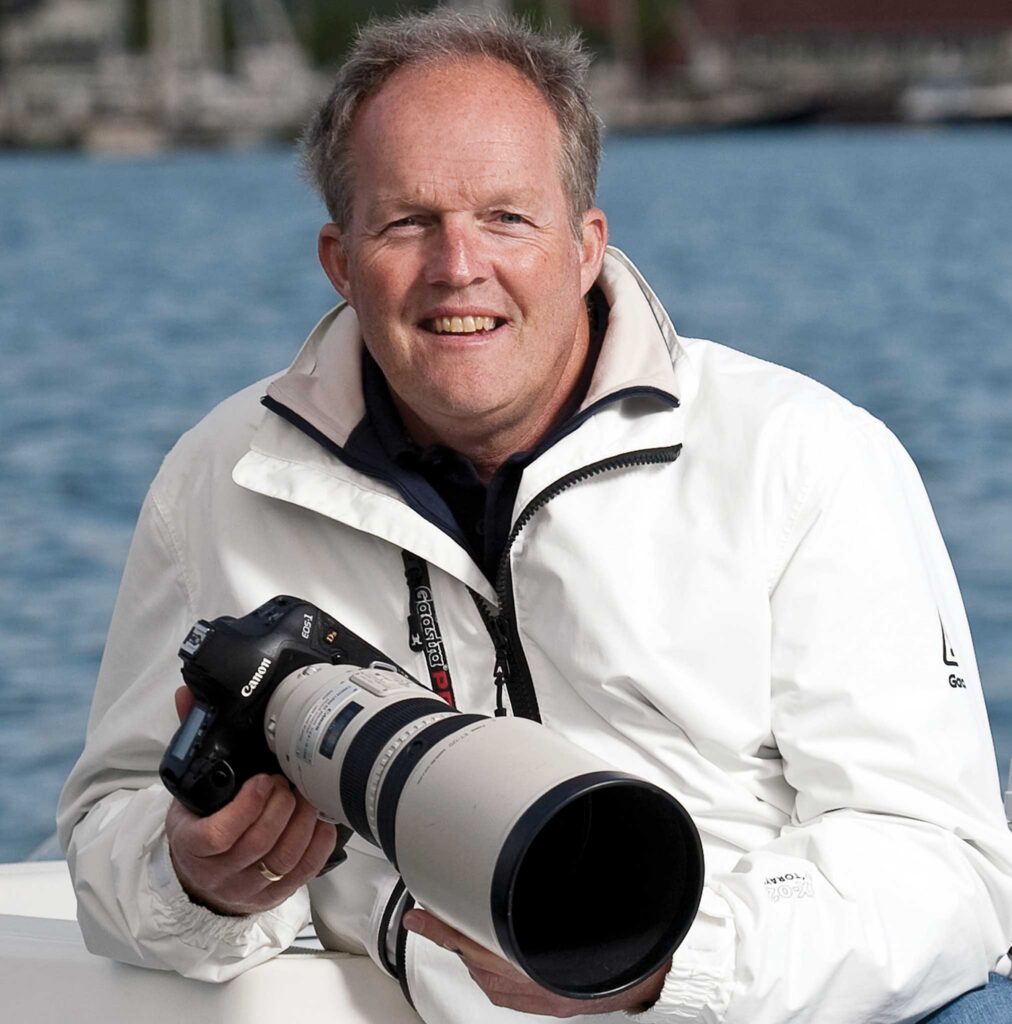
Onne van der Wal is perhaps the father of onboard reporting, a name synonymous with the aesthetic of the golden age of modern sailing, but he didn’t begin as an artist. Originally, he was an engineer and bowman on the 76-foot custom racing yacht Flyer II, bound for the 1981/1982 Whitbread Round the World Race. It was a chance encounter with Keith Taylor, the former editor of SAIL Magazine, that changed the trajectory of his career.
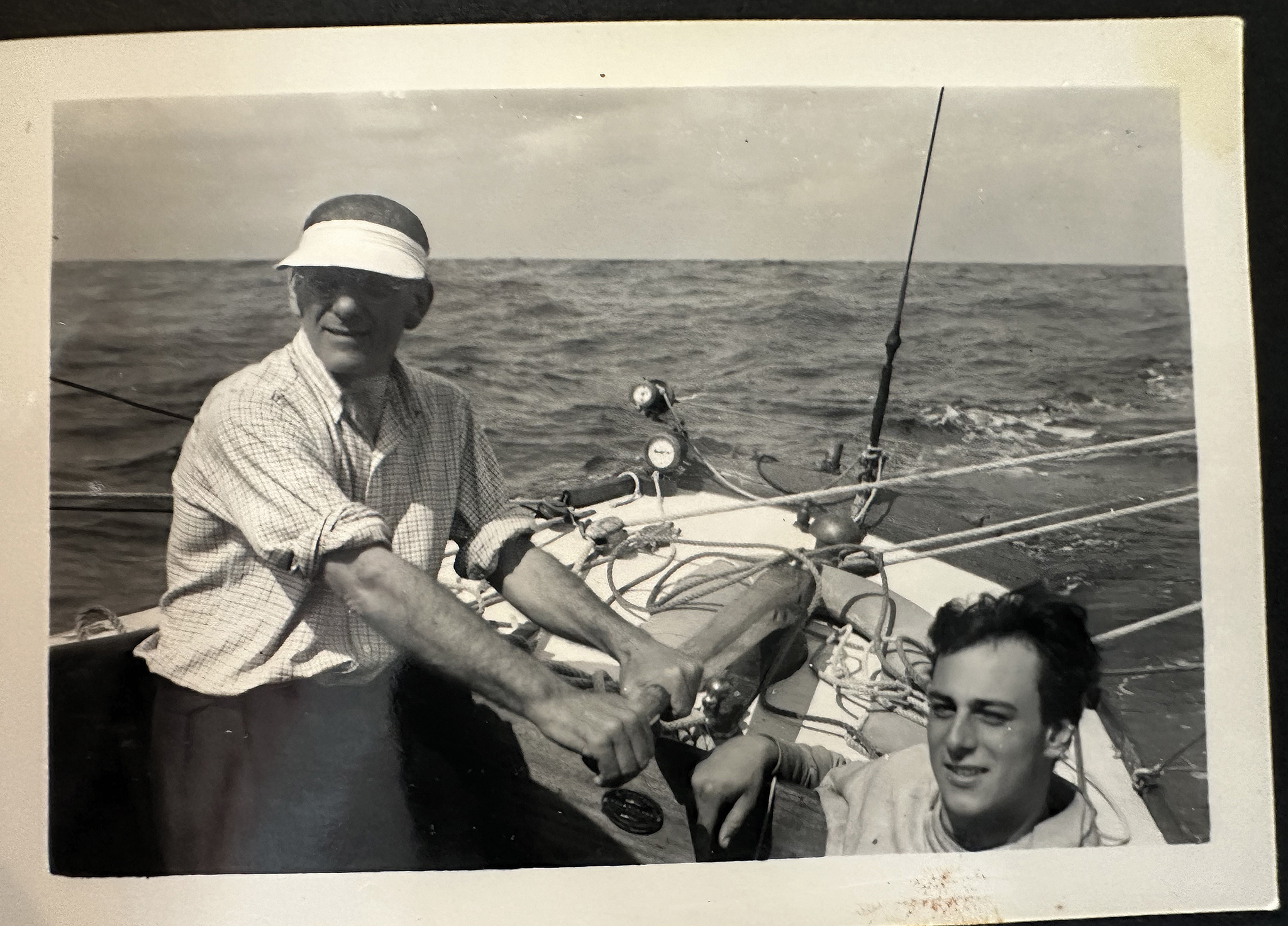
Van der Wal remembers it like it was yesterday. “We were doing trials on Flyer II and had sailed across the Atlantic to Marblehead [Massachusetts] where we had sails being built and fixed. We were on a mooring ball, and I was on the boat alone.
I heard a knock on the hull, and it was three guys in suits in a row boat. They were the publisher, the editor, and some other Johnny from SAIL magazine in Boston. And I started laughing; I said, ‘what are you guys doing here in this little row boat?’
They said, ‘well, we were at a meeting at the Corinthian Yacht Club, but we heard there was a super well prepared ocean racer in town for a few days, and we just thought we’d take a chance. Can we see the boat?’
And I said, ‘of course, come on board.’ And I gave them the whole song and dance and from stem to stern, and they were just blown away because in those days it wasn’t that popular to build a boat custom for a corinthian project, but here was a brand new ocean greyhound.”
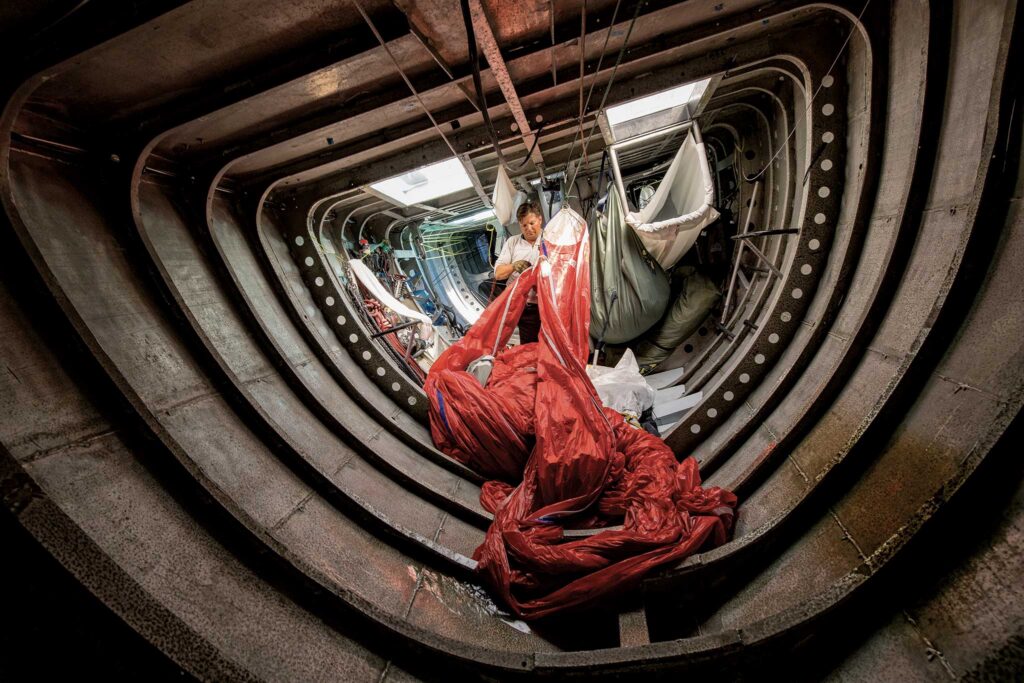
At the end of the tour, van der Wal asked if they’d be willing to look at his photos. At 27 years old, he’d been bringing a camera along when he sailed in order to put together a slideshow for his family when he was back home in Cape Town for Christmas.
“And so I had all these sleeves of images in a three-ring binder because I couldn’t have a light table or anything. And Keith Taylor, who was the editor at the time, he held them up to the sky and said, ‘oh boy, this is interesting stuff. Can I take this to Boston, to the office?’ ”
Van der Wal agreed and was soon signed on to send them photos from the race for publication. When Flyer II won the Whitbread, his pictures were in huge demand. But despite his success, van der Wal resisted pressure to become a yacht photographer at first, not ready to give up on being a sailor.
It wasn’t until five years later that he finally decided to set up shop in Newport and try to make a go of it as a professional photographer. During those early years, it was tough to get the business going, but his background as a sailor first and a photographer second served him well.
“Having been in the trenches, trimming sails and kites and mains for so many years, those things were a huge help. I was doing a project in Long Beach, California, for Dennis Conner and those guys. Kenny Read was running a two boat session, and I went on board and sailed with them. Of course, first Dennis said ‘will you stay behind the traveler?’ And well, Jesus, that’s pretty boring. But little by little I said ‘do you mind if I sit in the cockpit next to the trimmer?’ And then I slid forward a bit more, and then by the time the whole session was over, I’d been down in the pit packing kites and on the foredeck during the jibes. And at the end of the day, he said, ‘you are welcome any time.’ ”
The trust he built with brands and professional sailors alike allowed him unprecedented access into many campaigns, like the building of Comanche. “Once people can trust you, my goodness, it opens up such a world for the lens. I think of that in particular with the onboard reporters. There are some things that they capture where you just know that person genuinely is part of the team because some of it is just extraordinarily intimate photography.”
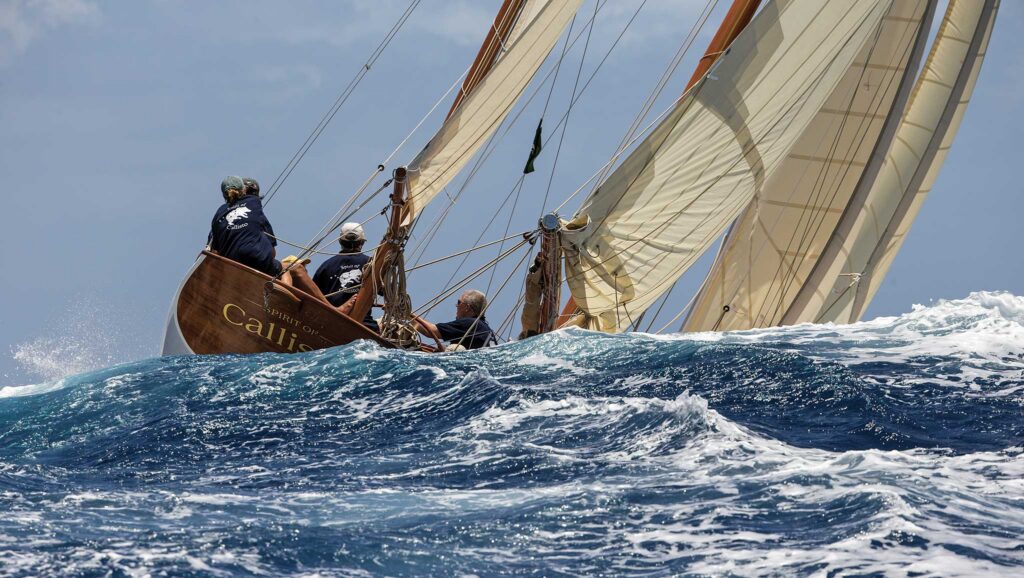
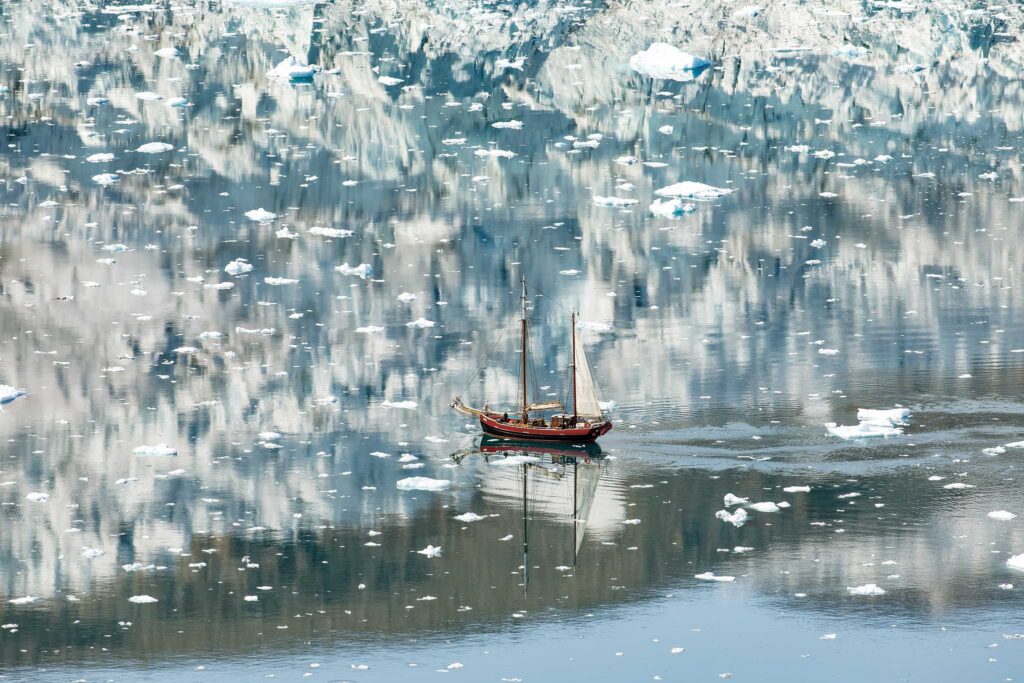
Van der Wal has spent his career on the water, but he hasn’t been relegated to the race course. His extensive cruising background sets him apart from many of his contemporaries, and his photography from these excursions portrays a more elegant and harmonious side of adventuring, highlighting a relationship between vessel and sea that you rarely get from the race course.
Processing Your Photos
Photography Advice from Onne van der Wal
Phone cameras are capable of great things if you know how to use them. “I just finished a book about Jamestown, and there are probably ten spreads in there that I took with the iPhone. People have no idea,” van der Wal says. “The potential is there, it’s just a matter of learning a couple of little tweaks.”
His advice? If you have a RAW setting, use it. With the processing on your phone it will usually come out nicely, but if not, don’t be afraid to get familiar with the post-processing settings. “If there’s something that I’m really in love with, I put it into Lightroom, and then I give it a tweak. Nothing major because it comes out of the iPhone so incredibly well, but I can just change the color balance, maybe a little crop and a little brighten.”
If you don’t have Lightroom or another photo editing software, don’t worry. Whatever you have built into your phone is probably more than enough. “Those little adjustment tools that the iPhone has are very, very good. Highlight, shadow, color balance, crop…Just don’t oversaturate. I very, very rarely need to saturate anything. I go with the color that comes in the file. And then it’s bingo, it’s good to go.”
This article was originally published in the May 2026 issue.