Where you’ve seen her work: the iconic Transpac photography at Diamond Head light, The Ultimate Sailing Calendar
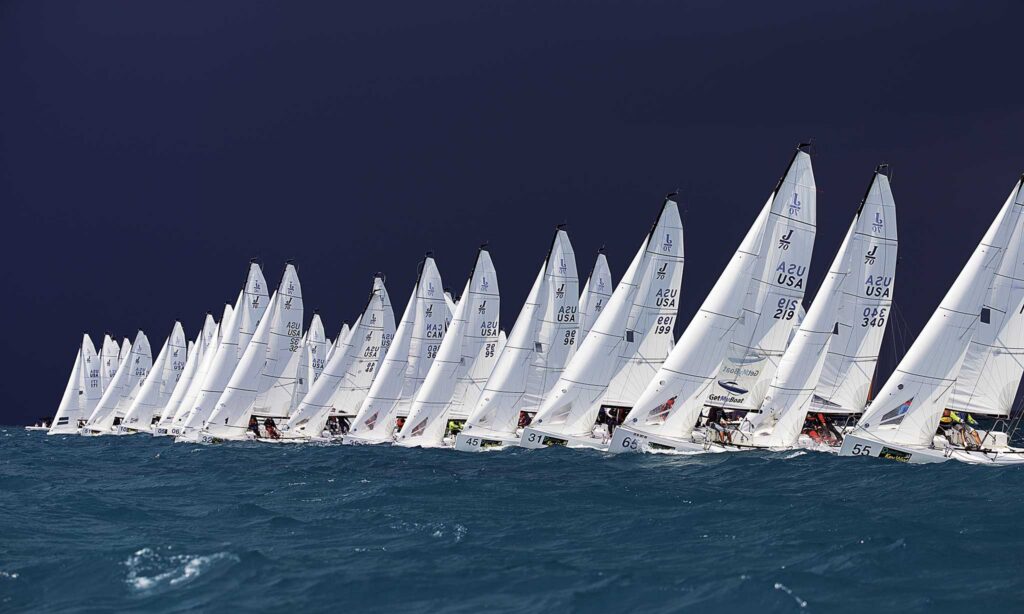
Sharon Green’s photography career began suddenly and with little preamble in the fall of 1977. Her father, Don Green, had commissioned a boat from C&C, but she was busy with life as a teenager and not particularly interested in her father’s project.
“All of a sudden, all these rockstar sailors start showing up at the house, people like Lowell North and Tim Stern. And I had just come from some high school dance, and all these people were just standing in our kitchen. I asked what was going on, and they said ‘Oh, we’re launching Evergreen tomorrow.’ “
Up until that point, she hadn’t realized that her father’s boat was anything other than a production C&C. The next day, they all trekked down to the docks in the November sleet for a sea trial.
“And this spectacular green boat with an orange stripe down the side is sitting there waiting to be christened and then launched. That’s when I realized it was a true racing machine, that it was going to be a big deal.”
Green tagged along in the chase boat, and through the dreary, wet weather took her first sailing photos. The manufacturers later asked if she’d gotten any good shots, and just like that, she sold her first sailing photos. Green will tell you that she was not very good in those early days, but the number of photos she sold while still in her teens suggests otherwise. While in her freshman year in college, she had three covers on three different sailing publications at the same time. “I thought that was pretty cool, but my photography professors were not terribly impressed. They said it wasn’t art. And I was thinking ‘do you know how much I just got paid for that? I’m probably making more money than you are!’ ”
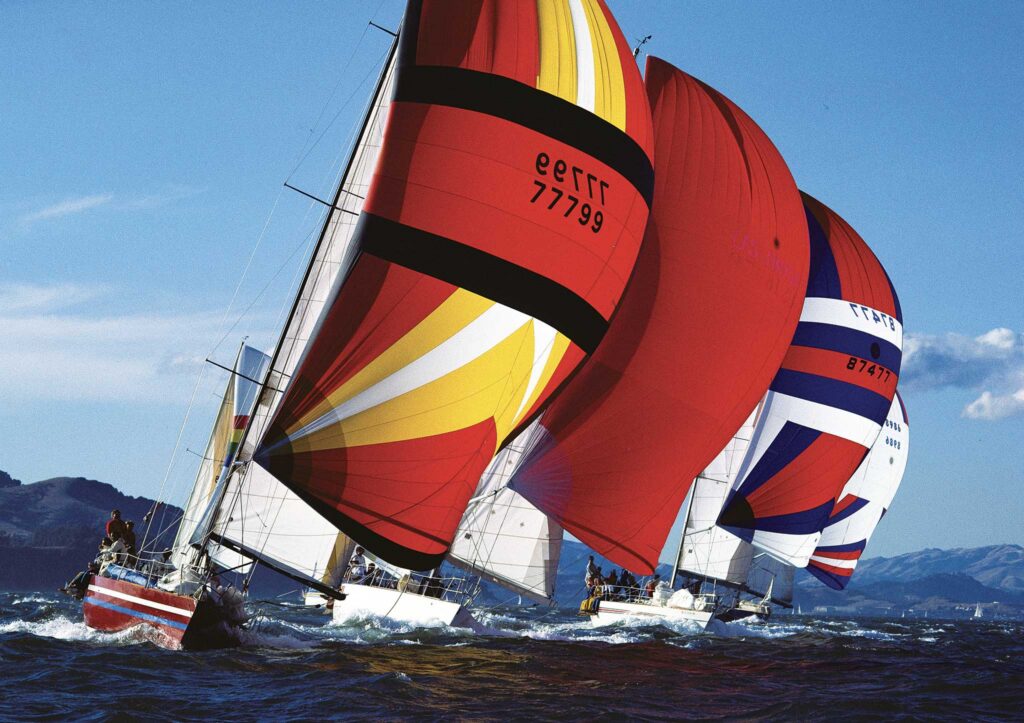
In 1983, she started her Ultimate Sailing Calendar. She had become frustrated with the editorial process of shooting for magazines because so many of her best photos ended up on the cutting room floor. Regardless of how good the photo was, if the magazine wasn’t doing a story on that boat or it didn’t do well in the race, she knew no one would ever see it.
“Back in those days, there were a lot of large format sailing calendars, and one of the distributors called me up, and he said, ‘why are you doing a sailing calendar? They’re just going to eat you up and spit you out.’ A couple of years later, he and I had booths side by side at the Annapolis boat show. And I’m autographing calendars for people, signing on their birthdays and anniversaries and their kids’ birthdays. I turned it into a whole business. Later on, that guy became a distributor of my calendars.”
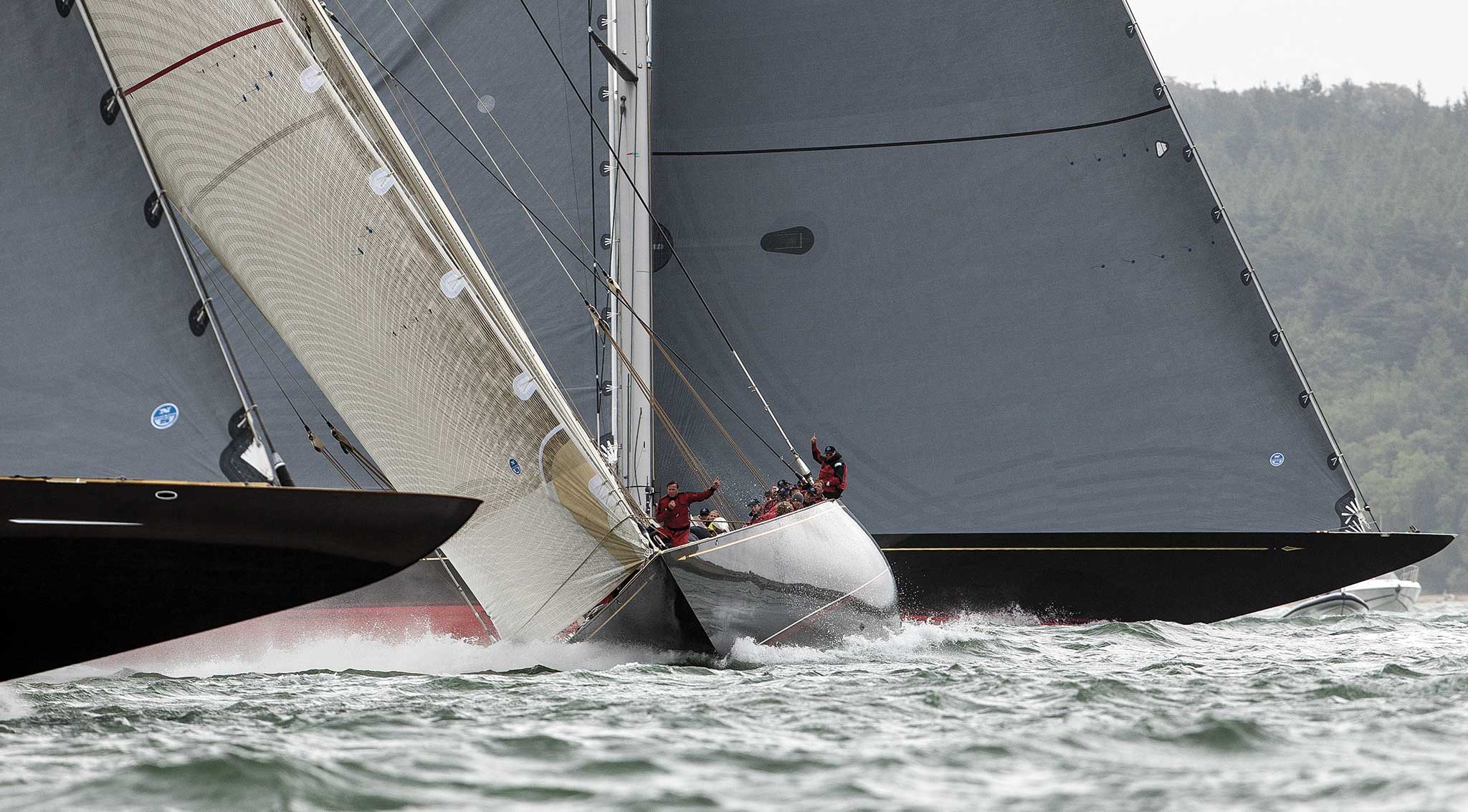
Green is a life-long sailor and like van der Wal agrees that understanding the sport is key to shooting it well. “There’s this one photograph, and it’s perfect: all the boats are lined up, spinnakers are all perfectly filled, and they’re in perfect formation, healing over on a nice reach,” Green recalls. Once, while giving a presentation on her work, she showed the image and got the question of how she’d gotten the boats lined up like that.
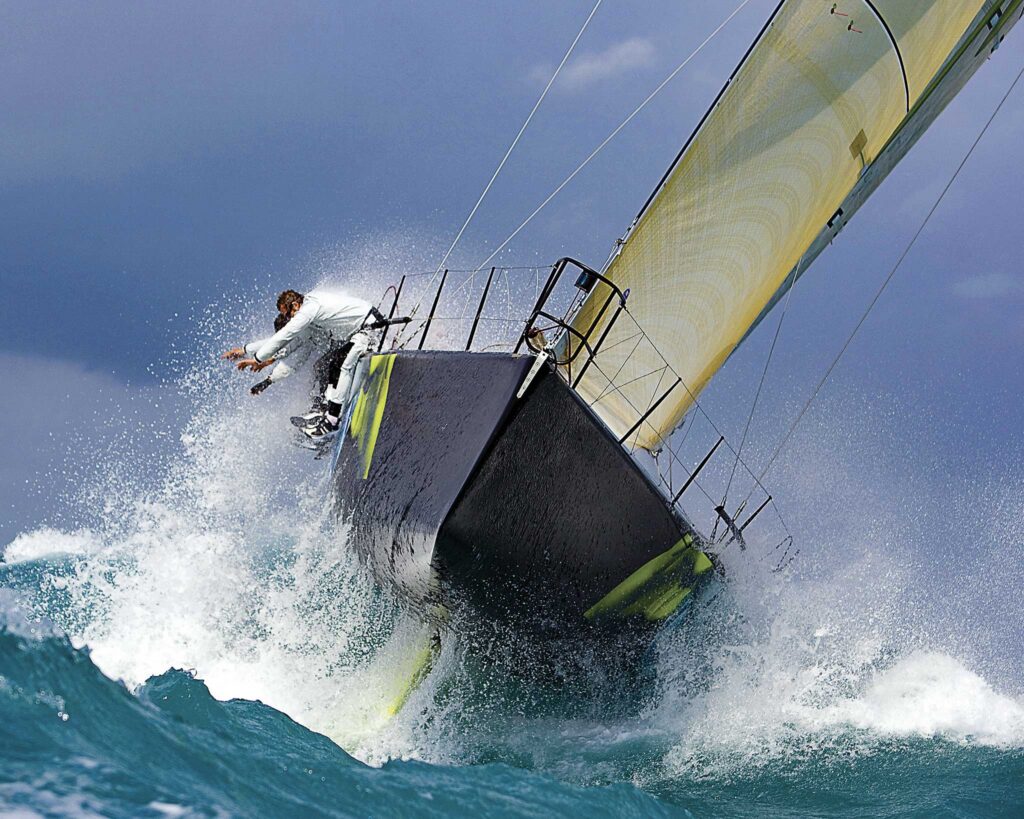
“And I will never forget that because of how hard it really is. You have no control. It’s not like I can say, ‘hey, you guys, could you go back and do that again? I was reloading, there was salt on my lens, the driver was in the wrong place, your spinnaker was collapsing.’ I couldn’t go back and do it again. During racing, I have absolutely no control.” One early heartbreak when she missed a rig coming down because she’d reached the end of her roll of film taught her that lesson well.
These days, she’s meticulous about her planning, especially when it involves other people. Green credits her drivers and pilots with being instrumental to getting the shot, but a good conversation about what she needs ahead of time goes a long way.
At the finish of this year’s Transpac, she remembers working with a new helicopter pilot and having a long discussion ahead of time about everything from where she wanted to intercept the arriving boats to how to anticipate the boat changing directions. But when the first finisher, Lucky, was drawing close, it seemed like it would all be for nothing.
“It’s too dark to shoot at 6:15 a.m. when they were expected to arrive. But all it would take was one little squall to slow them down, so I got my photo and video team and the helicopter ready at 5:30 the next morning, and of course it was pouring rain.”
“And, thank goodness I had spent so much time talking to the pilot about what to expect. He spotted the boat before I could see it. As the sun was just coming up over the horizon, and it was still pouring rain and the boat had all black sails, but he spotted it.”
“Then these Jesus sun rays came out, and so it was just magic. And, you know, that’s when you pinch yourself. We come across this boat that’s just sailed 2,200 miles, and hasn’t seen anybody else in all that time until this little helicopter comes busting up and it’s such a cool experience. I just love it.”
Getting the Shot
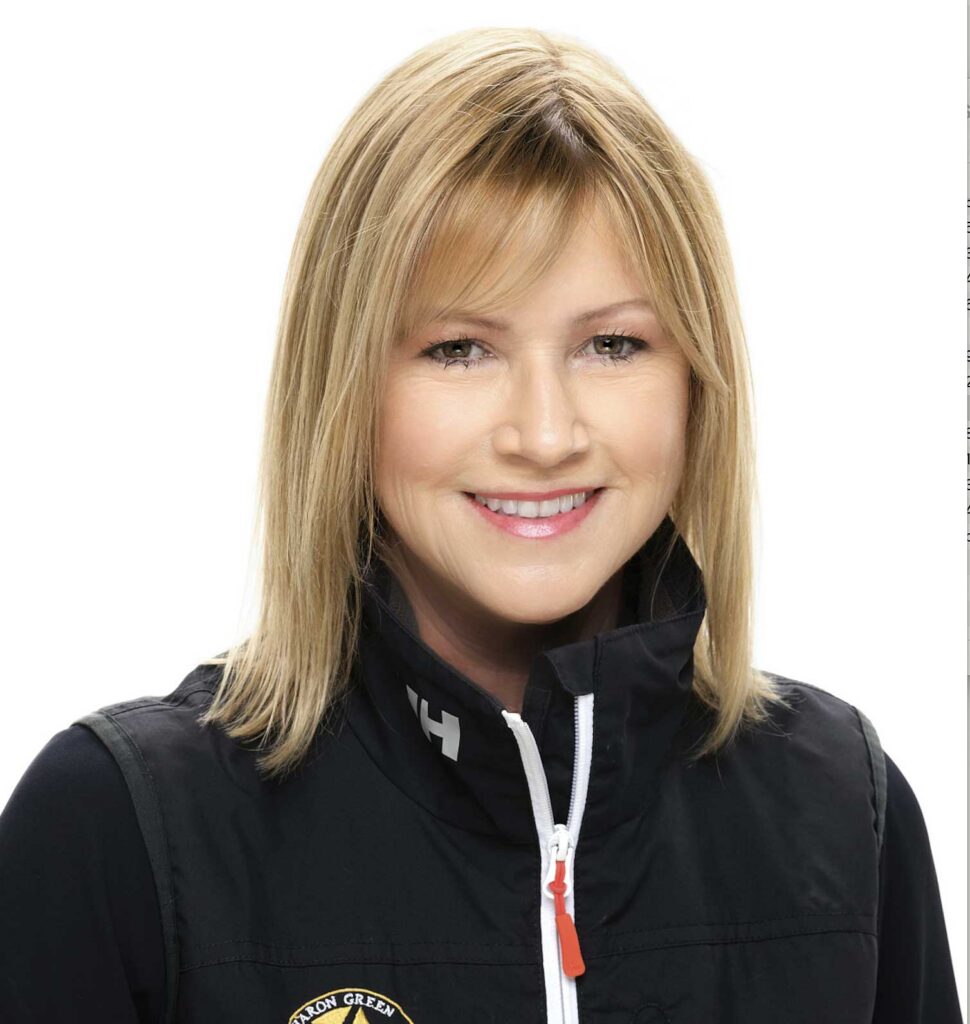
Advice from Sharon Green
Whether she’s dangling from a helicopter with her long lenses or racing on a Harbor 20 with her cell phone, Green is always taking pictures. She says regardless of what she’s shooting on, a sense of depth and motion will give the photos something special.
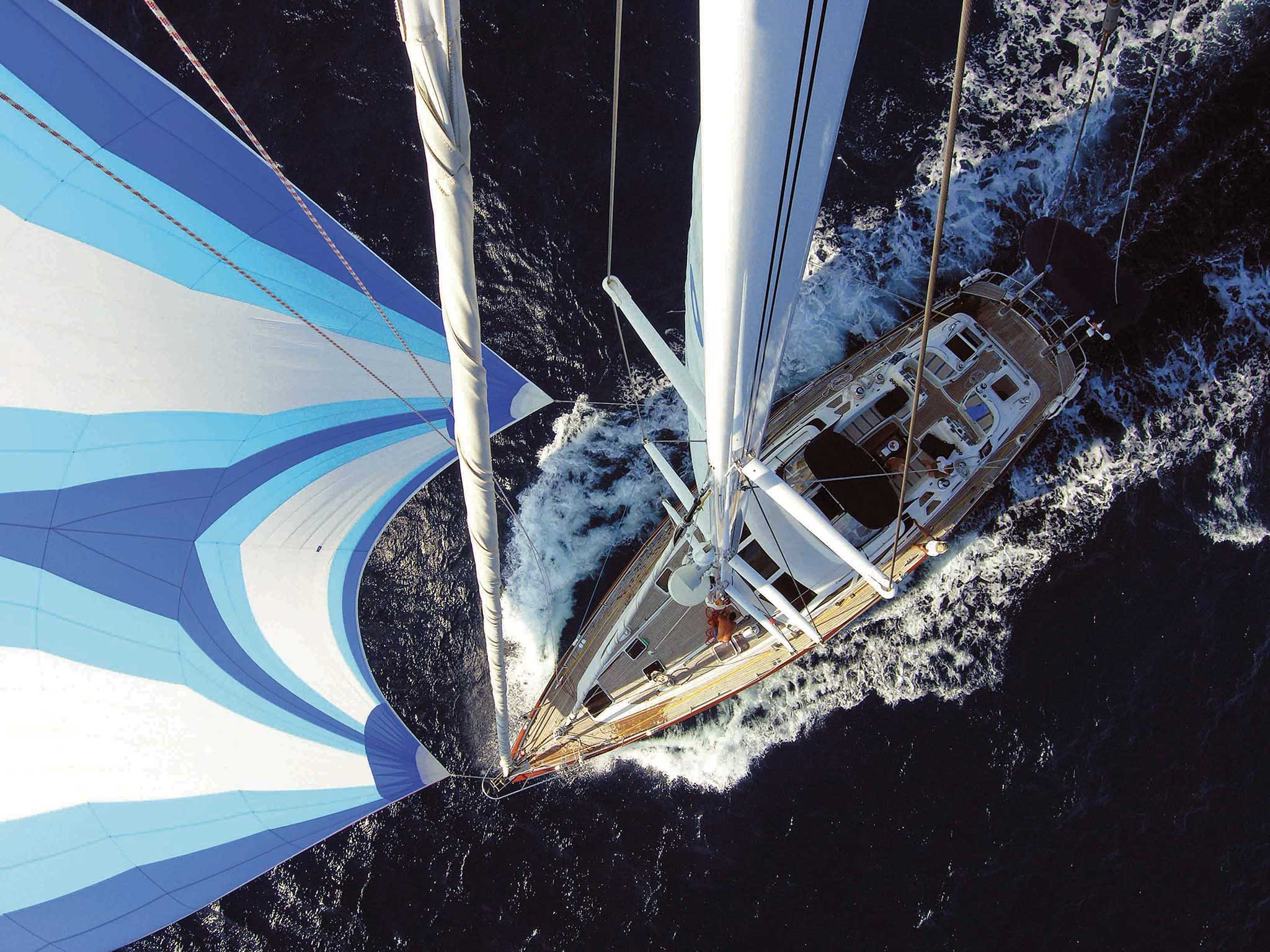
“It’s always fun, I think, to have something in the foreground, whether it’s looking forward into the boat or having another crew member forward and looking back at the helmsman. It gives a sense of the size of the boat you’re on.” If you’re racing, she says to get out your camera when there’s something off the boat you can line up in the background as well, like a mark or another boat. This gives your photo a sense of setting for the story of the composition. “I’ll shoot underneath the sail and get the whole fleet framed by the leeward side of the boat, and so it really looks like you’re in the middle of the race.”
Her favorite trick for capturing motion requires delving into the settings. “If you can figure out how to do slow shutter speed, that’s really fun when you’re on board.” Not all phone cameras have this ability, but look for a “Pro” mode that allows you to manually adjust things. Shutter speed will be listed as a fraction, with a larger denominator corresponding to a faster shutter speed (or, in other words, a smaller fraction of a second for exposure). It may take a little trial and error to find the right balance for your lighting, but once you’ve got it, “it’s super easy, and you can see the water racing by, so the shot will feel fast.”
This article was originally published in the May 2026 issue.