Photos provided courtesy of the manufacturers
It’s been a long time coming, but 2027 is truly the year of the cat. For the first time ever, new catamaran debuts out number new monohulls by nearly two to one, with an incredible 11 of them up for consideration in this year’s Top 10 competition. These models offer space, stability, and impressive ocean-going capability, in so many options it’ll be difficult to choose. And though small in number, this year’s monohulls hold their own in the rising tide of two hulls, representing a range of innovative ideas, fine tuned design, and top notch manufacturing. Our review team of industry experts will spend boat show season researching, touring, and sea trialing all of these models to crown the best of the best in new boats. Stay tuned for the results in the January/February issue of SAIL.
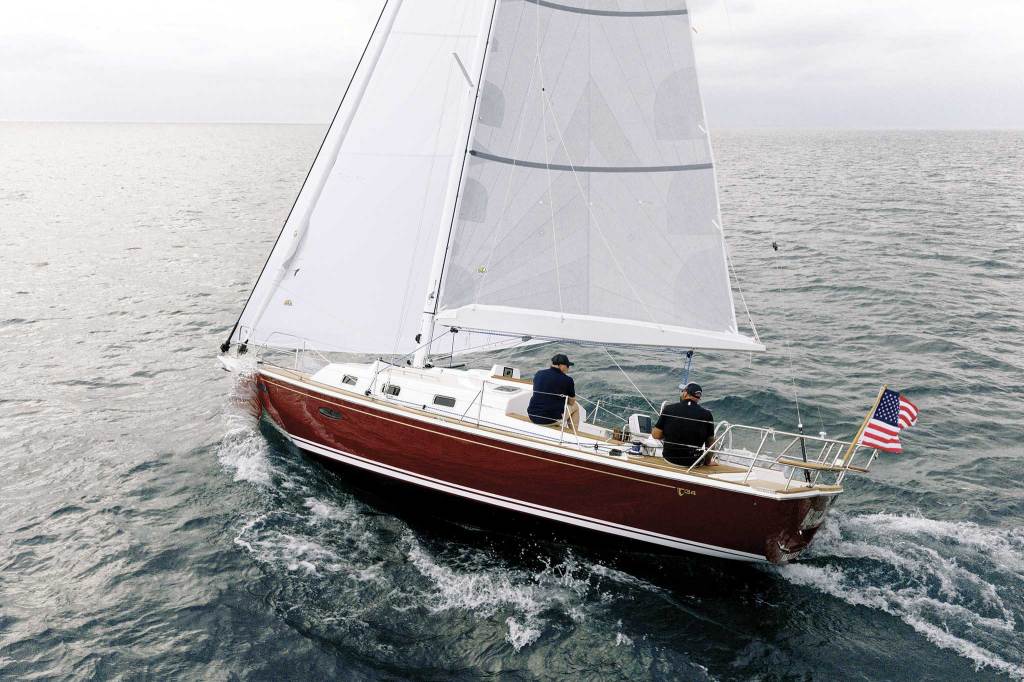
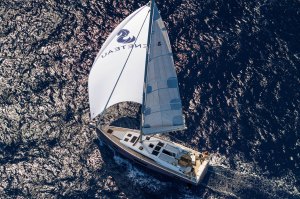
Tartan 34
American manufacturer Tartan has been hard at work on an elegant 34-footer that will be perfect for weekend getaways. The design brief called for a boat that’s responsive, easy to sail and perfectly balanced, and so far, it looks as if they’ve succeeded.
The boat’s internal structural grid supports rig and keel loads and is bonded and glass-taped into the hull. The hull itself is partially cored with CNC computer cut closed-cell structural synthetic foam coring. All hull penetrations are made through solid E-glass laminate “core windows” and they’re confident enough in the construction that it comes with a transferrable 10-year hull structural and blister warranty.
Belowdecks, Tartan has made the most of a small LOA with an open concept interior that keeps the space from feeling cramped. The berth in the forepeak is open to the rest of the salon, elegantly nestled in storage made from solid wood that visually designates a separate sleeping area. This and the rest of the joinery on the boat looks stunning, with a choice of cherry or maple that give the boat a warm and upscale feel. Though there isn’t room for a designated charttable, a panel with the breakers and electronics that would typically be there is instead located above the galley.
The cockpit features twin helms which are a little bit surprising on a boat of this size but were chosen to improve the ability to move around the boat, especially with limited space in the cockpit. All in all, it’s a handsome boat made with a thoughtful approach down to the details.
LOA 33’ 6” Beam 10ft 11’ Draft 6’ / 4’6” (deep/beavertail) Displacement 9,000/ 9,200 lbs Sail Area 601 sq ft (main and jib) Power 20hp Diesel Saildrive
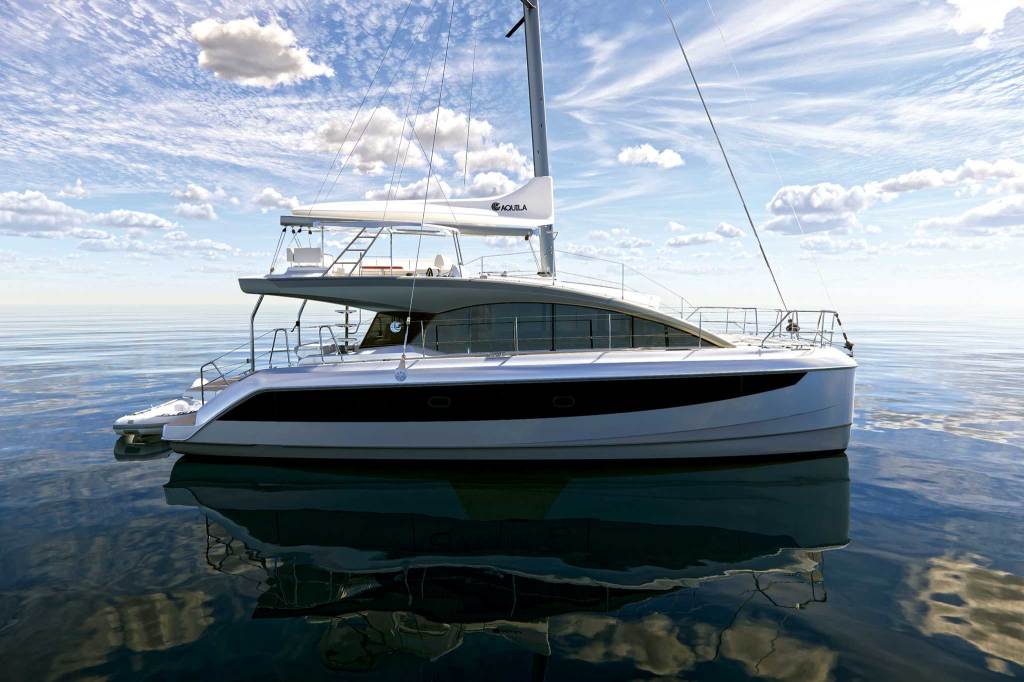
Aquila 45
New kid on the block Aquila has made a splash by launching two new catamarans in their very first year of designing for the sail market. While the Aquila 50 Sail debuted at the Miami International Boat show in February, the 45 is poised to make its American debut at the Annapolis Sailboat Show this month.
The brand has remained committed to the Aquila DNA carried over from their power cats, including in the recognizable lines of their boats and the overall sense of comfort and luxury on board. And while the company owners themselves will tell you that this boat is probably not going to be winning many races, that’s not what it’s designed for. It is for entertaining, relaxing, and bringing as much comfort as possible to the experience of being on the water.
The 45 can sleep up to 12 and offers a three or four cabin configuration, with each cabin having its own entrance to give guests and owners privacy. In the salon, there are plenty of spots to lounge or work from, and the chef in particular will want for nothing. There is ample storage space in the galley, a large sink, and a full size refrigerator. Large windows and upmarket finishes make the space feel more than civilized.
Forward, there is no trampoline but a fixed deck that spans across the bows. This provides extra living space for lounging and sunpads. The helm station is located to starboard on a split level between the main deck and flybridge, which has both advantages and disadvantages when compared to the centerline flybridge helm placement on the 50.
Continuing up, the large flybridge makes space for as many guests as you could want to keep the driver company, either seated comfortably around a coffee table or facing forward. Access is to starboard via either steps that come up from the aft cockpit or what the company calls bridge-to-bow access, with a path leading forward and right down.
In addition to private ownership, it’s likely that this model and the 50 will do well in charter, since it can sleep an impressive number of guests while still being an ideal boat for relaxing in luxury.
LOA 45‘ Beam 25’ 5” Draft 5” 1” Displacement 35,615 lbs (light) Sail Area 1,358 sq ft (upwind) Power 2X Volvo Penta 50hp sail Drive
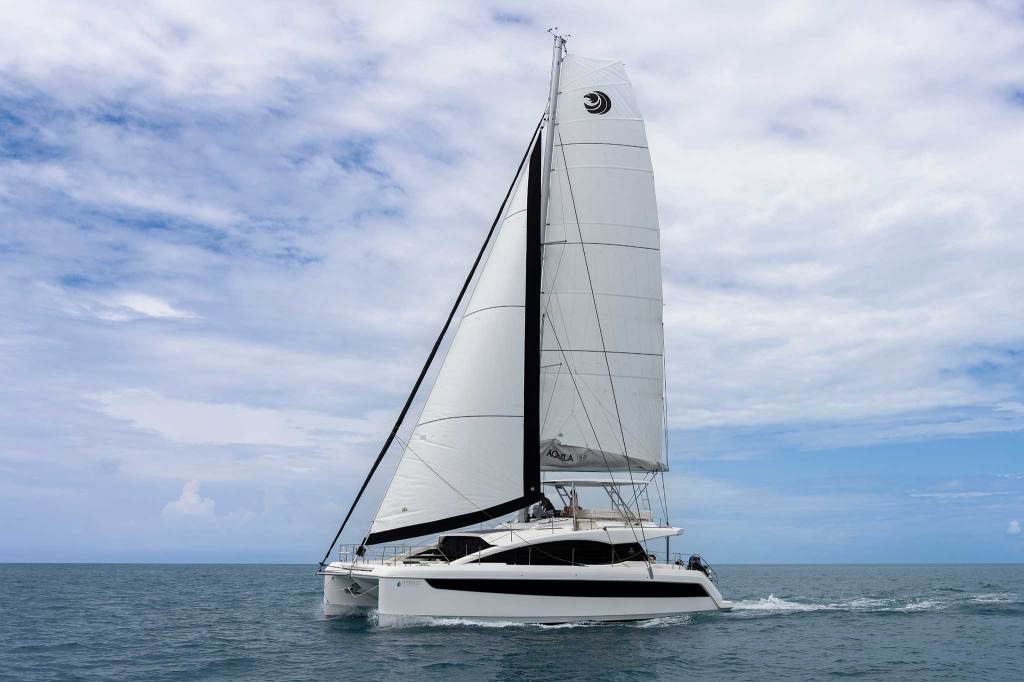
Aquila 50
Rolled out in the same year as her little sister, Aquila’s 50 Sail has much in common with the smaller model. And for all that the 45 packs into its LOA, the 50 takes it even further. This means up to six spacious cabins, again each with their own entryways, a galley that would be at home in an upscale high rise apartment, and storage for days.
Aquila’s signature aft cockpit bar stools, a carryover from their powerboat designs, face a large window that opens into the galley, making for a perfect space for entertaining and passing food and beverages through, either to those sitting at the bar stools or to the aft dinette (one of three onboard). The layout flows easily from the aft cockpit through to the salon forward to the foredeck, which again, is a solid GRP rather than a trampoline. The 50 is a tall boat that carries a lot of its weight aloft due to the impressive and comfortable flybridge and its hard top. In addition, the rig and its lofty boom make for an 83-foot air draft.
The boat isn’t all posh accommodations and space for toys though. Aquila has introduced water tight bulkheads and sacrificial keels to improve safety while a variable speed bow thruster helps ensure that a collision won’t happen even in tight quarters.
For more on this boat, read our full review in the August/September issue of SAIL or on sailmagazine.com
LOA 49’ 1” Beam 25’ 9” Draft 4’ 8” Displacement 45,232 lbs Sail Area 1,679 sq ft (upwind) Power 2x 50hp diesel w/ Saildrive or 50kW Torqeedo hybrid
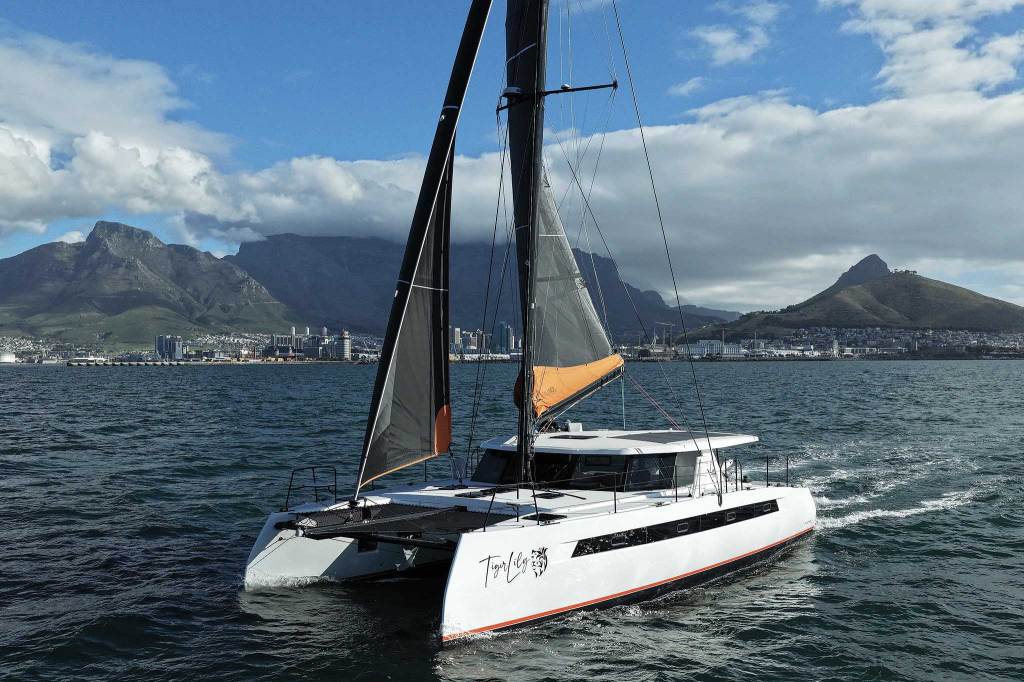
Balance 502
Immediately recognizable as a Balance by her sleek sharp hulls, reverse bows, and low profile, the Berman and Du Toit Yacht designed 502 replaces the 482. Hull number one debuted at the Miami Boat Show in February.
Balance does not compromise on performance, and the boat has been made fast by keeping the weight down. This means utilizing carbon in much of the construction, including primary beams, bulkheads, soles, and blades.
Like much of the Class of 2027, solar panels have been integrated into the power plan for the 502, and Balance uses freestanding glass panels which are more efficient and have a longer lifespan. They are recessed into the hardtop bimini for a sleek profile with a built in ventilation slot for air flow beneath them.
The living spaces are plentiful with a particularly cozy aft cockpit that has an integrated grill to starboard. To make the most of this space they have also included a daybed to port which is sure to be a popular spot, tucked in the shade but with good breeze spilling off the sidedecks. Directly opposite the daybed to starboard is the helm station, featuring Balance’s trademark Versahelm, which can be swung up or down depending on the driver’s preference. The lower position offers weather protection and social integration into the aft cockpit while the split level raised position gets the driver out of the boat for better sightlines. All the lines are led to the upper helm station.
LOA 50’ Beam 25’ 11” Draft 3’ 10”/7’ 7” (boards up/boards down) Displacement 28,660 lbs (light) Sail Area 1,539 sq ft (Upwind) Power 2x 45hp Yanmar
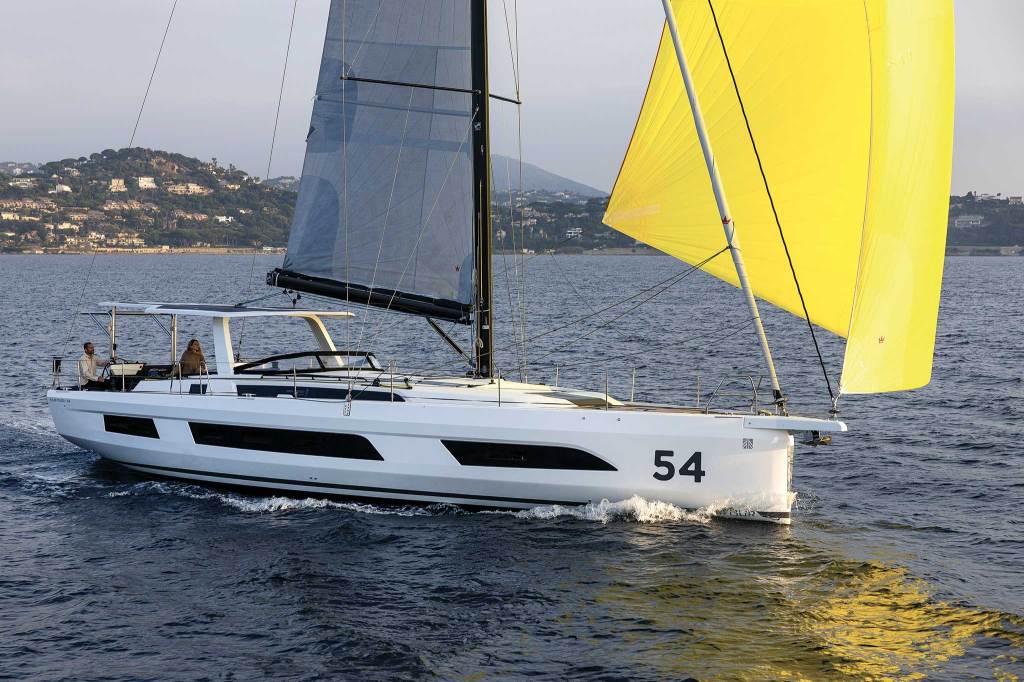
Dufour 54
Dufour designed the 54 with ocean crossing in mind, and it certainly looks like a comfortable, stylish means for reeling in the miles. At a glance, the boat looks incredibly big, even for its 55-foot LOA, with a beamy cockpit and twin helms positioned in different area codes.
The cockpit itself is enclosed by a hard top, which also serves as a mount for up to 1,300 W of solar panels. In addition to the galley, there is also a cooking space in the aft of the cockpit, featuring a sink, refrigerator, and double plancha grill.
Down below, the living space continues into a chic if monochromatic salon (though surely there are other material options). Forward is a transverse galley, and every counter and shelf has fiddles, a suggestion that care has been taken to consider the practicalities of life at sea.
On either side of the companionway, there are flex spaces. The larger port side one comes standard as a storage space, but could also be swapped for a head or pullman berth. On starboard, the standard is a head, with an option for a home office.
The owner’s cabin is forward, and Dufour has opted for some interesting and refreshing takes on a cabin layout. The king sized island berth has been placed on the diagonal, which makes space for a love seat and a desk/vanity in its own designated space. The head is then placed forward of the cabin, making good use of the less beamy area forward. If the owner opts for the four cabin version, this space is split into two.
The boat is also available with Dufour’s proprietary ODSea+ technology, which manages power usage onboard from one central interface and prioritizes solar and hydro electric power when available.
LOA 55’ 3” Beam 17’ 3” Draft 7’ 10” Displacement 36,564 lbs Sail Area 1,430 sq ft (upwind) Power 80hp standard
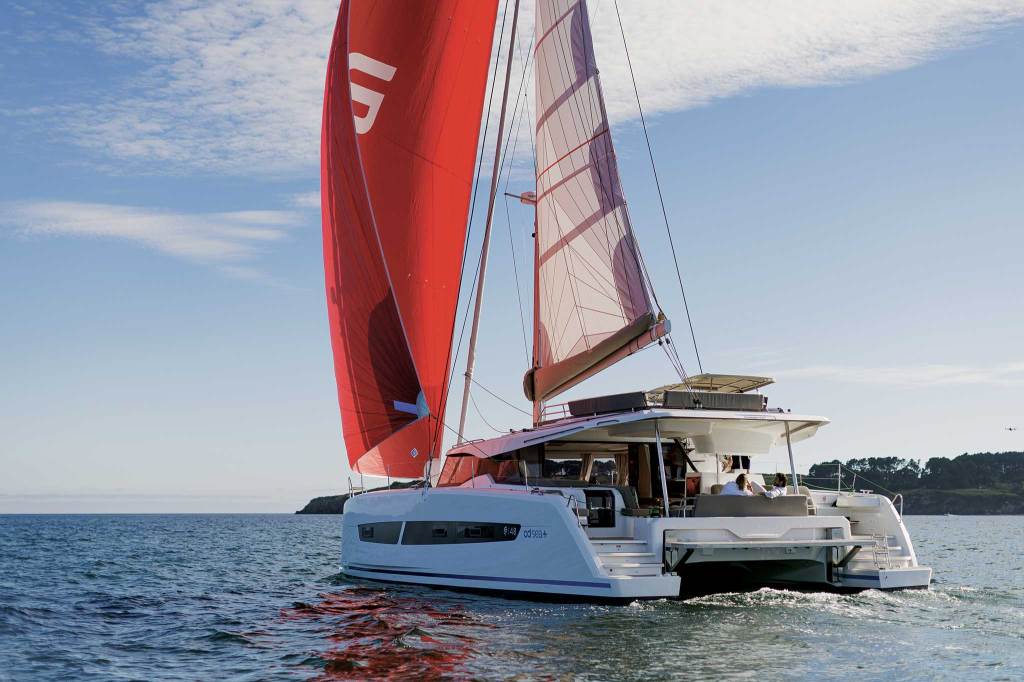
Fountaine Pajot 48
Fountaine Pajot has been on a mission to refresh its entire range in recent years, and the design brief for the 48 was to replace the Tanna 47 and Elba 45 with something more in keeping with the aesthetics on 41 and 44 that were launched last year, just with even more room.
This boat is all about the space to relax, and you can find a comfy spot in any amount of breeze or shade you want. Forward, there is a lounge space with storage built in beneath the middle of the bench and a coffee table over the windlass. The boat does have small trampolines, but they can be swapped for additional solar panels if desired. Between this space, the generous flybridge lounge, and many reclining spots in the aft cockpit, there will be no shortage of places to stretch out with a book. One particularly popular one may be the optional port-side chaise lounge which faces aft and is outboard, taking advantage of the shade and excellent views. To the other the option of a plancha grill is available.
Direct access to the port side cabins can also be done from the aft cockpit, which may be the owners or a guest cabin, depending on the chosen layout. When configured with the “maestro version” this entire hull will be devoted to the owners, with a bed, office space, longitudinal dressing room, and head. There is also an option to shorten this space to make room for a multifunction cabin that can be for storage, private dressing room, or a children’s cabin. Finally, it’s also available in a five cabin “quintet” version, which has five cabins (one with bunk beds).
The helm is raised to starboard, and can be protected with the optional sunshade.
LOA 47’ 4” Beam 25’ 10” Draft 5’5” Displacement 39,021 lbs Sail Area 1,441 sq ft Power 2 x 45hp standard
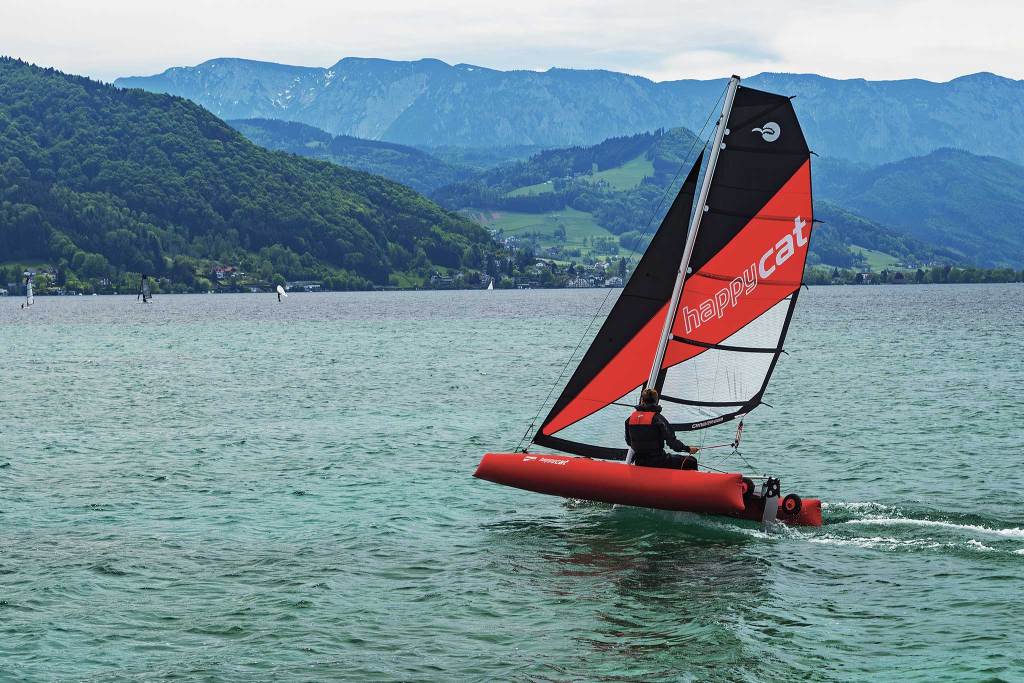
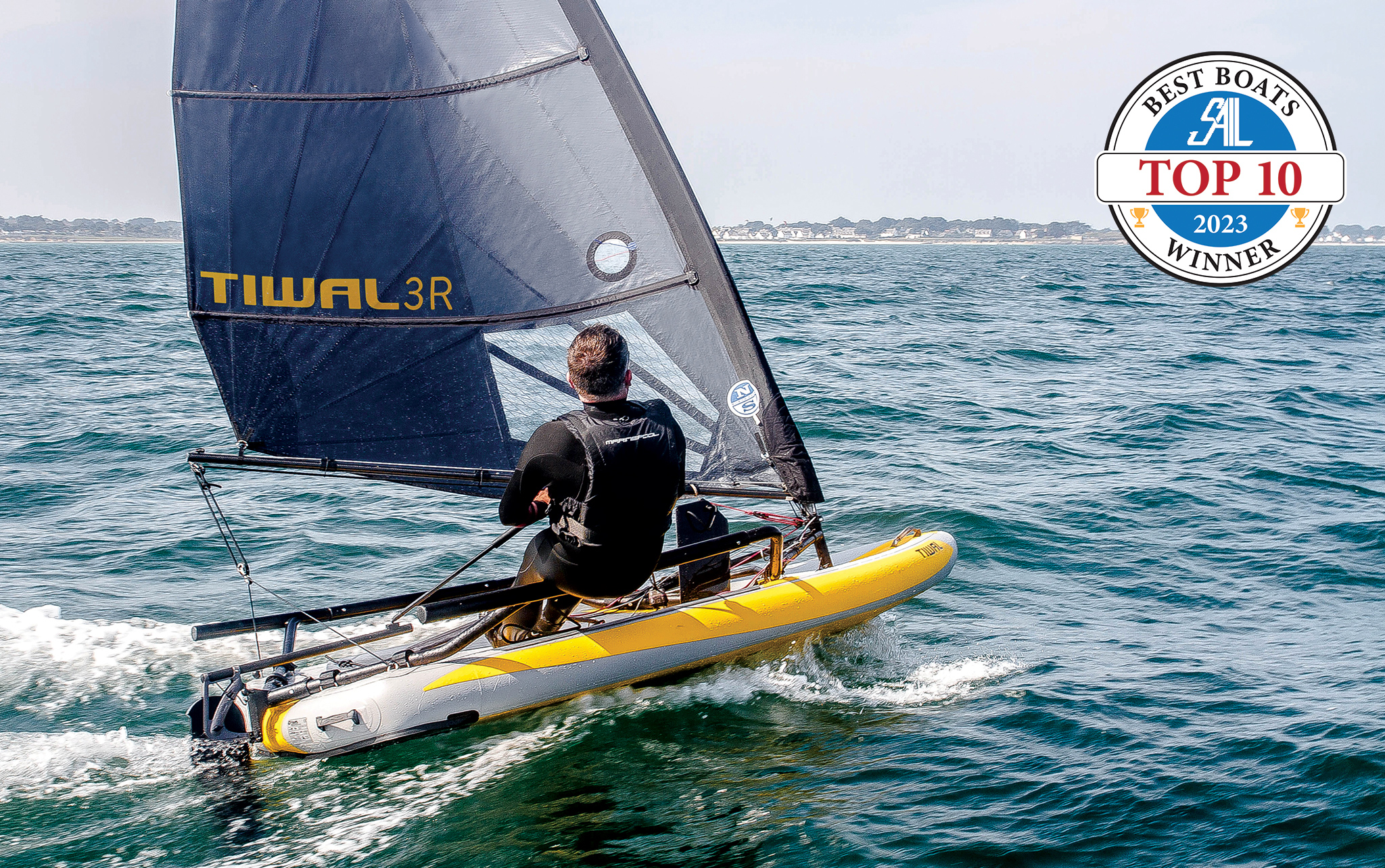
Happy Cat Star Mini
Hot on the heels of last year’s sporty Happy Cat Star, Grabner has rolled out the Happy Cat Star Mini, which takes almost two feet off of the already diminutive LOA of this inflatable.
The boat could, in concept, fit three adults and a child, but it’s really optimized for solo sailing. Wave-piercing bows reduce drag and have been cut higher on this model for easier gliding. The sterns have been rounded and raised for clean water flow. This boat isn’t for carrying cargo, but an integrated bow cover with a bag that can be zipped into place offers room for boat water-safe and dry bag storage.
The inflatables are made of EPDM rubber, which is resistant to wear and tear from grounding or dragging out of the water (though you won’t need to do this, as launching wheels affixed to the frame are a worthwhile option). The material is UV resistant, and Grabner suggests it can last several decades if cared for. If something does happen, a puncture can be repaired. The boat is free from PVC and phthalate plasticizers.
The Star Mini breaks down into three bags that can be easily transported in a car (or as oversized luggage on a plane if you’re feeling ambitious) and takes a little over 30 minutes to be seaworthy, making sporty sailing easy and accessible from anywhere
LOA 13’ 8” Beam 7’ Draft NA Displacement 130lbs Sail Area 97 sq ft Power 3hp (optional)
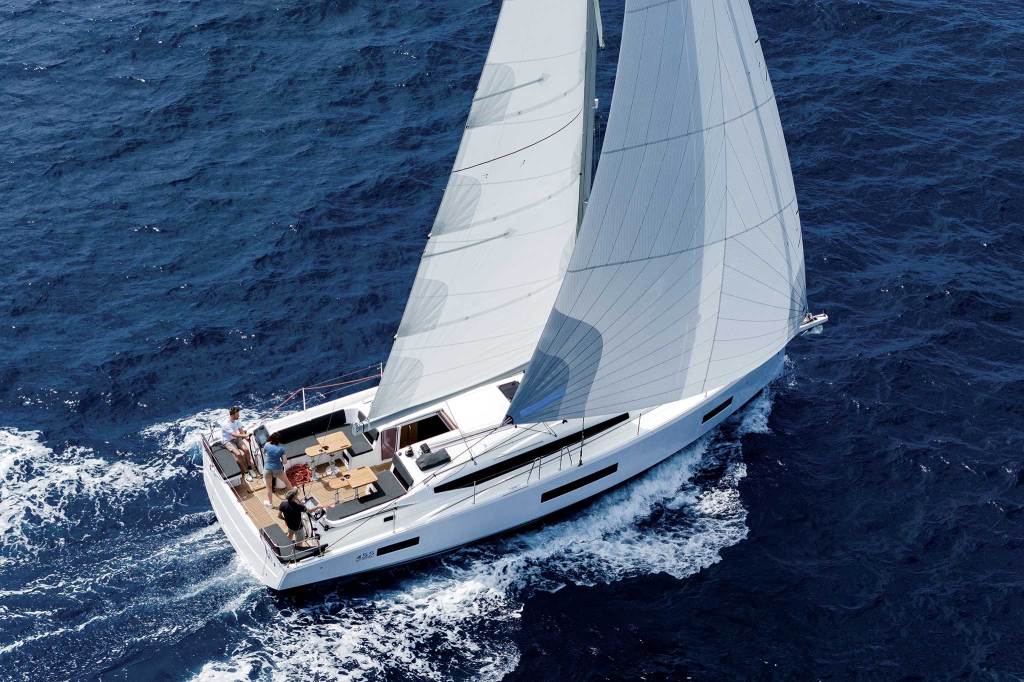
Jeanneau Sun Odyssey 455
The hull mold is new for this boat, but the lines are familiar; Sun Odyssey 455 is pure Jeanneau DNA. The deck layout features walk-around side decks and twin helms aft of the large cockpit. There are four winches in the four corners of the cockpit, and the two aft have been placed inboard of the helms, serving a small, transverse bank of clutches. This keeps trimmer and spaghetti both safely in the cockpit.
Four different layouts are available for the Jean-Marc Piaton-designed interior. Remarkably, this includes a four cabin, four head version, which makes some significant trade offs for storage space but will maybe make sense on charter. For owners looking to do long range cruising, the three cabin two head option will be more suitable as it has a pantry, and if an extra berth is really needed, a pullman berth in place of one of the aft heads is also an option.
The c-shaped galley to starboard offers a good amount of space to work in and a clever extra brace panel will be useful to the chef. The aft side of the counter makes for a designated nav desk. A dinette that supposedly can seat 10 is to port.
LOA 41’10” Beam 14’ 8” Draft 7’9” / 5’9” (standard/shoal) Displacement 24,864 lbs Sail Area 1,109 sq ft / 1,128 sq ft (standard/performance) Power Yanmar 57hp
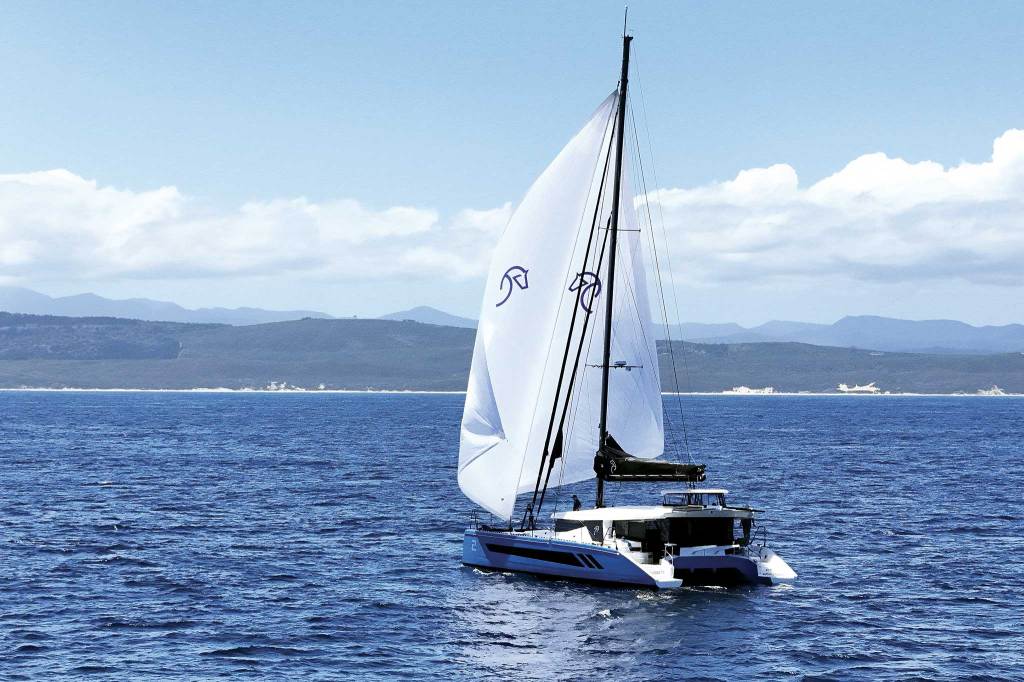
Knysna 550
A relatively uncommon brand in the United States, Knysna Yacht Company was founded in 2002 by Kevin Fouché and is located on the shores of South Africa’s Knysna Lagoon.
The company is named for the “delicate in appearance yet astonishingly resilient” knysna seahorse, which makes its home in the lagoon. Knysna Yacht Company has adopted that ethos for their boats, aiming for beautiful designs capable of weathering any conditions. They have limited runs of each boat, focusing on output quality over expansion. Because each boat is custom made in their boutique yard, full customization is possible.
Designed in collaboration with VDS Marine Design, the 550 is a blue-water cruising cat available in a 550SL (Sky Lounge) and a 550SE (Solar Explorer) models which add seating aloft on a flybridge and a solar package respectively. The 550 is kitted out with everything you could need for long range cruising in comfort, from air conditioning to an ice maker. Three or four cabin layouts are available. The interior is stylish and spacious, following a similar floor plan to several of its contemporaries, but bar stools around the large galley are a nice touch, making the chef part of the social center of the boat. The cabins are reasonably sized with upmarket finishes and good lighting.
LOA 57’ 10” Beam 29’ 9” Draft 4’ 11” Displacement 43,210 lbs Sail Area 2,031 sq ft (main and genoa) Power 2x 80hp
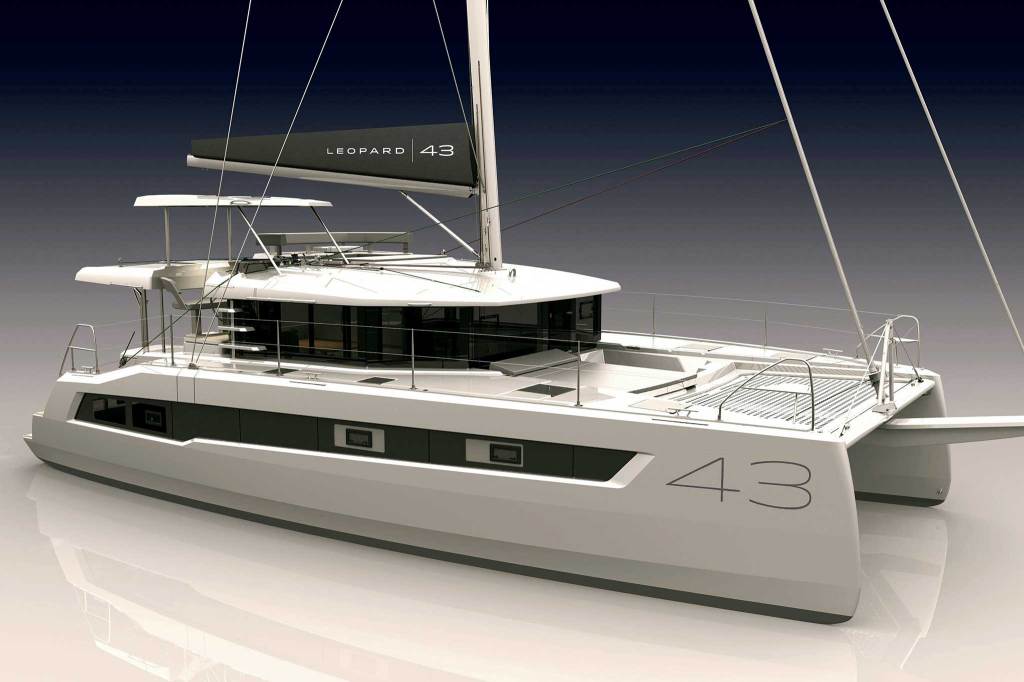
Leopard 43
Originally conceived as a cosmetic facelift to the popular 42, the Leopard 43 soon took on a life of its own with meaningful design upgrades. The 43 is billed as a sportier boat with wave piercing hulls and reverse bows to improve performance. The mast is three feet taller than on the 42 and can support 12% more upwind sail area, which makes for a more powerful boat that will still be able to move in a wider range of wind conditions. The solar capacity has also been increased. Still, comfort and aesthetics will always be core to the Leopard approach.
The cabins and salon feature the clean modern styling that Leopard has favored in recent models, and they have focused on large, unobstructed windows, doors, and movement pathways around the main living space. The 43 also has added an integrated step which makes loading up from the dock easier.
The helm is located to starboard and raised halfway between the main deck and the flybridge. A hard top above provides shade to the driver while those lounging on the flybridge will have to remember their sunscreen. The forward cockpit will be a nice hang out space with a double wide sun pad and a recessed seating area that will be appreciated when things start blowing around underway.
LOA 4’ 7” Beam 23’ 7” Draft 5’ 2” Displacement 32,470 lbs Sail Area 1,354 sq ft Power 2x Yanmar 45hp
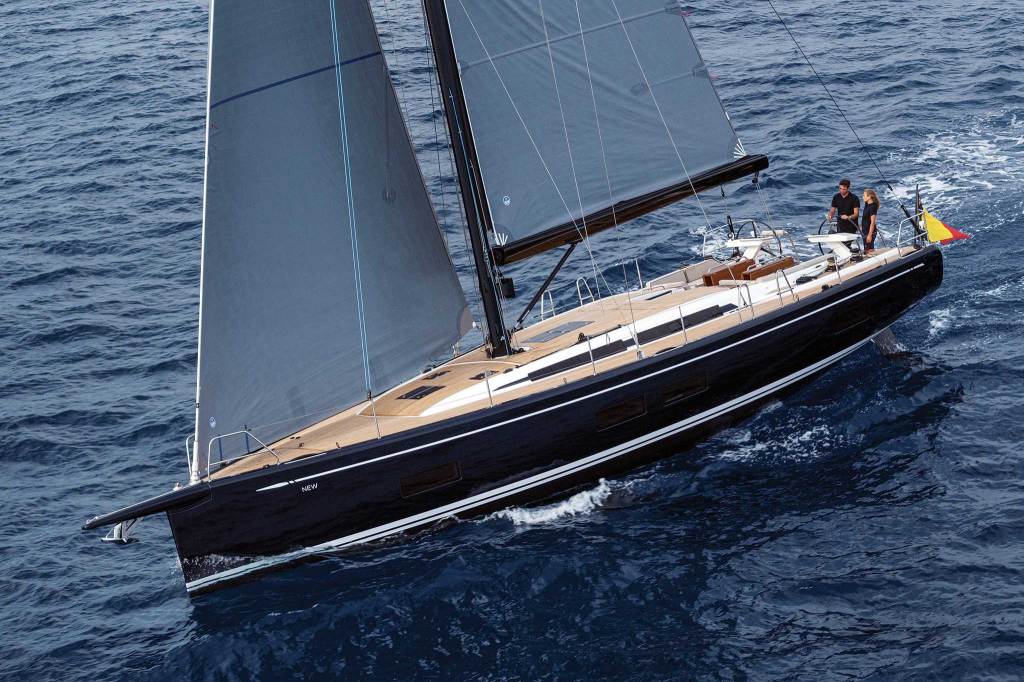
Nautor Swan 51
The latest from the 44-year long partnership between Frers Naval Architecture and Nautor Swan represents something of a full circle moment for the companies. The first Swan that Germán Frers designed back in 1981 was also a Swan 51 and the beginning of a partnership that would launch over 700 boats.
Over the years, the design brief has evolved, but the 51 is still a Swan right down to its DNA, with the pure sailing experience at its core, “more a sportscar than a limousine,” as the company says.
To that end, pains were taken to design a hull shape that balances volume distribution with performance, and three different deck configurations and sail plans help each model suit the owner’s specific needs—Cruise, Comfort, and Sport.
The first is a straightforward 1,500 sq ft sail plan, while the second moves towards comfort features like a cockpit protected via an arch for installing canvas. The main sheet track is also moved to the top of the arch, out of the way of the cockpit, and in mast furling and a self-tacking staysail make sailing as simple as possible. In Sport mode more options, including a taller carbon fiber mast and running backstays, are available. Twin rudders help the boat remain grippy when on its ear and reduce the draft, making shallower anchorages accessible.
Heading below, the L-shaped galley is to port with a head to starboard and salon table and settee forward. Opposite the settee is the option for a bench seat or a clever desk area, which will act as a chart table. The owner’s cabin is in the bow with an ensuite head and ample storage space, and two guest cabins aft can include two single, one single, or double berths.
LOA 55’ 5” Beam 15’ 11” Draft 8’/6’ 10” Displacement 39,683lb (lightship) Sail Area 1,583 sq ft Power Yanmar 80hp 58.8kW saildrive
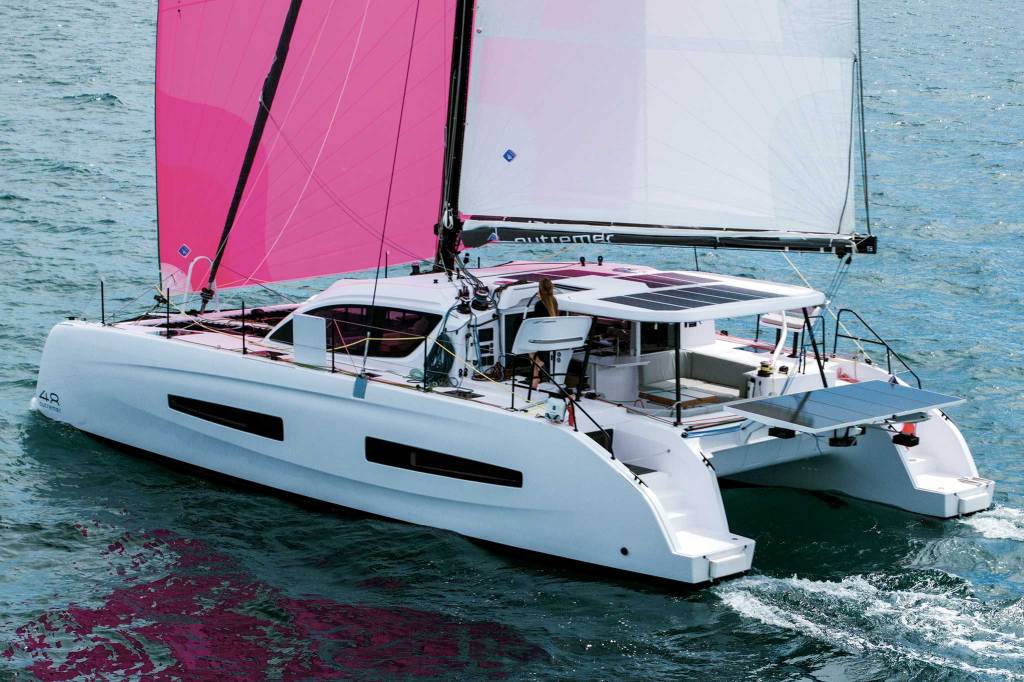
Outremer 48
The French catamaran brand Outremer returns to the new boat game with the Outremer 48, a model that aims to blend comfort with performance in a reasonably sized package. VPLP’s design brief for this boat included getting as much living space as possible while keeping the boat under 15 meters (or 50 feet) overall.
The signature helm station devised for the bigger boats in this line, the 52 and 55, has been adapted for the 48. This features a double bench seat raised to the height of the side decks to port meaning that the driver has good visibility without being totally exposed or adding the extra weight aloft of a flybridge home station.
Inside the salon visibility has also been a priority for the designers with numerous windows in somewhat organic shapes that keep the boat from feeling austere. The galley is in the aft section of the salon with the adjustable table and seating to port and a well outfitted nav station to starboard. A built-in swiveling chair ensures that standing watch inside is comfortable. The boat itself has 10 different layout options resulting from several possible uses for the forward port cabin, including a single, double, or triple cabin, office space, a workshop, or children’s cabin.
When it comes to performance, Outremer has a reputation for both speed and seaworthiness. They have lowered the boom on this model, increasing sail area, lowering the boat’s center of gravity, and allowing for easier access to the main sail. Outremer has also opted for somewhat narrow hulls despite the effort to maximize living space aboard the 48. This is no cruise ship, and the sailing performance will almost certainly benefit from a more svelte shape. Manufacturers report that the boat should be able to sail at wind speed in light air.
LOA 48’ Beam 24’8” Draft 4’2”/7’ 5” Displacement 23,150lbs / 31,990 lbs Sail Area 1,300 sq ft (main and solent) Power 2x38hp
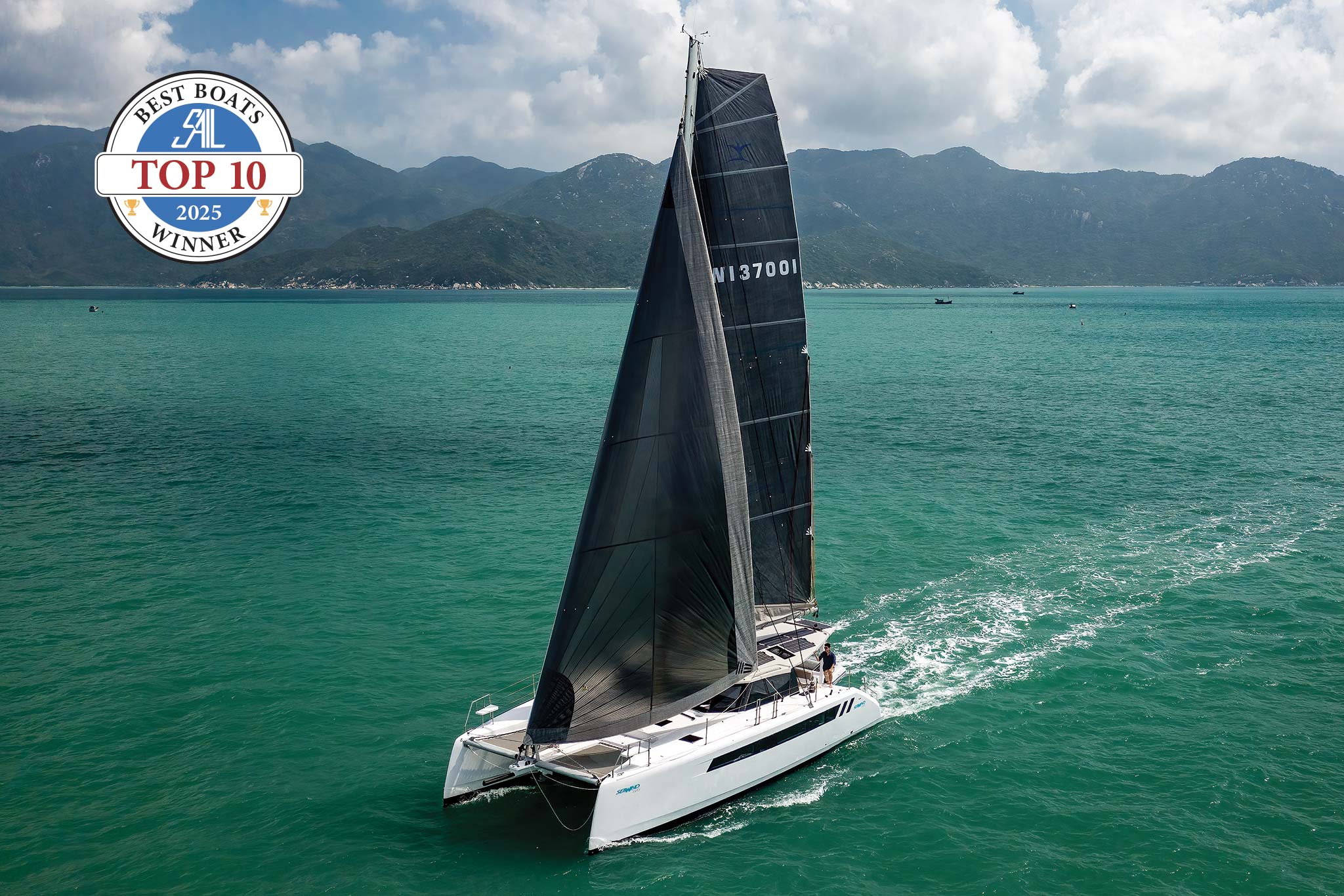
Seawind 1160XL
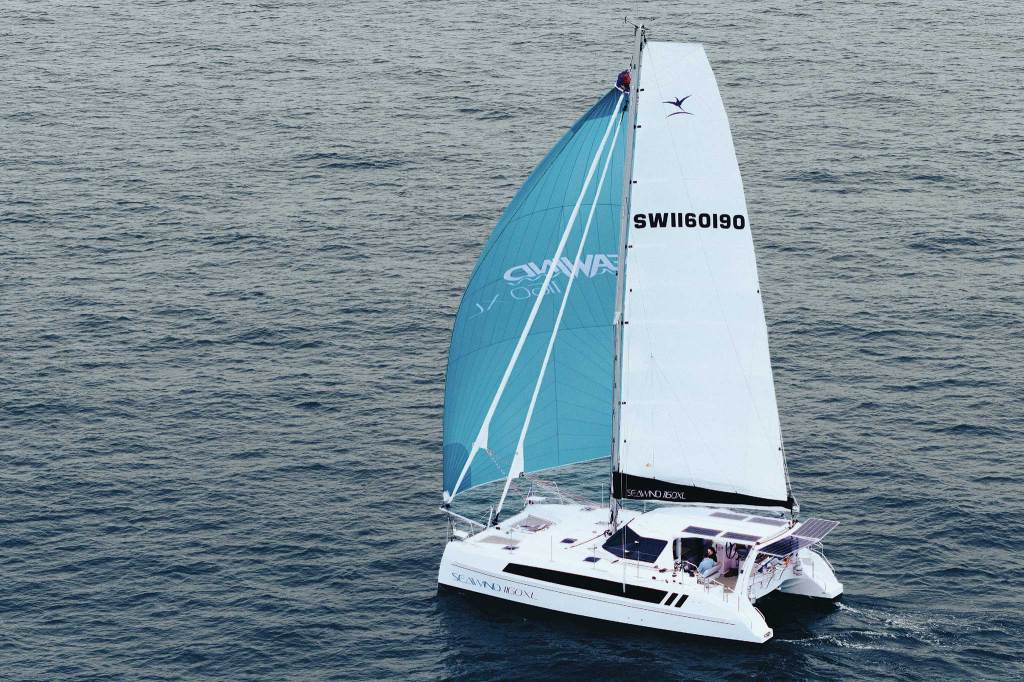
The Seawind 1160XL is an update to one of the brand’s most popular models, the Seawind 1160. The main difference, as the XL designation suggests, is that the refreshed version offers more space and light than the previous one. (A “LITE” version was also launched in 2014.)
The boat is specifically designed with first-time cat owners in mind, and so the boat has been made for ambitious dreams on an unfussy platform. It is ISO Category A certified for ocean-going, and the team brought in Stuart Bloomfield to co-design the reconfigured hull shape. They have increased the beam and raised the freeboard to make more space onboard, improve the stability, and keep the boat comfortable. This has also made the sidedecks wider, and Seawind has beefed up the lifelines to further improve safety.
It wouldn’t be a Seawind without their signature tri-fold door, which turns a fully enclosed salon into a wide open indoor/outdoor space with a little origami. Unlike many of the other catamarans in the Class of 2027, the Seawind 1160XL has twin helms located symmetrically across from each other in the aft cockpit, just far enough outboard for the helmsperson to peek around to the sidedecks. Inboard or outboard engines are both available.
LOA 38’ 10” Beam 21’ 6” Draft 4’ 3” Displacement 17,196 lbs Sail Area 936 sq ft (main and jib) Power Yamaha 25hp High Thrust Duo Prop
Vaan R4
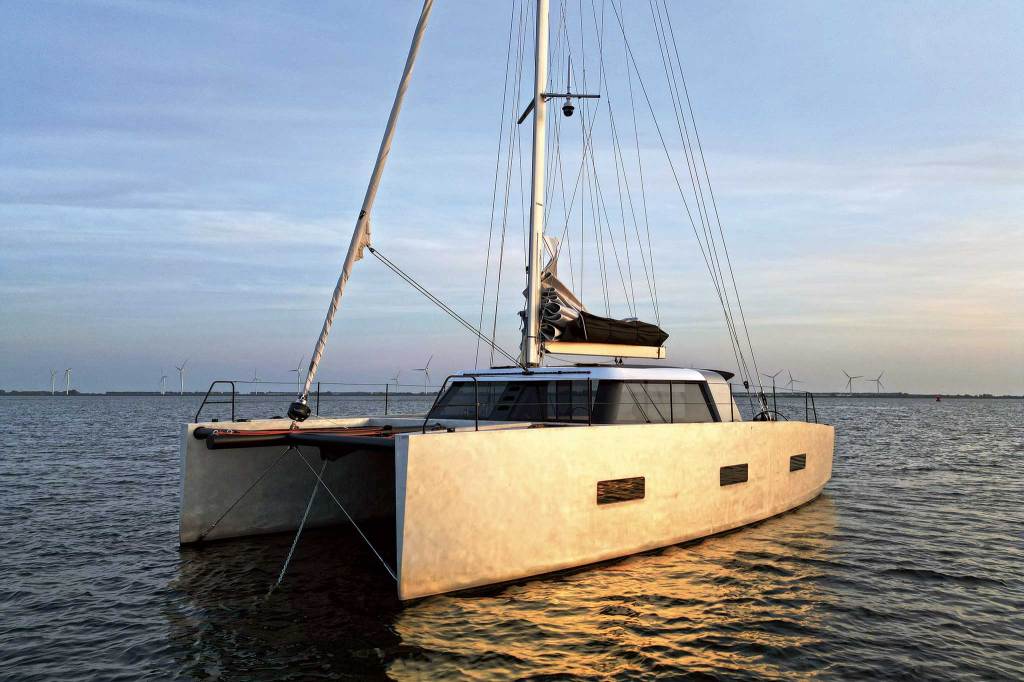
The Vaan R4 is marketed as the “ultimate deck salon,” designed for sailors looking for an easy to handle boat that will fit in any marina. The R4 is the smallest of the Vaan range, which has four models now and is bookended on the other side by a 78 footer.
The R4, and indeed all of the Vaans, were designed for nature lovers. Focus has been given to creating the sensation of being immersed in the wind and waves. Sustainability is also central to its production and usage. This means that the boat is all electric from the cooking to the propulsion to the design, which makes space for extra large battery banks with solar panels and hydrogeneration to feed them. (A backup generator can be added for extra assurance.) They have also focused on using materials that have a circular life cycle and can be repurposed. The hull is made out of recycled aluminum, the decking is cork, and the interiors use recycled fabrics and FSC certified wood.
The rugged aluminum hulls give it a somewhat industrial, workmen like appearance from the outside, which is amplified by the blunt, squared off bows. Dual helms placed at the aft end of each hull allow the driver to be on the same level as social action while still having good sight lines down the side decks and out over the water. The cockpit is also somewhat exposed, not having a hard top or fixed coachroof that would make the outside feel like inside. Instead, there is a removable bimini for when you want shade.
The port hull is dedicated to the owner’s space and includes not one or two but four full-width closets for storage. And despite having a designated owner’s hull, that doesn’t mean that the other one skimps on accommodations. There are a few options to starboard, which is also mostly devoted to one cabin with a few options like a sliding double bed aft, a single berth in the bow and multiple locations that the head can be placed.
The R4 was launched several years ago in Europe but will make its United States debut this fall.
LOA 42 ft Beam 23’ 3” Draft 4’3” Displacement 24,000 lbs Sail Area 914 sq ft (main and jib) Power 2x 15 KW electric motors (equivalent to a 2x 25hp combustion engine)
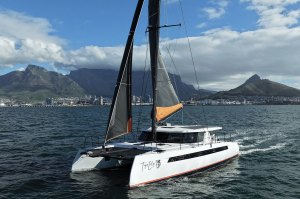
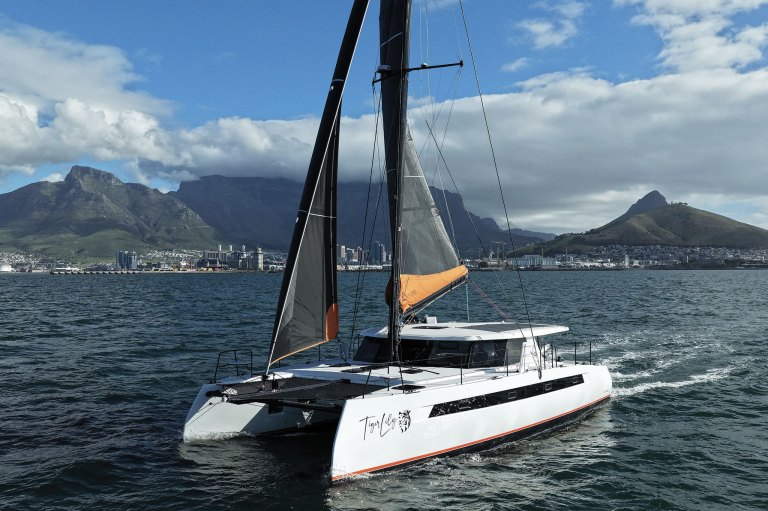
Voyage 510
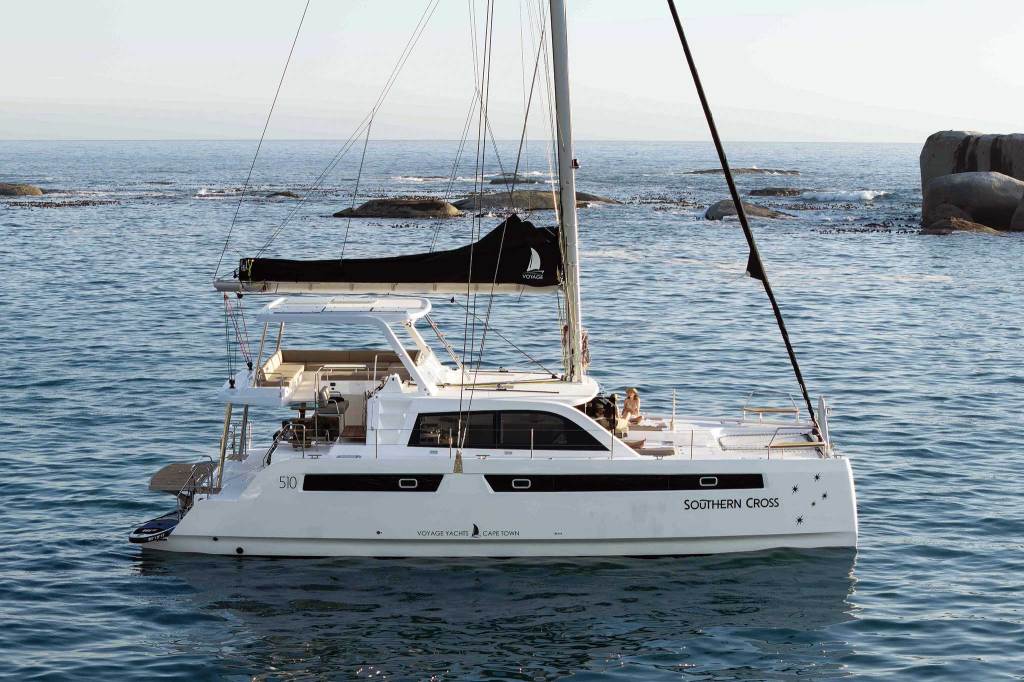
South African-based Voyage has been designing award-winning catamarans since 1994, though the 510 is only their second model released in the past decade. Voyage says the 510 is worth the wait.
The 510 has been designed with the dual ambitions of being fast and agile while also maintaining stability and comfort.The lines have been modernized since previous designs
It is rated Category A for Ocean going, with a 2,500 nm range. All lines are lead to the helm station, which is raised and to starboard. The mast is an aluminum single-spreader 7/8th fractional rig from Sparcraft.
The galley is well-sized with plenty of counter space and has a helpful railing to keep the chef from accidentally stepping backwards and taking a tumble into the hull. This does portion off a rather narrow area one side, but there’s plenty of other space to work from. The interior styling is a clean and minimalist white.
A forward seating area with salon access via a full height door features lounge space and a low table. The flybridge is spacious and protected by a low clear windscreen forward, which may save belongings from blowing or sliding overboard. An angled ladder allows access to the roof so that the boom can be reached.
LOA 51’ 10” Beam 26’ 11” Draft 4’ 11” Displacement 42,990 lbs Sail Area 1636 sq ft (main and genoa) Power 2x Yanmar 57hp
This article was originally published in the October 2026 issue.