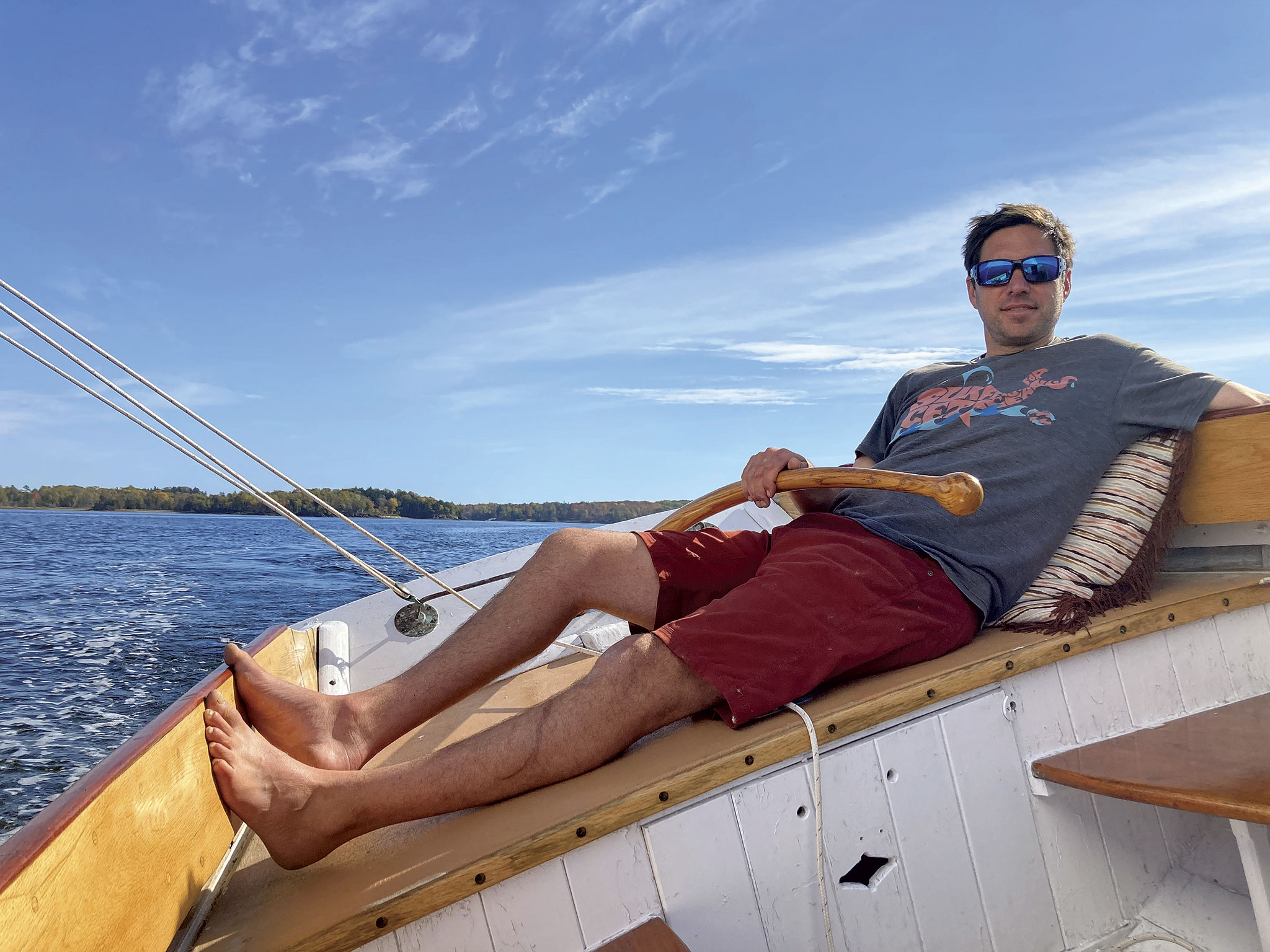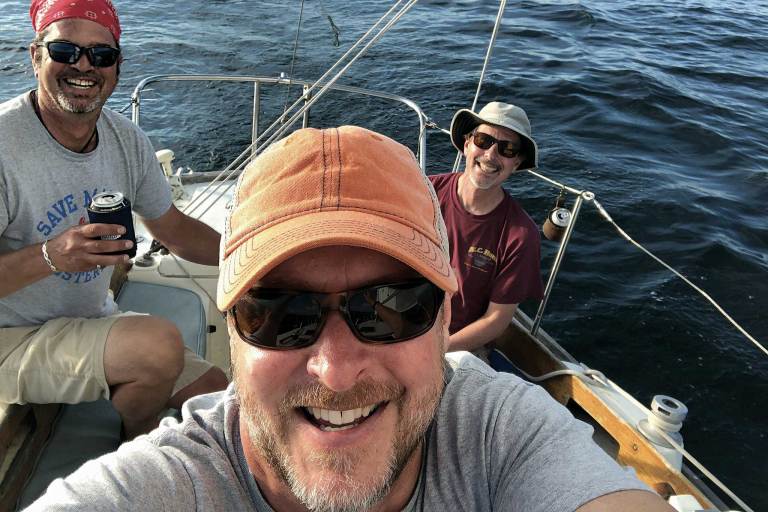
It was a gray and cold April morning in 2006 when Tim Fallon launched his 28-foot catboat Kathleen. Fallon, a software engineer from Wareham, Massachusetts, was worried about how she would sail. Were the historical documents and drawings he and the boatbuilders at the Beetle Cat Boat Shop had followed accurate? Fallon had opted for a tiller instead of a wheel, sacrificing some mechanical advantages for the steering method he was more comfortable with. Would there be too much weather helm on the boat as a result? How would he ever handle the 900-square-foot mainsail attached to the 36 foot 6 inch boom? The odds seemed to be stacked against him. Still, she launched with ease, and by July she was ready for her shakedown cruise.
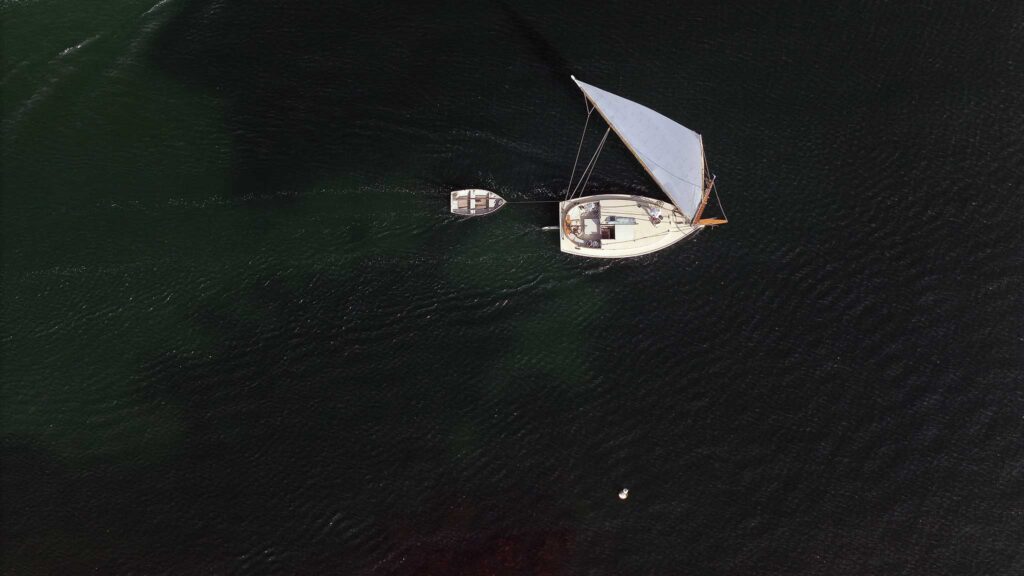
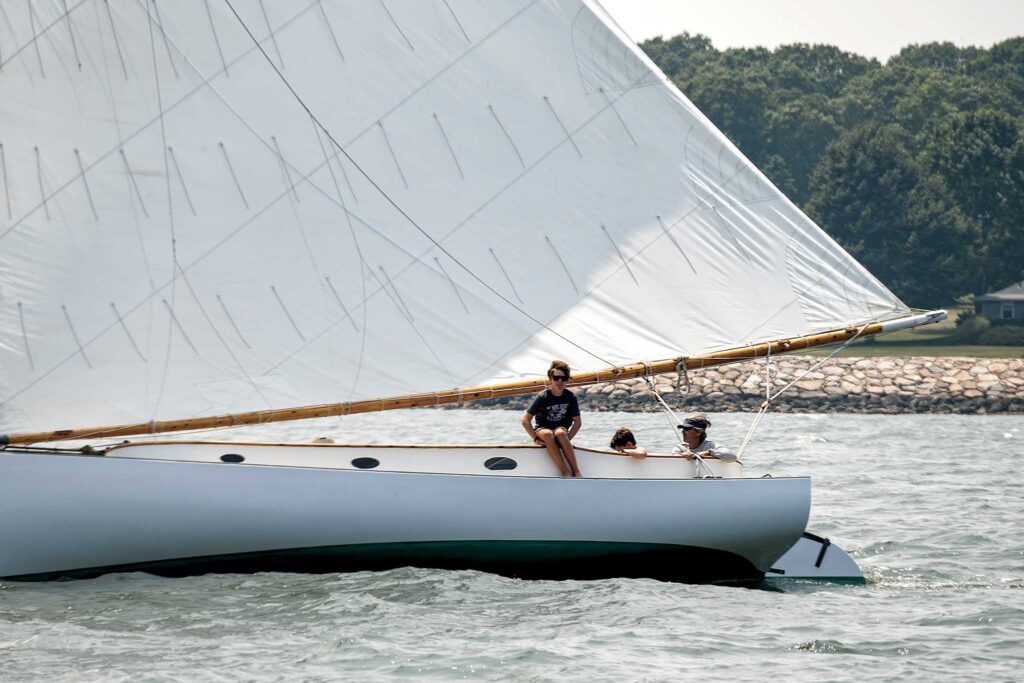
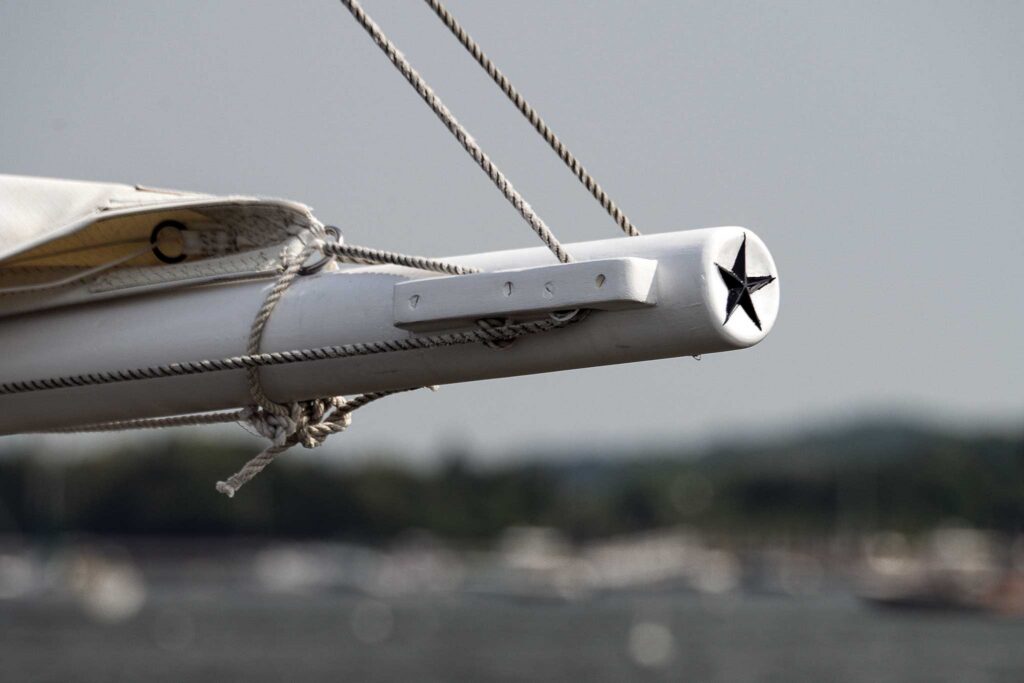
The wind was perfect on Buzzards Bay that July day, blowing around 10 knots, and the two-year process to bring the hundred-year-old C.C. Hanley design to life had finally reached its end. While some might wonder why Fallon would build a boat designed over a century ago when modern sailboats are on offer, it might make sense after seeing Kathleen sail. Her mast is stepped hard in the bow, and her gaff jaws are lashed with parrel beads riding the mast, just as they would have been in the 20th century. Her clean, white hull carries a sheer line that sweeps up to the bow, with a full, round entry that leans gently into the Cape Cod waters. A wide beam of 12 feet 4 inches reduces Kathleen’s heel as she sails upwind. And sail upwind she did when Fallon and his family took Kathleen for her maiden voyage that July.
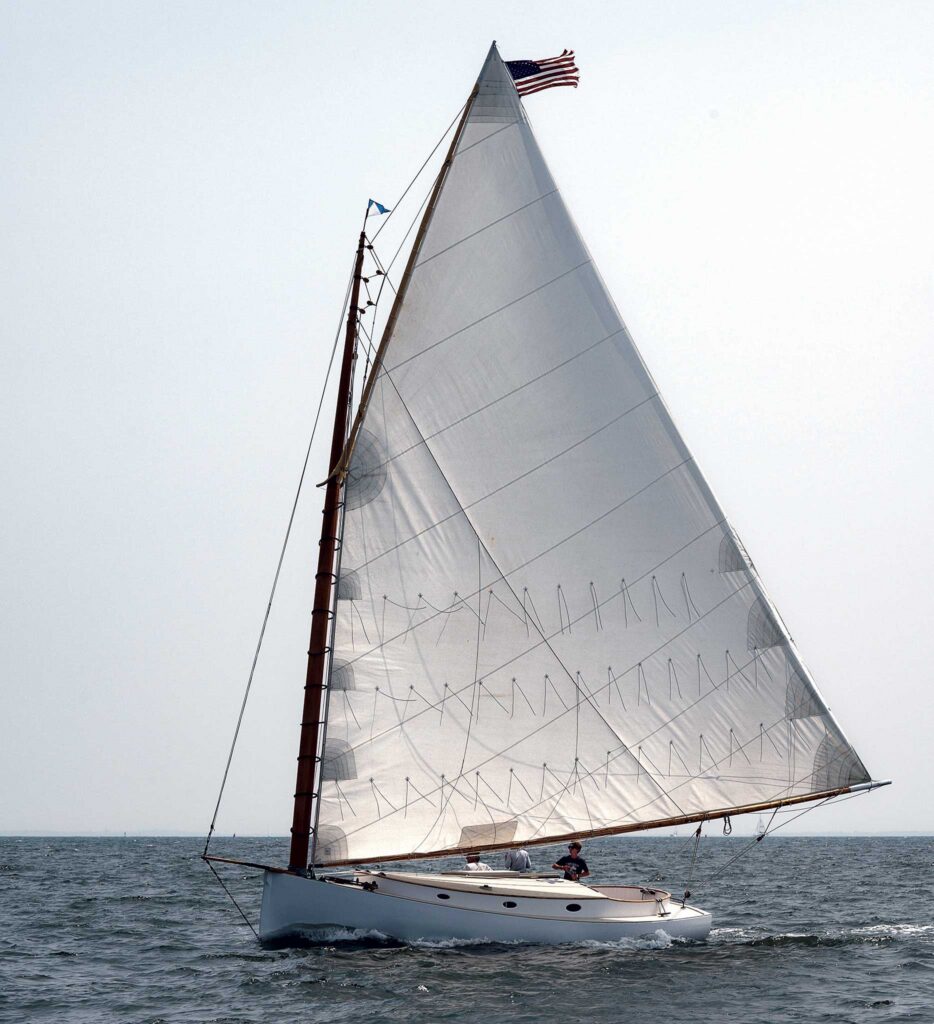
“We were hungry to go sailing,” Fallon said, recalling the day. She sailed fast, pointing right up and cruising as if she’d been doing it all her life. Though there were a few tweaks to be made and a large learning curve for sailing a catboat of that size, Kathleen was an undeniable success. Cruising the Cape Cod waters, Kathleen looked straight out of an antique photograph from the 20th century.
Fallon didn’t just set out to build any boat—he wanted a boat he could live on as a single man, a boat he could singlehand, and a boat that harkened to his childhood days spent sailing catboats off Cape Cod. And when looking at Kathleen, that legacy is abundantly clear. From her smooth lines to her boom and spacious cockpit, Kathleen is a nostalgic reminder of the extraordinary boat designs of the golden age of sailing.
Catboats first began appearing around Cape Cod in the 1850s, though Massachusetts and Rhode Islanders still dispute their origins and varying claims of the “first” catboat. Was it the catboat Una, built by Bob Fish in New York? Or were they an evolution of “Newport Boats,” as believed by L. Francis Herreshoff? Perhaps a long-gone relative of the Crosby family of Osterville, Massachusetts first “conjured them up,” as their old family tale goes. While it remains uncertain, the early designs that defined catboats have remained. A single mast forward with a gaff rigged sail, a spacious cockpit, a large rudder, and a wide beam are the elements that continue to prevail in catboat design today. Originally built for a range of marine duties in the 1860s including fishing, lobstering, scallop dragging, carrying freight, and transporting mariners, catboats also began to be developed as pleasure crafts. When a young man named Charles C. Hanley from Damariscotta, Maine, arrived in Monument, Massachusetts, the catboat began its evolution into the world of yacht racing.
While working as a blacksmith, C.C. Hanley developed an interest in boats and began building his first. A “rule of thumb” builder, Hanley would carve a half model out of wood and whittle it down until it looked right rather than penning the boat on paper beforehand. His boats were based on a one inch to one foot half models made of white oak with white pine plankings and brass screws for fastenings.
This was how his first boat, the 23-foot, 6-inch Eleanor, came to be in 1878, named after his first daughter. Through trial and error, Hanley continued to fine tune his designs, with early examples of his work including Surprise in 1884, Mucilage in 1888, Harbinger in 1889, and Almira in 1890. These catboats defined his design style, and sailors celebrated them for their speed, as they regularly won races against other top designers of the time. By the late 1800s Hanley’s catboats had become very popular among wealthier sailors. Sailors also coveted his boats because they couldn’t be replicated through traditional building plans, since Hanley did not pen his designs. However in 1917, one of Hanley’s former crews on Almira, Norwegian-born Erland Debes, published a story in The Rudder magazine about renovations to the boat. A 1919 story published in the same magazine showed a series of three drawings and the hull lines of a C.C. Hanley catboat done by Debes. Those plans, 107 years after Debes published them, became the basis for Kathleen. The question was how Fallon would bring her to life.
Like most people who decide to build a sailboat in their late twenties, Fallon came from salty roots. He grew up sailing beetle cats, including a Marshall 18, on Cape Cod during summers at his grandmother’s home. He loved it so much that he continued to sail throughout his teenage years, ultimately racing in college at Tufts University where he earned a degree in software engineering. After coaching sailing for a couple of years and working as a software engineer, he began to seriously consider living aboard a boat of his own. Unfortunately, the sailboats on offer didn’t pique his interest.
He also knew slip costs were determined by boat length. “I’m an engineering mind,” Fallon said, “So I was like ‘I just need a wide boat and I’ll get charged less for the same volume.’” A catboat fit the bill.
“I thought I had a lot of money. I didn’t have enough to build my own boat, but I thought I did,” Fallon said. “So I went down that path and didn’t look back. But I’m really happy that I did, in hindsight.”
As he dove into researching the boats that were formative to his sailing experience, he discovered the designs of C.C. Hanley. At an award ceremony for the fall Beetle Cat race series in West Falmouth, Massachusetts, Fallon approached his friend Charlie York, the former owner of the Beetle Cat Boat Shop in Wareham, Massachusetts. The new owner, Bill Womack, brought the boatbuilder Bill Sauerbrey onto the project. An adept builder, Sauerbrey had worked at Mystic Seaport where he learned to build wooden boats with the authentic techniques craftsmen used a century ago. John O’Donovan, another boatbuilder, joined the project as well.
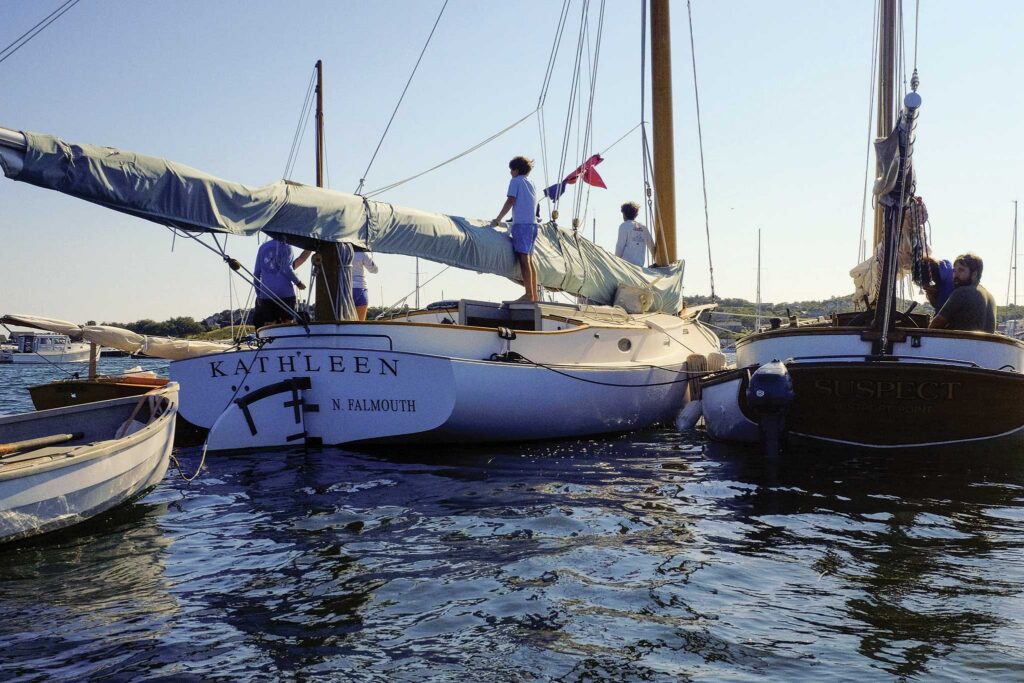
Nowadays, boatbuilders might employ modern building methods, but Sauerbrey nudged the project towards a more traditional approach. “[Sauerbrey] was like, ‘let’s just do exactly what they [C.C. Hanley and builders of the time] did as best we can, and that’s gonna be your best shot at getting a good boat,’” Fallon said. “Our mantra was, ‘let’s just redo what these builders of old had done because they knew what they were doing.’ ”
The following summer construction got underway. A hundred years prior, 28-foot oak trees would have been plentiful on Falmouth, but years of felling and deforestation had changed the landscape. Conveniently, Fallon’s uncle had a sawmill and received timber from Suriname, South America, for the Gannon and Benjamin boat shop. Fallon and Sauerbrey handpicked woods like Silverballi, Angelique, and Wana to use for Kathleen.
The team was struck by similar luck when it came to sourcing the spars. During the era of conservation sparked by the New Deal, a town forest full of red spruce trees had been planted. The town granted Fallon and Sauerbrey permission to cut down a couple of trees for the project. “We walked around the forest and picked out a boom and a mast out of a couple long, straight trees,” Fallon said. “It was pretty neat to go and pick one that was standing upright.” C.C. Hanley’s design required hollow spruce for the gaff, but out of necessity the team made Kathleen’s from carbon fiber.
For the most part, Fallon, Sauerbrey, and O’Donovan managed to build Kathleen just as Hanley had designed her. Still, they had to make a couple of changes. They built her keel two inches wider than Hanley’s design, to accept a shaftlog. The Crosby family of Osterville lent a “frame snake” to Sauerbrey that allowed him to curve the wood properly. You can really admire this curving in the aft sections of Kathleen and inside her cabin. Another deviation from the original Hanley design was that Kathleen’s sheet belays to a cleat on the cockpit coaming. All of these alterations added to the pre-launch anxiety that Fallon was feeling, but he trusted the experts. All there was left to do was learn to sail her.
This was one of the biggest challenges Fallon faced after she was built. In a 2013 presentation at the Herreshoff Museum, Fallon postulated that it would take at least ten years for him to be proficient at sailing Kathleen.
“One thing that we’ve learned is sailing without an engine actually makes you a better sailor,” Fallon said. Unlike the smaller catboats of his youth, Kathleen boasted a 910-square foot sail area and 36 foot, 6 inch boom, making standard moves like a jibe fairly tricky. During the same presentation Fallon explained the “wet jibe” maneuver that another catboat sailor taught him. With the mainsheet cleated he would haul in the sail, throw the excess main over the transom and allow it to trail behind the boat. As the sail crossed, he would release the main sheet, and the water created a natural resistance that slowly released the sail out onto the new gybe.
“It helps when you have two hundred feet of main sheet,” said Fallon.
Balancing the sailplan was another challenge that the team had to figure out. When you have two sails, you can trim the head sail and release the mainsail to bear away or do the opposite to turn upwind. That isn’t possible with just one sail. The solution was to release the peak halyard enough so that the sail was cut in half, into a triangle. This functions the same as pulling in the jib and releasing the main sheet on a sloop rigged boat.
Now, in her twentieth season, Fallon can confidently say he is finally proficient at sailing Kathleen.
Like the summers of his own youth, Fallon and his family will cruise around Cape Cod and its islands aboard Kathleen. They’ll travel down the Sakonnet River and through Buzzard’s Bay to dock Kathleen at the Wild Harbor Yacht Club while they vacation and spend time with family. Because Fallon has racing in his blood, Kathleen will also participate in a number of regattas, including Fallon’s personal favorite, the Pat West Gaff Rig and Schooner Race hosted by the Gannon and Benjamin boat shop. Local wooden boats gather for a distance race around Vineyard Haven Sound followed by live music and festivities ashore.
In years past Kathleen has dominated this race, beating out historic 65-foot schooners like Brilliant and Juno. Fallon recalled one race where Kathleen sailed to victory with his family aboard, boat lengths ahead of the schooners, singing songs and lounging in the sun.
“The folks out on the Vineyard, they’re big into schooners and they think that the catboat is kind of a lowly class,” Fallon said. “So it’s fun to go out and show people that ‘hey, catboats can actually be fast.’ ” Fallon’s sons, now fourteen and twelve, are in the thick of their Opti racing years. While it has cut into family cruising time a little bit, Fallon understands the obsession with racing. “We try to use Kathleen as a coach boat, but she’s not very good at that,” he laughed. Perhaps in the future, his sons will fall in love with catboat racing like he did.
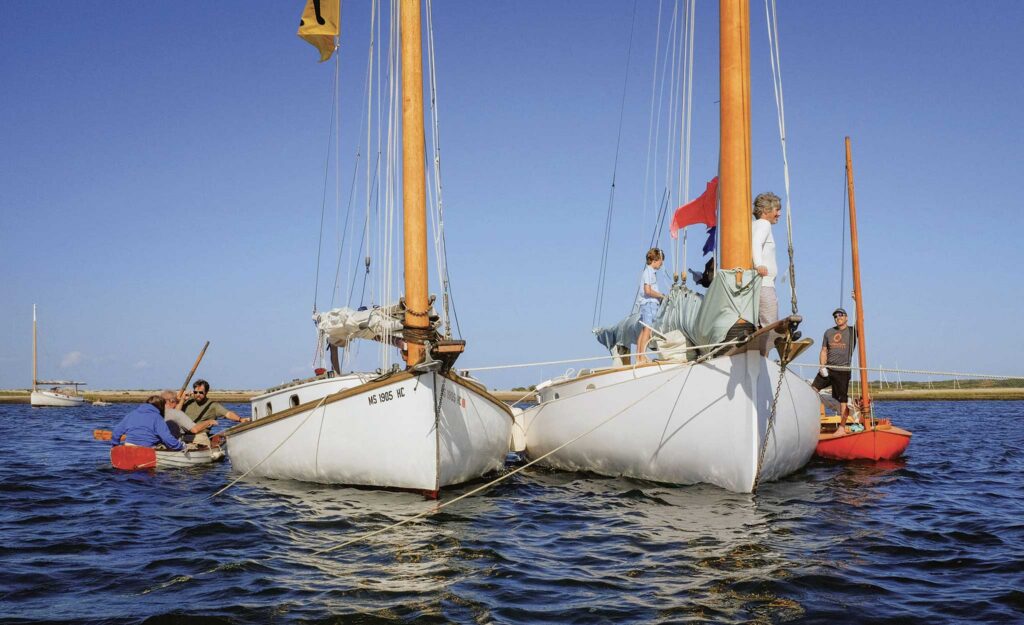
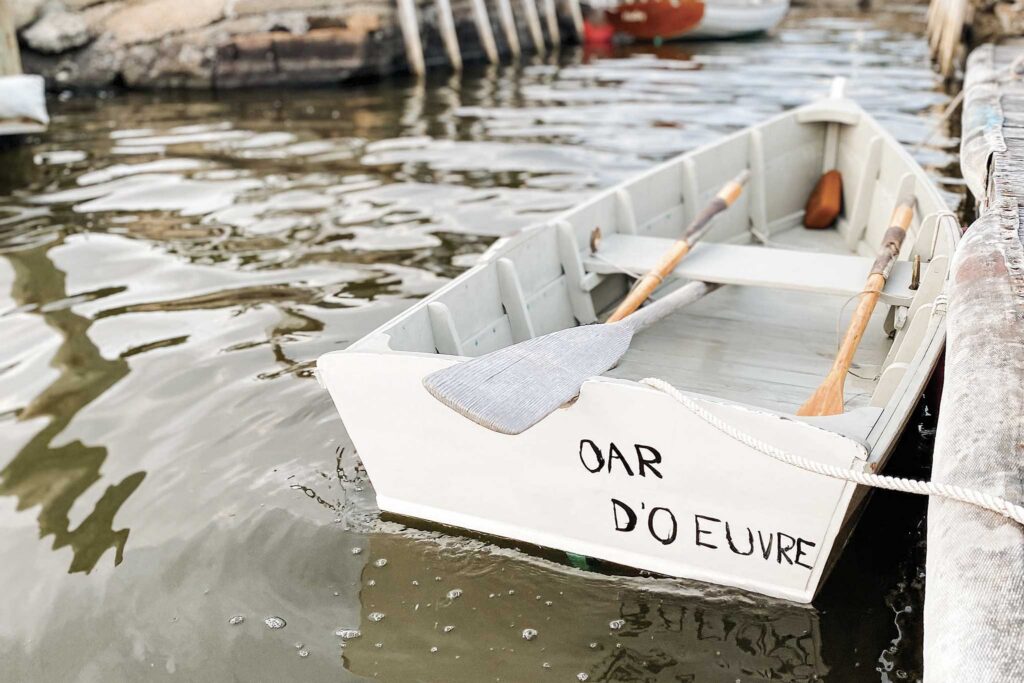
Kathleen also participates in various catboat rendezvous that take place around Cape Cod. They’ll attend the Padanaram rendezvous hosted by Marshall Marine and a number of others organized by the Catboat Association. The family also hosts an annual rendezvous aboard Kathleen herself off of Cuttyhunk, Massachusetts. Though it’s usually small, the Fallons love hosting the whole fleet aboard Kathleen for socializing. “Sometimes there’s a full boatload of people with a trail of dinghies back behind the boat,” Fallon said. “That’s a fun one.” At the end of the summer the Fallons cruise to Block Island, a family favorite for the beaches and bodysurfing—one last hurrah before the kids head back to school and Kathleen takes a rest after a long summer season.
Just a century ago, catboats were everywhere on Cape Cod, fishing, lobstering, ferrying, and working the water. Today, most of them are gone. Kathleen is not, and on a late summer evening running home ahead of the tide with a smiling family aboard and a long wake stretched out behind her, it isn’t hard to understand why.
Beetle Cat Beginnings
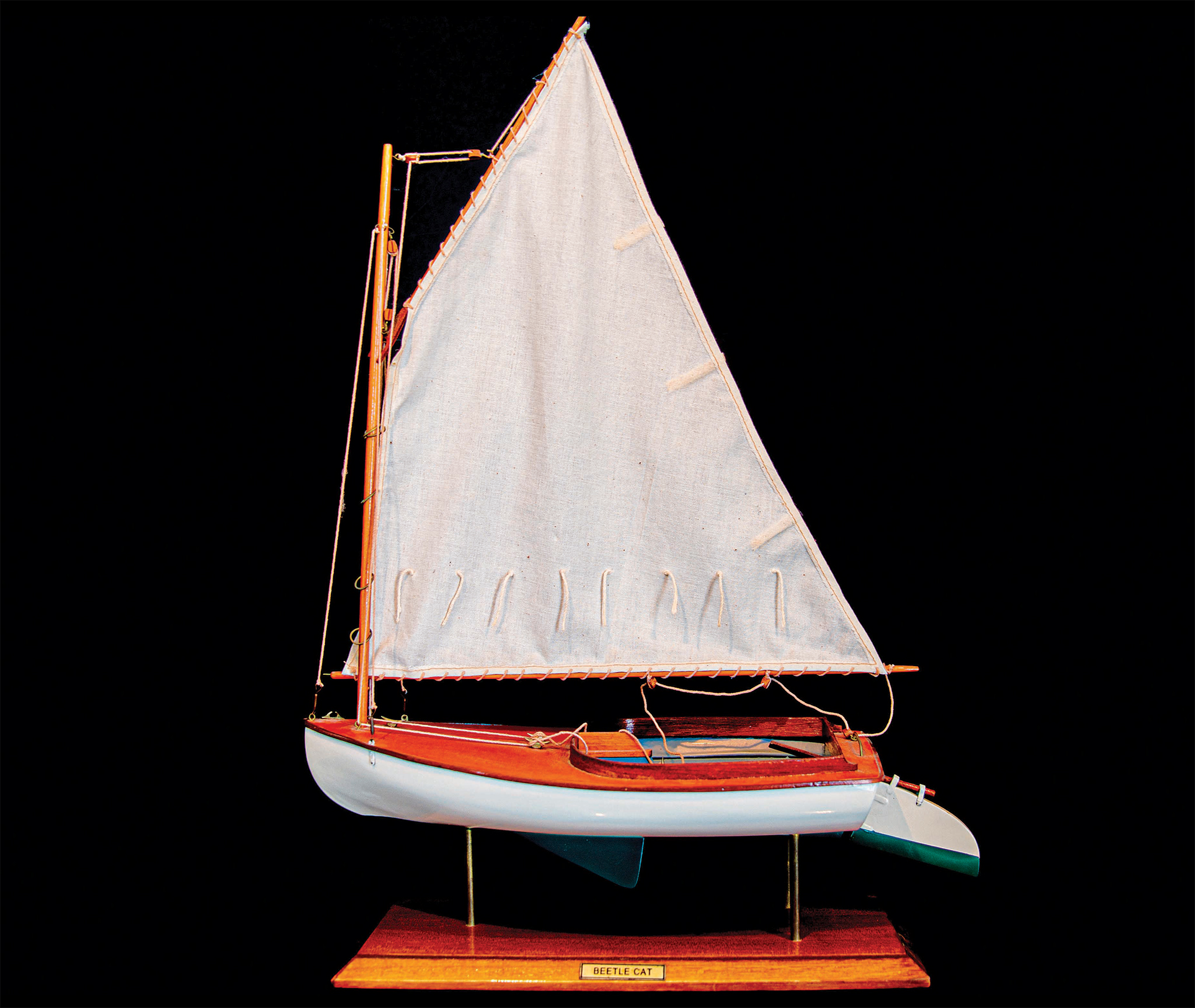
In the early 1920s, John Beetle set out to build a sailboat with his son Carl that would eventually become the Beetle Cat boat. The original boat was small, just twelve feet long, made of wood and gaff rigged. The Beetle family had been famous for their Beetle Whaleboats, but the demise of the whaling industry allowed them to focus on producing Beetle Cat boats instead. Beetle headed the boat shop until he died in 1928 and his daughter Ruth took over. According to the New Bedford Standard Times, Ruth was the only female shipwright in the United States at the time. During World War II, Ruth and her brother Carl sold the rights of the Beetle Cat to the Concordia company in Dartmouth, Massachusetts. There, Leo Telemanick led the building of new Beetles and made a few changes to the design to ensure uniformity of the hulls. Charlie York took over as master builder in 1993, and most recently sold the shop to Bill Womack in 2003. More than a century since its inception, the Beetle Cat continues to withstand the test of time. Some even consider it to be the one design with the longest continuous production history. The Beetle Cat Boat Shop sustains that legacy and loyalty through its commitment to wooden boats, plank-on-frame construction, and the highest levels of craftsmanship.
This article was originally published in the June 2026 issue.