The critically endangered right whale has been a focal point for conservation efforts for decades, and with boat strikes being one of the major threats to their population, sailors have a vested stake in the efforts to protect them.
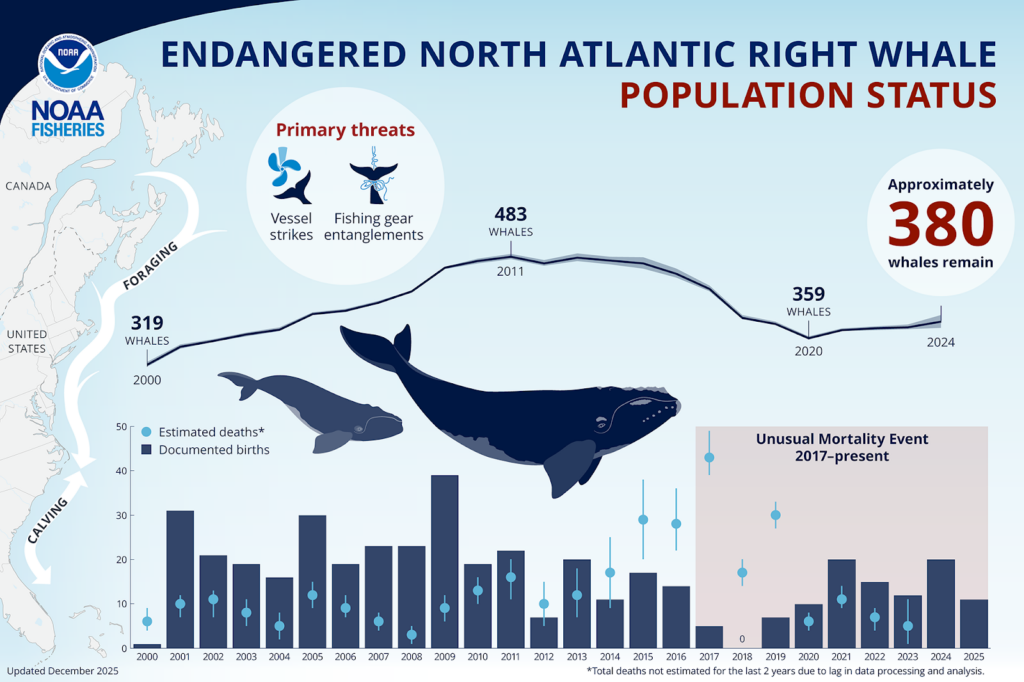
Many of these whales migrate up and down the eastern seaboard each year, from Florida as far north as Canada in search of feeding grounds. In the colder months, most will have traveled far south for calving off the coast of Florida and North Carolina. This season, 22 calves have been reported, marking the highest number of documented young since 2010.
The efforts to track these whales in the southern calving grounds have also identified nearly 70 other individuals, or a quarter of the surviving population. Many of these whales are pregnant females or females with vulnerable calves who spend more time close to the surface than these whales typically would, meaning that it’s especially important to be aware of regulations when transiting these waters.
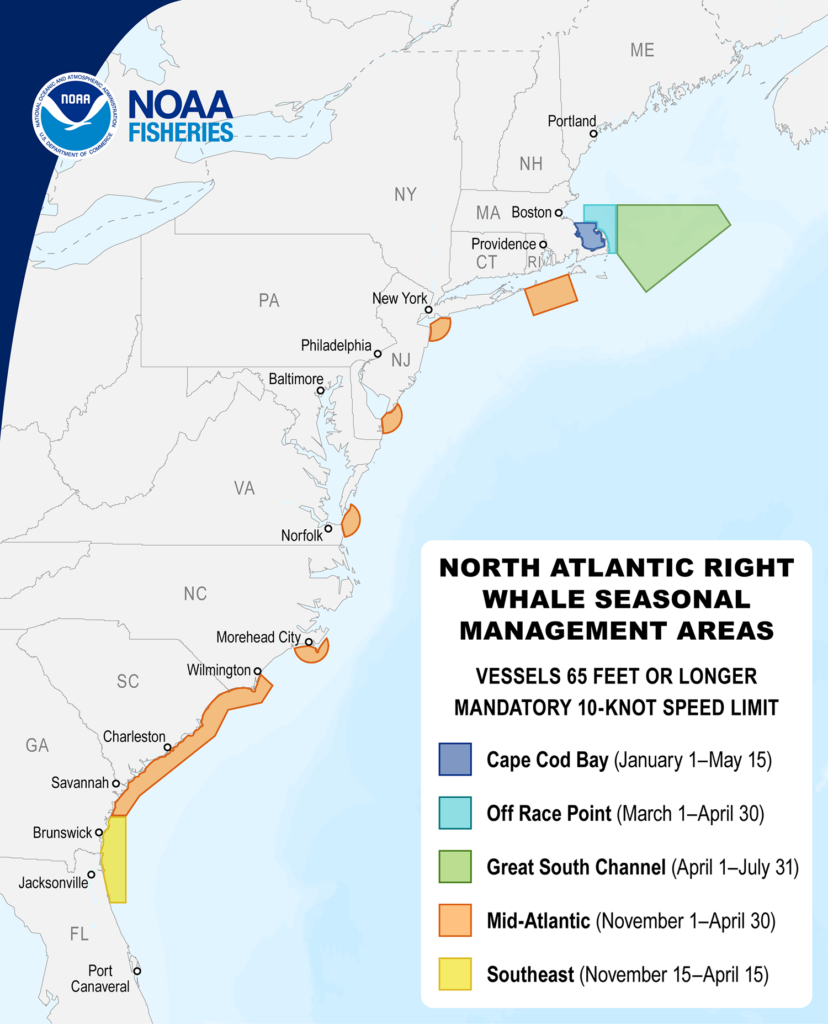
So what do you need to know? First, in Seasonal Management Areas, most vessels 65 feet or longer must travel at 10 knots or less. Currently, the Cape Cod Bay, Mid-Atlantic, and Southeast Seasonal Management Areas have speed restrictions for larger crafts, but a smaller vessel can still cause serious harm.
When cruising in these areas, keep a careful lookout for marine mammals. Sightings from North Carolina to Florida should be reported at (877) WHALE-HELP/(877) 942-5343 and from Maine to Virginia at (866) 755-6622. Right whale sightings in any location can also be reported to the U.S. Coast Guard via channel 16. It is illegal to be within 500 yards of a right whale.
For more information on what you can do to help Right Whales, click here.
February 2026