Belgian climate activist Adélaïde Charlier and several of her peers have been eschewing travel by plane for years. “I know leaving my seat empty doesn’t help the carbon footprint of a plane that’s going somewhere anyways,” she says, “but an empty seat can start a conversation.” So, when the idea of arriving at this year’s United Nations Climate Conference by boat came up, she began strategizing about how to make it happen.
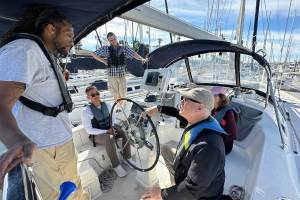
From the get-go, the Women Wave Project was a long shot. Finding a boat, financing, crew, and getting all the paperwork squared away was nearly a year’s work. Six activists, none of whom had much sailing experience, signed on: Charlier, Lucie Morauw, Camille Étienne, Coline Balfroid, Miriam Toure, and Maïté Meeus. They knew they would need help, and enlisted five sailors, including SAIL‘s Lydia Mullan, to teach them during the two legs of the journey.
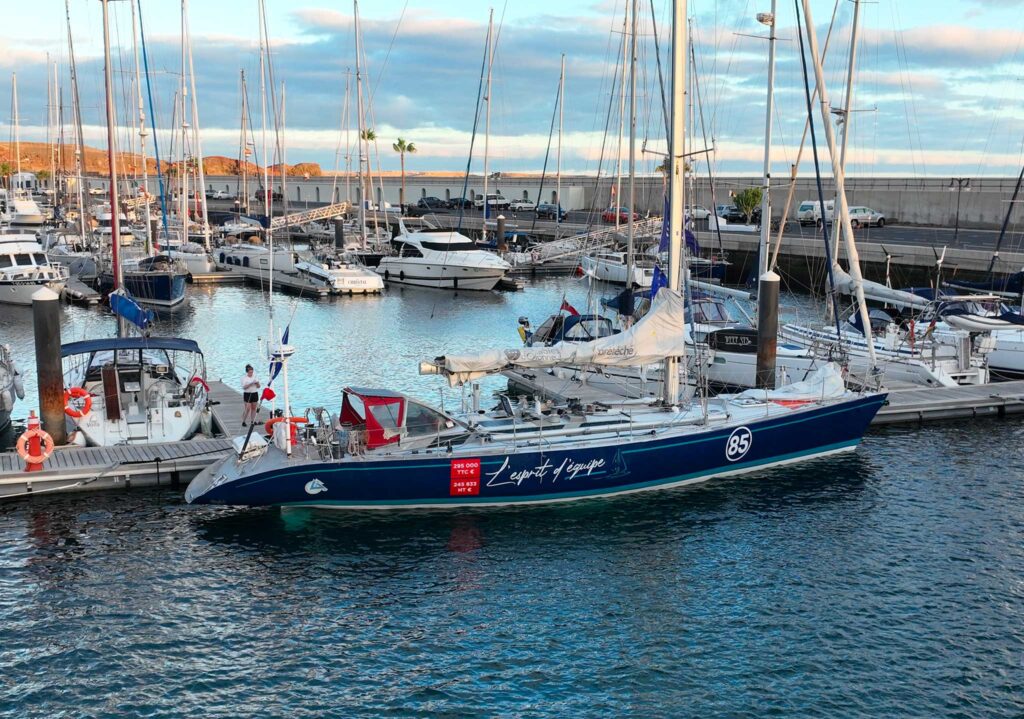
Adding more interest to the scheme, the project secured the 1985 Whitbread Round the World Race winner L’Esprit d’Équipe for the journey. The boat had everything from pedigree to personality, and had recently proved itself in the Ocean Globe Race. The only catch? There was no autopilot.
For over a month cumulatively at sea, the all-female crew hand steered from Saint Nazaire to Lanzarote in the Canary Islands, and then across the Atlantic to Belem, Brazil. They faced squalls gusting over 35 knots, extreme heat, and rough seas along the way. But the conversations flowed, the music only stopped when the speakers needed to charge, and the French cooking didn’t hurt either (if there’s been a sailor who’s made butternut squash ravioli from scratch Mid-Atlantic before, we haven’t heard of them).
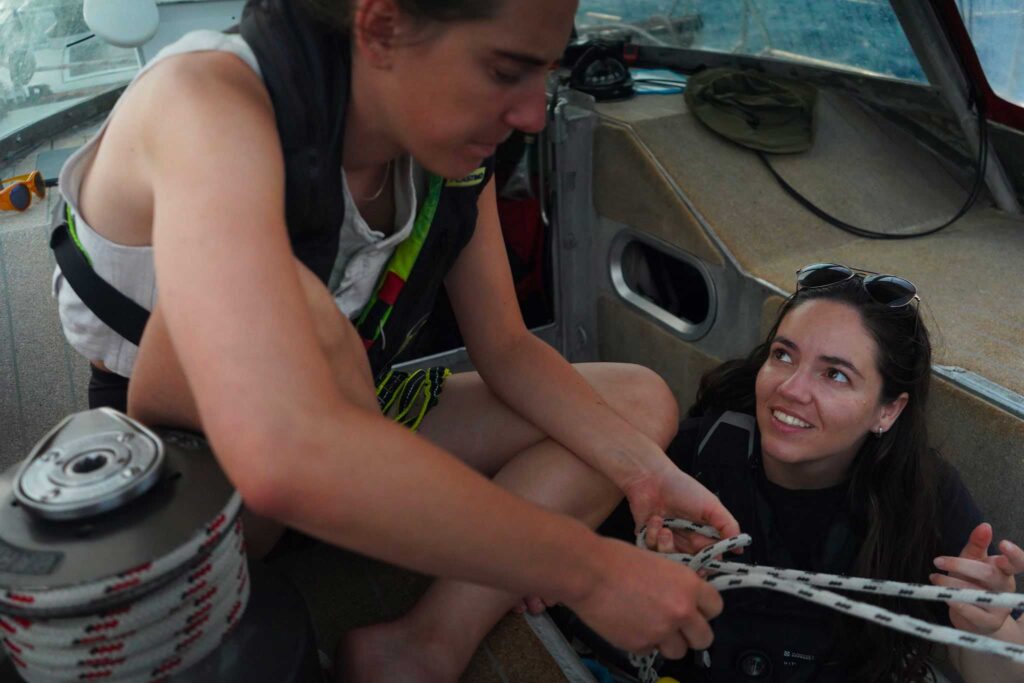
“I’m proud of how the girls looked after each other,” says SAIL Editor in Chief Lydia Mullan. “Many of them had never been offshore before and it’s really a challenging environment, but they showed up for every watch with grace and respect, even on the hard days.”
“Being in nature for so long reminds us of what we’re fighting for,” says Étienne. “I think we really came together as a crew because sailing off shore and activism have a lot in common. It’s about humility and keeping your focus on something bigger than yourself.”
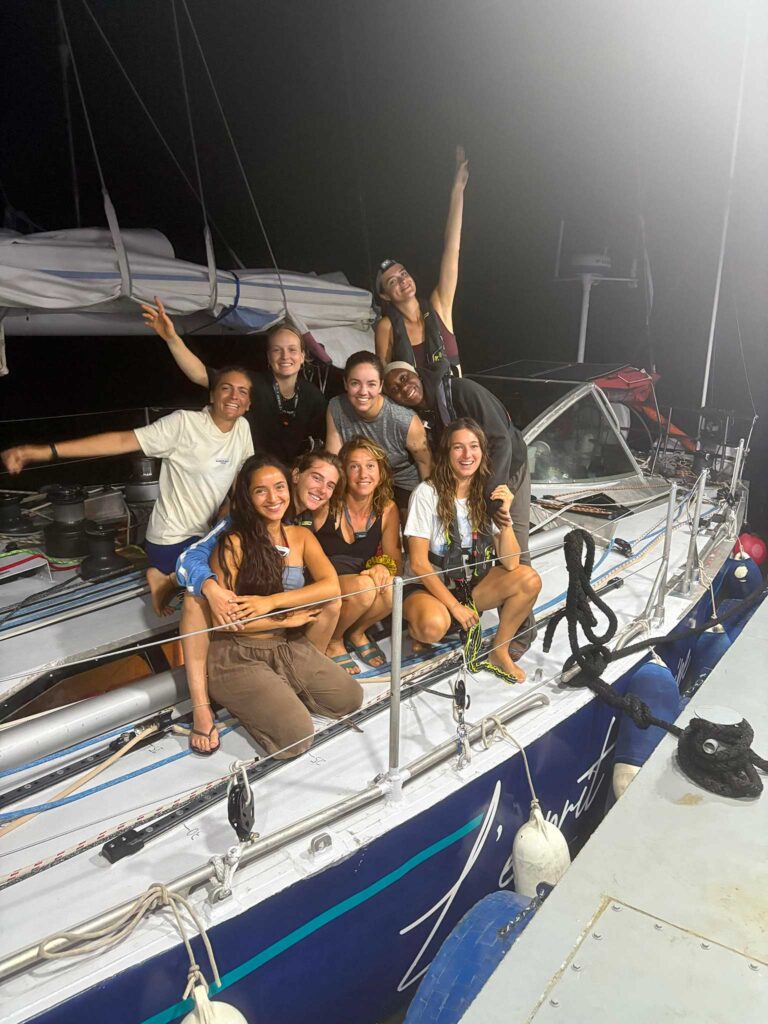
Though most of the team will be returning home by plane, the activists hope that this effort will start a conversation about cleaner transportation and how there aren’t currently accessible alternatives to flying when it comes to long distance travel. The fact of the matter, they say, is that most people do not have the privilege of taking a month off on either side of their trip for getting to and from their destination. And though they won’t be sailing back, all of them hope to be back on the water again soon.
For more on the Women Wave Project, see an upcoming issue of SAIL magazine or follow their Instagram @womenwaveproject