Danny Moroney had the rare gift of knowing exactly what he wanted to do with his life from a young age—he was put on this earth to help people.
Danny grew up in Michigan where his mother had settled after fleeing political unrest in Jamaica. It wasn’t until his early teens that he was able to visit the island, traveling south for his grandfather’s funeral. “Because my family was there, I didn’t just stick to the tourist spots,” he remembers. “We went inland, and I encountered a level of poverty that I had never seen before. And I’m thinking ‘how do you have these kinds of conditions in such a beautiful country?’ It’s such a wonderful place with wonderful people, but it can be really tough to live in those environments.”
“I always had a heart for children, and my grandfather was a pastor at a church in Montego Bay. I knew that they worked with several children’s homes in the area.” When he arrived back home in Michigan—still a child himself—Danny emailed the homes, beginning a conversation that would last over a decade.
“I said, ‘what do you guys need?’ and all the emails I got back asked for supplies. They said ‘it costs money to get books and lotions and diapers and all of these basic supplies for the kids. But if we have more supplies, and we can reallocate money to staffing or beds or other things.’ I started to see this piece of my vision, not the whole thing yet, but I just saw a bunch of sailboats leaving Florida and going into the Caribbean to bring supplies. I couldn’t shake it.”
But he didn’t know anything about sailing. “People assume that I was really passionate about boating and then used that passion to make an impact, but it was really the other way around.” When he was 18, he moved to Florida to try to realize that goal, working a couple of jobs to pay off a 30-foot Hunter with a 12hp engine.
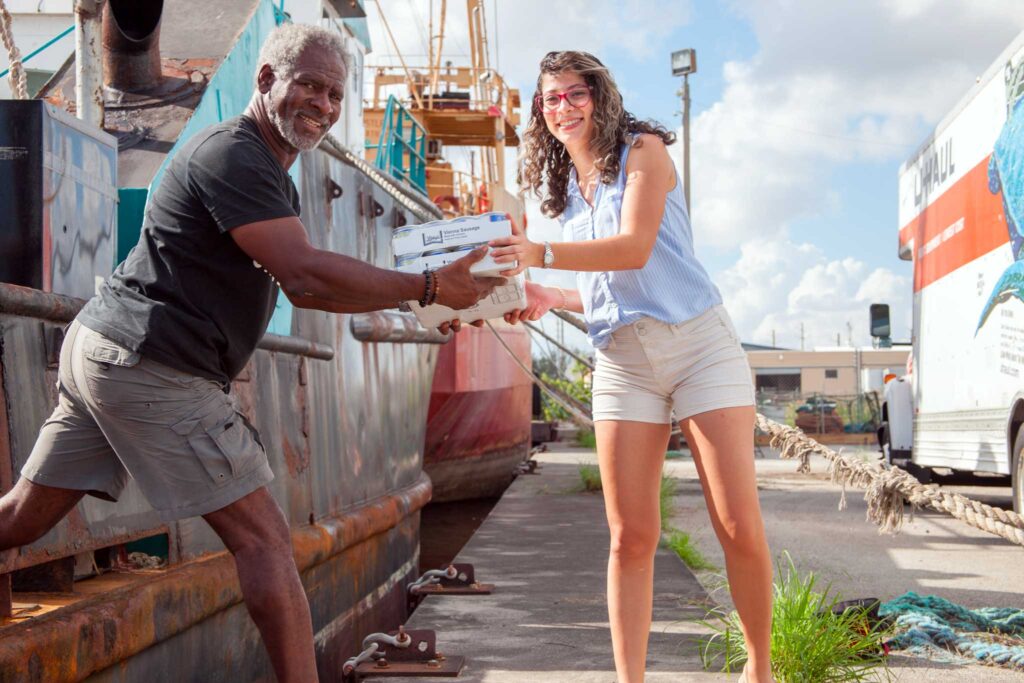
“I had the loudest, smallest boat in the marina,” he jokes. “But I learned a lot, and I had some wonderful people come alongside me. I was docked next to a couple, they were electrical engineers, and they knew of this crazy dream of getting boats to sail supplies in the Caribbean. They never shut it down. They encouraged me and taught me how to sail.”
Logistically, though, it didn’t make sense for Danny to be ferrying the goods back and forth. A 30-foot monohull doesn’t have much by way of cargo space, and there just weren’t enough hours in a day to be the one doing the coordination, donations, and the deliveries. It wasn’t scalable.
In 2019, when Hurricane Dorian hit the Bahamas, Danny recalls chaos around getting aid to the islands. Many local and recreational boaters wanted to help but there was no organization system to coordinate their efforts. Who needed help? What supplies would be useful? Where could they be dropped off?
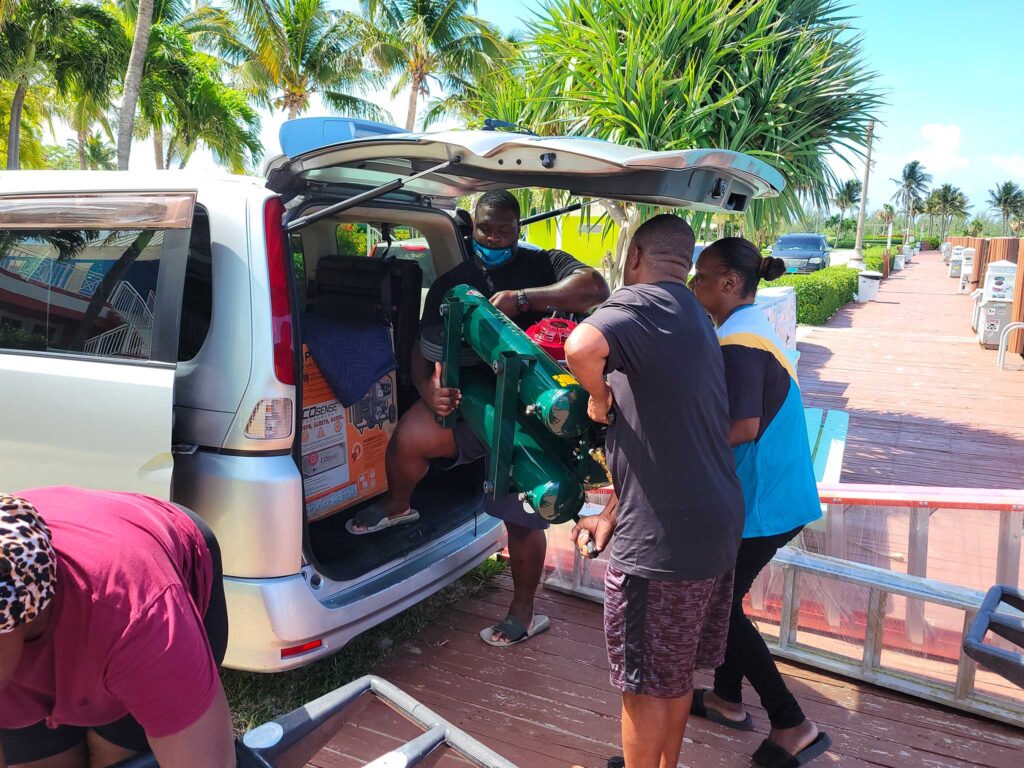
“We thought ‘what if we develop a system to coordinate that?’ And that’s Ocean Reach, which has become the most successful part of Hope Fleet.” Inspired to activate the pre-existing Caribbean cruising fleet, Danny launched a program to manage the logistical side of delivering supplies. Working with boat owners who already had cruising plans, they collected donations, packed the boats, managed the import logistics, and coordinated with local community leaders to receive and distribute the supplies.
Within a few years, Hope Fleet had a network of over a hundred boats involved, bringing educational, agricultural, and disaster relief supplies to Caribbean communities. “It’s pretty simple,” he says. “I mean, it’s not easy, but it’s simple.”
“We go off a needs based approach. So, we ask ‘where are the boaters going?’ And then ‘how can we engage them in the local community?’ We’ll have someone on the [Hope Fleet] team like our program director Kim, and she’ll make contact with our partners on the ground. We try to find, for example, a school or children’s home or a church that’s doing community outreach or a feeding program.”
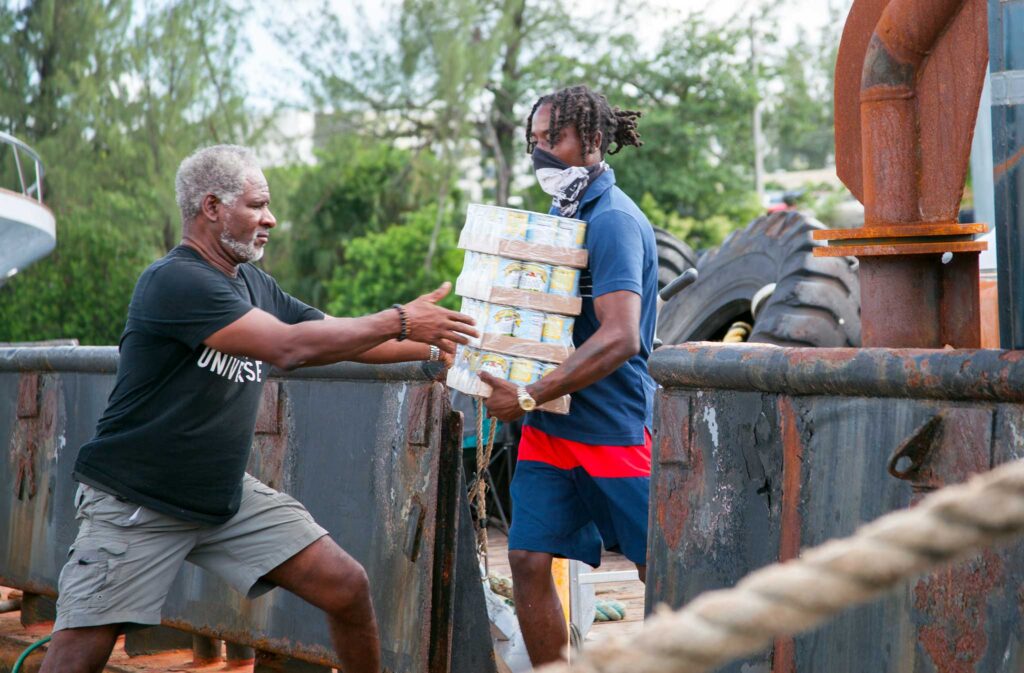
“We don’t want to come in and be like, ‘here’s what we’re going to do,’ because that never works. Every island—not even every country but every island—is different. And so we just see who’s making an impact and then how we can support them.”
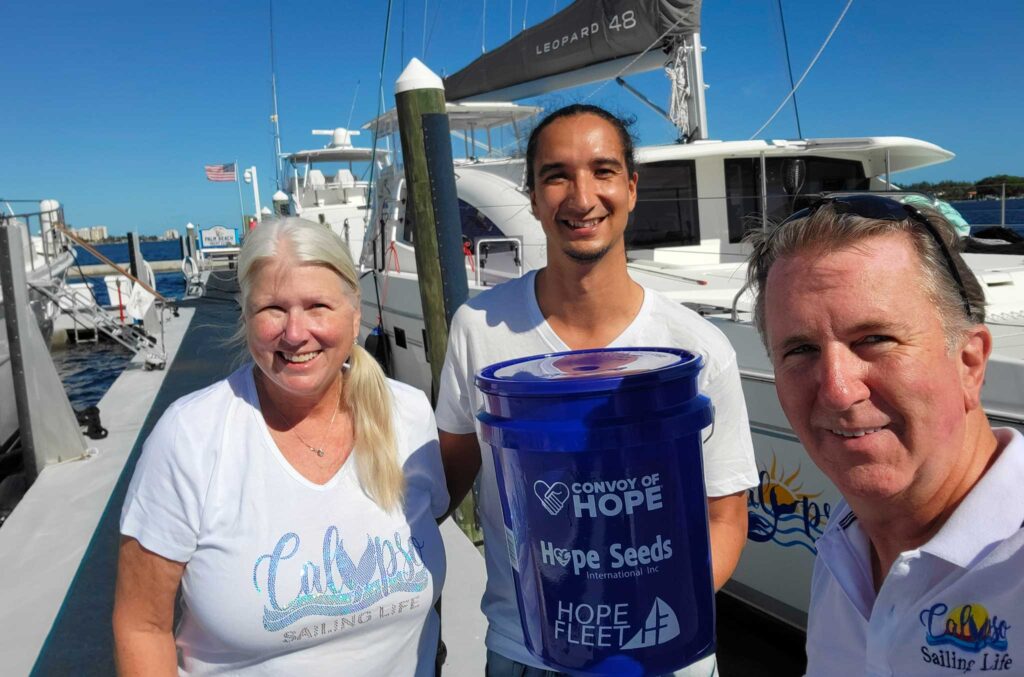
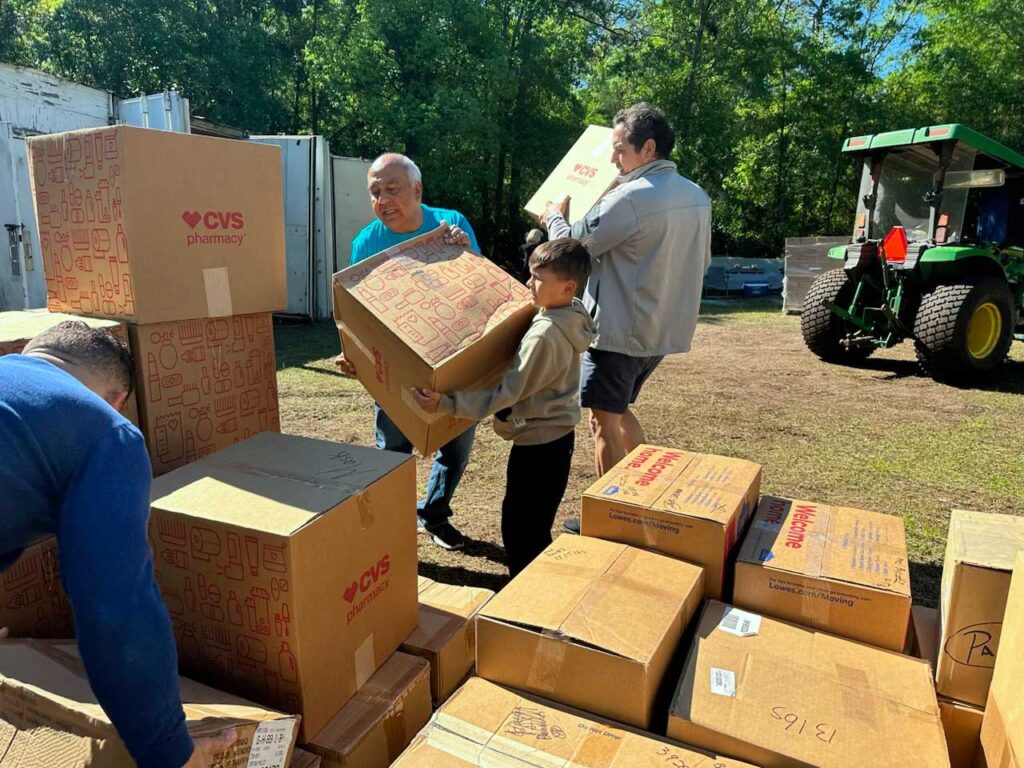
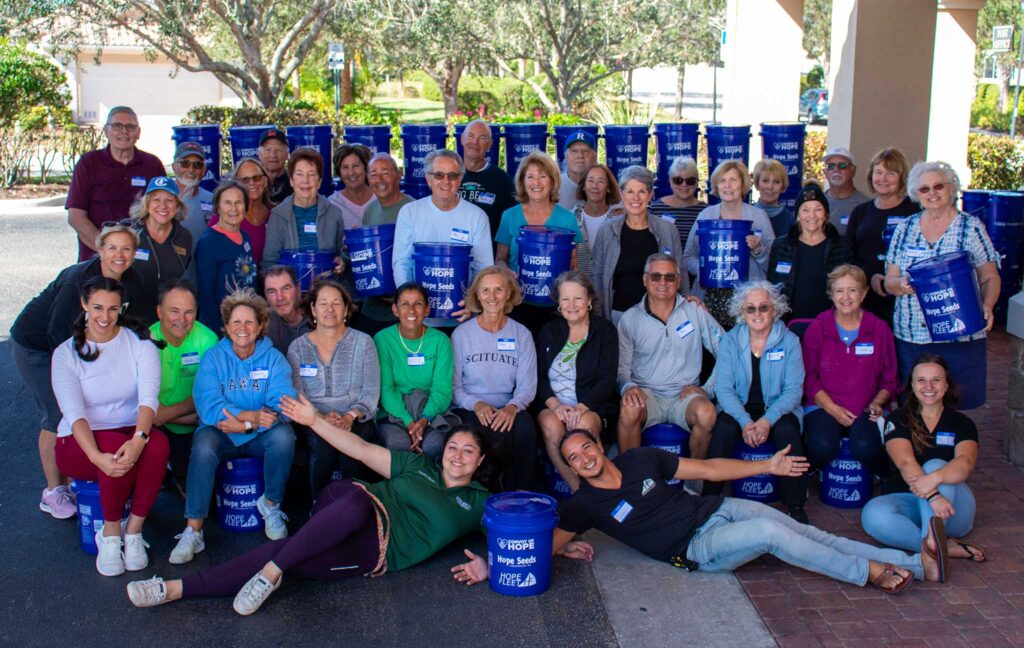
The program is mostly run off of donations, which are then assembled at “packing parties” into kits of tools, books, or other goods. One successful initiative Hope Fleet runs is a bucket program, in which five gallon buckets are packed with the necessary supplies to start a home garden that can help communities become more autonomous and resilient both everyday and in the event of a disaster. Their partner organizations distribute the buckets along with classes on how to best grow and tend to the gardens. But it’s not just the island communities that benefit from the work Danny and his team are doing.
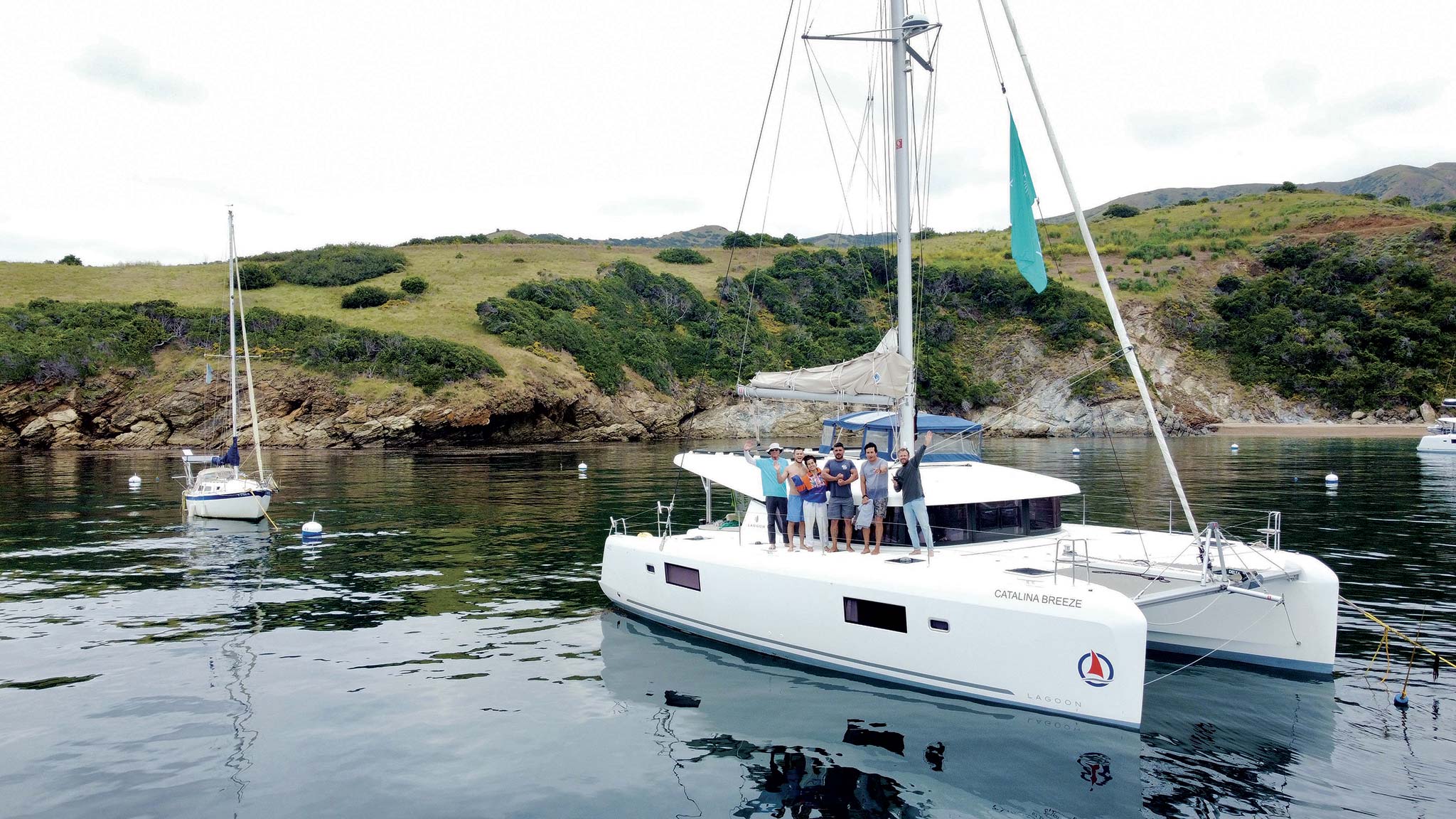
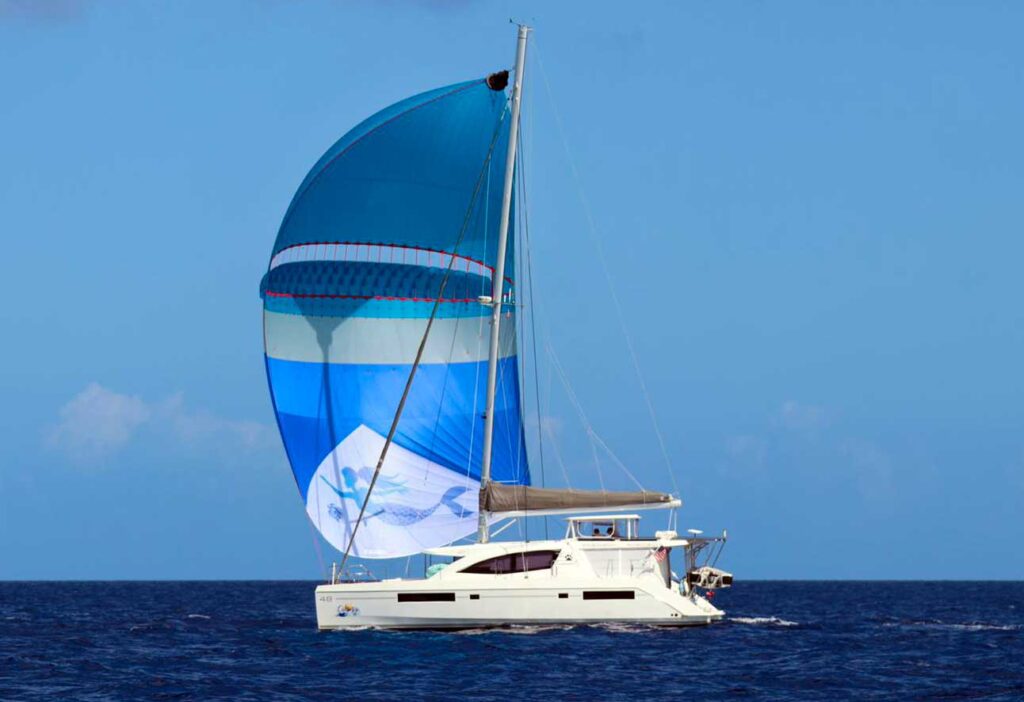
Mark and Sharon Noneman are fulltime liveaboards on their Leopard 48 Calypso as well as Hope Fleet’s volunteer commodores. They have been involved since 2021.
“For us it really helped after we left our home and community and church,” Sharon says. “We have a nomad lifestyle, and we never stay anywhere more than a few days or weeks. We really missed being a part of something. Boaters look for those moments where they’re able to connect. And being a part of Hope Fleet gives us that. It’s an ongoing relationship.”
Like many others, they had been part of the wave of cruisers looking to help after Dorian, but had struggled to figure out how exactly to do it on their own, finally reaching the island on New Years Day. Later, Sharon found Hope Fleet online, and they signed on for their first delivery.
“Danny came with a van full of stuff and a few people, and they loaded up the boat,” Mark recalls. “We had generators under our cockpit table, a 12-foot ladder, drills, and power tools. Our whole port hull was full of stuff.”
Upon arrival in the Bahamas, they said the customs agent was a little confused but mostly curious. After a few phone calls to confirm the paperwork was all in order, he asked to come aboard, not for an inspection, just to see what they were bringing and how it all managed to fit into their space. The materials were bound for Sweetings Cay, a remote village that was still recovering two years after the hurricane. When they arrived, the only building with a roof was the church. Pastor Lorenz, the Hope Fleet contact for the Northern Bahamas, met them to pick up the supplies.
“The local contact is really important because they know what’s needed, and they know who needs it,” says Mark. “They’re not just handing things out on the street. They taught people how to use the tools, and so they’re getting the training and the follow up that they need.”
“For years before we started doing this full time, we loved the cruising and the people,” Sharon says. “I really liked the concept of Hope Fleet’s Ocean Reach program because the trouble with helping these communities is mainly transportation. Danny has the donations, but getting there is hard. A lot of cruisers, particularly in the Bahamas, go back and forth all the time, so it just makes a lot of sense.”
Danny also adds that cruisers are able to bring their own talents and expertise to the deliveries, remembering one sailor who’d always wanted to be a librarian. She was bringing a cargo full of books for school children, and once she arrived, was able to help with inventorying and setting up a library.
“The time we went to the DR, we actually went to the children’s home and that was really powerful, going to that school and spending the day with the children, sharing meals, singing songs, playing basketball,” Sharon remembers.
“Some of the boaters in Ocean Reach are able to go and stay for longer periods of time, and we’re always invited to come to the services on Sunday, which are an opportunity to meet the community,” she says. Though Hope Fleet is a Christian organization and churches help to create the network for the work they’re doing, the aim is to provide help to anyone who needs it. People are welcome to be involved, from packing to delivering to receiving the supplies regardless of their religious affiliation. “They’ve got a passion for helping their community. It’s not about who’s in their specific church community,” Sharon says.
As for the deliveries, they’ll take any kind of boater who’s headed in the right direction (provided they pass a background check for safety purposes). Mark and Sharon cruise on a cat and it helps to have the extra space when delivering goods, but they say all sorts of boats are part of the fleet. “We have a lot of trawlers that do it, which is great because they’ve got room onboard. A lot of the Ocean Reach vessels are powerboats, but a lot of them are sailing vessels too, and monohulls as well.”
In just five years, 150 boats have joined the cause, and Mark and Sharon are hoping that a future partnership with a flotilla or cruising association could help draw even more in. “There are lots of different ways to get involved. If you don’t have a boat, you can donate, you can come to a packing party, you can tell other people about us.”
Much of the Hope Fleet program is centered around the everyday needs of children in remote areas, but sooner or later the Caribbean conversation always comes back to hurricane season. When Beryl hit Grenada and St Vincent in 2024, Danny says they weren’t equipped to go so far south. “I really didn’t think that we could be helpful during that time,” he remembers. “We’re not really active there, and by the time we could get supplies from Florida that far south, it was going to be too late.”
Normally if there’s a disaster that Hope Fleet can’t respond to, they share information on other organizations they trust that are able to help, so that their network can still support the efforts. But then the calls started rolling in.
“They said, ‘hey, there are plenty of boats down in Trinidad, and they want to bring in supplies but they don’t know where to go. Can you coordinate?’ So we did.” In all, Danny’s team helped dozens of boats reach trusted ground partners in the islands.
“We’ve worked with other larger organizations a couple of times, and what we found is they’re really good at getting large amounts of supplies to one spot, but no one has the boats to deliver them to communities in need. So we’re actually bridging that gap. And because now we’ve got all this information on how to do that, our boaters can get there first before anyone. And they did.”
In addition to the supplies they can carry, cruisers often arrive with two other critical resources: watermakers and communication capabilities. In the immediate aftermath of a disaster, these are hard to come by but invaluable. Danny and his team make it possible.
“We fell in love with Hope Fleet and their mission. We’d recently retired, and so we started talking about it more and more,” Sharon recalls. “What can we offer? How can we help?”
“It’s a small organization doing what it can,” Mark says. “But Danny had a calling, and he’s making a difference out there.”
For more information on Hope Fleet and how to get involved, visit hopefleet.org.