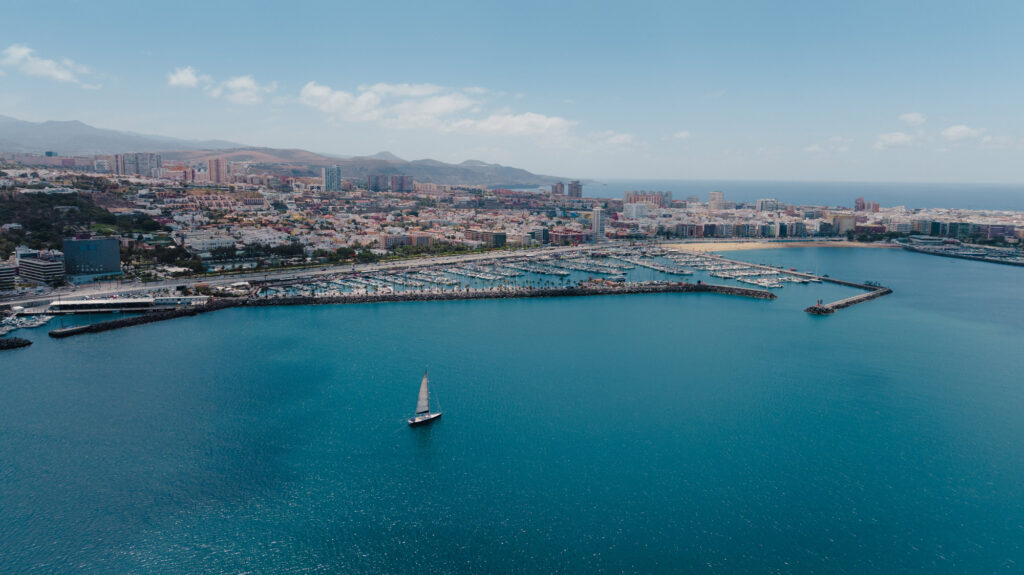
The Canary Islands have always been recognised as a cradle of nautical talent. The islands’ exceptional conditions have historically cultivated a fleet of sailors who have shone among the international elite. Today, María Cantero (Las Palmas de Gran Canaria, 1997) and Joel Rodríguez (Las Palmas de Gran Canaria, 1997) stand out as two of the guiding lights of a generation that continues to expand the archipelago’s footprint at the height of the global sailing scene.
In the Canary Islands, the sea is not just a stage, it is also a school. This environment shapes, demands and transforms sailors. The archipelago has been home to generations of sailors who have competed on the most demanding circuits.
María Cantero and Joel Rodríguez are heirs to this living legacy. The pair share many commonalities, including their passion for sailing and their drive to perform at the highest levels. They also share a deep respect for the islands that taught them to master the wind.
Sailing as a Way of Life
From the very beginning, María and Joel understood that the sea was a place to learn.
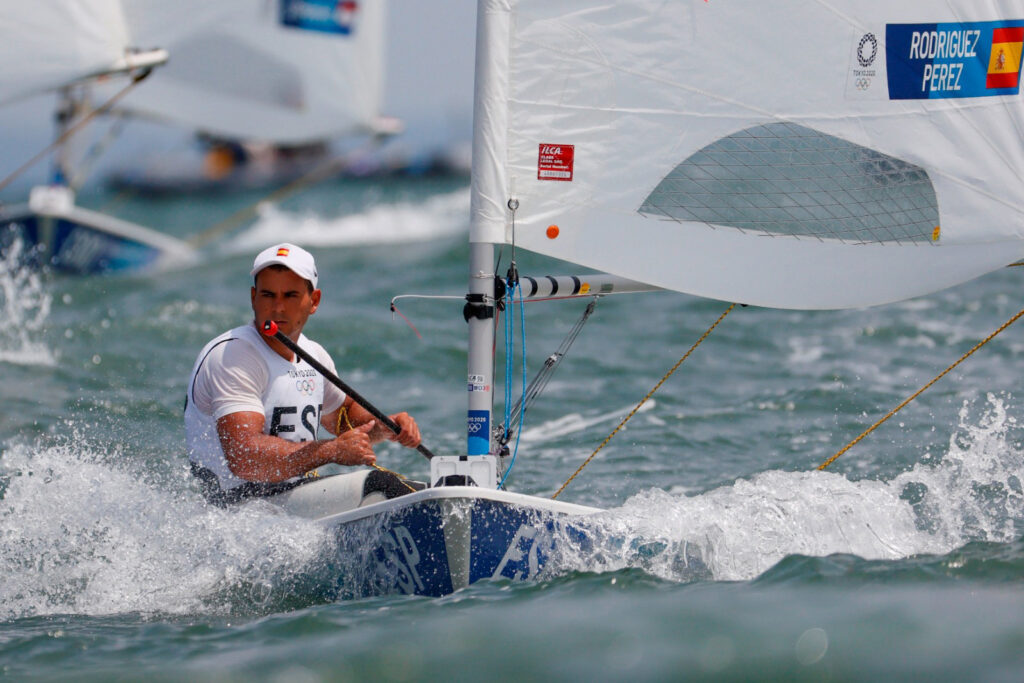
“The Canary Islands are a magnificent setting for outdoor sports like sailing,” Joel said. “From a very young age, I was able to dedicate many hours to the sport thanks to how much sunshine and good weather we get, especially in winter. That made me stand out at a very early age among the world fleet.”
For María and her family, life in the archipelago has always been intrinsically entwined with sailing.
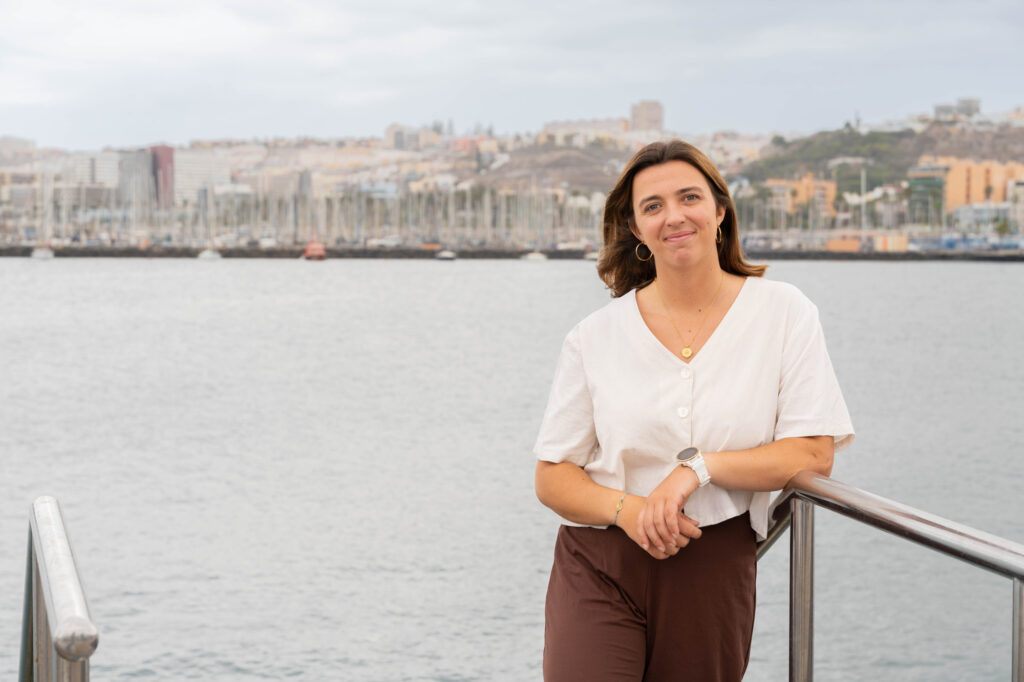
“For me, growing up in the archipelago 100% influenced my career as a sailor,” María. “My parents sailed, and my grandfather was the president of the Real Club Náutico de Gran Canaria (Royal Gran Canaria Yacht Club). The sea is in my blood.”
This privileged environment not only gave them hours of practice, it also shaped their mentalities. In the Canary Islands, sailing is a culture, a way of growing up.
“The sea was our playground,” María said. “The islands were a constant invitation for sports. Alone on the boat, dealing with the elements, you learn to clear your head very quickly.”
Epicentre of Sailing
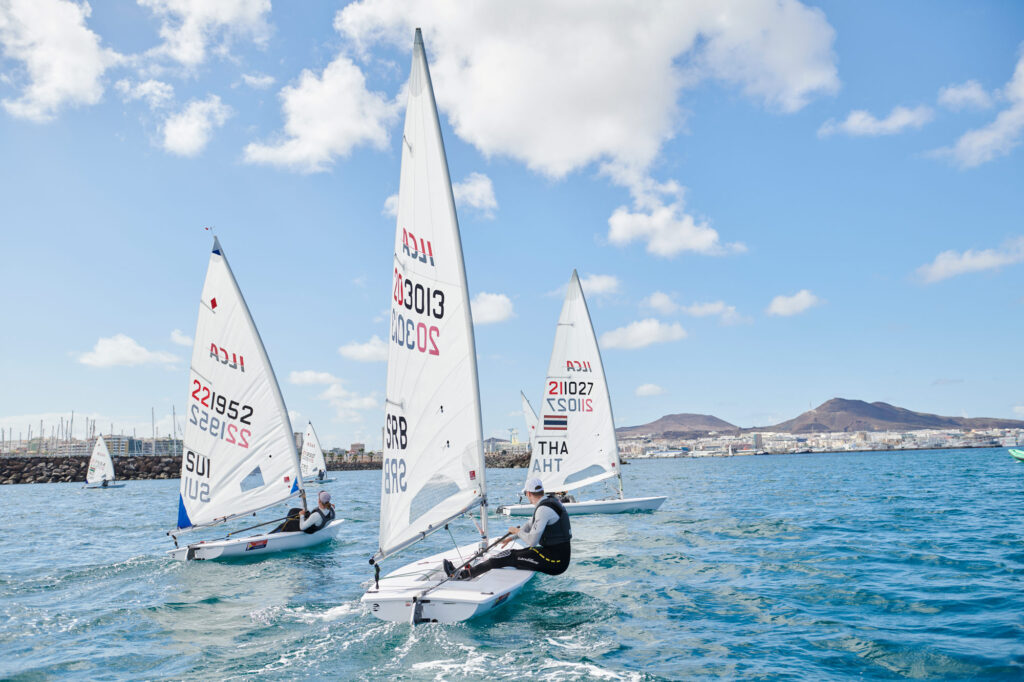
Today, the archipelago is one of the world’s leading enclaves for training, especially in winter. The natural conditions––combined with first-class facilities––have made the islands world-renowned. Lanzarote, in particular, has attracted hundreds of Olympic sailors.
“There is never a day when you can’t go out on the water. That’s why many Olympic athletes chose this destination to prepare for the Tokyo and Paris Olympic Games,” María said. “The nautical atmosphere here is what gets you hooked.”
The Canary Islands is well-positioned as a strategic hub for international sailing, and the sport’s impact on the islands is only growing.
Amid the current boom in Olympic sailing, Marina Rubicón—located in Lanzarote—has played a pivotal role. At the Tokyo 2020 Games, 21 sailors who reached the Olympic podium had, at some point in their training, chosen this marina as their base. For Paris 2024, that number stood at 19. During the same season, from October through March, the marina hosted 1,200 athletes from 24 countries and served as the venue for two Olympic qualifying events, along with 24 championships across eight different Olympic sailing classes—including four official Olympic disciplines.
In addition, nearly all European sailing federations now maintain a permanent base at Marina Rubicón. The venue regularly hosts major events such as the iQFOiL circuit, the Lanzarote International Regatta (now scheduled for 2026), the ILCA U21 World Championship (set for January 16), and part of the TP52 Super Series from June through July.
“Bringing competitions such as the Youth Sailing World Championship to La Palma in 2027 and 2028 gives young people a reference point. I remember seeing Olympic sailors in my club and thinking, ‘I want to be there too,’” María reflects. “Fifteen years later, I’m in the same competitions with them.”
From the America’s Cup to the Olympic Dream
In 2024, María made history by taking part in the first women’s edition of the America’s Cup.
“I don’t think any of us had any idea that there would be a girl in the America’s Cup, honestly. When it was announced that the event was going to be in Barcelona ,and that there was going to be a women’s team, it was obvious to me that I wanted to be there. I wanted to be part of it. It still gives me goosebumps,” María said.
María said her team didn’t have many resources, but they did have an unshakeable desire to compete. She described an energy within the team that motivated everyone to work hard and do their best, and she credits that energy for the team’s positive performance.
“What we did there was really amazing. I think it’s opened the door for this to continue in the future,” María said. “I want more girls to see that they can get there. I hope that this was not the exception, but rather, the new norm.”
With that momentum, María has now set her sights on competing in the 2028 Summer Olympics in Los Angeles, California.
“I’m looking forward to giving it my all, not only for the project, but also for the people who are with me. We are fighting for the same dream, with the same vision, the same values. That’s very important, since in Olympic projects, your team ends up being your family,” María said.
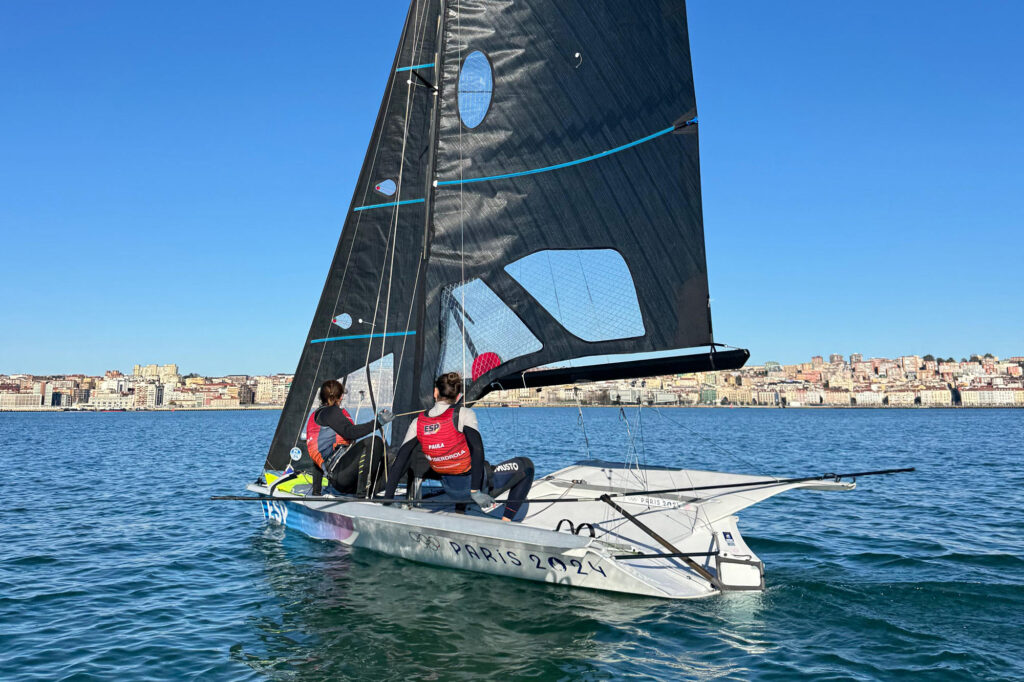
She will be sailing alongside Paula Barceló, a double Olympian, in a new tandem led by Xabi Fernández, one of the most respected sailors in the world.
“Our project has something special,” María said. “When you start with someone new, there’s that process of getting to know each other, of knowing what works best for the other person, what they need from you. I think all that comes relatively naturally to us. It all feels easy.“
The Revolution of the Sea
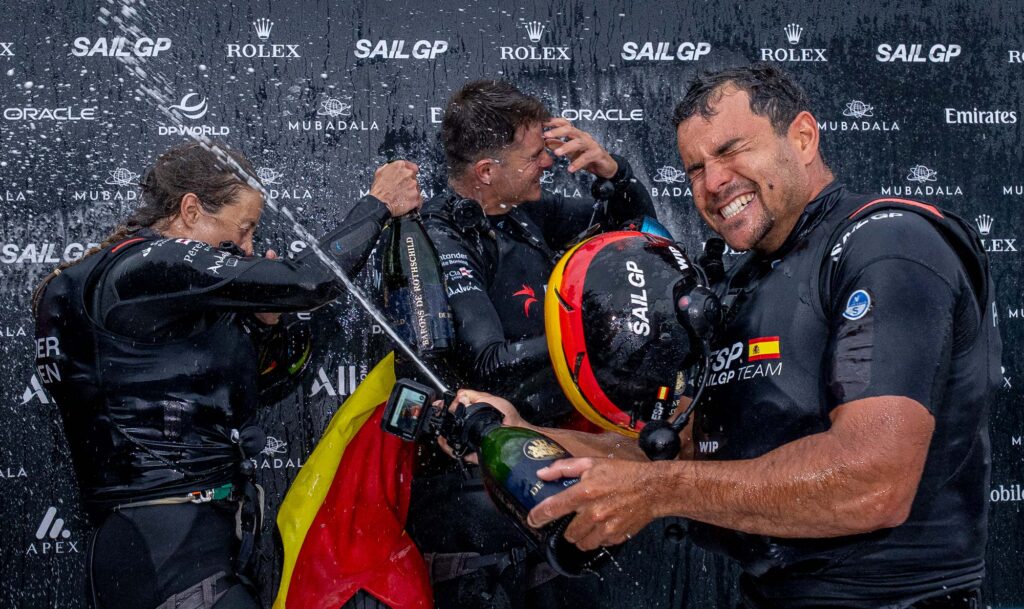
Joel leads another dimension of elite sailing. He is the flight controller of the Spanish team in SailGP, the most spectacular and technological league in the sailing world.
“It’s a dream to be part of SailGP. The boats are amazing, the circuit brings together the best sailors on the planet and it’s got the highest level of demand,” Joel said. “I’m so pleased to see how this team is growing.”
In May 2025, the Spanish team––which won the SailGP title in the 2024 season––received the award for Best Foiling Team at the Foiling Awards.
“These are very complex boats to sail, where there are many hydraulic or electronic systems that change a lot compared to more traditional sailing,” Joel said of working with the F50. “For me, the key is to be very familiar with these systems and know how to apply them as if it were a traditional boat to get the most out of it.”
Despite his involvement in SailGP, Joel is also looking ahead to the Olympic cycle. After competing in ILCA 7 at Tokyo 2020, he is now alternating his participation in different classes to make it to Los Angeles with more experience.
“I’m sailing different boats this first year of the Olympic cycle, which will give me a lot of knowledge for the end of the cycle, where you have to dedicate more time to the Olympic boat,” Joel said.
Back Home in the Archipelago
Despite their international calendars, both María and Joel maintain a close link with the Islands.
For María, her refuge is the beach of San Felipe, in the north of Gran Canaria. She often goes there to read or surf after training. Joel mentioned Playa de Montaña Arena, also in Gran Canaria. The area is linked to his family memories and carries his most intimate connection with the sea. For him, the archipelago is life.
Both assert the role of the Canary Islands in the development of sailing and professional sport.
“The thing about sailing in Spain is that it’s a minority sport without a lot of visibility. It’s difficult for private companies to get involved. It’s a question of culture and finding companies that really believe in the same ideals,” María said. “There are stories that inspire and values that deserve support. And the Canary Islands is the perfect place for those stories to begin.”
Q&A with María Cantero and Joel Rodríguez
How would you define the Canary Islands in one word?
MARÍA CANTERO: Spectacular.
JOEL RODRÍGUEZ: Life.
What nautical or natural experiences would you recommend to someone who is going to the Canary Islands for the first time?
MARÍA CANTERO: I’d recommend activities such as windsurfing, kitesurfing and windfoiling. For those who aren’t fans of the water, go mountain biking, road biking or hiking. There are several trails on the island. I love the inland part of Gran Canaria, the mountains. I think people associate the Canary Islands with the sun and the beach, and they don’t get much of an idea about the vegetation on the islands.
JOEL RODRÍGUEZ: Obviously, it depends on your taste, but if they move around the islands, there are many places—both in the sea and in the mountains—that are spectacular for outdoor activities.
What have the waters of the Canary Islands taught you that they haven’t taught you anywhere else in the world?
MARÍA CANTERO: Struggling with 30 knots every day.
JOEL RODRÍGUEZ: I learned to sail there. Since I was very young, I’ve spent many hours in the waters of the Canary Islands, and I’ll carry that with me for the rest of my life.