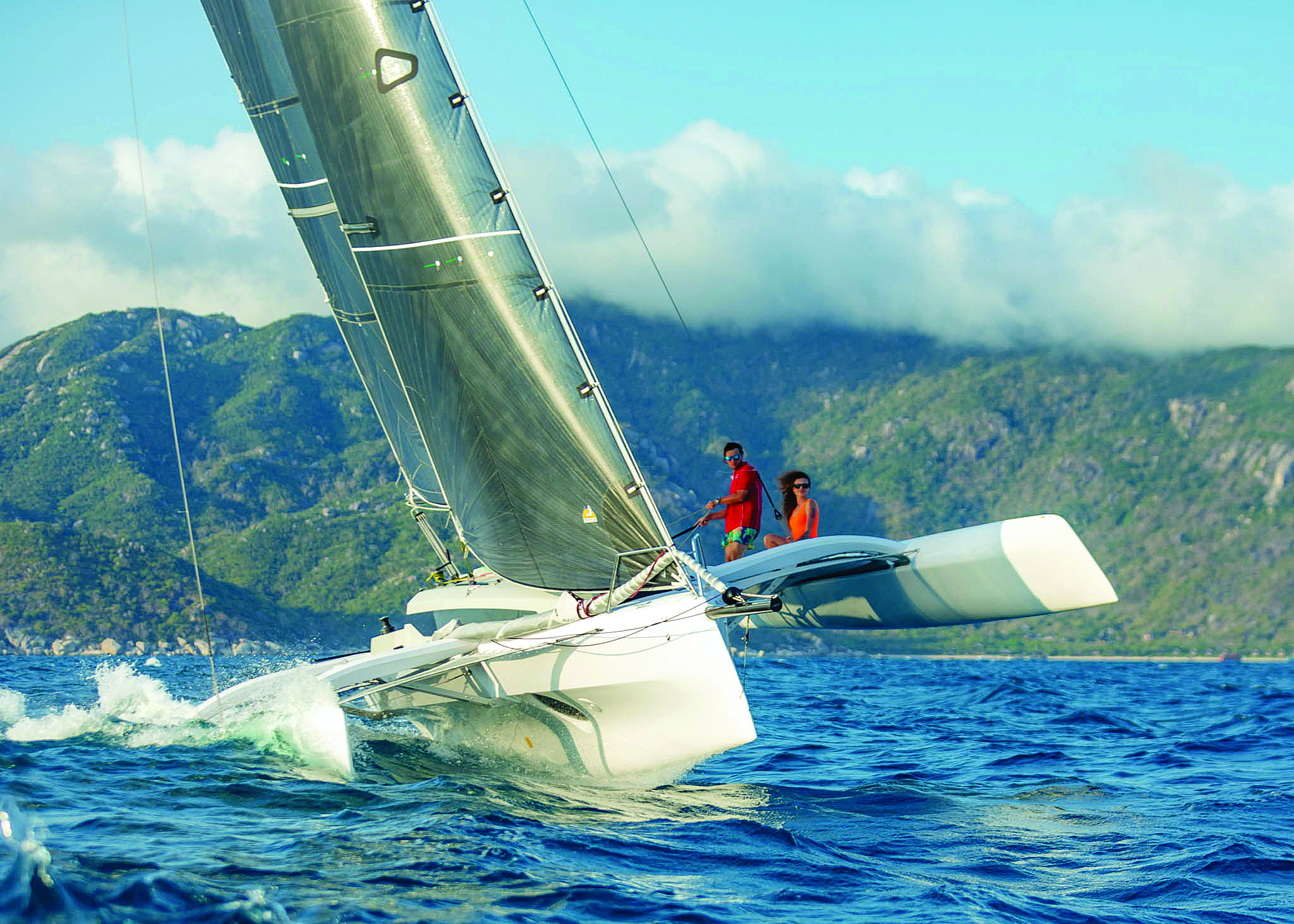
After the Newport International Boat Show, SAIL’s technical editor Adam Cove and I joined Al Johnstone of J/Boats for a sail aboard the new J/36. It was a gorgeous September day on shore, warm in the sun, cool and crisp in the shade. Unfortunately, the idyllic conditions didn’t quite extend out onto Narragansett Bay, and we could’ve used 10-15 additional knots of breeze to be really happy. After a brief chit chat on the dock, we headed out.
The J/36 joins the J/40 and J/45 to complete the company’s performance cruiser range. At the smaller end of a range like this, you often see features from the bigger siblings trickle down, and frankly the boat felt like more than 36 feet to me. Having spent a lot of time racing on 40-foot J/122s, I was eager to see what new ideas would be on this similarly sized model.
“You know, I think you could blindfold me and put me on a brand new J/Boat that I’d never seen before, and I’d still know where everything is,” Adam said after a quick glance around the cockpit. I felt the same, it was immediately familiar—simple, organized, well-laid out. If it isn’t broken, why fix it? It makes hopping on a new boat to crew for a day super simple.
Despite the fact that this boat is four feet shorter than the J/Boat I know like the back of my hand, she really didn’t feel like it on deck. That’s partially thanks to twin helms and removable cockpit table that open up the flow. My gripe with twin helms is often that they’re placed so far apart that you can’t comfortably move from one to the next without letting go or looking away from where you’re headed. Not so with these. They were ergonomic and had great sightlines forward. I was also pleased to see well-positioned wedge foot braces at each wheel, which in addition to keeping the driver in place, also make for a more comfortable standing angle when driving for hours. For those of us on the shorter side, the step also offers a few extra inches to help see over the bow.
The optional instruments on the steering pedestals were installed on our test boat, and it was quick and easy to glance down to get all the info I needed. They’re mounted flat so I did need to crane over the wheel a bit to see them without glare. But still, I was squinting to read the displays mounted at the front of the cockpit without my glasses, so having some of the data displayed close by was great.
There are six winches placed around the cockpit with good spacing so that multiple people can work at once without anyone taking an elbow to the face. We had the main up easily in a minute with an electric winch. Between the two cabintop winches is, of course, the companionway, which has been redesigned to great effect on the 36. The hatchboards are built in and lift or slide into position. Gone are the days of stowing them somewhere below where they rattle around all watch. The step up to get down to the stairs has also been reduced, making for a smoother transition with less trip potential. And finally, and probably most importantly, the entire opening has been extended forward, meaning fewer head bonks, more ventilation, and plenty of natural light as you head belowdecks.
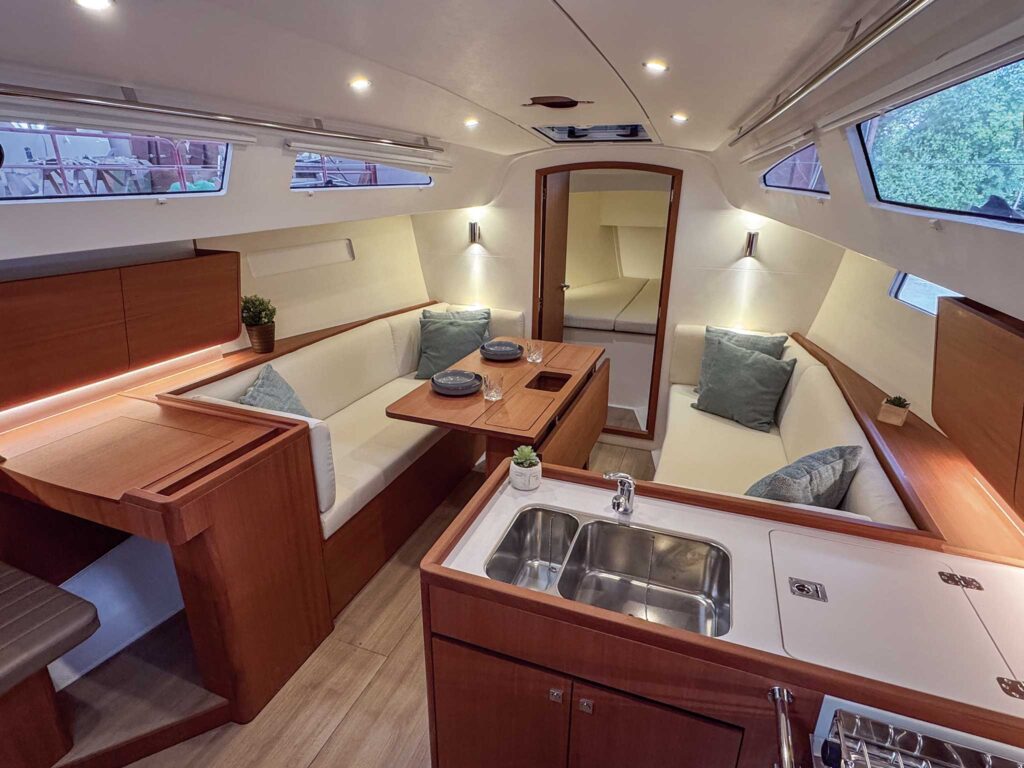
I’ve been whinging about Ikea-styling on boats for years now, and I was delighted to find that the J/36 has a clean, neutral palette that still felt warm, bright, and classy. This is thanks in part to doubledecker portlights in the hull and cabin top. I’ve seen it crop up on a few new models recently and always love the added sense of light and breathing space that it gives. My guess is an easy view of the horizon will be welcome for those of us with a tendancy to get a little queasy too. Grab rails along the top of the cabin will make moving about easy in any seastate and the mahogany joinery throughout is lovely.
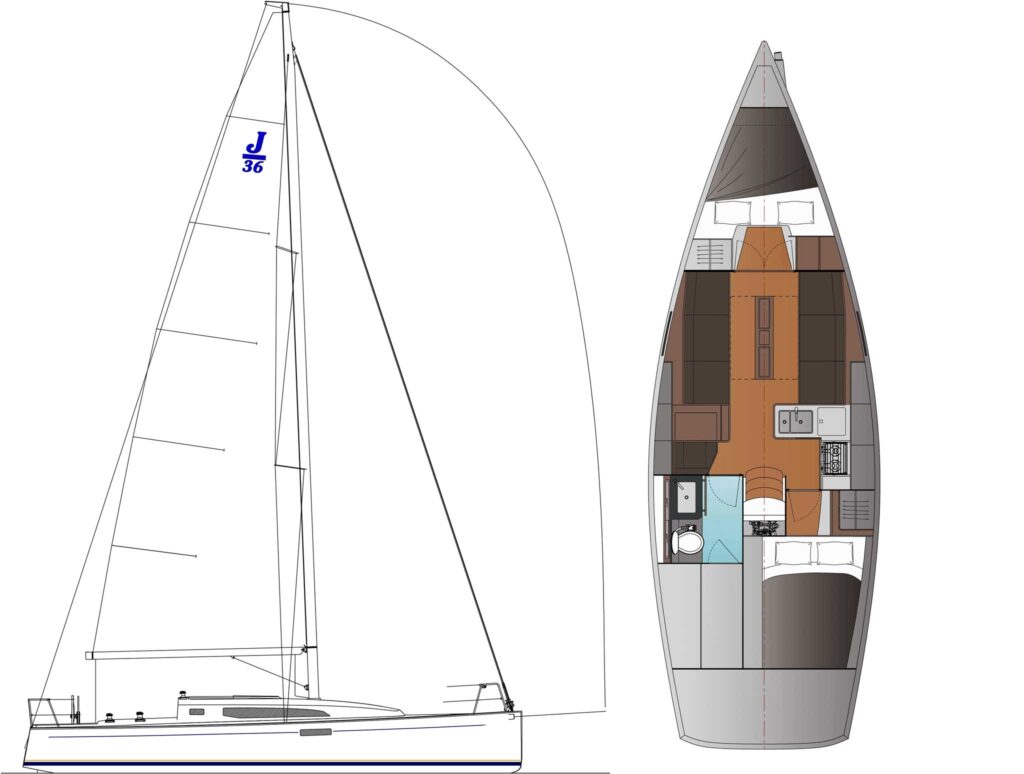
A spacious nav station to port is outfitted with plenty of storage nooks and within arm’s reach of the electronics panel and VHF. In a design landscape where some builders are moving away from having a designated navigation desk at all, having one this substantial felt like a statement: This boat is not meant to just sit at the dock.
The corresponding space to starboard features a pretty standard L-shaped galley set up with a double sink, top-down fridge, and gimballed range. The chef onboard might be left a bit wanting for counter space, but this boat is 36 feet after all. The designers have, frankly, done an excellent job fitting as much in as they have without it the boat feeling cramped. This is purely personal preference, but I liked the feel of the 36 even better than last year’s (admittedly similar) Top 10 Best Boats winning J/40.
The boat may also look familiar to another SAIL Best Boat winner: the J/112E, which debuted in 2016. The two share a hull shape, but the deck, cockpit and interior have all been redesigned for the new release. And rehashing a model from almost ten years ago wasn’t just done for the sake of convenience: The 112E was a winner. The ORC World Championship, ORC European Championship, IRC European Championship, Cowes Week, and multiple Chicago Macs are on the long list of races won by the 36’s predecessor. Al expects the 36 will be similarly successful while being a better sailing experience.
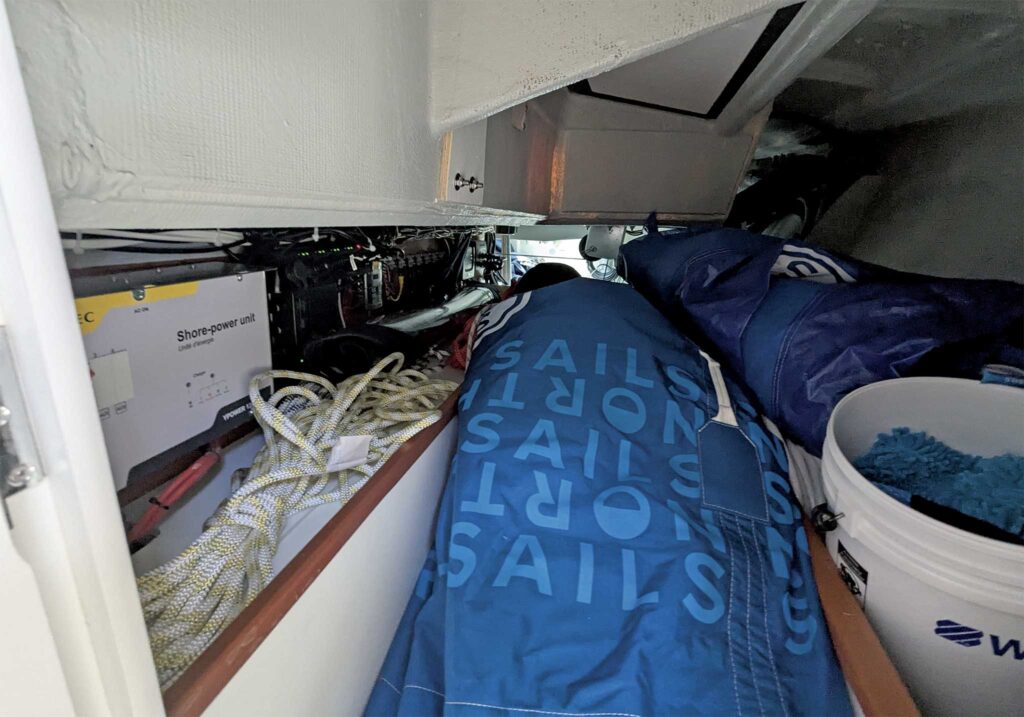
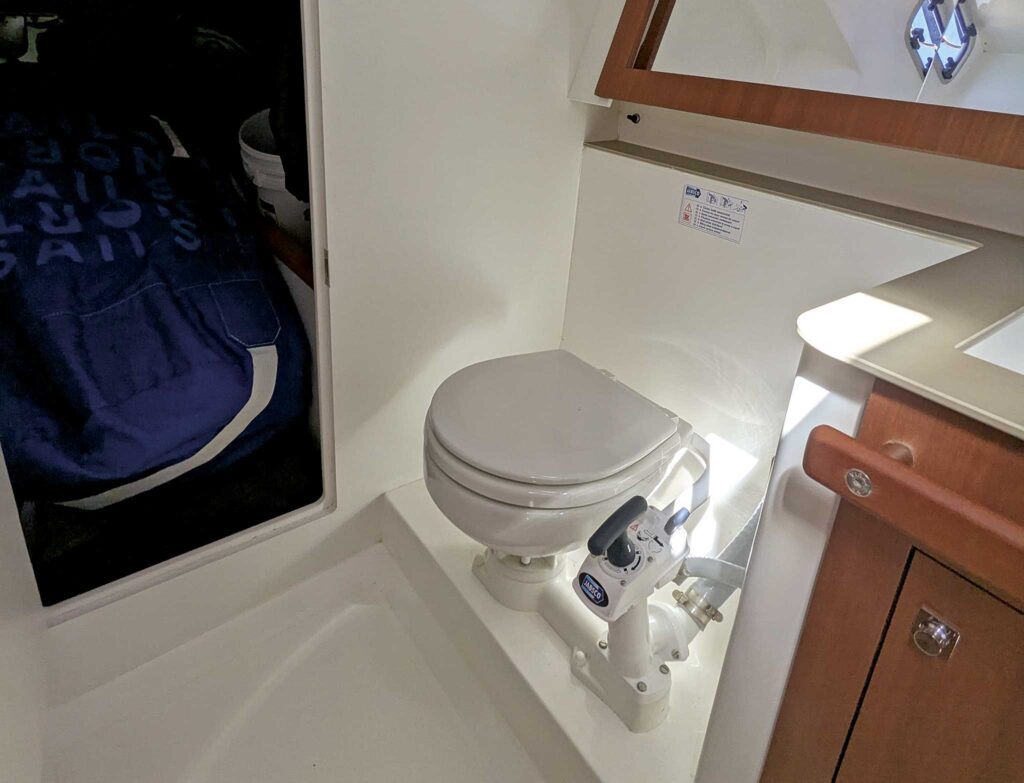
The boat comes in just one layout with two cabins—forward and aft to starboard—and a head aft to port. The head itself is Jabsco. And while there’s no separate shower stall, the floor is raked nicely to help ensure that it’s draining on either tack. Behind the head is a massive storage space for sails, gear, and spares (another feature that denotes this boat as a real sailor’s sailboat) that can also be accessed from up on deck through either the bench seating or a hatch aft of the helms. Cleverly, the aft hatch is translucent, so light can get in and you won’t be digging around in the dark. The access from the head is big, so even bulkier headsails will be able to pass through easily, and that means wet sails won’t be leaking puddles in the boat’s living area during a race.
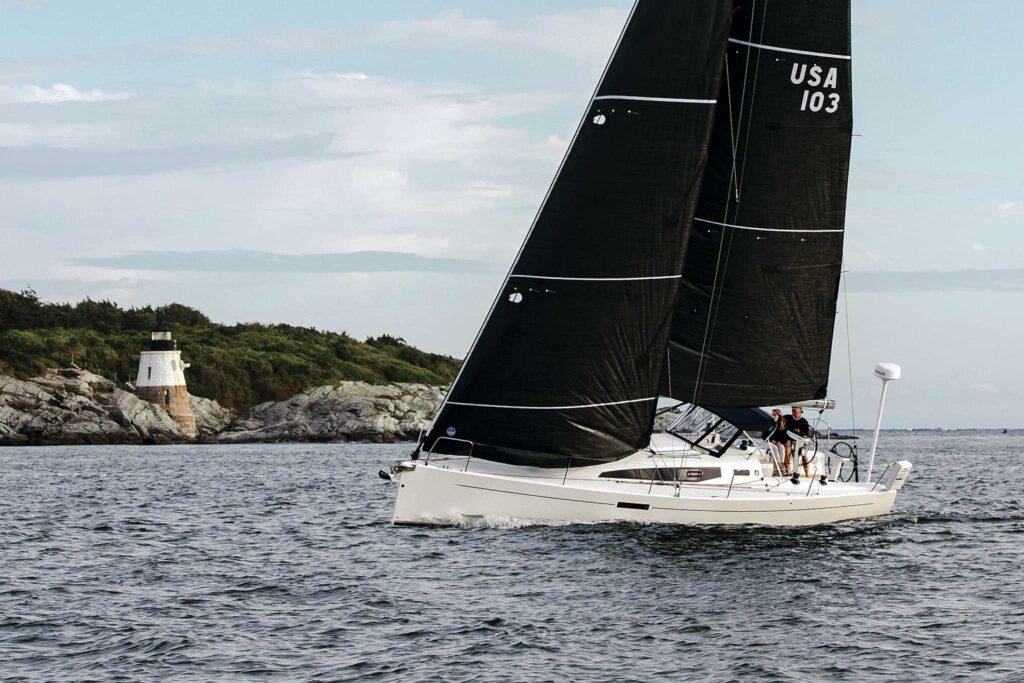
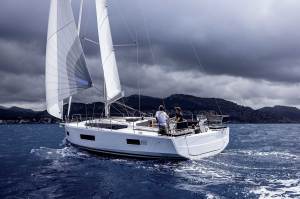
We were really hurting for breeze on our test sail day. To the boat’s enormous credit, she didn’t just park, and in around 5 knots of wind, we were slowly but surely getting along with about 2.5 knots of boat speed. The helms seemed well balanced with the right amount of feedback, and even with the meager water flow over the rudder, the boat had no trouble with responsiveness or crossing through a tack. When it was time to throw in the towel, we put the engine on. Wide open throttle, we were making about 6.8 knots with 2900rpm. The engine controls are to starboard and mounted low, slightly in the kick-zone, but that’s pretty typical.
All in all, I was as impressed by the J/36 as is possible when you don’t really get a chance to put the boat through its paces. That being said, with an already well-tested hull design and an excellent performance history, there’s little doubt this model will follow in the J/112E’s footsteps. I won’t be at all surprised to see this model on the starting line of any offshore race next season or plotting its own cruising routes far and wide. It’s a proven hull, rethought with a smart deck and cockpit layout, and complimented by an elegant, ergonomic styling belowdecks.
LOA 36’
Beam 11’ 10”
Draft 6’ 11”
Displacement 11,300 lbs
Sail Area 699 sq ft (foretriangle and main)
Power 30hp
Designer J/Boats jboats.com
November/December 2025