The conventional wisdom amongst sailors—especially those of us who used to sail dinghies—is that dinghy sailors make the best big boat sailors. The logic is that bigger boats tend to be more forgiving and have more instruments to help you out. In a small boat, if your weight placement is bad or you’re over steering, you’re going to know it right away. An unexpected swim is one of the best coaches you could ask for.
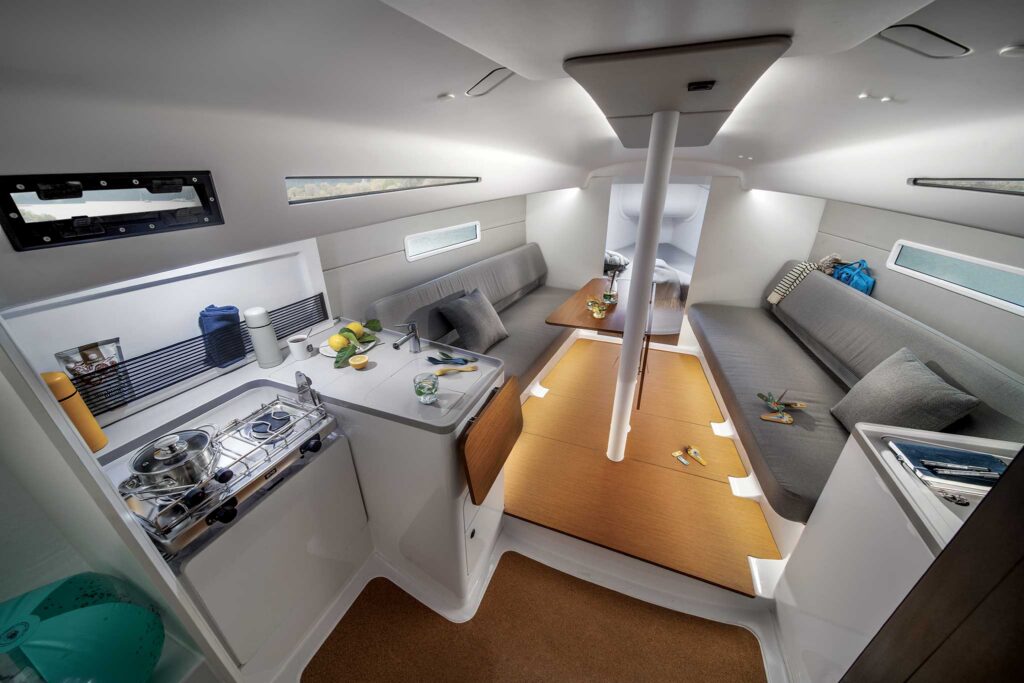
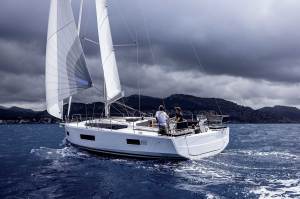
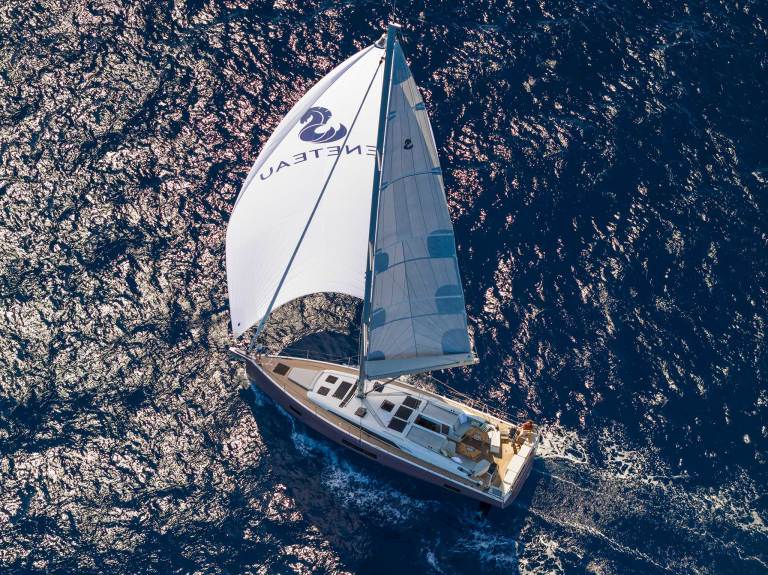
Photo courtesy of Beneteau
The First 30 falls somewhere in the middle of the big-to-small boat spectrum, both in actual LOA and in the sailing and design mechanics. It’s really purpose-built for a niche sailor—someone active who’s looking to do spirited and techy sailing and spend more days on the water than in the maintenance shed despite a limited budget—and that comes through in every decision made by Beneteau’s team.
As you’d expect from a smaller boat, the feedback on the First 30 will teach you a thing or two about sail trim and optimal heel angle—without the extreme loads that are part and parcel of the sail plan on a heavier boat. Still, the set up from cockpit to gennaker is that of a bigger boat, making it a great transition option for former-dinghy sailors looking to scale up or maybe even cruisers looking to drill down into a more sporty type of sailing.
The focus of this design brief is easy planing. “There are so many ways to enjoy the water these days,” explained Head of Customer Marketing and Experience Tit Plevnik during our test sail. “Our main competition for people’s time and money is a wing foil or a kite board, not another 30-foot keelboat.” To that end, he says the boat had to be just as much fun as the alternatives—and that meant planing.
The day we did our test sail, the wind was up and down between 12 and 22 knots depending on where in the Chesapeake Bay we were, which made for a somewhat challenging set up. At times we were certainly over canvased with the main and gennaker up, which made the tiller steering tricky. Fortunately the boat was simple to reef and behaved itself once we had made adjustments. The planing was, as advertised, smooth, fast, and exhilarating.
One consequence of that planing-first hull shape was that when the boat feathers up above a close hauled course, it stalls, quickly flattening out and parking. It doesn’t take much effort to get back on course, and though I suspect the stalling is more of a side effect than an intentional feature, it will be a very useful teacher for staying right on the edge of the wind because it is very clear when you’ve over done it.
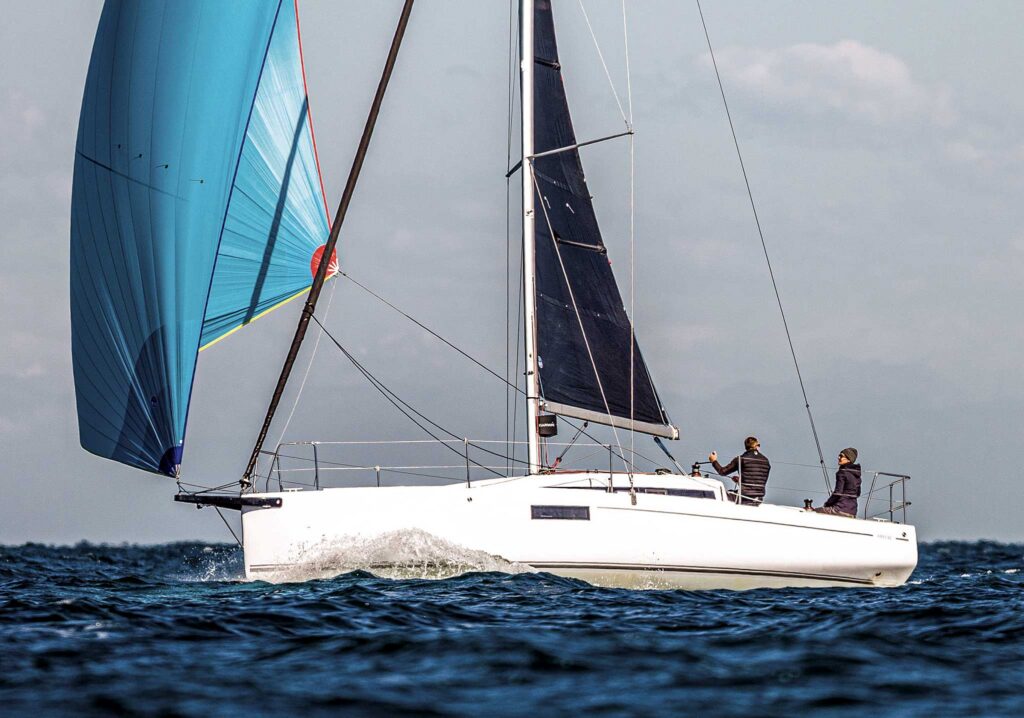
The boat is Category A certified for reeling in the miles on the open ocean, and it comes in two cockpit layouts—racing and cruising. The sail controls are plentiful, leading to two clutches on either side of the companionway, making for easy adjustment. The jib is on a furler and can be deployed quickly and easily.
Other than when over-canvassed in a breeze, the helm was comfortable and provided a reasonable amount of feedback. Twin rudders help the steering retain its grip as the boat heels, and for younger sailors whose dinghy years aren’t too far behind them, the tiller steering will make the transition a cinch.
Below decks, the accommodations are simple and functional with basic Scandinavian styling. This is both a weight saving and a cost saving measure, which again comes back to that target owner. To reach a lower price point, cutting back on excess to prioritize accessibility was an important part of the strategy. After all, future owners of bigger boats have to come from somewhere.
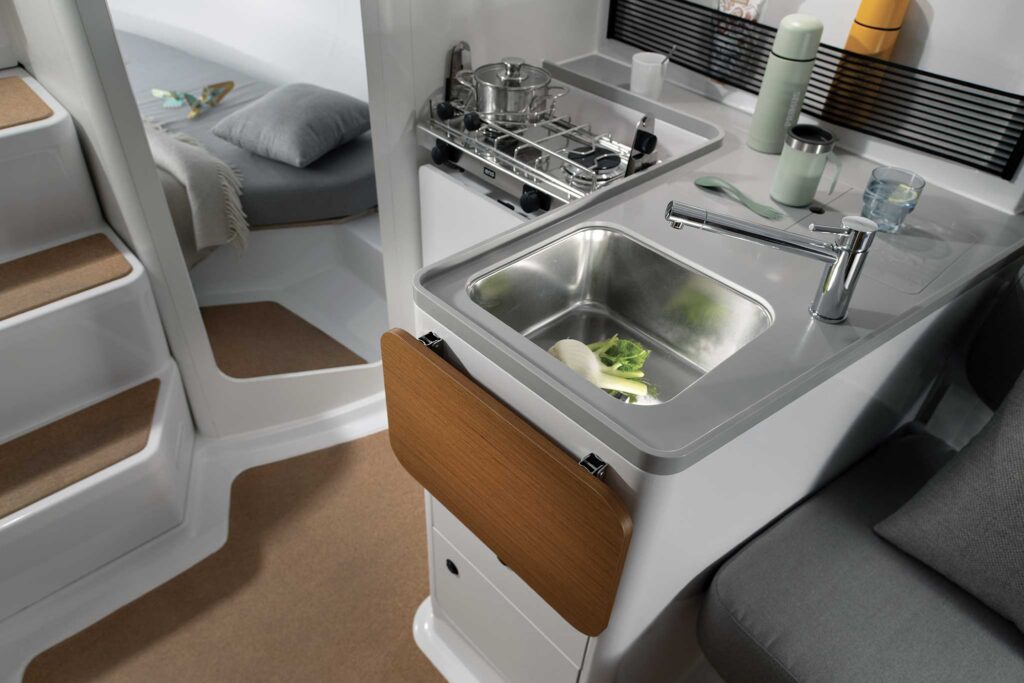
The boat is easy to get around both above decks and below decks with good handholds and maneuverability, though if you’re on the taller side, it will feel a little cramped down below. It’s a 30-foot boat after all. To help combat this, Beneteau has designed a step up in the salon area and a step down in the galley area, meaning that you have more headroom in the part of the boat that you are more likely to be standing in, and the vertical sacrifice to make space for keel box is kept to the seating area.
Rather than doors or curtains, magnetic soft sided panels close off the head and cabins, adding a better sense of privacy than a curtain would but weight and cost savings when compared to a more traditional door. The galley includes a sink, gimbaled stove, and an optional fridge. The electronics are managed by an easy to reach integrated wall panel to starboard.
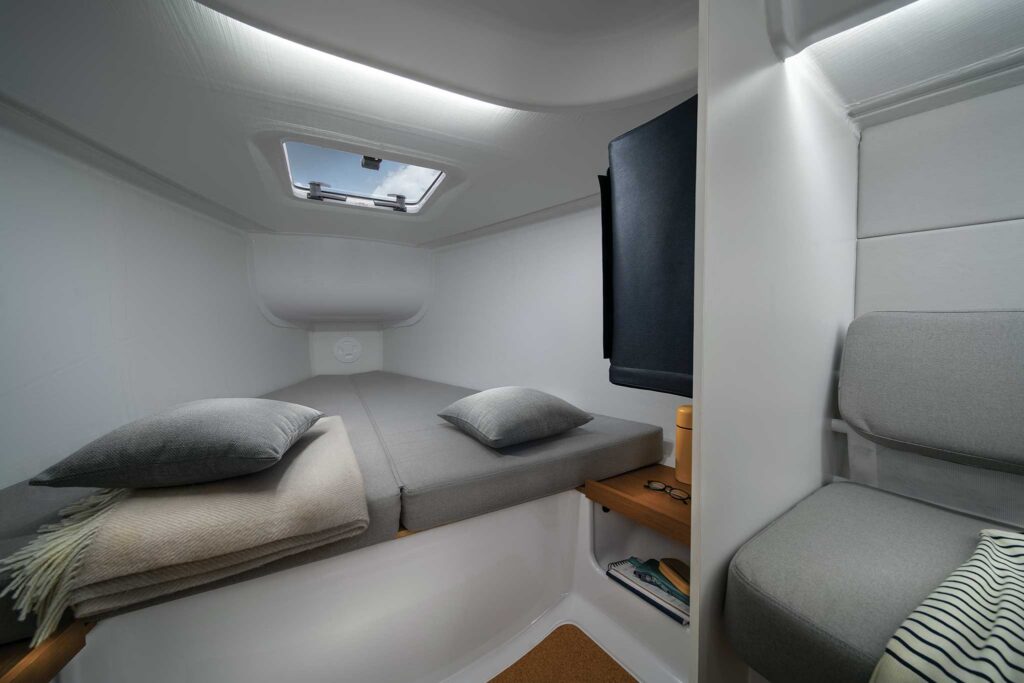
The materials below are simple and focus on weight saving, with the salon table and floorboards in a wood veneer. Aft in the galley, the veneer is swapped for a cork covering directly on the hull structure, which is comfortable on bare feet and also reasonably durable. When it does need to be replaced, it is a relatively cheap and eco-friendly operation, and in the meantime, it can also be sanded and refinished to get rid of stains.
I’ve said it before and I’m sure I’ll say it again: When I walk around a boat show my favorite boats are always the ones where I know immediately who they were designed for. A quick look around the First 30 tells the story of a fun-loving, sporty owner who cares more about the wind in their hair than entertaining guests over cocktails.
That’s not every sailor, but I’d argue that with 100 sold before the First 30 even made it’s US debut, the appeal is certainly resonating with many of us. This year we saw a big push from manufacturers to invest in more accessible LOAs and affordable price points, and I’d say Beneteau has a winner in the First 30.
LOA 30’ 8”
Beam 9’ 9”
Draft 5’ 6” (min) 6’6” (max)
Sail Area 646 sq ft
Air Draft 48’ 3”
Displacement 6,700 lbs
Water 26.4 gallons
Fuel 10.5 gallons
Engines 14HP Diesel
Naval Architect Samuel Manuard
This article was originally published in the April 2026 issue.