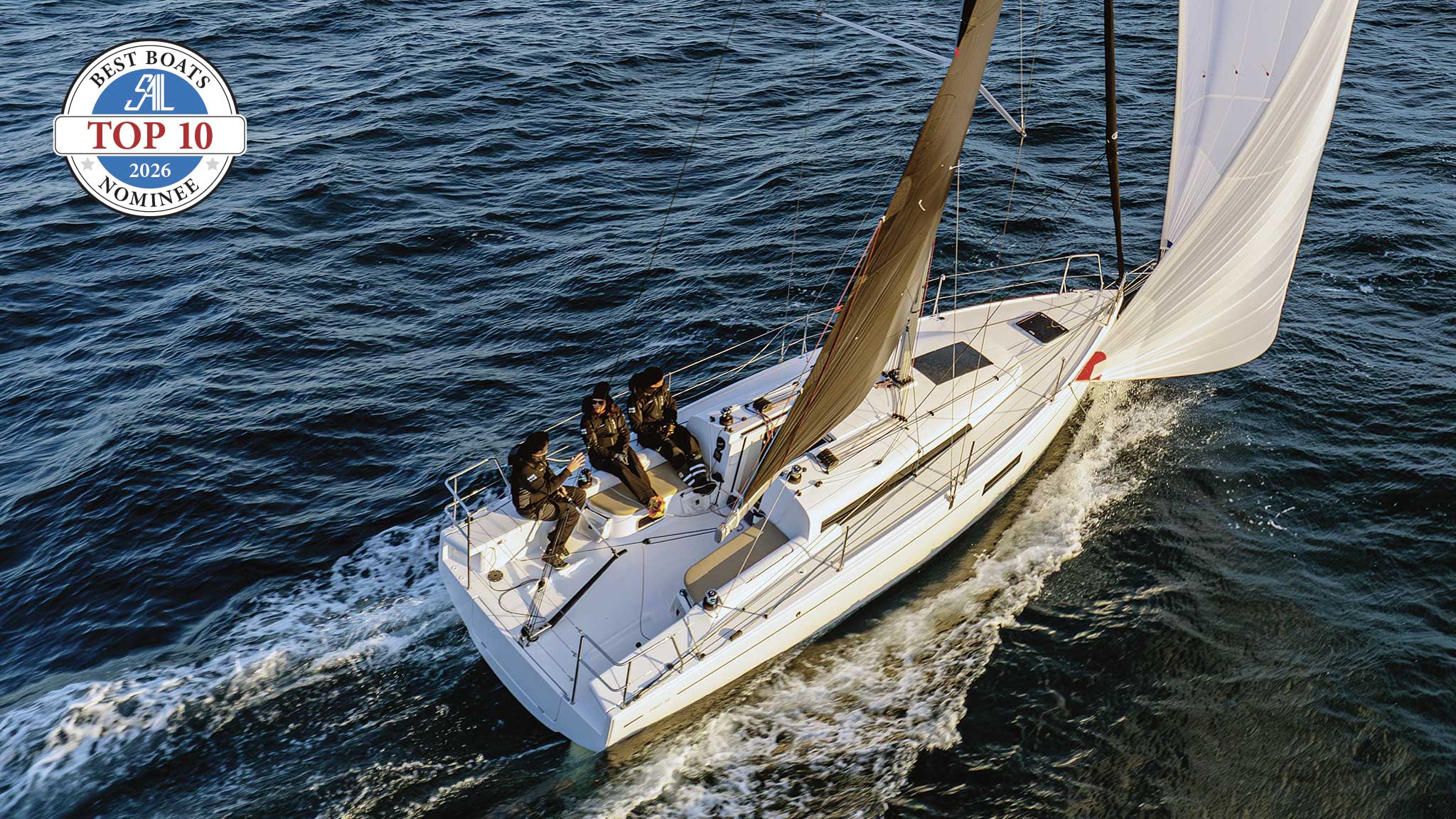
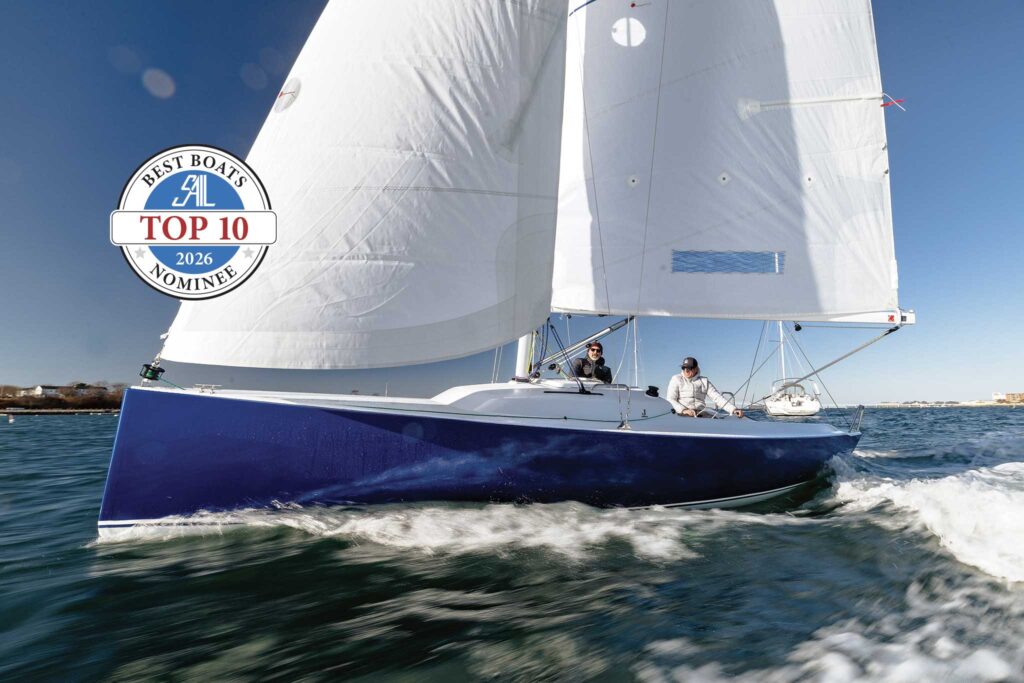
It isn’t very often that you can have Newport Harbor all to yourself. However, when it’s below freezing, blowing 12-15 knots, and mid-December, it can happen. Maybe this doesn’t sound too enticing? How about if we add a beautifully balanced new boat into the mix? I couldn’t resist. An extra layer or two made for an invigorating day on the water with the new J/7 from J/Boats.Hull No. 1 had just splashed at Sail Newport, and we had the opportunity to be first outsiders onboard.
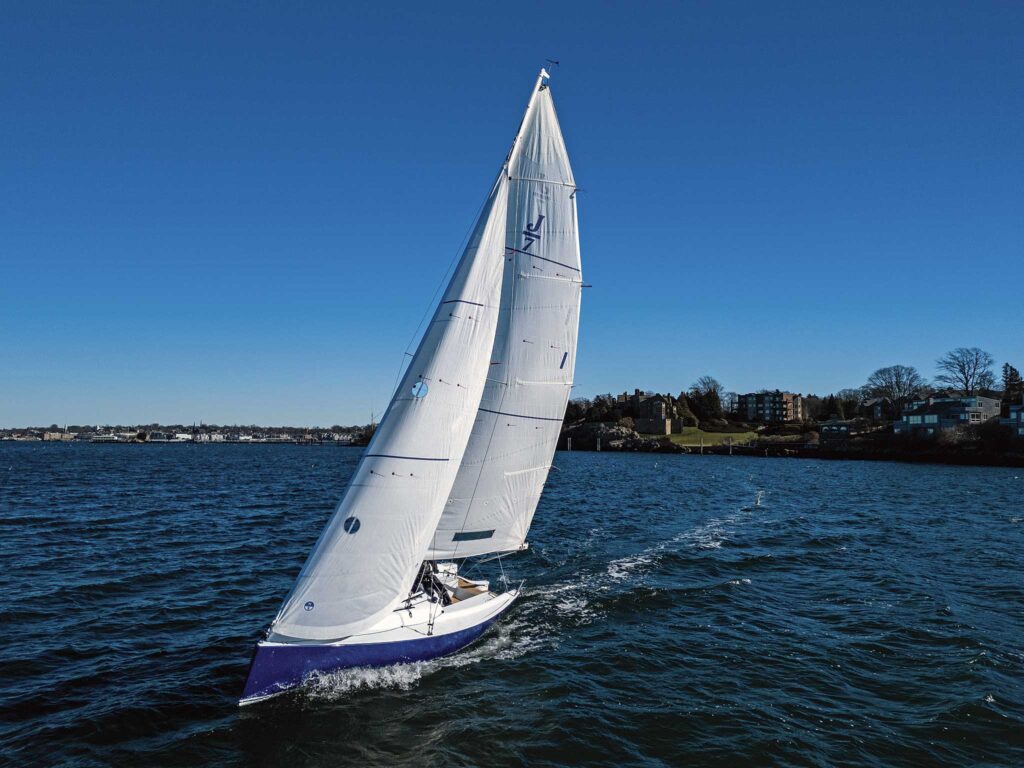
When you’re at the ground level, you really get to experience how the builder thinks; I’m impressed with the J/Boats approach. Not only for what this boat represents in their evolutionary process, but for the continuous improvement mentality within each build. It all starts with an inherent level of curiosity. For example, without hesitation we tried different sail configurations, just to see how the boat balanced and accelerated. In our wind range the J/7 felt amazing under main only, jib only, and main and jib together. That’s a rare feat, but more impressive is how it was performed in such a transparent and goal-oriented way: Get to know the boat and continue to drive it to be the best sailing platform possible.
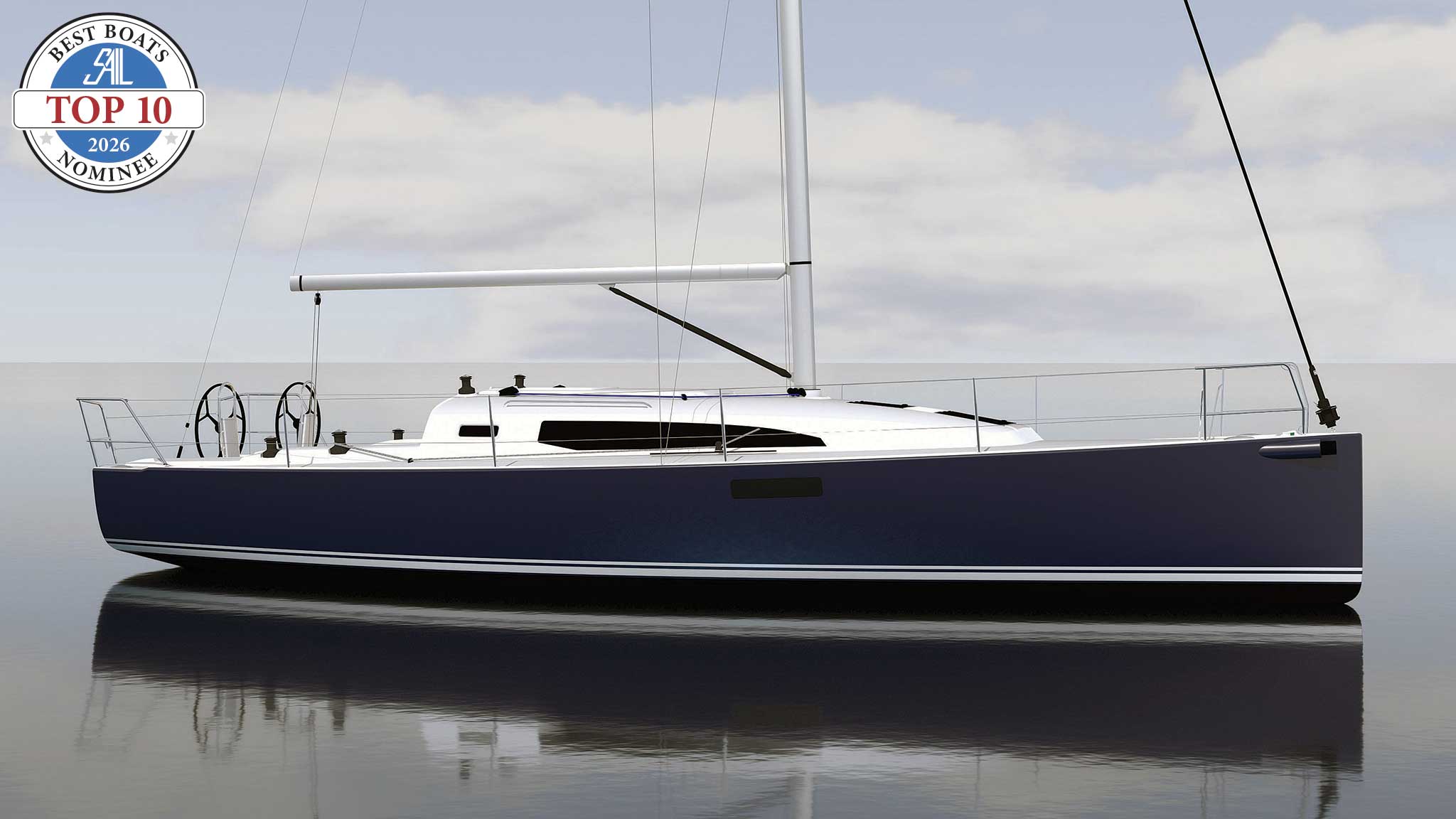
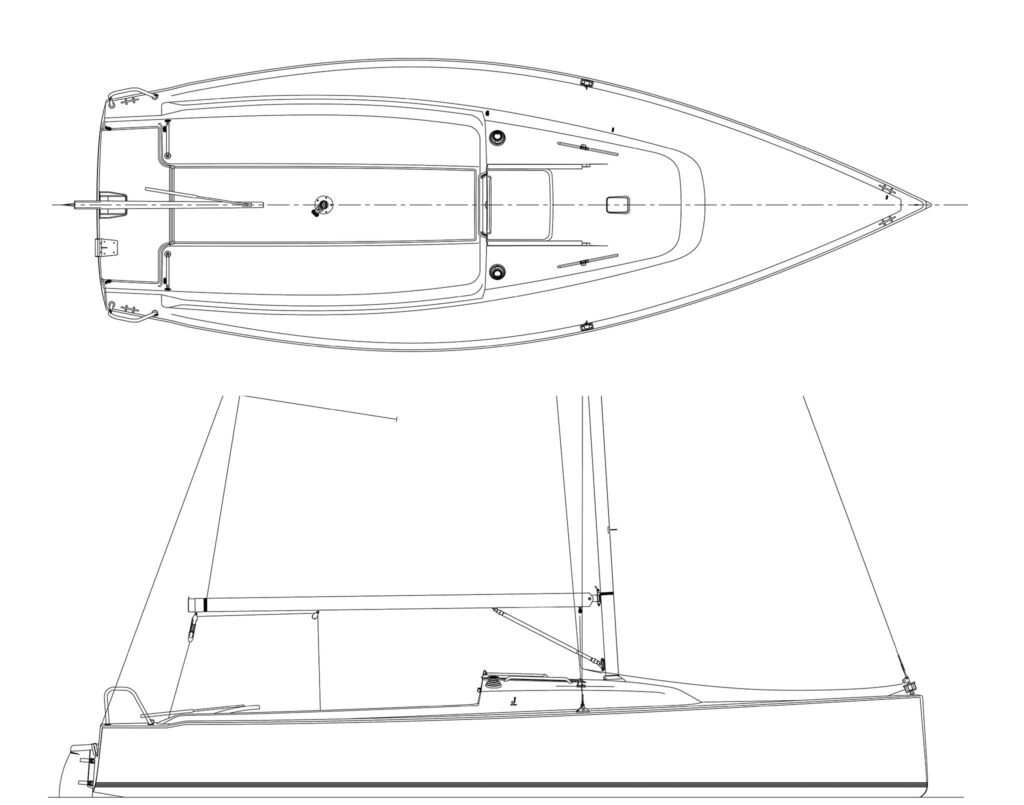
J/Boats has thousands of boats on the water as an experience base, and that played a large part in designing a brand-new hull and deck geometry for the J/7. Created to be a family-oriented daysailer, the cockpit takes a modern approach and can fit four adults across one side, a likeness to the J/70 but improved by ergonomic molded cockpit seats inspired by her sister, the J/9. The spaciousness adds to the ease of switching sides and the comfort of relaxing onboard.
The seats are exceptionally practical because of the stability. The J/7 features a 46% ballast-to-displacement ratio with a 3.8-foot draft. That’s a 1,050-pound lead keel on a boat that weighs 2,300 pounds. As a reference point, its 42-year-old cousin, the J/22, has 700 pounds of ballast at the same draft. Having spent time racing 22s, it came as a surprise when I first stepped on board and the J/7 didn’t heel much—it was stiff and made boarding a breeze. Underway, steering from the rail or cockpit offered different perspectives, but the ballast meant that either was comfortable and fast.
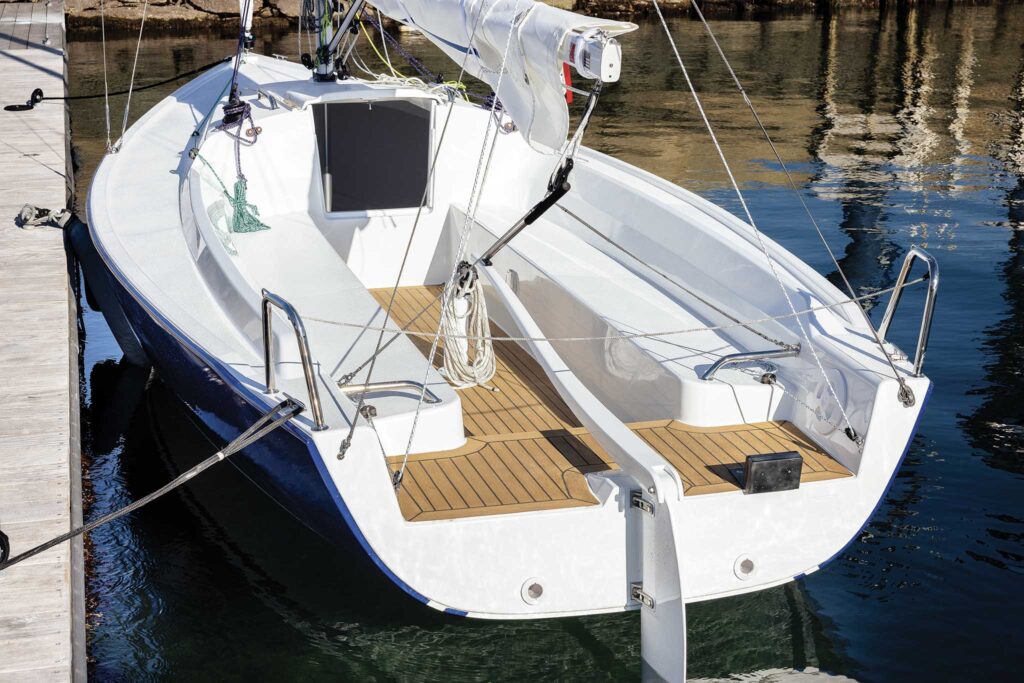
Ease of use also shines through with the rigging and sailplan. The halyards are secured at the base of the U.S. Spars single-spreader deck-stepped mast, keeping a clean deck, but are still within easy reach because of the short cabintop and sliding hatch. Adjacent, the rigid vang holds the boom in place during rigging and de-rigging—no need for a topping lift. The J/7 also features a pair of smooth Harken SnubbAirs for tensioning the 2:1 jib sheets with quick-adjust Ronstan cars. The North jib is secured to a Harken above-deck roller furler.
There is plenty of power in the main’s end-boom sheeting, but no traveler; instead a bridle. This still provides a decent level of twist adjustment for the large roach North main in the tradeoff for simplicity and reminds me of modifying racing dinghies for better performance. The backstay is adjustable, with a system that mimics that of the J/24: a trio of blocks on a split backstay. That quick and reliable control is accessible from the tiller and adds a depowering option.
My favorite part about a fresh look at a 23-foot daysailer is the performance gain. I love smaller boats, if for nothing more than feeling closer to the water. It gives a sense of speed, but in this instance it was even more than that. As we completed laps around the harbor, the J/7 was quick to accelerate and nimble through our tacks, jibes, and winter stick-dodging maneuvers. The displacement lets this design glide to weather through each tack and come out with plenty of speed; the J/7’s ability to point was also impressive. Feathering in the puffs allowed her to really excel to windward, and even without that strategy, she easily stayed on her feet.
The hydrodynamics focus goes well beyond the speed from a plumb bow and efficient lines and is evident in how the J/7 feels from the helm. Most boats with transom hung rudders, including early J/Boat designs, placed the pintles or gudgeons on the leading edge of the rudder. This means that any weather helm can quickly translate to high loads on the tiller. In the case of the J/7, the mounting hardware is recessed from the leading edge and mounted close to the center of lift of the rudder. The result is an exceptionally light feeling helm that anyone in the family can enjoy using, whether steering directly with the composite tiller or the tiller extension.
With just a main and jib there’s plenty of performance to enjoy a day on the water, but for those looking to push this boat a bit harder, there’s a fixed sprit option, enabling the use of an asymmetrical spinnaker. Thought has also been given to team and match racing, as evident by the ring on the mast for a conventional pole and symmetrical spinnaker arrangement.
Modernization has its benefits in materials. The J/7’s hull, deck, and structural bulkheads are built with biaxial E-glass and a Corecell foam core. High density core inserts are placed in way of high load deck hardware. It’s finished with a white gelcoat, but as seen on the first build, an aftermarket vinyl wrap can add a sharp customized appearance. In the self-draining cockpit, an optional Flexiteek sole not only adds plenty of grip but also a touch of warmth.
The sole in the vicinity of the transom is slightly raised, providing a secure-feeling cockpit while also delivering the benefits of an open transom, including the perfect swim platform (with the optional swim ladder). Outboard and aft, a pair of simple stainless pushpits form an ideal spot for an onboard instructor, even if that is just a parent stepping back and letting the kids handle everything. This aft area also provides clean access to the outboard motor bracket, with the security of an aft lifeline.
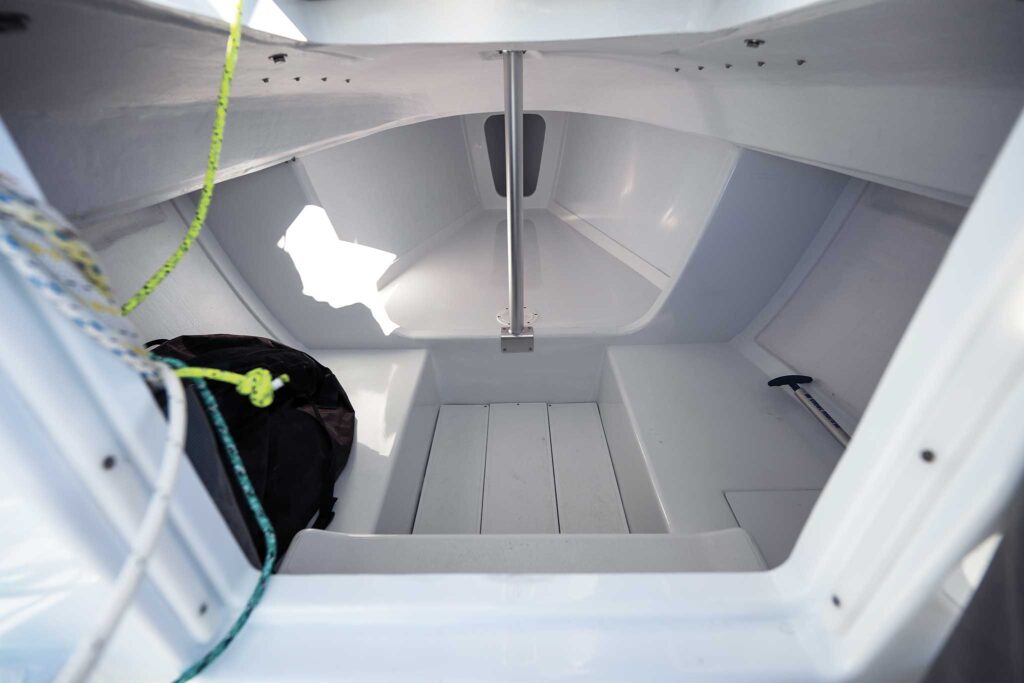
The interior, as expected, is fairly spartan. A well-secured step makes for smooth entry, and minimal deck hardware results in a clean overhead. The cabin offers plenty of room to get out of the weather and store gear. However, with two settees and a V-berth, it is well within the realm of possibility to enjoy a summer night onboard if you stash a portable toilet below and bring a cooler with some prepared food (or even a handy Jetboil for making your morning coffee).
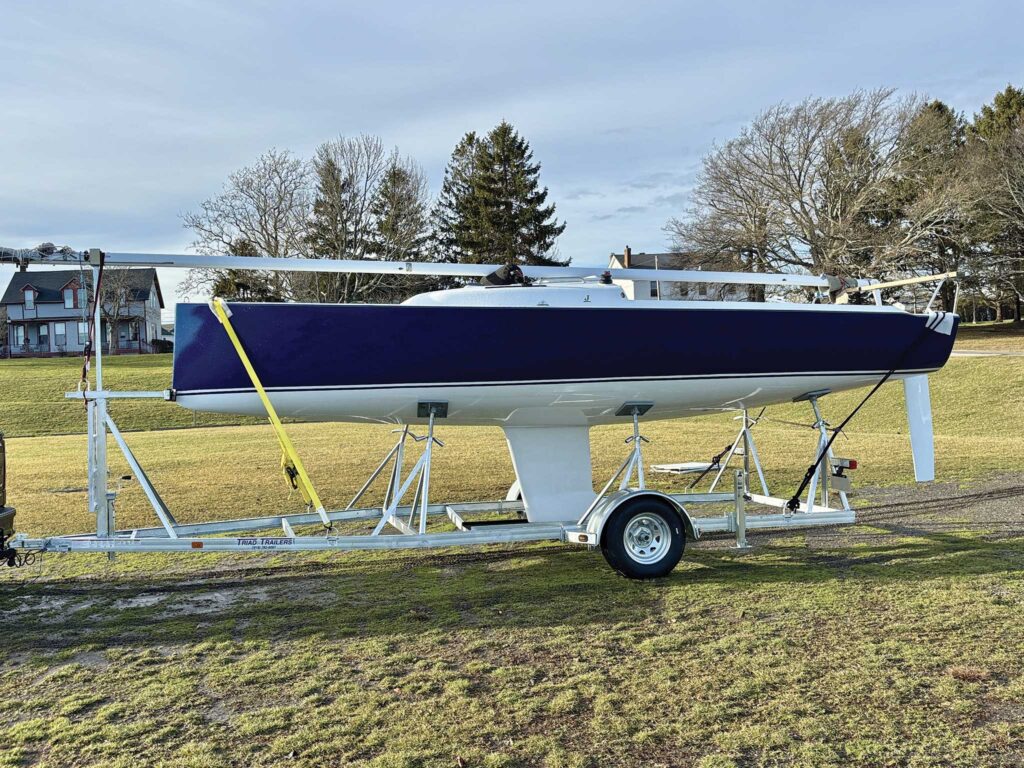
The J/7 would sit nicely on a mooring or in a slip, but there are plenty more options since it is easily trailerable and can be lifted by a single point hoist. Sailing on and off the dock, with ease, proved this design has few maneuverability limitations. And it can adapt to an extensive range of conditions. I expect this simple and responsive boat will create many wonderful memories, whether it is carrying a family exploring a high elevation lake or charging upwind through ocean chop and full of captivated students.
J/7 Boat Specifications:
LOA/LWL 23’1” / 20’10”
Beam 8’1”
Draft 3’10”
Air Draft 33’4”
Displacement 2,300 lbs
Ballast 1,050 lbs
Sail Area 256 sq ft (upwind)
Engine Outboard
Designer J/Boats
Builder J/Boats
Price $54,850 (base), approx. $60,000 (Sail-away: main, jib, boom cover, and Flexiteek cockpit)
For more on 2025’s Top 10 winners, click here.
J/7 Review: Final Thoughts
- Lively & stable: Quick to accelerate, sure-footed in puffs, and easy on the crew.
- Refined ergonomics: Big-boat comfort in a compact daysailer hull and deck geometry.
- Easy ownership: Clean deck layout, bridle in lieu of traveler, and simple docking/launching.
- Quality build: Biaxial E-glass/Corecell laminate with durable deck hardware and finish options.
July 2025