I’ve said it before and I’ll say it again: I like a boat that’s for someone. The design trend for so many years has been a regression towards the mean, closer and closer to this perfectly optimized build for the hypothetical typical sailor with more and more swappable, customizable features to make the same boat well suited for everyone. Sometimes it works, sometimes better than others, but I rarely fall in love with a boat that’s trying to do it all for everyone. The soul gets lost along the way.
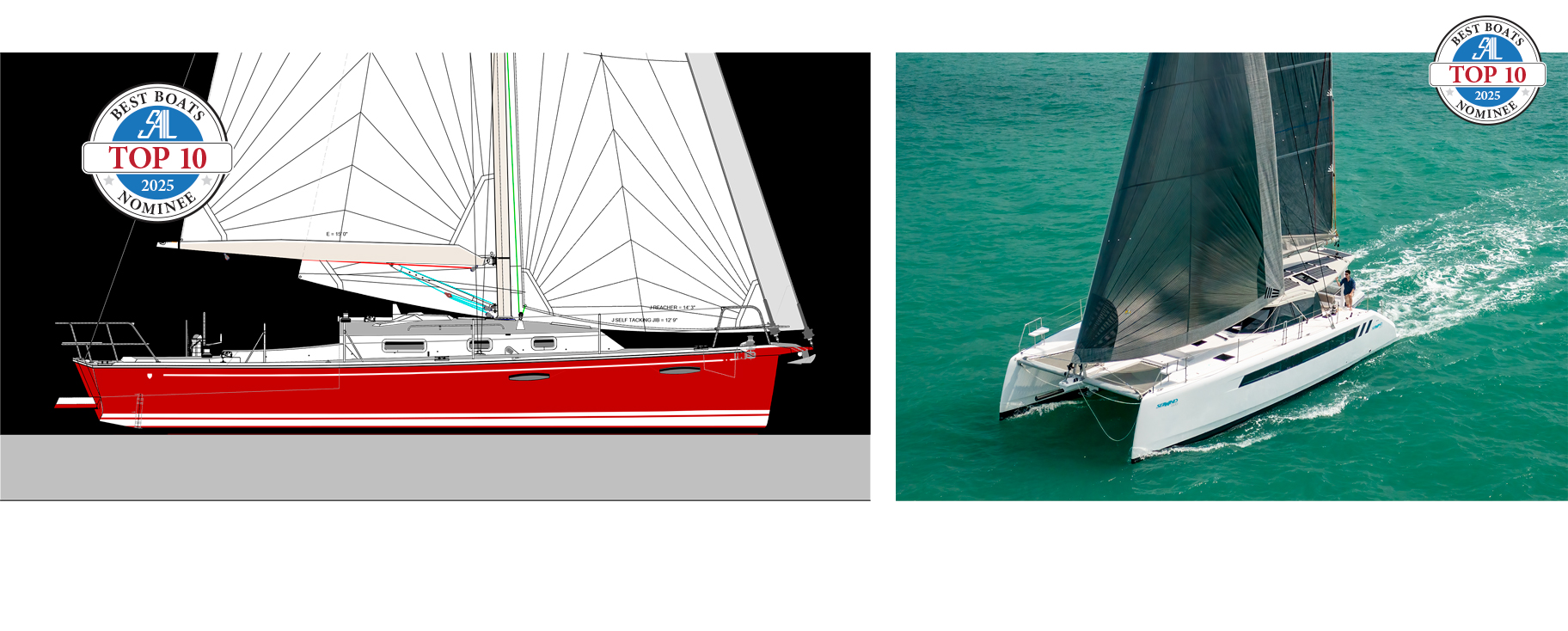
Enter the Pegasus 50. Even a cursory look through the boat is enough to see that there’s something a little different in its DNA. This build is simultaneously designed on salty classic ideals and creative innovation, making for arresting lines, stunning performance, and a few little design surprises that take the boat to the next level. It won’t be for everyone, but for the right owner, after seeing it there will be no competition.
Though hull No.1 first splashed in 2020, the boat is making its U.S. debut this summer and is expected at the Newport and Annapolis fall shows, where the lines to visit it are sure to be long. I was able to test sail the Pegasus 50 for two days off the coast of France last fall, seeing it perform in a wide variety of conditions as well as living aboard and getting a thorough feel for what an owner might expect.
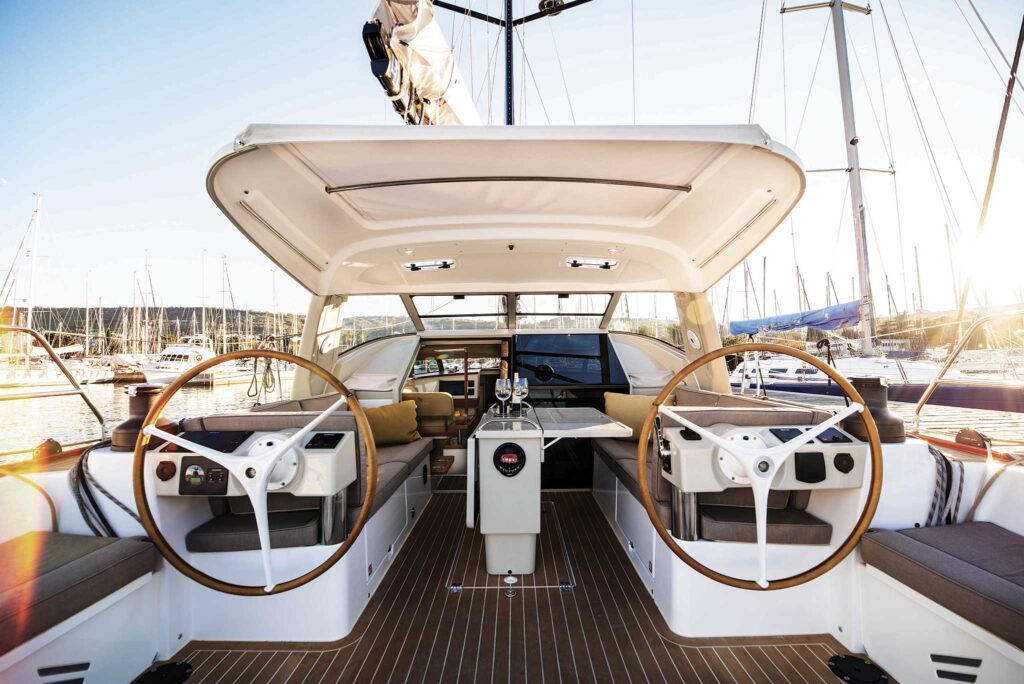
I don’t tend to prefer hardtops since they can obstruct sightlines forward and aloft while also keeping you from the wind and sunshine. If I wanted to be inside and sail by pushing buttons, I’d stay home and play the pirate Assassin’s Creed instead. But our test sail’s crisp, chilly mornings, sheeting rain, and cozy cockpit dinners had me reconsidering. The sightlines were still very good and the protection offered by the hardtop made a big difference when weather blew in. The added windage and weight aloft didn’t impact the seakindliness, even when we saw 38-knot gusts. Plus, like much else on the boat, it’s carbon, so the weight is minimized. The mainsheet arch is integrated into the hard- top, as is a retractable moonroof for better visibility aloft. Solar panels can also be mounted here. Eisenglass windows throughout can be rolled and lowered to improve ventilation or keep out the weather.
As for push-button sailing, it’s a matter of use cases. Having to recruit a few handy people just to get off the dock limits how and when you can use the boat, and for the owner I sailed with, being able to handle things on his own meant he could bring any guests along he wanted and not have to think twice about their skills—or lack thereof.
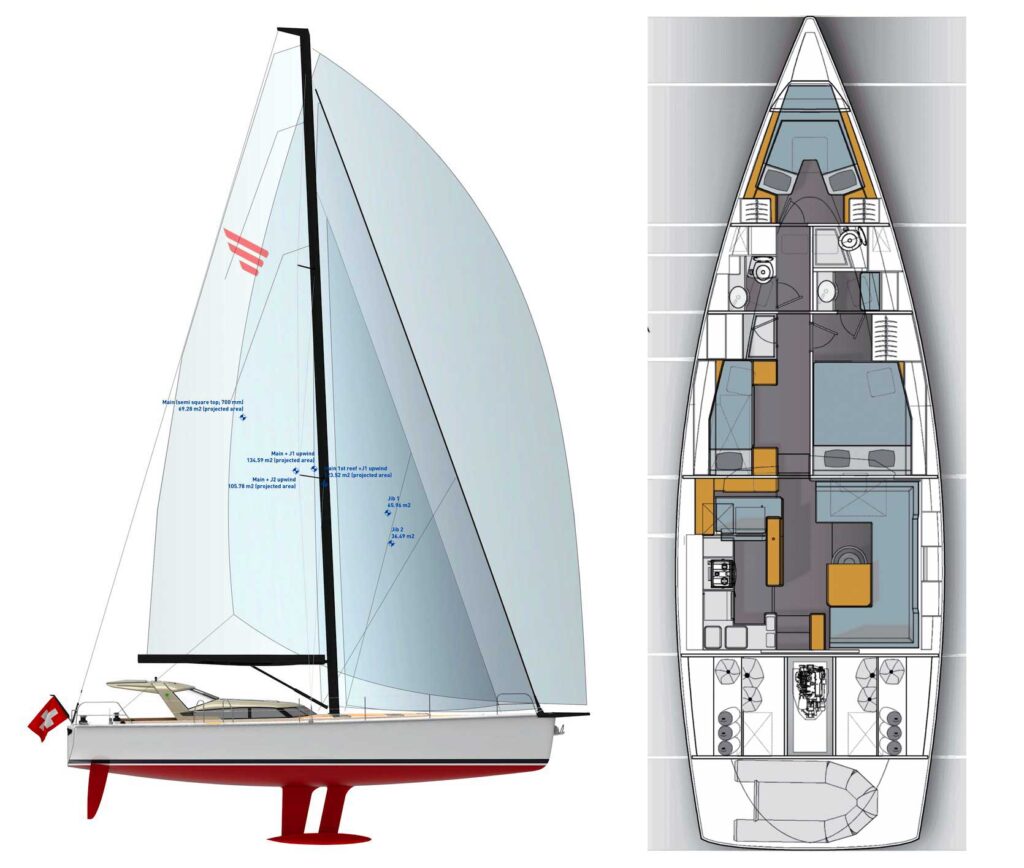
The carbon mast has been placed as far aft as is practical, meaning that the most real estate is given to the easiest sails to adjust and stow, the furling headsails. This means shortening sail is totally feasible for one person. The boom has also been shortened, which takes load off the mainsheet arch, keeping weight low and improving the boat’s motion. The sailplan is optimized for 10-20 knots of wind, and an outer sheeting point for the J1 is built in for reaching.
Twin helms and rudders keep the boat grippy when heeled over, but the real star below the waterline is the keel. Giorgio Provinciali, an America’s Cup designer currently working on optimizing foiling monohulls, was called in for the project. The goal was to maintain the boat’s longitudinal stability without compromising on speed potential, something that was not possible when fitting a more traditional keel design to this boat. The result was a tandem keel, inspired by New Zealand’s 1992 America’s Cup boat, with two fins in line, attached to the same keel bulb. The Pegasus’ separation is less dramatic than on Kiwi Magic, but still extremely effective underway (and well worth the chilly dive under the boat to see).
The interior layout of the Pegasus 50 is a departure from the bright and beamy open spaces you see all over boat shows these days, but it’s not different for the sake of bucking a trend. Instead, each space has been carefully considered and optimized for that particular sailor: someone salty and experienced who values functionality over fashion—but wouldn’t mind also being best looking boat in the harbor.
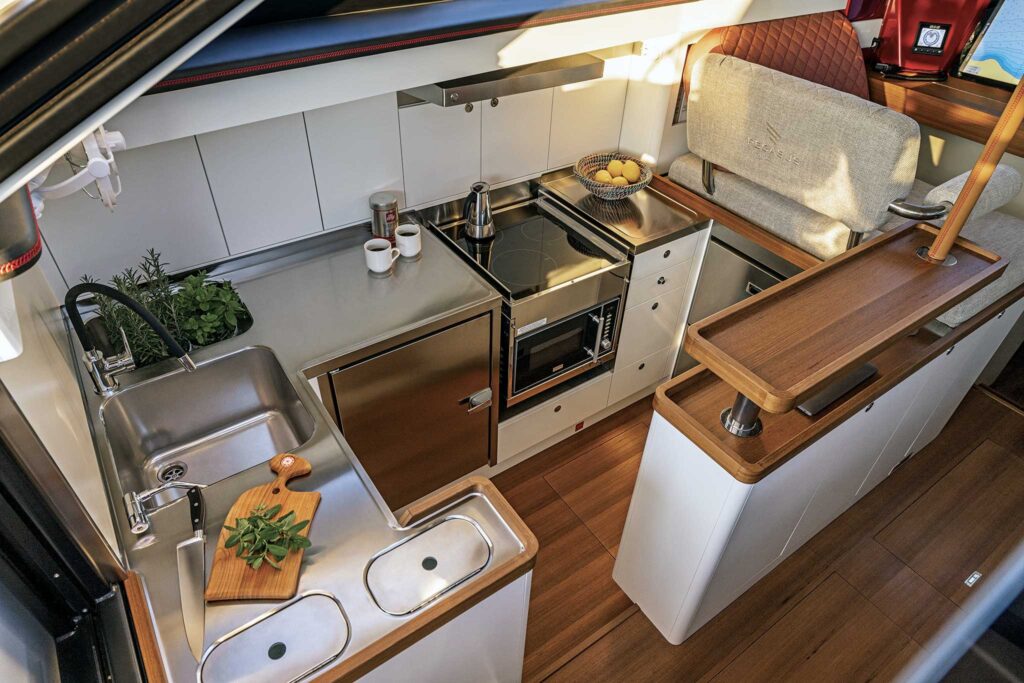
The cockpit is slightly recessed, so it’s only two steps down to the galley, which is accessible via a futuristic-looking sliding door. No companionway stumbles or hoisting up a dog here. The galley is an easy continuation of the cockpit, and whoever’s sitting farthest forward on the port side has the counters in reach, great for passing food and drinks, especially underway. The galley is narrow with a tall island bracketing the workspace, making for a really stable place to cook and enough stainless steel counter space to satisfy the owner—a Parisian who loves to cook—who I was trialing the boat with.
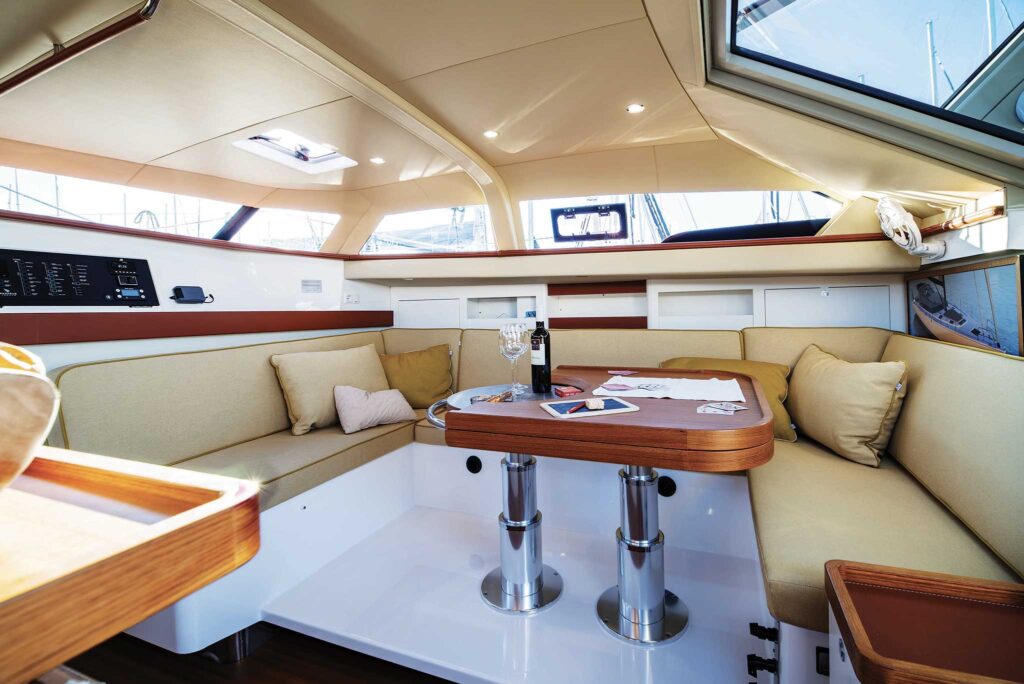
To starboard is an astonishing bit of innovative thinking. The salon table and U-shaped settee is built as one component with an adjustable gimbal. On either tack, you can pivot the table and settee up to 10 degrees and lock it in, encouraging cups and plates to stay in place and providing a more comfortable workspace for any remote workers and rest space for crew. Studies have found that seasickness and fatigue are minimized when a person is leveled and two thirds of the way aft, so Pegasus has designed this common area with that in mind.
Forward, there’s a full width helm station akin to something you might see on a powerboat with a panoramic view through a windshield, made possible because the salon and galley are on that split level. The trade-off is that there are no aft cabins, and the forward ones are functional but a little tighter than what you’d usually see on a 50-footer these days, particularly the owner’s cabin. But the majority of time onboard isn’t spent in cabins, and elevating the common spaces encourages crew to spend time together, so Pegasus went for it, and it works.
Since there are no aft cabins, the remaining space below the cockpit is dedicated to two easily accessed technical rooms with the engine and generator in between. Port has the water-related equipment and starboard has the electronics, keeping them safely separated. An electric version of the boat is available with double the standard version’s 715w solar array and two Oceanvolt 15kw ServoProps. Carbon is also used frequently throughout to save weight and improve performance.
The price point for all of this is steep, but everything is included down to the linens and the silverware that fits perfectly into the custom drawers. According to Pegasus, once you add a watermaker, sail upgrades, and all the other options that come standard on the Pegasus 50 to most other 50-footers, you’re not looking at much of difference in price points at all.
I was on the boat for two days. The first was windless while the second had a squall chasing us down the coast for much of the afternoon, so I had the opportunity to see the boat perform in a range of conditions. The owner spent the first day demonstrating all the things that were possible with just one person, from setting sails to raising and storing the gangway in its designated spot, doubling as an aft bench in the cockpit when underway. The electric winches are well placed, undoubtedly by someone who’s spent a lot of time on the water, and are in easy reach of the helms. The cockpit table and surrounding seating was well protected from the elements when our storm blew in.
The real proof of concept comes in the boathandling, and the team at Pegasus should be very proud of this one. It’s a smooth, clean ride with an exceptionally well balanced sailplan. The helm feel had the perfect amount of feedback, and only when we saw gusts in the 30s did the boat start to feel overpowered (we’d pulled the headsail in preparation but still had the full main up). When it settled to a sustained 23 knots true, we were seeing up to 12 knots of easy boatspeed with one reef in the main and the self tacker out.
All in all, this is a true sailor’s boat designed on its own principles, not just following the pack. It will be a brilliant passagemaker, a joy to sail, and an innovation trailblazer. Plus, we were stopped by two people in port and one French coast guard boat, all commenting on how beautiful the boat was—a ringing endorsement if I’ve ever heard one.
LOA 49’
Beam 15’10”
Draft 7’8” (std)
Displacement 25,794 lbs (loaded)
Ballast 8,487 lbs
Sail Area 1,386 sq ft (main and 104% jib)
Engine Volvo D2-75
Designer Marine Designs
Builder Pegasus Yachts
Price €1,250,000 (U.S. $1,426,000 as of press time)
For more on 2025’s Top 10 winners, click here.
July 2025