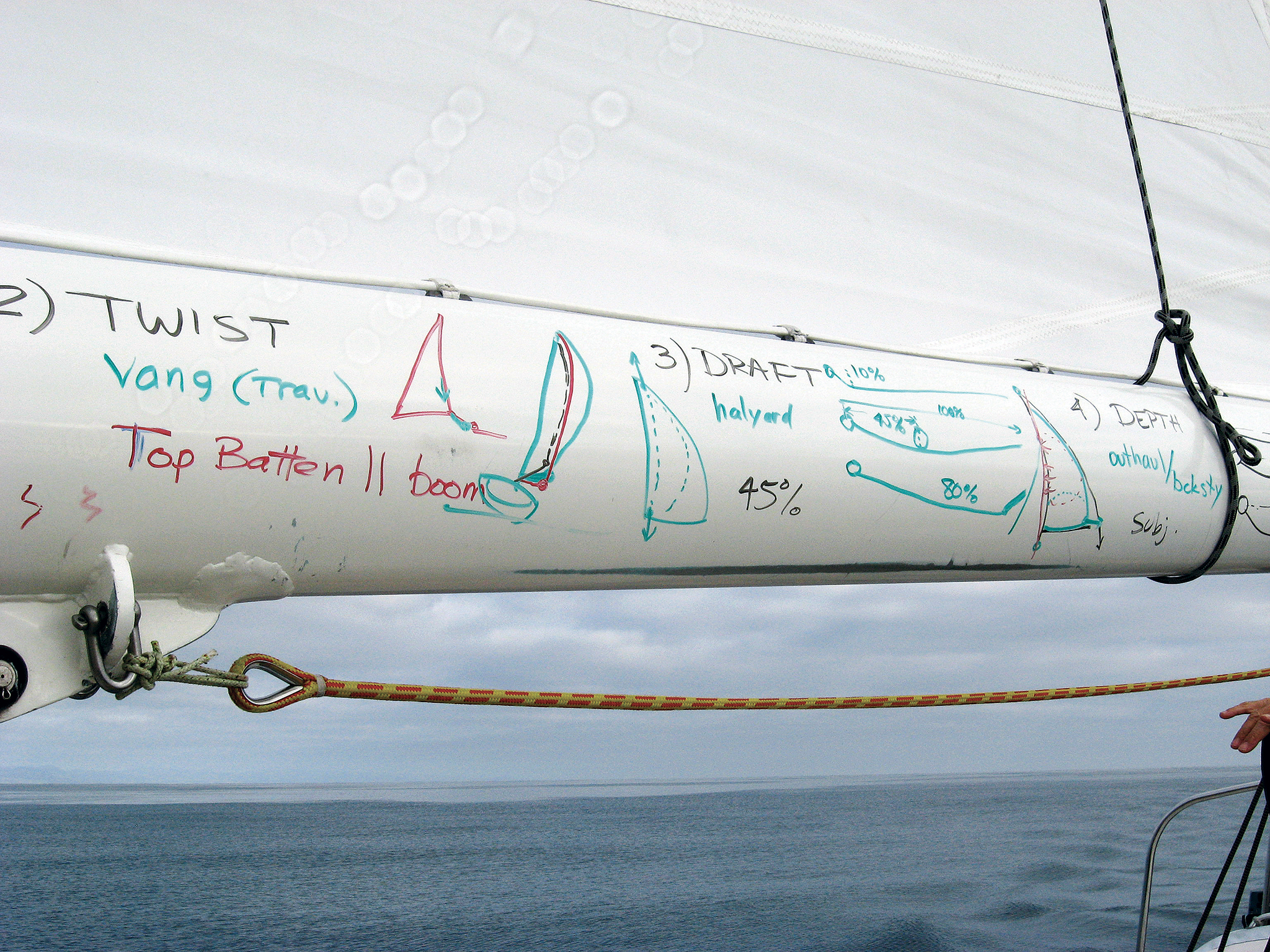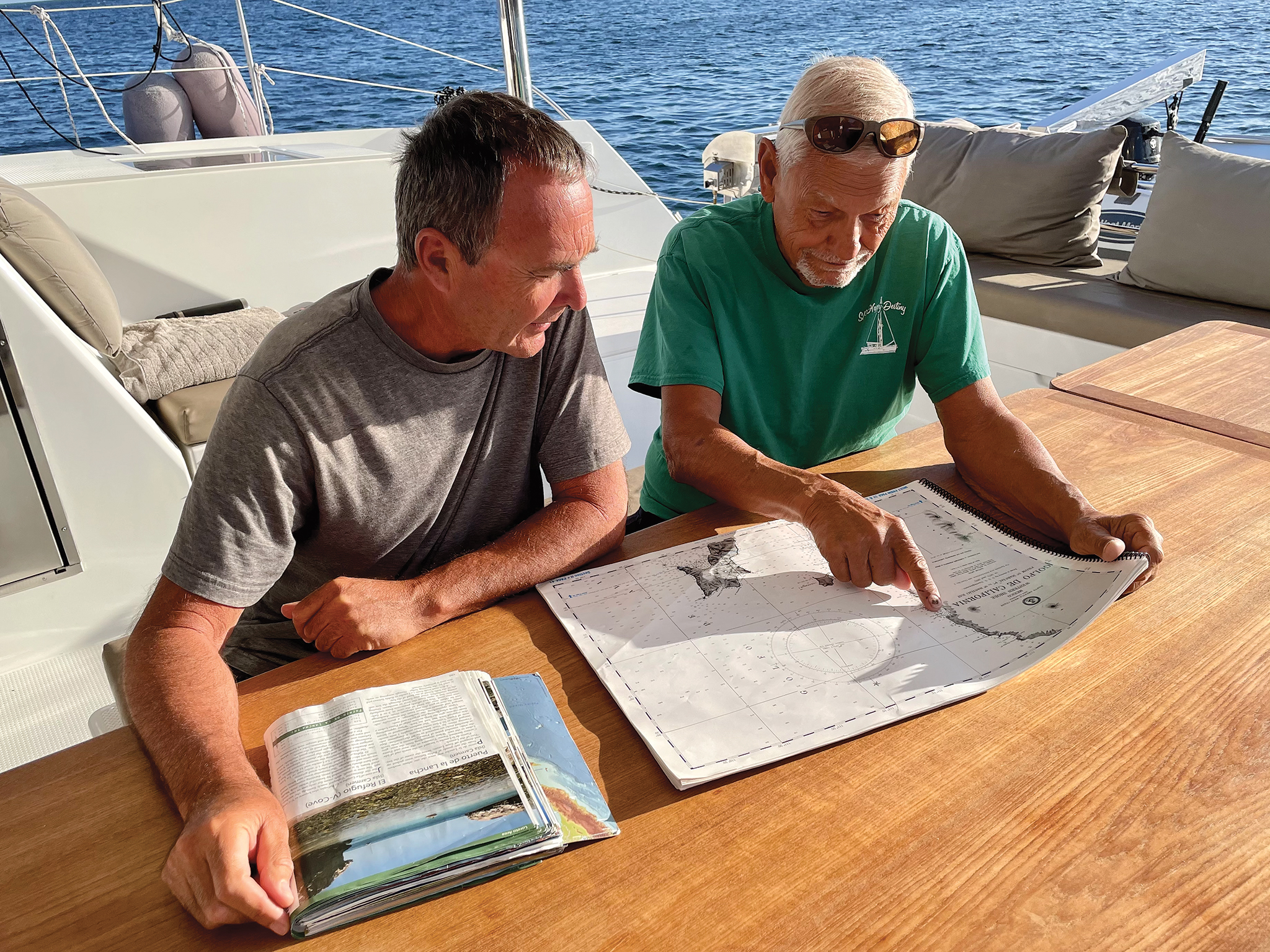
Exactly one year ago in this column, I postulated that AI had a steep hill to climb before it could master many jobs, mine included. Back then, I had asked ChatGPT to generate an image of a woman captain on a sailboat and received back an illustration so spectacular that one reader accused the magazine of doctoring it to make it more ridiculous. Wondering about my job security once again, I asked ChatGPT to create an image of “two people anchoring a catamaran.” Phew! I think I’ll survive to write another column.
The New York Times recently featured an article that attempted to measure the carbon footprint of AI. For reasons unknown, they measured the energy required to answer a standard ChatGPT query in number of slices of bread toasted. In other words, it takes 20 to 30 watt-hours of energy to answer a query, which is enough to toast one slice of bread. Apparently, it can take 50 gigawatt-hours to train a new AI model (two billion slices of bread). I have no idea how many slices of bread I burned generating the anchoring image, but between the energy needed and the water required to cool the data centers, I think I just blew my allotted carbon footprint for the year.
Time is an itch, a fleeting moment existing only in the present, and I feel its creep every year as we head into another boat show season. As autumn gets its footing, I feel buoyed by the energy in the crisp air, the promise of new boats to sea trial, and the oodles of articles that’ll generate. As the marine industry grinds into gear, it causes unholy chaos on the docks, leaving us testers running to catch the next ride and reach for the tantalizing promise of the next “groundbreaking leap in boating technology.” It’s a hamster wheel that I run for the love of the game. It makes me think though, “Will AI and its pilfered experiences ever feel the joy of hoisting sail on a new hull? Does it care? Will I be stupid enough to underestimate my competition?” Too late!
Once at my desk, I usually struggle to put my sea trials and impressions into words; words that AI will quickly consume in its gluttonous quest to “out-me” me. I believe AI’s creators consider this a “benevolent larceny.” It doesn’t feel benevolent though since with any query, my own words are spat back at me from the digital cauldron. It’s weird to read an anonymous, suspiciously enthusiastic writer that is “borrow” my test results. I don’t remember George Jetson thinking too deeply into the threats posed by his flying car or electronic dog, so why am I sweating this?
AI digs through the volumes written about sailing, anchoring, and chartering like a raccoon on a dumpster dive for human experiences. It uses three-dollar words for 50-cent concepts and is allergic to simple expressions. It’s particularly fond of bland bulleted lists, and I half expect it to slip in an emoji when discussing parallel hybrid propulsion. But I realize my horse is high because the day is coming, and none too slowly. The running joke is, “Why did AI send flowers? Because it knows the end and wants to get ahead of things.”
Friend or foe, AI is a different kind of hell; one that makes me feel itchy and rudderless because I don’t know how to work with or against it. It’s making progress even if currently, it’s still got a way to go. One day, it’ll catch up and tick off the things I think I’ve mastered. Until then though, it still can’t drop a hook in my anchorage.
This article was originally published in the October 2026 issue.