“Too late to check bags,” the Jet Blue agent nearly spat at me as if I should’ve known. Long lines of vacationers headed to cruise ships had caused unexpected delays at check in. This hiccup wouldn’t spoil my trip. I was headed for a week-long charter trip aboard a Skye 51 ketch named Arbella, sailing from Antigua to Grenada on the warm tropical Caribbean Sea. Nothing could dampen my mood.
I heaved my weighty bag over my shoulder—no wheels allowed on sailboats—and hurried through the zig-zagging corral. Before getting to the scowling TSA agent’s podium, I remembered I’d packed my sailing knife. A four inch blade for cutting through sailing lines, tethers, and cables would definitely be confiscated. I sadly tossed it in the trash.
Arbella is owned by Tucker Mitchell and Catherine Nurse, an engaged couple who’ve called the boat home since they moved aboard in July 2024. Their charter business, Salty Coffee Sailing Expeditions, doesn’t provide luxury passages with gourmet catered meals, flowing cocktails and turn down service. Instead, Tucker and Catherine offer guests immersive training in offshore sailing and cruising. Charter guests are instructed as working crew, standing watches, navigating, hoisting sails, washing dishes, logging data, and learning CIQP procedures (customs, immigration, quarantine, port authorities) when arriving to and leaving from foreign countries.
I needed all the experience I could get. I’d grown up in Western Pennsylvania where fishing boats, not sailboats, reigned supreme. It wasn’t until I was a Navy wife and mother of three young children that I became intrigued with what I thought was a sport for fancy people from places like Greenwich, Connecticut.
In 2004, I signed up for weekend dinghy sailing courses at Norfolk Naval Base in Virginia on Lasers, 420s, Hobie Waves, and Hunter 170s. I’d intended to learn keelboats, too, but the Navy had other plans. My husband left for a yearlong deployment to Djibouti, East Africa, and my sailing came to a screeching halt. When he returned, we received orders for landlocked Stuttgart, Germany.
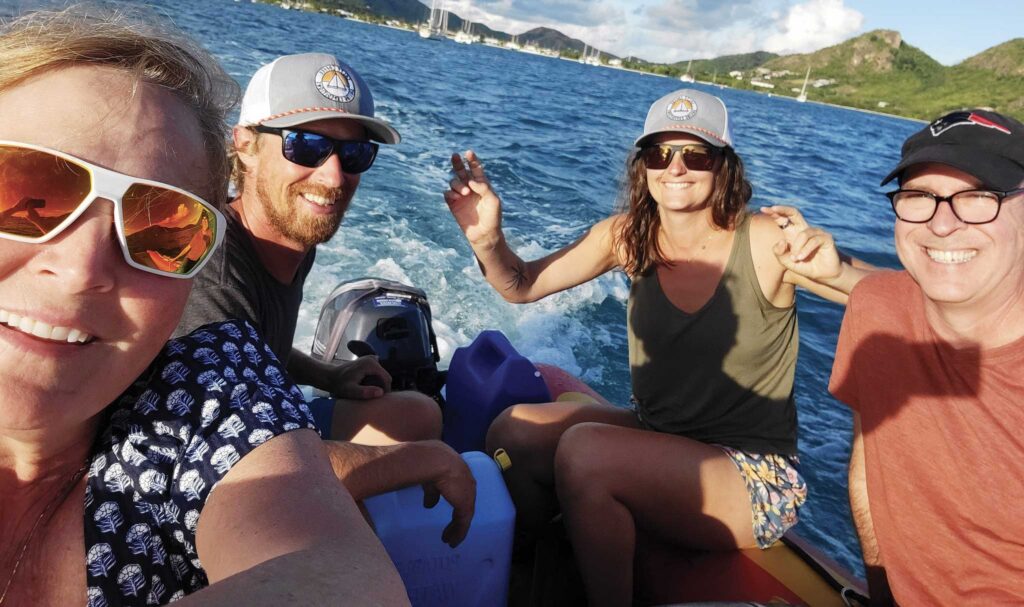
Photo: Lisa Smith Molinari
It wasn’t until our family landed at Naval Station Newport, Rhode Island that the opportunity to sail resurfaced. I joined the base yacht club, glomming onto people with boats who let me help with deliveries or crew in races, including a return trip from the 2024 Newport Bermuda Race. When the chance to crew on Arbella presented itself, I thought my ship had come in.
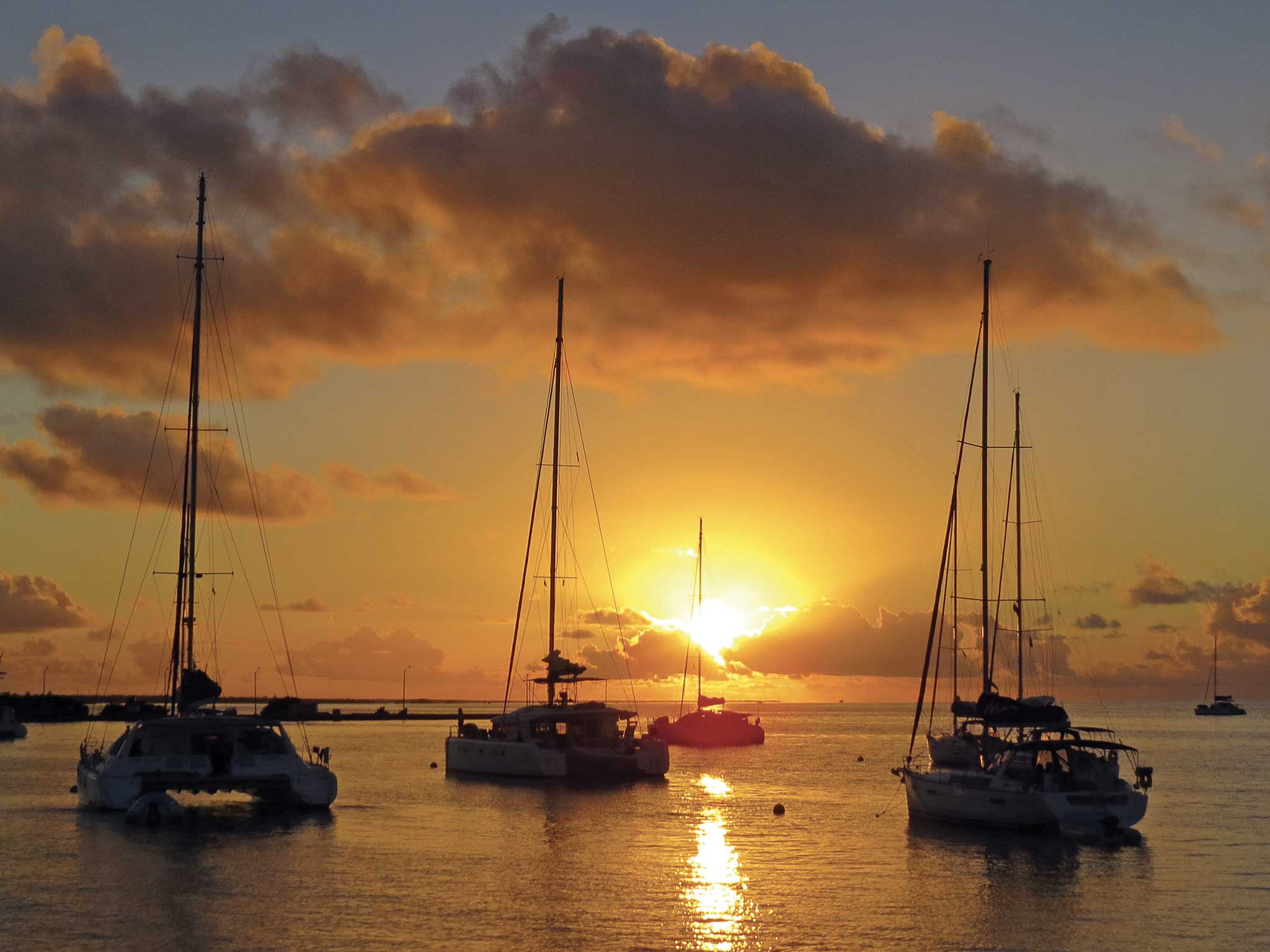
By mid-afternoon, I was taking a cab from the Antigua airport to Jolly Harbour where Arbella would provision before the voyage to Grenada. That evening, I watched an orangey-pink sun sink below the Caribbean Sea. Thanks to raucous music blaring from the marina bars, sleep proved challenging in my rented room.
Neither I nor the jolly partiers at the marina knew that at 2am, just 600 miles away, U.S. Special Forces were raiding the presidential compound of Nicolás Maduro in Caracas, Venezuela to arrest him and his wife to face drug and weapons charges.
I woke on Saturday morning, oblivious to world events. My plan was to take a cab to see English Harbour before my rendezvous with Arbella that afternoon.
“The flights was cancel, in an out. Oh Lord, there will be no peace in this world,” a local woman said in thick Antiguan drawl outside the hotel’s reception office.
“I don know what we do,” her female companion responded, shaking her head. “He’s the devil, he is.”
I asked the hotel’s receptionist if she knew of a reliable cab driver “like Robert who picked me up from the airport” for my trip to English Harbour.
Despite the enexpected departure from the original itinerary, the trip was full of other adventures, including extra time to explore Antigua, a few literal bumps in the road, and a leisurely fish-catching pace once underway.
“Robert’s brother sometime do this kind of thing,” she said. She made the arrangements and told me to wait at the curb. Robert’s brother would be there in 15 minutes. Half an hour late, his beat up minivan arrived. On our way, I asked about the cost to take me to and from English Harbour (a rookie mistake to talk price after committing). He quoted me $60 USD each way—highway robbery.
“Pardon me?” I asked when he mumbled something about two miles into our drive.
“You ever eat Roti?” he repeated. “We get Roti,” and before I could protest, he’d pulled up to a brightly painted shack. I tried to explain I needed to hurry to make it back to board a boat, but he was already on the shack’s porch conversing with local men waiting for the Roti they’d ordered through a window. When finally back in the van, the driver peeled the paper from the steaming Roti and took a big, saucy bite. In the rearview mirror, I noticed his eyelids were at half-mast. Something wasn’t right.
“I stop for gas,” he slurred, and I put the puzzle together—my driver was high as a kite.
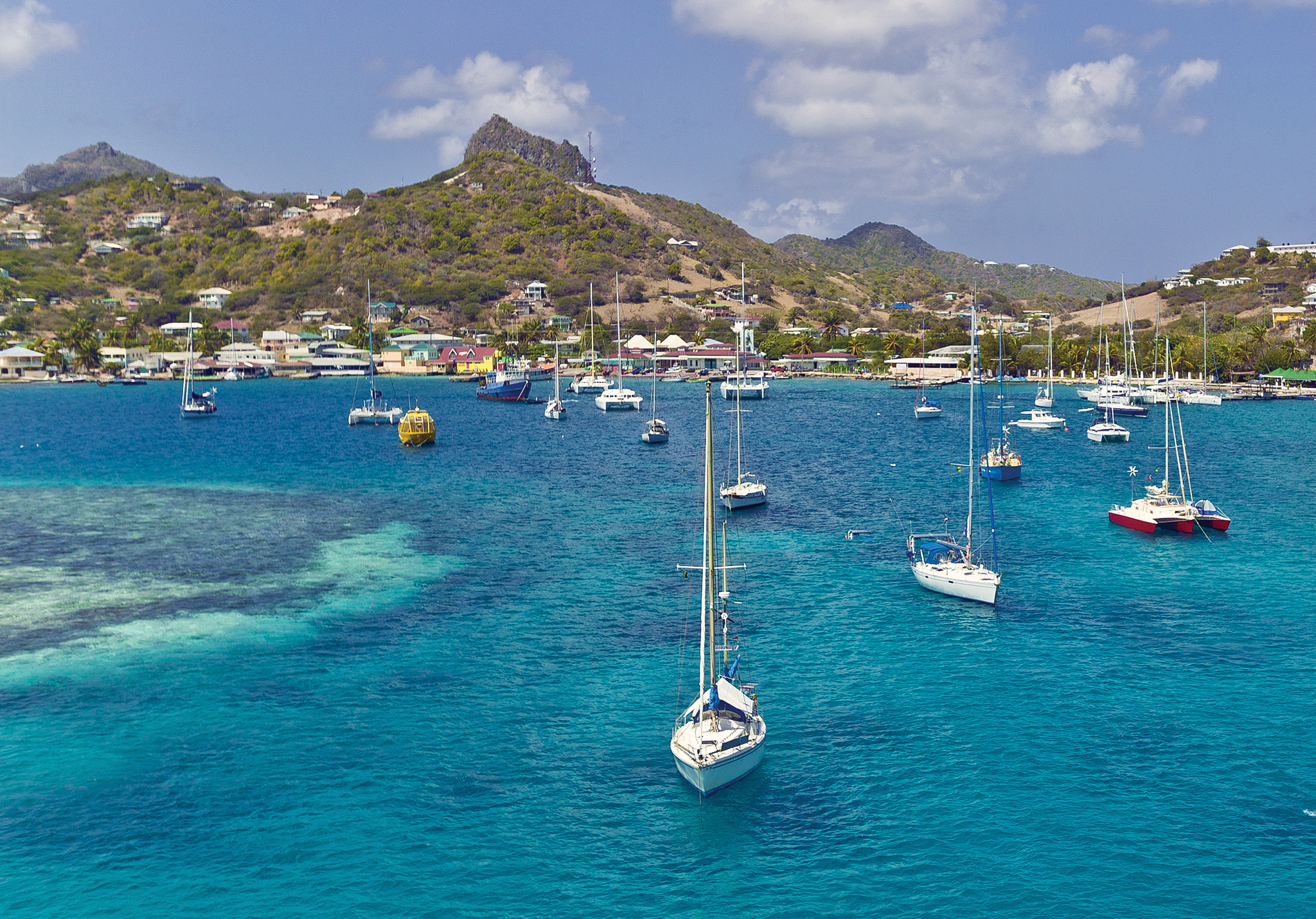
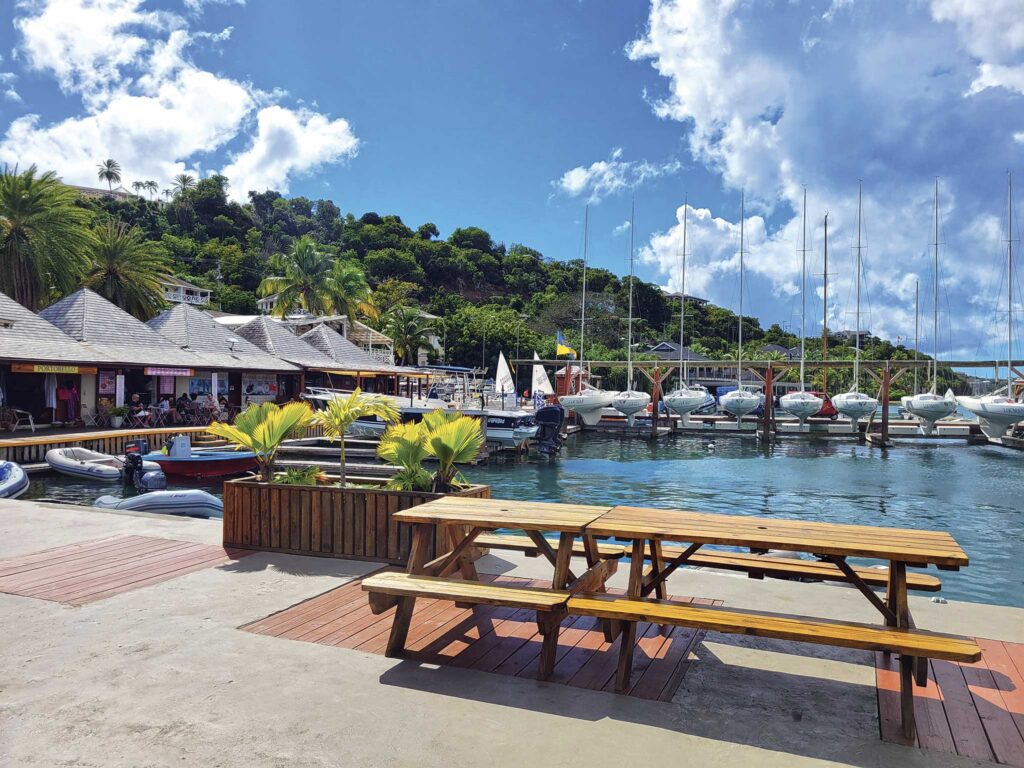
Miraculously, I made it to Nelson’s Dockyard, paid my addlepated cabbie for one way, and told him, “I’ll find my own way back.” I stopped for a rum punch to calm my nerves then strolled the docks, taking in the beauty of English Harbour, a UNESCO World Heritage site. Lush tropical foliage grew on steep mountainsides that stopped at the turquoise water’s edge. The dockyard was clean, organized, and well-appointed. The mega-yacht crowd lounged at breezy tables lunching on fresh salads. Another rum drink went down smoothly while I pretended to fit in.
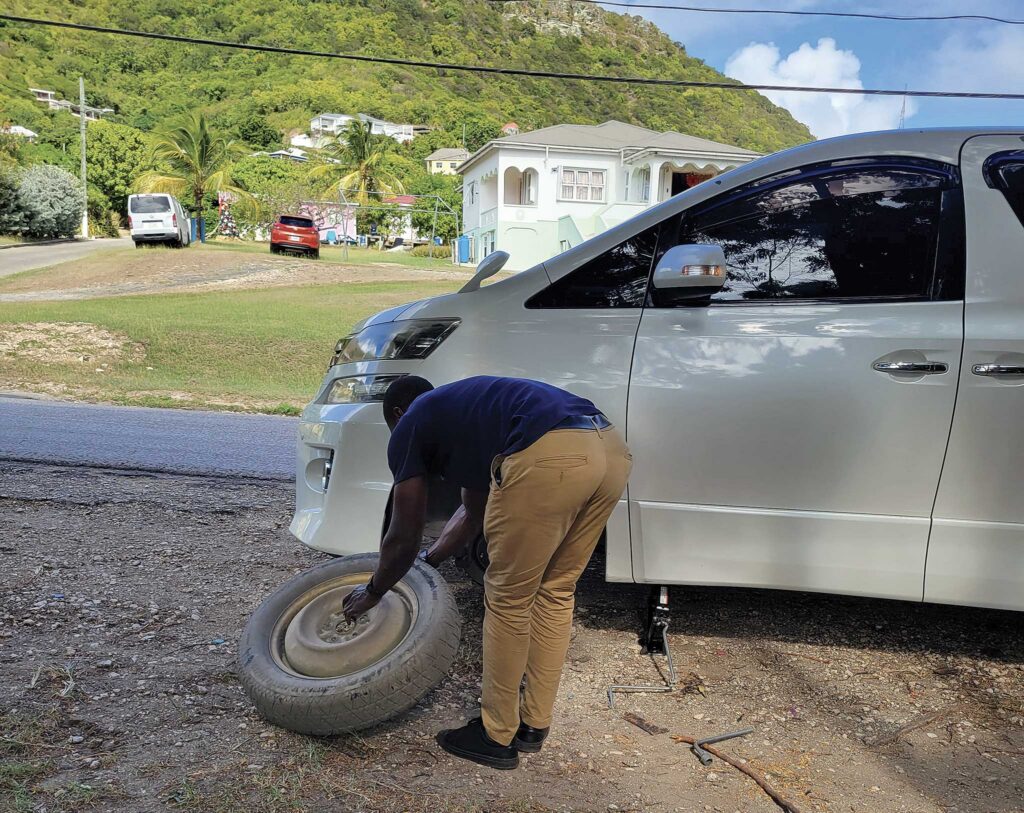
I found a sober cabbie for my ride back, but fate was feeling mischievous that day. In the rainforest, we suffered a flat tire. Thankfully, the spare was installed in no time flat, and I made it to Jolly Harbour just in time.
Waiting for Tucker to collect me at the dinghy dock, I read texts and learned that the second charter guest’s flight had been canceled due to commercial airspace closures related to the U.S. military operation in Venezuela. He would arrive one day later than planned. My mind raced. Would military operations in Venezuela continue? Would there be more airspace closures? Would we be stranded once we arrived in Grenada?
“Hey, Lisa!” Tucker smiled through his sun-bleached beard. He had a comforting presence and looked cut out to cruise oceans—outdoorsy, athletic, seasoned, perhaps a bit underfed. We jaunted to Arbella’s anchorage off of Saracen Point.
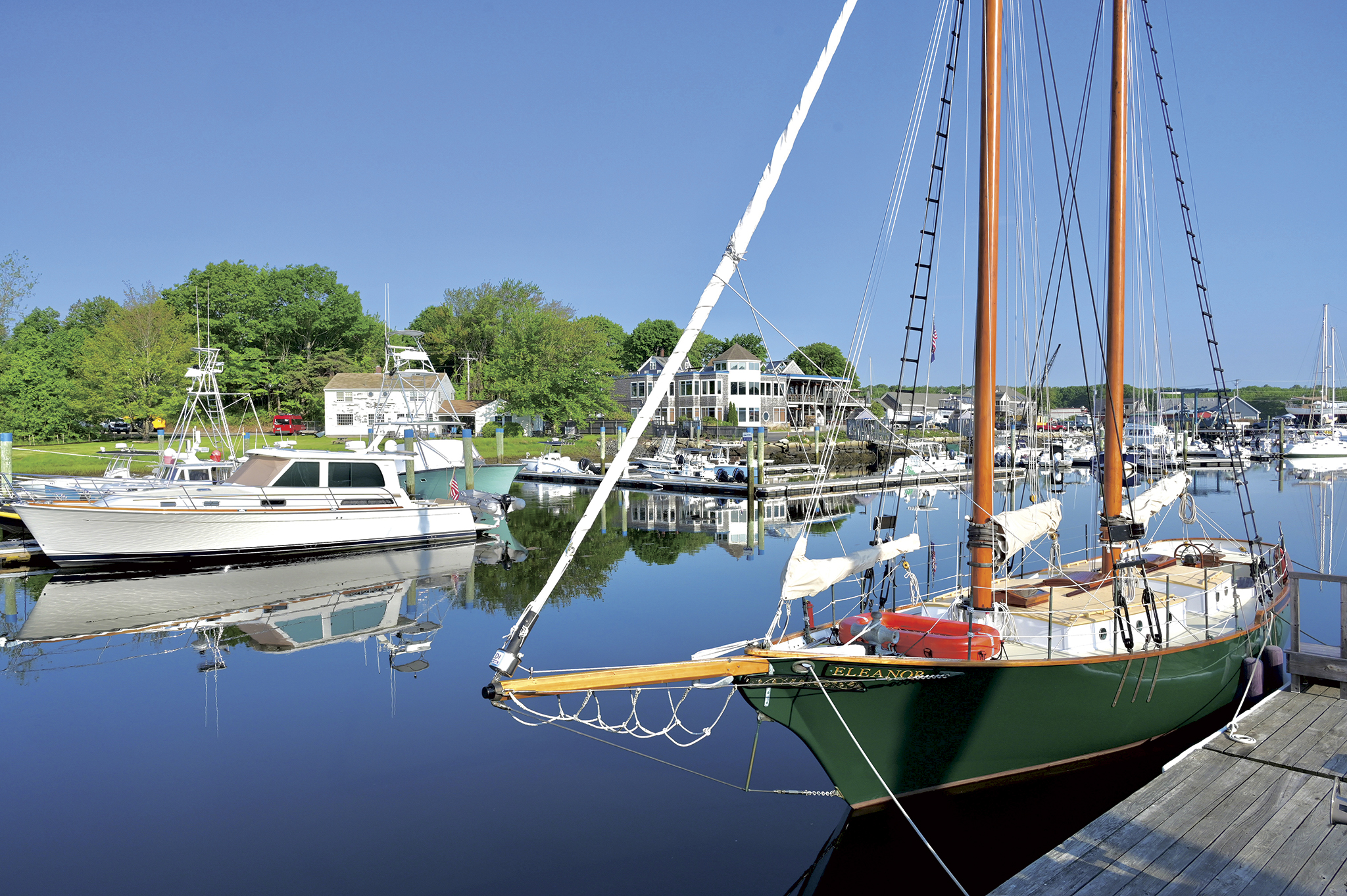
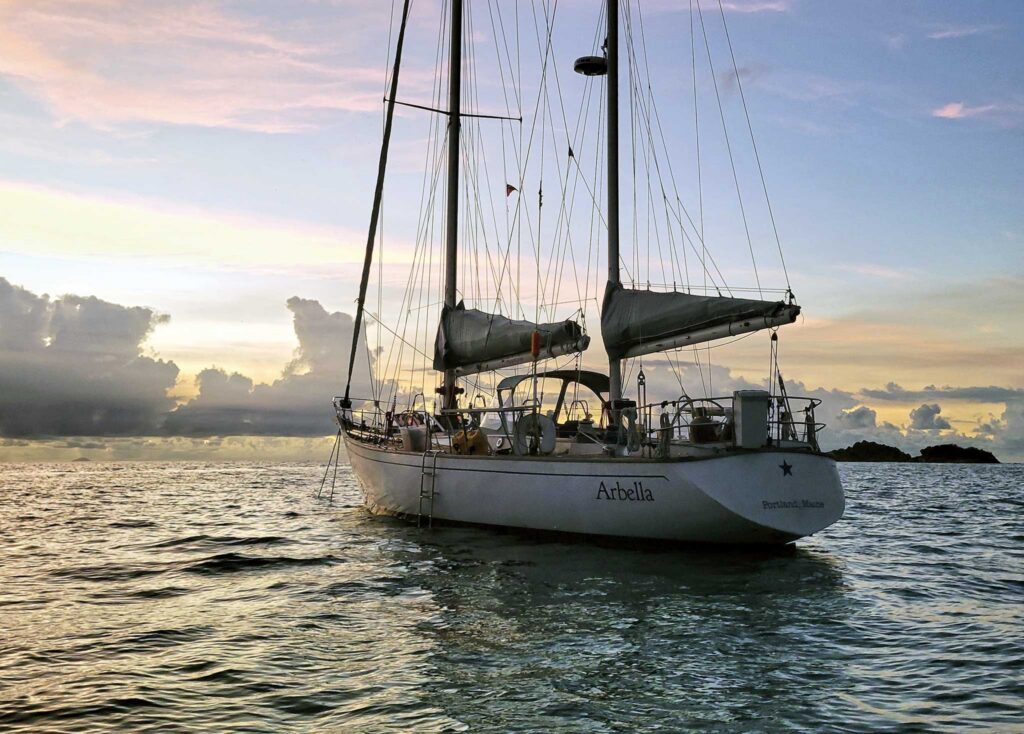
Arbella is a fiberglass masthead ketch designed by Kauffman and Ladd and built in 1981 in Taiwan. At 51 feet in length and 14 at the beam, Arbella is known for being a sturdy, comfortable cruiser, with good righting ability and a manageable sail plan. Its stable performance and roomy, teak interior make it a safe choice for blue water passages.
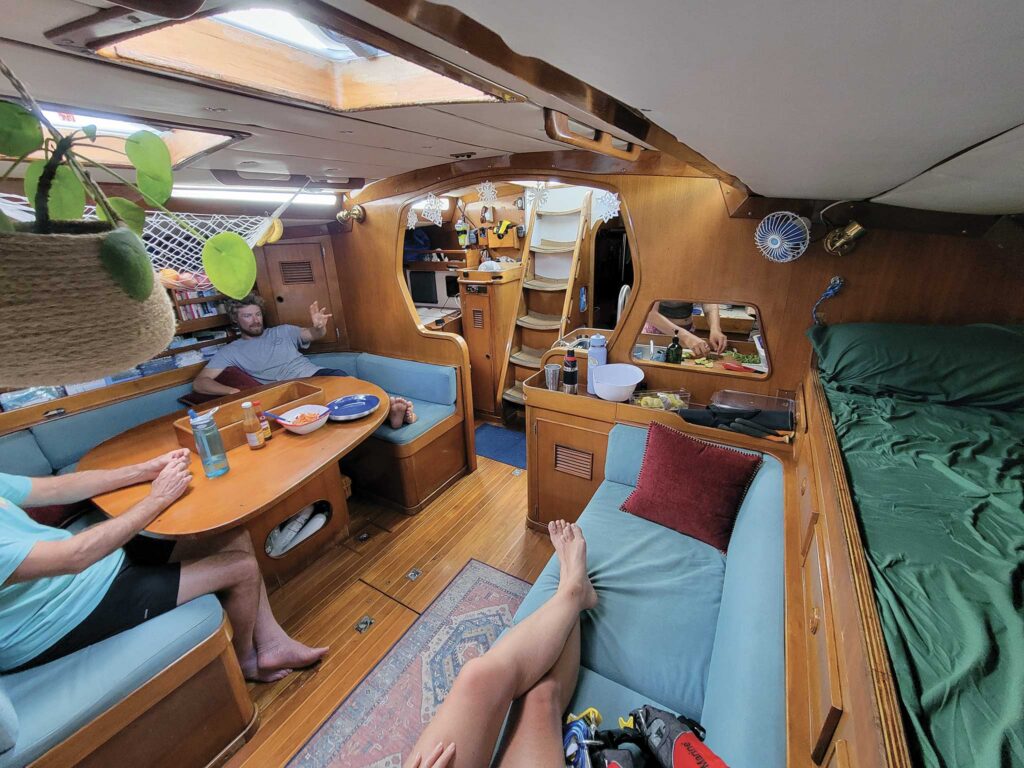
Once aboard, I met Tucker’s fiancée Catherine, who is naturally pretty with kind, earthy vibe. After a brief tour of Arbella, we chatted around the roomy salon table.
“Voyage for Madmen! One of my favorites,” I said, scanning the many books on shelves above the banquette. Along with adventure classics, Tucker and Catherine also had an impressive collection of instructional books including Heavy Weather Sailing, Skip Novak on Sailing, How to Sail Around the World, Boatowner’s Mechanical and Electrical Manual, Nigel Caulder’s Cruising Handbook, and many more.
Tucker described himself as “a vagabond” of sorts, in whom his father had instilled wanderlust when the family moved to Europe to travel in a camper for a year. Catherine is the ninth of twelve children, genuinely happy in the background, never seeking attention or credit even when she deserves it.
“Tucker’s mother described him as being obsessed with all kinds of things,” Catherine said. If Tucker was curious about something, he’d go to great lengths to learn every detail about it, diving in head-first and hands-on.
Over dinner in the cockpit of quesadillas, salsa, black beans, and sour cream, I learned the couple’s backstory under a full Wolf Moon.
Tucker and Catherine met in their junior and sophomore years, respectively, at Maranacook High School in Maine. Tucker, smitten with Catherine immediately, took her on a Valentine’s Day “date” which entailed eating drive thru fast food in his car. Despite Catherine’s family moving away and Tucker going off to Sarah Lawrence College to study anthropology, they maintained their relationship. When Tucker graduated, he beelined to Colorado to be with Catherine, then a French major at Fort Lewis college. Tucker worked as a waiter and became a ski bum.
Going to sea was not part of the couple’s plans until, in their mid-twenties, they took a sailing trip to Belize. Tucker and Catherine decided then and there, they would buy a boat and live aboard while cruising. Their inaugural boat, Vagabundo, a 30-foot S2, served as the first learning platform for Tucker’s sailing obsession.
“We had no idea what we were doing,” Tucker laughed, describing his trial by fire sailing education. They sold Vagabundo in 2018, then sailed across the Pacific on a friend’s boat, Havili. During Covid they bought Dragonfly, a 1980s Prout Catamaran in rough shape. Tucker repaired nearly everything and sold Dragonfly for 2.5 times his purchase price. Catherine remembered, “Vagabundo taught us to sail, Havili taught us we could sail long distances, and Dragonfly taught us how to fix boats.”
Tucker and Catherine had racked up thousands of offshore sailing miles during their adventures. “We were getting feast or famine fatigue,” Catherine recalled. They were ready to take steps toward their dream of starting a charter sailing business. Tucker attended The Landing School of Boat Building and Design in Portland, Maine. In May 2024, he found Arbella, which had been on the hard for three years. He moved her to Maine Yacht Center where he worked, and began the overhaul.
Tucker replaced Arbella’s mast step, standing rigging, transmission, seacocks, and battery bank. He rebuilt the steering system, rebedded hatches and deck hardware, bought a new main and mizzen, and completed countless smaller projects. Catherine and Tucker moved aboard in July and started Salty Coffee Sailing Expeditions that winter. Their dream had become a reality.
During the 2025-2026 season, they offered ten charter passages, ranging from 360 to 950 nautical miles through the Atlantic Ocean and Caribbean Sea, with planned landings in Nova Scotia, Bermuda, Antigua, Grenada, USVI, Dominica, Jamaica, Mexico and the Bahamas.
Over French press coffee and cream the next morning, Tucker broke the news: we would not be headed to Grenada after all. Given the U.S. military operations, the airspace closures, and threats of further unrest, the safest course was north to the U.S. Virgin Islands.
Again, my mind raced. On one hand, I’d miss a week beating against the Christmas Winds. I wouldn’t learn about tacking upwind, I wouldn’t spend watches reefing and changing sails, I wouldn’t need my new Helly Hansen rain pants for sea spray.
But on the other hand, I’d be able to fly home at the end of the week. Catherine had told me that Tucker’s intense attention to detail made her feel safe. Now, I knew exactly what she meant.
While we waited for the second charter guest to arrive, Tucker tinkered with the furling drum, and Catherine and I donned fins and masks to scrape barnacles from Arbella’s hull. It was satisfying work, dragging plastic spackling spades across wide swaths of the boat’s underbelly, watching mollusks pop off into the clear water. Two silvery fish hovered nearby, eyeing morsels.
That afternoon, Tucker waited for the second charter guest while Catherine and I gained access to the marina showers with a bit of criminal ingenuity. “I seem to have forgotten the code to the showers,” I fibbed in my best yacht-owner voice on a call to the marina office. My plot worked, but karma rendered the water pressure a mere trickle.
Mark, the second charter guest, was a sailboat owner from Boston, Massachusetts, who aspired to cruise in his retirement. Catherine welcomed him to Arbella with a delicious dinner of creamy coconut chicken curry with Indian spices and chickpeas over rice. The cozy teak salon lent itself to storytelling, so we lingered long after the meal.
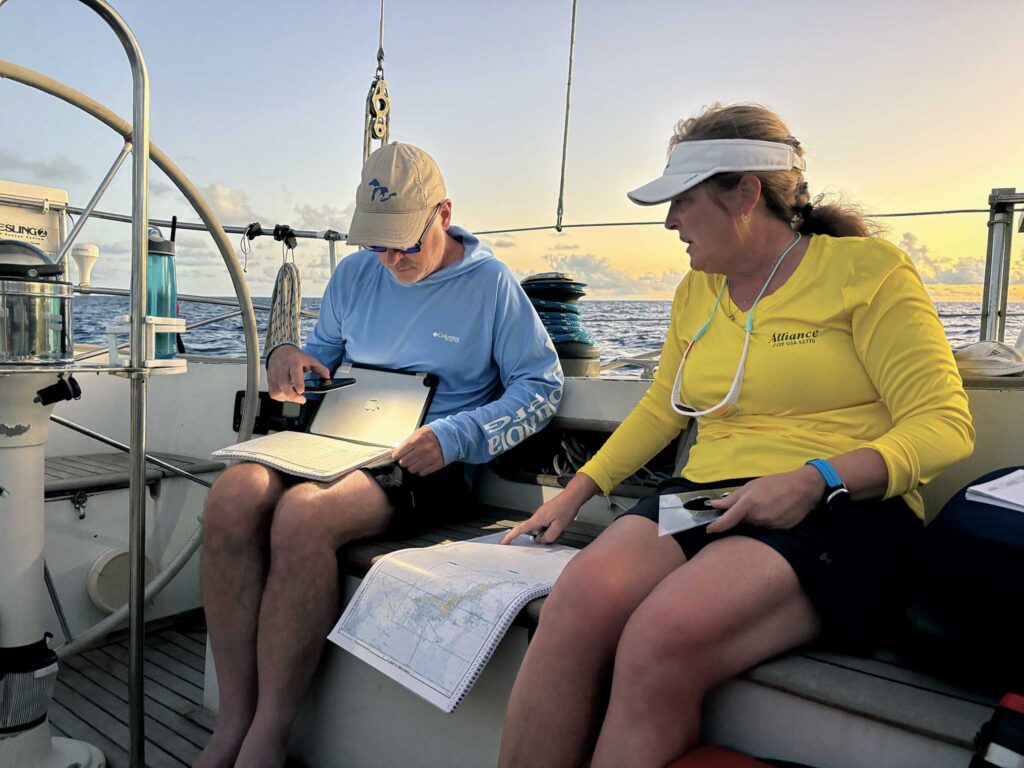
The next day, Tucker gave Mark and I detailed briefings on safety and boat systems, including reefing, logging data, Navionics, charting, self-steering, Furuno radar, and more. The wind forecast wasn’t great and the new itinerary cut a significant number of miles off the trip, so we had more time to kill shoreside.
Midday, we hiked an undeveloped road below Pearns Point intending to find an uninhabited beach on the opposite side of the peninsula. Instead, we found the posh Hermitage Bay resort. Palm trees framed a creamy white crescent dotted with tasteful teak chase lounges, paddle boards, and Hobie Bravos. A staff member picked leaves off the soft sand. The tinkling of glasses came from a palapa where guests gathered for afternoon cocktails. With rooms costing up to $4,500 per night, we were most definitely in the wrong place.
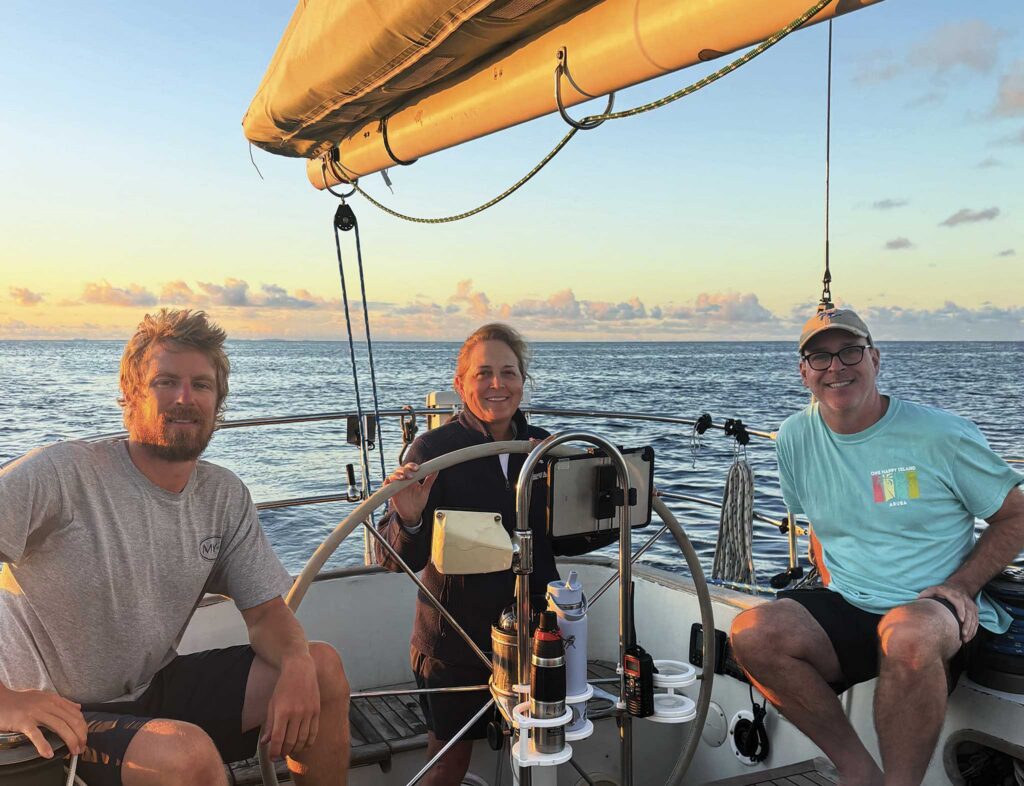
After dinner aboard Arbella, I broke out a set of cards from an old Nautical Trivia game. We lazed on the salon cushions with our bellies full of pasta and read aloud perplexing questions about signal flags, right of way, terminology, and maritime history. Tucker triumphed, but even he joked, “All are humbled before the mizzen mast.” Yawns banished us to our bunks, where gentle rocking worked better than Ambien.
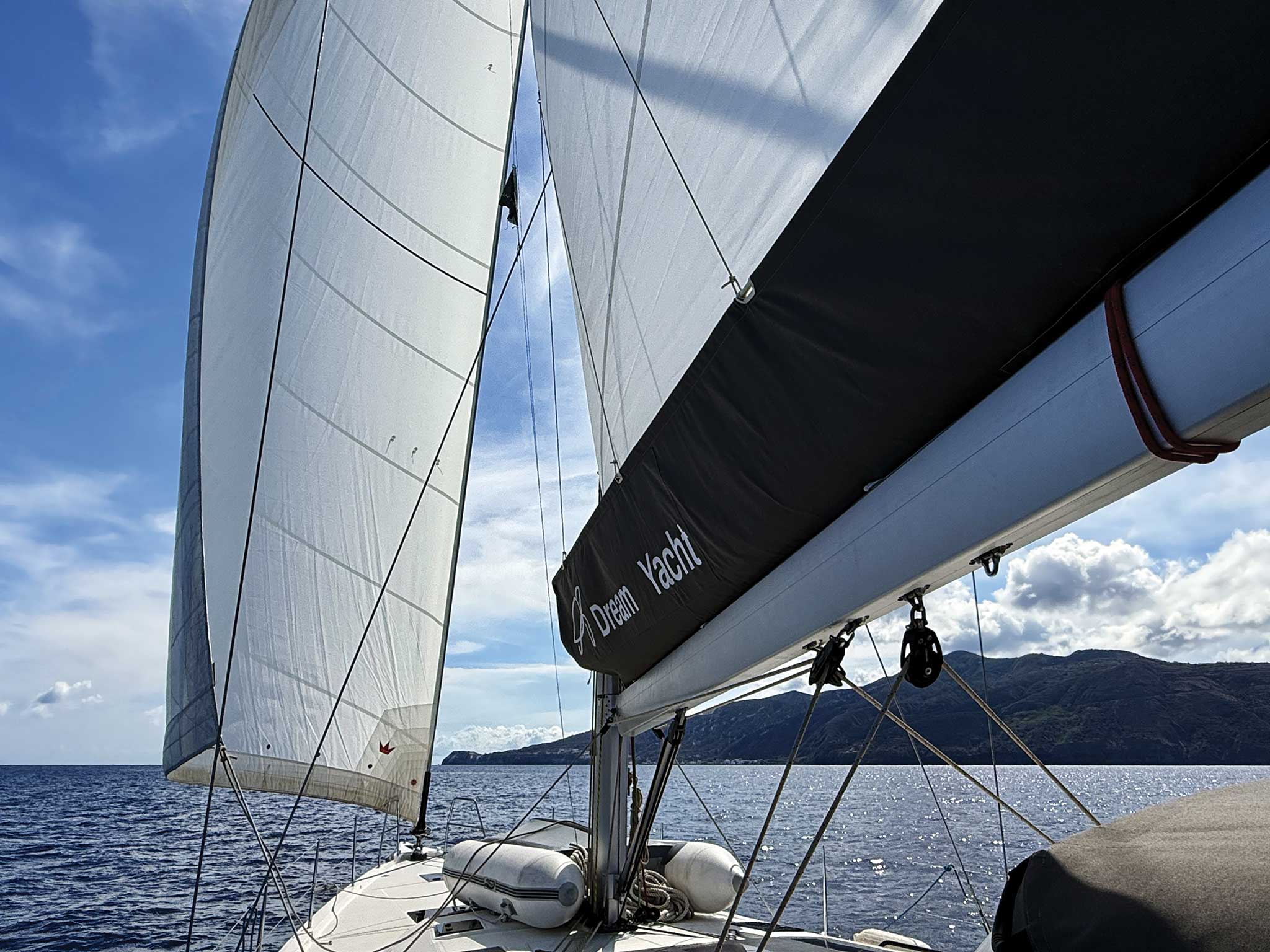
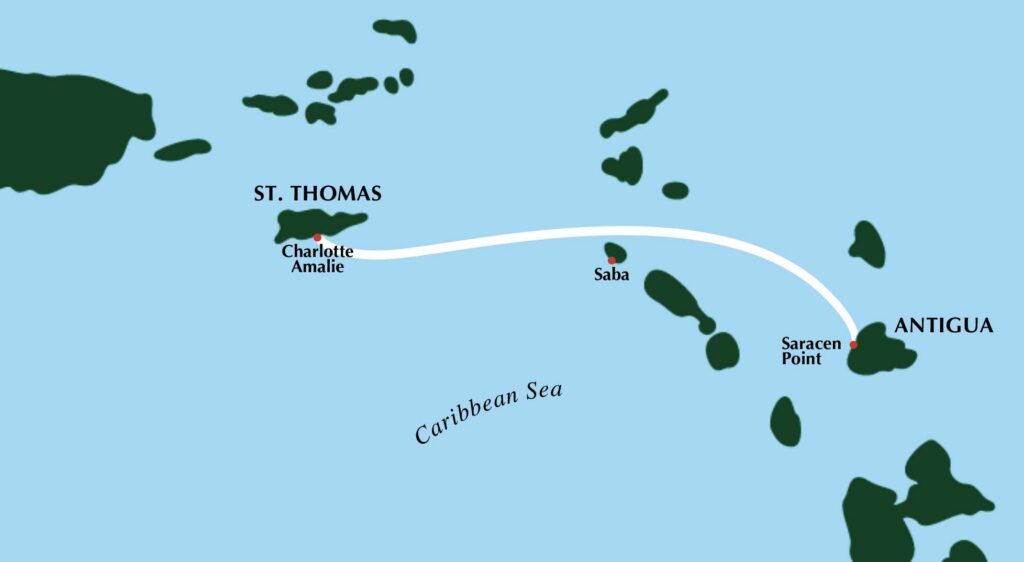
The next morning Catherine made beautiful breakfast bowls of yogurt, granola, almonds, raisins, sliced banana, and hemp seeds. We prepped to depart and waited for wind. At 2pm, we gave up, pulled anchor and motored out of Jolly Harbour without so much as a whisper of breeze, bidding farewell to Antigua, bound northwest for St. Thomas. Sightings of rainbows, flying fish, and boobies entertained us as Arbella purred along a glassy sea.
Mark and I scrambled from our bunks for the 2am watch, learning that a seven knot northwest wind had arrived the previous evening, too on the nose to raise sails. Nearing midnight, it veered northeast, allowing Tucker to turn off the engine and hoist the main and genoa. In the moonlight, Arbella sailed along smoothly until our final watch hour, when the wind suddenly picked up to 18 knots, swung southeast, and chilled.
Tucker appeared on deck as if teleported from below, and pointed to a squall aft of us, dark and looming. Quickly, we furled the genoa halfway, sheeted the main out to port, and eased the traveler. The squall passed behind without leaving drop of rain on our decks.
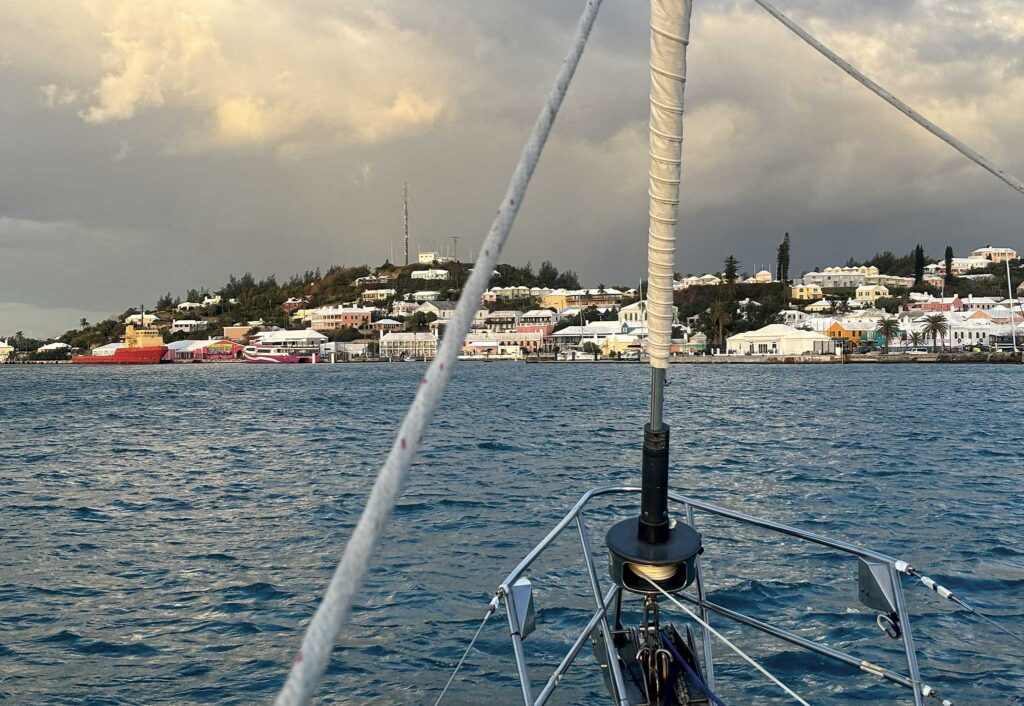
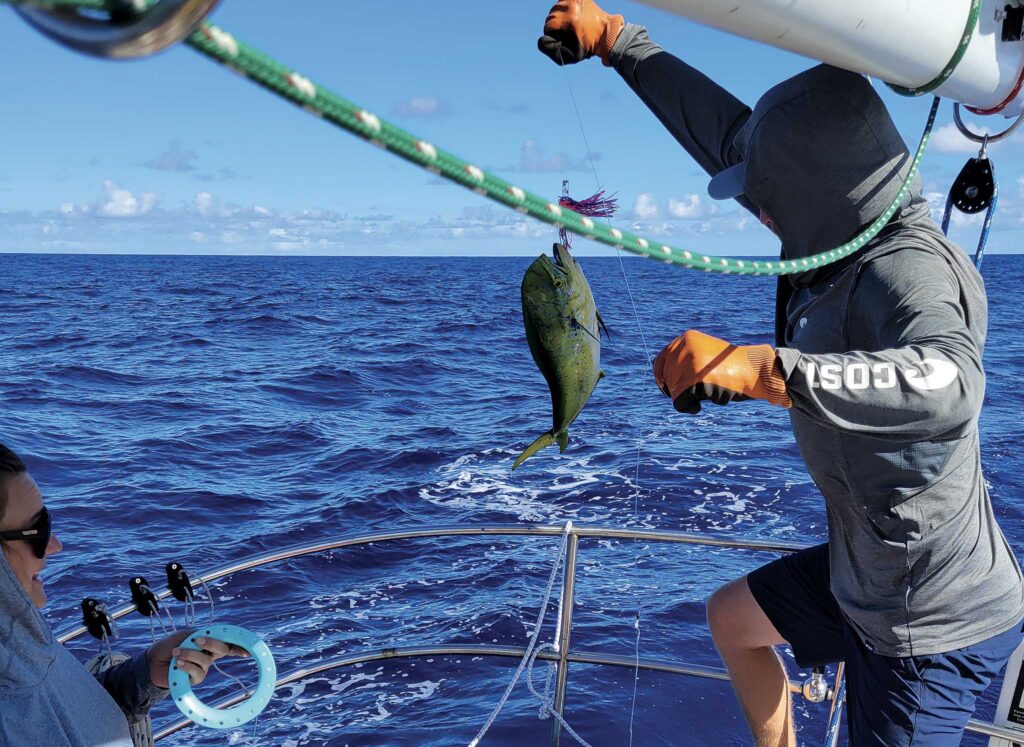
During our afternoon watch, Tucker trailed a fluorescent fishing lure behind the stern. We forgot about it as it skipped and dove in the boat’s wake. Hours later we heard, “Fish on!” He’d hooked a technicolor Mahi Mahi! We devoured a freshly sautéed filet in the cockpit with a squeeze of lime.
By our next overnight watch, the motor was back on, pushing Arbella’s sails along at 3 or 4 knots. Saba had disappeared, but the lights of the Virgin Islands were visible. A waning moon cast shadows on deck. Shooting stars skimmed across the night sky.
We’d been instructed to steer clear of French Cap, a formidable rock poking sharply out of the sea, upon our approach to St. Thomas. Behind us, we spotted two mammoth cruise ships headed in our direction and able to reach 30 knots. We changed course to get out of their trajectory and still clear French Cap to starboard. The hulking Majestic Princess passed to port, her bridge 128 feet above us.
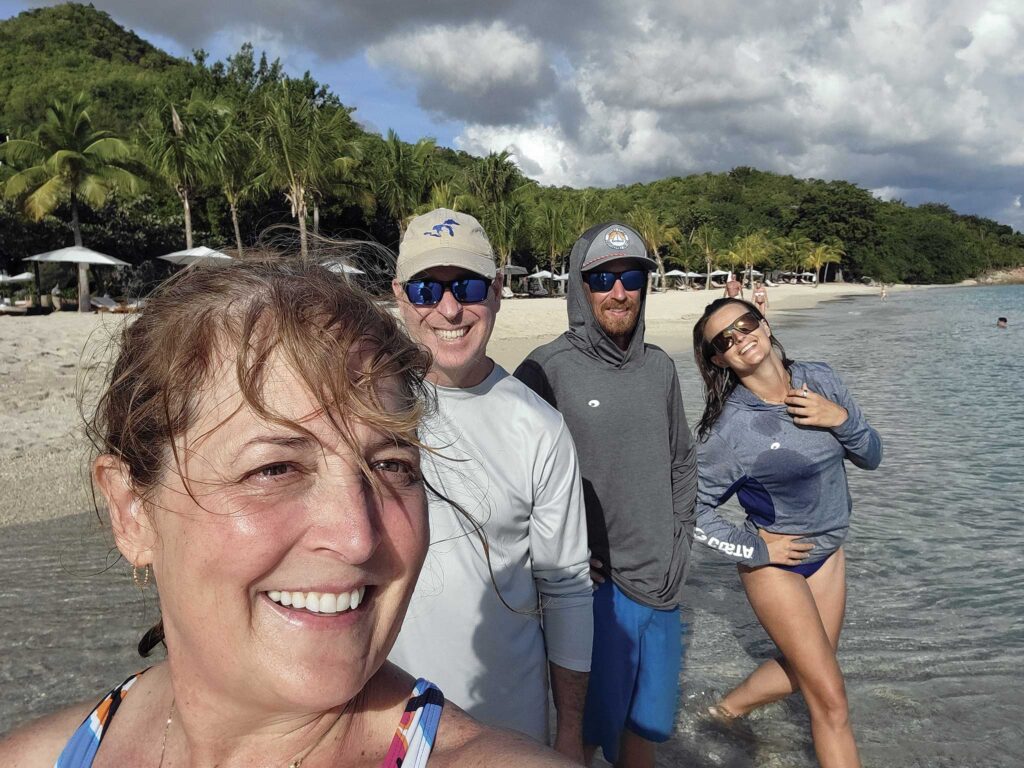
Once anchored at Charlotte Amalie, we went ashore to explore the back streets of the capital, wandering through alleyways past thick stone walls and heavy arched doors with cast iron hardware, relics of Danish colonial times. Thirsty for pain killers, we ended up at a touristy bar advertising a “2 for 1” drink special. Believing we’d only pay for two of the four libations we’d ordered, we were surprised when the waitress brought a tray of eight glasses, two drinks each.
That night, we laughed at our gullibility as we gathered one last time in Arbella’s snug salon.
I’d thought I’d be drafting a gripping tale of five days of wet watches, beating for hundreds of nautical miles against the fabled Christmas Winds. I’d planned to describe sudden squalls and pooped decks, as 30 knot gusts blasted Arbella. I’d envisioned earning scrapes and bruises from being flung against lee cloths and chart tables below.
My original plan was to wax poetic about remote Grenada, the Spice Isle, with its fragrant nutmeg farms and pastel colonial architecture. I was supposed to write about the vast sailing knowledge I’d gained during the intense experience.
Instead, I learned that neither destiny nor destination is predetermined in cruising. Be it for weather, mood, safety, opportunity, or a clandestine U.S. invasion of Venezuela, cruisers change course frequently. During my previous experiences with deliveries and racing, I sailed from point A to point B as planned, regardless of what happened in between. But cruising, I learned, is not so much about the destination; it’s about what happens in between.
It’s about stoned cabbies and vagabonds, canceled flights and stolen showers, scraped barnacles and cockpit quesadillas, log entries and fishing lines, high school stories and trivia cards. Wolf moons and shooting stars.
Salty Coffee’s Upcoming Itinerary (2026-2027)
Newport to Bermuda, 10/31 to 11/9 (10 days)
Bermuda to Sint Maarten, 11/13 to 11/22 (10 days)
Sint Maarten to Grenada, 4/16 to 4/23 (8 days)
Grenada to Antigua, 4/25 to 5/2 (8 days)
Antigua to Bermuda, 5/7 to 5/16 (10 days)
Bermuda to Portland, 5/21 to 5/30 (10 days)
Portland to Bermuda, 6/5 to 6/13 (9 days)
Bermuda to Portland, 6/19 to 6/27 (9 days)
They will also have six one week-long out and back trips from the Portland, Maine area this summer. To learn more about Salty Coffee Sailing Expeditions visit saltycoffeesailing.com.
This article was originally published in the April 2026 issue.