Photos by Zuzana Prochazka
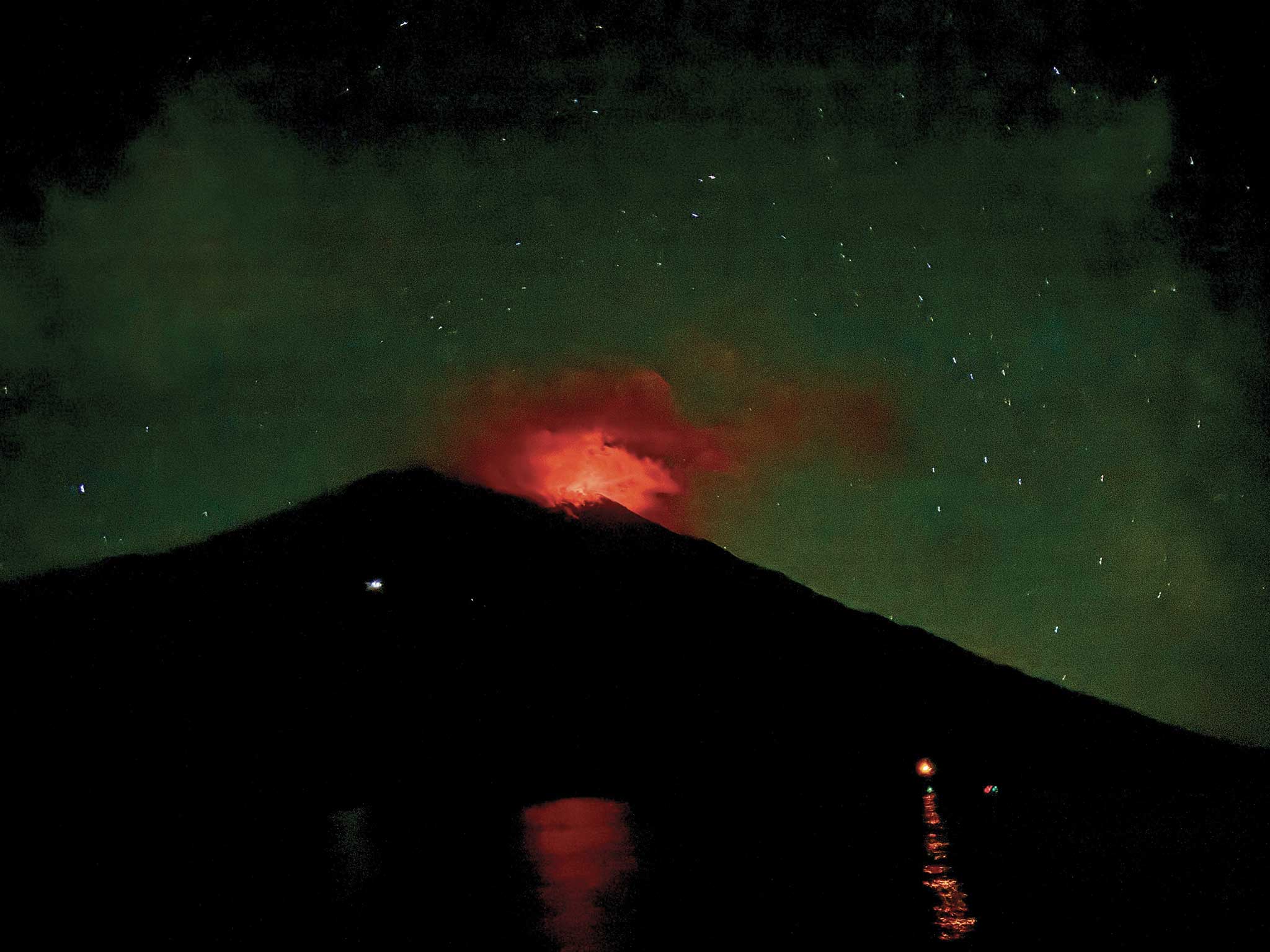
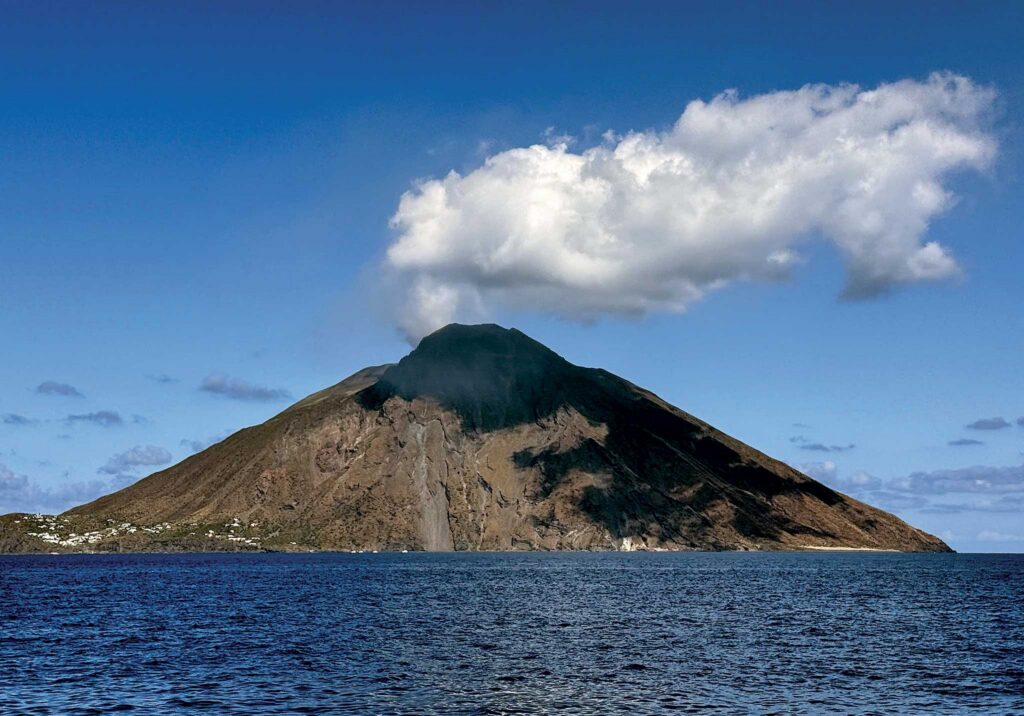
We stared up at the flames shooting into the night sky as Stromboli blew her top. Every 20-30 minutes, this temperamental mountain spewed ash and lava sometimes haphazardly as if she forgot the schedule, and at other times with great vigor like she intended to win an argument only she was privy to. Witnessing an erupting volcano from the deck of a boat is surreal and I had to pinch myself as I took in the light scent of sulfur and listened to the rocks tumble down her face.
As a kid born in a small, landlocked country, it’s a wonder I’ve carved out a life on the water, specifically one under sail on the world’s seas and oceans. It’s been a good life full of adventures, successes, failures and the occasional nail-biting moment of terror that defines offshore sailing. And now, here I was in the dark shadow of a 3,000-foot volcano on the mirror-glass surface of the Tyrrhenian Sea smackdab in the middle of the Mediterranean. I felt like a location scout for the next Jurassic Park movie.
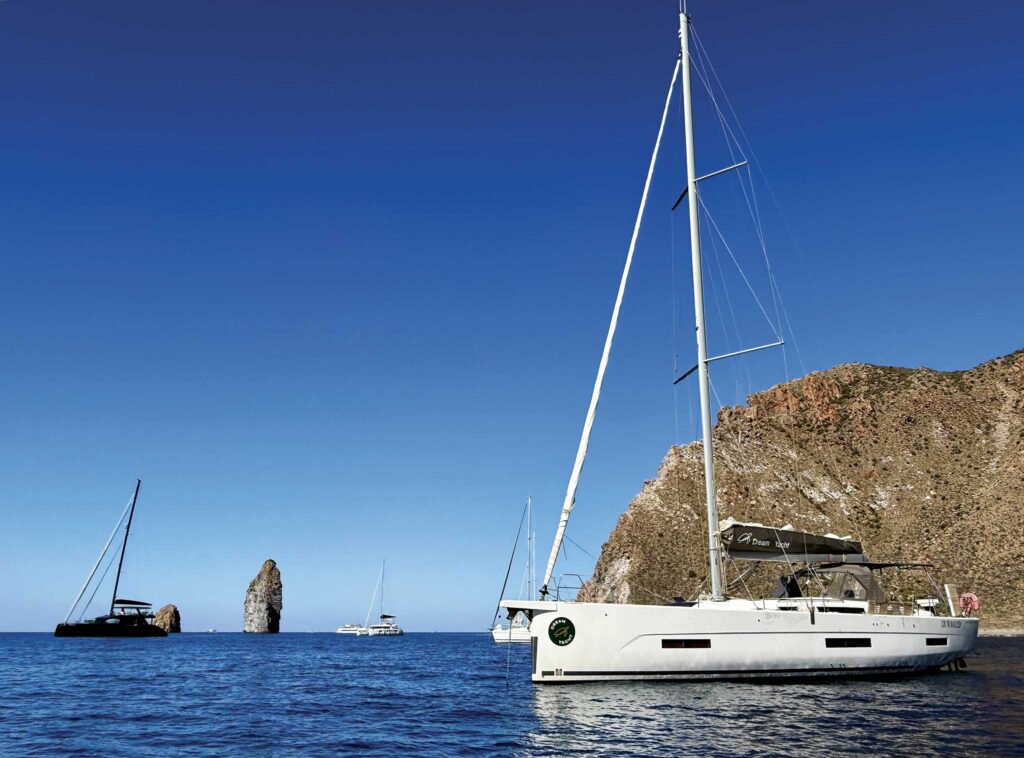
Our cruising grounds were the Aeolian Islands that are clustered above the northeastern tip of Sicily, a large island itself that looks like it’s about to be kicked by the boot of Italy. These isles are named for Aeolus, the mythical ruler of the winds, who hosted Odysseus in Homer’s The Odyssey. With such a namesake, we had high hopes of speedy passages under sail as we departed the Portorosa base on our Dufour 530 named The Big Sleep. Although initially sounding ominous, that name proved prophetic regarding the week’s wind forecast.
Our group of seven set out on an unoriginal counterclockwise itinerary around the half-dozen major islands. We figured we had a leg up since a convoy of charter boats set to sail in the opposite direction leaving our contrarian path with freer anchorages. We were also irrationally optimistic that the sparse breeze would eventually fill in from the north providing us a nice downwind sail later in the week.
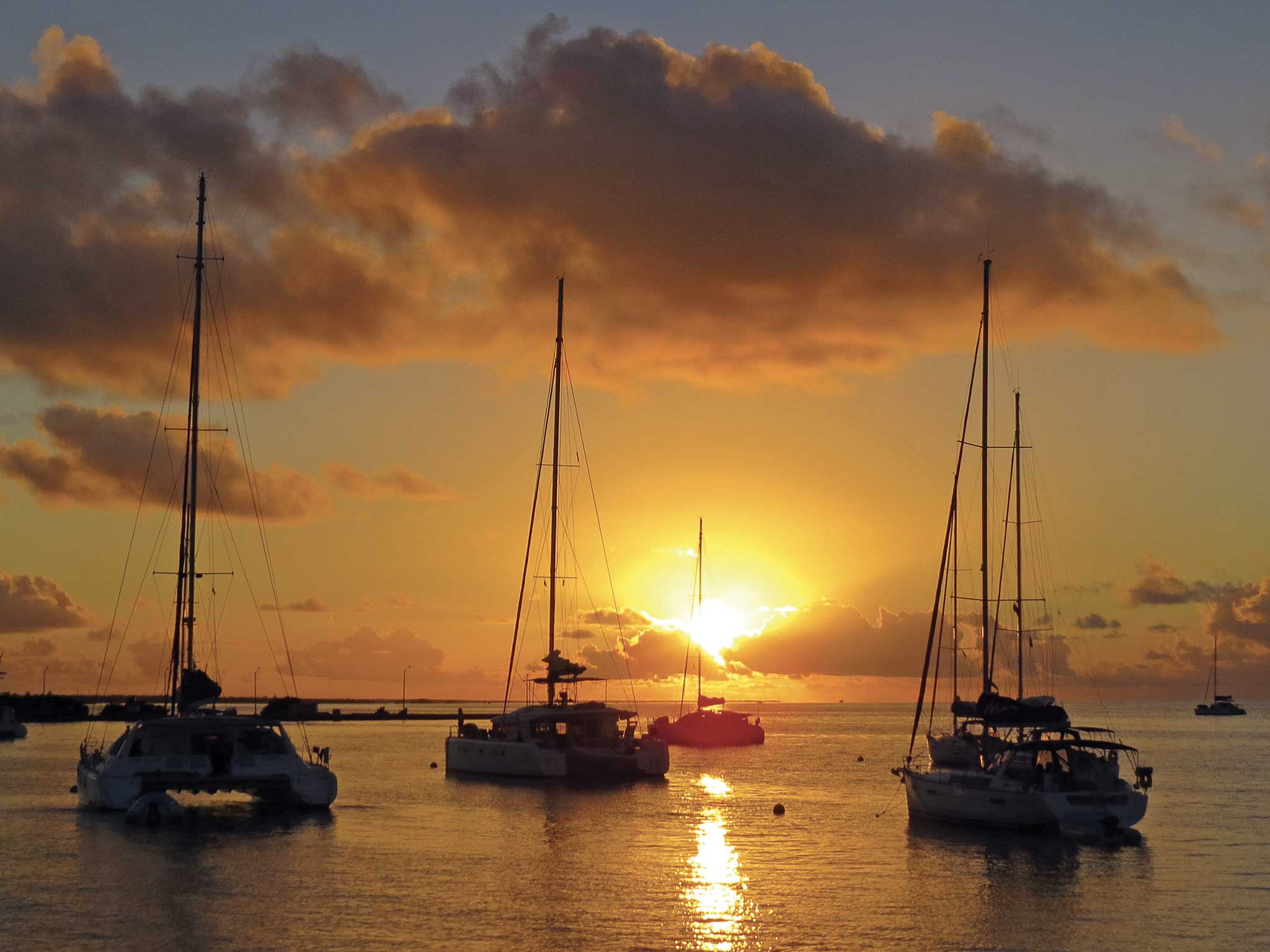
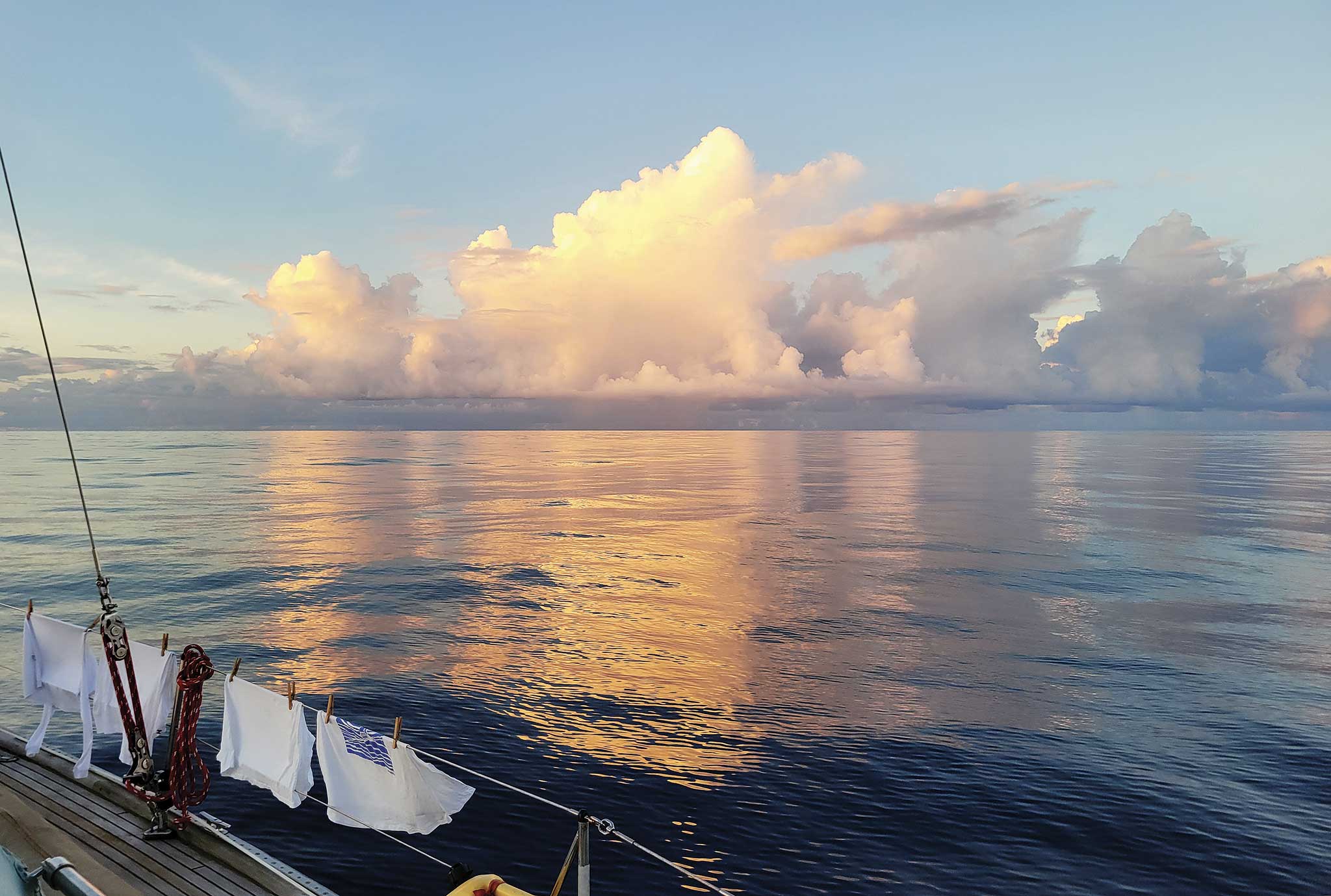
Unfortunately, the weather gods had other plans and gave us a deep eye roll as they served up breezes that gusted to a blustery six knots. The week was, in a word, breathless. Progress under sail was aspirational at best as the entire island group fell into a wind hole leaving us quite literally parked with little to do but reapply sunscreen and watch for the giant predatory ferries that barreled down on pleasure craft at 30 knots. Luckily, the islands are close together, so we had short hops between them after the initial 20-mile run up to the northernmost island of Stromboli with her plume of white smoke blowing horizontally off her cap. She sat on the horizon like an apparition, our talisman with mystical powers.
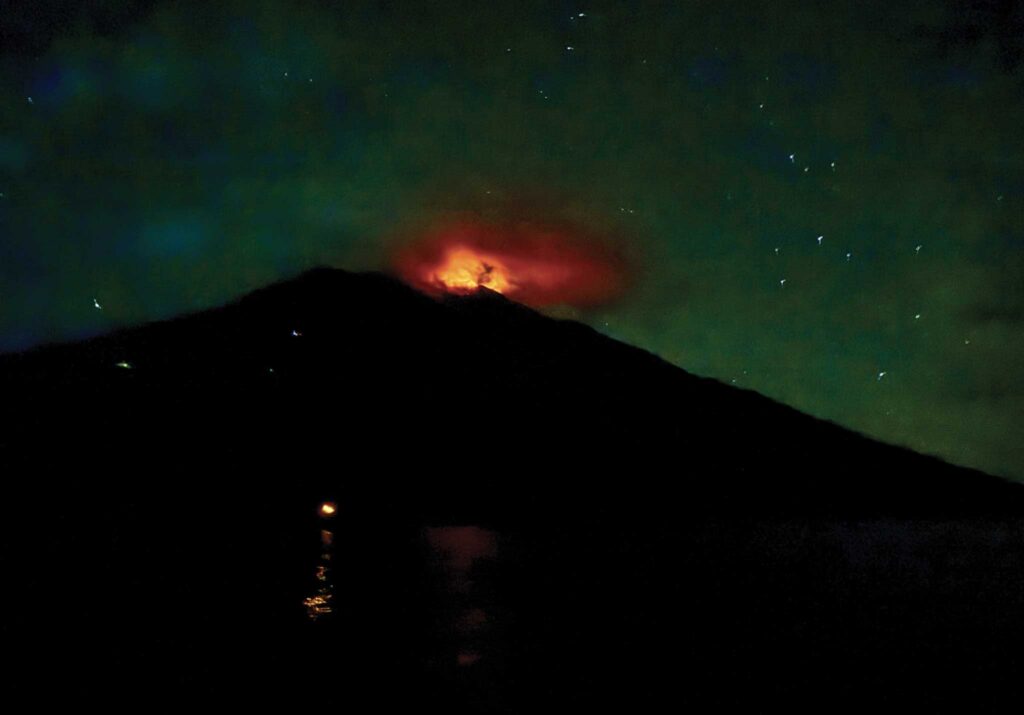
Volcanic islands rise abruptly from the depths providing only a few places to drop the hook safely. Stromboli dips vertically into the sea and we were warned to call ahead for a mooring. We were not told that mere mortals would have no hope of hoisting the thick hawsers up on deck with a flimsy boathook. Apparently, that’s what the local mooring assistants are for and soon, one came charging across the cove in a dinghy, a lit cigarette scattering sparks in his wake.
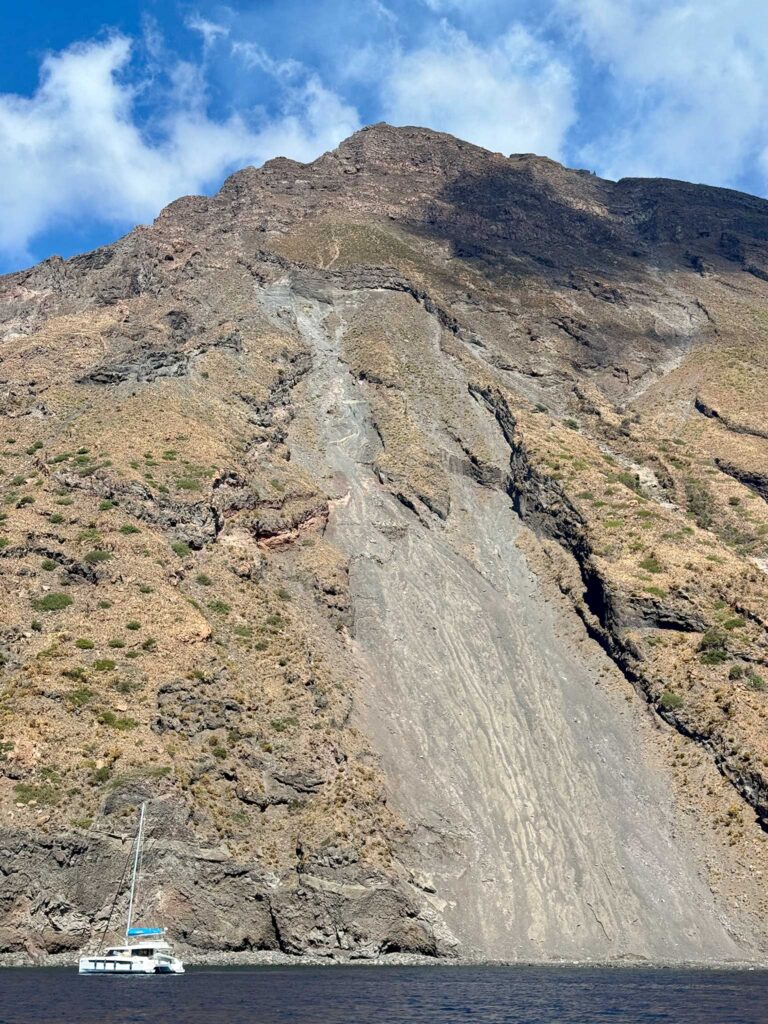
Stromboli makes an impression and after our nighttime adventure, she still tempted our cameras as we circumnavigated her the next day, finally leaving her in our wake as we sailed to Panarea. The smallest of the inhabited islands, Panarea is normally quiet and sleepy. However, her sun-warmed beaches occasionally ramp with vacationing glitterati and although we never saw Lady Gaga or Rihanna, we toasted celebrity-mode excesses with ornate cocktails that were clearly designed with luminaries in mind.
Next door, the island of Salina found us wandering her tiny alleys lined with vibrantly colored boutiques and of course, I tried to feed the ubiquitous cats that brazenly own just about every Mediterranean island. Salina was formed from six different volcanos that can now be hiked but instead, we were distracted by the delicious golden Malvasia wine made from the vines that drape the island’s lower terraces.
Docking in the Aeolians is a mixed bag since the term “marina” can refer to a real harbor with developed facilities or a long dock where members of a family work together to entice visiting boats to spend a few euros for dockage and overnight electricity. The always-exciting Med moor maneuver is the order of the day where captains contend with wind, current, tight spaces and often unsolicited advice as they try to put their transoms on the moving target of a dock that bucks and jumps with the surrounding ferry wakes. Most afternoons, we settled into the cockpit to toast the good performances and judge the more harrowing and theatrical attempts. We did this somewhat silently, of course. After all, we weren’t savages. It’s the kind of entertainment that leaves one feeling a bit snotty and superior and I was no exception until our very last landing that was so funky, it erased all my good approaches of the week prior.
Our last stop was the largest island of Lipari that’s famous for the remnants of its walled city and the sixteenth century Norman castle, now a museum complex with a monastery and a center for archeological studies. It’s a must-visit. The castle sits on a hill that divides two marinas and therefore two sections of town connected by cobbled streets chock full of boutiques and cafes. The island is covered with pumice and obsidian which are also mined here so decorative trinkets and jewelry made of the local stones pour out of every shop where well-practiced storekeepers reel in tourists like fish.
Unsuccessful in our hunt for wind, we instead opted for a swim and so turned the southern corner of Lipari to Spiaggia Praia di Vinci and its crescent of black sand beach. As we threaded our way through the anchorage looking for a shelf of shallow water to drop the hook, I noticed the sailors on the other boats watching our progress with unusual interest. When we finally let the chain fall, I was horrified to find our mainsail still aloft. After anchoring with a full main up, it’s hard to have an ego about much of anything so we just hurled ourselves in the water and acted like we were exceptional pros who can do that kind of thing.
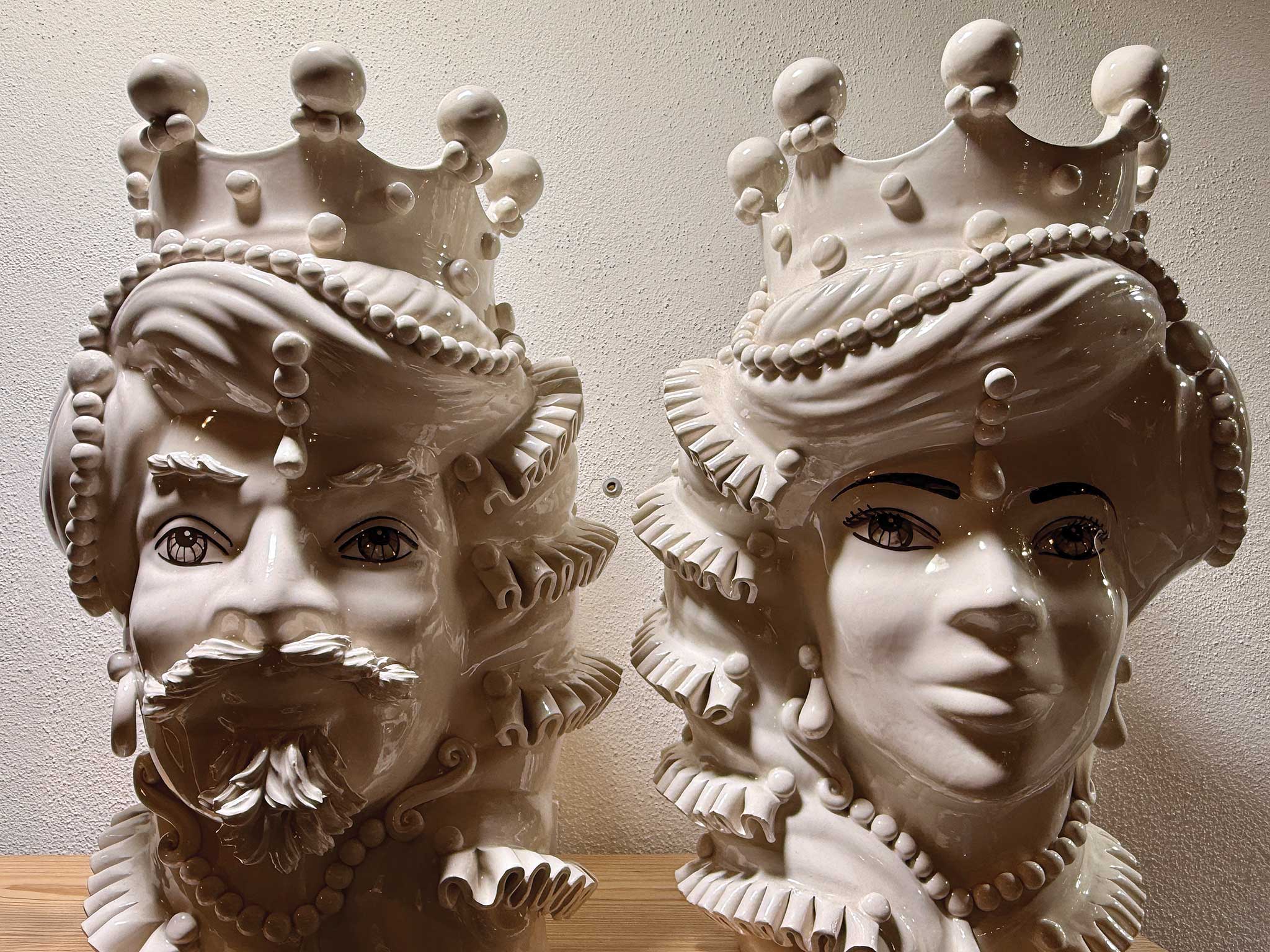
Food is a ritual in Sicily. Every corner eatery sets a colorful table of hand-painted plates and ornate carafes of local wine. Often, salt and pepper shakers are two tiny ceramic heads or “Testa di Moro.” They’re in the shape of a man and woman around whom swirls a warning bit of Sicilian lore. The story goes that a local girl fell in love with a Moor but when she learned he already had a wife back home, she killed her lover and used his skull to plant herbs. Today, these two are regional celebrities and staples in souvenir shops selling dedicated T-shirts, themed plates and of course, macabre planters.
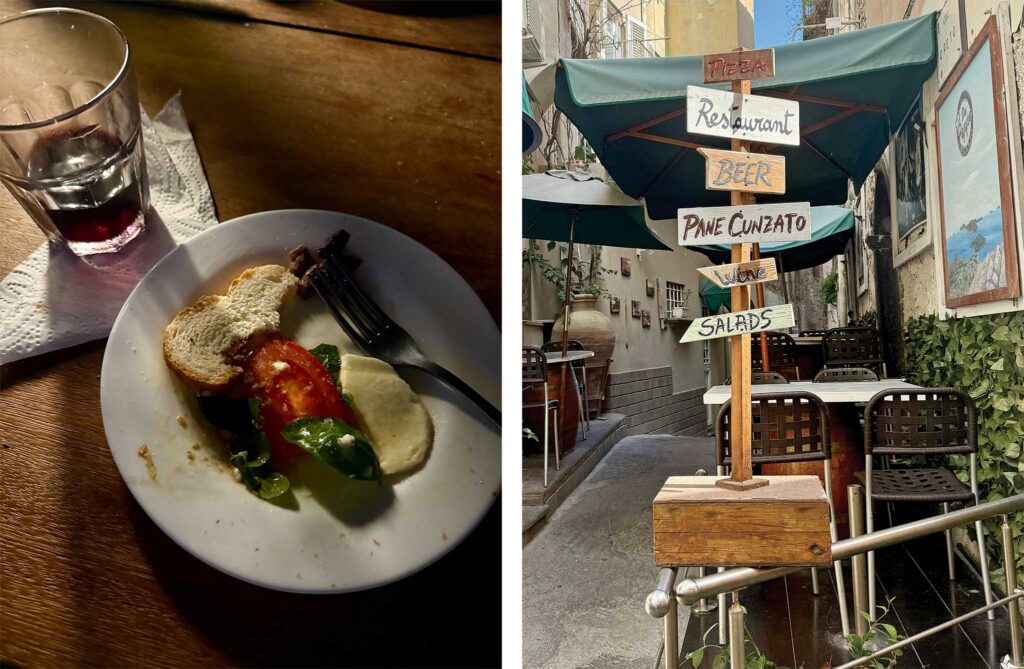
The island restaurants take creative license with their culinary feats from lavishly presented muscles to simple peasant fare like Pane Cunzato, or “seasoned bread”. This hearty and rustic open-faced Sicilian sandwich has its origins in what was once a poor man’s cuisine. Fresh calamari, stuffed arancini and rich caprese salad are on every menu while open tubs of sardines and anchovies grace grocery market counters where you scoop your own. There were so many varieties of capers, I lost count.
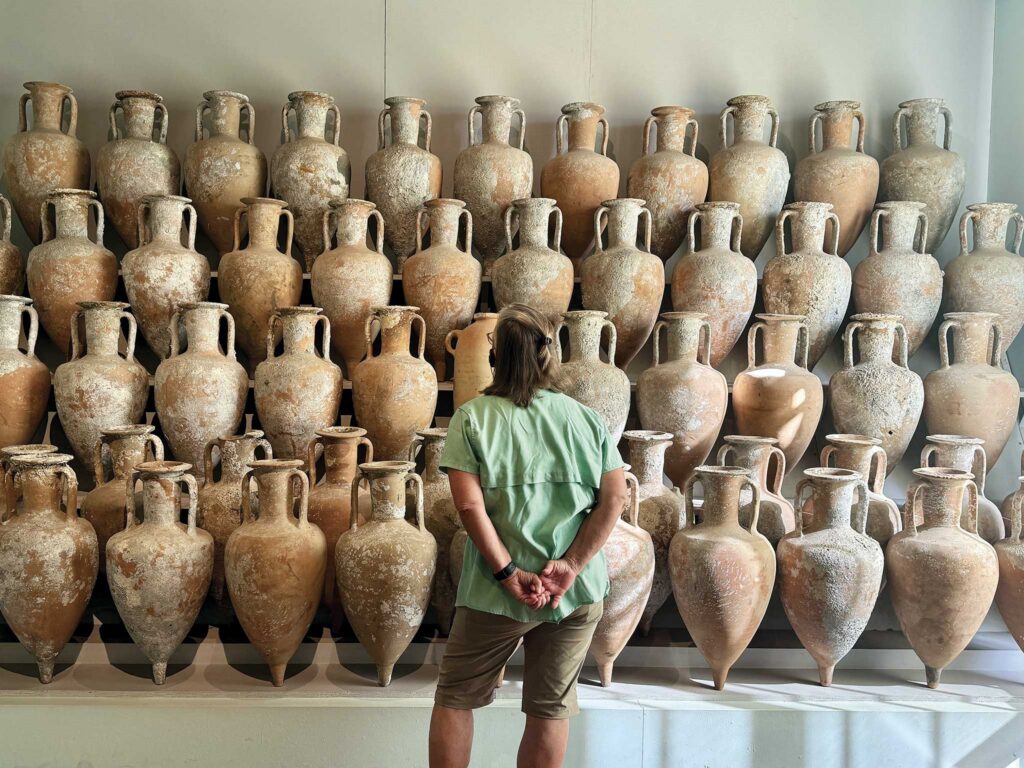
Many bottles of wine were opened aboard with the corks immediately tossed because when in Italy, there is no leftover wine. The Big Sleep had a wonderful outdoor galley built into her transom and it would have been a shame to waste it so we put Frank in charge of grilling. Provisioning was easy as every island is well stocked with exotic foods that we were dying to try. I could have survived on mozzarella, basil, bread and wine alone, but the honey and the variety of sweet and savory pistachio spreads made my head spin.
We came to know the Aeolians one island at a time, but we barely grazed the surface of these cruising grounds that were designated a UNESCO World Heritage Site a quarter century ago. They’re the fiery product of the continued northward migration of Africa toward Europe and they have a 6,000-year history with human inhabitants predating the Bronze Age. This majestic cauldron is both a daunting lesson in geology and a volcanically themed Disneyland. The whole rugged archipelago pulsates with drama and a soundtrack of a continuous low rumble.
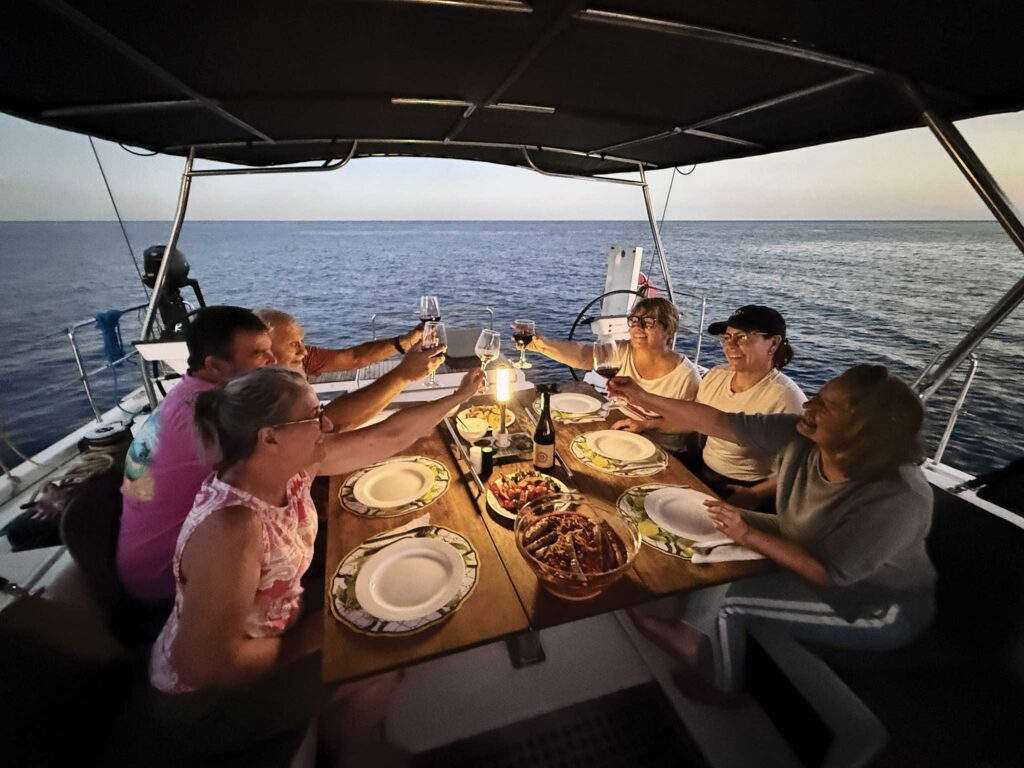
On our weeklong meandering and leisurely cruise, we touched just four of the seven islands which was certainly not enough time to claim intimate knowledge of this one-of-a-kind region. As we set course back south to the base, we pointed the bow toward Mount Etna on the horizon some 130 miles south of Stromboli. At 11,000 feet, she dominates the Sicilian skyline, dwarfs Stromboli and hosts skiers in the winter on her snow-covered slopes. Even from our distant vantage point, Etna looked intimidating as we remembered reading about her temper tantrum just three months earlier when her pyrotechnics led to evacuations and aviation alerts. She’s formidable and terrifying but she makes a great nav aid.
The Aeolians lean on their unique charisma, the fiery allure of a mad ring of smoking fumaroles. The entire archipelago harrumphs and snorts and generally feels alive and in motion. It pulsates and seems eager to chat with passersby, emphatically communicating its self-importance and imploring you to watch in wonder. I can’t say that over the course of my watery career I ever set a goal of sailing beneath a fuming volcano but now that I have, I feel like an extraordinary box has been ticked and a magical memory made. Not bad for a sailor from a place that’s never been touched by saltwater.
The Aeolians by Charter
We chartered from Dream Yacht Worldwide that has a base only a few hours by shuttle from either Palermo or Catania on Sicily. They’re a small but efficient crew helping guests live their best charter life. You can find out more at dreamyachtcharter.com.
At their base in Protorosa, Dream has both monohulls and catamarans with traditional combustion propulsion and one special boat that gave us the rare opportunity to test the optional hybrid electric propulsion that Dufour is making famous one boat at a time.
The benefits of chartering in these waters on the shoulder season of mid-September were many. Restaurant dining was more open and available, and the gridlock that inevitably forms outside any mooring field or marina entrance at the end of a sailing day was minimal. These cruising grounds are perfect for a 1-2 week holiday. The weather and water temps in late summer and early autumn are ideal, but you’ll want to watch for a strong northerly known as the Mistral, which we thankfully missed. For your own sanity, stay clear of the nutty European tourist traffic in August.
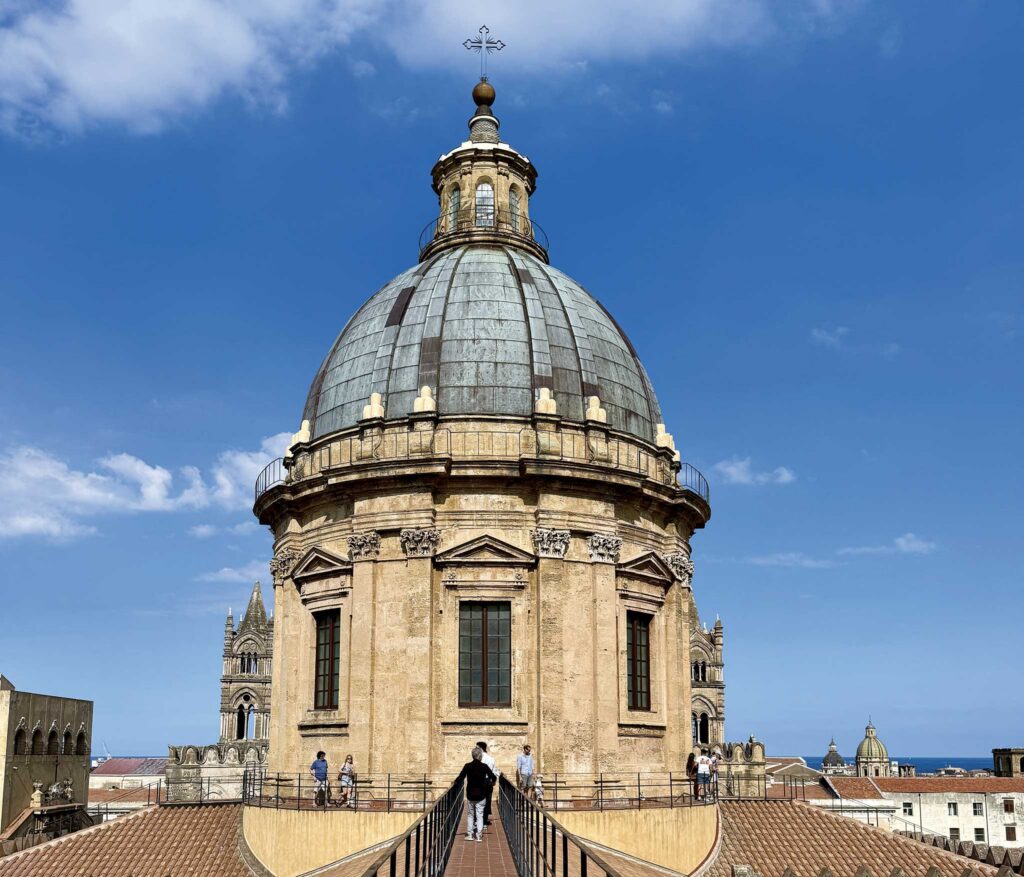
Before or after a charter, give yourself a few days to wander the streets of historic Palermo which is gritty but fascinating. A walk across the rooftop of the Palermo Cathedral has a James Bond vibe while the Palazzo di Normani with its columned inner courtyard highlights Sicily’s regal days. The city’s open-air food and fruit markets alone will entertain you for hours, and the hotels are affordable.
This article was originally published in the April 2026 issue.