Don’t clutter out all the rain
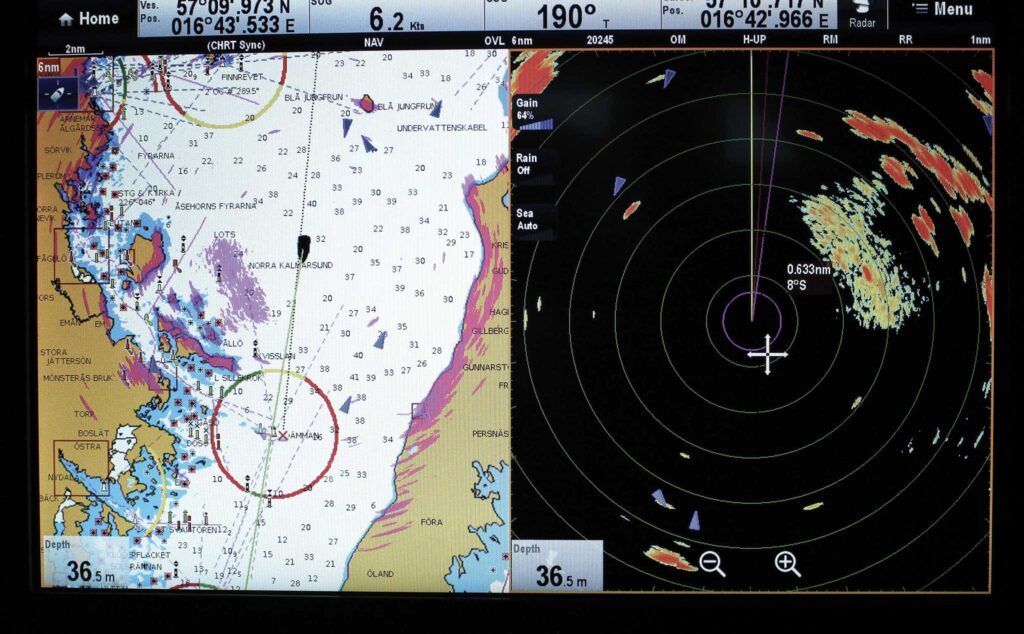
Radar is great for micro-weather forecasting. With a modern set you can see instantly where it’s raining in your vicinity. More importantly, by sensible use of bearing lines and target ranges (EBL and VRM), you can tell if a squall is coming your way by monitoring its progress. None of this works, of course, if you click on the rain clutter button as soon as a shower shows up on the screen. When to declutter is a judgment call as to whether to let the radar see any ships that might be lurking inside a cloud, or to watch the actual rain itself. Keeping the switch generally off but taking a regular look for targets inside the cloud by decluttering for half a minute seems to work well.
Save those ice pop sticks
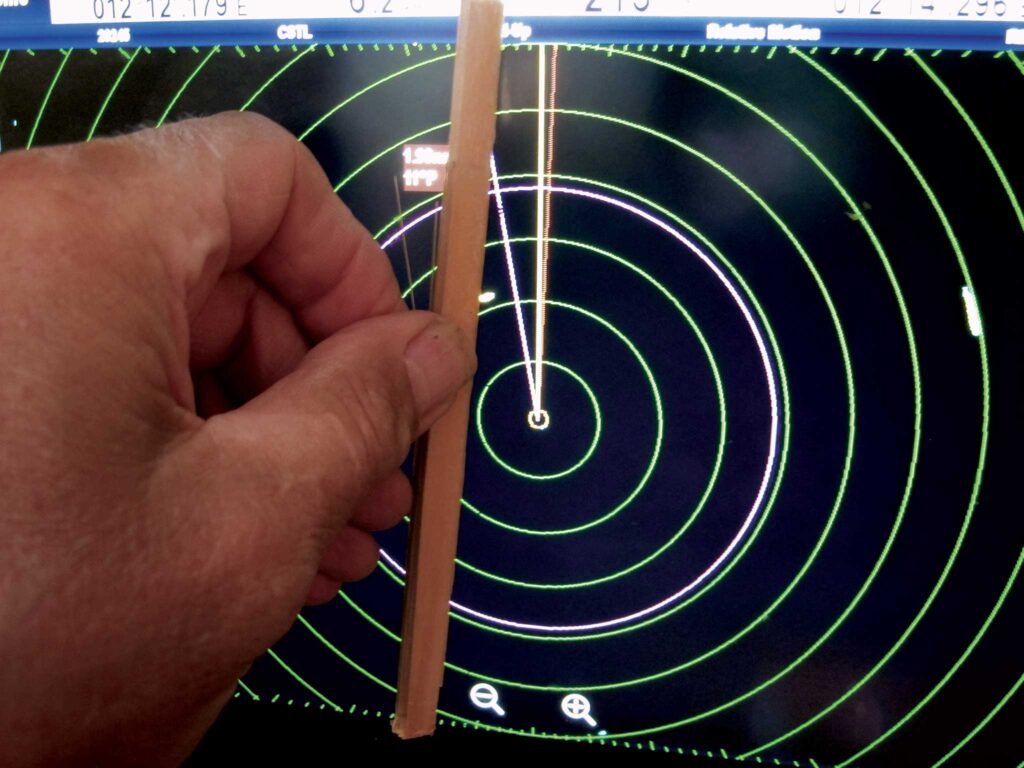
Speaking of radar, here’s a real winner. If you’re disinclined to go to the trouble of plotting a radar contact on paper, as most of us are, you can stab a good guess at its CPA (closest point of approach) without reverting to AIS by using a stick saved from a lollipop or ice pop. First, lock the target’s position on the screen at a given moment by using the EBL (electronic bearing line) and the VRM (variable range marker). Now wait six minutes. Unless you and it are stationary relative to one another, it will have moved. Lay the stick on the screen so that it joins the target’s current position with the position you fixed one tenth of an hour ago. The shortest distance between the edge of the stick and the centre of the screen is the CPA. If you want to be really sophisticated, you can extrapolate along the lollipop stick in decimals of an hour to determine the time of the CPA as well.
Just don’t try this with a Magnum bar. The manufacturer is no seaman, and his are shaped like Marilyn Monroe.
Use the phone
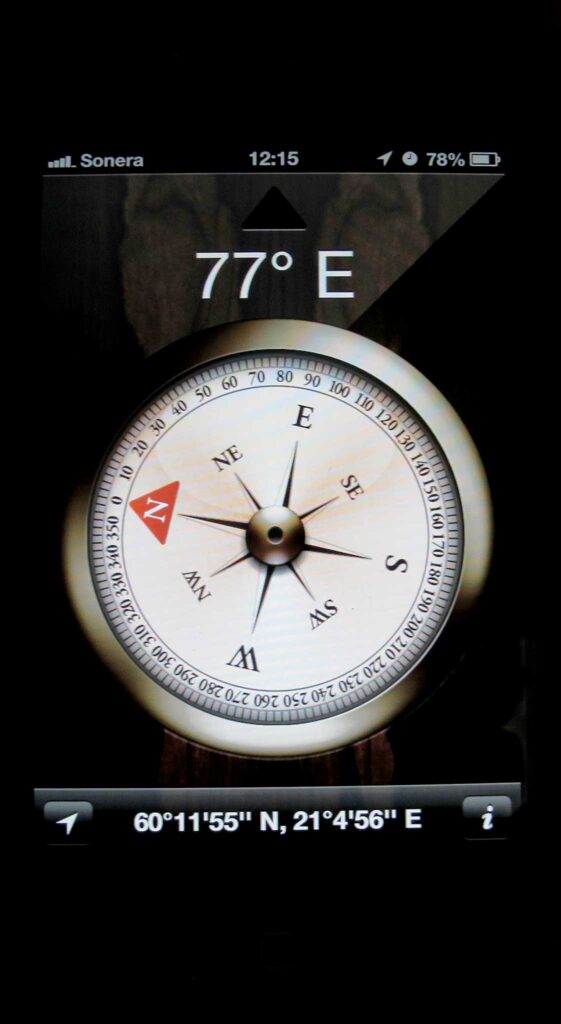
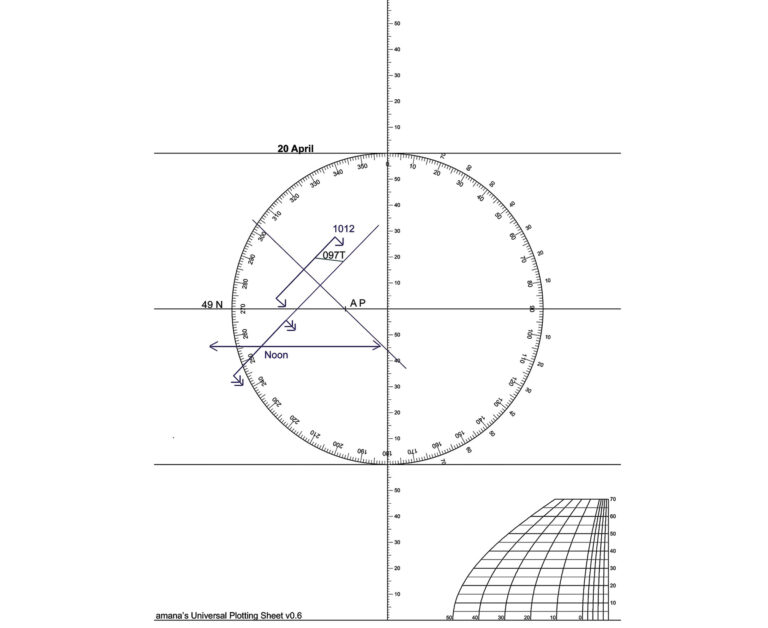
This summer I found myself needing some bearings and had lost the handbearing compass. “Try the phone,” suggested somebody. “That’ll be Mickey Mouse,” I assumed, but I gave it a shot anyway. To my amazement the iPhone compass is not a child’s toy. It offers bearings either in degrees True or Magnetic—duly corrected for your present position on the planet—and it delivers the goods with surprising accuracy. I performed a running fix using traditional methods but plotting on a tablet using the AngelNav app. I compared the results with GPS and my fix was less than a football pitch adrift! It wasn’t flat calm either. I was sailing at nearly 7 knots at the time. I’d have been grateful for a lot worse with a magnetic compass.
November/December 2025