The risk of going overboard—and how you brief it—depends entirely on context.
Mia and I were at a wedding recently in England. The bride and groom were both professional sailors, having met on the Clipper Round-the-World Race. We were seated at the sailors’ table—I was across from the former Clipper Race director and adjacent to the founder of Girls for Sail, a British-based women’s race charter team, and a number of other very accomplished sailors were in the room (Skip Novak was invited but couldn’t make it because he was in South Georgia!) Over the course of the dinner, we shared several stories of “8816” calls (an incoming call from a sat phone). The T-bone crash at the start of the ARC Rally with Girls for Sail; the sailed-the-boat-onto-the-beach in South Africa from a recent edition of the Clipper Race. I felt suddenly calm in the company of those sea stories, thankful that I had been on the receiving end of much more minor incidents, and thankful that most of what we do at 59º North happens in a cruising context.
Clipper has had several MOB calls in recent years, including a couple tragic deaths, and even 59º North is not immune. We had an untethered MOB shortly after the start of the Caribbean 600 race earlier this year; a woman went over when she was a little too enthusiastic during a tack and slid underneath the lifelines. (She was recovered quickly and unscathed.)
In cruising we have different goals, and therefore different stakes, than racing. You don’t need rail meat when cruising, you’d never have someone at the pointy end making a headsail change upwind, and you’re not going to be in such close-quarters as to risk a collision. In racing, it’s part of the challenge. In cruising, it’s an unnecessary risk. That we often don’t distinguish these different contexts when talking about person-overboard situations means we end up spending far too much time talking about recovery, and far too little time about how to stay on the boat in the first place.
Most of the high-profile MOB incidents you read about in accident reports happen during a racing context, and most of those scenarios are utterly avoidable in a cruising context. During our safety briefings at 59º North before going offshore, I always ask the crew one simple question: “What keeps you on the boat?”
Inevitably someone enthusiastically replies, “Your PFD and tether!”
To which I smile and say, “Close, but no cigar.”
When it comes to MOB specifically, it’s never the safety equipment that’s primarily responsible for keeping you on the boat—instead, it’s the mindset and strategy of the skipper and the crew. John Kretschmer, a mentor of mine and one of my seagoing heroes, calls this “thinking like a sailor.” It doesn’t just apply to going overboard; it’s also about avoiding using loaded lines or winches as handholds, or standing in way of a loaded running backstay or being in the “Danger Zone” as we call it on Falken, the area in the cockpit that is exposed to the boom and mainsheet during a jibe, accidental or otherwise. I compare it to rock climbing—the harness and rope is there to save your ass if you make a mistake, but they’re not pulling you up the wall.
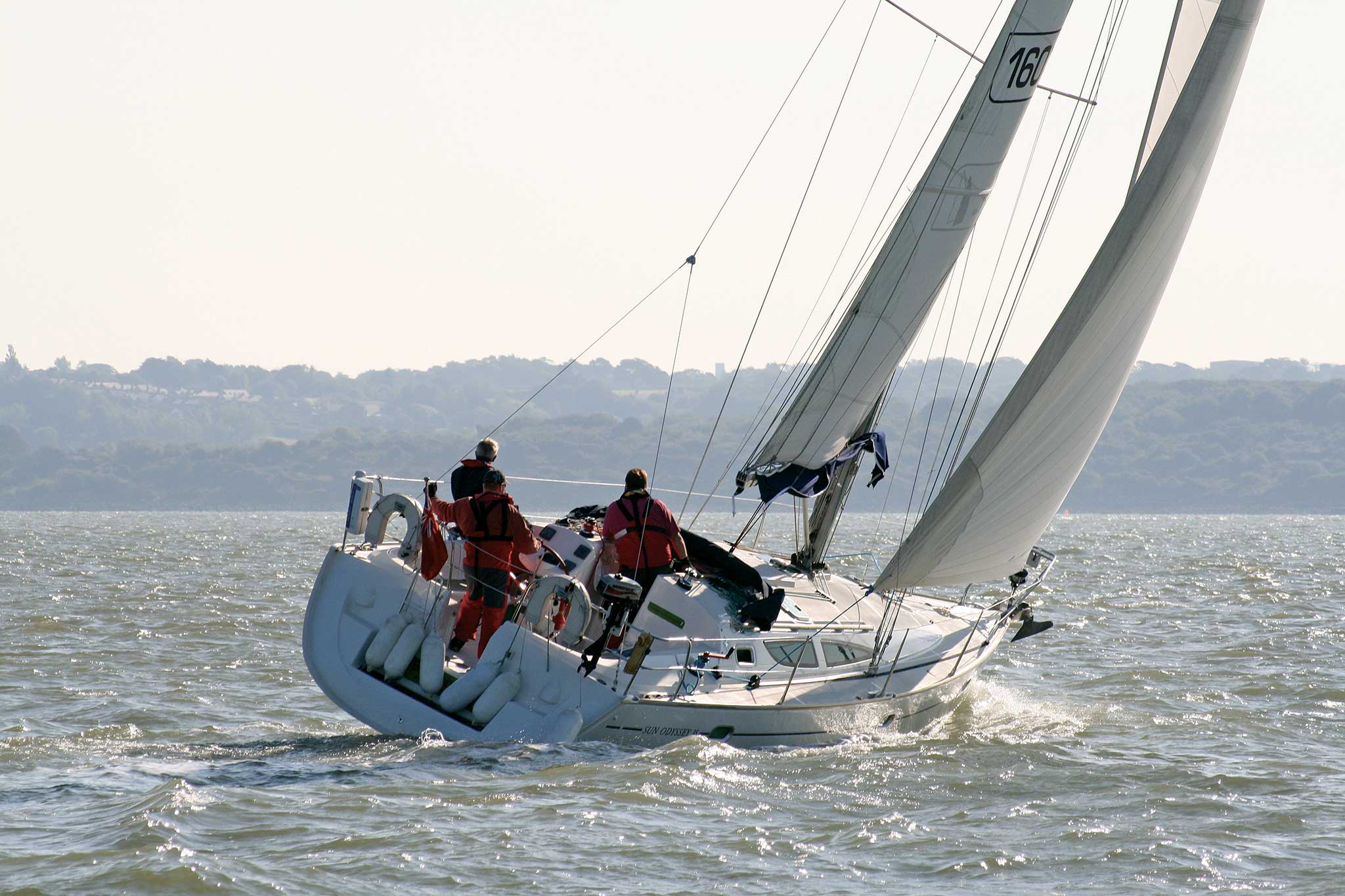
The MOB during the Caribbean 600 happened to a crew who was rail meat. She transitioned under the boom and over the cabin top on J/122 a beat too early, before the boat had tacked and the low side became the high side. A high-profile MOB death during Clipper happened to a crew member on the bow who’d gotten swept overboard by a big wave when changing headsails going upwind (his tether clip failed when it jammed on the horn of the bow cleat). The T-bone crash with Girls for Sail happened at the starting line of the racing division of the Trans-Atlantic ARC Rally. All understandable circumstances when racing.
When cruising, your actions and the boat-handling decisions of the skipper as you move around on deck are the 1A and 1B means of keeping you on the boat; your tether is there to (hopefully) save you if you mess those up.
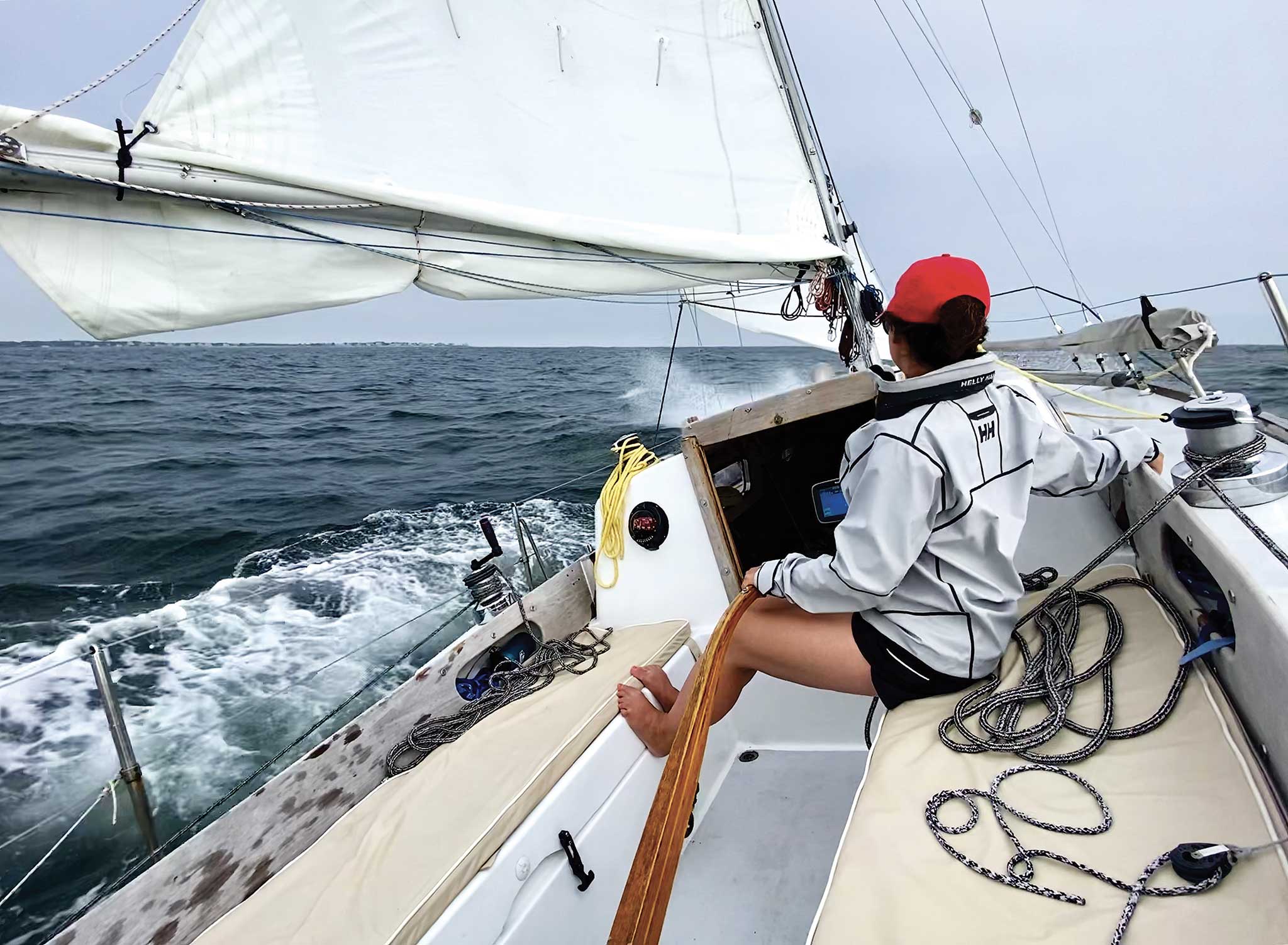
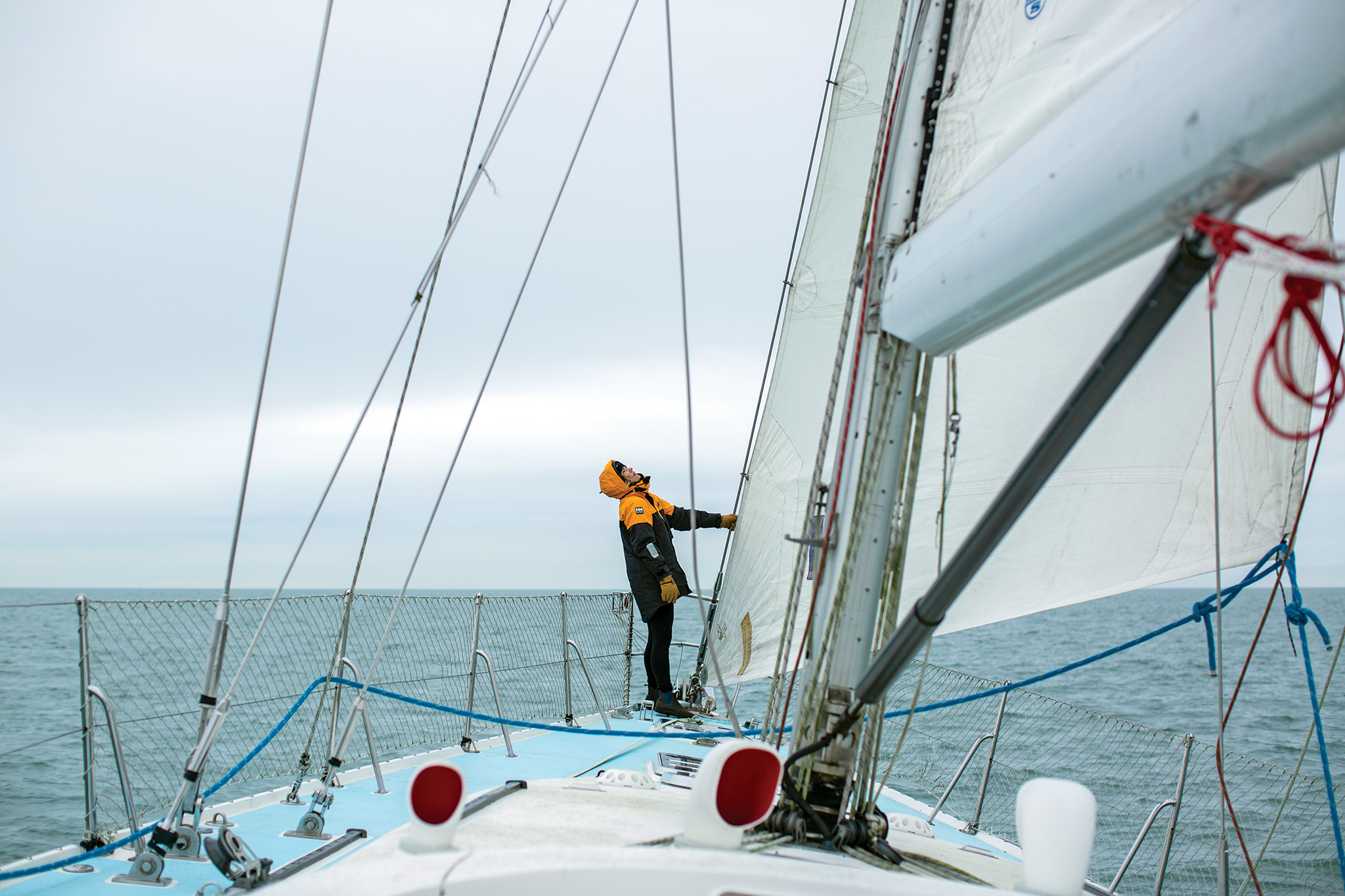
Let’s use reefing as the most glaring example. When cruising offshore, you never need to reef on the wind. Not even the mainsail, contrary to what they teach you in sailing school. Bear away first, at least to a beam reach and ideally further, making sure you’ve got a good helmsman (or a reliable autopilot) so as not to sail too far downwind and jibe. The apparent wind drops right off, the boat levels out and the sea-state feels much friendlier.
Now the risk of sending a crew member forward is dramatically reduced, not to mention you’ve just made their job orders of magnitude easier (and drier). Pair that with the “stay-on-the-boat” mindset of said crewmember when they’re moving around on deck, and we’ve further reduced that risk.
Next time you’re at a Safety at Sea course or reading about a MOB, take note of the context of each incident described and what could have been different if the skipper and crew’s preparation had focused more on reducing risk and keeping people on the boat, rather than spending so much time discussing how to get them back aboard.
January/February 2026