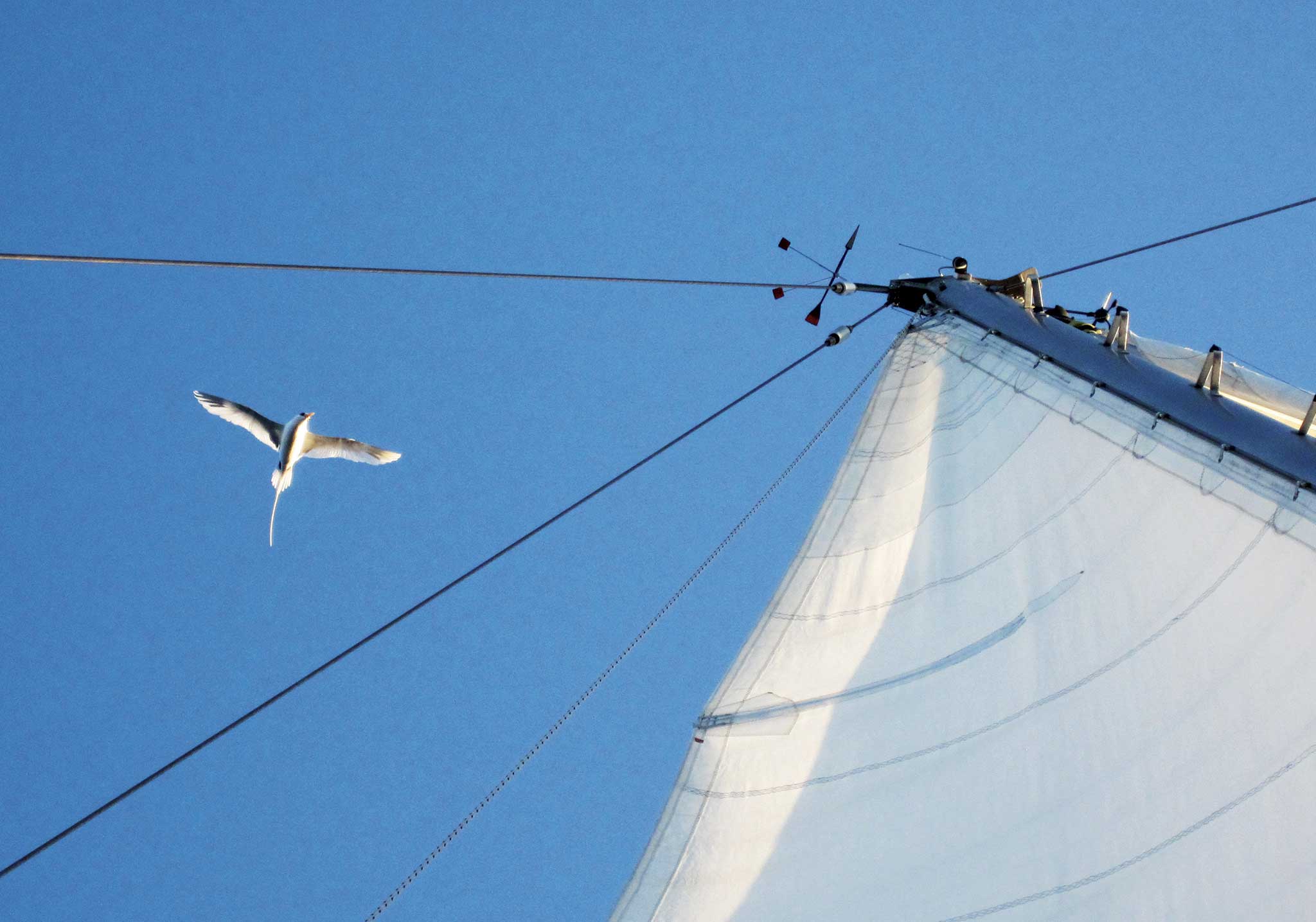
The red lights and aromatic cafes of Amsterdam draw hordes of international visitors, but when the Dutch coastline loomed into view off our starboard bow one recent morning, carnal and psychotropic pleasures were the farthest thing from my mind. Instead, I was fixated on brightwork. Holland is the birthplace of Epifanes varnish, one of my favorite marine products. I knew exactly what I wanted from Amsterdam’s menu of guilty pleasures; I was hungering for fresh varnish straight from the source. Silky brushstrokes of the stuff coated my imagination, lifting my mood. As the dikes grew closer, I sniffed the air like a dog, eager to pick up the familiar notes of Epifanes’ unique, smoky, phenolic-modified-alkyd scent. It’s a happy flavor that noses warmly, like a peaty single malt whiskey, foretelling of good things to come.
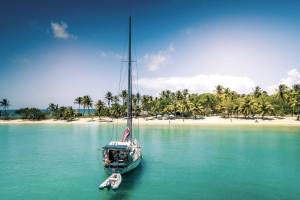
My wife, Alex, and I were out cruising full-time on our Maine built, 36-foot Morris Justine. The fourth year of our ongoing voyage took us from The Solent in England, across the Prime Meridian, and up into Scandinavia for a summer of sailing in near-constant daylight. The waterways of the Netherlands offered an alternative route as we navigated north and east, providing relief from the storm-tossed North Sea for some of the way. Fresh Dutch varnish was a welcome bonus.
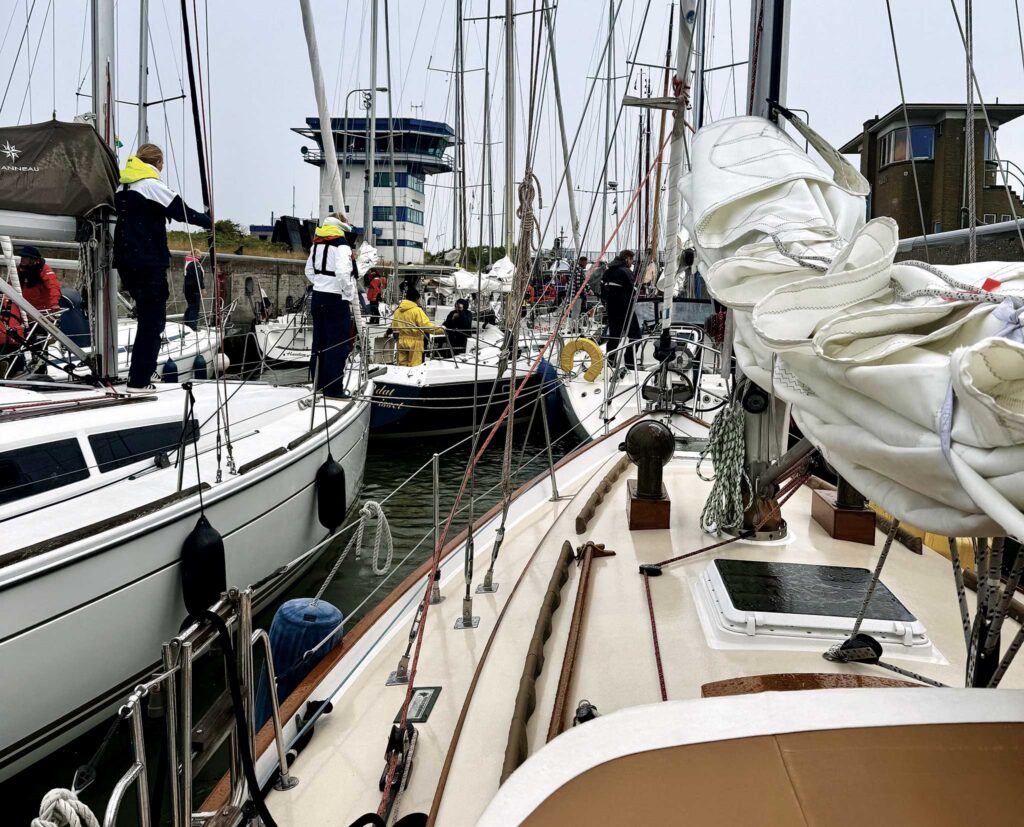
The dikes, locks, bridges, and canals that protect and connect the Netherlands are an astonishing masterwork of hydro-engineering. Dikes stretching for hundreds of miles have transformed tidal estuaries into massive freshwater lakes. Aqueducts shepherd marine traffic OVER major highways. At high tide, the majority of residents live happily below sea level. With a note of well-deserved civic pride, the Dutch are fond of saying, “God built the world, but the Dutch built the Netherlands.”
Of particular interest to us was a collection of canals and lakes called “The Standing Mast Route” which allow a sailboat to navigate on protected water clear across the country from the Belgium border to the German border with the mast up. There are some bridges along this route, but all of them open to allow masted sailboats to pass through. We took advantage of a portion of this waterway, entering at Ijmuiden and crossing back out to sea at Lauwersoog.
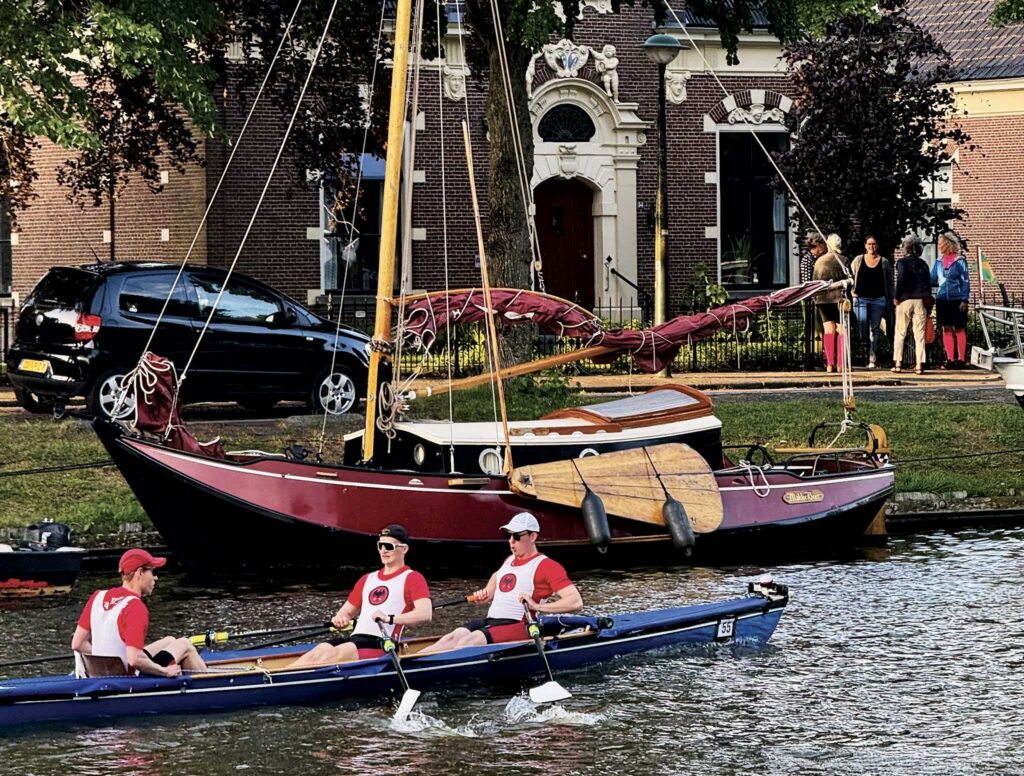
Photo by Chris Birch
Three distinctly different places along the way defined our Dutch sailing experience:
Amsterdam
Perhaps the most remarkable aspects of cruising Northern Europe is the sailors’ ability to park their boat smack in the middle of some of the greatest cities in the world. During our Scandinavian cruise, we made memorable stops in the heart of Amsterdam, Kiel, Stockholm, Gothenburg, and Copenhagen. We were just two sailors, going about our work of sailing. Then, when that work suddenly produced Amsterdam on the other side of our well-varnished rail, it came as something of a shock. How could we have made it to such a place in our little boat from Maine? And it kept happening over and over again, with more beautiful and historic European capital cities finding their way to our rail. It almost felt impossible. Impossibly good. Along the way, we also took short day trips by train to London, Paris, Hamburg, and The Hague. All of that in one summer in our own boat. Amazing.
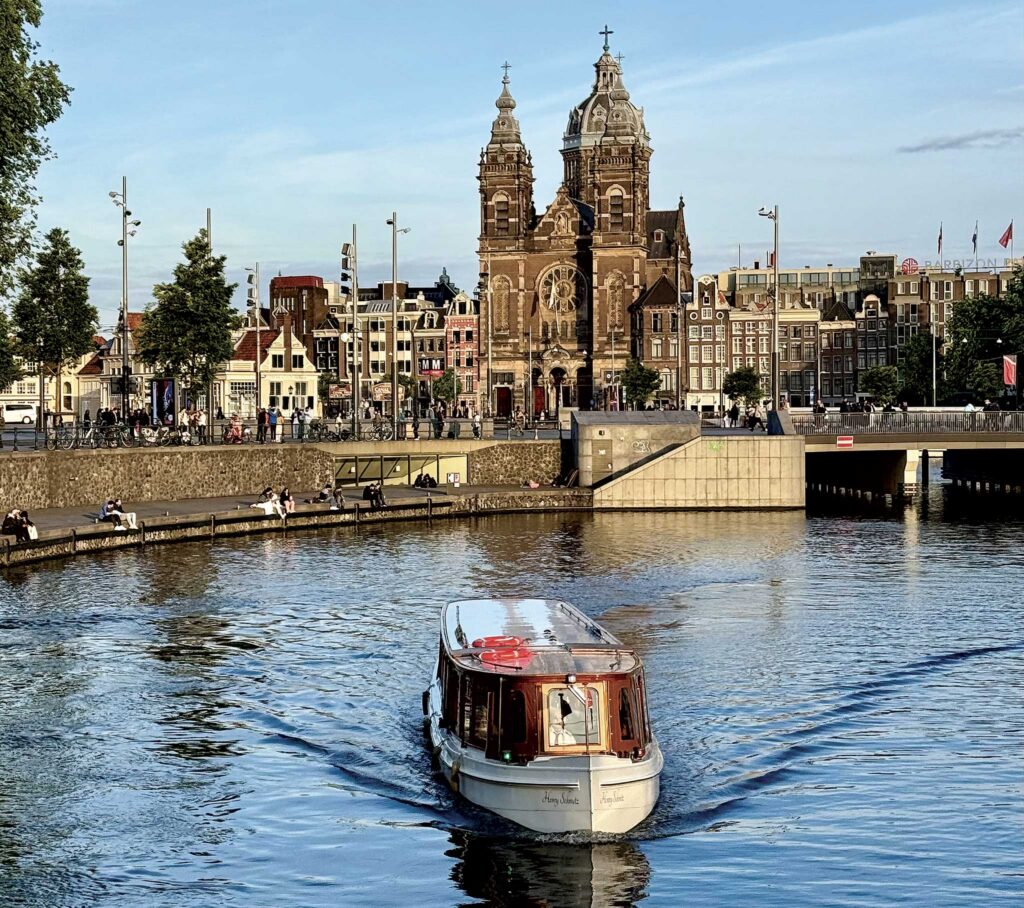
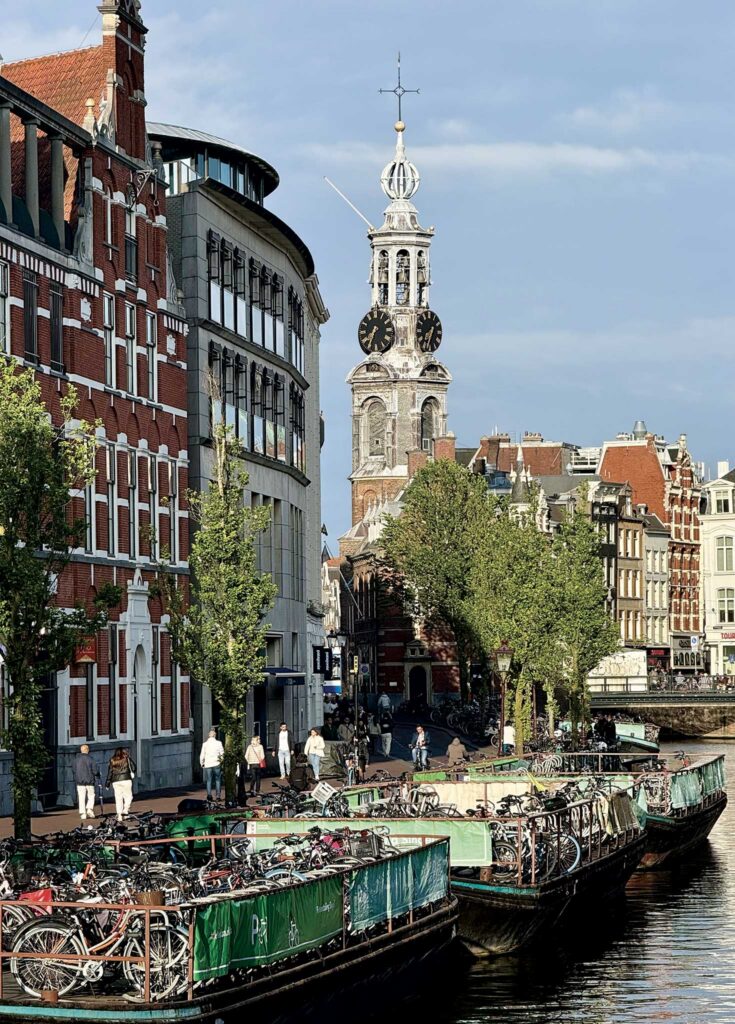
Dutch living in Amsterdam had me saying things like, “Is that a Van Gogh they have next to the Rembrandt? Yes, I think it is! Let’s go check them out just as soon as I find a vase for these tulips, finish my Heineken, wolf down another slice of suikerbrood, and slip on my wooden clogs.” We took a slip in Amsterdam Marina, close to the central train station in the heart of the city and were quickly immersed in the rhythm of city life in this unique metropolis. Amsterdam is a city of boats and bikes, where the canals and bike paths are like roads full of commercial traffic, commuters, errand runners, exercise enthusiasts, and visitors like us. When the time came to go collect our Epifanes varnish and a few other odds and ends at the massive Dekker Watersport chandlery, we had the option to get there on foot, by bus, by bike, by Uber, or we could sail our whole boat right down the canal and tie up at the front door of the store.
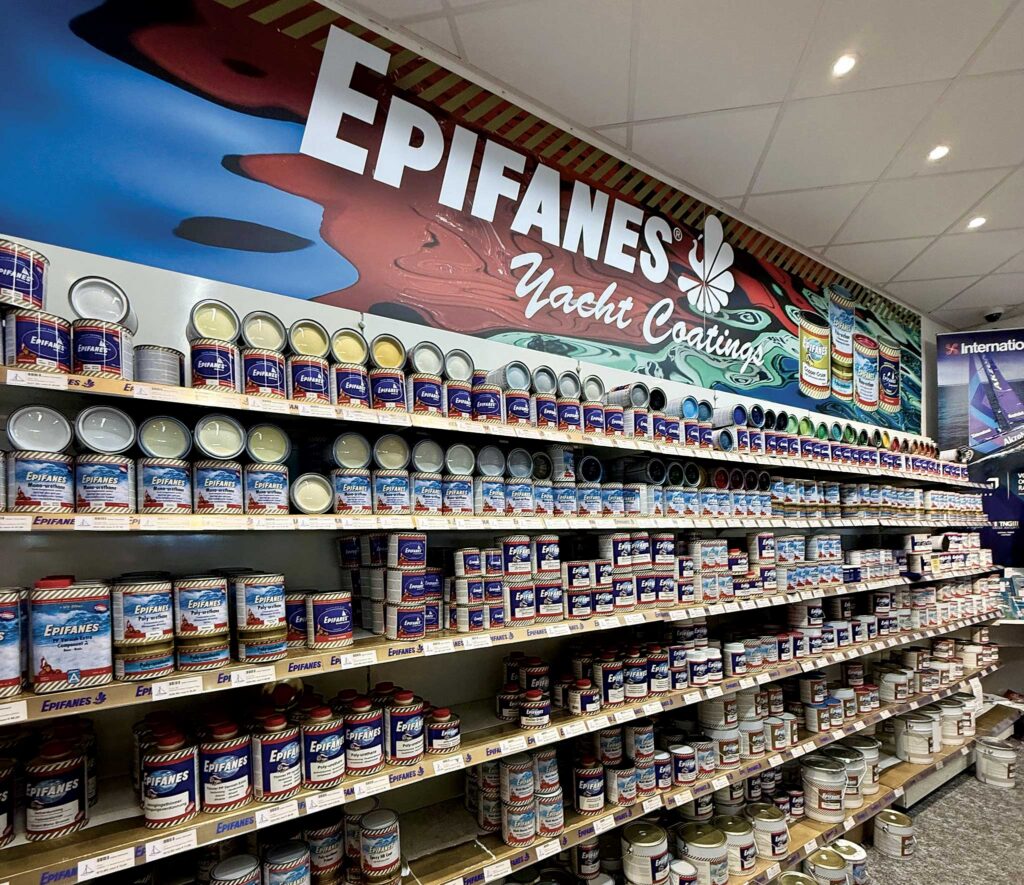
We opted to walk. The route was well off the tourist trail, and along the way we noted how different our experience of sailing in Europe was from that of the average tourist visit. We didn’t arrive at an airport or train station lugging heavy bags, and we woke up in our own bunks every day. More important was the fact that we filled our hours tending to the minutiae of running our boat and living our lives. We walked for varnish, we cleaned the boat, we did laundry, we sought out gas for our stove (which incidentally, is butane in Europe, not propane), and we worked to reprovision our boat. It’s amazing how much more fun it is to tend to mundane projects when you are in a beautiful new place. We saw much of the city and made several new Dutch friends while punching off items from our “to do” list. (Nothing better than a laundromat for making new friends.) We also frequented local cafes, signed up for morning yoga classes, and successfully sought out live music in the evenings. When the raw weather broke to calm sunshine one morning, I gave in to the ultimate Dutch temptation and laid down a high-gloss freshy on our dorade boxes with the new juice. We lived like residents of Amsterdam, because we truly were. We never did fit in a visit to see that Van Gogh or that Rembrandt or a dozen other tourist attractions and that was okay. We felt pretty good about our choices, both big and small, as we sailed out of town.
The Canals, Lakes, and Towns
Blue lights flashed up behind us in the canal. The police boat came alongside, and its crew politely chastised us for sailing too close to the middle of the channel. That was new! Decades of experience running the ICW on the east coast of the USA taught me that the deep middle of the channel was usually the best place to be. In the Netherlands, they expect small recreational boats like ours to navigate along the sides. The center of the canal is strictly reserved for large commercial traffic—even if there isn’t any. Fortunately, we found all the canals we transited to be uniformly deep from bank to bank. Control depth along the Standing Mast Route is at least six and a half feet. We never saw a dredging operation, and the continual shoaling that the ICW in the USA suffers from doesn’t look to be nearly as much of a problem in the Netherlands. All those dikes do a great job of protecting the waterways, and water levels are well controlled.
With Amsterdam in our wake, we steamed out of the canals and into a pair of surprisingly large lakes where we were once again allowed to roam free. The Markermeer and Ijsselmeer are manmade lakes. They protect the surrounding area from storm surges, and also serve as popular places for recreation. We enjoyed over fifty miles of tranquil sailing and spectacular boat-watching as we crossed both meers. The Dutch pride themselves on maintaining their boats to the highest standards as a way to celebrate and honor the rich nautical history of the Netherlands. I felt like I found my people there, and for once I wasn’t the only varnish-crazed sailor out on the water. Deep, lush coats of the local liquid treasure were expertly applied to brightwork everywhere, and the boats gleamed.
We were impressed by how different the sailboats in the Netherlands were from the sailboats back in England and the ones ahead in Scandinavia. In each place the boats are, logically enough, built for local waters. This reality was most obvious in the Kingdom of the Netherlands, where even the most yachty and highly polished boats took on something of the utilitarian, bluff-bow, canal barge shape and look. Leeboards allowed for safe passage over the shallow bits. Reverse tumblehome above stout rubstrakes provided ready fendering. When the wind picked up, these boats could really gather a bone in their teeth and go. Several leeboarders, sporting wide swaths of canvas, blew past us during our memorable miles on the lakes.
Harlingen, one of the many charming old Dutch towns that dot the coast, was our entry point back into the canal system. Once again, managing drawbridges became part of the navigation. Most were free, but a few requested a fee. The unorthodox system of toll collection still in practice involves the bridge tender using a fishing pole to swing out a clog to the passing boat. We were expected to quickly drop a one-euro coin into the clog and swing it back—all while navigating a narrow bridge opening with much boat traffic and oftentimes a few bridge-jumping swimmers in the mix too. The single-handed sailor would definitely struggle with this protocol. I know our double-handed crew was way too busy to snap any photos during these exchanges.
The Dutch operate their boats confidently and aggressively around bridges and locks. Navigating the waterways was more like navigating busy city streets. The Dutch do use their waterways like streets, so it made sense, but it took a little getting used to. Rather than taking turns to pass through a narrow bridge opening, boats would zip through in both directions at the same time, often with only inches to spare between varnished rails. Locks slowed boat traffic and often caused a line. When the lock doors opened, sailors rushed in like it was a Best Buy on Black Friday. Boats didn’t just tie to the sides of the locks; they ran down the middle and jammed in as tightly as possible. The general rule seemed to be, “There’s always room for one more boat.” And they kept coming. Hopefully you had ten crew members and twenty fenders at the ready in there, otherwise your boat was destined to be hard up against something that’s not soft. On the upside, we didn’t need to worry about dock lines because there was just nowhere for anyone to drift away to.
When the lock doors started to crack back open, boats raced out long before the red light turned to green. It was bumper boats, and it was crazy. Onboard our home, it was just me and Alex tending to all the mandatory fendering, and I can’t say the locks were our favorite part. Fortunately, there were only five of them along our route. My theory is that the demolition derby approach to locking in the region has fostered a huge rail varnish repair industry, which is in turn responsible for the plentiful supply of the masterfully blended local varnish. A silver lining! Or, perhaps we should call it a high-gloss, golden lining in this case. Eventually we became wise to the fact that lock life was more manageable if we avoided the weekends.
Traditional windjammer style cruise ships ply this route in considerable numbers. Some of these sailing barges were surprisingly large for the narrow canals, occasionally measuring out at over 100-feet long. Despite the tight turns, narrow bridge openings, and other challenges, they handled their navigation with consummate professionalism. In the locks, they were always extremely well fendered and lived happily above the fray. Out on open water with sails set, they were a striking sight to behold and a welcome addition to our world.
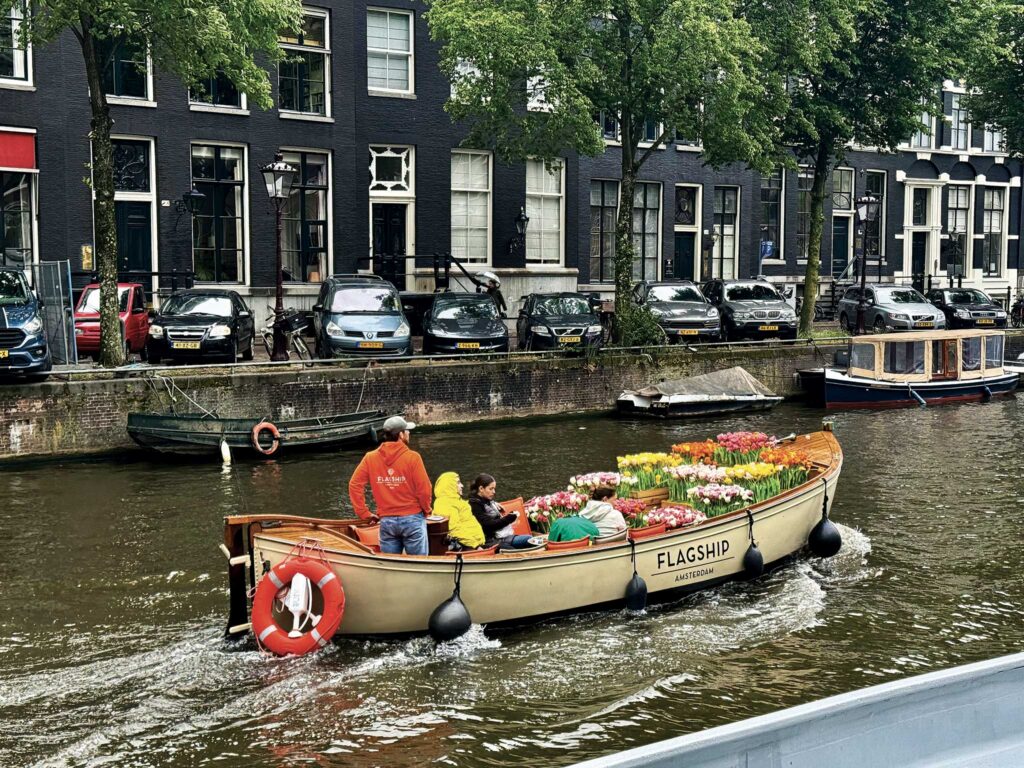
In most of the towns we passed through, the waterways were integral for transport and were also a part of the public park system. Residents took full advantage of the canal paths for walking and biking, and many restaurants were situated to enjoy a canal view. Leeuwarden, the beautiful and historic capitol of Friesland, was a particularly memorable stop for us. Instead of clustering into a remote marina, visiting boats are welcome to tie right alongside the canal anywhere they like. Water and electricity, bathrooms, and laundry are all available at regular intervals, turning the whole town into a viable marina slip for a visiting boat to pull into. On the evening we were there, a 24-hour rowing race passed through town, and our cockpit was the perfect place to relax with a drink and cheer on the rowers. In the winter, we were told, they race the same route on ice skates—an explicit reminder that we were indeed making progress north.
The Sands
Salt water and big tides returned to our life when we locked out of the protected Friesland canals and into the province’s seaward realm. The Wadden sea fills the gap between the outer Friesland islands and the mainland. Knowing no political borders, this sea extends eastward into German waters too. Like many, I had read about this corner of the world in Erskine Childers’ famous spy thriller The Riddle of the Sands. That classic sailing book left such a vivid picture in my mind’s eye, that to turn our bow into these waters felt like returning to familiar place.
Seawater is on the move above the shifting sands in the Wadden. Just like in the famous book, the changing tide can give, and take away, the water needed to float a boat. While related currents can add, or subtract, a substantial turn of speed. Navigation here requires a careful study of the tide chart and the clock. The local twin-keelers embrace the changing tide instead of fearing it, sailing when able and landing in a sturdy upright stance when the water falls away. It was not uncommon to see crews from these boats casually lower their swim ladders and go for a walk when the sand flats ran dry beneath their keels.
The low-lying out islands and mid-tide sandbars combine to offer plentiful protection and flat-water sailing in the narrow Wadden. The stark beauty of the sea was enhanced by the slate gray weather we encountered. Fog and mist came and went during our transit, toying with my imagination. It felt as if we were sailing against a living adversary out there. The tidal races skewed our perceived rate of speed, the seawater constantly threatened to recede, sails and rigs ghosted past in the fog, and the tumbling sea, just on the other side of the windswept out-islands, snarled a sonorous and never-ending growl. I understood it to be an ancient Dutch voice of caution, reminding us that we had left tranquility, sophistication, and protection back inside the dikes, and now, the unforgiving arctic north was near.
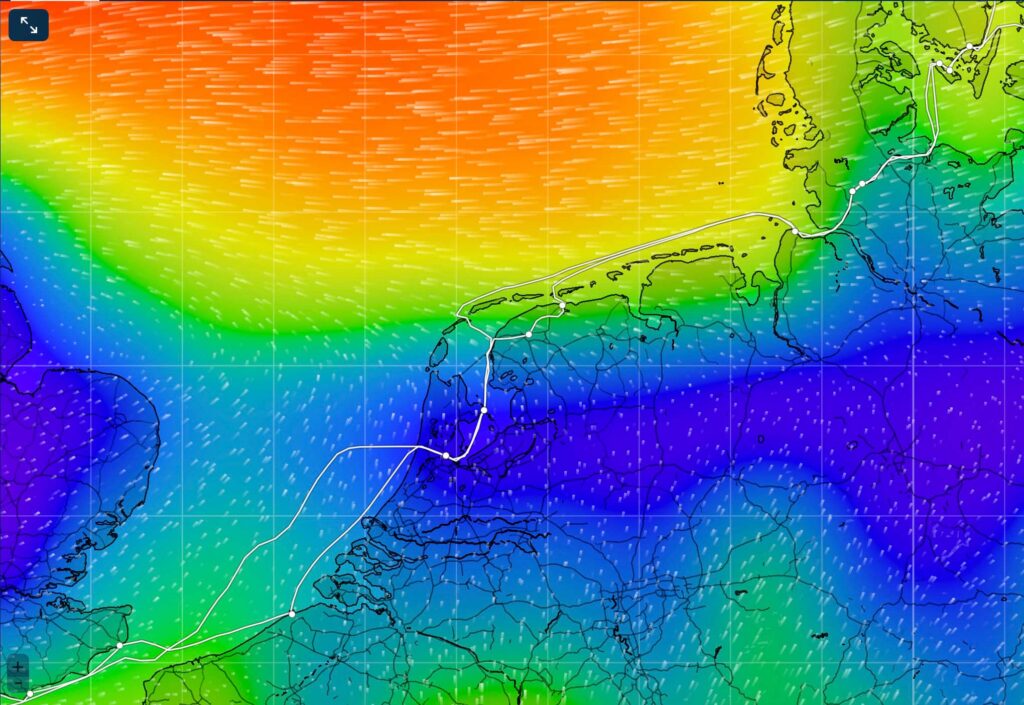
Over our eight days in the Netherlands in May of 2025, we sailed a total of 120 nautical miles. This provided us a welcome diversion from the menacing North Sea for about one-third of the distance between Dover, England, and Cuxhaven, Germany, at the mouth of the Kiel Canal, where we would turn for The Baltic.
When we returned to Dutch waters at the tail-end of our Scandinavian summer, we ducked back into the utopia behind natural and manmade barriers for a second tour. Sailing in, atop our old track in the winding channels through the sand, we steadied our resolve for a return to battle in the locks. With victory secured, we paraded triumphantly into our favorite Dutch lakes. The over-canvassed leeboarders were still there right where we had left them, and they quickly had us racing again on the protected waters. The familiar fuel dock attendant in Amsterdam congratulated us on the 2000 miles sailed since we saw him last. Amsterdam Marina welcomed us back warmly. And off I went on foot once again to satisfy my craving and procure more of my favorite varnish, fresh from the source.
SAIL Contributing Editor Christopher Birch is the founder of Birch Marine Inc. in Boston. He and his wife, Alex, are now cruising full-time aboard their 36-foot Morris Justine. Follow their voyage at EagleSevenSailing.com. Also available at that website is a link to purchase Birch’s recently released book, “The Four Seasons of Boat Maintenance.”
This article was originally published in the May 2026 issue.