Photos by Dan Tutor
It is one of those Maine spring days when the sea and sky gleam like polished silver under the tarnish of dark clouds. Here and there, through the sky-cover over Rockland Harbor, the spotlight beam of the low sun turns the ocean into flowing mercury; the water slaps and murmurs against the pilings of the Apprentice Shop Pier. On shore, sailing teams from Islesboro Central School, Camden Regional High School, and Rockland’s Oceanside High School are slipping into dry suits. The teams have come here for practice, as they have twice a week since March when the water was barely 37°F. The baggy monochrome suits have tight cuffs and mandarin collars that make the wearers look like some combination of priest and astronaut. Students, coaches, and Apprentice Shop staff mill around what looks like a tiny chapel, complete with decorative trim and an oculus, chatting with each other.
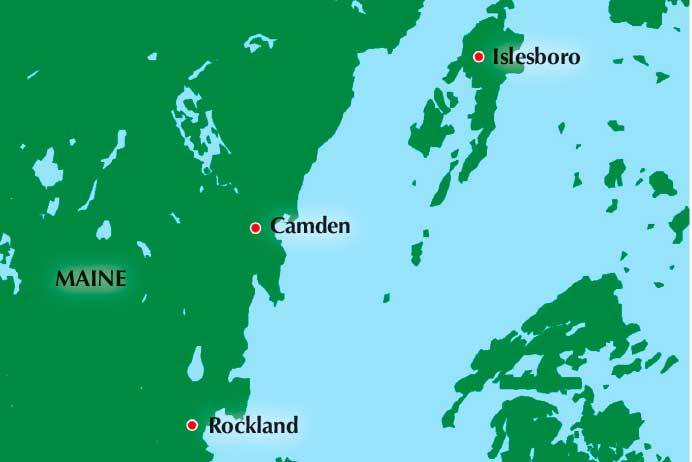
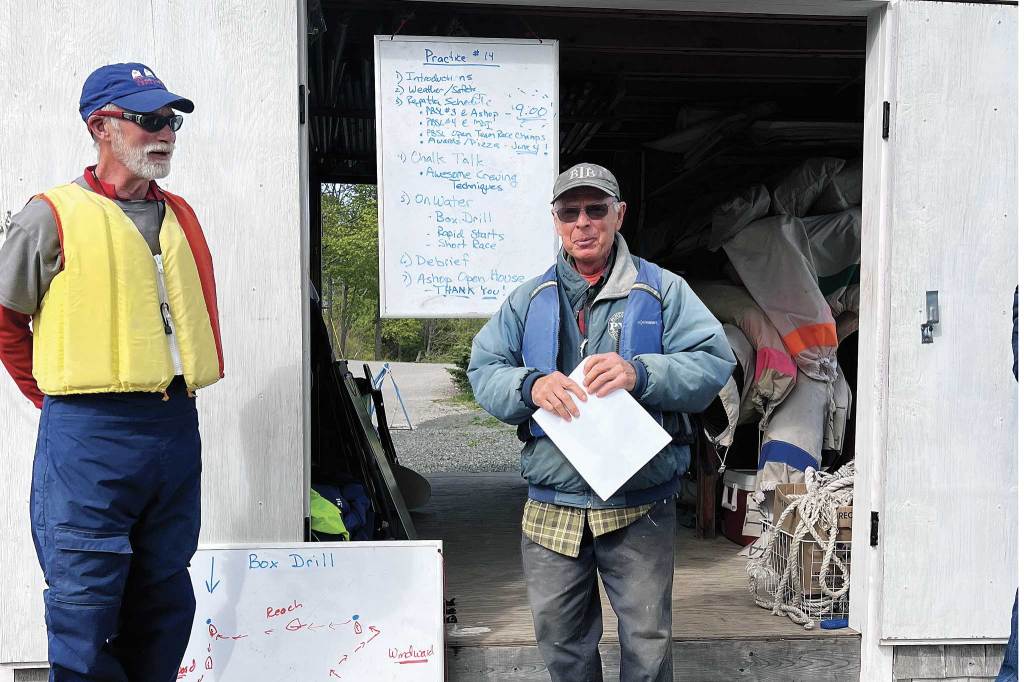
The chapel, it turns out, is a boathouse, and the base of operations for the inter-team practices. A postage-stamp platform extends from the front of the little building, like a chancel under the arched gable. The crews take seats in rows of weathered benches that call to mind pews, but when Camden coach, Devan Gordon, drags out a whiteboard and dry erase markers and begins to go over the course and drills for the day, the ecclesiastical scene is broken. The presentation is quick and to the point: the group will be working on starts and rounding marks, critical skills in dinghy racing, which, when executed well shave off crucial seconds, and when executed poorly, result in lost time or penalties.
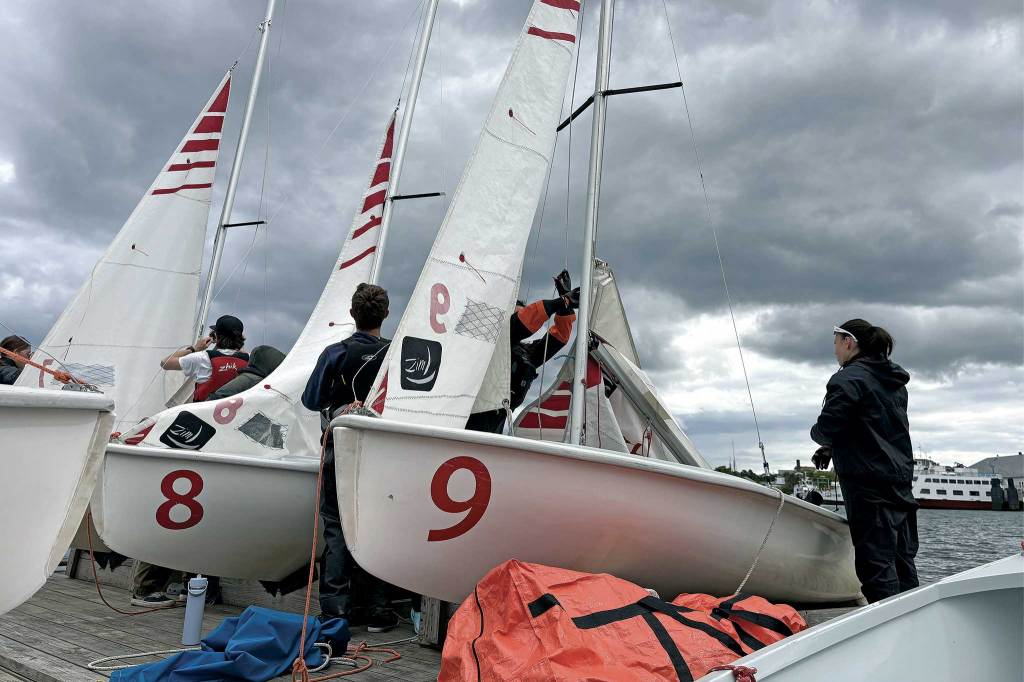
Having received their directives for the afternoon, the sailors grab life jackets and sail bags and stride down the pier to the docks, again reminiscent of astronaut-priests. At the dock they are greeted not by the doors to a space shuttle, but a Boston Whaler, waiting to take them out to the floating dry dock where the racing dinghies are kept. The crews rig the sails, which are misleadingly emblazoned with flags and insignia in Harvard University crimson and black. The boats are seven years old, but new to the program, purchased from Harvard in 2025. The sails are newer, used two years prior by the Crimson to win the team and match titles at the National College Championships before being handed-down to the sailing program in Maine. The Islesboro sailors—Ford Glotzl, Sophia Skrinivich, and Eloise Mooney—make quick work of the rigging and slide the Z420s into the dark water. It’s late in the season, and a few ICS sailors are missing, so Glotzl hops in with a sailor from the Camden team. It is not uncommon for the teams to trade sailors—a practice that encourages collaboration, learning, and builds bonds between the sailors of the competing teams. The breeze is strong enough to get the boats out into the harbor at a fair clip, where the coaches are setting a course within the breakwater in accordance with the prevailing winds.
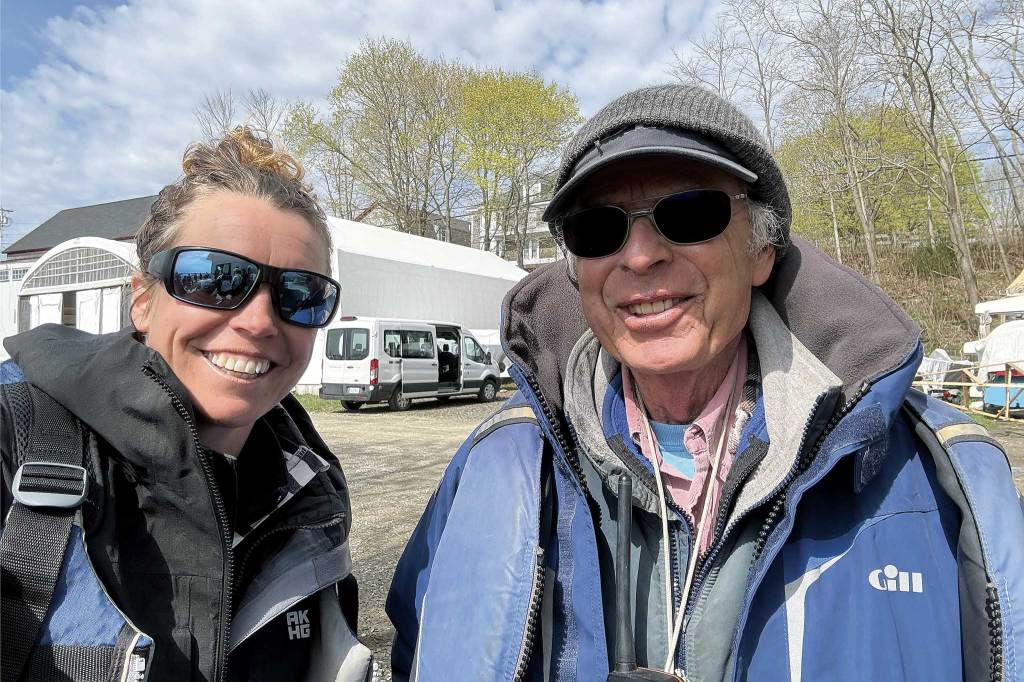
The “digital N” layout of the buoys, now a standard in dinghy racing, was introduced into collegiate sailing by Mike Horn, the former Harvard Coach and Intercollegiate Sailing Association (ICSA) President. The list of Horn’s accomplishments is long. He is credited with fostering the Harvard Sailing program and leading them to four National Championships during his 32-year tenure. Before that, Horn himself was a three-time New England Intercollegiate National Sloop Champion, two-time New England team racing champion, and two-time National team racing champion. For all that and more, Horn was inducted into both the Harvard University and ICSA Hall of Fame. Horn could coach at any of the top college programs in the country, but for the last 12 years, he has focused on coaching a handful of high schoolers from Islesboro Central School, a tiny K-12 school on an island off the Maine coast. Horn passed the reins off to Tracey Wuori in 2024, but he still often makes the two-hour drive from Lewiston to Rockland for Islesboro team practices.
Horn came to Islesboro in the summer of 1992 as a sailing instructor for the Tarratine Yacht Club, an exclusive 130-year-old country club in the wealthy summer enclave of Dark Harbor on Islesboro Island. Give or take a few short stints elsewhere, Horn has been closely involved with Tarratine sailing ever since. While he no longer oversees the program, he continues to run races for the Dark Harbor 20s—the rare and elegant 30’ racing sloops created specifically for the Tarratine Club by legendary boat designer Olin Stephens, whose boats won a record eight America’s Cups between 1937 and 1980.
In 2000, Horn took on the title of Program Director at Big Tree Boating (BTB), Islesboro’s public sailing program. In some ways, BTB was created as an answer to the members-only Tarratine Club with its dress code, private restaurants, and steep membership fees. While the two programs sail the same waters and several of the same types of boats, the handful of miles between them might as well be an ocean. In his unassuming way, Horn has done a lot to bridge that invisible gap between Dark Harbor and the rest of Islesboro. He has trained sailors from both sides of the proverbial tracks; the kids who grew up piloting yachts glossy with fresh varnish and polished brightwork and the kids who were raised rowing dented aluminum skiffs and driving lobster boats pungent with bait and brine.
Horn led BTB for 17 years, and in that time the organization produced many excellent young island sailors. It was a logical decision to form the first Islesboro Central School sailing team in 2014 out of BTB-trained sailors. Horn coached the Islesboro team for ten years, during which time they won their first State Championship Regatta against the largest field the cup has ever seen. In 2024 when Wuori took over, she promptly added another State Championship to the island team’s achievements.
It has been a good run for the team from tiny Islesboro Island, where the total high school enrollment is 30 students in a good year. In the early years the size of the team was limited to the six students who could fit into Horn’s battered red minivan, but the program has grown. One season the team fielded 11 sailors, a third of the high school population at the time. The team’s two State Championships in 12 years are especially impressive considering the school’s minuscule enrollment—they routinely defeat schools 10 times their size. ICS sailors have gone on to prove themselves at the college level, sailing for some of the top college teams in the nation including Yale, Dartmouth, and Georgetown.
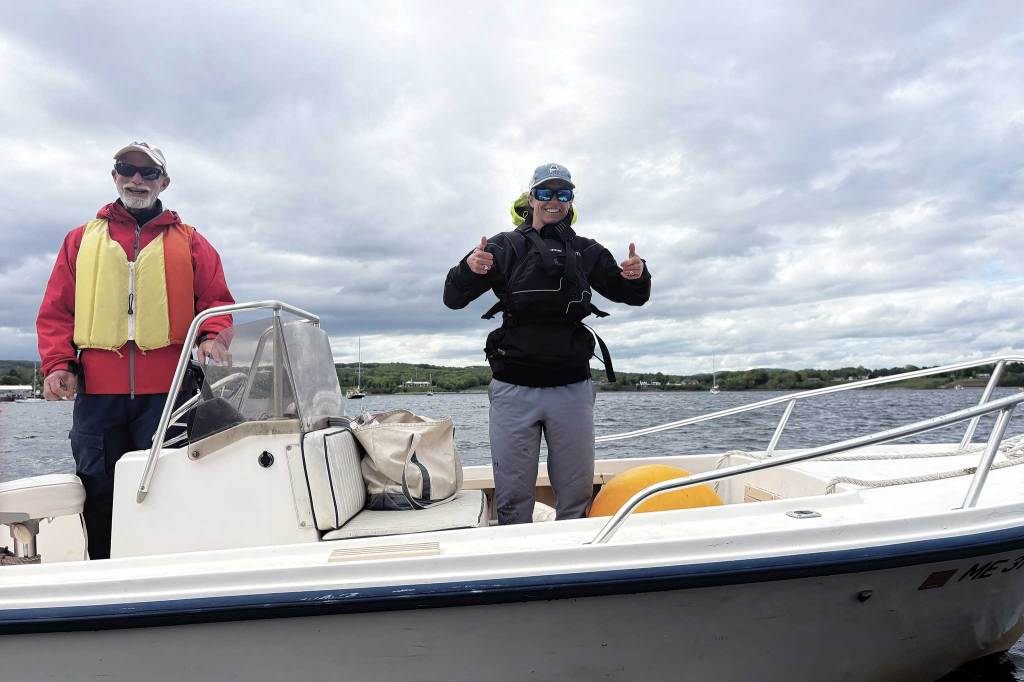
“They don’t have the resume that a lot of these people who grew up in yacht clubs from the age of six and have had parents that send them all over the country do. Kids in Optimists now go to world championships at eight years old,” says Horn. Despite that, The Islesboro team had another stellar year in 2026. The team came in third in the Championship Regatta, and Mooney and Skrinivich also placed third in the Girls State Championship Becton Cup race in the fall.
Horn attributes the team’s success to a variety of factors. He credits the students’ intimate familiarity with the sea, as well as the benefit of these inter-school practices in Rockland Harbor. “In order to be competitive in weekend competition, you have to be able to sail in a larger fleet. In Rockland they can get eight to ten boats sailing, whereas here on the island there would be two, max.”
Out in the harbor today, the wind is picking up and the sailors are finding their groove. Islesboro’s top sailors this season, Skrinivich and Mooney, move in fluid tandem as they sail around the course, gracefully ducking the swinging boom as they throw their bodies from gunwale to gunwale on each tack. The 4.2 meter long boats are incredibly nimble in their hands, pivoting around the course buoys with a turning radius that would make a compact car jealous. Coaches for the teams shout encouragement and critiques from tender-boats when the racers glide by within earshot.
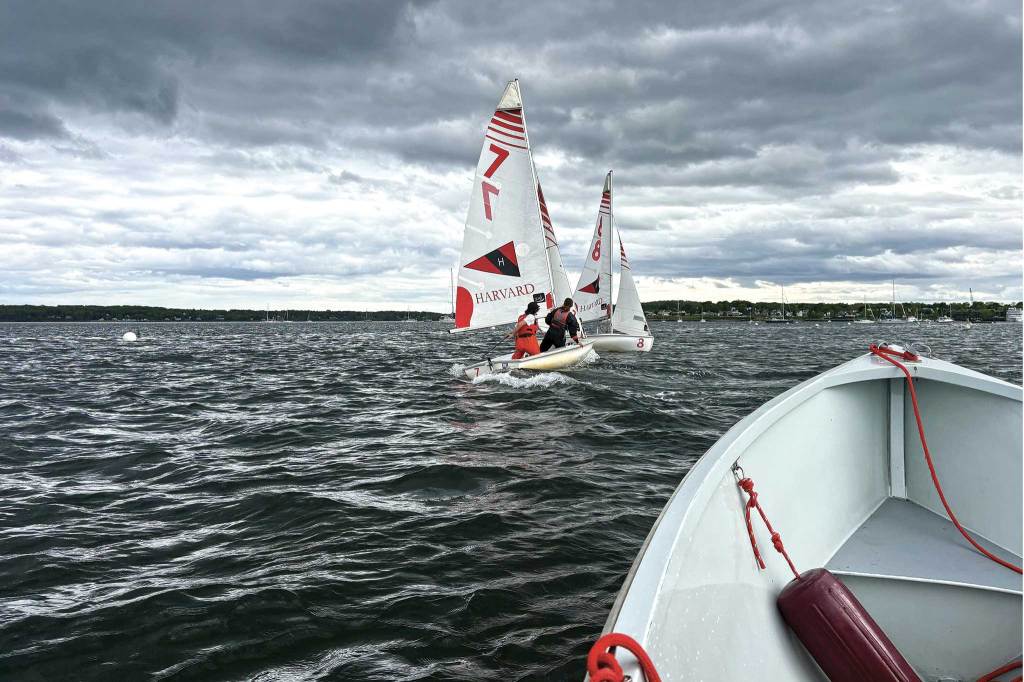
The sky continues to darken, and now the boats are really ripping, raising the stakes and creating a palpable sense of excitement and danger. The boats can capsize in high winds, and the teams can compete in winds exceeding 20 knots. In 2024 an ICS boat crewed by Mooney and Luke Neve capsized in a race, and Neve had to be cut free by a rival coach when the sheet got wrapped around his neck. Today the weather holds, but the capricious wind forces the coaches to continuously adjust the course. Great sailors have something of a sixth sense for wind changes, Gordon tells me, and that can mean the difference between winning and losing in a tight race.
“I’ve coached college and high school for 65 years, and won national championships, but that’s not the really important thing. It’s seeing the kids develop. The high school program right now is more similar to what college sailing used to be, where people like myself, who had never raced before college, could come in and develop, and you would see that growth. Now they’re coming in with tons of experience, and very few walk-ons actually have a chance to do anything,” Horn tells me.
Despite the lack of national-level experience, ICS sailors continue to impress at the collegiate level. A sly smile creases Horn’s face as he relates their accomplishments. “Emily’s freshman year in the fall, I got a call from the head coach at Yale, whom I know well and coached against. He said, you know, ‘Emily won the pin at the start in the first practice race, and beat all of the ten freshman recruits, freshman recruits who had national and international experience.’ Or Alma, she’s sailing for Maine Maritime Academy. I was up there for the state championship, and I overheard that she’s running captains’ practices and showing everybody how to play the game, as a freshman.”
The benefits of the program go far beyond competitive success. Horn and Wuori both point out that the program encourages a sense of cooperation and camaraderie amongst the sailors from the mainland and the island school. “In my view, it’s the way high school and college sailing should both be. They practice together, they help one another. And then on the weekends, they compete against one another. They like one another, and the exchange, both for the mainland people and for the island people is very good,” says Horn.
After two hours of pirouetting around buoys, the practice is over, and the teams dock boats, take down sails, and trade their dry suits for street clothes. Hot pizza and cookies are waiting for them at the boathouse. Crowded around picnic tables, the kids chat, laugh, and flirt. Islander, mainlander, teammate, or opponent, the distinctions don’t seem to matter. For the island students, broadening their social circle is an imperative. With a student-teacher ratio of five-to-one, the school’s small size is a selling point in many ways, but the lack of peers can be limiting. This season one ICS sailor met his prom date through the sailing practices.
The pizza party is over, and Skrinivich and Mooney depart. They are both magnet students who reside on the mainland but commute to attend ICS. In the fall, Skrinivich will sail for the Georgetown University team, while Mooney will lead the Islesboro team as a senior.
The ferry has long since stopped running for the day, and the sun is beginning to set as Coach Wuori and a student board the chartered water taxi back to the island. The clouds have blown out on the stiff breeze, and Penobscot Bay is full of whitecaps as we cross. Sea-spray showers the cabin and runs down the windows in rivulets that turn golden in the last rays of the sun.
There is that warm, tired, dreamy feeling one only gets after spending time in the wind and sun. Wuori’s blue eyes, which have the slight, far-off squint earned only by years spent in the elements of the open ocean, crinkle at the edges as she speaks.
“It’s such a special place,” she tells me. “It always feels good to be on a boat going home.”
This article was originally published in the October 2026 issue.