Carbon fiber dust drifts through the air as the high-pitched whine of a grinder cuts through the shop. Through respirators, muffled French voices are just barely audible throughout JPS Production in La Trinité-sur-Mer, France, where the newest Classe Mini 6.50 prototype is rapidly taking shape. Now that the deck has been joined to the hull, this project has reached an important milestone: what began as an idea is now unmistakably becoming a boat.
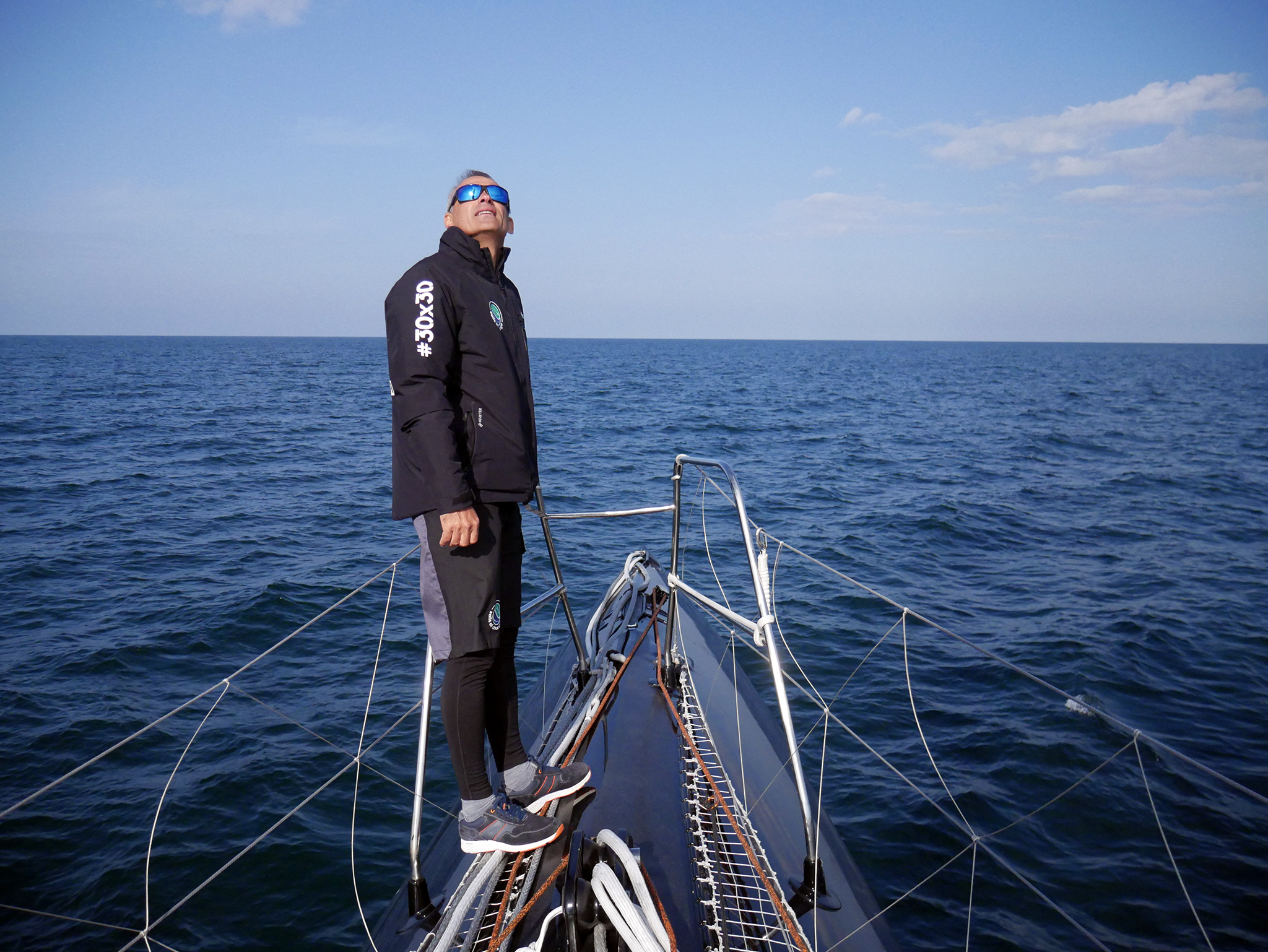
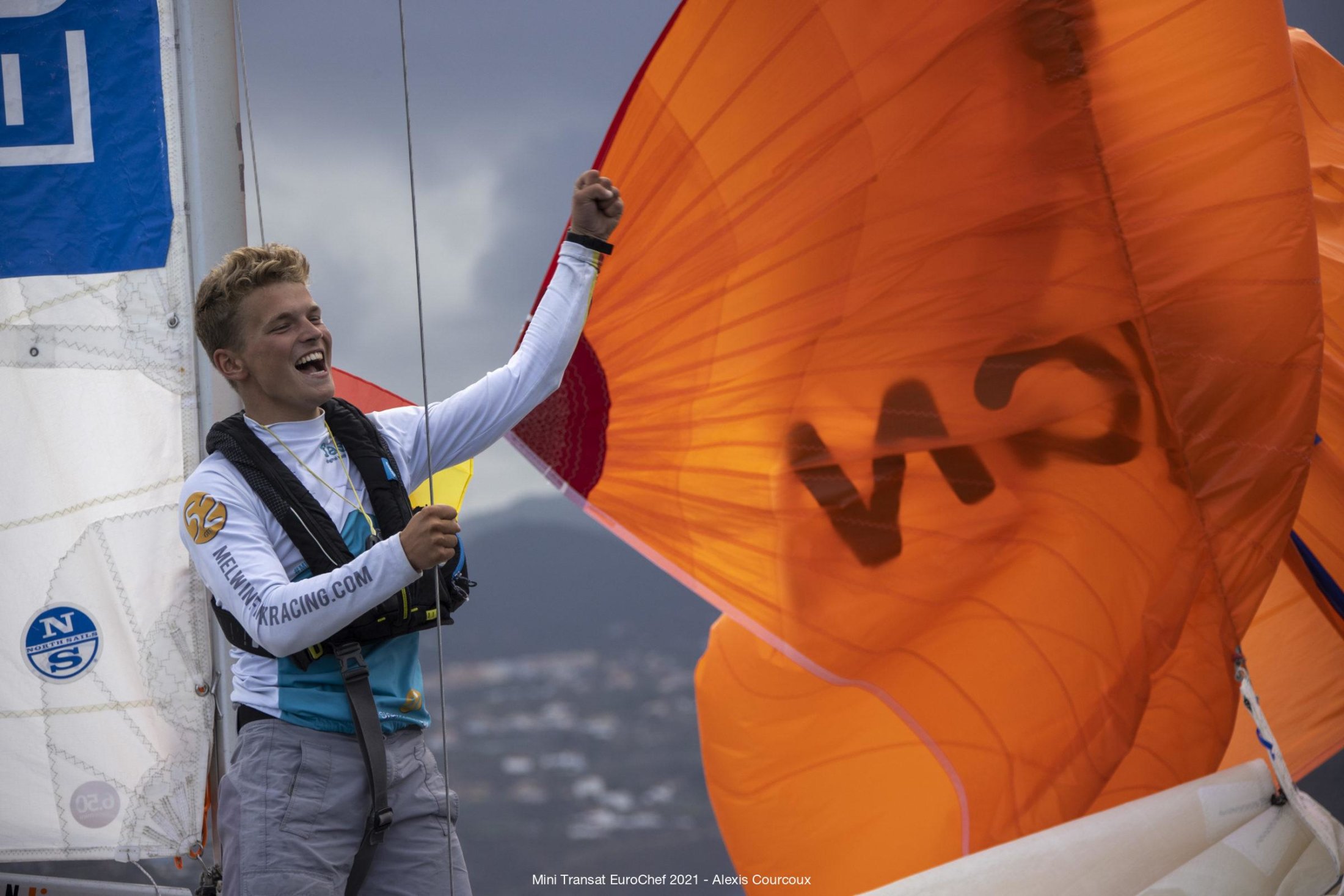
In many ways, this moment began long before the first layer of carbon was laid into the mold. In 2020, I launched my first Mini Transat campaign with an older production-style RG650, shipping the boat from the United States to France and spending three seasons immersed in qualification races, solo offshore miles, and the steep learning curve that defines the Classe Mini. That journey ultimately carried me across the Atlantic in the 2023 Mini Transat and then a follow on adventure of sailing the boat from Guadeloupe back home to Annapolis. Looking back, it is remarkable to compress more than 15,000 nautical miles—most of them sailed solo—into a few sentences, but those miles shaped every decision behind this new prototype.
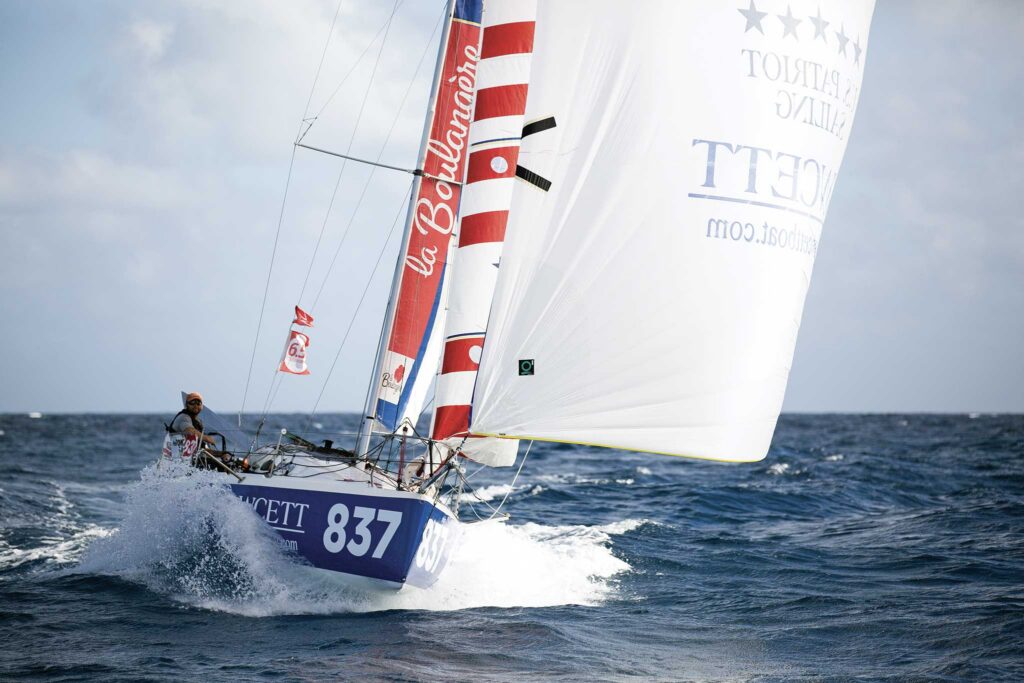
The first campaign was about far more than simply reaching the finish line. Even after losing one of my rudders mid-race requiring a quick stop in Cape Verde for repairs, I completed the crossing and, more importantly, fulfilled the mission behind it: raising awareness for U.S. Patriot Sailing. This nonprofit organization helped me navigate a personal challenge upon returning from a military deployment and during my transition off active duty.
After the 2023 campaign, it took time to fully process the experience and understand what the next chapter should be. By the time I began planning for 2027, I knew the second Mini campaign would continue supporting the veteran community through U.S. Patriot Sailing, but this time performance had to stand alongside purpose. Competing at the front of the fleet would generate the visibility needed to expand support for the mission behind it.
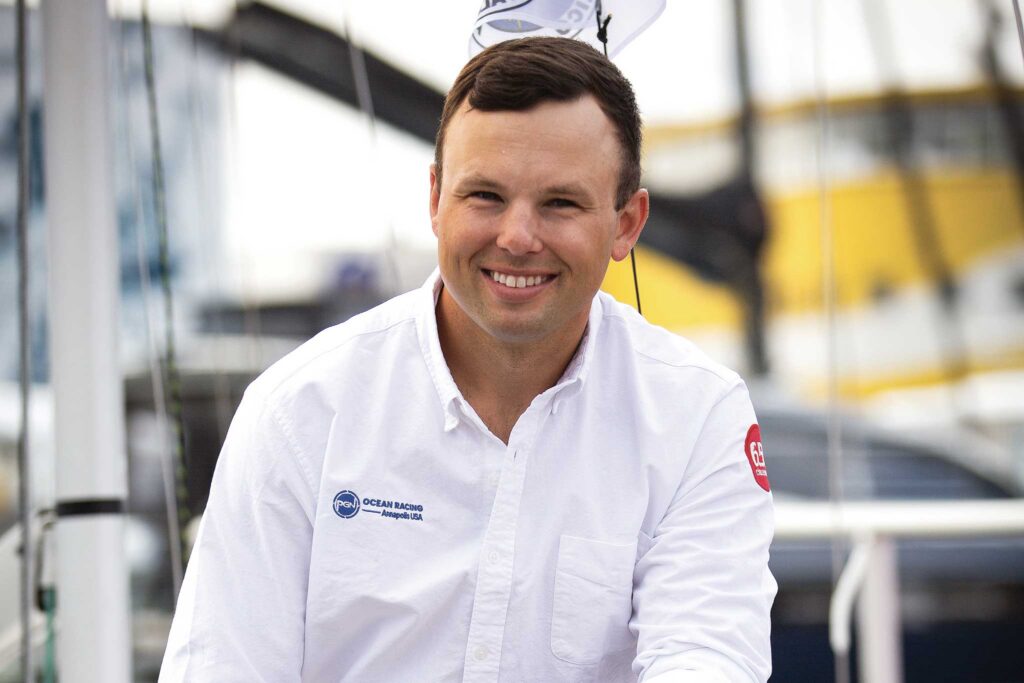
This campaign is not about simply returning to the Mini Transat; it is about pushing design and performance boundaries in a new prototype. To do that, I partnered with Sam Manuard, whose recent designs have consistently defined the leading edge of offshore racing performance. We first met on the Vendée Globe pontoon in November 2024 next to the IMOCA Charal, which Jérémie Beyou skippered to an impressive 4th place finish in the Globe and won the 2025 Transat Café-L’Or (formerly the Transat Jacques Vabre). Manuard also designed numerous Class40s and most recently the Mach 50 Palanad 4 that won the 2026 RORC Transatlantic Race.
The most compelling reason to work with Manuard, however, was his recent evolution of the Mini prototype itself. His design for 1067 Nicomatic changed expectations for what a fully foiling Mini could achieve, not just in outright speed but in the consistency and duration of stable flight. Benoît Marie’s dominant lead-up to the 2025 Mini Transat proved the concept’s potential, and during the Atlantic crossing he set a remarkable 24-hour distance record of 352.59 nautical miles—an average of 14.69 knots in a 6.50-meter offshore boat. Damage to the boat ultimately kept that design from becoming the first fully foiling Mini to win the event, but it was clear the breakthrough had arrived.
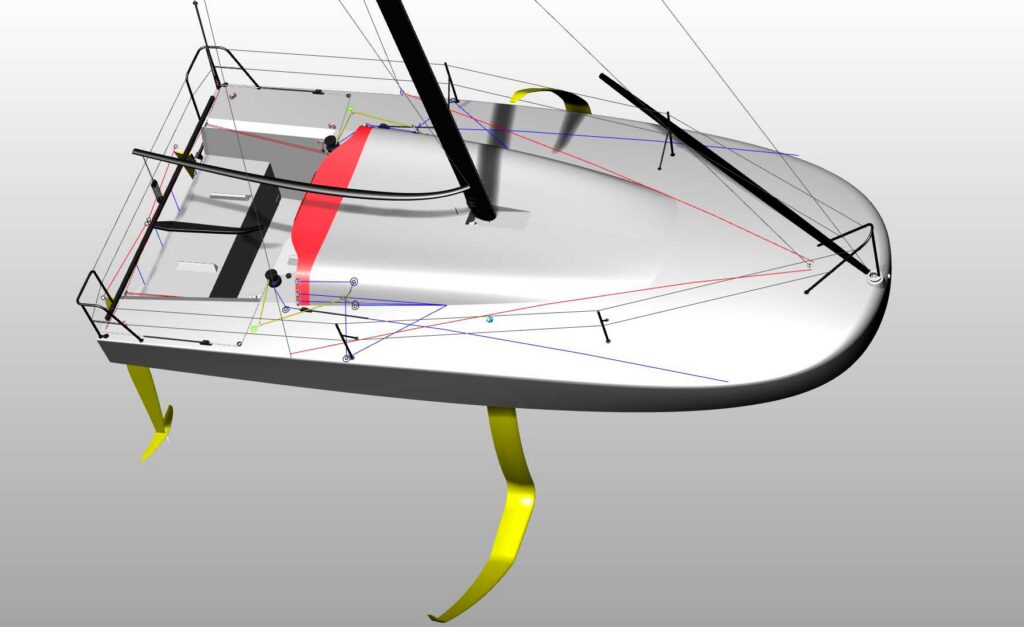
Our new prototype builds directly on that proven foundation while refining the areas where the next gains can be made. Since the launch of Nicomatic in 2022, Manuard has continued evolving this new design with a particular focus on improving control while foiling and increasing performance in lighter wind speed displacement conditions, when foiling is not yet possible. While the hull shape may appear visually similar, the details have been carefully reworked throughout—from foil geometry and rudder T-foils to the hull dimensions and deck profile. The result is not a repeat of a successful design, but a refined next iteration informed by lessons learned.
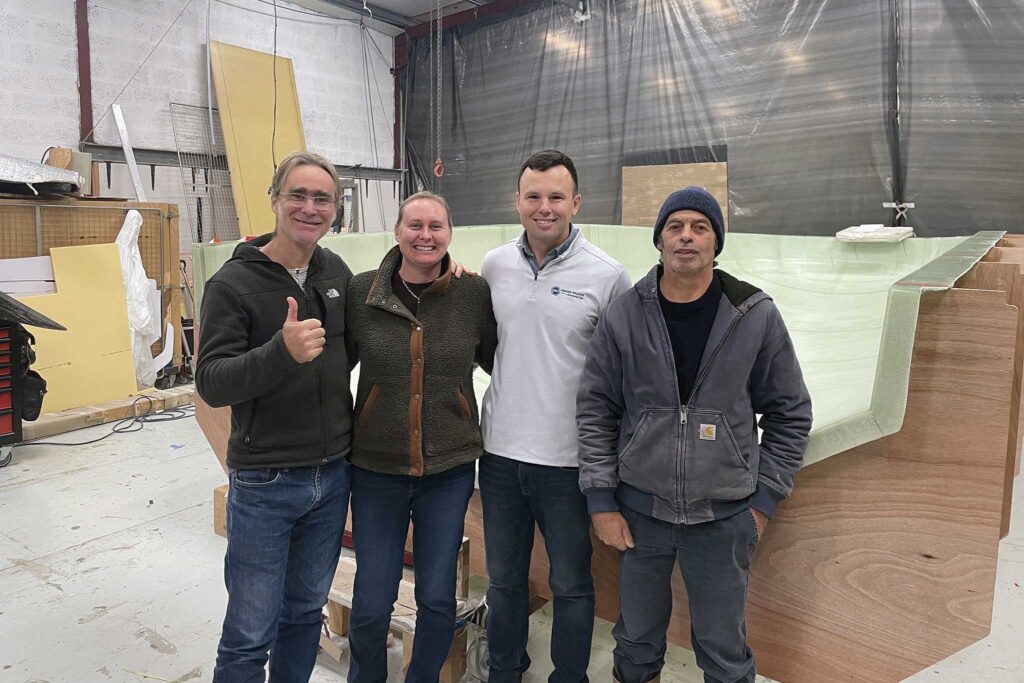
Turning the new design into a physical boat required the right builder. Manuard connected us with JPS Production, a custom shop in the Brittany area of France with significant experience. Their familiarity with his previous designs—including the Mach 50 and Class40s—made them an ideal fit for a Mini prototype.
The build began not with carbon, but with wooden plugs shaped to the exact geometry of the hull and deck. These full-scale forms demanded extraordinary craftsmanship since every contour, radius, and alignment point would define the molds used for the final structure. Once the plugs were completed, fiberglass was laid over them to create the molds, with plywood reinforcement added to ensure the rigidity needed to hold a precise shape throughout the infusion process.
With the molds complete, the boat itself could begin to take form. The hull and deck were built as carbon sandwich structures, starting with an infused outer carbon skin followed by a carefully fitted high-density foam core and then a second infused inner carbon layer. This lightweight but exceptionally stiff construction forms the foundation of the boat’s performance. From there, the structural skeleton was added: bulkheads, stringers, the canting keel box, mast compression post, foil case bulkheads, displacement foam compartments, and chainplates that will support the rig loads. In a boat this small, where foil, keel, and rig loads are extreme, every structural decision is a balance between weight, strength, and offshore survivability.
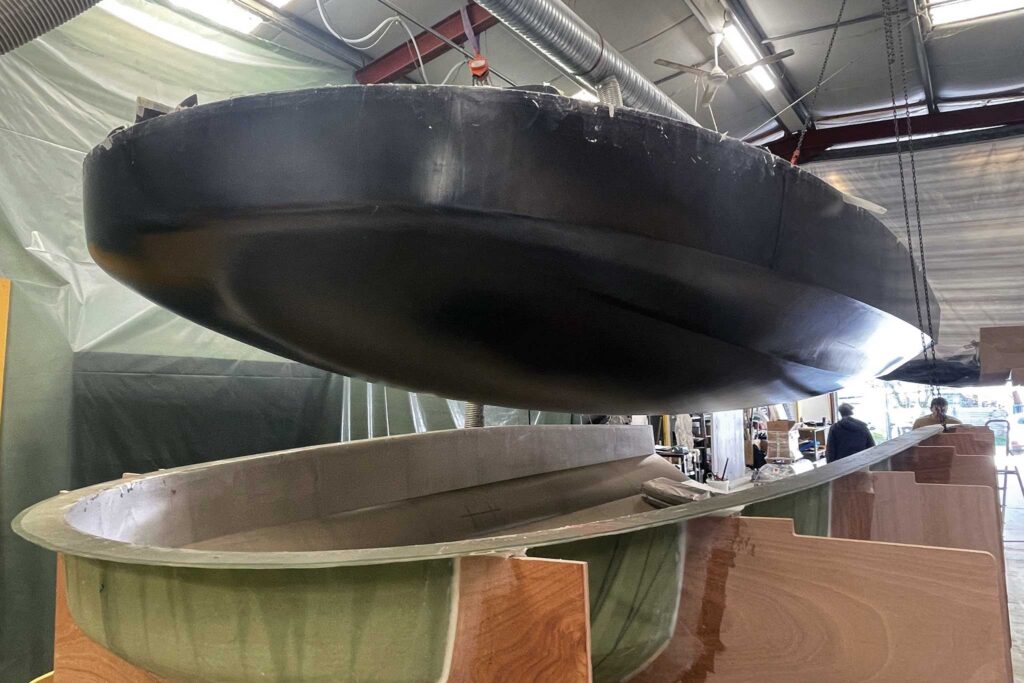
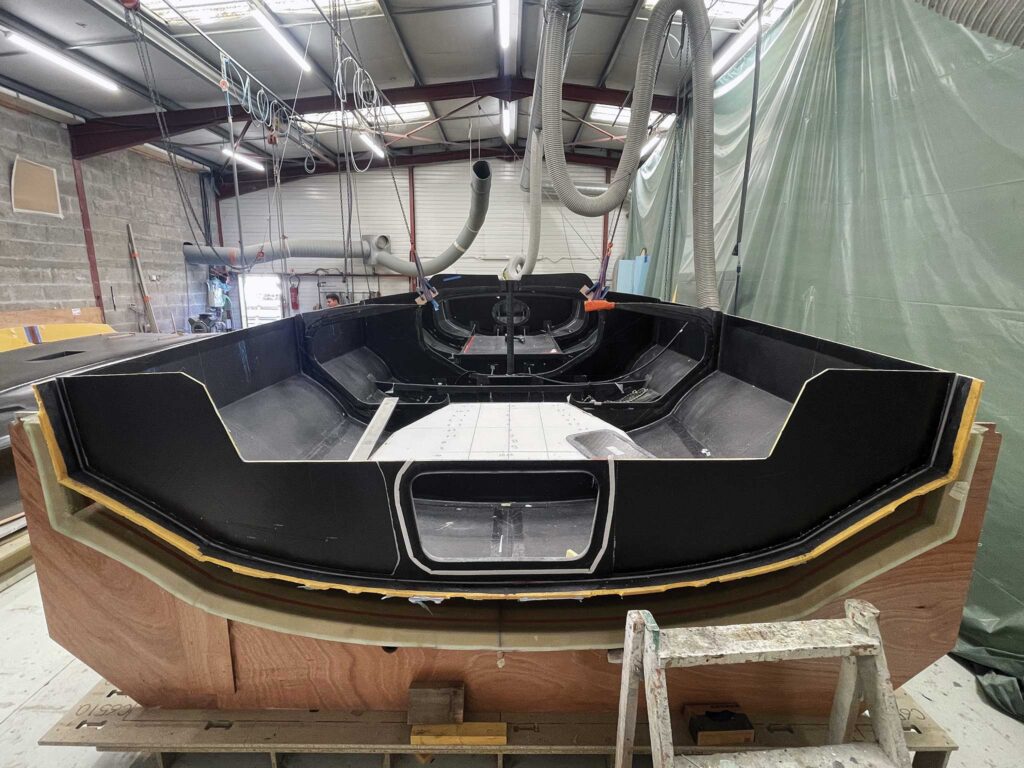
By early April, those major structural elements were complete and ready for one of the most significant milestones: joining the deck to the hull. The process demanded repeated dry fits, with the deck lowered into place, lifted, trimmed, and sanded again until the alignment was exact. Once the final fit was confirmed, epoxy resin mix was applied across every bonding surface before the deck was lowered for the last time. With the boat carefully aligned, weight was distributed across the structure as the bond cured. This step marked the moment the project finally crossed from separate components into a whole boat.
As the boat comes together, weight is a key aspect we are focused on. Every material choice, every fitting, and every item of mandatory safety equipment must justify its place onboard. In a box-rule boat where performance margins are measured in grams, the balance between weight savings, reliability, and cost becomes a constant conversation. The same discipline that shaped the building of the hull now carries into every decision about hardware, sails, safety gear, and systems that will eventually be included for racing.
The next major layer is electronics, where modern Mini racing increasingly becomes a systems problem as much as a sailing one. Despite class restrictions on chartplotters and satellite communication, the onboard architecture remains highly sophisticated. One of the most intriguing elements of this package will be the integration of Madintec’s MADBrain, an AI-enabled control system designed to work with the autopilot to improve stability and control while foiling. In a boat capable of flying above the water, that kind of intelligence may prove to be one of the defining factors in the boat’s performance.
If the electronics influence how the boat will be sailed, the sail inventory defines how its performance potential is unlocked. Quantum Sails is designing an entirely new loadout for this platform, one that differs from previous Manuard iterations and is tailored specifically to the refined hull, foil package, and control characteristics of this boat. Within the Mini’s strict box rule, the challenge is not simply designing fast sails but choosing the limited onboard inventory that delivers the widest possible performance range across the conditions expected in the Atlantic crossing.
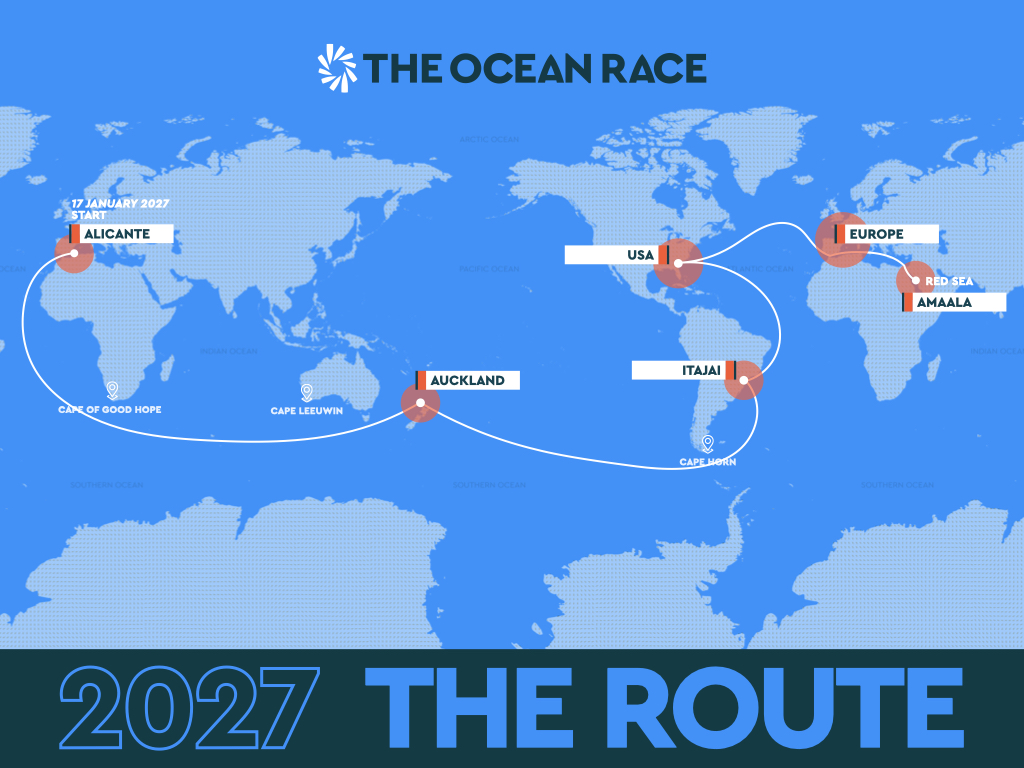
Those decisions take on even greater significance with the return of the La Rochelle–Canaries–Salvador, Brazil route for the 2027 Mini Transat. The revived course reintroduces an equator crossing and the strategic complexity of the doldrums, adding an entirely different layer to sail crossover choices, foil handling, and routing options. A prototype like this must not only excel in high-speed reaching conditions, but also remain efficient and manageable in the unstable, often frustrating light-air phases of this route as we cross the ocean to Brazil.
As we prepare to splash the boat this spring, it is clear that the initial launch is only the beginning. The first weeks on the water will be dedicated to understanding the balance of the platform—foil behavior, autopilot tuning, sail crossover analysis, deck layout improvements, and the countless small adjustments that only reveal themselves offshore. From there, the focus shifts quickly to qualification races and offshore mileage, with a race to the Azores in July serving as one of the first major proving grounds. By then, the real work of turning a new prototype into a race-winning platform will be fully underway.
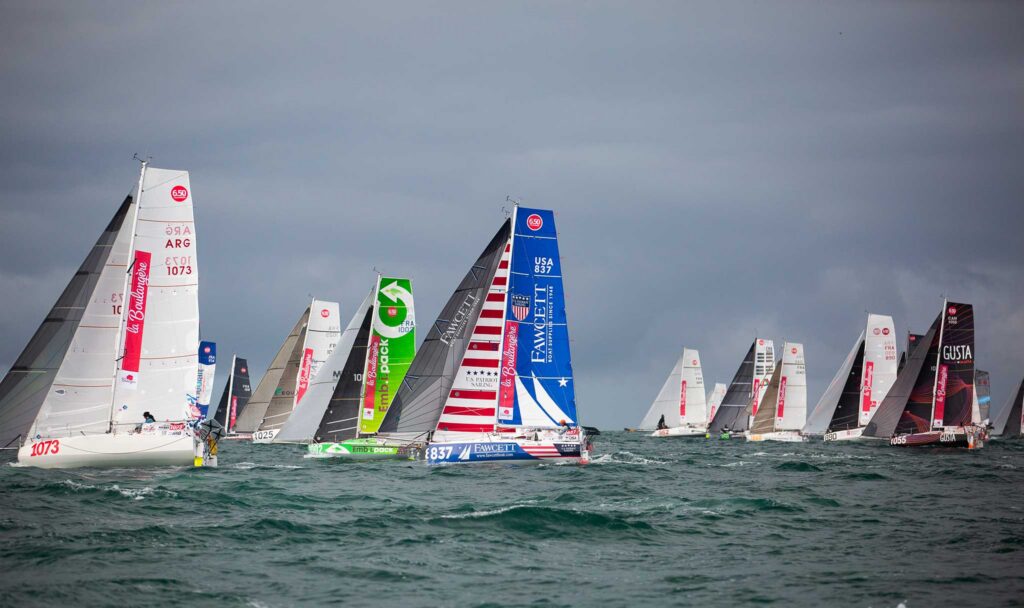
As the prototype moves closer to launch, I remain grounded in my purpose to expand support for U.S. Patriot Sailing, even on the difficult days when the inevitable setbacks of a new prototype test one’s patience and resolve. Although the Mini Transat is raced solo, nothing about reaching the start line happens alone.
This project is only possible through the support of donors, technical partners, and sponsors who believe in the mission behind the miles. By the time this boat lines up in La Rochelle, it will carry not only thousands of miles of testing and refinement, but also the support of an entire community pushing this mission forward.
Gibbons-Neff is seeking a title sponsor and additional funding partners to support the campaign through 2027. For more updates, visit pgnoceanracing.com