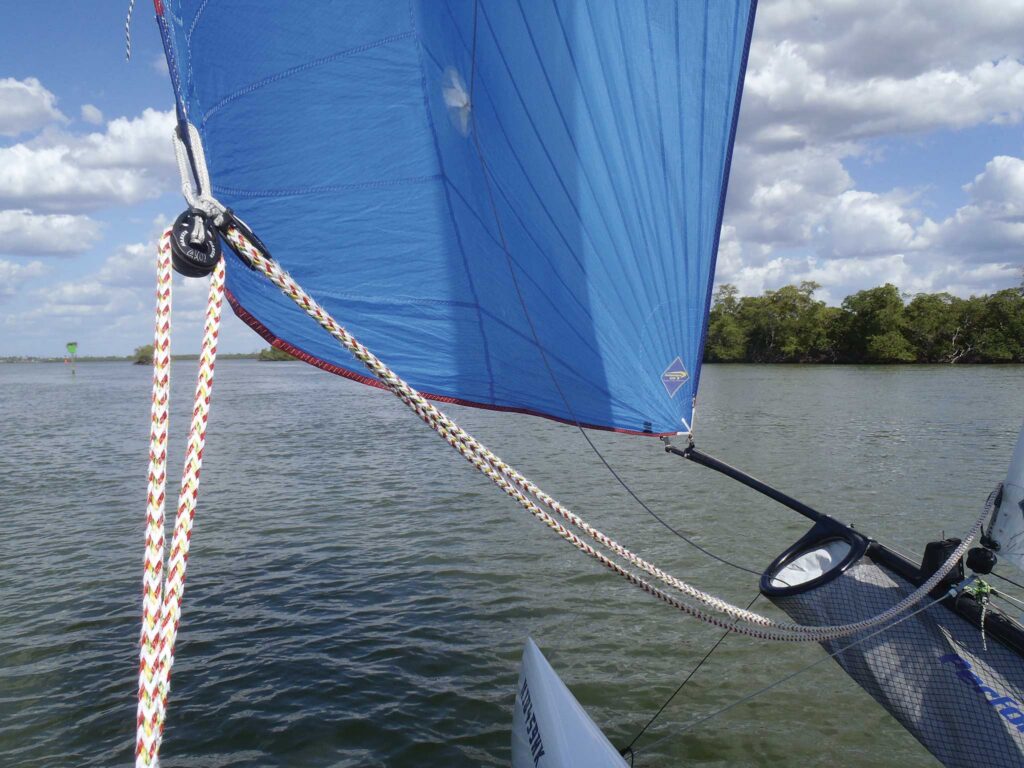
“Put up the kite!” Someone shouted from the beach. I am too busy on the halyard to hear coaching from the peanut gallery. A few more pulls and I jump to the sheet, turning to my race partner.
“How is the boat?”
“Good.”
“How is the balance?”
“Good.”
“Head straight for Anna Maria.”
Remember to sail the boat, I tell myself.
Solid advice for someone who a minute earlier was running down the beach like a character from Baywatch. To the uninitiated, the start to the Everglades Challenge looks more like a punishment that a junior sailing coach would invent than a race start. Organized by Watertribe and running since 2001, the Everglades Challenge is heavy on tradition and light on formality. Launch your boat from above the high tide line on the beach, take anything you use to launch it with you. Row, sail, and otherwise persevere your way 300 miles from St. Petersburg to Key Largo by way of three checkpoints.
Like any true adventure, this started well before the first horn. In fact this adventure began exactly one year earlier in Everglades City with a boat full of water and a rocky beach we couldn’t safely land on. We had to abandon our 2025 attempt. The next morning, waking up under a makeshift tent, the only thing we knew for certain was we’d have to come back and finish what we started the next year.
My skipper and I did a deep dive on what we could improve on. We called in our fiberglass tech to diagnose the patient. Our boat, SeaPayne2 is a Nacra F18 that left the factory as a fully foiling speed demon. She spends most of her life at the Sandy Hook Catamaran Club blasting around the Statue of Liberty at speeds that would make your average sailor reach for a crash helmet.
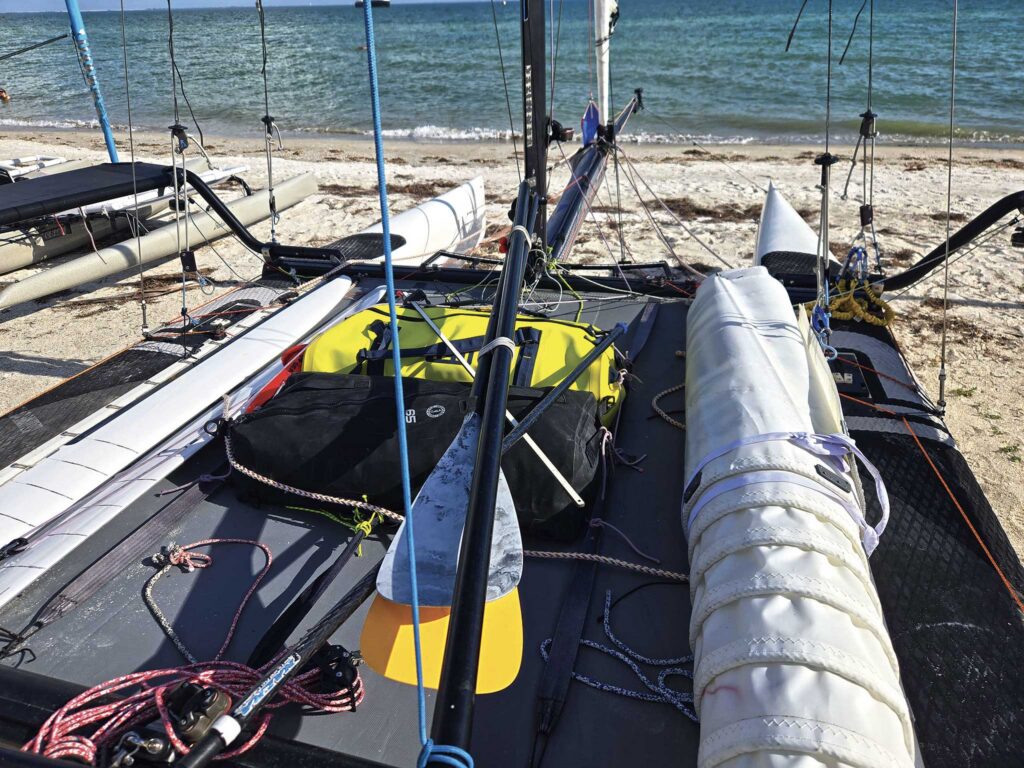
For the race, we had converted her to a distance race boat, trading the foils for regular daggerboards, kick up rudders, wing seats, and furling sails. Using the old trick of a shop vac to pressurize the hulls, we found that removing the foils had left several small screw holes that the new blades didn’t fill. In heavy seas off Marco Island, this slowly filled the hulls with water. We wouldn’t make the same mistake this year.
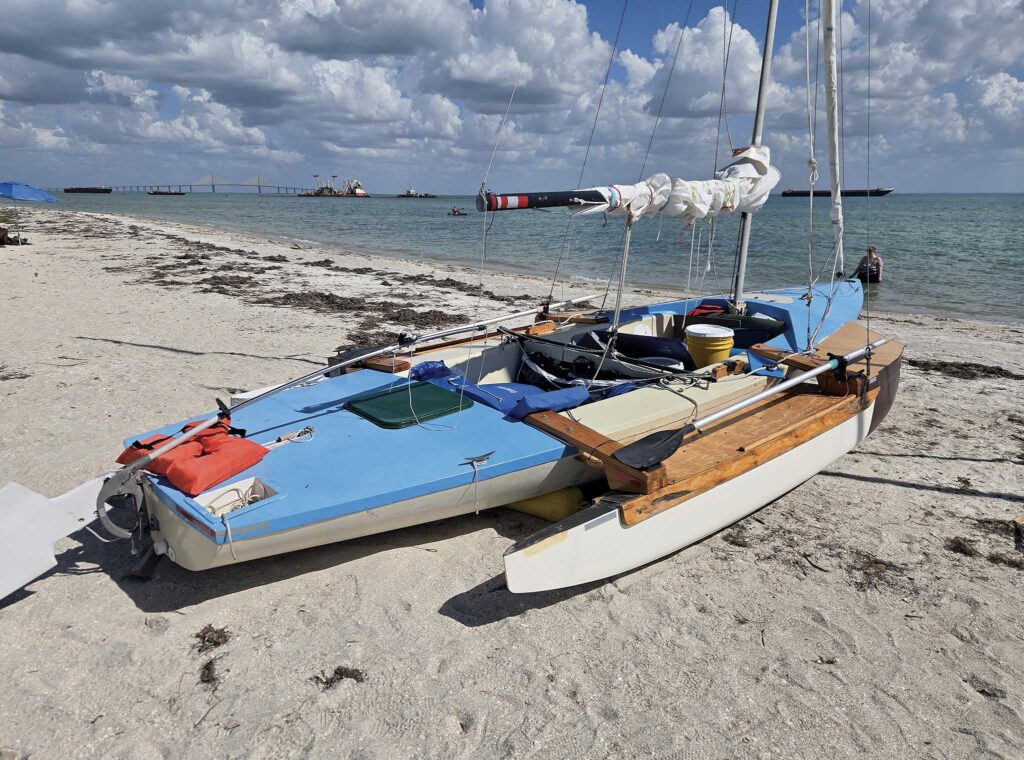
The beach at the start of an Everglades Challenge looks like a combination of a naval architect’s fever dream and MacGyver raiding a junior sailing program’s spare parts bin. It’s not uncommon to see a trimaran frankensteined together from a homebuilt main hull and beachcat hulls as the amas. The most common boats are Hobie Adventure Island trimarans and the Core Sound series from B&B yacht design, both of which get their own class.
In pole position as usual is Spawn, one of several boats designed and built specifically for the race. Two friends, who are the best sailors and nicest guys you will ever meet, called their naval architect childhood friend and headed into the garage. What emerged was Spawn. With features such as dual kick up rudders, a slide seat rowing station, and water ballast, she was designed with one mission: finish the Everglades Challenge fast. Next to her is Zygote, her little sister. Designed by the same naval architect as Spawn and finished just in time for the 2026 race, Zygote was built so that one member of team Spawn could do the race solo this year. The skipper tells us he has 26 miles on the boat and 90% of the leaks plugged.
Watertribe may be loose on the rules of racing but they are serious on the rules of safety. We check in and provide our PLB registration numbers and our life jackets for inspection. In return, we received T-shirts emblazoned with our nicknames for the event or “tribe names” as the Watertribers call them.
Next it’s the boat’s turn. The inspector walks over and dives into our gear bags.
Paper Charts…Here you go.
Hypothermia Protection…Here is a space blanket and bivy sack.
Sleep System…Tarp for boom tent and second tarp for ground pad, here is my sleeping bag.
Fire starting kit…I have matches, and he has a lighter. Here is a tinder kit and sparker.
Reef Points…We have a factory Nacra Reefing system.
Inspection done and boat ready, we head back to the house. The night before any race it’s your mind that’s racing. Am I ready? Is the boat ready? Did I learn the campsites well enough? What do I do if I see a snake? Am I going to die in the everglades? Would anyone care if I do? This is the kind of race that makes you reassess your life choices.
I don’t want to tell everyone I didn’t finish again, I decide.
The next morning the horn sounds, and we’re off. We look around and realize, for the moment, we’re in second place behind a Hobie Tiger.
We set a course direct for Anna Maria Island and out of Tampa Bay. As we get closer, we see the sandy outline of Passage Key. We read the breakers and find the deep water near the beach. It’s a little too close for comfort, but then we’re out of the bay.
This time last year we were drifting around. Lesson learned.
We keep the kite up and are reeling off the miles down the coast. We might even make Stump Pass in daylight. Off Sarasota, a RIB blasts out to us. The initial feeling of getting pulled over subsides when we realize it’s our friend Dalton from Sarasota Sailing Squadron coming out to wish us luck and record for posterity.
“Its good to have friends on the water,” I say, a constant refrain in my life, but in my head I’m secretly thinking I hope I look good in these pictures.
Of course, no plan survives first contact with the enemy, and the breeze soon dies. We look around and see Spawn, Zygote, and a Hobie 16 making slow headway near the beach. One of our competitors, MoreSailSed, did tell us the breeze holds close to the beach.
Lesson from last year maybe only half learned.
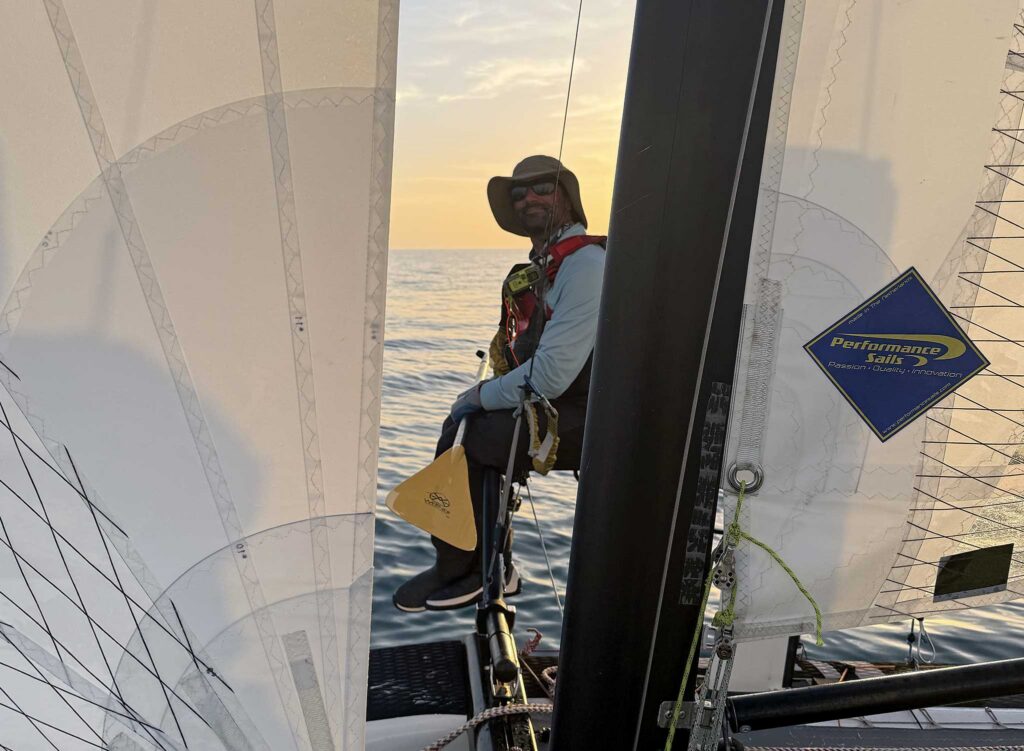
We take the paddles off the boom and set a course for wind. I have drifted around lakes hunting for puffs, but paddling for a breeze line is a new experience. Spawn is also “motorsailing.”
Nav marks would have been nice as we enter Stump Pass at twilight, but the best we get is a boat that comes out to fish. I hope they aren’t hunting alligators. We paddle on, seemingly making zero progress. Out of the darkness emerges a shape in the water. Is that a shark? An alligator? All I can tell is it’s throwing a wake.
I pull out my spotlight and find a string of crab pot buoys. Equally disappointed and relieved, I realize we must be seriously fighting the tide. “New plan, lets get to the beach for current relief. Still waters run deep,” I say to my skpper (tribe name: Sailor Swift) as we tuck into the calmest water we can find. He suggests we hit the beach and take a breather.
We land next to Crazy Russian, an Everglades Challenge legend in his own right. This year he has traded in his shunting proa for a Nacra 17 that’s pretty similar to our boat except he is solo and has a rowing station. We ask him how is doing.
“Not good. My GPS died.”
“Do you want our back up?”
“I’ve done this 14 times, I know where I am going.”
Maybe he really is crazy.
We look at the tides: outgoing until midnight. I do some math. We’ll need to fight the tide to the checkpoint then paddle through slack after that, which means it’s time to go.
We are making almost no progress when we see Crazy Russian walk right past us on the beach. Crazy like a fox, I guess.
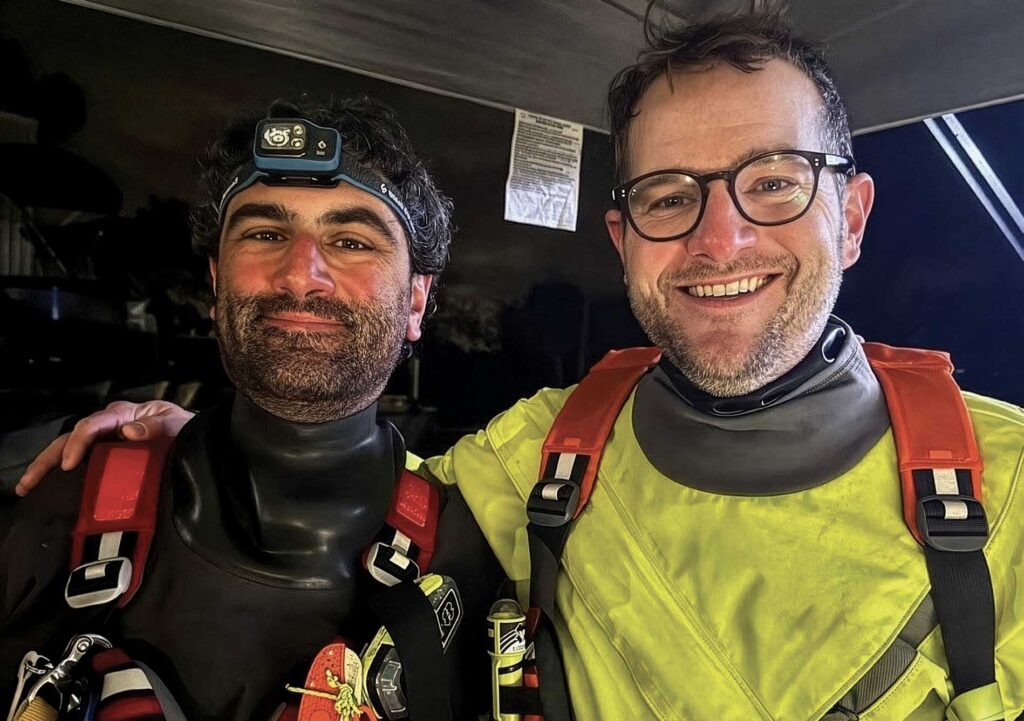
We turn back to the beach, hop off, and start walking. My feet feel moist in my new dry suit. It must be sweat from all the paddling. I’m happy my still-too-tight neck seal is keeping the smell in.
Out of the pass, the water is totally calm, only broken by the sounds of manatees coming to the surface to breathe. A large splash behind us reminds us we are not alone. A dolphin fin breaking the surface a minute later is a relief.
Like a flock of ducklings, the Watertribers are descending on check point one at Cape Haze Marina. Despite the early lead, we arrive around the same time we made it here last year.
The first checkpoint is always a combination of camaraderie and commiserating. The high of reaching the check point wears off as soon as the dock rock hits. Then you’re thankful for a chair with a backrest. Each checkpoint is run by a team of volunteers, and they are the glue holding this race together. They have an assembly line of cup noodles waiting.
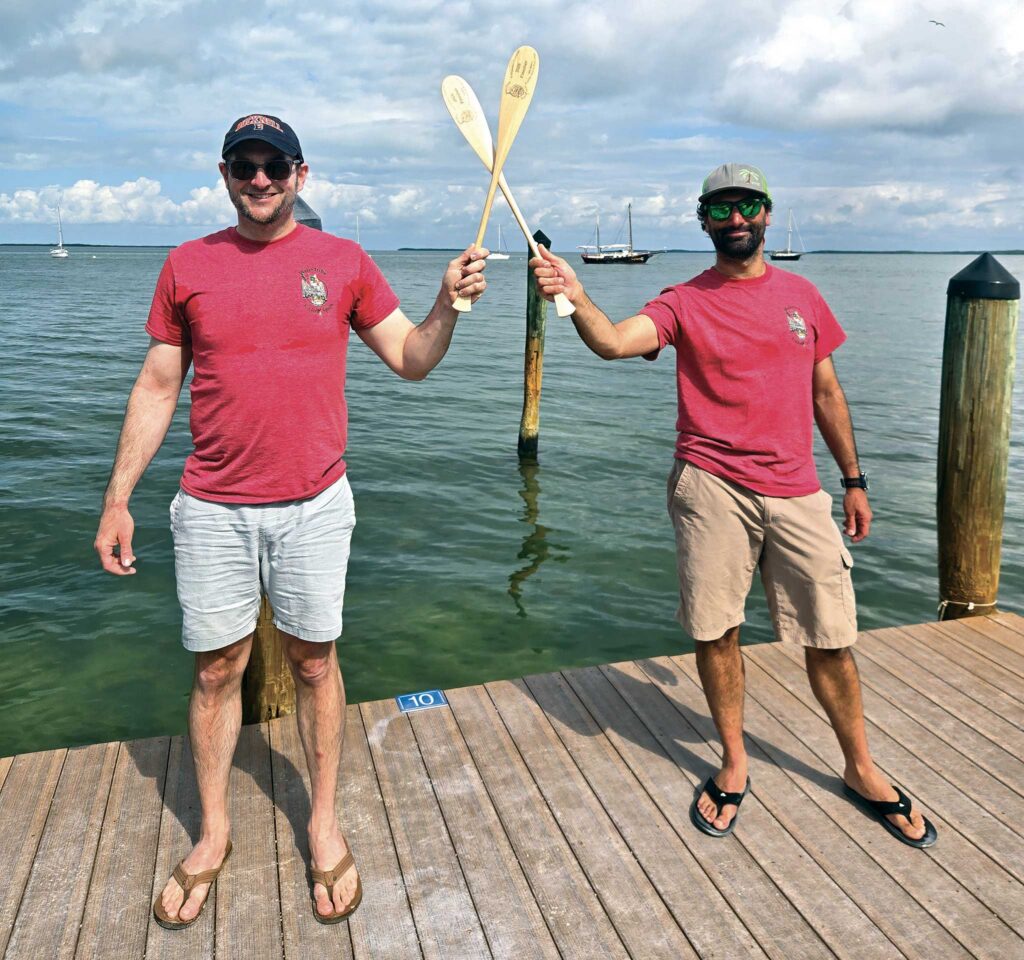
Two Beers comes in on Zygote, signs in, hops back on the boat, and takes off. I hope I am that cool someday. We fill our camelbaks with filtered water and take the opportunity to use a real bathroom. My stomach is grumbling so I accept a second round of the best ramen I have ever tasted. One of the volunteers helps us untie and get turned around. We may be a sports car of a sailboat, but this is tight maneuvering. The residents of Cape Haze Marina come out to wish us luck as we paddle out.
Spotlight. Horn. Spotlight. The Palm Island ferry runs until midnight so I guess it’s before midnight. This must be the most stressful night of that captain’s year, but he steps out of the pilothouse and gives us a wave. He’s a fan of the challenge too.
I turn to Sailor Swift and mention a few things I wish we’d remembered to pack. Across the water Zygote’s skipper chimes in that, “the hardest part is getting to the start line,” a true statement from a man who barely had a boat built in time for the race.
Pushing the boat up the beach takes a lot of muscle even with our makeshift beach roller fenders. I remember this being easier last year. We decided that after the ramen at the checkpoint, sleep is more important than the time it would take to heat up our freeze-dried dinner. We rig a tarp over the boom and roll out our sleeping bags on the trampoline, which is surprisingly comfortable. Crazy to think my whole day takes place on an 8-foot by 8-foot piece of fabric.
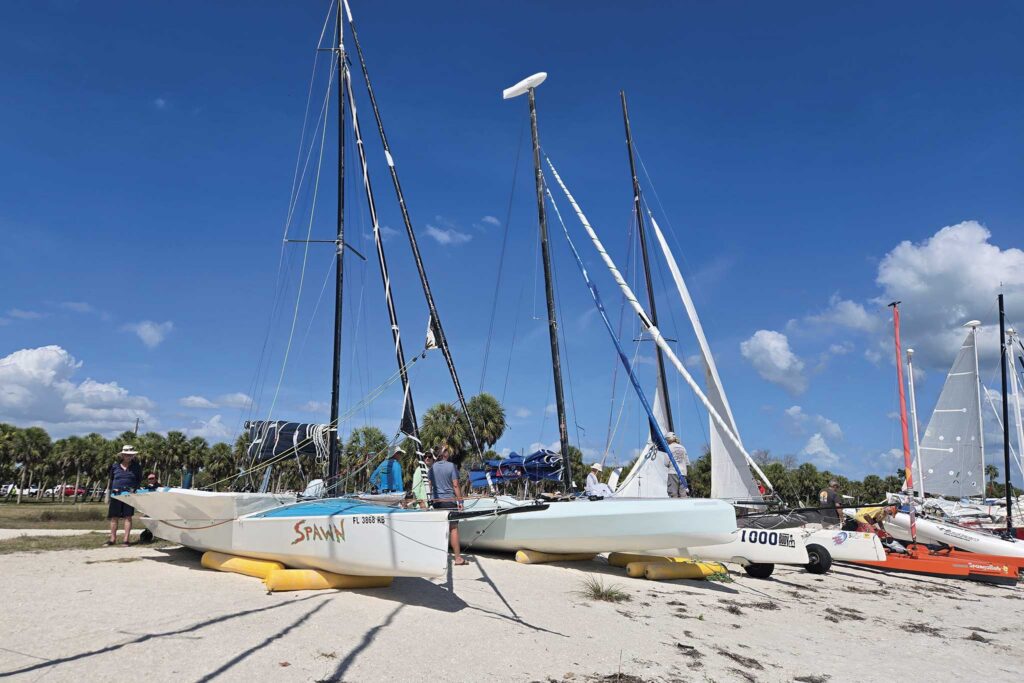
Day 1: 62.5nm in 17 hours and 2 minutes. Avg Speed: 3.7 knots
Am I hallucinating or in Star Wars?
I open my eyes and see someone flying down the beach on a hoverboard. Sunrise has brought beachcombers, dog walkers, and all manner of people. Looking literally like something the tide washed up, we decide it’s time to go before we overstay our welcome. Somehow the gear is never quite dry and doesn’t fit as well as it did the night before, but it all gets back in the gear bag. We push the boat into the water and catch some breeze through Gasparilla pass.
Sleep and food. During a race like this your body runs on them, and you need at least one to keep going. We are running on empty, so we plan to stop at Cayo Costa to fire up the stove and make some freeze dried breakfast. Then I look at the forecast and see the breeze for the day dying off. The winds will be light until we get to Florida Bay and pick up some stiff easterlies. Our plan has to be “get south, get breeze.”
Begrudgingly I tell Sailor Swift we can’t afford the stop and need to make miles while we can. I shove a fistful of trailmix in my mouth, and he offers me a nap on the trampoline as a consolation prize.
“I’m sorry to do this to you, but I need you on the kite…”
Once again the surefire way to find a breeze is to take a nap. It’s built, and we are sailing up wind. I douse the kite and the boat settles on the new course.
This is what I signed up for, what this boat is meant to do. We fly down the coast and are reeling off the miles. Beaches fade and buildings blur past. At Sanibel the coast turns east. Do we hug the beach, lesson learned yesterday? No, the breeze is good, so rhumb line it is. We might even make Marco Island by nightfall.
The boat is surging over ten knots, and we are all smiles at Wiggins Pass when we get a text from Sailor Swift’s fiance that she can see us from his parents house. We’re still dreaming of making Marco Island, but as soon as we set our sights south, the breeze senses our excitement and slows. New plan: Keeywadin Island. We tuck into the beach off Naples looking for those last puffs as a constant stream of private jets over our heads reminds us we are in the fancy part of town.
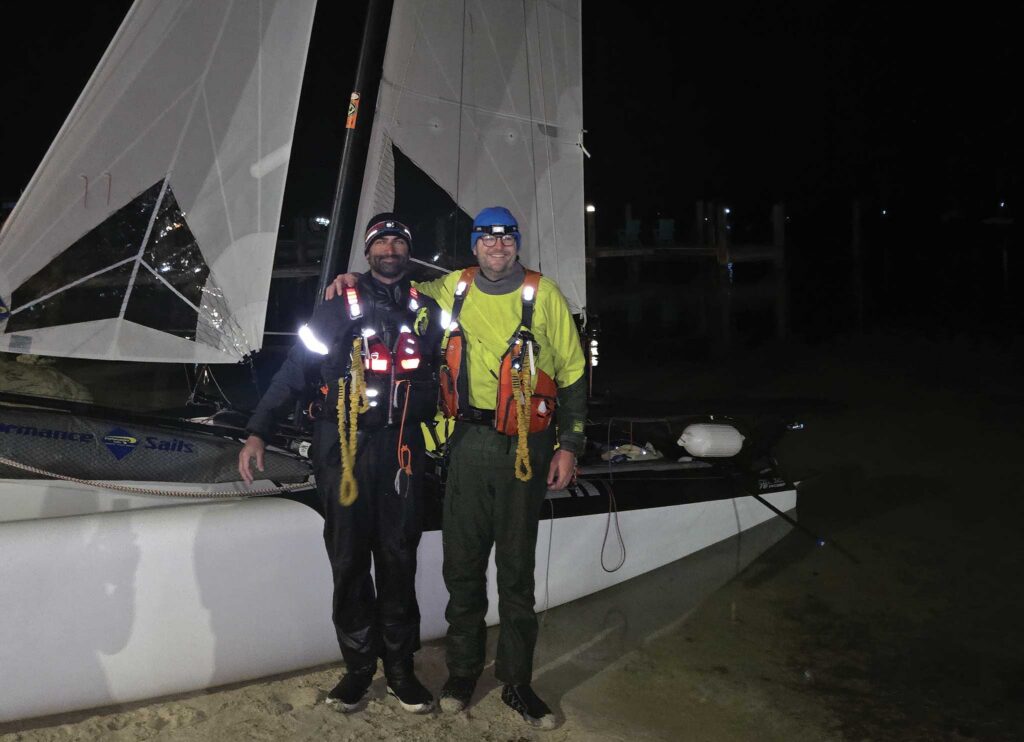
Finally the last breath of wind dries up leaving us drifting. I handle this situation as any true sailor does and reach into my camelback, slide past the water bladder, and pull out a flask of rum. I make an offering to Poseidon for better breeze before taking our paddles out.
You can do this, Mike. You have paddled canoes through the wilderness for days on end, you can paddle this boat to your campsite for the night, I tell myself.
A powerboat asks if we need help. I always appreciate how people help each other on the water. “No, we’re just idiots,” I respond. They look confused. How do I explain I am doing this for fun? I follow up telling them we are in a race and can’t accept help. Still puzzled, they drive off.
“We need to remember to switch sides next time we paddle,” I say, keenly aware you can only use one arm when paddling from the wing seats.
“Are we going to hit those marks?” He asks.
We sneak around the two day marks head for the north end of the island.
“Either that mark was moving or I was hallucinating,” Sailor Swift says to me when we hit the beach.
“That mark was fixed,” I respond.
Sleep and food, time for both tonight.
The problem with no wind is that it lets the bugs out. I slink lower into my sleeping bag looking for protection. This is an endurance race, I think. It’s about how many bugs you can endure.
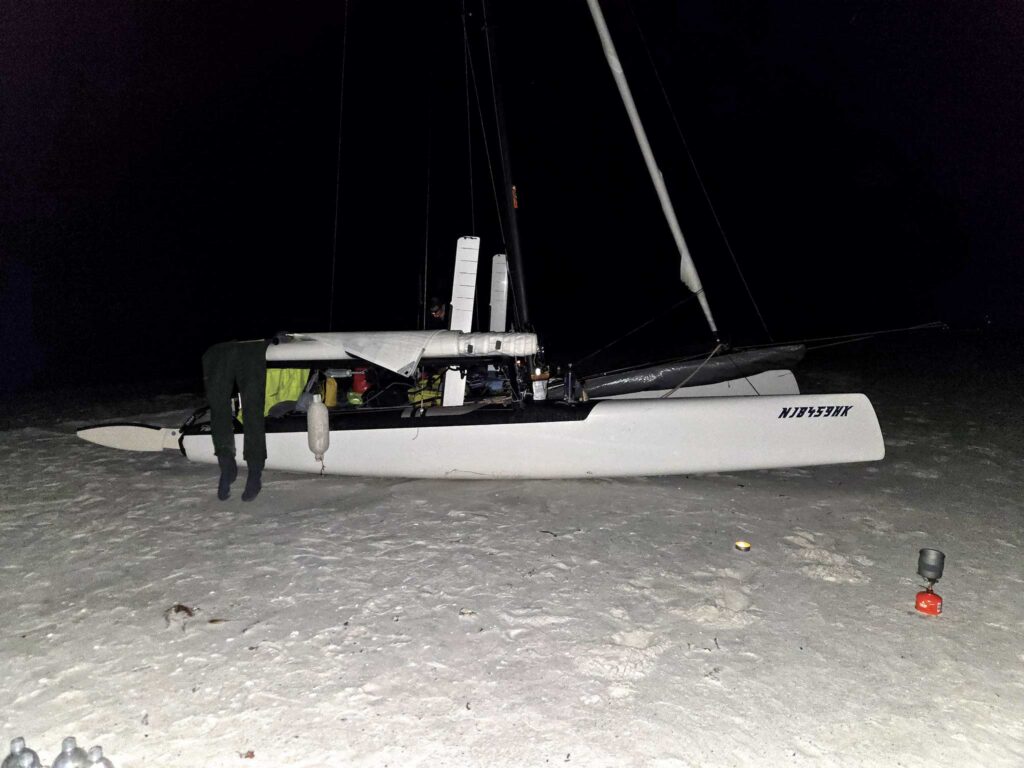
Day 2: 57.9nm in 12 hours and 10 mins. Avg Speed 4.68 Knots
Morning brings a beautiful sunrise on the beach. I do the math on our water consumption: exactly half. I put my drysuit back on. Sand has made its way in. We push the boat into the water, and the breeze meets us at the beach. Maybe that offering to Poseidon paid off.
The boat is peaceful as we make our way south. Do we go inside Cape Romano to save distance? Sailing takes a back seat to the GPS and reading the water as we drift over the shallow spots with boards up and make it into Gullivan Bay.
As we pass, we both stare at Indian Key: the scene of the crime. We try to identify where on the island we landed in the brush. Even though we are in the same place a year later, it feels like a million miles away. We have sunlight, breeze, and a newfound confidence that comes from getting past where you failed last year. The weight off my shoulders is short lived as I realize now I have to sail the parts of the race I have never done before.
We snake our way through the mangroves until the markers align, and run wing on wing down the channel to Chokoloskee.
“Isn’t this awesome,” I say sitting on the wing seat holding the kite out by hand.
“Cats are not designed to do this,” is the reply I get back.
The breeze pipes up, and we sail at high speed through shallow water to the beach and checkpoint two. We land in the mud and are met by the volunteers who offer us a snack and some water. On the beach are the first signs of attrition: A trimaran that has been dismasted and a kayaker packing up to go home. One of our fellow Nacra sailors arrives with a cracked front cross beam. We refill our water bottles at the fish cleaning station, drop off our trash, and send proof of life to everyone back home before we lose cell phone reception for good.
Despite the excellent campsite at Pavilion Key calling to us, our plan of “get south, get breeze” forces us on.
We dodge crab pots until the breeze dies over night, and we lay adrift under the stars. Are we ever going to make it there? But then the breeze is back. I would be excited if I wasn’t so tired. We set a course for Cape Sable, and the boat takes off like a dog let off its leash.
Cape Sable looks like a vertical sea wall in the moonlight. We approach gingerly, and the tension builds the closer we get. Beach landings aren’t something I get to practice during my Tuesday night buoy races. We get the boat oriented and using a combination of muscle and will power, get her above the high tide line.
Cape Sable is a desolate place deep in the largest roadless area in the lower 48 states. I walk down the beach and look around. This is a public campsite so there are likely no poisonous Manchineel trees. I hope this isn’t the campsite that is overrun with raccoons either. The freeze dried food may not taste great, but I am still in no mood to share.
Day 3: 81.6nm in 18 hours and 40 mins. Avg Speed: 4.37 knots
Sunrise comes fast, and we wake to the breeze we need. My freeze dried biscuits and gravy look and taste like mush, but real food is so close I can taste it. A well oiled machine by now, we pack up the boat and slide her down the beach. The zipper on Sailor Swift’s drysuit decides it’s a good time to pop off the tracks. In addition to the strategic ventilation hole he found, this is probably the suit’s last race.
We head south to checkpoint three at Flamingo. The radio tower and a few other boats welcome us to this outpost of civilization. Picking our way up the channel, the final turn to Flamingo sets us on a reach. The boat loves this and takes off like it’s been shot out of a cannon. We blast through the mangroves into the marina.
I have the honor of checking in and writing our names and time in the logbook. A group of people comes over to ask about our boat. They have an old catamaran and are looking for advice. Sleek and well traveled, our boat looks like the Starship Enterprise to them. It might as well be with the mission it’s on.
We go to the taco truck at the marina, but they closed early. All this distance, and I didn’t even get any tacos. We settle for the marina store and what is both the best and worst gas station sandwich I have ever had. We borrow some wifi to check the weather and confirm the stiff easterlies we have been promised.
Back at the dock, sailors CruxOfTheMatter and RocTheBoat arrive on their Dovekie. Complete with an autopilot and cooler, it looks luxurious compared to our existence. They are walking down the dock with a bag of ice, and I ask them to pour it down my drysuit.
The silhouette of one of the two crocodiles that lives here full time appears by the marina. We take that as a cue to not overstay our welcome and head back out.
Getting out of the channel is more stress than getting in. We get blown off course and pull the boards up to slide over the shallows. With the breeze from the east, the shortcuts through Florida Bay are off limits. We turn back towards Cape Sable and set a course for open sea.
A tarpon jumps clear out of the water as a welcoming committee as all signs of land disappear from the horizon. The boat lurches as we beat our way into chop. Even with wave piercing bows, I think this might send me to the chiropractor. The sun is relentless, and I start to overheat in my drysuit, but the shade of the sail helps.
A green flash at sunset is the best omen I could ask for and the signal that it’s time for our sunset routine. We each take a turn at the tiller so the other can switch sun hat for warm hat, add extra layers, and put on a headlamp. Tonight takes on extra importance as we know it’s going to be a long one. We sail in complete darkness until the lights of the Keys become visible. Are the dark spots bridges, mangroves, or hallucinations?
I pull out the GPS, find the first nav aid, and hit it with my flashlight. Heading, flashlight, marker, heading, flashlight, marker. Do that a thousand more times, and I am home free. Our rudders pop up as we hit a crab pot. I breathe a sigh of relief that it isn’t the shallows. I’ll need to eat enough crab when we get there to make these pots worthwhile.
The Core Sound 17 pops out from Man of War Pass as we fly past.
Four more passes to go.
We are in the open sea now, and the only way back is the next pass. Cowpens Cut is the longest and narrowest. We dive in between two mangrove islands, and the wind completely dies. Everything around us is quiet as I paddle. Then we break out the other side and get our breeze back.
Two down three to go.
Ramshorn Cut is upwind, so that’s going to be a challenge.
“How are you feeling about this?” I ask.
“Not great, but I know you are going to get me through it.”
“Remember, I have the GPS, flashlight, my paddle, and the daggerboards. I can do two of those four jobs at once, so we need to be smart about which two.”
The plan is to come in with speed, button hook the right side, and carry that through as best we can.
The first mark is a buoy instead of a post. We miss it and slide into the sand. That was a practice run, I tell myself as we get set up again. This time we make it.
Two short passes left. Picking out the next red marker in a sea of lights ashore is almost impossible.
“Is that a radio tower? Is that marking a shoal?”
“I don’t know,” I answer, realizing my skipper is very sleep deprived and maybe hallucinating. Fortunately he still knows how to tack on a dime.
Then it’s open waters to the finish. As we approach, three waves from a spotlight on the beach welcome us. The final stretch is upwind until the wind dies near the beach. It’s fitting I would paddle the last bit of the race.
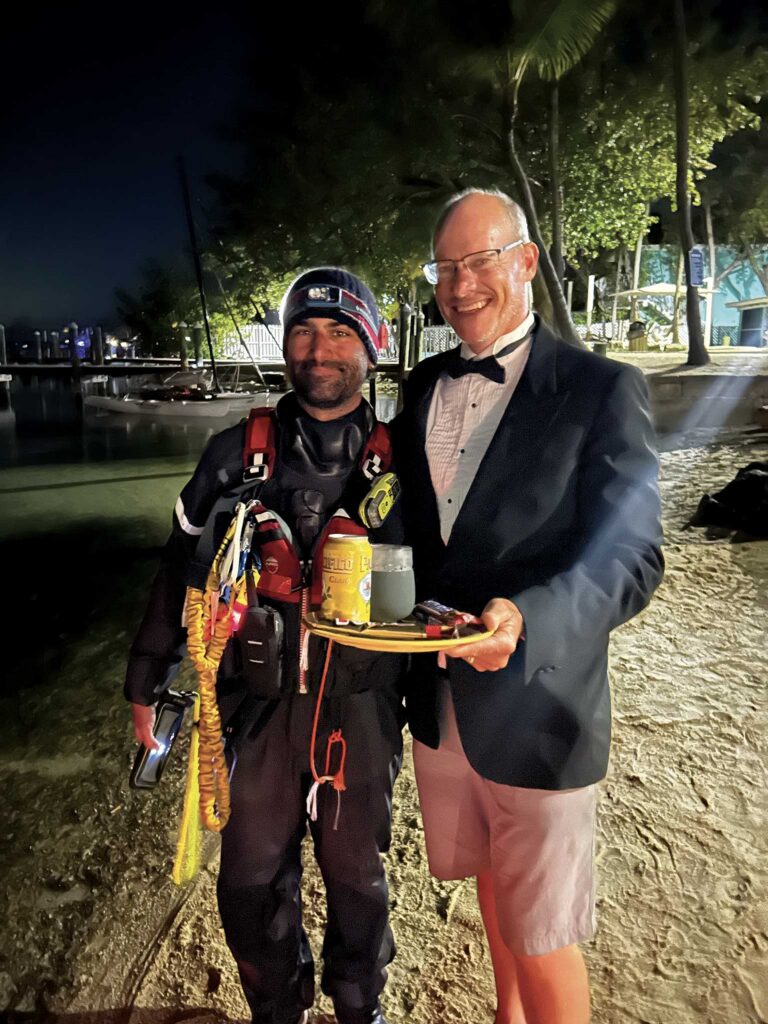
We sign the logbook with our official finish time: 0415 Wednesday. Three days, 18 hours. Midnightcrew has beaten us to the finish and is waiting to welcome us. Sailor Swift’s fiance is on the beach, and my crewmate Eddie has driven up from Key West to welcome me. Wearing a tuxedo top he serves us the beer and margarita we requested as well as candy and snacks. There is nothing quite like the high of that first drink among friends. The second best feeling is the first shower back on land, followed immediately by sleeping in a real bed.
Day 4: 91.4nm in 18 hours and 25 mins. Avg Speed: 4.96 knots
The Everglades Challenge has an average attrition rate of 40%, but for us finishing means more than beating the odds. It’s redemption.
I text my sister and tell her I finished. She asks me how I feel, and I respond, “like a huge weight is off my shoulders.”
This race is the craziest thing I have ever done on a boat, and for me that’s saying a lot. To succeed, I had to draw on so many experiences, from buoy racing my J/80, to the Newport Bermuda, wilderness canoe camping, to everything I learned in Boys Scouts.
This race takes more preparation and more grit than just about anything else. There is a reason it’s called a “challenge” and not a race.
This article was originally published in the June 2026 issue.