This weekend was one for the history books on the maxi trimaran circuit. Two separate campaigns set records when they completed laps of the globe.
The first was Sodebo Ultim 3, which arrived on Sunday after 40 days, 10 hours, and 45 minutes at sea, setting a new world record and winning the Jules Verne Trophy for history’s fastest global circumnavigation under sail. Skipper Thomas Coville and his team (Benjamin Schwartz, Frédéric Denis, Pierre Leboucher, Léonard Legrand, Guillaume Pirouelle, and Nicolas Troussel) bested the previous record by 12 hours.
Set in 2017 by Francois Joyon aboard maxi trimaran IDEC Sport, the previous record has withstood nine years and 13 attempts to break it, with weather patterns being a major confounding factor. Joyon’s circumnavigation benefited from near-perfect conditions early in the race, especially in the Indian Ocean, meaning that subsequent efforts had to time their departures perfectly to even have a hope of keeping pace. Now, however, with improvements in technology and foiling, it’s not quite so necessary to wait for that one-in-a-million weather window.
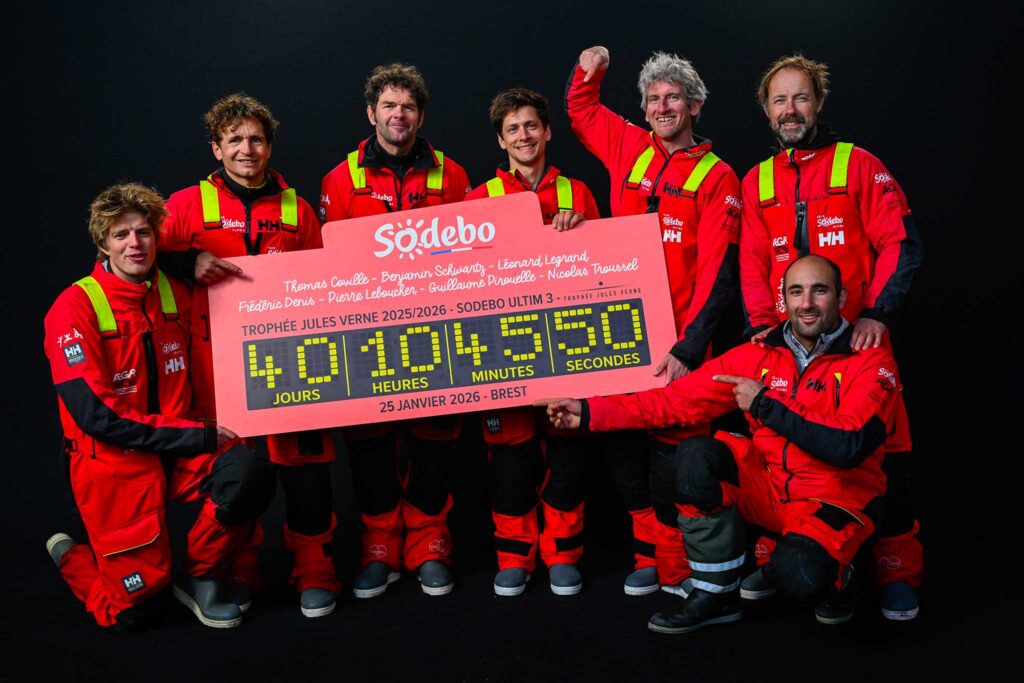
Instead, Team Sodebo saw that day one of their standby window looked like as good an opportunity to go as any and never looked back.
They quickly took the lead on the pace from 2017, but had to sail more miles to the west to stay in the breeze as they headed down the Atlantic, losing a little ground but still staying well ahead into the Indian Ocean stretch. Around the time they crossed Cape Leewin, however, things were neck and neck, and for the early stages of the Pacific and again in the south Atlantic it was a fight to stay ahead of IDEC Sport. Once they reached the trade winds, things finally seemed to be looking up.
A final challenge, however, was waiting for them in the form of Storm Ingrid, which brutalized the coast of France late last week.
“Going into Ingrid or not was the difference between getting the record or abandoning it,” says Schwartz. “The thing is that none of the Ultims have ever faced such conditions, so we were jumping into the unknown.”
Ultims don’t sail in these conditions because they don’t have to. They’re fast enough to outrun anything that looks too risky. “The advantage of having such fast boats is that you can choose your weather. When you encounter a low pressure system, you can decide your limits in terms of sea state and wind speed, and you position yourself in the system to avoid breaking the boat.”
But despite going in optimistic, Schwartz says, they were quickly faced with extreme sea states and gusty winds that were difficult to manage on such a large foiling multihull.
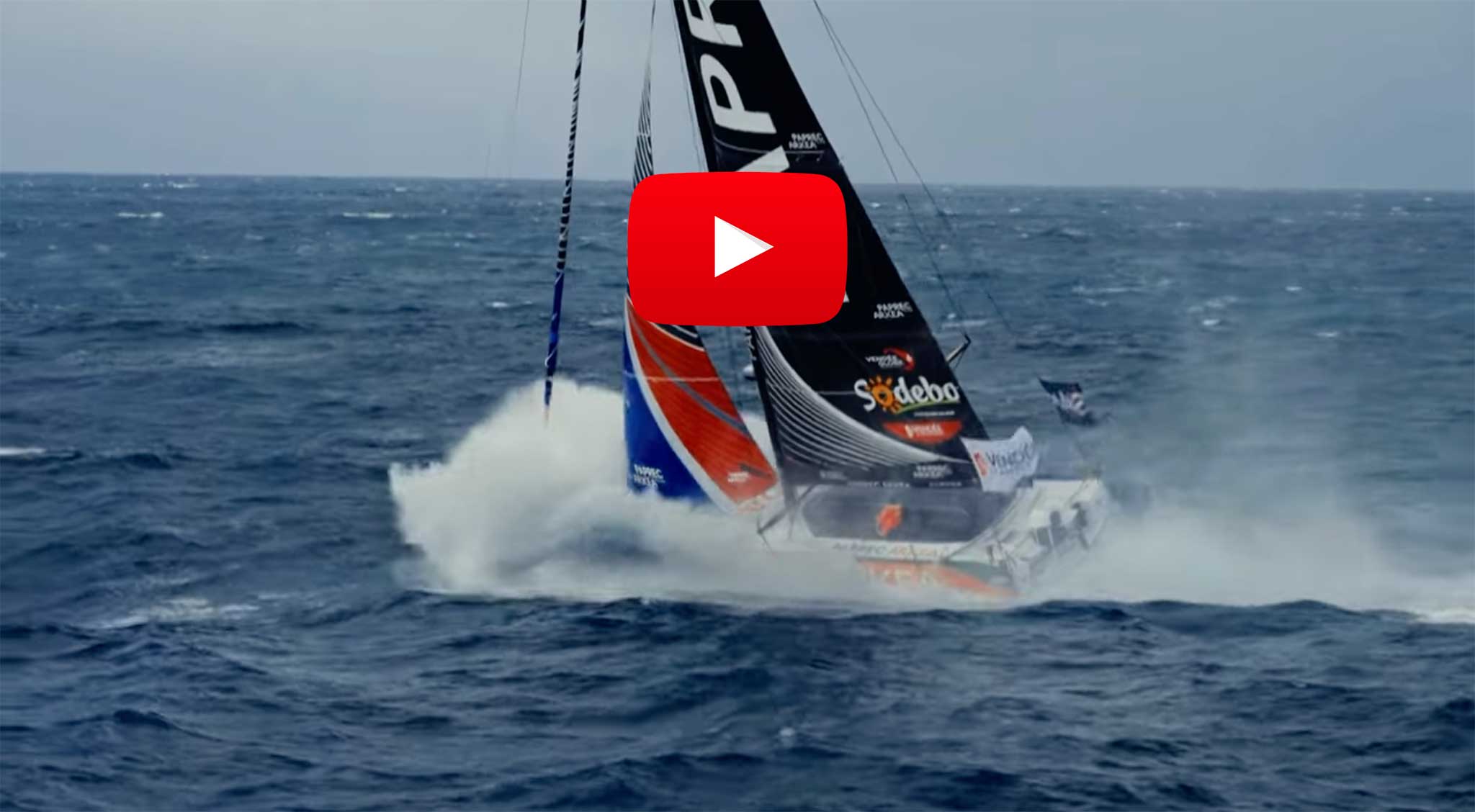
“We had to slow down at some points because it was too hard for the boat in terms of structure. We had alarms ringing everywhere, and so we had to escape to the north to avoid the biggest part of the storm because it was really boat breaking conditions.” The constant worry about keeping the boat safe was more fatiguing than any of the physical exertion they faced, and they later discovered the toll on the boat included massive delamination and a ripped off bow pulpit.
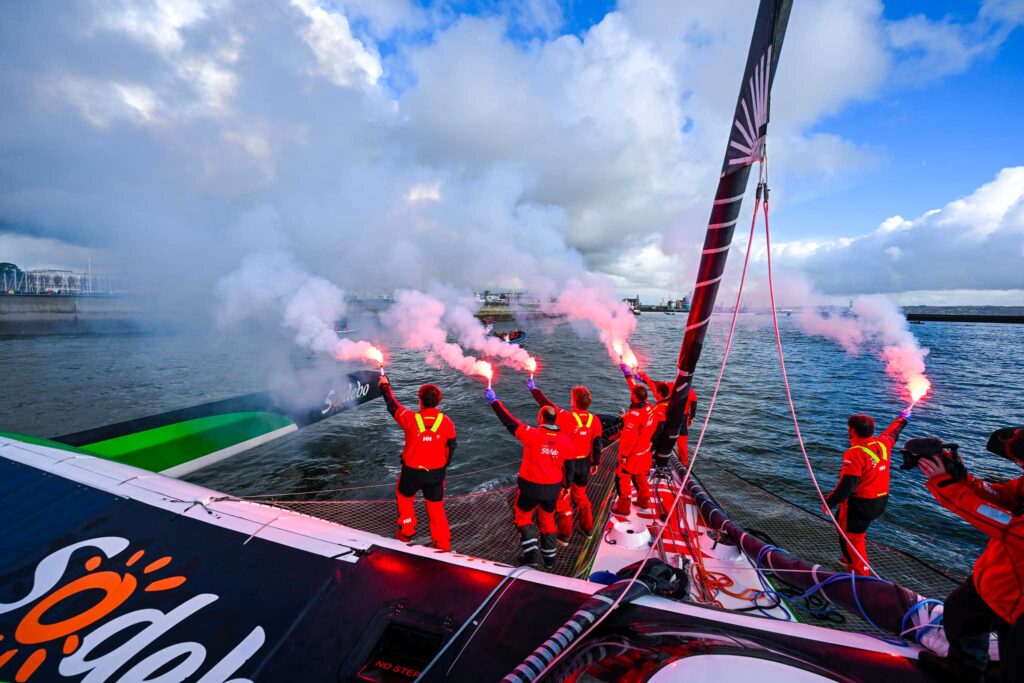
Still, on January 25 they crossed the line, having taken half a day off the previous record.
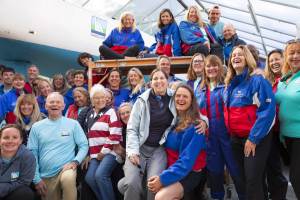
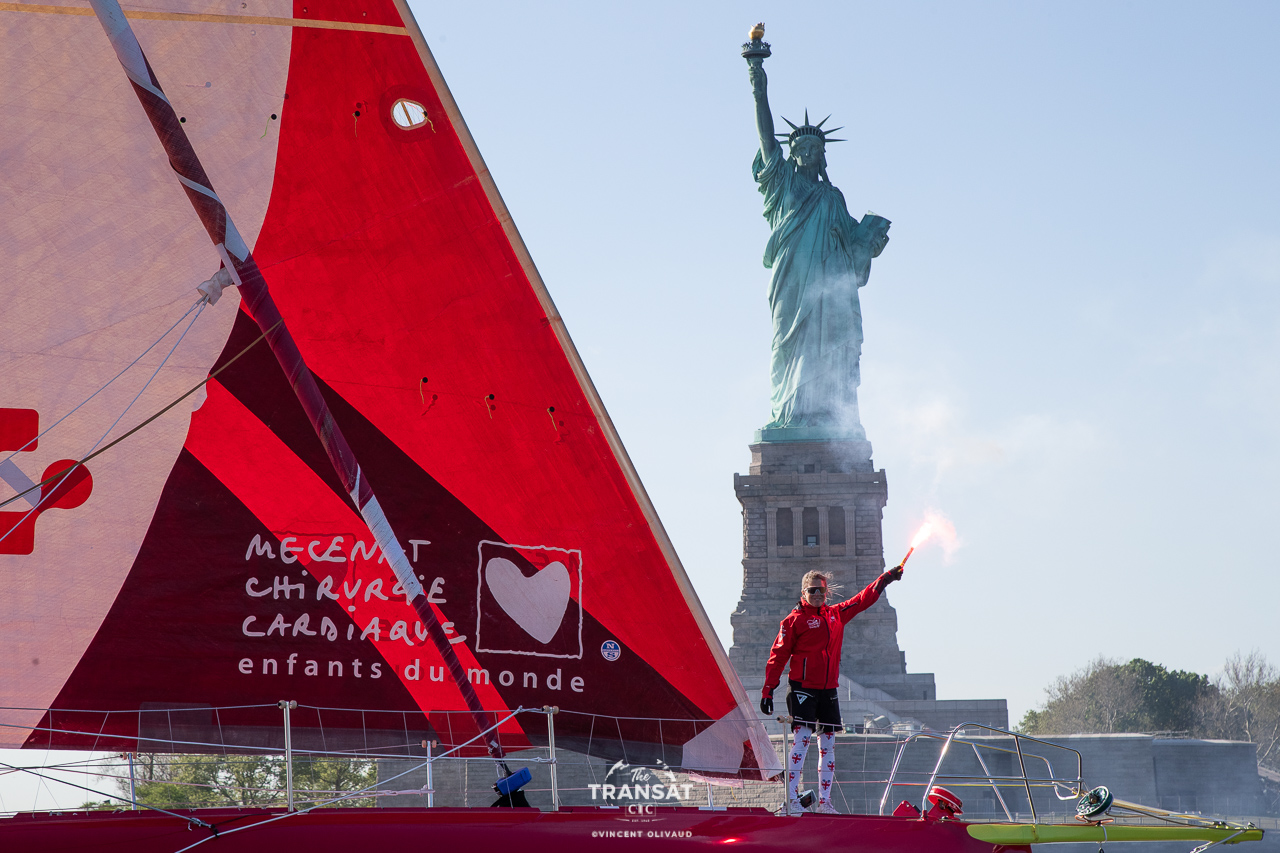
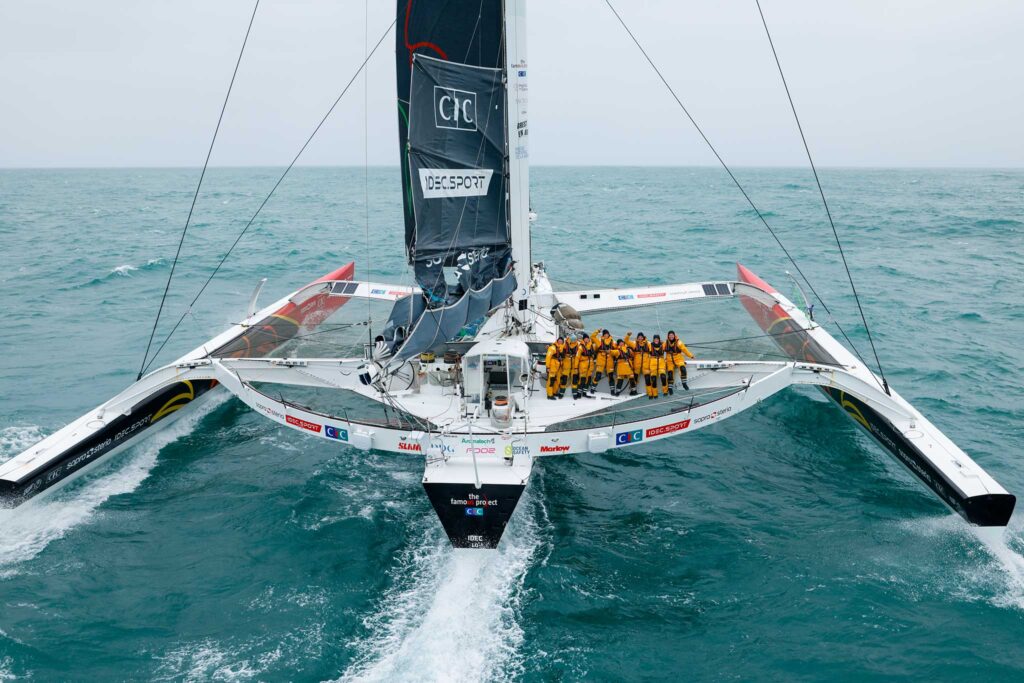
The very next day IDEC Sport, now sailed by The Famous Project CIC, crossed the same finish line after 57 days, 21 hours, and 20 minutes at sea. Led by Alexia Barrier and her co-skipper Dee Caffari, the team became the fastest all-female team to sail non-stop around the world.
27 years prior, Tracy Edwards attempted this feat but was forced to abandon the effort halfway around the world, having been on track to set a new Jules Verne record when her boat dismasted. Since then, no other all-female crew has made an attempt.
“We want to establish this first time for women, first time ever around the planet, non-stop, and unassisted team sailing on a multihull,” Barrier told a SAIL reporter before the start of their circumnavigation.
“It’s important to deliver on what we’re saying we’re doing, and then we can get faster and faster each attempt. It doesn’t have to be one attempt and over and done,” Caffari added. The team is deep with talent, but a maxi trimaran requires learning a whole new way of sailing, which takes time even for experienced offshore racers.
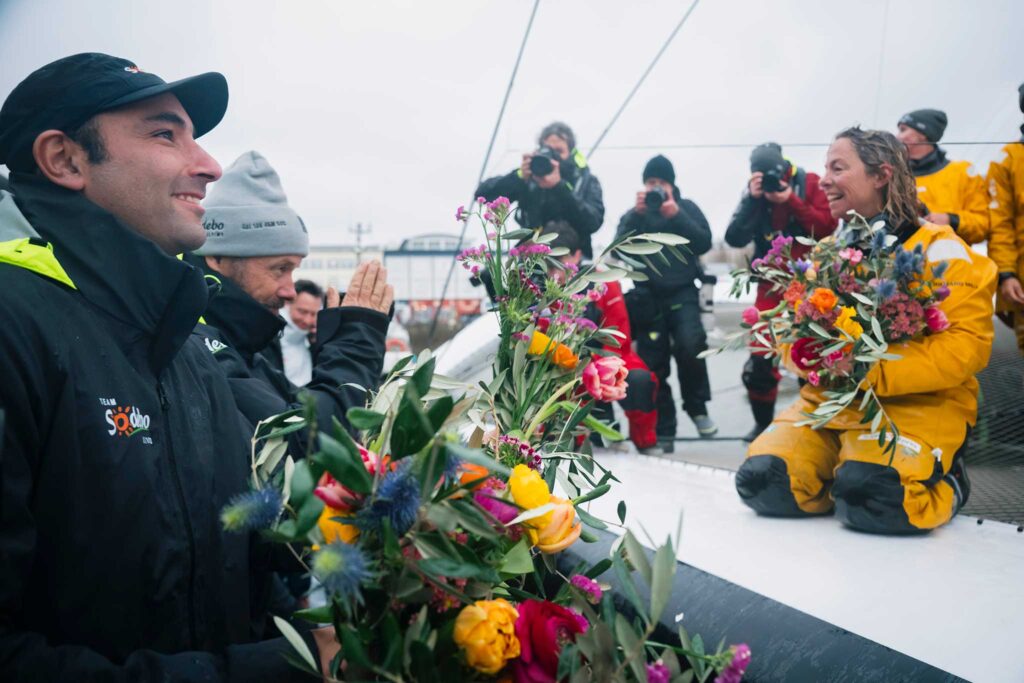
When they arrived in Brest, Team Sodebo was there to greet them with flowers.
“We were watching what the ladies were doing and checking their tracker regularly,” Schwartz recalls. “From the Ocean Race and European mixed doublehanded, I’ve raced against some of them, and [Annemieke Bes] was with me on Holcim PRB. So I was super happy to welcome them.”
“We made sailing history on Sunday, and they did it again on Monday.”