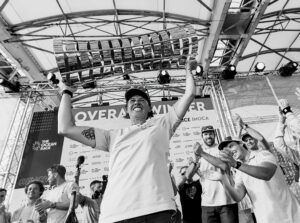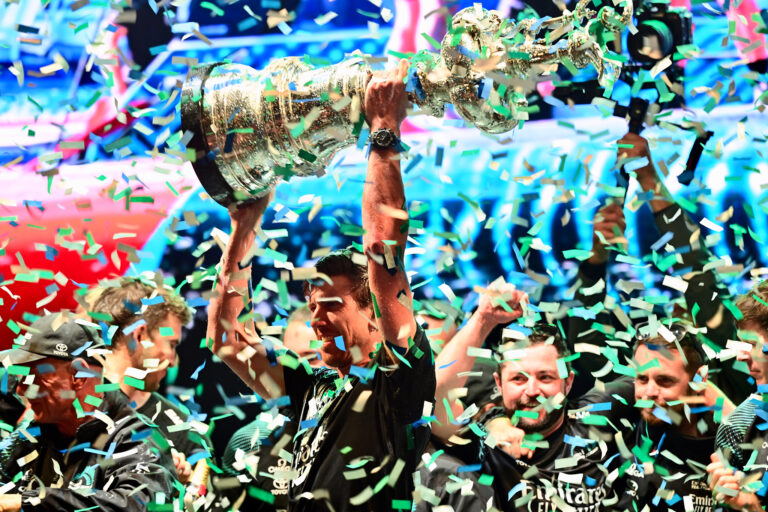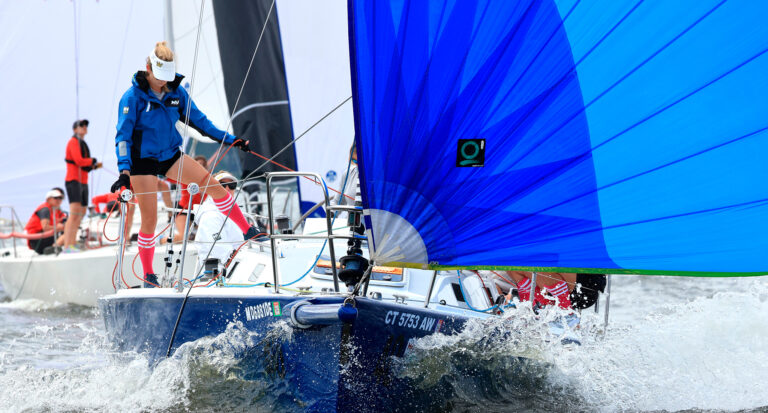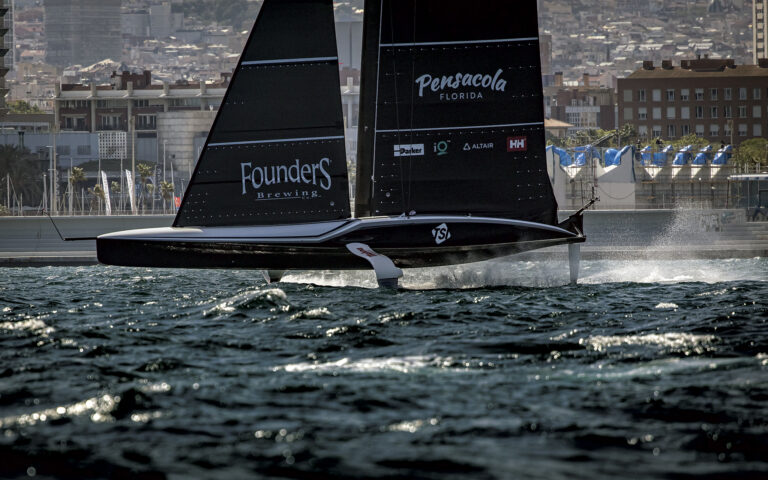
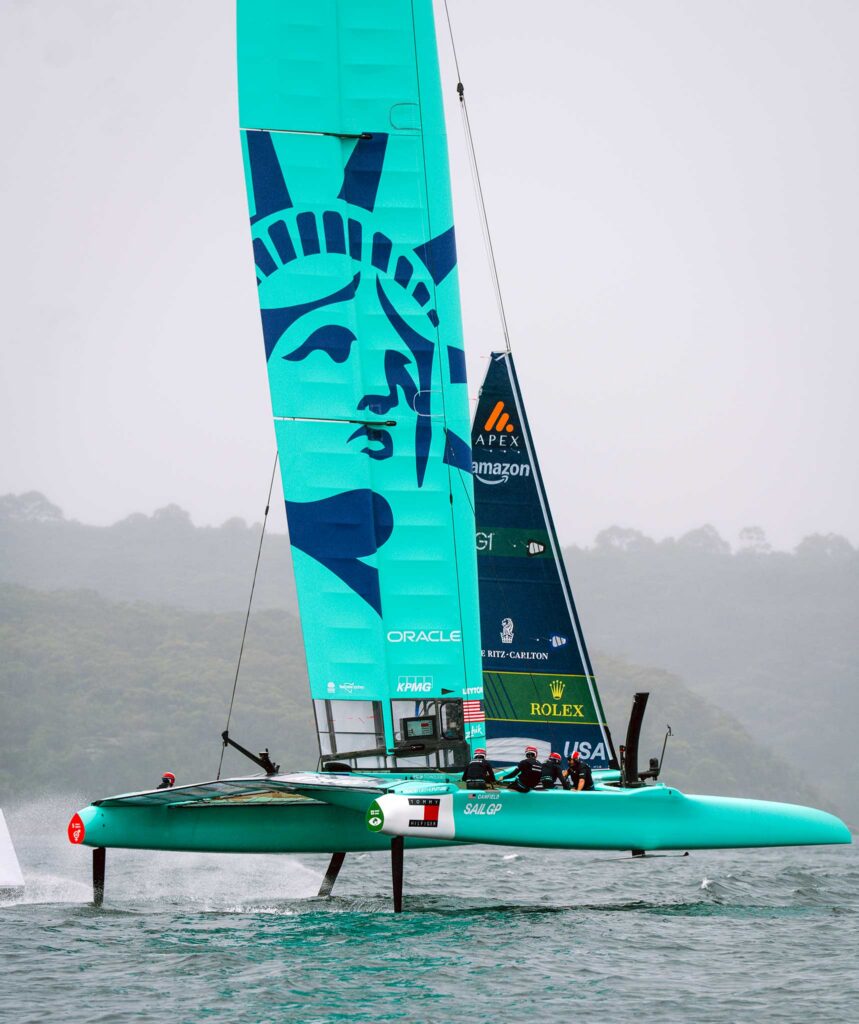
On March 1, the U.S. SailGP Team shook up the Grand Prix series and won the Sydney Sail Grand Prix, marking their first victory since October 2023. Led by team driver and co-founder Taylor Canfield, the American crew dominated the final day of racing in tricky, light-wind conditions, beating Emirates GBR and Spain in the three-boat final. It was a celebratory moment for the entire team, and a personal best for Canfield.
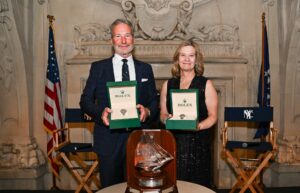
Canfield, 37, is a nine-time world champion sailor who grew up in the U.S. Virgin Island. He is a 2011 Boston College graduate where he was a three-time All-American sailor. In 2025 he was nominated for the Rolex Yachtsman of the Year for his SailGP performance and winning World Championship titles in multiple classes.
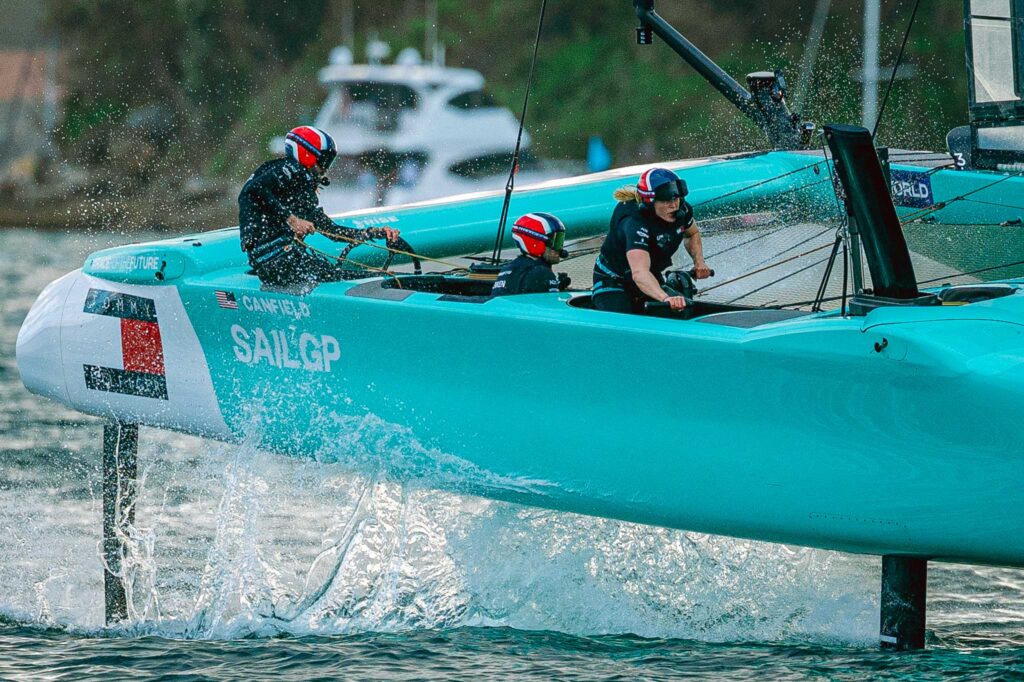
The U.S. SailGP Team is currently ranked third overall in the series standings with twenty points and are preparing for the ENEL Rio Sail Grand Prix event in Rio de Janeiro on April 11 and 12. SAIL Magazine caught up with Canfield while he was stateside this past week.
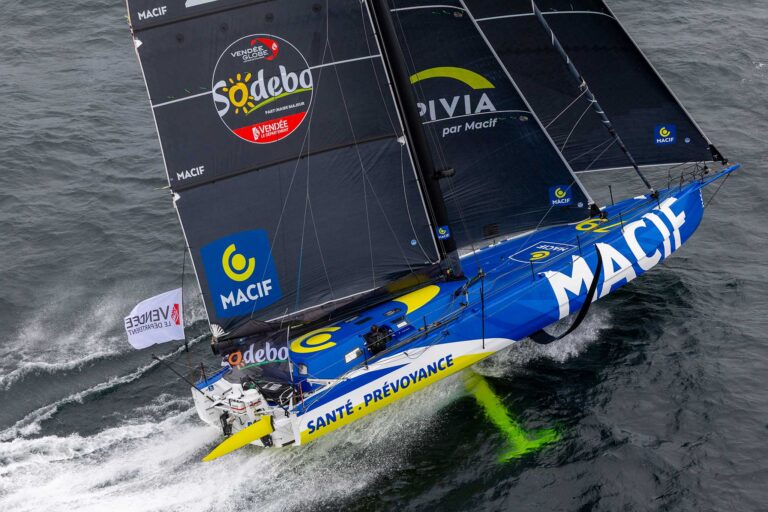
SAIL: Congratulations on your win in Sydney. During the final race, it was an exceptionally light air race. How difficult are the F50s to sail in this kind of tricky breeze? Do you feel the U.S. SailGP Team may have simply offered a master class in light air sailing compared to the other teams?
TC: It was a tricky racetrack, but we came into today with a good plan. We knew we had to keep the pedal down, stay in clean air, stay out of the pack. Our starts have always been good in lighter conditions, and we got off the line well, kept our heads out of the boat and did a nice job. We have been pegged as a boat that performs well in light air, and we are known for that. We are one of the strongest teams in light air and it is nice to have those skills and be able to reach a podium position. That is a slightly easier step for a new team. But we are now becoming far more well-rounded, and it is only going to get better.
SAIL: Now in third place overall, 2026 is shaping up to truly be a winning year for the U.S. SailGP Team. Can you shed light on what you believe came together for the team?
TC: We had a solid group, but we did make changes in late 2025/early 2026 to the sailing team and that did include three American sailors Michael Menninger, Harry Melges IV and Andrew Campbell. We wanted to build out the next generation of US sailors, and we now have a deep bench. If one of us gets hurt, we have someone to fill in. We have been working on it all – top to bottom but we understand that it is our sailing side that is benefitting now from more coaching, teamwork, and practice.
SAIL: You once said that the F50 is one of the most difficult boats to sail. How would you say things changed this year while in the driver’s seat?
TC: We unfortunately never get enough time to practice in these boats, and even as recently as Sydney they partially cancelled our training day due to weather. So, getting time on these boats is like water in the desert so we learned to take advantage of every second we had to train in them. We maximize that time now and we need to continue to do just that. We are training for moments on the boat that occurs while racing so we have decided to train for that as well. We decided to have an exact plan of what to work on when we were out on the F50s in training. We also did make one of our biggest steps this season and it has to do with our tone in the boat. In other words, we communicate on the boat in a simple, very moderate tone. It has been extremely helpful.
SAIL: Do you feel you are achieving a stated goal of making the U.S. SailGP Team an all-national boat that is also more accessible to younger generation of American sailors?
TC: Truthfully, I really hope so. That was always the goal of Michael Buckley, and I when we initially pursued an America’s Cup team and the U.S. SailGP Team. We are aware that compared to other countries, the USA has been lacking opportunities for sailors, yet we remain, right now, one of the very few all-national teams in the series. We are proud and excited to represent the country. We are representing the US, and we have such a good group of American sailors. We are all well rounded and we have more growth to come.
SAIL: When you talk about the well-rounded American men and women sailors you have on the team, how have you successfully brought them on board?
TC: Well, with 2021 Rolex Yachtsmen of the Year Harry Melges IV, who is twenty-four, he started sailing with us in Bermuda, there is no question that Harry is hungry and ready to go. And Anna Weis is a fantastic example of how motivated women are. She has taken on the physically grueling job of being our grinder and gets it done. We do not miss a beat with her on the boat. She is truly a pioneer.
SAIL: There is no question watching the boats sail in the fleet races, that the field is crowded and there have been some unfortunate situations – like the collision in New Zealand – that have some involved with the event calling for more safety – and perhaps fewer boats on the line at the same time but not fewer teams. Can you offer any insight or thoughts into what you might like to see change from a safety perspective?
TC: Safety is a huge topic of discussion, and we all feel that the League does look out for the athletes. It will continue to get discussed – personally, there will need to be a limit and splitting the fleets, imposing a wind limit, and increasing the course size are all being talked about. They are taking safety seriously and take certain these boats are extremely hard to sail, especially on a crowded course. So, splitting the fleet may be the solution.
SAIL: Tech investor and founding Uber engineer Ryan McKillen and his wife Margaret McKillen are competitive sailors who are some of the primary investors of U.S. SailGP Team. Is this a unique opportunity in our sport, in that many of the key investors are also competitive sailors?
TC: Ryan and Maggie are amazing people, and they were the first people Mike and I went to. The McKellen’s, Michael Buckley and others have continued to grow our group, which includes pro athletes and people who are top in every industry. We have amazing investors both at the top of their sport and the top of their game. We do not take the support of the people in our investor group lightly. They are people who believe in us and expect us to improve.
SAIL: Does some of that drive translate to making decisions – like for example when Michael Buckley stepped off the boat this season?
TC: For Michael Buckley, it was not an easy decision for him to get off the boat. As an athlete and competitor, it has been his whole life. He has done an incredible job for our team. He wears a lot of hats and does them very well. Further he is fully capable of jumping back into the boat if needed. He has really become the heart and soul of this team right now. Our team is of course bigger than just the sailing team. Team coaches, marketing, hospitality, everyone works so hard through both the good and the bad. Work never stops whether we are winning or losing. And the sailing team wants to do our part. Altogether we are rock solid.
SAIL: Do you find that with all the growth and success of the U.S. SailGP Team. that you are working more directly with organizations like US Sailing or how that has been coordinated.
TC: Right now, we have taken it on ourselves to recruit and grow opportunities for sailors. We are super proud of that. We have had some talks with US Sailing, and we would love them to make steps with us. The CEO of US Sailing Charlie Enright is one who knows and appreciates how hard it is to be successful in this sport in everything from sponsorship investment to team building.
2026