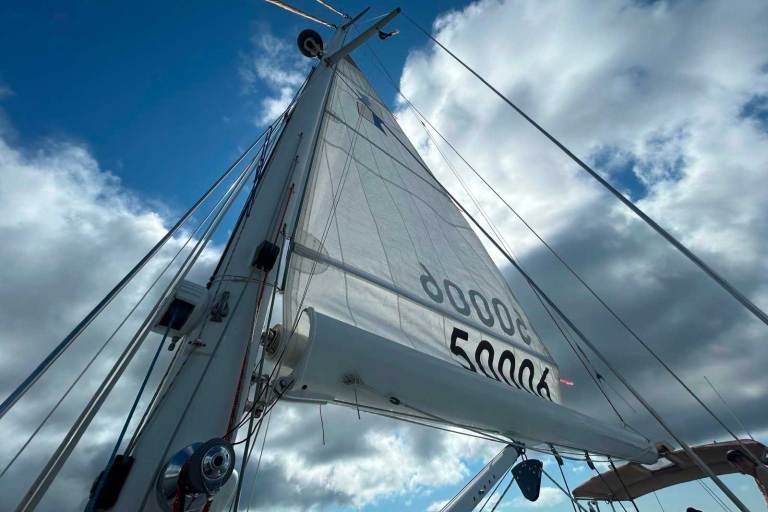
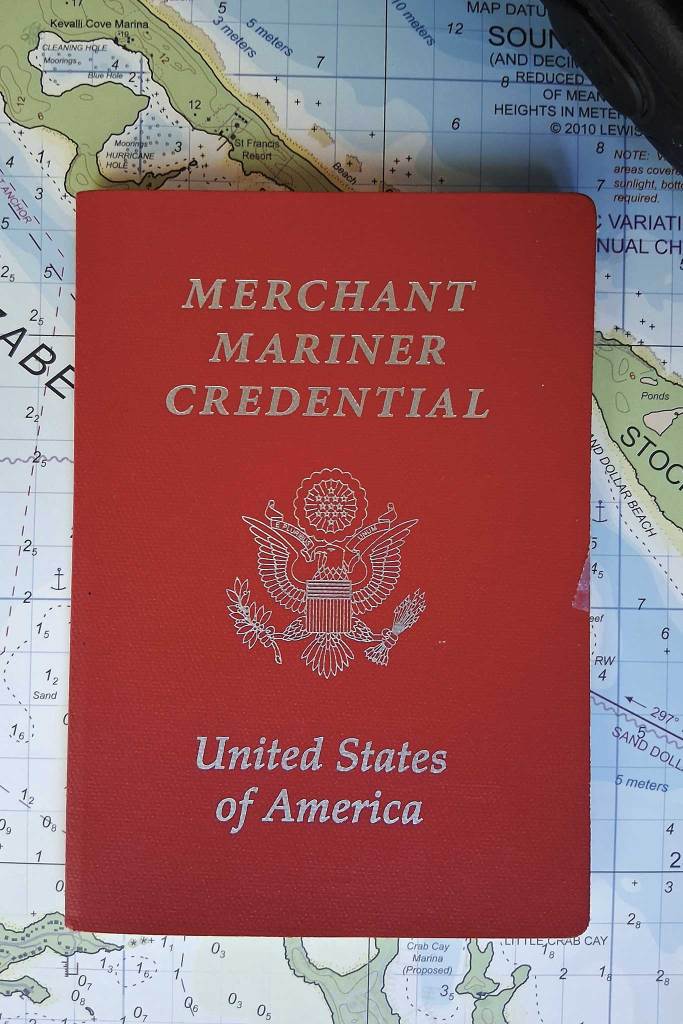
If you are in possession of a USCG Merchant Mariner Credential (also known as a six-pack license) congratulations; it’s a great thing for boaters to have. With one, you’re able to take out paying customers for a guided fishing trip, a sunset cruise or a day of learning how to sail. And for chartering a boat in an exotic location, there’s nothing like handing over a current MMC for instant credibility.
Like me, you probably won’t get wealthy having an MMC, but it compels you to keep your skills sharp and serves as a backup government issued ID for TSA should you lose your driver’s license. To qualify there’s a fair amount of preparation and training. Nothing, however, that someone with the smarts to operate a boat can’t handle.
But here’s the rub: you must renew it five years from the issue date, which is printed on the credential. You will not be reminded of the impending date, and if you fail to renew by the one-year administrative grace period you must reapply with a new application.
David Kilmer, author of The Way of the Sailor, runs a 60-foot private sailing yacht for clients on Lake Coeur d’Alene in Idaho and renewed his MMC in 2021. He provided the 360 documented sea service days using a combination of time on the job and by sailing his own boat in the winter. “I love working as a captain,” he says. “It’s a job that feels like honest work and keeps me immersed in the natural world and in a great fraternity of fellow mariners.”
But renewing your MMC is not like renewing your driver’s license: waiting in line at the DMV, taking an eye test and smiling for the camera. It’s a process, not unlike your original application. And though credential holders do not have to retake the challenging exam, they need to produce 360 days of documented sea service in the previous five years, with a “day” defined as a minimum of four hours service on a vessel (less than 100 GRT) in a 24-hour period.
Why the requirement? According to one marine educator, the USCG wants to make sure the applicant hasn’t forgotten the Rules of the Road since the original issue date of the MMC.
For this mostly recreational boater that was a lot, and when it came time to renew I was unable to produce the required hours. I checked with Captain Jack Feeney of Sea School in Jacksonville and learned that in lieu of the sea service, I could retake a portion of the original exam and enclose a passing certificate with my application. Sea School didn’t have this course, so I did a quick search of USCG accredited schools and discovered one which offered what I needed for a reasonable fee. And bonus! The entire thing was online. The study materials and practice tests were at my disposal 24-7 and proved to be a great refresher of my maritime skills. I was required to take two modules: Rules of the Road Inland and International and Master Less Than 100 GRT. After three weeks of study, I was ready and was assigned a proctor who issued me the open book exam. The modules were 50 questions each, which I was given 50 minutes to complete—all while sitting at my desk. Pacing is everything here, I had to average a little more than one question per minute. And remember those high school teachers who told you to read the entire question before you answer? That strategy will serve you well on this exam.
Though I aced it, I was very glad I spent the extra time preparing. Many of the questions, especially in weather and deck safety, had gotten fuzzy over the years. If you go this route, take the time to study so you can score the required 90%.
Take note that not every primary care clinic is able or interested in performing the medical exam; it’s essential that they use a SAMHSA (Substance Abuse and Mental Health Services Administration) accredited lab, or the results will be rejected. After several phone calls, I found a nearby occupational health clinic familiar with USCG paperwork. They walked me through the examination process and gave me a copy of my Department of Transportation drug test after sending off the original to the lab. The Application for Medical Certificate has many direct questions about your health and pre-existing conditions; I must emphasize the importance of answering them all honestly. I was out the door in less than an hour and on to the final step.
I gathered up the paperwork and prepared to file:
- Completed CG-719B application
- Valid medical certificate CG-719K
- Negative Drug Test
- Copy of current MMC
- Conviction Statement (if applicable)
- 360 days of sea time in last five years (or passing certificate from accredited school)
- $95 fee receipt from pay.gov
Next came the best news of all: since my last renewal, the National Maritime Center has changed to an all-online process with applications submitted via email with PDF attachments. No more wondering if the USPS will get it there! After submission, acknowledgements are sent in less than 24 hours, and within a few days the renewed MMC arrives, good for another five years.
USCG Approved MMC Renewal Schools
US Captains Training uscaptainstraining.com
Chapman School of Seamanship chapman.org
Annapolis School of Seamanship annapolisschoolofseamanship.com
Atlantic Captain’s Academy atlanticcaptainsacademy.com
USCG MMC Renewal Forms dco.uscg.mil/nmc/merchant_mariner_credential/
This article was originally published in the October 2026 issue.