Years ago during my commute, my car started making a weird noise, and I did what any self respecting 20-something would in the same situation: I called my dad.
I described the noise and where it seemed to be coming from and asked if he thought it was a “bad” noise.
“Yes,” he replied without any deliberation at all.
“How do you know?”
“Well,” he said, “let me put it this way. Your car’s not driving around fixing itself.”
He was right about the car. And he was probably right about your boat, too.
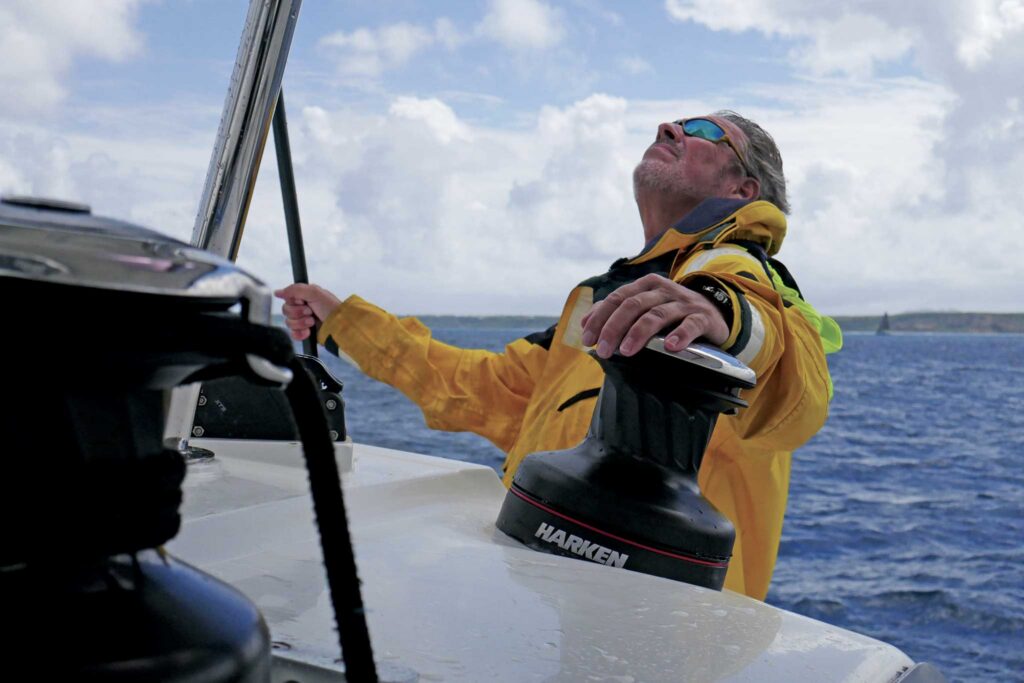
We’re used to relying on sight for pretty much everything we do on land, but not so on the boat. It’s a more equitable sensory division. We use our kinesthetic sense to feel the swell and heel so attentively that you can steer by it. You can often feel a wind shift on your face or you may be able to smell a land breeze as it fills in. But most of all, on the boat we listen. Listening gives us some of the best information about how things are going onboard.
Even if you aren’t actively monitoring the sails, the whap of a flog or the crinkle of a softening spinnaker tell you it’s time to readjust. When a line being winched in is slipping, you might not be at a great angle to see it while turning the handle, but you know the sound instantly. And if you hear your bilge pump kick on, well, look sharp. A radar or anchor alarm can be important, but the analog “alarms” are what we truly live by at sea.
A while back while on passage I was perched atop the flybridge in gusts of 27 knots, trying to get a clear view of the jib. The boat—a charter cat that probably didn’t see 9 knots over ground on a beat very often—screamed. The rig groaned. The wind rushed by. The sail bag was flogging, gulping down wind.
And then in the midst of the cacophony there was a tiny metallic ping! The skipper and I both went absolutely still for an instant before I was monkeying my way down to investigate. The loaded creaking that would scare our land-bound friends didn’t get a moment’s thought, but that resonant little noise—a pebble in the mountainous soundscape—had our attention.
It turned out to be a buckle from a sunshade that had come undone and was swinging around, occasionally bouncing off a metal post. No drama whatsoever, but as I climbed back up to my perch, I couldn’t help laughing at how one little ping sent us into a frenzy, how attuned we’d become to the boat after having been onboard for just a few days.
Every boat has a sort of aural fingerprint, and if you know your boat well, you’ll instantly recognize when something’s amiss, even if it’s just a buckle strap in the breeze.
This article was originally published in the June 2026 issue.