he day after last year’s Annapolis Boat Show, most of our boat tests got canceled. A nor’easter blew in Sunday afternoon, complete with roiling grey skies and lashing October rain. Fortunately, or perhaps unfortunately for me, I’d scheduled a line up of dinghy tests for that Monday morning. While the big boat dealers were concerned about breaking things and spooking prospective owners with the sloppy conditions, the dinghy guys just shrugged and asked if I had a drysuit. I did not.
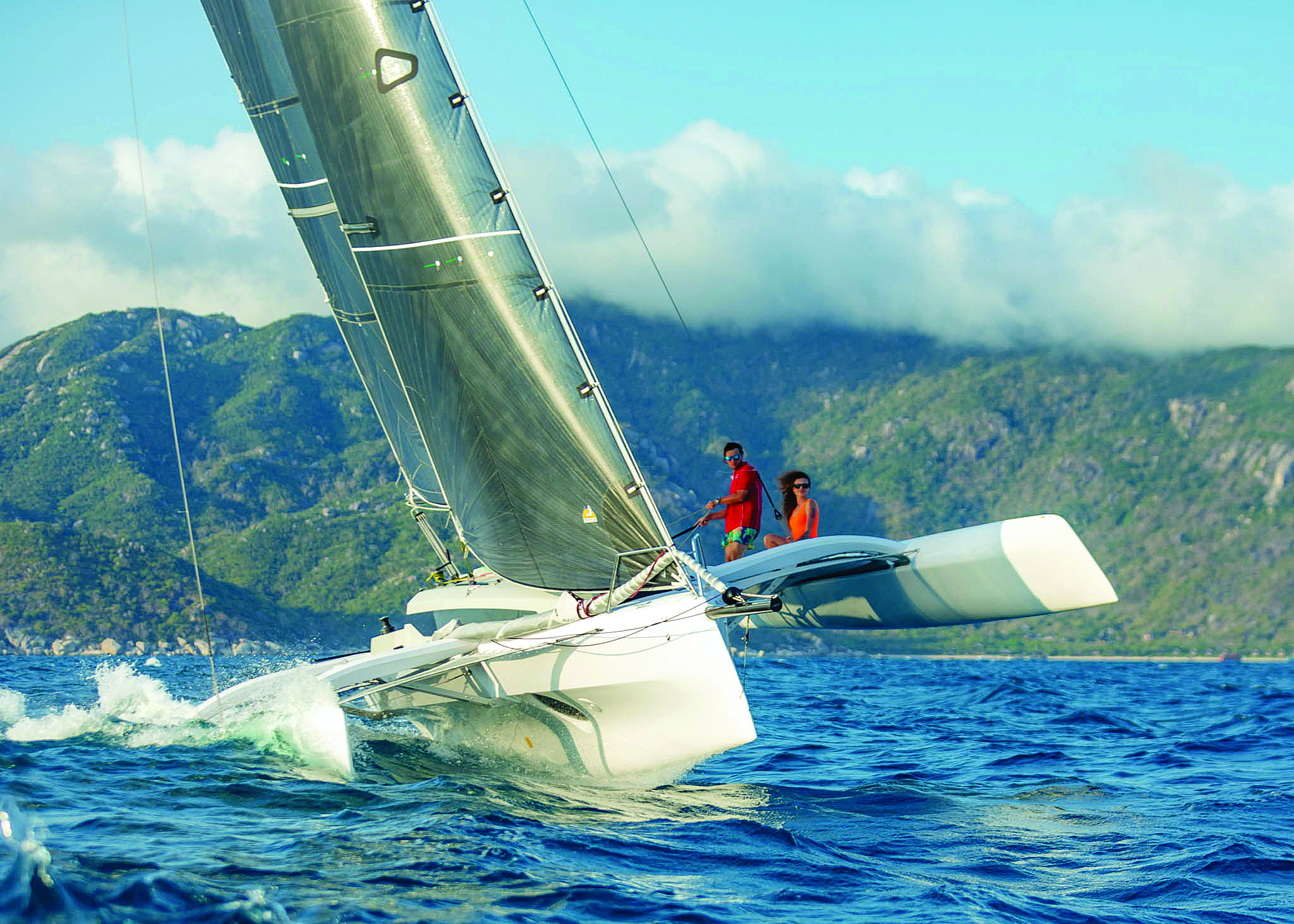
Made by Grabner, the Happy Cat Star is an inflatable multi purpose catamaran. With the number of boats that pack down into a few backpacks these days, it’s a familiar process by now. Inflate the hulls, set up the frame, untangle the lines, and shove off. According to the manufacturer, this takes just over half an hour, though it’s worth planning to spend a little extra time sorting it out the first time you do it.
The boat can be sailed by one to four people. Given the spicy wind forecast, Grabner managing director Ewald Grabner, American dealer Alex Caslow, and I decided it was a three-man job.
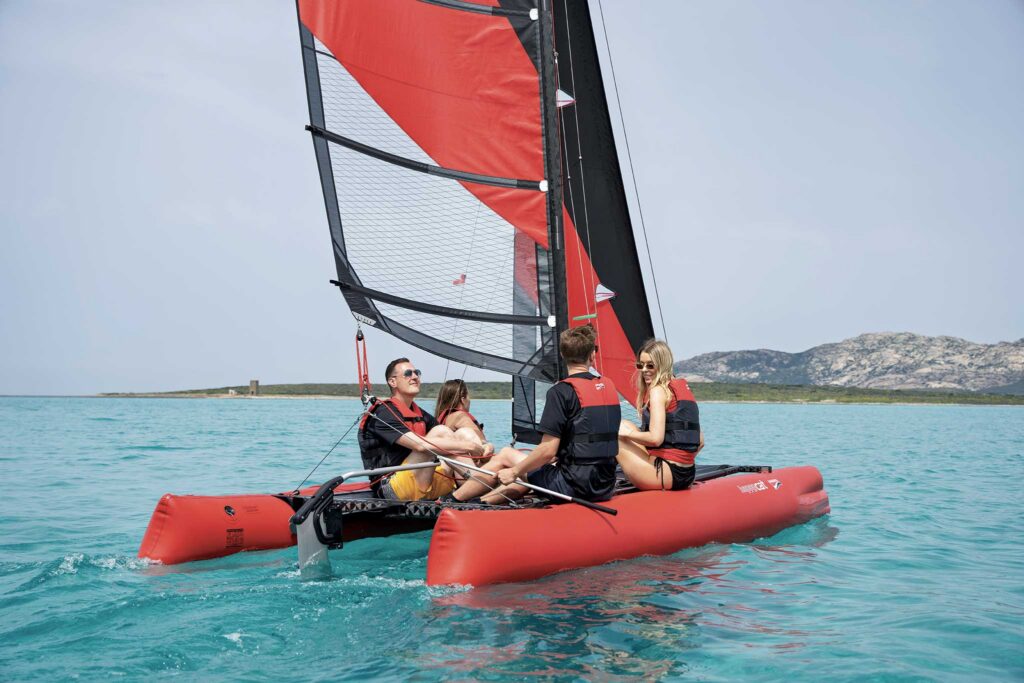
We launched from a ramp at the leeward side of an Omega-shaped docking basin. Beating out of the inlet—through a small opening on a catamaran that couldn’t get up to speed in such a small space—didn’t sound particularly appealing. Fortunately they had one of Temo’s electric motors on hand, and it got us out to open water with little trouble (stay tuned for Adam Cove’s comprehensive guide to the current electric outboard market in an upcoming issue).
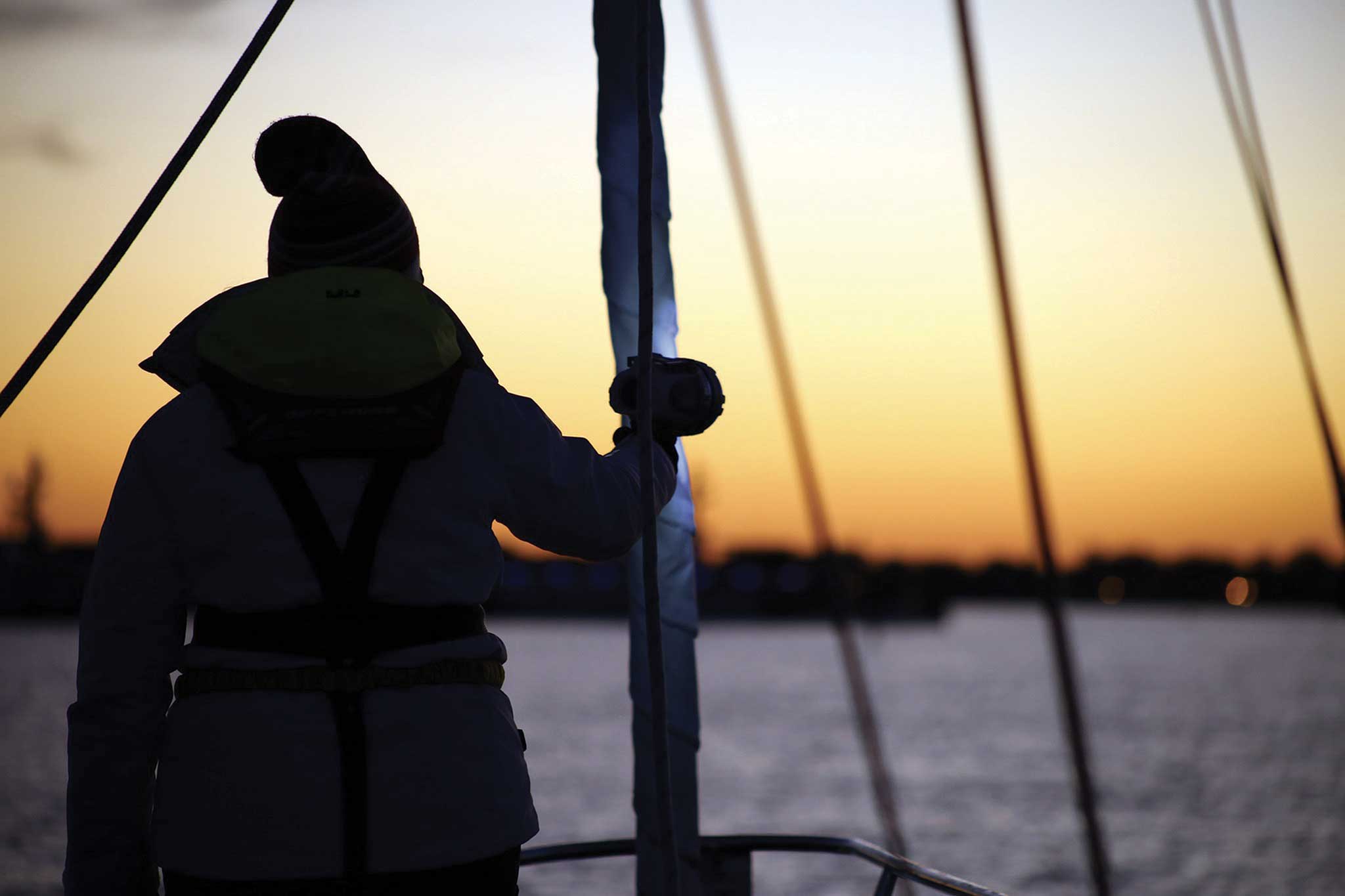
Resigned to the fact that I wasn’t getting out of the day dry, I started out up front acting as a spray shield for the other two as they walked me through the rigging set up, which is well conceived: intuitive but still complex enough to get performance results.
It was hard to tell how much of the dousing I got was the sheeting rain and how much was the spray, but my impression was that it was actually not nearly as wet as you’d expect for a sporty little boat in big waves, especially with how much time I spent leaning out over the water thanks to the adjustable “stability strap” (think hiking strap without the actual hiking).
We had large puffs spilling down the bay, but the boat handled them with panache thanks to an extra long centerboard. I’m told it can fly a hull if you’re in the mood for a circus trick, but given the chilly October day, we didn’t want to risk a swim.
The Dacron battened mainsail is 86 square feet and at its widest half way up to take advantage of breeze above the water level. The foot is cut up on a diagonal, making more headroom for the skipper during tacks. A 37 square foot Dacron jib on a continuous furler completes the upwind sailplan. Because the main is boomless, there’s no danger of a head injury in gusty conditions.
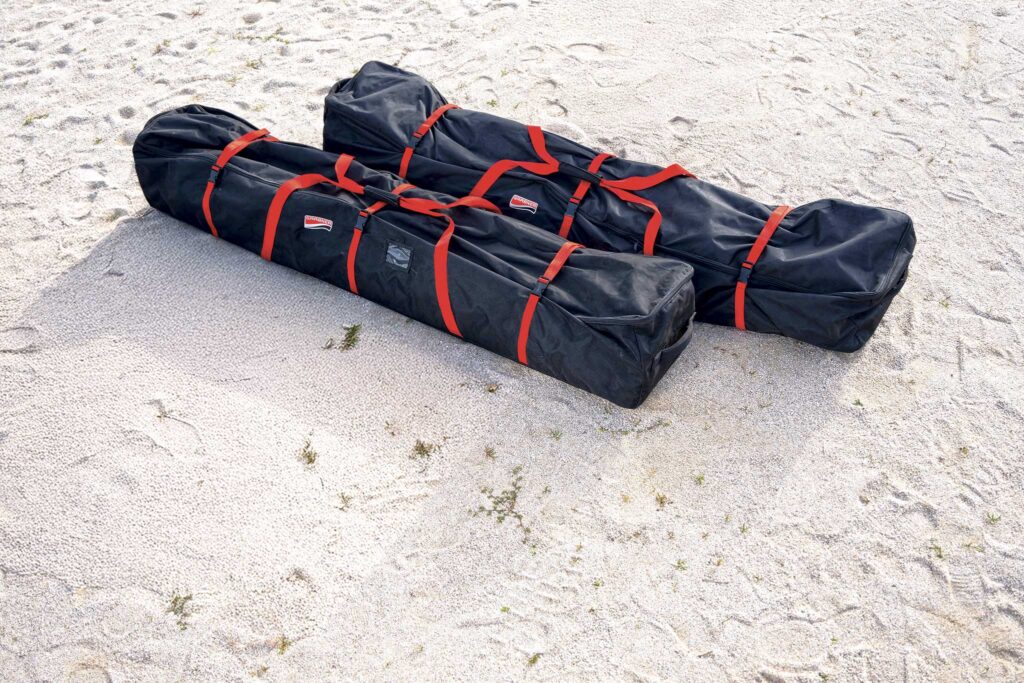
Removable mesh tarps over the trampoline provide a space to shove surplus spaghetti or small items. The boat I tested was the carbon version, which is a littler pricier in exchange for weight savings. Aluminum is also an option. Numerous accessories are also available including an electric motor and bracket, seat cushions, and a sun awning.
The moniker “Star” is actually an acronym, standing for Stability, Technology, Agility, and Reliability. Despite the number of very good inflatable dinghies released in recent years, I do think their reputation as a toy has been hard to shake in the U.S. market. If you’re still of that mindset, it’s worth getting on one because routinely they impress me with their sailing capabilities. The Star epitomized this. We were ripping around the Chesapeake Bay, logging 14 knots of boat speed while the big boats waited out the breeze from the safety of their slips. (The manufacturer reports max speeds over 16 knots.)
In the end, I’m glad we had slightly worse weather than we bargained for. Any boat sails well in optimal conditions, but it takes a really good design to have you feeling confident, in control, and having a great time when the waves kick up and the gusts are coming hard and fast.
- LOA 15’ 9”
- Beam 7’ 5”
- Draft 1’ 6”
- Displacement 143 lbs
- Sail Area 116 sq ft
This article was originally published in the June 2026 issue.