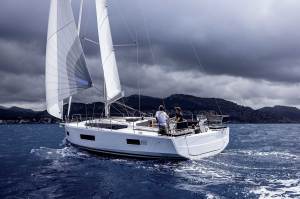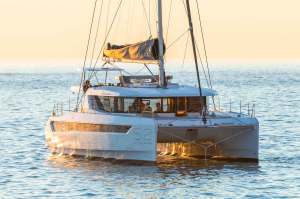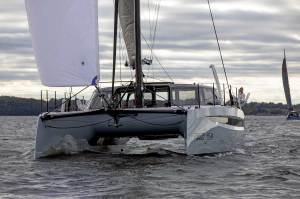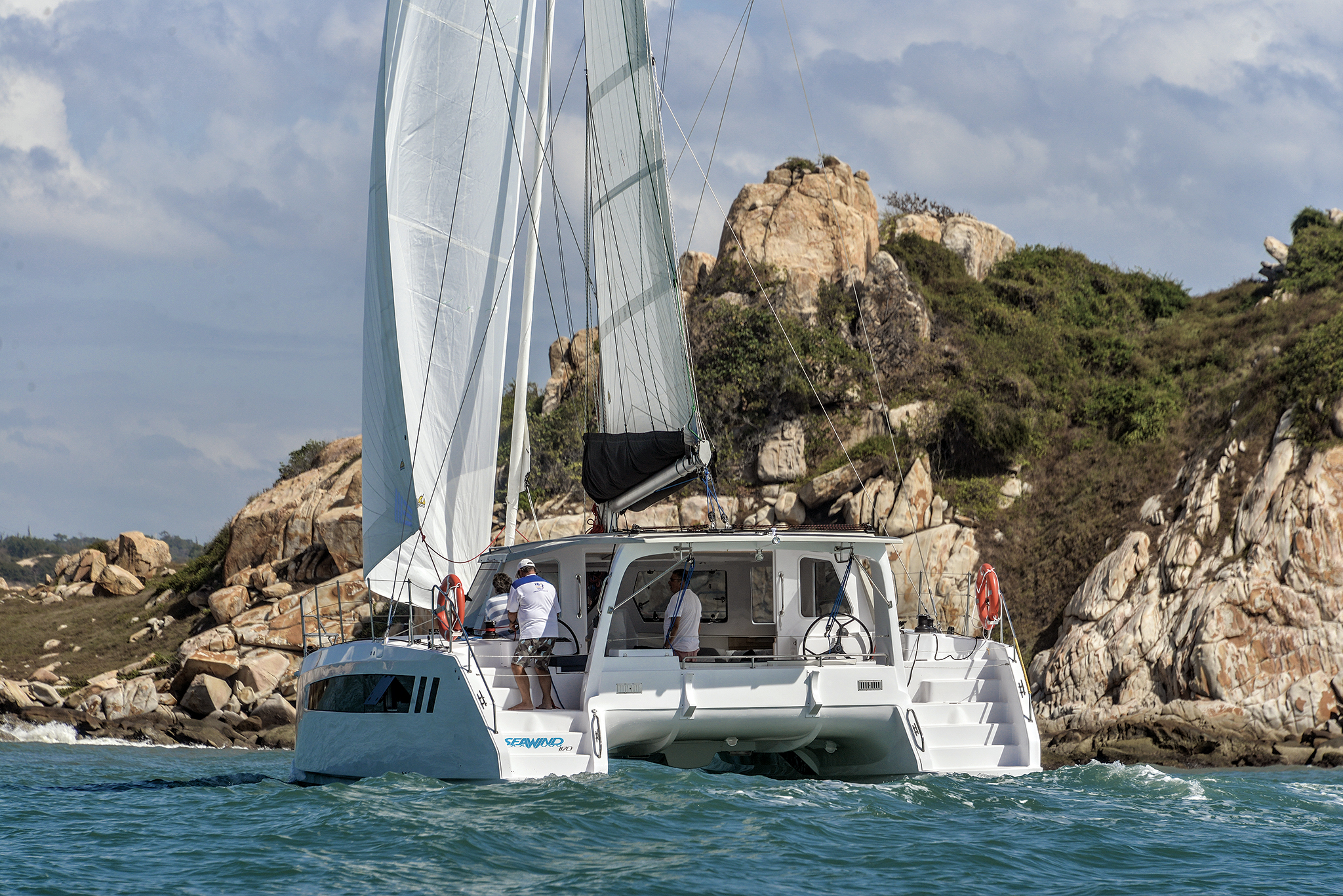
I generally prefer to test a boat in too much wind rather than too little wind. It’s easier to get a sense of where the boat really shines when it’s pushed a bit. In the case of the 1160XL, there was no shortage of breeze for our sail. It was, and I mean this literally, blowing the coffee out of my cup when I stepped aboard in Newport for a brisk morning sail. While docking out, we got the news that the Block Island Ferry—our ride home—had been canceled for the foreseeable future due to a nor’easter rolling in. But I’d already driven two hours to see the boat, so in for a penny, in for a pound, I figured.
We raised sail in Narragansett Bay and, after a quick glance around, got to work putting a reef in. As we rounded the corner into open water and got a better look at what was in store, the idea of a second reef was floated but overruled. Later, we all agreed it would’ve been prudent. The breeze was in the high 20s, gusting low 30s, and by the time we were approaching Block Island, it was 30 knots sustained. The boat was a bit heavy on the helm in the gusts, but I’d attribute that to user error with the reefs more than its general operating standard. The more troubling factor than the wind, though, was the seastate. The largest of the waves were topping 10 feet, either on the beam or quarter with seemingly little rhyme or reason to the direction they hit. Despite the slop we were riding it through, the boat did itself credit, romping along and taking the waves in stride. The rudders kept their grip even when we were a bit overpowered, and we stayed on the fun side of challenging the whole way. The helms had a suitable amount of feedback, which is especially important on cats that can’t heel to tell you when they’re overloaded.
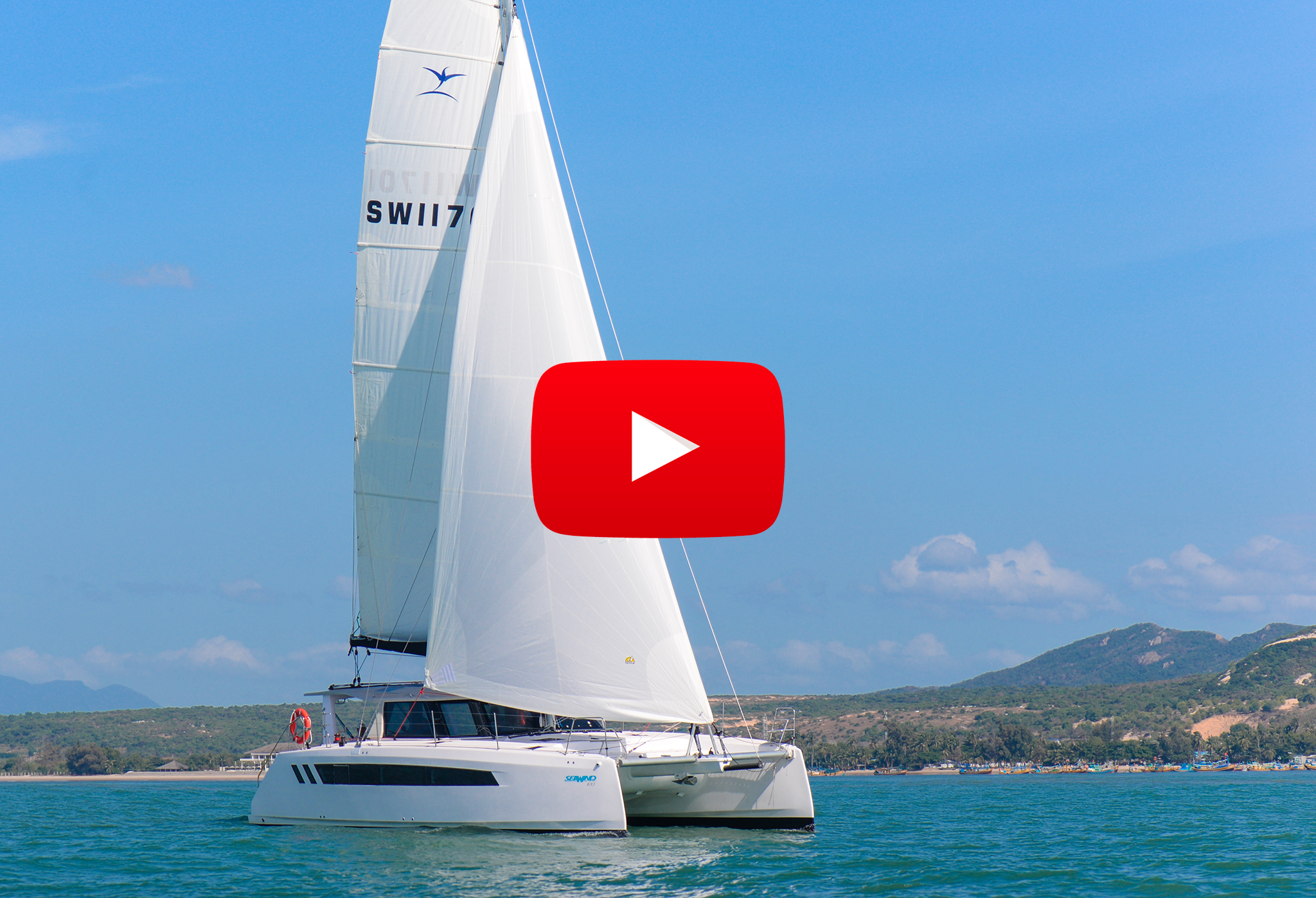
The Seawind 1160XL follows in the footsteps of 2004’s popular 1160. The modern update has changed the hull form to improve both performance and life aboard. Starting at the front, the original design featured decks that sloped down in front with the idea that low, svelte bows would cut through the water. The XL instead has reverse bows and relatively flat side decks. This means that, in addition to being easier to walk around on, the buoyancy is carried quite far forward to keep the boat from nosediving. It’s a pontoon rather than a submarine.
I was glad of this redesign in our test conditions. While surfing down one truly gnarly wave, I was sure we were about to bury the bows, green water at the deck level just shy of breaking over. But the 1160XL rolled with it, riding out the surf and bobbing free from trouble. The helm reported we’d hit 19 knots of boat speed while careering off the face of that wave, and frankly the benefits of trading the water splitting bows for the ones that stayed afloat were abundantly clear.
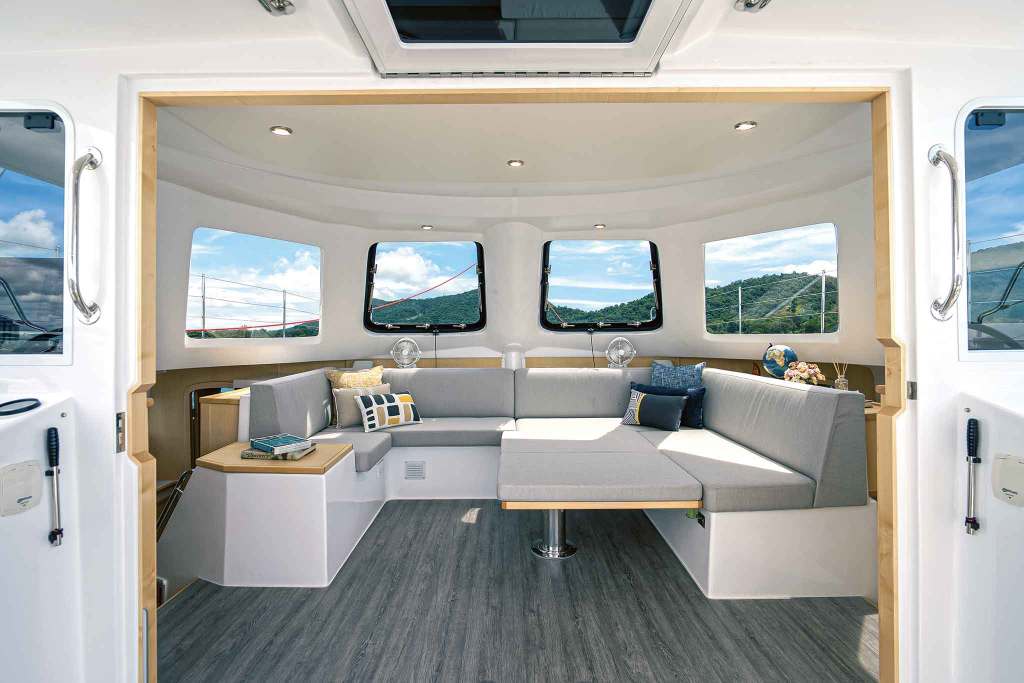
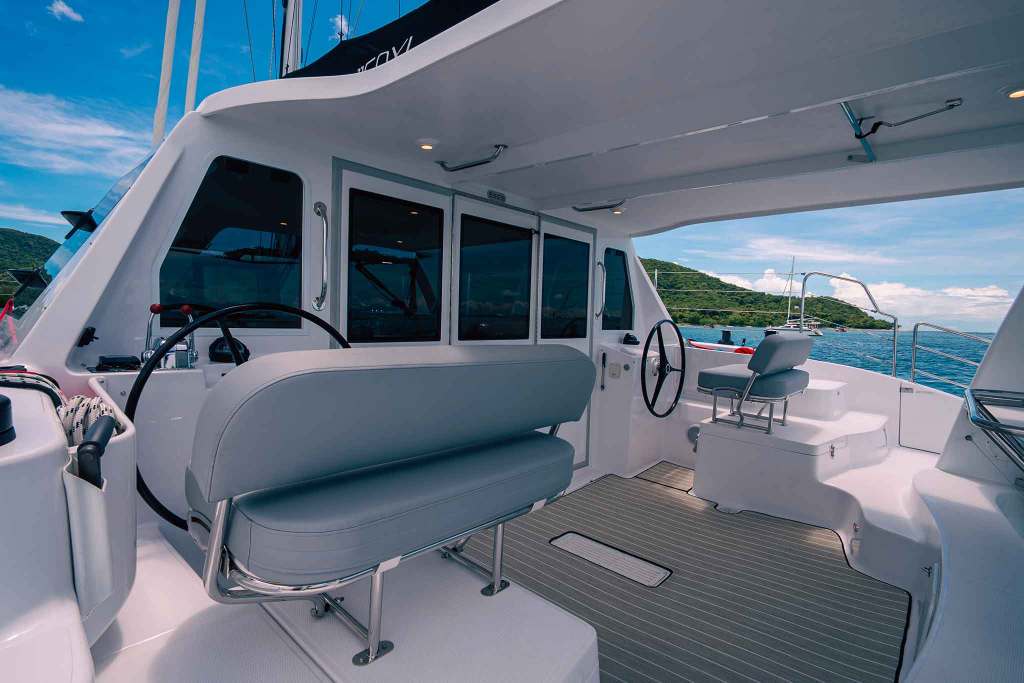
Moving aft, the pitch of the cabin windows has been adjusted, so despite being slightly less aerodynamic than the previous iteration, the interior now has better airflow and more headroom for those seated in the salon. As is typical on Seawind cats, the helm is at deck level to port. This protects the driver from both the weather and any precarious climbs, while helm hand-offs are easy with both people on the same level. As Seawind CEO Richard Ward points out from the helm station, a boat’s motion is amplified the higher up you go, and in our sea state, the driver would be swinging like a pendulum if they’d been up off the deck. My driver’s license generously lists me as 5’2” and I could see well from the helm, even through the cabin. From up on the bench seat the view was better, and a handy foot brace made me feel secure. A step built into the hull outboard makes for a good standing perch when you really need to get your sightline up and out of the boat.
There are two helms, port and starboard, but they’re not symmetrical, with the port helm being the main driving station. All the lines on the boat are led to two banks of clutches on either side, which makes shorthanded sailing simple. On our particular test boat, the jib sheet and furling line were both led to starboard, which had a single winch. This meant that to furl the sail in the serious breeze, the sheet had to come off the winch and be hand tailed, which wasn’t ideal, but the self tacker is small enough that we managed with all fingers intact. Either speccing out the second starboard winch or leading the lines differently would solve the problem easily.
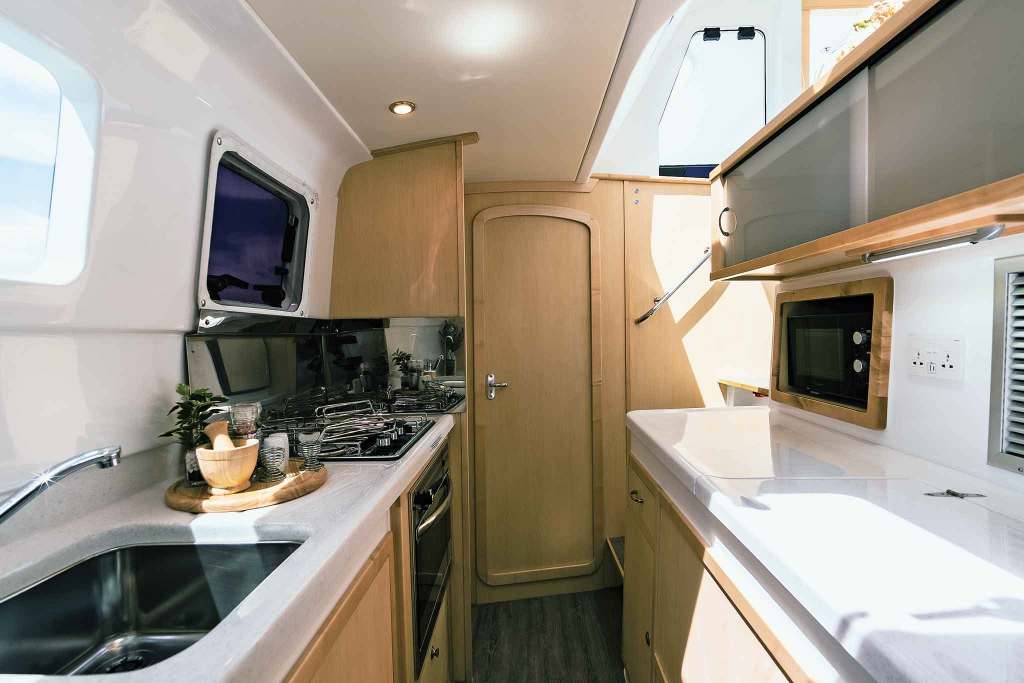
Inside, the layout borrows classic Seawind design choices, like having the hulls open to the salon and placing the galley down in the starboard hull rather than taking up space on the main level. This makes for a generously sized galley with a refrigerator, freezer, storage, microwave, and as much counter space as you could possibly hope for on a boat that’s less than 40 feet. The salon also features an asymmetrically mounted rectangular table that rotates to transform the space for different seating or reclining arrangements.
Forward of the galley is a cabin with an en suite head, and aft is a second smaller but perfectly serviceable cabin. To port, a large cabin is forward and a day head with shower is aft. To achieve a Cat A offshore certification, the bows have been reinforced with two watertight bulkheads per hull, the space between which has been cleverly allocated for storage.
Seawind’s proprietary trifold door that hoists up to fit in the roof of the aft cockpit is of course also present on this model. When we were underway with the doors open, the airflow in the cabin was excellent. At the mooring with the door down and the salon converted to a cozy enclosure, we were well protected. Side doors make getting on and off easy and comfortable when docked side-to, which will be especially useful when onboarding groceries, cargo, and people who aren’t so steady on their feet.
Another unique feature of the 1160XL is the propulsion package. It’s offered in three versions: standard diesel, hybrid electric, and with outboard engines. On a boat this size, the outboards can offer plenty of power with the added benefits of saving space in each hull, hinging up to prevent growth on the props and reduce drag while sailing, and being easier to find a service tech for maintenance when in remote areas. According to Richard, around 60% of owners are choosing them.
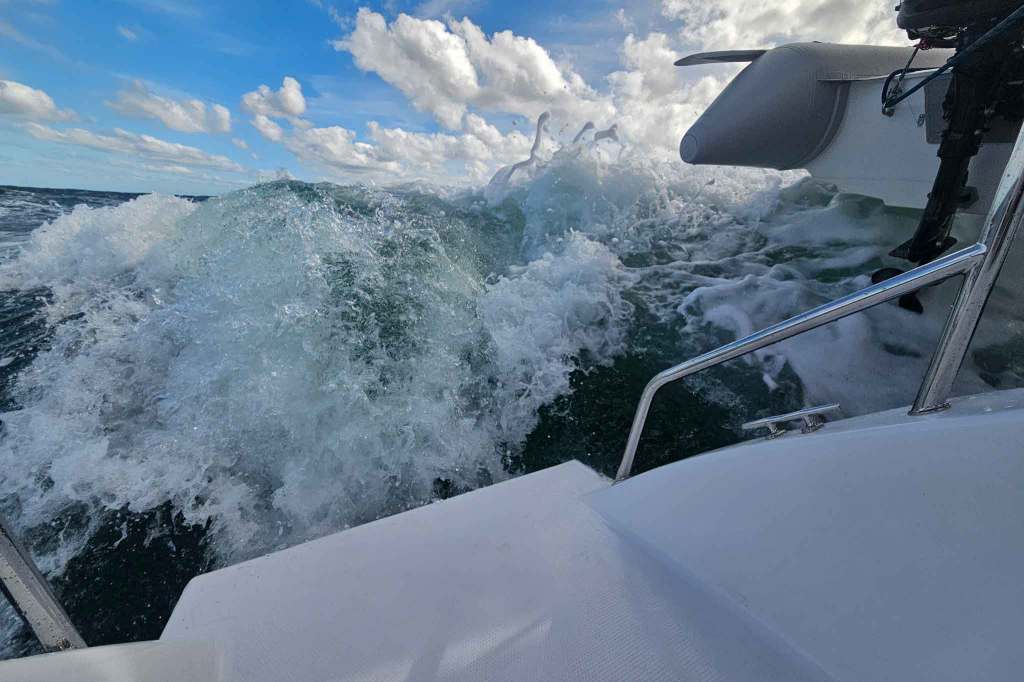
We cruised into Block Island around midday, happy to be out of the pounding waves (though there were whitecaps as far as the eye could see even in the protected cove of The Great Salt Pond). With no ferry and a storm due that weekend, we didn’t have many good options. But the conditions looked stable for the next 24 hours or so, and we’d had so much fun sailing over, why not do it all in reverse the next day?
LOA 38’ 11”
Beam 21’ 6”
Draft 3’ 8”
Displacement 17,196 lbs
Sail Area 936 sq ft
Power 2x 25hp Yamaha outboards or 2x 29hp Yamaha inboard diesel
This article was originally published in the November 2026 issue.