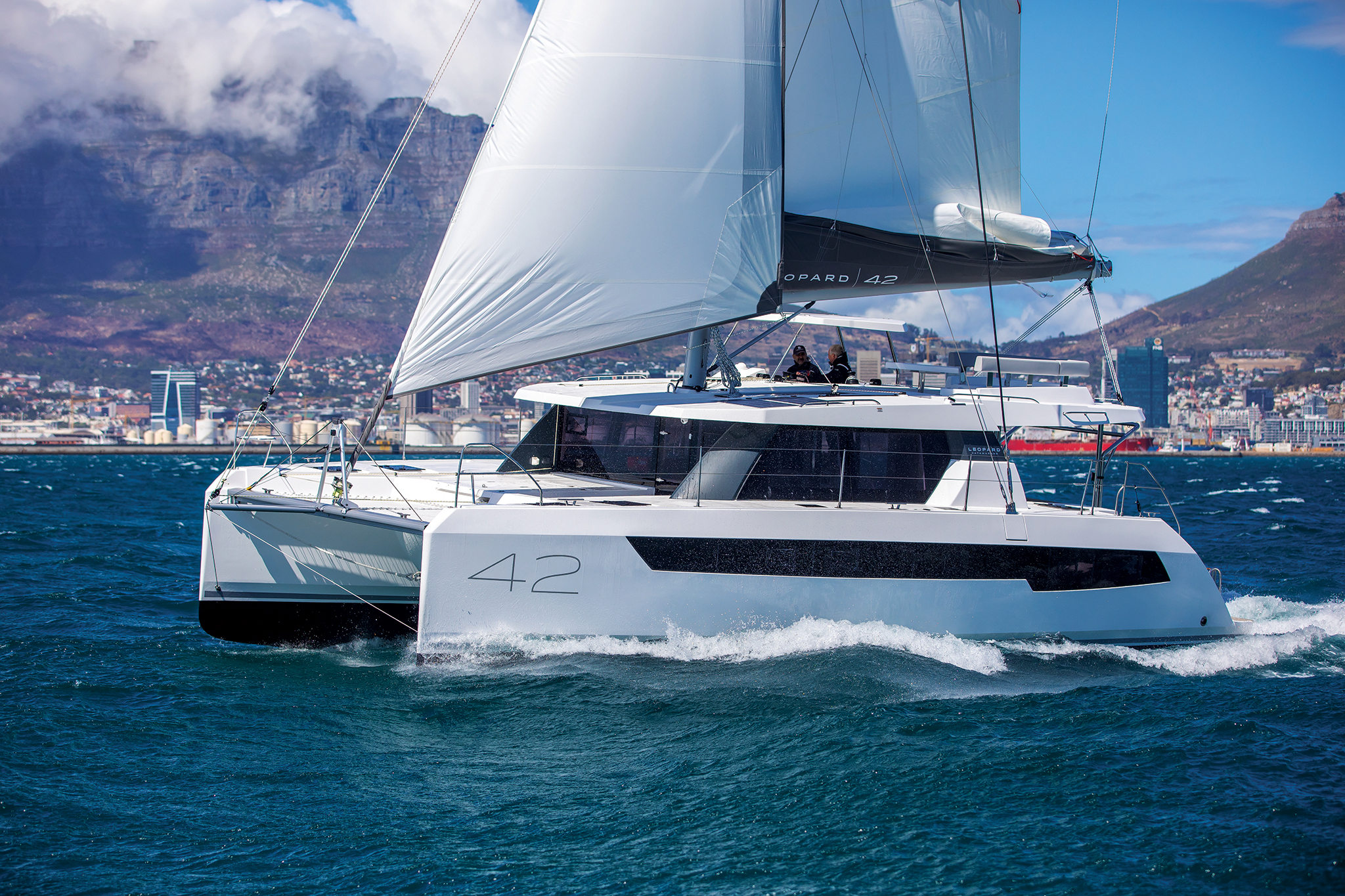
All photos courtesy of Leopard catamarans
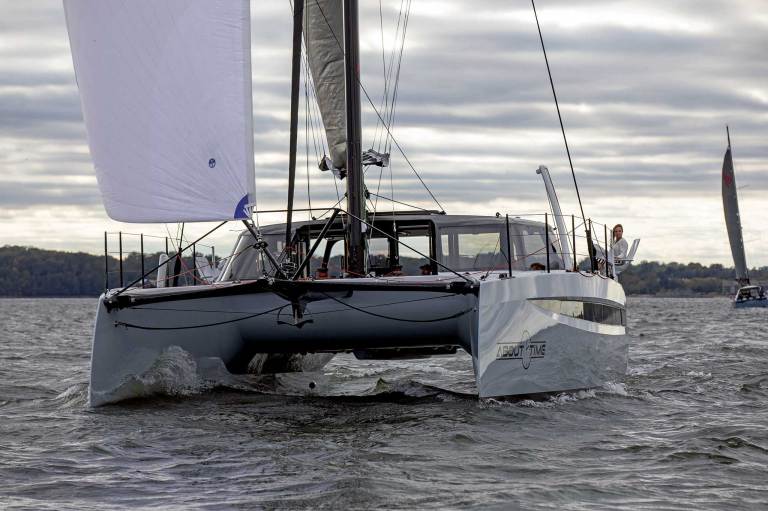
I had to admit that it was a miserable day to go sailing, made worse by the fact that I was the one who had insisted on going out. It was blowing 22 knots on Chesapeake Bay sending frigid rain and spray cutting across the deck. But it was a now-or-never sea trial, so I bundled up in every bit of kit I brought and jumped aboard the Leopard 52, Robertson and Caine’s new flagship of their sailing catamaran series.
The latest design replaces the Leopard 50, a workhorse in both private ownership and charter.
I was told she had a bigger rig, a versatile layout and optional hybrid diesel-electric propulsion so I figured, damn the weather, full steam ahead.
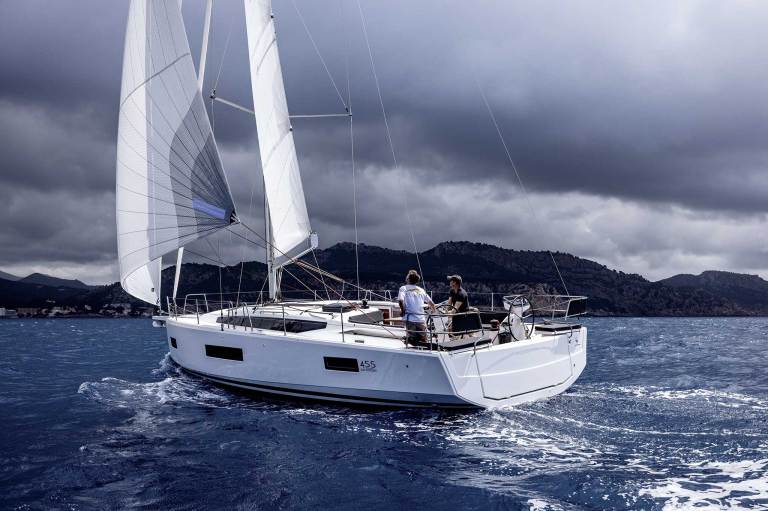
The Bay was a little kicked up but this beamy platform took it in stride. The breeze was blowing 18-22 knots true with an occasional gust to 24 and we charged along at 8.1-8.3 knots, occasionally bumping up to nine knots without even a single reef. The new rig is powerful with a taller mast, longer boom and 17% more upwind sail area than the Leopard 50. Ullman aramid sails are optional. As we cracked off to 150 degrees apparent wind angle, the wind dipped to 14 knots but we still pushed along at 7.3 knots of boat speed with the main and overlapping. Despite the wind and general chaos, the boat felt solid, and you could almost sense her eyeroll at the antics of the humans aboard.
It was cold so I occasionally nipped down to “inspect something in the cockpit” so I could get out of the wind. The cockpit was a blissful respite as the Leopard 52 charged ahead, looking every bit like she was in her element. Our Florida-based delivery skipper with his thin windbreaker was another story.
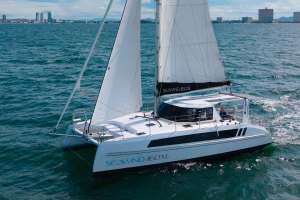
The naval architects of Simonis Voogd created muscular hulls with narrow entries for better upwind performance and a significant chine for impressive interior volume above the waterline. On deck, trademark Leopard features are still present including the forward cockpit and the watertight door that leads to it from the salon. This door is relatively rare in the industry and it’s great for improved traffic flow to the foredeck but also for cooling the boat down in a jiffy at anchor on a hot day.
The raised helm with a double bench seat is on starboard where two electric winches and a set of jammers handle the lines. Electronics from Raymarine put control at the skipper’s fingertips and visibility is good both forward and down the starboard deck so it’s easy to tie up on that side. The coachroof lounge or “semi-flybridge” was enlarged and now has a table, a settee and sunbeds so guests can keep the helmsman company under way.
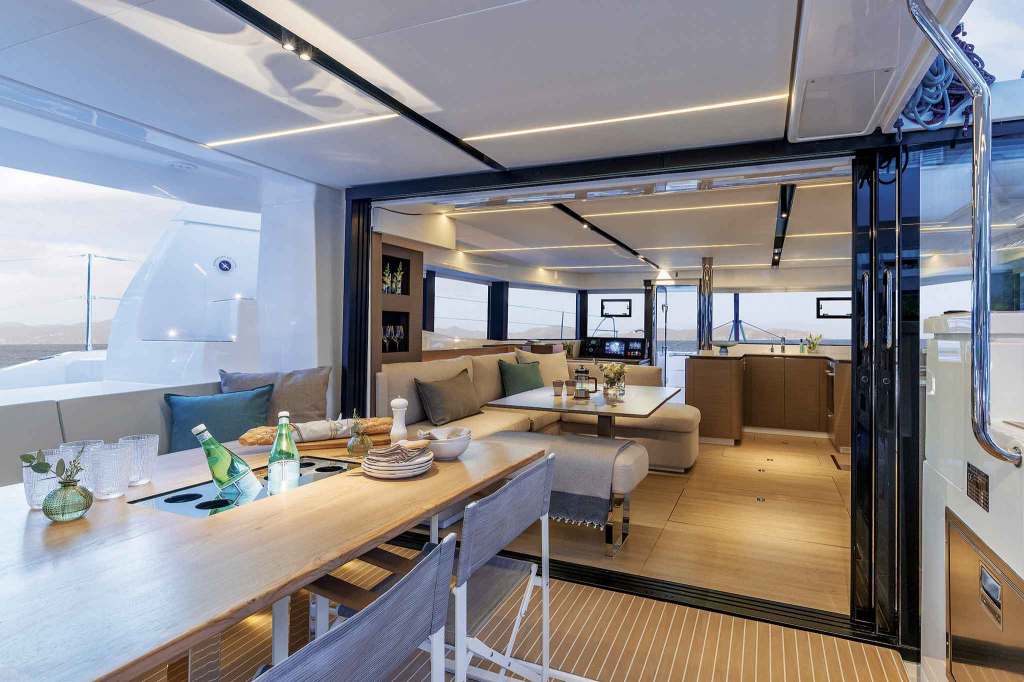
salon.
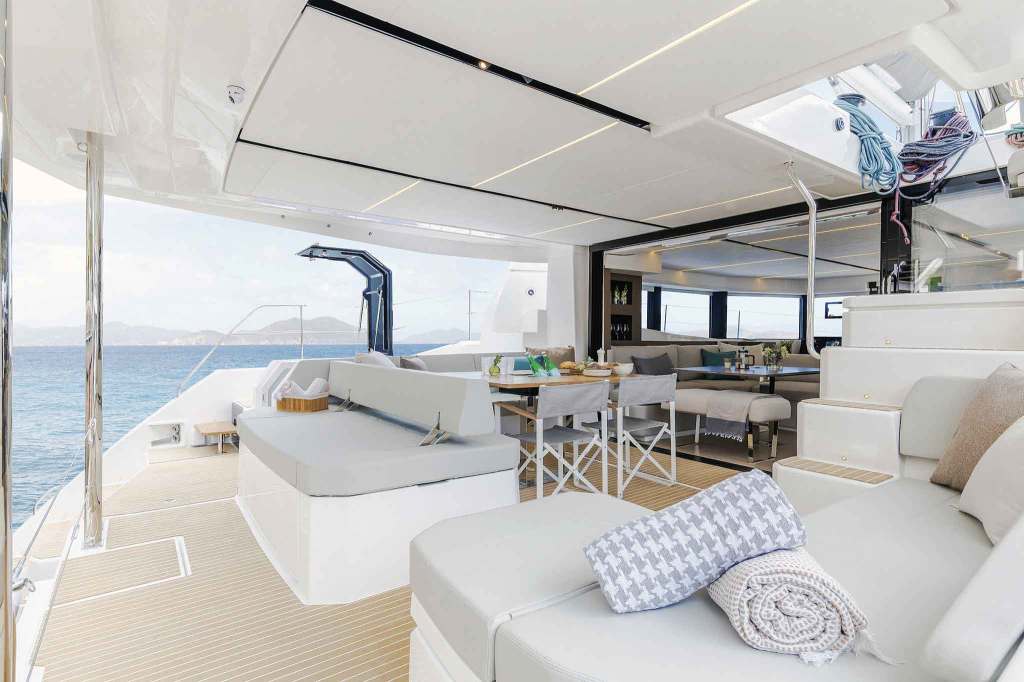
Leopard has embraced a layout that’s become popular in the multihull space. The interior connects with the exterior via a flowing dinette that runs in a straight line from the salon to the cockpit. It’s banquet style dining along the port side and it’s made possible by a three-panel stacked door that slides and disappears into a casing on starboard below the helm. It’s a wide and seamless connection for both foot traffic and airflow and it’s gaining traction with the catamaran crowd.
In the cockpit, there’s also a double lounge to starboard and a full grill giving this space a backyard feel. The hydraulic platform is optional but it’s so practical and fun, that it’s a choice I’d definitely include. The platform carries the tender when raised and forms a teak beach when lowered where you can put on snorkel gear or play with the kids. Even dogs love it because it’s an easy way to get back on deck.
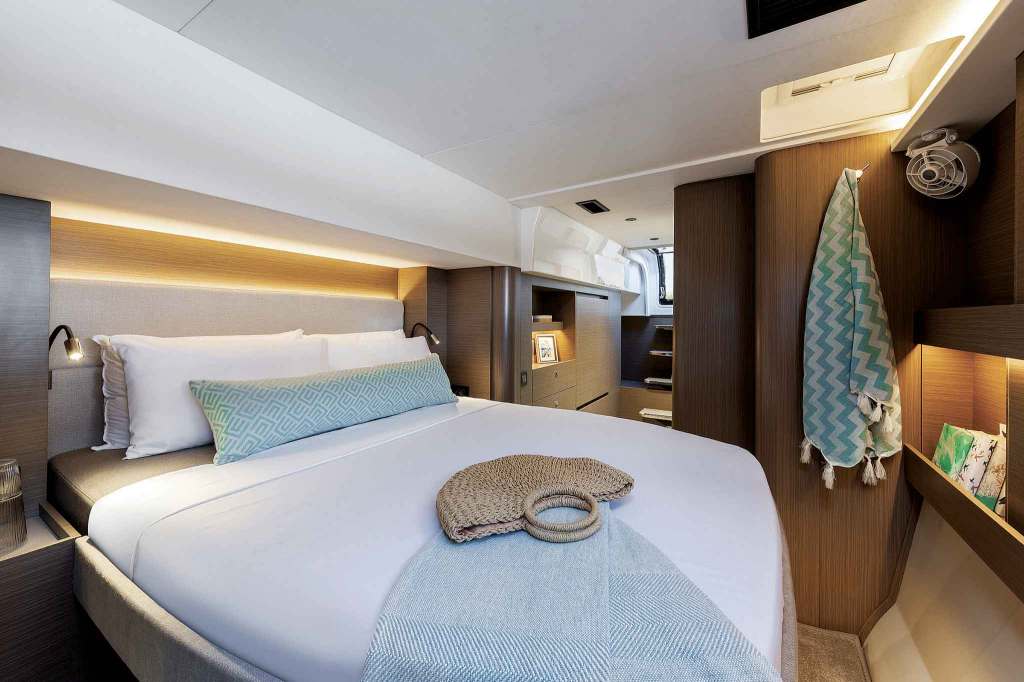
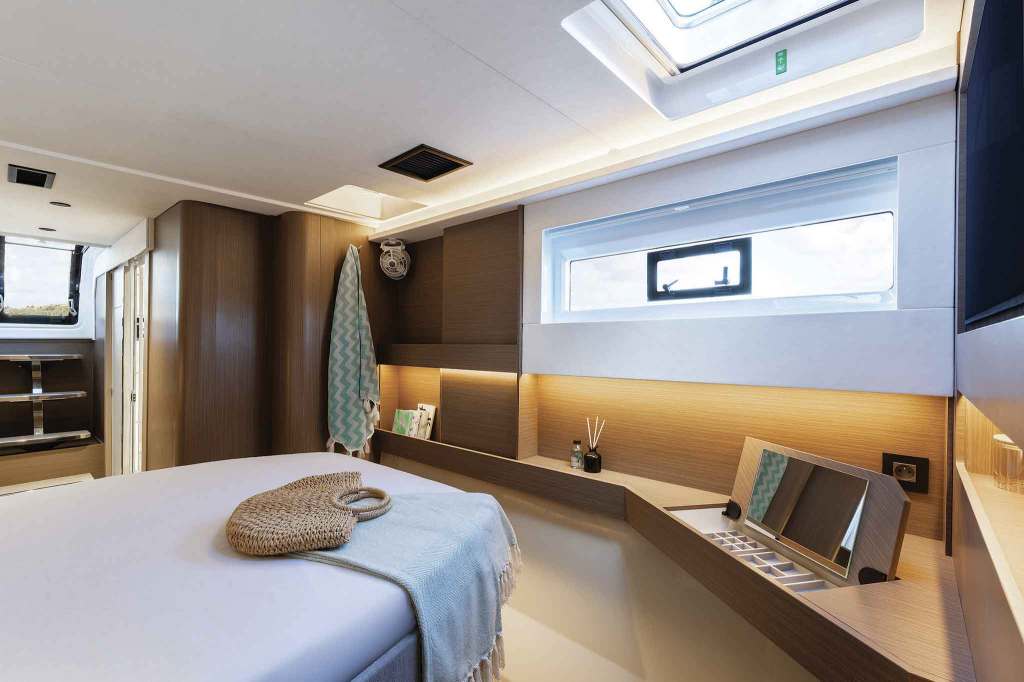
The Leopard 52 is available with 3-6 cabins plus a small optional crew cabin in the port bow that’s almost certain to be relegated to fender and line stowage. Not even hired crew likes to sleep in these coffin berths. The owner’s version has the three-cabin configuration with a posh master stateroom that takes up two thirds of the starboard hull and has its own interior stairway access. It’s an upscale owner’s retreat with a large bed, an enormous head and a desk and ample storage in between. With this layout, you get the bonus utility room in the port forward bow to stow tools and spares, as well as dry provisions and an optional washer/dryer. The four-, five- and six-cabin versions are destined for charter and it’s mindboggling that each of the six cabins has an ensuite head including the over/under aft crew or kids’ cabin with its access directly from the cockpit.
Large salon windows bring in lots of natural light drawing attention to the subtle color schemes and contemporary styling reminiscent of the way we decorate at home. Add options like a wine fridge, induction cooking and a dishwasher, and you’d never know you left your condo except for the stunning views and easy access to the water.
Standard propulsion includes 57-hp diesels that can be upgrade to 80-hp engines. Our test boat was equipped with the optional JOOOL serial hybrid system. This includes a 1,600-watt solar array and a 24kW range-extending generator that powers a 27kWh lithium battery bank which in turn drives twin 25kW electric pods. The genset kicks on automatically when the batteries reach 40% without the need for operator interface so even if you forget you’re on electric power, the system won’t fail you. Expect to power at six knots for three hours. Hydro-regeneration under sail is possible but the large propellers induce drag as they spin slowing the boat down. Realistically, meaningful regen starts around nine knots of boat speed under sail.
The South African company builds both sailing and power catamarans and has launched over 3,000 boats so they have a long history of design and execution to draw on, and it shows. At the end of the day, as I headed to the pub for hot soup and cold wine, I had to admit that of all the boats I was to test in the coming days, the Leopard 52 was the right one to have been on in that day’s snotty weather. She’s self-assured, likes a lot of wind, and has oodles of space to get out of the rain or the beating sun. Leopard’s designs are stable and tolerant of the crazy maneuvers dished up by charterers as well as frozen boat testing journalists. Our model was surprisingly responsive and light on her feet even in the slop and she behaved like the flagship she’s meant to be.
LOA 51’ 8”
Beam 26’ 9”
Draft 5’ 7”
Displacement 45,232 lbs
Fuel/Water 238/185 gallons
Engine 2x 57 or 80-hp Yanmar or JOOOL hybrid system
Builder Robertson and Caine
Design Simonis Voogd Design
This article was originally published in the November 2026 issue.