My 10-year-old son spotted it first as we snorkeled in Taha’a’s sunset-lit lagoon. I saw Talon dive abruptly, yellow fins flashing, before noticing the creature gliding below us with its enormous half-moon mouth and 10-foot wingspan. “Manta!” I cried, waving my sister over.
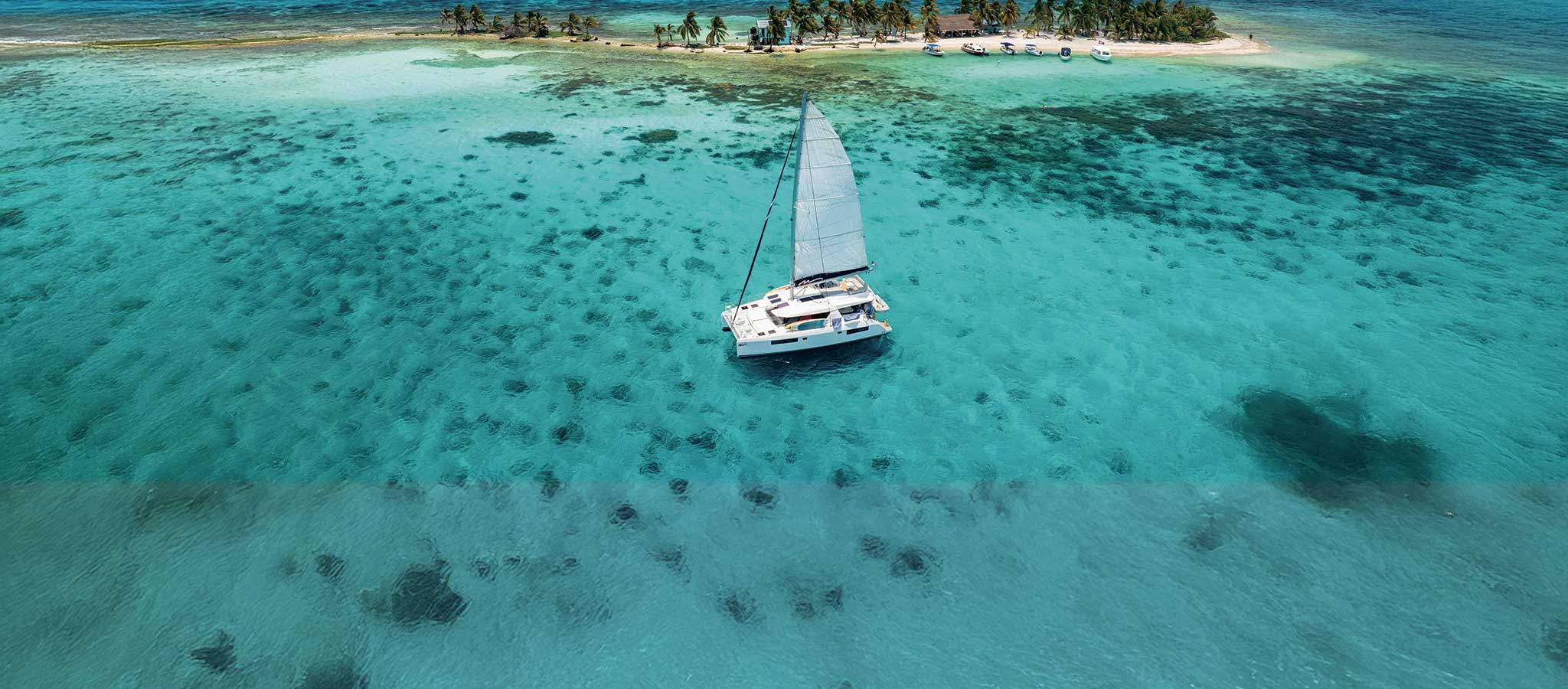
It was the last night of our charter in French Polynesia. We’d been hunting for megafauna for nearly three weeks, sailing a 40-foot Bali Catspace to remote anchorages in search of dolphins, sharks, turtles, and rays. The manta was the crown jewel in our wildlife treasure chest. It was also the top animal on my son’s must-see bucket list. But an up-close experience with a manta had proven elusive—until now.
Sure, we could have sailed to Bora Bora and joined dozens of other tourists on a guided tour for a guaranteed sighting. But our family was committed to finding wildlife the old-fashioned way: all by ourselves. It gives us an extra zing when we are able to track down a rare animal in the wild, perhaps akin to early explorers spotting a new island.
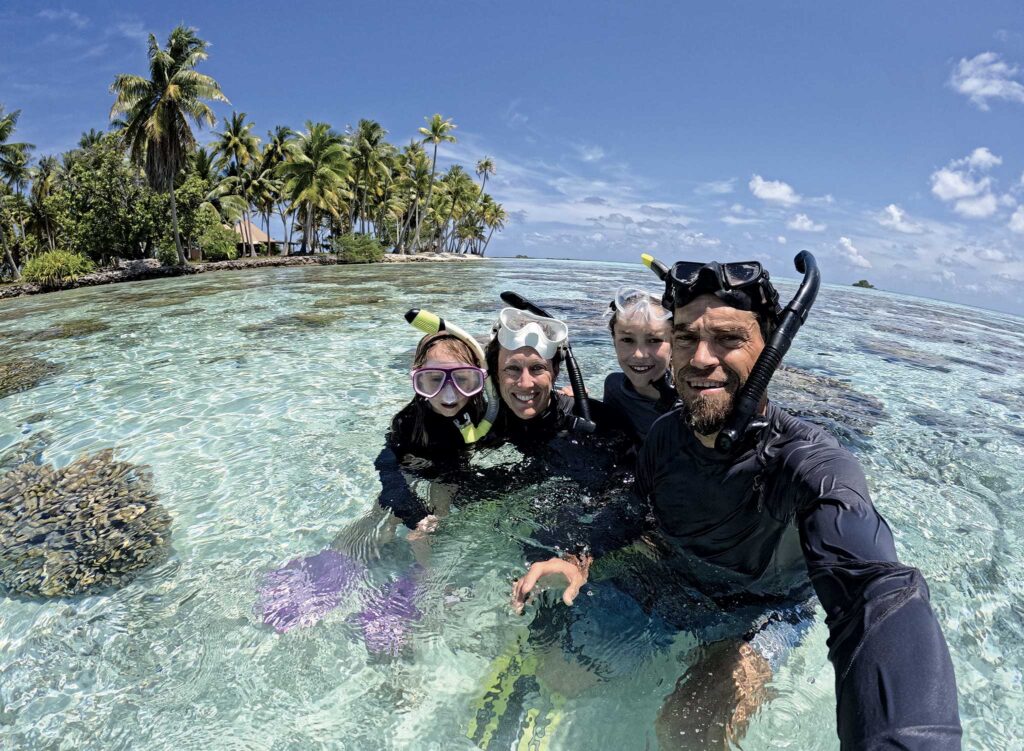
Plus, while Bora is spectacular (my husband Rob and I had sailed there 12 years before), it was also spectacularly busier than the less-visited Society Islands of Raiatea and Taha’a. We hoped to avoid the crowds and to show our children, six and 10, the magic of a more wild French Polynesia.
The wilder the better, as far as we’re concerned. As Montanans, we are spoiled with abundant wildlife right out the back door—quite literally. This past fall, Rob and I awoke one night to banging in the backyard. Hustling out of bed, we turned on the patio light and illuminated a chunky black bear standing on its hind legs just 10 feet away. Our kids are sometimes late to school because a mountain lion likes to hang out in a tree near their bus stop. Deer regularly wander by my office window, and we keep a scope in our living room to watch a herd of elk across the valley. At my favorite anchorage on Montana’s Flathead Lake, bighorn sheep come down from the hills to drink water while I sip coffee in the cockpit a stone’s throw away.
All that to say: we’re big fans of watching charismatic megafauna. And we usually avoid places with lots of humans in order to have the best chance of spotting wildlife. In French Polynesia, this meant deviating from the typical charter itinerary. During our briefing at the Dream Yacht Worldwide base on Raiatea, the manager outlined a recommended route—brief pit-stops in Taha’a en route to popular anchorages in Huahine and Bora Bora, each of which entailed a 50-mile round-trip sail. We had other ideas.
“You’re just going to stay in this lagoon?” asked the manager, eyes incredulous. “For the entire three weeks?”
“We like to go slow,” I explained. “Really get to know a place.”
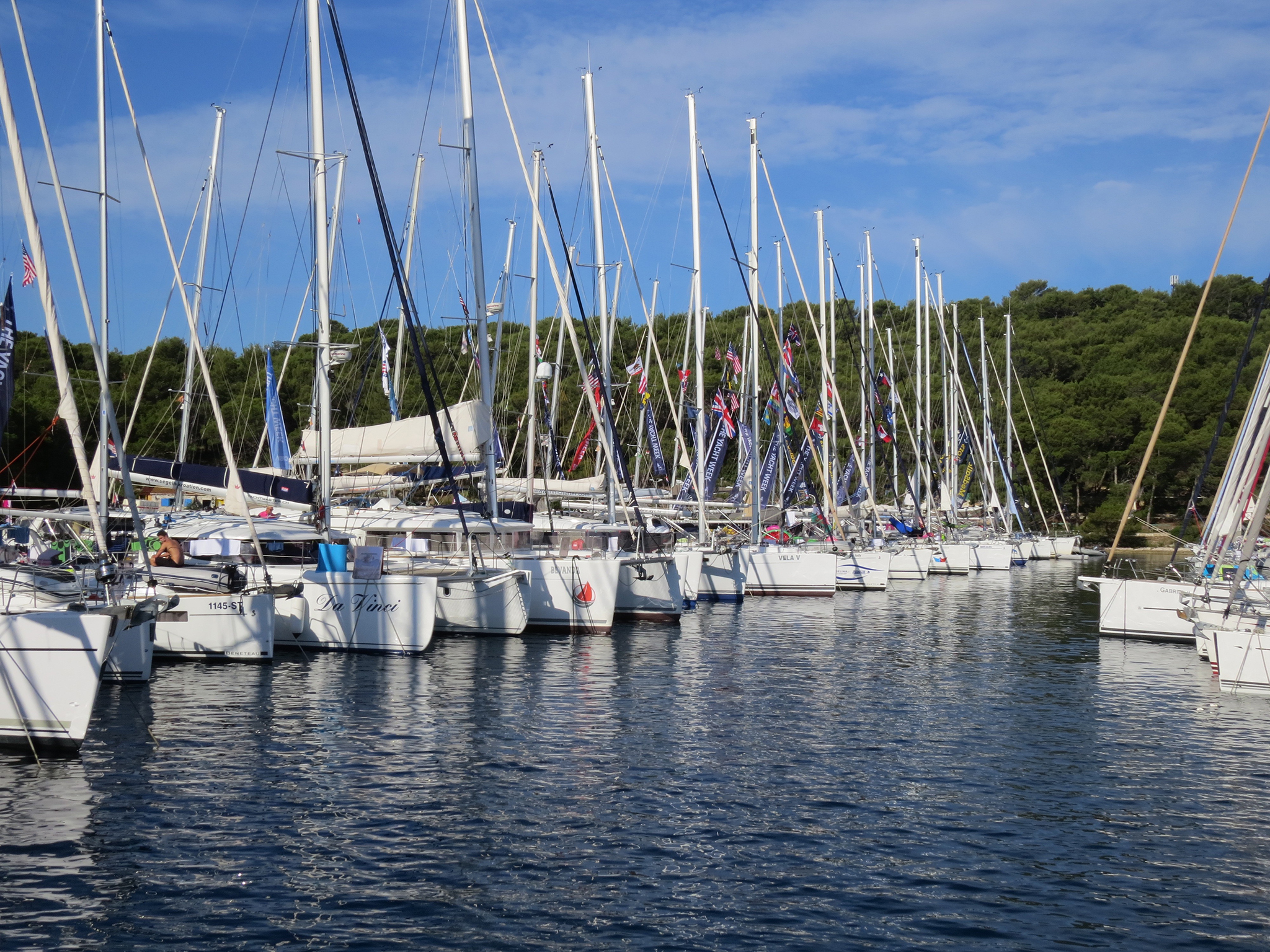
What I didn’t tell him is that members of our family have the tendency to strip naked and dive off the transom anytime a cool animal swims by. Our enthusiasm for skinny dipping with sharks gets tricky in a packed mooring field.
French Polynesia has one of the world’s healthiest populations of sharks and rays. Its otherworldly-colored waters teem with beefy apex predators like tiger sharks and hammerheads, as well as shivers of blacktip reef sharks and fevers of eagle rays. This is partly due to a strict nationwide ban on shark fishing passed in 2006, which sets a gold standard of protection for these animals.
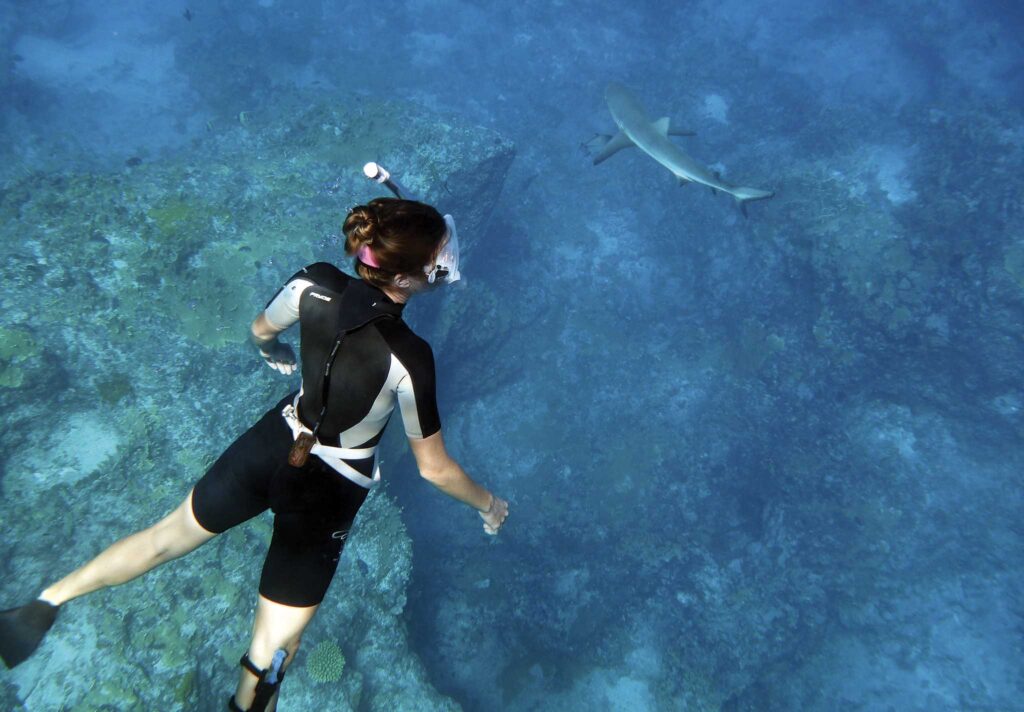
In traditional Polynesian culture, sharks and rays are valued totem animals for certain families. They certainly are for mine. Sharks flock to Rob when he’s snorkeling as if he’s the Pied Piper. (Maybe it’s the fish at the end of his pole spear?) While I feared the sight of blacktips during our first sailing trip through French Polynesia, I now feel a thrill of hope when I see them on a reef—healthy predators means a healthy ocean. But my all-time favorite animal to spot beneath the waves are rays. I couldn’t wait to see what might cross our bow wave during this go-around in the South Pacific.
First things first, though: we had to get used to the weather. We decided to charter during the month of January, the peak of summer in French Polynesia, because the catamaran was half the price. Another bonus of sailing in the off-season was that we had our pick of deserted anchorages once we left the Dream Yacht base. The downside was that it was hotter, wetter, and the wind was less consistent. Our fair-skinned Montana bodies took a few days—and several tubes of sunblock—to adjust to the tropical heat and humidity. I felt like a deliciously limp noodle as the last of the travel tension and winter work-life sloughed off in the sea and evaporated into the soft, tiare-scented air.
The first week aboard it was just the four of us. We wanted to learn the boat and scout the best spots to bring our incoming Montana visitors: a couple and their three-year-old, followed by my sister and brother-in-law. As we made a leisurely loop around the lagoon shared by Taha’a and Raiatea, the kids nicknamed anchorages based on the megafauna we saw at each. Blacktip Boulevard. Eagle Ray Alley. Porcupine Fish Place. Baby Shark Street. We didn’t see any mantas, but we gathered clues by asking locals about their potential whereabouts.
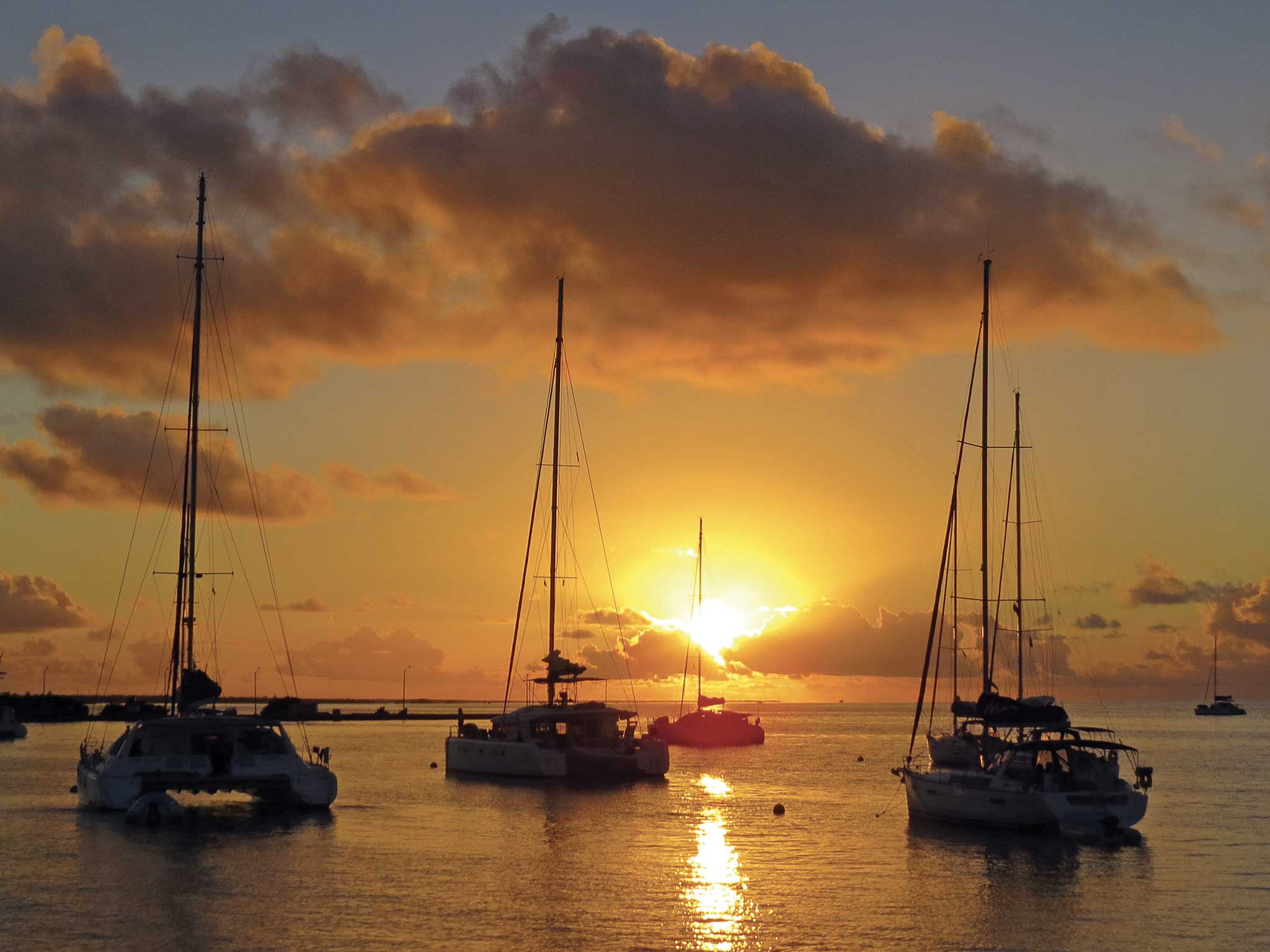
Our days fell into an easy rhythm. We sailed in the morning, then took the dinghy to nearby reefs to snorkel. After lunch we hid from the intense sun, reading or playing cards or floating between the hulls in the shade of the boat. Come evening, we fished or paddleboarded, then ate dinner topside while watching the sea for wildlife.
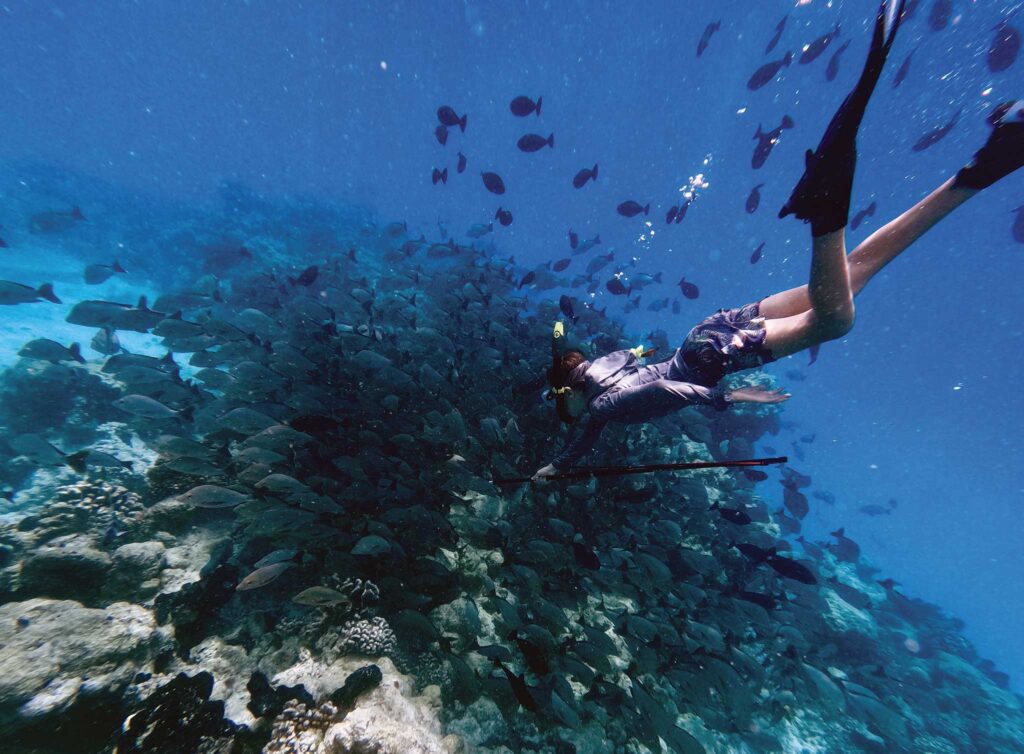
Most of that first week was breathless, and we motored between the outer motus ringing Taha’a. When the wind came up two days before our friends were due to arrive, we decided to head outside the reef and sail 30 miles south around the bottom of Raiatea. As we entered the pass out of the lagoon, a pod of spinner dolphins greeted us with acrobatics in the channel. “I think the babies are playing!” cried our own baby, six-year-old Lyra, in delight.
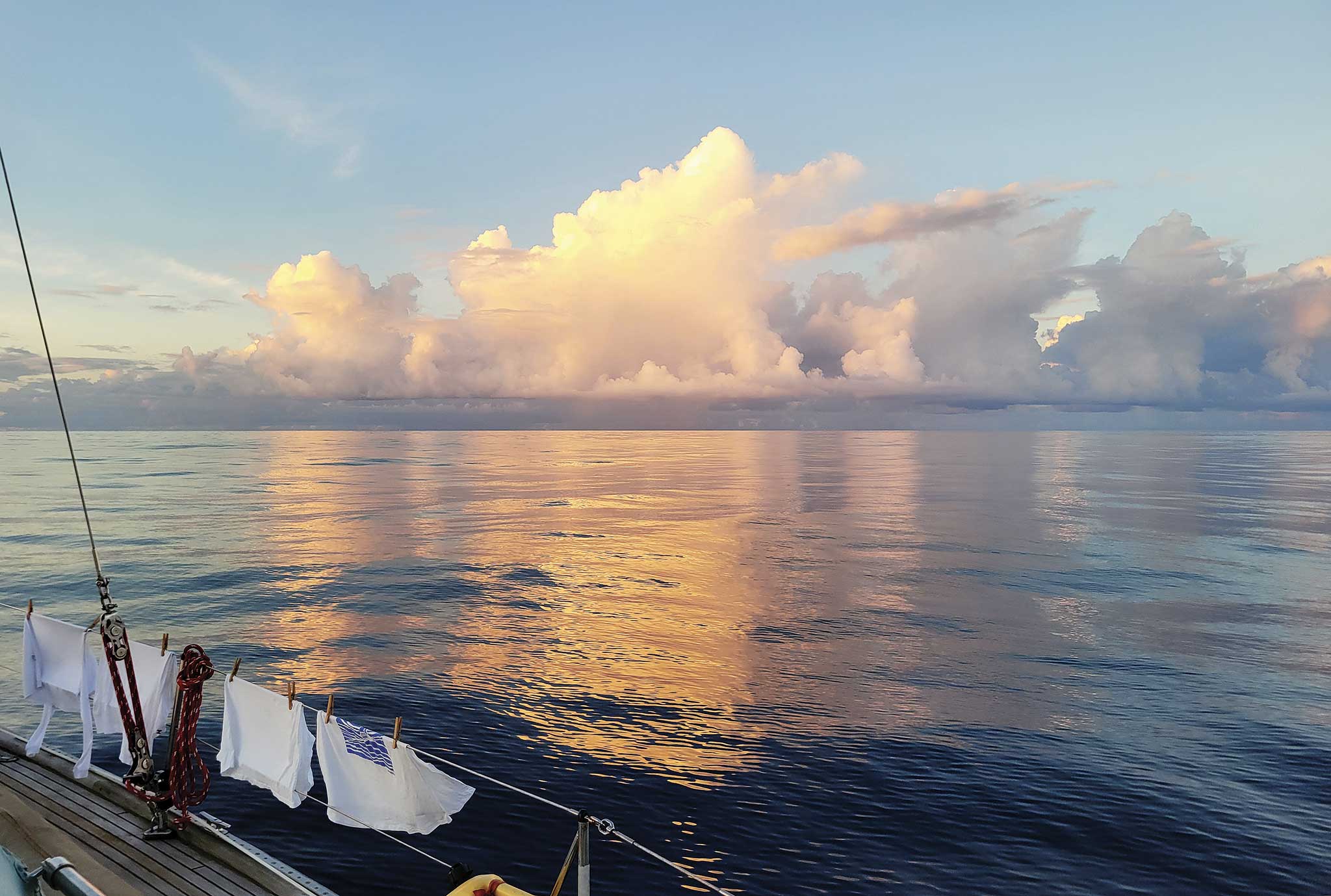
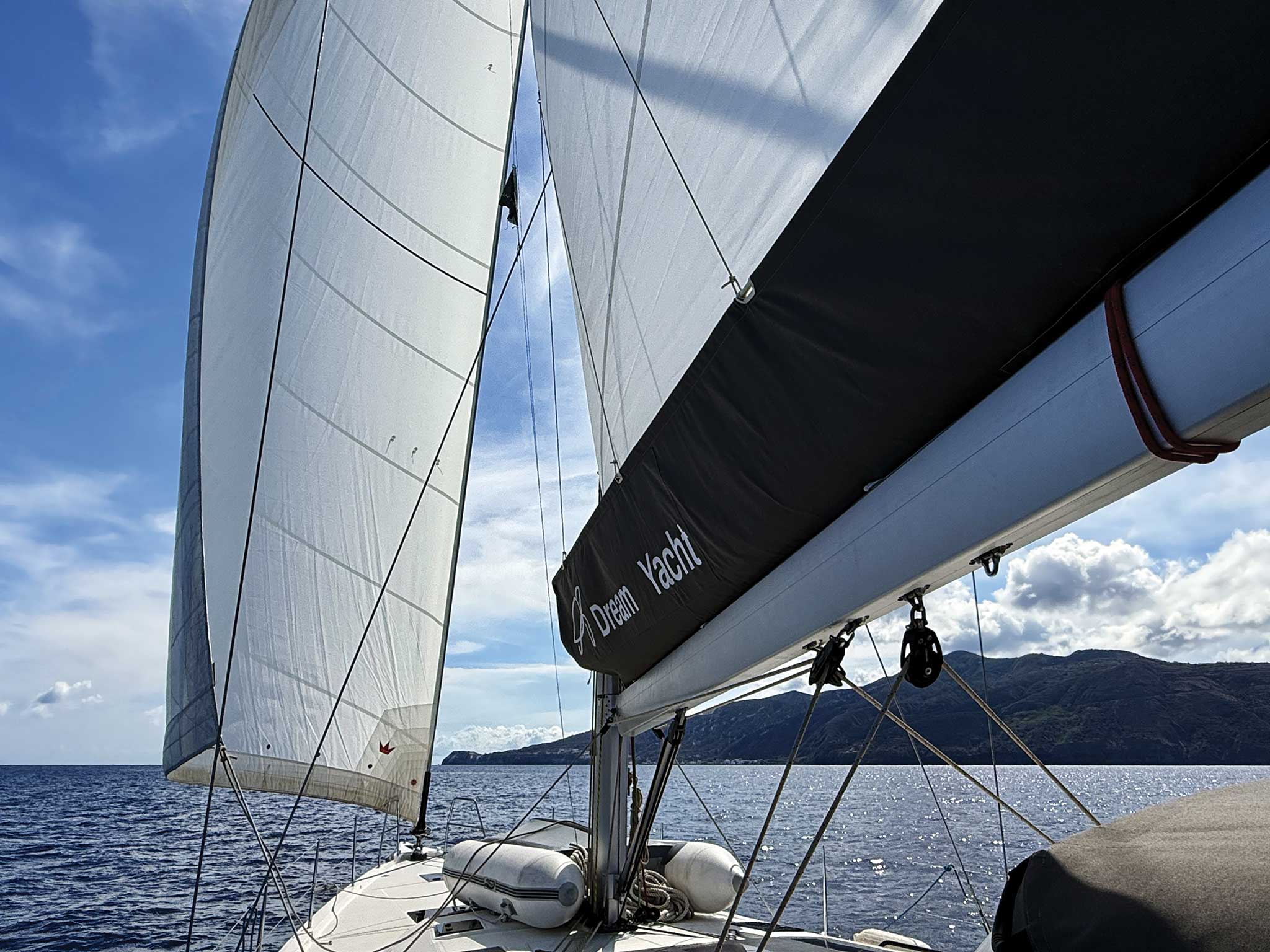
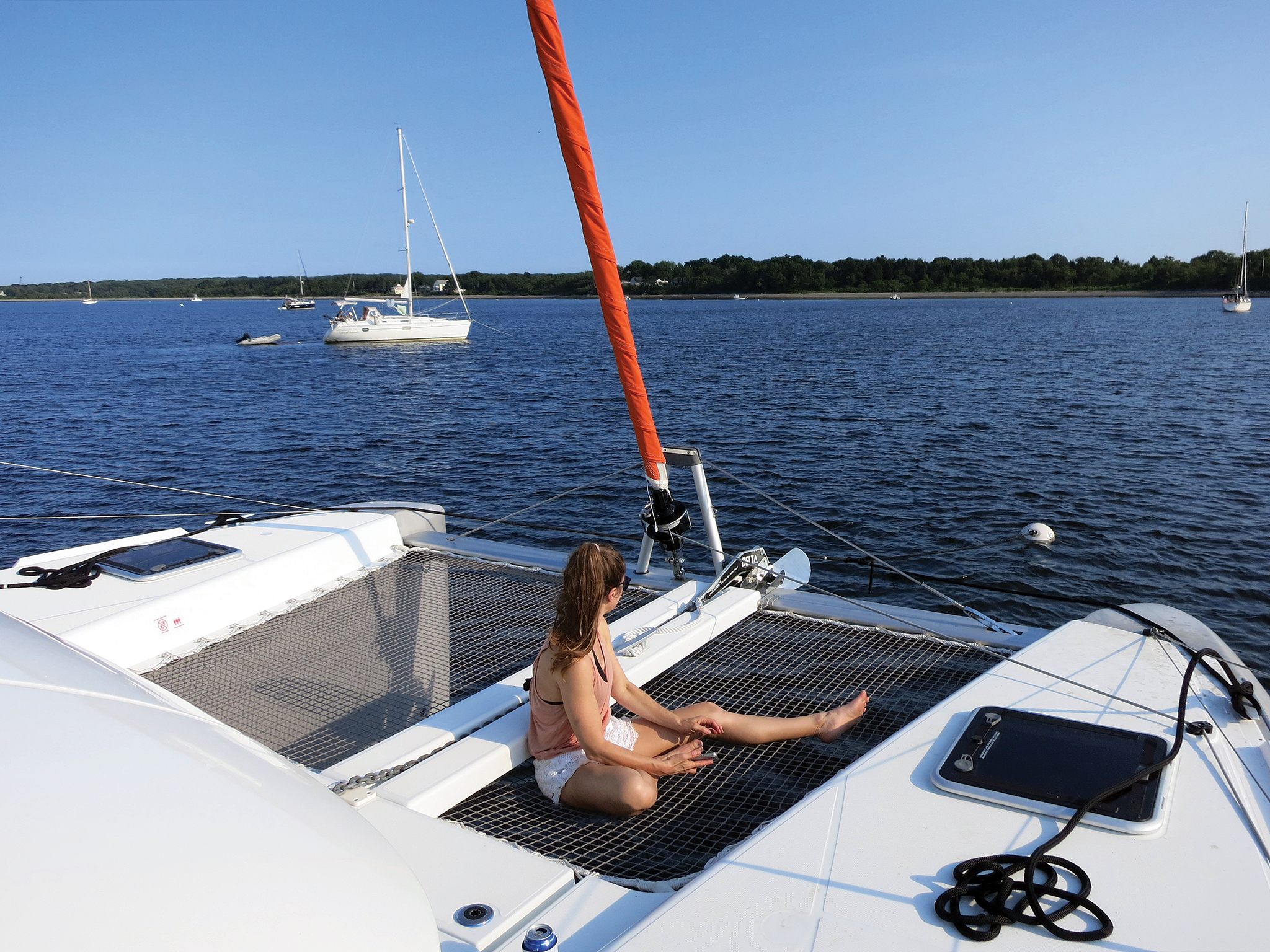
In the deep water, we set our sails on a broad reach. 20-knot winds frosted the sapphire sea in whitecaps while Raiatea’s green mountains rose to sharp peaks, growing taller the further south we sailed. The Bali Catspace was by no means a speed demon, but we weren’t in a hurry. There’s a lot to be said for traveling through the tropics at jogging speed atop a fancy catamaran. It left plenty of time to soak up the scenery. The kids pointed out waterfalls and timed how long flying fish could stay aloft. They also took turns at the helm. The Catspace was rigged with a twin mainsheet instead of a traveler, as well as a self-tacking jib sheet. This made it an easy boat to single-hand, and also meant I was less nervous when Talon insisted on adjusting course and the sails all by himself.
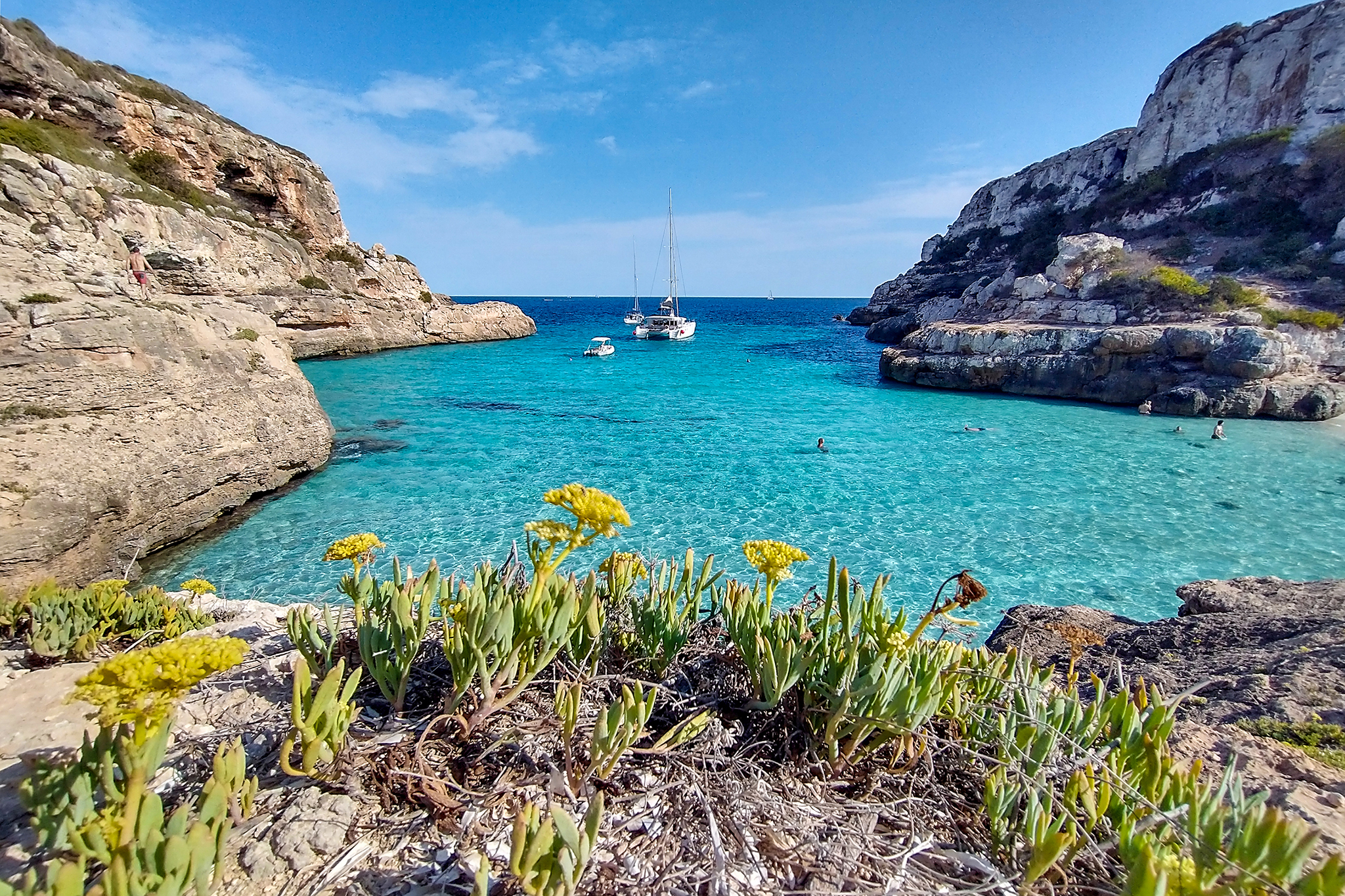
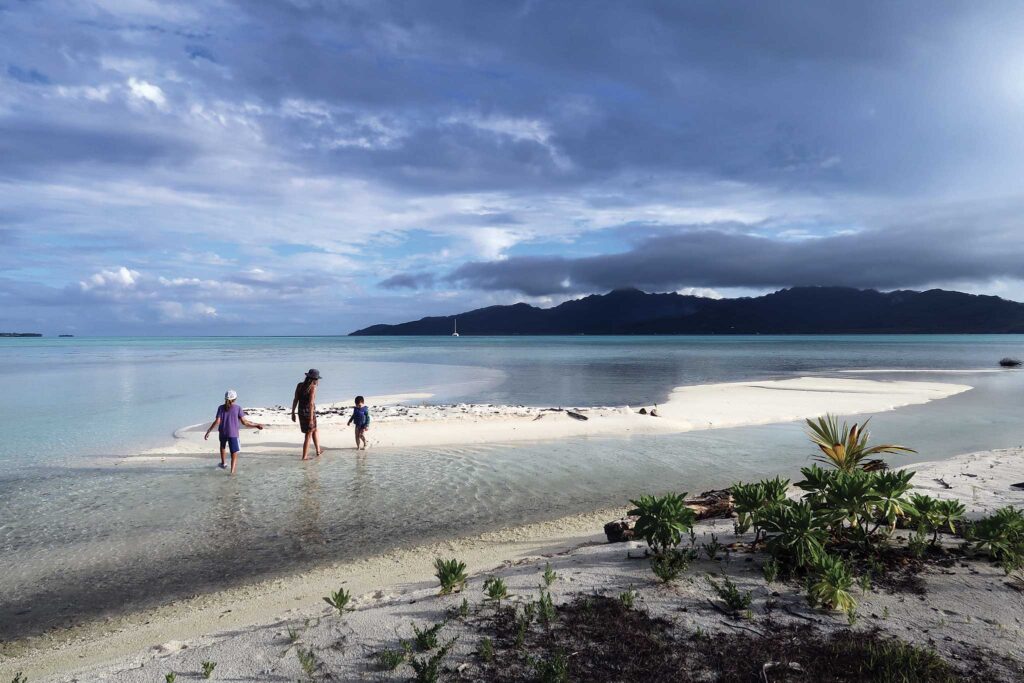
After entering the lagoon again at the southern end of Raiatea, we anchored in two meters of water on a sand flat, watching rainbows and clouds roll across the lush peaks. I could see why the ancient Polynesians believed that Raiatea was the birthplace of the gods. The island is considered one of their most sacred places and is full of archeological treasures. Not far from our anchorage was the marae of Taputapuātea, a ceremonial site with stone structures. Built a millennia ago on the southeastern shore of Raiatea, it served as a meeting place for chiefs, priests and warriors who sailed from far-flung islands in outrigger canoes to discuss Polynesian politics.
We headed back north the following day to the Dream Yacht base—conveniently located within walking distance of the market and ferry dock—to re-provision. The skies turned heavy and leaden by the afternoon, signaling the start of a tropical depression. Just as we emerged from the store with two carts full of groceries, the clouds unleashed a deafening curtain of rain. Rob snagged a water bottle from a trash bin and ran out to the public dock to frantically bail our dinghy. I scoured weather forecasts as we waited under the eaves for the torrent to let up: sporadic rain the next two days, followed by two very windy days. Our friends would have a wet visit.
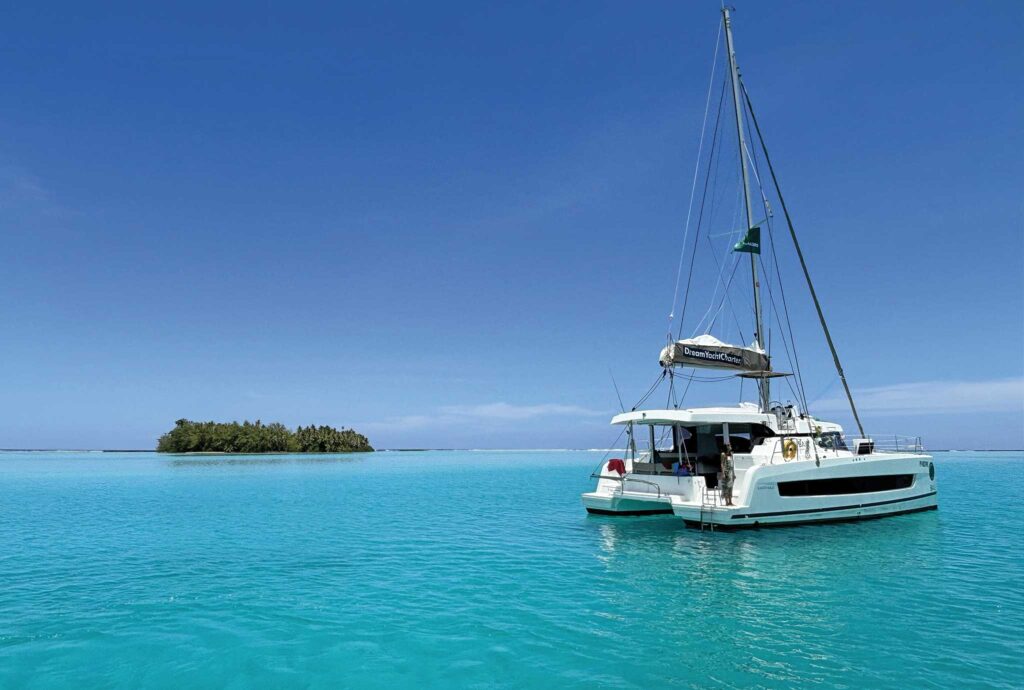
We met Dave, Andrea, and their son, Cash, at the Uturoa ferry dock. They were green around the gills after a rough four-hour crossing from Papeete. I was glad we’d opted for the half-hour flight from Tahiti, instead. After a quick boat briefing, we sailed an hour north to anchor at Blacktip Boulevard. A black shape drifted into sight as we nosed onto the sand flat. “I don’t remember that baumie being here last time,” Rob said from the helm.
Then the shape moved. “Manta!” yelled Talon. He ran back from the bow, grabbing his mask and snorkel. “C’mon, Mom. Let’s go in!” We waited for Rob’s thumbs-up that engines were in neutral, then dove off the transom.
The manta was a few body lengths away. We sprinted toward it, earning a 30-second view of white wingtips and a gaping mouth before the creature outpaced us. Talon turned to me in the shallows, putting his fingertips to his head then fire-working them up and out. We’d been practicing our underwater signals: a hand to the forehead for a shark, waving hands for a ray. This was apparently Talon’s gesture for “mind blown.”
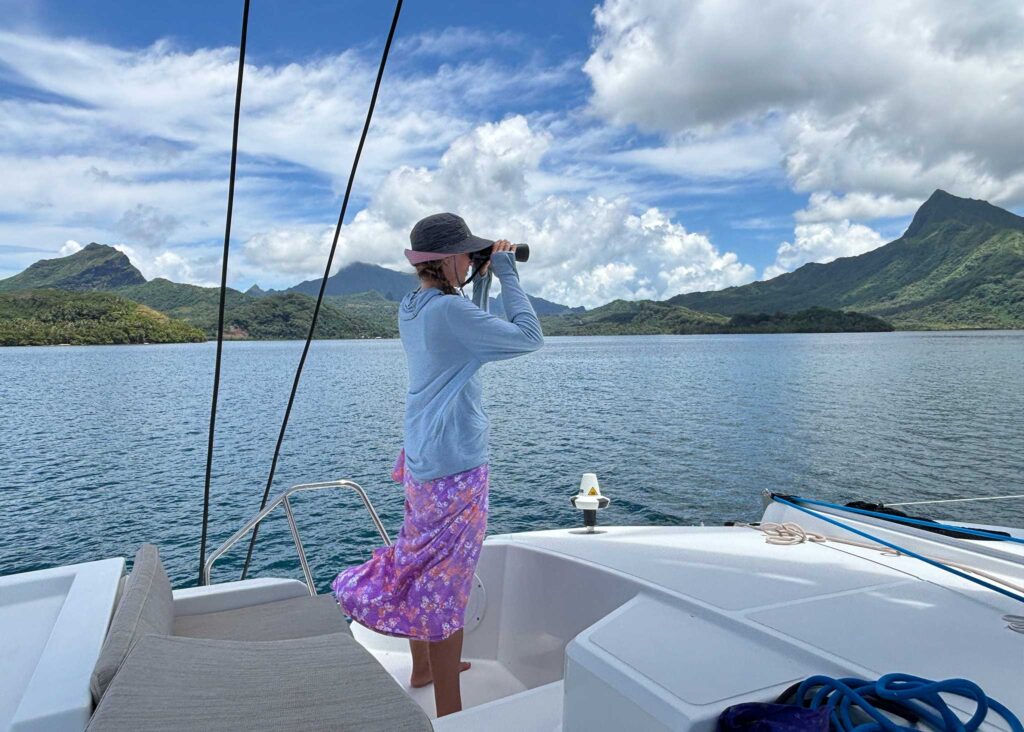
That evening as we ate spaghetti in the bow, we heard the slap of flesh hitting water. We grabbed flashlights, shining them on a pair of manta rays splashing along the dropoff 50 yards away. This time Rob dove in, taking a dive light with him. But he returned quickly. “The krill are so thick, I can’t see anything. It felt like sand pelting my body,” he said.
A couple days later, we shifted gears from wildlife safari mode to battening down the hatches. To wait out the 35-knot winds, we holed up in a deep bay on the east side of Raiatea at the mouth of the Fa’aroa River, the only navigable river in French Polynesia. We wandered the charming Haamene village between downpours, touring a vanilla farm, buying fresh tuna at the store, and ogling pink-hued Tahitian pearls in local shops.
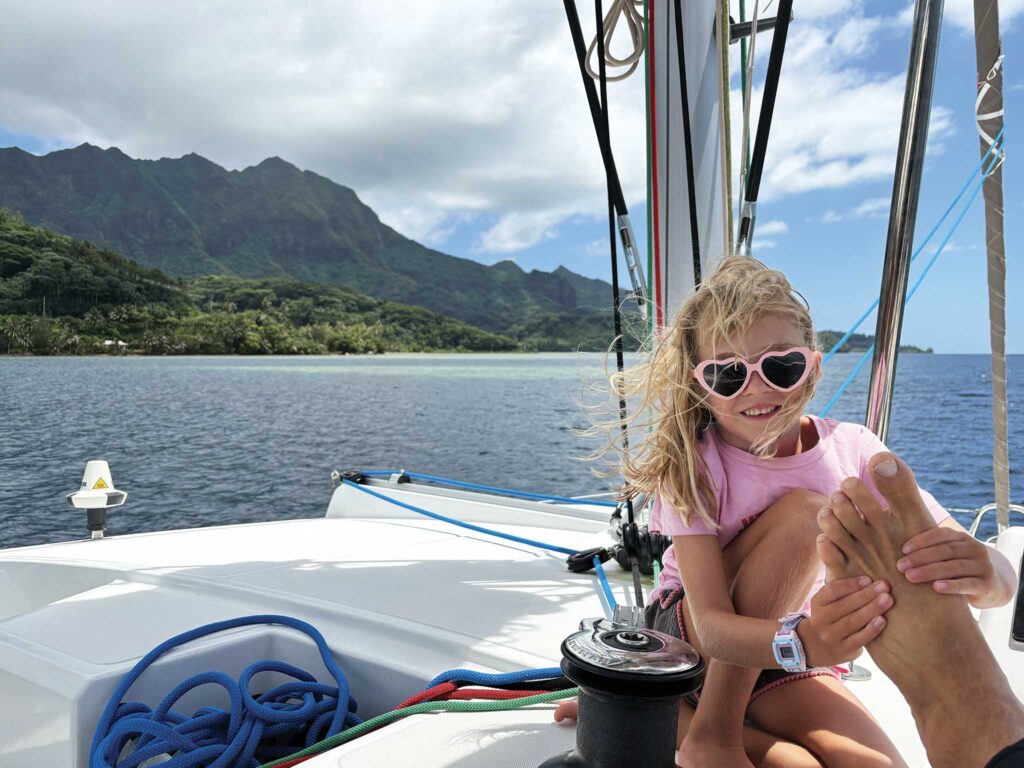
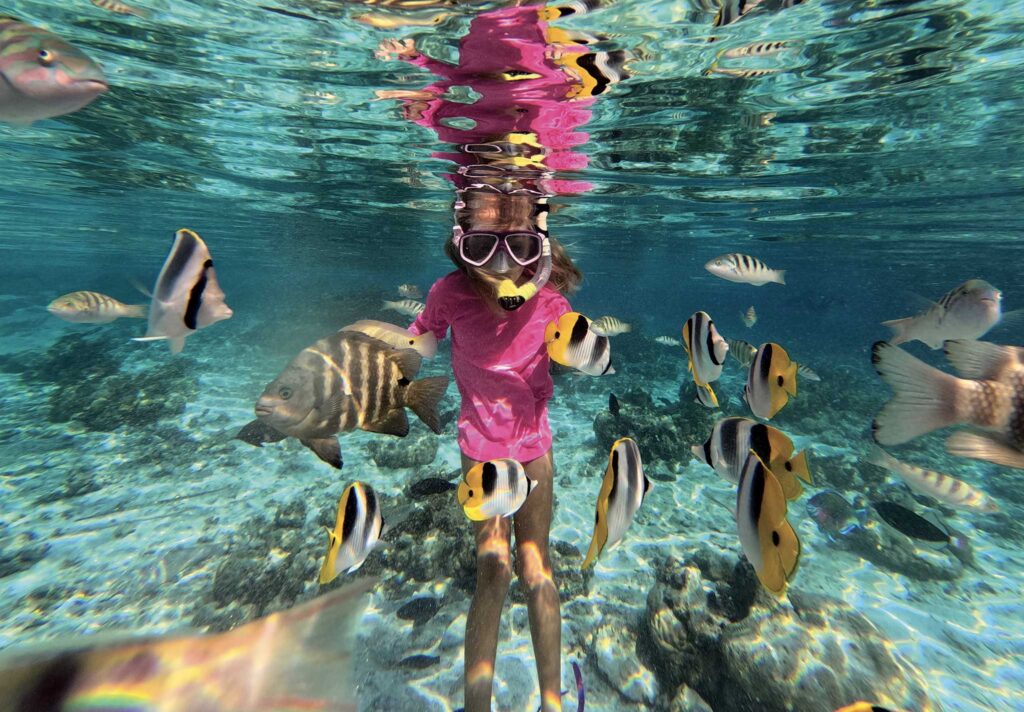
When the storm finally passed, we sailed north to snorkel in Taha’a’s famous coral river. The anchorage off a palm-studded resort held a half-dozen boats, but the jaw-dropping view of Bora Bora helped me forgive the crowd. We dinghied over to a shallow cut between two motus that funneled water from the outer reef. After walking a half-mile up the beach, you could ride the current across a shallow coral garden full of colorful fish. We took turns lapping the river, marveling at pink sea anemones, clouds of damselfish, and neon-purple clams. Lyra, new to snorkeling, spent an hour chasing rainbow wrasse that played peekaboo between her legs.
It was a lovely reminder that wildlife doesn’t have to be big to be breathtaking. “Top 10 swims of my life,” Dave announced, a bold statement from someone who lived aboard his dad’s sailboat in the Bahamas as a teenager. Andrea wiped away tears as she waded out, thanking us for introducing her to the reef’s beauty.
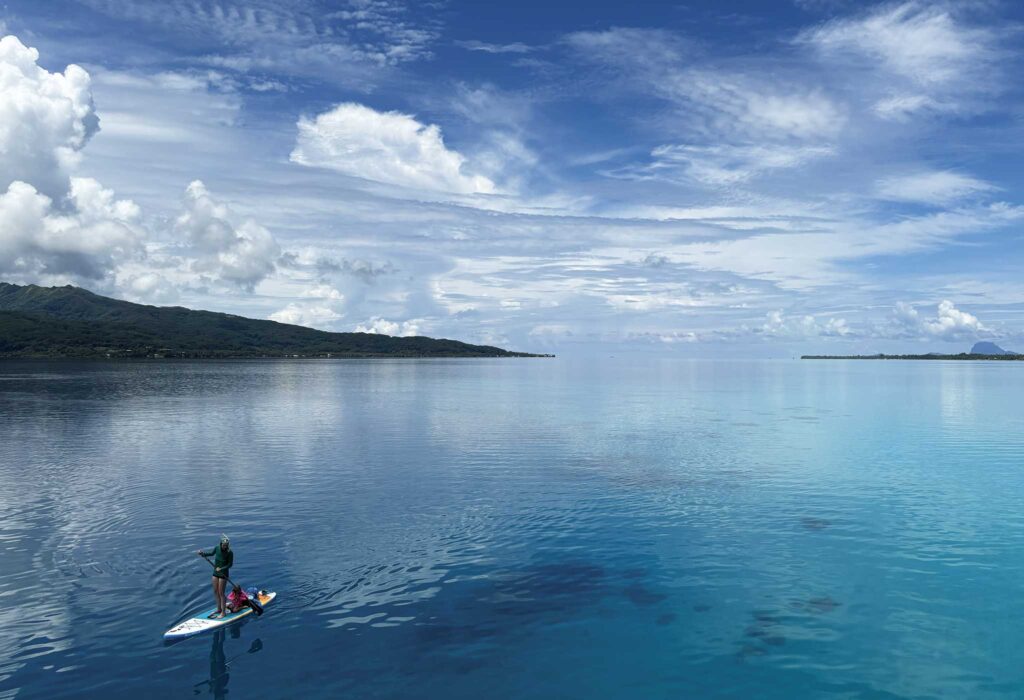
We swapped crew the following day. By now we were seasoned veterans of this lagoon, and we had my sister Cassidy, and her husband Ben snorkeling with turtles and stingrays within a few hours of their arrival. Lyra showed off her marine wildlife knowledge by pointing out pufferfish and parrotfish. Talon showed off his newfound freediving skills, effortlessly sinking 40 feet into the gin-clear blues as we watched him from above.
And through it all, we scouted for mantas. It had become a bit of an obsession, everyone hoping for a solid swim with the giant ray before we left. We had found a particularly promising reef with a steep drop on one side. The nearby anchorage was only safe in settled weather, so we waited until conditions were perfect. Rob and I took turns scouting in the dinghy during our second-to-last day aboard, finding plenty of turtles but no rays.
Until sunset. Cassidy, Talon, and I were swimming toward the reef from the catamaran, a last leisurely snorkel before dark, when our lucky manta arrived. This time, it didn’t swim away.
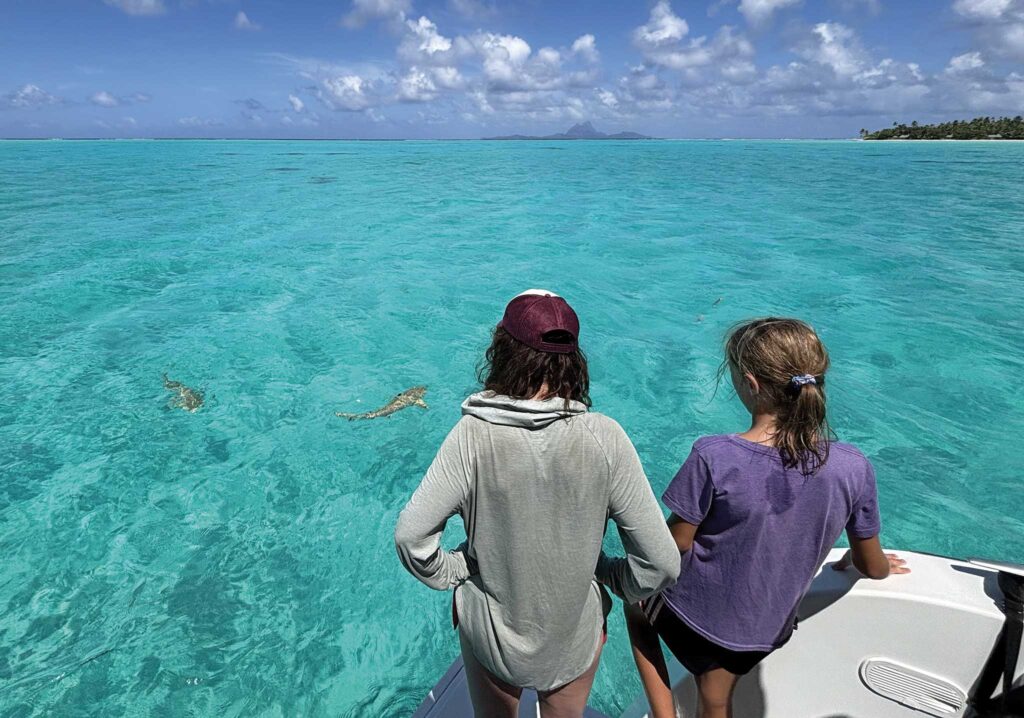
I watched in awe as the manta banked sideways like a Jedi spaceship along the underwater wall, flipping a loop to take another pass along the reef. The ray let us keep pace, and Talon dove again to be nearer. My heart swelled to see my son, dwarfed by its massive wingspan, cruising the reef in tandem with a majestic manta. I was mesmerized, oblivious to everything but the flight of the ray and my corresponding kicks. It could have been minutes or hours that we shared space with the manta before she performed an impressive slow-motion barrel-roll, as if waving goodbye before jetting into the deep. This time, I was the one who made the “mind blown” signal underwater.
The last night aboard, just after I turned off the bedside reading light, we heard splashing. We sprang from our berths, visions of mantas luring us topside. Instead, we found a fever of stingrays cavorting in the sand below us and a school of jacks foraging for baitfish. The sharks came in next, fins slicing the surface amidst the fracas. Everyone stayed up too late watching the moonlit megafauna, grateful to be a small part of the ocean’s endless, wild dance.
October 2025