When Bill Gates predicted that within a decade many jobs including teachers and doctors will be replaced by AI, you could hear the panic roll through the internet. The sky was definitely falling and with it our livelihoods. All I could think was, how would a writer and charter captain not become obsolete and starve in the world ahead?
I decided to investigate my competition. When writing a review of the same boat for the third time, I sometimes have trouble coming up with fresh ways to describe the same things without repeating myself. So, in my darkest moments, I’ve asked ChatGPT for ideas. Don’t judge me. I mean, who among us hasn’t tried it? What I found divided into 1) seeing my own words and test performance results come back to me verbatim from articles previously published, and 2) flouncy hyperbole that used marketing speak to generate 1,200 words of absolutely nothing. Google’s AI imposter even tried to suggest that “captainess” is a real word, and Microsoft Word refused to underline it in red.
Then, I tried testing more generic concepts and asked for AI’s lighthearted views on crewed charter. No kidding, this is what came back: “A crewed charter includes a captain, possibly a cook, and maybe a deckhand who look like they just stepped off a romance novel cover. They handle the sailing while you lie on deck with a cocktail and an expression that says, ‘I understand compound interest.’ ”
I’m not even sure how insulted I should be by that.
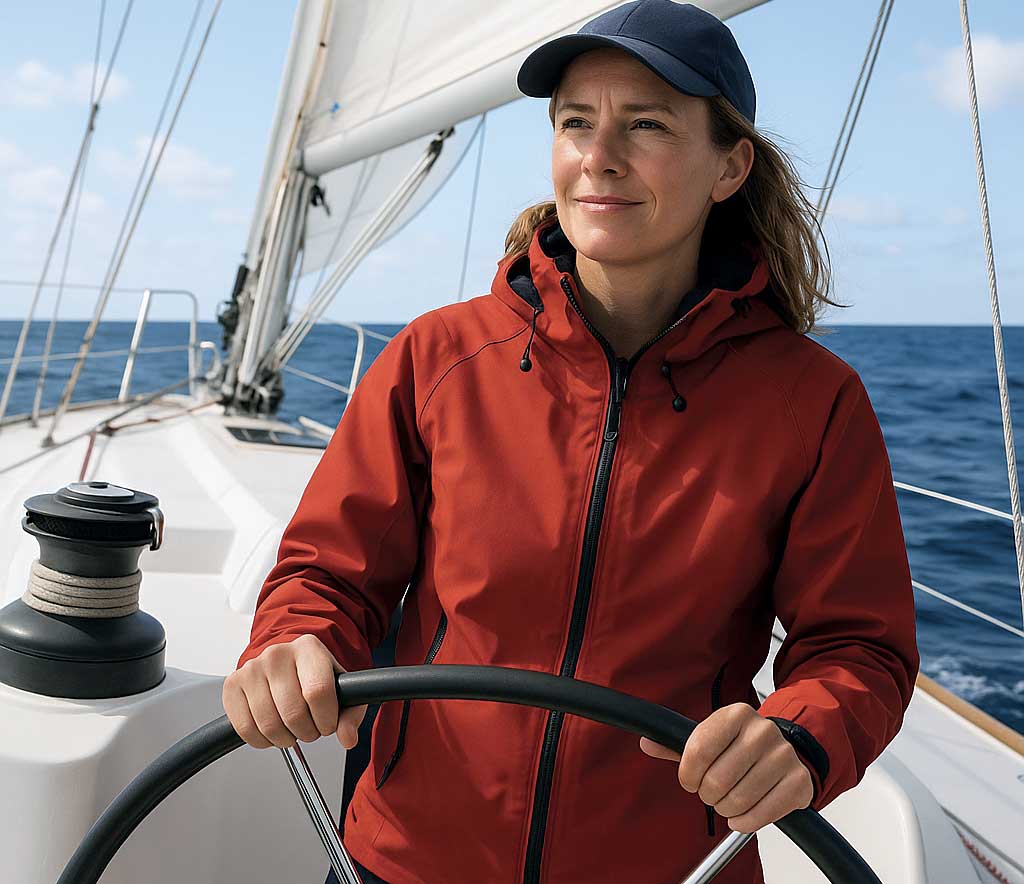
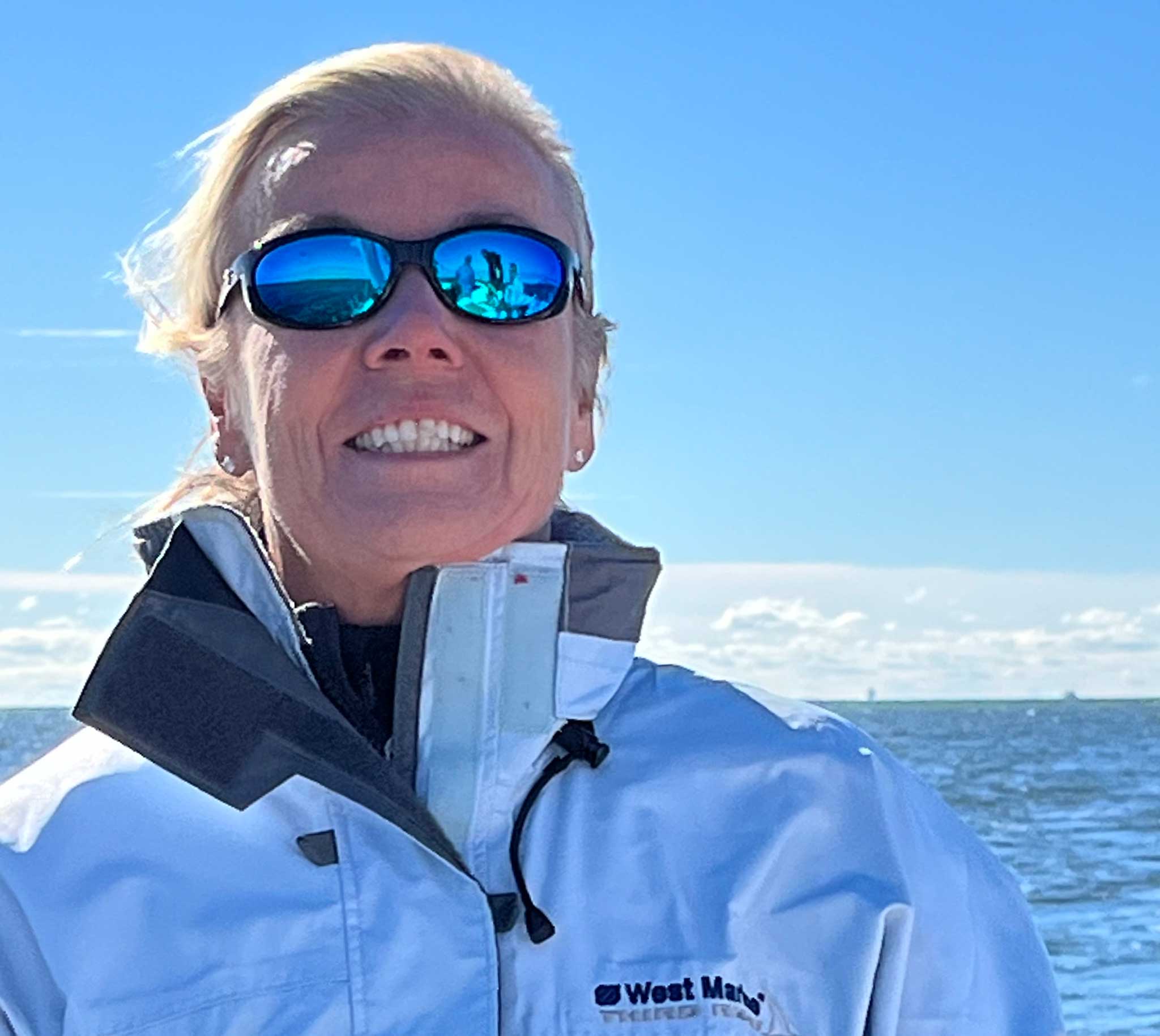
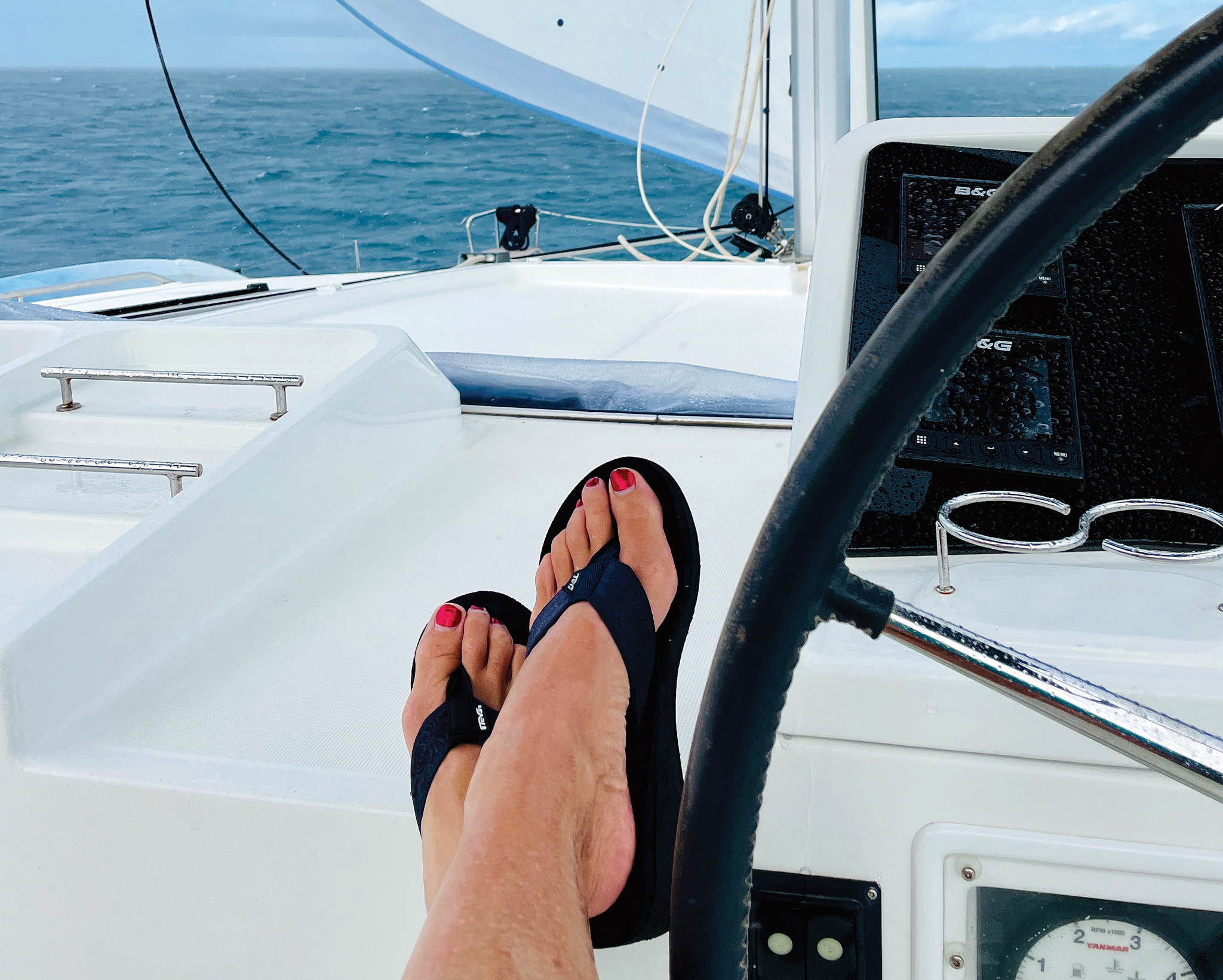
The results aren’t much better for AI generated images. My query for “female captain on a sailboat” yielded a fantastic result that made me feel fairly secure in my job (see photo). I kept asking for more images until ChatGPT cut me off for the day.
For most of us, AI is a mystery and the term is overused. Every incremental technological development including Photoshop is now referred to as AI. Improvements in gyrostabilization and charting software have suddenly become AI. Everything people don’t understand is attributed to AI because when confused, it’s best to lean into a buzzword to sound smarter and hipper. Most people can’t define the concept and frankly, its use is maddening.
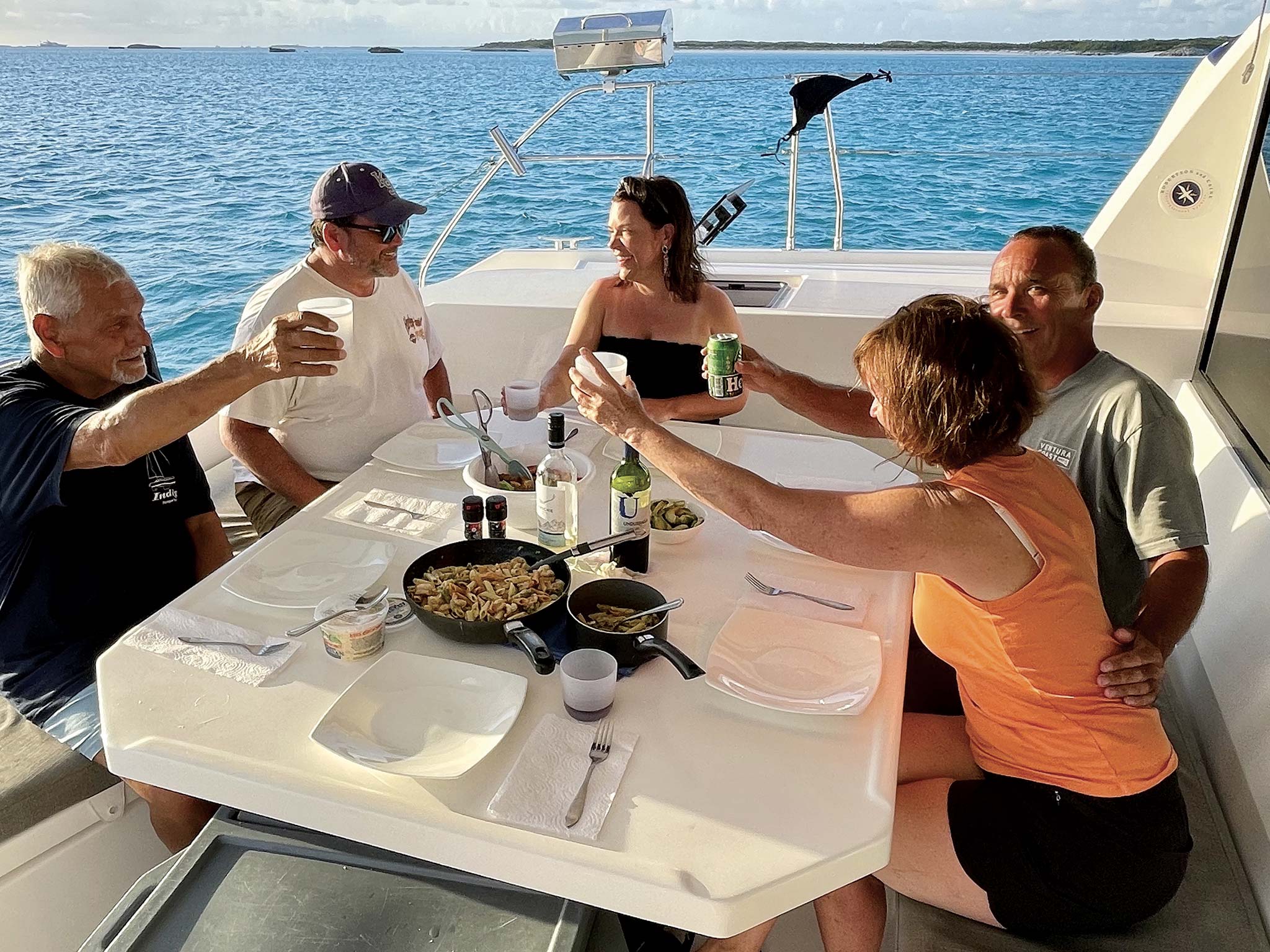
Still, the prospect of a robot world has made me trepidatious, so I decided to explore my own differentiators. I found there are things that AI can’t or won’t do. It can’t tell just from someone’s expression that they’re about to open the jammers and sizzle the skin on their hands as the genoa sheet runs away from them in a blow. It can’t grab the outboard tiller based solely on instinct to stop someone from driving under an anchoring catamaran. It can’t write an original boat review without feeding on someone else’s work first. AI won’t catch a mooring in the pouring rain, climb the mast to untwist a halyard, or spend two hours treading water trying to get someone to master a SUP. AI is not human, so it doesn’t make foredeck happy hour happy, and it doesn’t dive in when someone, who’s misrepresented their swimming skills, flips a kayak. AI anticipates little and sacrifices even less.
In sailing, the line blurs between what’s technological progress like self-docking boats, and what’s real vessel self-awareness, which is altogether alarming. Better cartography, adaptive autopilot, and radar that responds to changing hazards to navigation are all real today and have made boating better and safer. But is it artificial intelligence in the strictest definition? There’s a difference between what is “useful” and what is “intelligent,” and that’s where humans still shine, moreso if they’ve learned to use these helpful tools. Neural networks may be on the horizon, but even they can’t offer emotional support to someone who’s just gulped down a bucket of saltwater while learning to snorkel.
So, is AI coming for our jobs? Absolutely. Is it a shoo-in to replace a doctor, teacher, charter captain, boat tester, or even sailing columnist? Not likely. Not now at least. However, AI’s capabilities are improving quickly, so I’d best brush up on my skills and differentiators to keep a step ahead of the thundering changes headed our way. In the meantime, I’m going to have fun making AI work on ridiculous projects because the results speak for themselves, and I sure could use a good laugh right about now.
August/September 2025