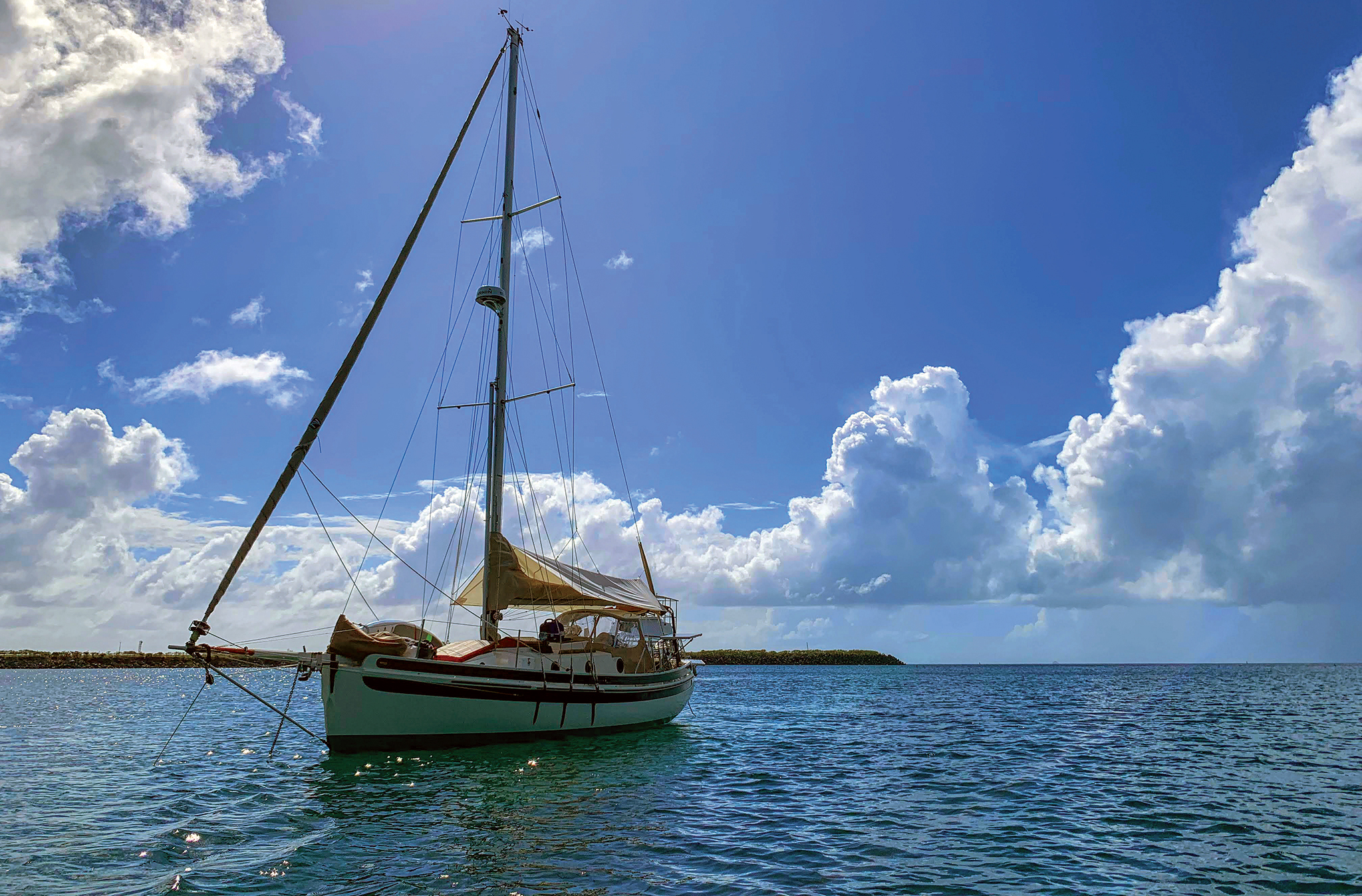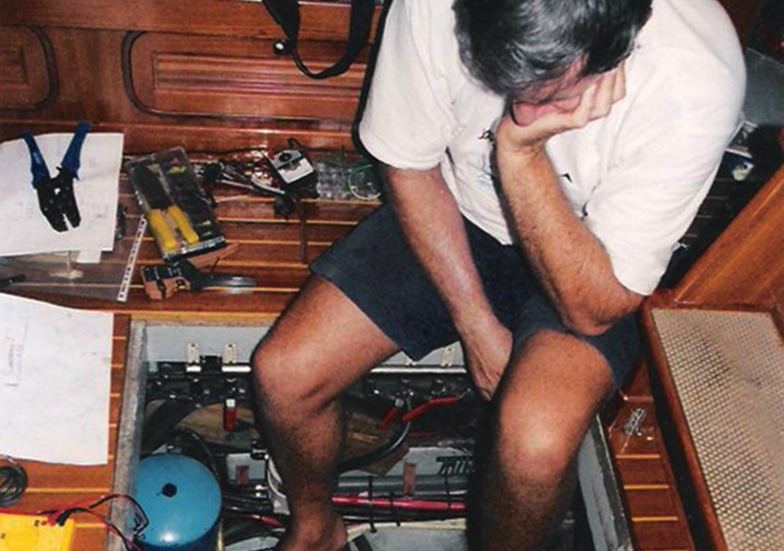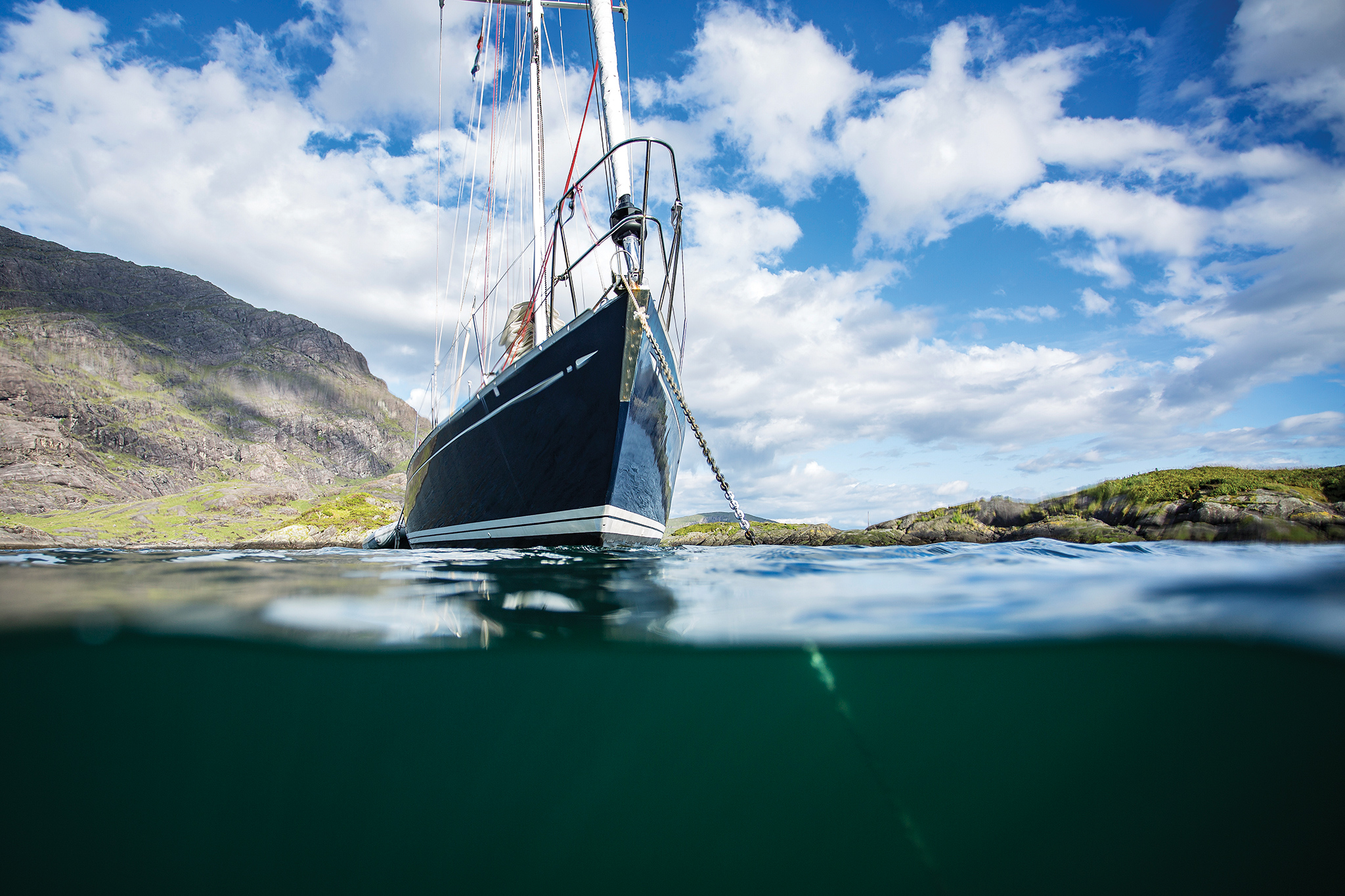
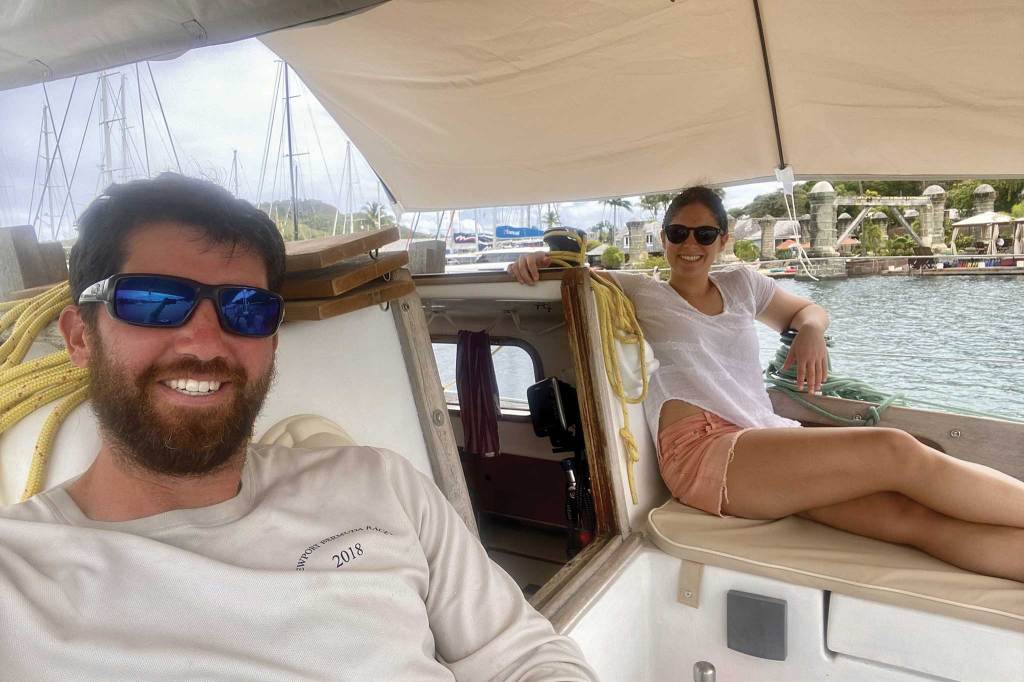
It was the eve of Thanksgiving and hot. Really hot. Caribbean hot. I had just finished a passage from the Chesapeake to St. John in the USVI. Even giving myself fifteen days to acclimate, from the encroaching winter in the mid Atlantic to where I was now, was not enough. Sitting on the mooring, it was stifling below deck as I endeavored to tackle a few modest repairs.
The consistent beam reach for the prior three days carried a refreshing apparent wind and even early morning, in the lee of the land while clearing customs, had been comfortable. Now it was even too hot for a nap. Air conditioning would have been a treat, but there wasn’t any onboard and it didn’t fit with an off-grid cruising mentality anyway: the energy draw would have easily exceeded the solar generation capacity. Not to mention that Ben-Varrey has never been the type to run a generator and ruin a beautiful anchorage.
As my mind wandered to the cooler miles that lay behind me, a puff caught my sweaty cheek and offered some hope. More ventilation would be key to survival in my latest environment. Ben-Varrey is well-equipped on this front but needed some adjustments. Good ventilation, regardless of the boat, is crucial to comfort onboard and keeping a cabin fresh. Here are some of the best ways to maximize air flow and what I turned to first:
Dorades
The first line of defense against stale or hot air, even when underway, is a nearly 100-year-old technology: dorade vents. A scoop pointed into the wind collects fresh air and a box with internal baffles routes it below deck; meanwhile, any spray or rain that enters the cowl escapes through limber holes and is prevented from entering the cabin. Rough conditions with decks awash will call for these to be sealed, but otherwise dorades serve as a flexible approach that can be used even when away from the boat (and they’re most effective at anchor or on a mooring). Cowls can even be turned to face opposite the wind to serve as an exhaust port instead of an intake. Interesting adaptations can be found across new builds, such as the X-Yachts Xc47, where low-profile scoops and baffles are hidden in the sides of the cabin top and provide fresh air to the salon.
Solar Vents
When the wind drops, solar vents keep moving air. A horizontally mounted low-profile baffle accepts or exhausts air using a small fan. They’re powered by an integrated battery, charged by a small solar panel on the top of each unit. They can be sealed off in heavy weather and are intended to run through the evening: a fresh battery and plenty of sun help. Air flow is limited when compared to the potential of other solutions, but the consistency is unrivaled, especially when away from the boat.
Hatches and Portlights
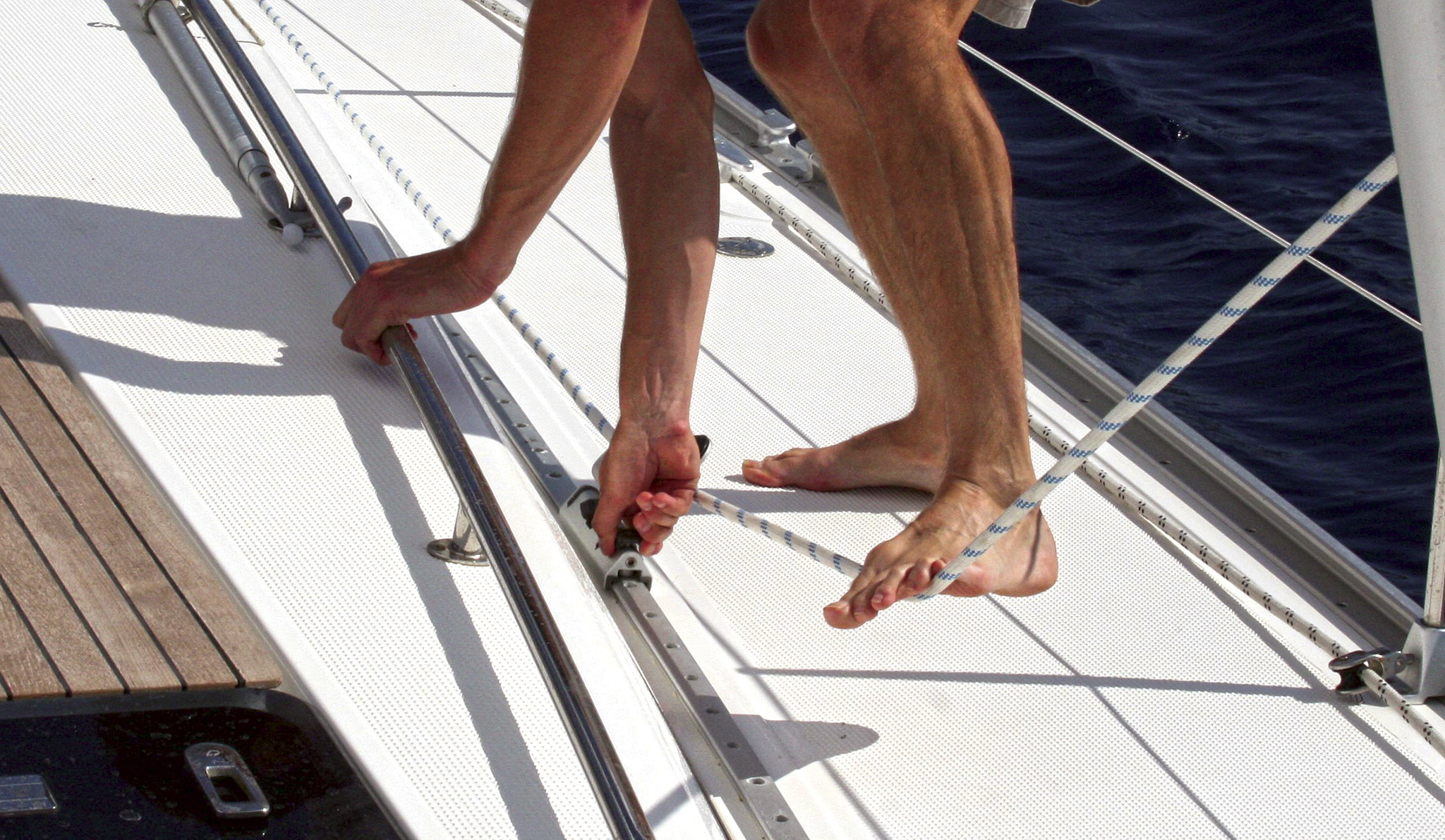
Opening hatches and portlights provide maximum air flow volume, but requiremild conditions underway (watch out for snagging lines too). At anchor or on a mooring, where spray is less of a concern, stronger weather can be tolerated. Lighter winds can be concentrated with a wind scoop: a nylon fabric extension of the hatch opening that funnels a larger cross section of wind into the same opening. Keep a lookout for rain or maybe install port visors to at least keep ports open through all but driving rain.
Docks present a problem in that the bow isn’t always into the wind, but newer vessel designs feature flexible and more populated hatch patterns that allow for opening hatches in different directions. Try removing screens, when there aren’t any bugs, for better airflow.
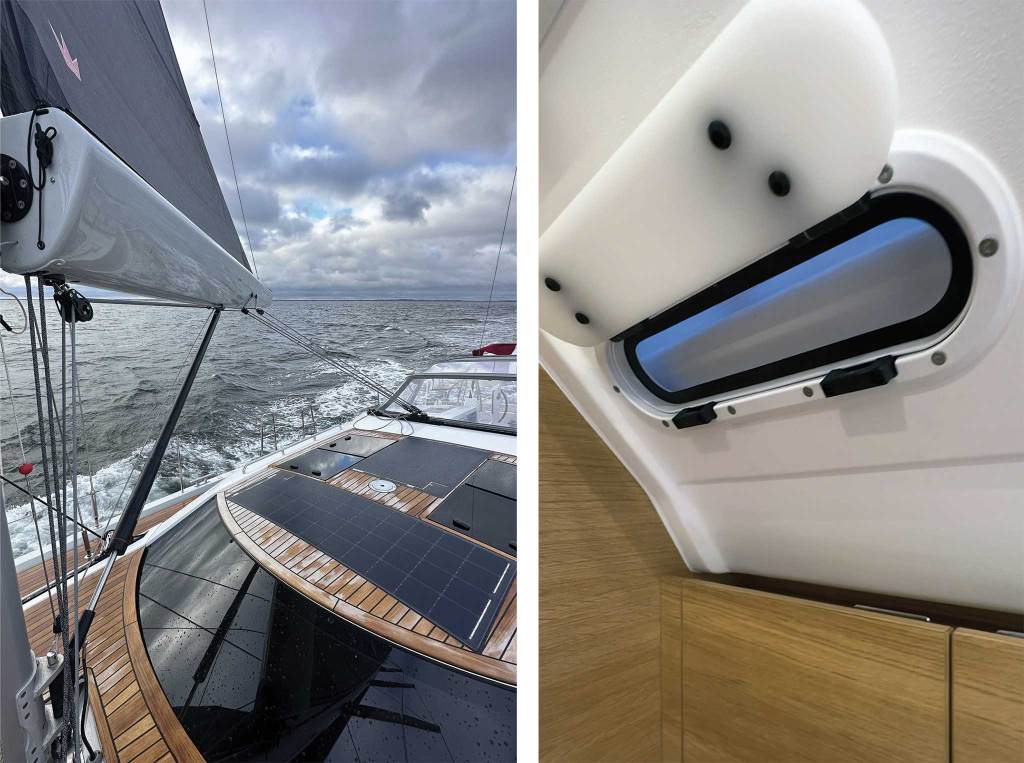
Fans
Circulation can be encouraged by keeping air moving through the cabin in productive directions. Fans provide that extra boost. Fans also serve to orient fresh air in directions that natural ventilation may miss, such as a settee or bunk. Most are low power consumers in fixed positions, with some offering variable speeds to match the conditions. Onboard Ben-Varrey, we bolster the fixed collection by including a powerful rechargeable fan—we can clip it virtually anywhere for more flexibility.
Operations
Consider modifying routines. Using the oven or stovetop will only add to the discomfort below deck on a hot day. Instead, time stove use for cooler hours and consider adding a dedicated exhaust fan for the galley. Engines and generators are another culprit—avoid running them, or at least insulate their compartments from the rest of the cabin. Dedicated intake and exhaust air will also help isolate their impact. Even the collective effects of inverters, transformers, chargers, and computers can add up.
Insulation and Canvas
Insulated cabins, especially on sunny days, reduce the heat transmitted through the hull and deck. Cored decks and cored hulls provide similar benefits, just like cork decking.
Canvas shades shield the deck from the sun and not only provide a cooler cabin, but also comfortable open-air space. An effective sunshade will be open on all four sides but provide broad protection from above. Consider one forward and one aft of the mast. When a dodger is extended with a bimini, open the middle panel of the dodger. Folding down any dodgers will provide the best airflow and will still protect against rain if the shade extends forward far enough—just be ready to take these shades in if a squall rolls through.
A combination of these ventilation methods is ideal. Just like anything else on board, each carries its tradeoffs. Consider the layout and ensure one venting option isn’t blocking another. And exhaust is just as important as intake—the companionway acts as a wonderful exhaust path. Sprayhoods can be a strong addition for aft-facing hatches to maintain their exhaust capabilities when it’s raining.
If these all fail, change another variable: location. Be strategic about where you anchor. Swinging to the strong trades and tucked behind a reef of low-lying land mass is a far more strategic position than being anchored in the lee of trees and hills.
Even with best practices in place for venting a cabin, some climates are just too warm for it to be comfortable. Open a cold drink or jump in for a swim!
This article was originally published in the June/July 2026 issue.