Photos by Tom Cunliffe
Semantics – Chain or Rope?
In the golden age of our sailing navies, a “cable” was the huge rope used for the bower anchor in those pre-chain days. Cables were made up of three massive ropes laid together, each of which was spun conventionally with a clockwise lay just as three-strand ropes are today—and woe betide any non-sailor caught trying to coil one backwards. To form the cable, these ropes were laid together anticlockwise so as not to fight the original lay, which means “cable-laid” rope naturally coils backwards—“against the sun.” A cable in John Paul Jones’ day was one tenth of a nautical mile long, which is why 200 yards is sometimes still referred to as a “cable.”
Today, paying due respect to tradition, anchor chain is generally referred to as “cable” or perhaps as “chain cable.” To call an anchor rope a “warp” is a misnomer. A more seamanlike name for this is “rode” unless, of course, it happens to be a cable-laid, left-handed, proper job.
Sort Out the Echo Sounder
Every time I charter a boat I’m disappointed by the echo sounder. Typically, its reading is glibly described as “depth under keel,” with “a bit added for safety.” What sort of safety is it, I wonder, that sends sailors to sea not knowing how deep the water really is? We’re navigators as well as skippers. The sounder is a navigational instrument, not some sort of idiot’s “Get out of Jail Free” card that announces with a hateful buzz whether we may or may not be running aground.
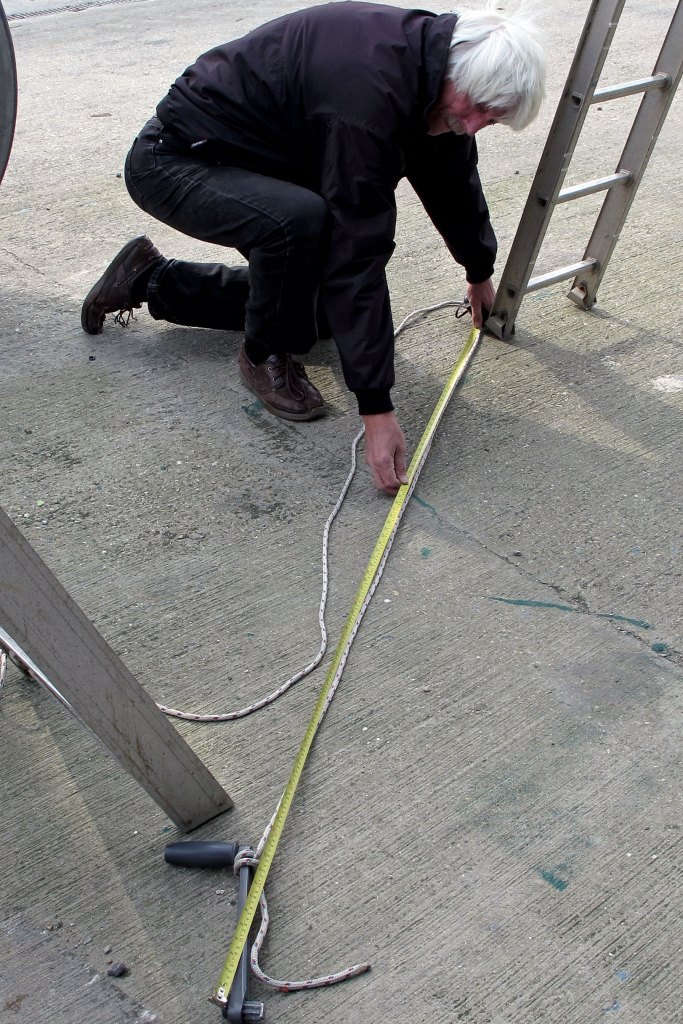
Sounders should be calibrated so that we can quickly apply tide height to reduce the reading to soundings. We can then relate it to the chart. If my yacht draws six feet, she’ll run aground when it reads six feet. What could be clearer? In the illustration, I’m measuring the real draft of a boat, not something on a broker’s handout which could well be wrong. There’s no lead-line so I’m using a length of rope weighted by a winch handle lowered from the waterline. I also measured the depth of the sounder transducer and calibrated the readout to “depth of water.”
No More Condensation
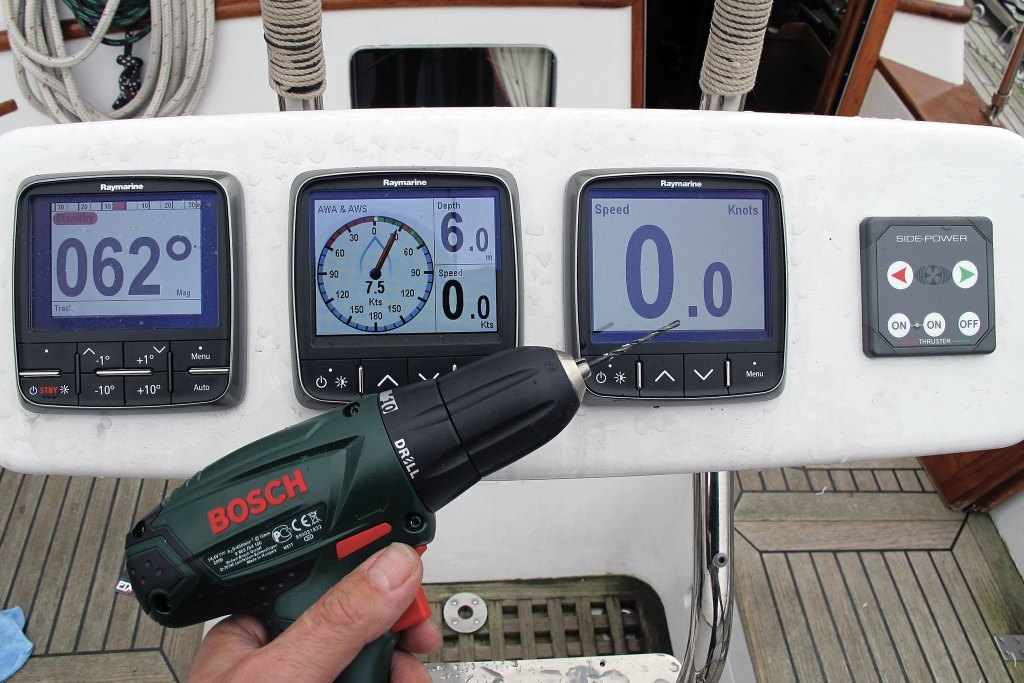
Problems with misty instruments? Most of these are waterproof from the front but not the back. If they sit in a cockpit pod and they’re misting up, the pod is probably leaking. Open it up, dry it out, and drill a few holes at the bottom to let any further water out. 2mm is about right. Give the holes a tiny countersink on the inside to prevent water hanging up on the meniscus.
An Unexpected Downside
There’s much to be said for the Saildrives many of us now have, especially the folding prop that usually comes as part of the deal. There’s one practical drawback. They aren’t great for maneuvering under power. Site a prop just forward of a decent rudder, blast her ahead for a couple of seconds and the boat will stand up and beg as the burst of water slams into the blade. Hold her astern and the prop torque will pull her into the turn from its leverage point well aft of the keel. A Saildrive is closer to the keel and further from the rudder so these effects are lessened. There may also be anything up to a two-second delay between shoving her ahead and the millstream reaching the rudder, so don’t expect wonders in the marina if you’re changing to a Saildrive. If you have twin rudders too, you’ll just have to keep way on until the last minute.
This article was originally published in the October 2026 issue.