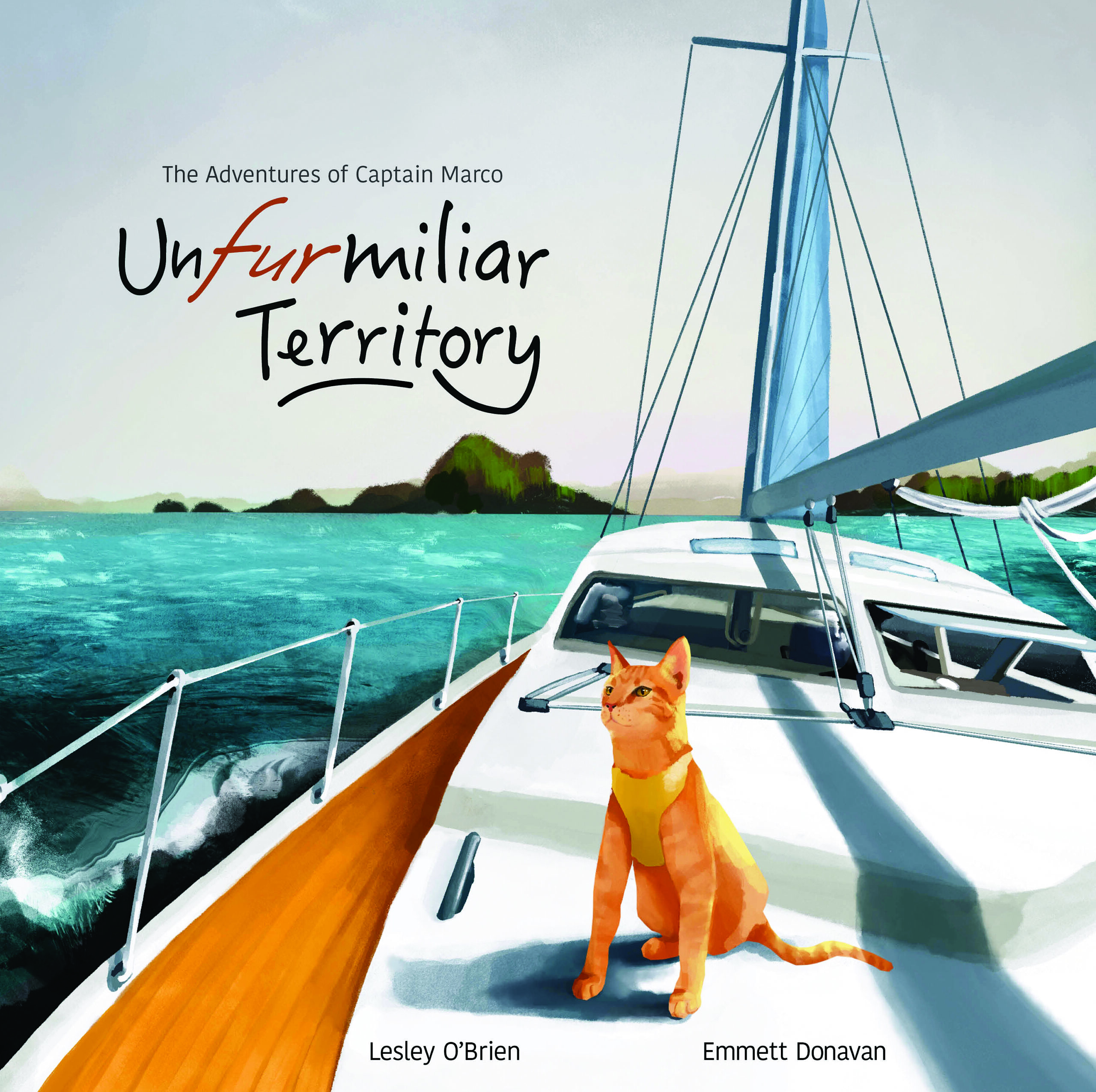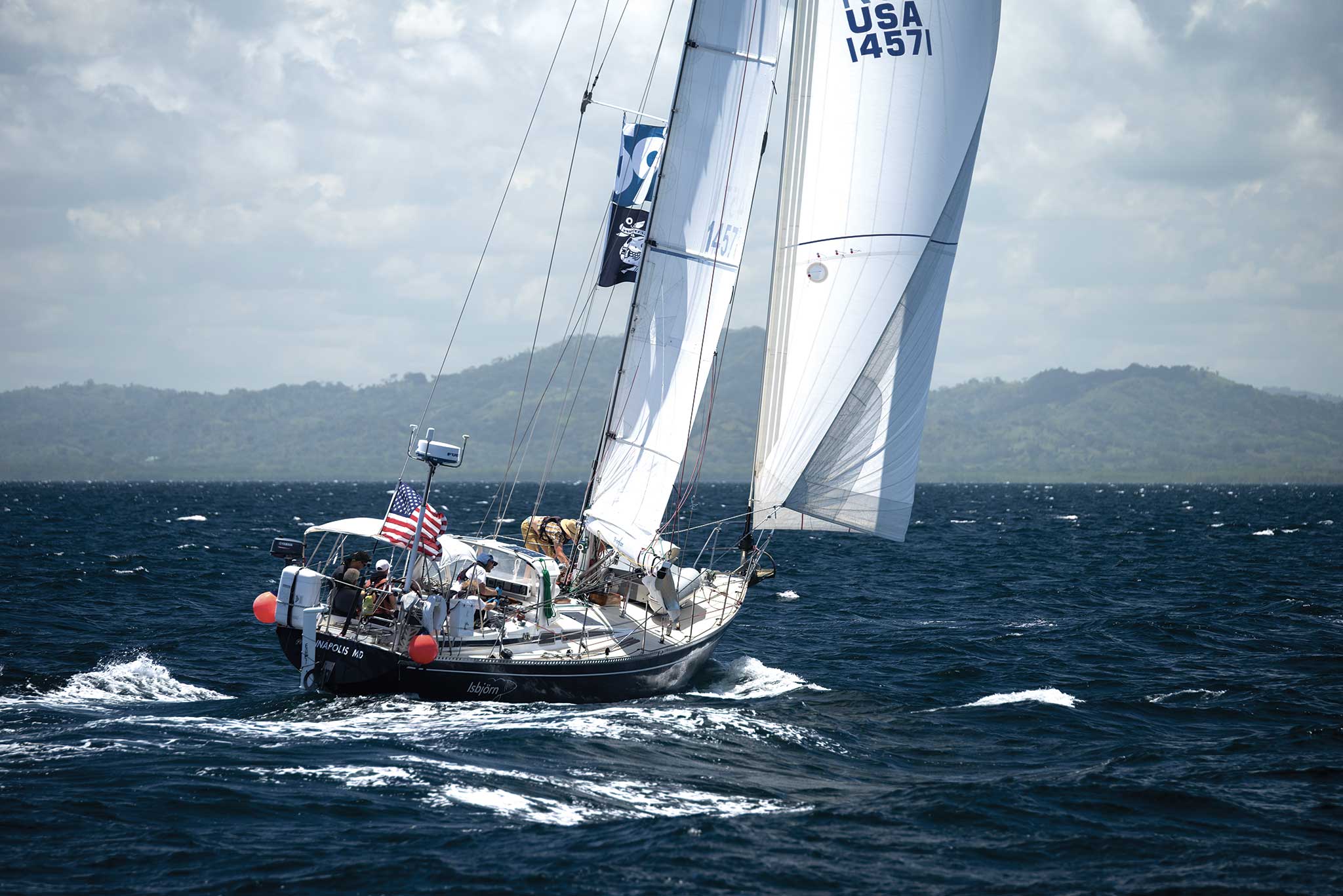
One of the greatest assets a crewmate can possess is the ability to project calm in any conditions—and so, when we’re sailing our 52-foot Amel and get into some rough seas or spend an anchor watch spinning in gnarly weather, it’s always reassuring to turn to Marco. A master of chill, he’s our boat cat, and as long as he isn’t bothered, my partner Chris and I figure we’ll be just fine.
And we aren’t alone. Maritime history is rich with stories of shipboard cats, and sailing has made contemporary social media stars out of many nautical kitties. Our feline companions possess a unique set of qualities that makes them well suited to a life afloat, which can all be explained by brain science.
Your cat is a gimbal. A very agile gimbal, thanks to their superior vestibular system. Deep within the inner ear the vestibular apparatus communicates with an area at the base of the brain (the medulla) through highly specialized nerve cells and receptors. Appropriately, fluid filled canals of the inner ear contain highly sensitive receptors and facilitate incredibly fast neural processing. All of which allow the integration of positional information with the senses for cats to seamlessly navigate complex environments. On a boat, your cat can squeeze through tight spaces, quickly change direction, and keep their head rock steady, all during unpredictable motion, while we humans fumble around trying to remember the “one hand for the ship, one for me” rule.
The precision of your favorite feline’s movements also makes them resilient sailors. While cats experience motion sickness, they are less susceptible than their humans (or dogs), and when they do it is more associated with the stress of travel. Seasickness is a result of conflicting signals between the eyes and vestibular system. As a boat moves so does our body. Yet our eyes register a stable scene of the cabin around us. This perceptual incongruity signals the brain to release a cascade of stress-related hormones, leading to the familiar and uncomfortable nausea and vomiting. Most of us adapt as we spend time at sea, the first few days often being the worst. This adaptation is what cats excel at. Their ability to process motion more efficiently through their superior vestibular system means they naturally adapt much faster.
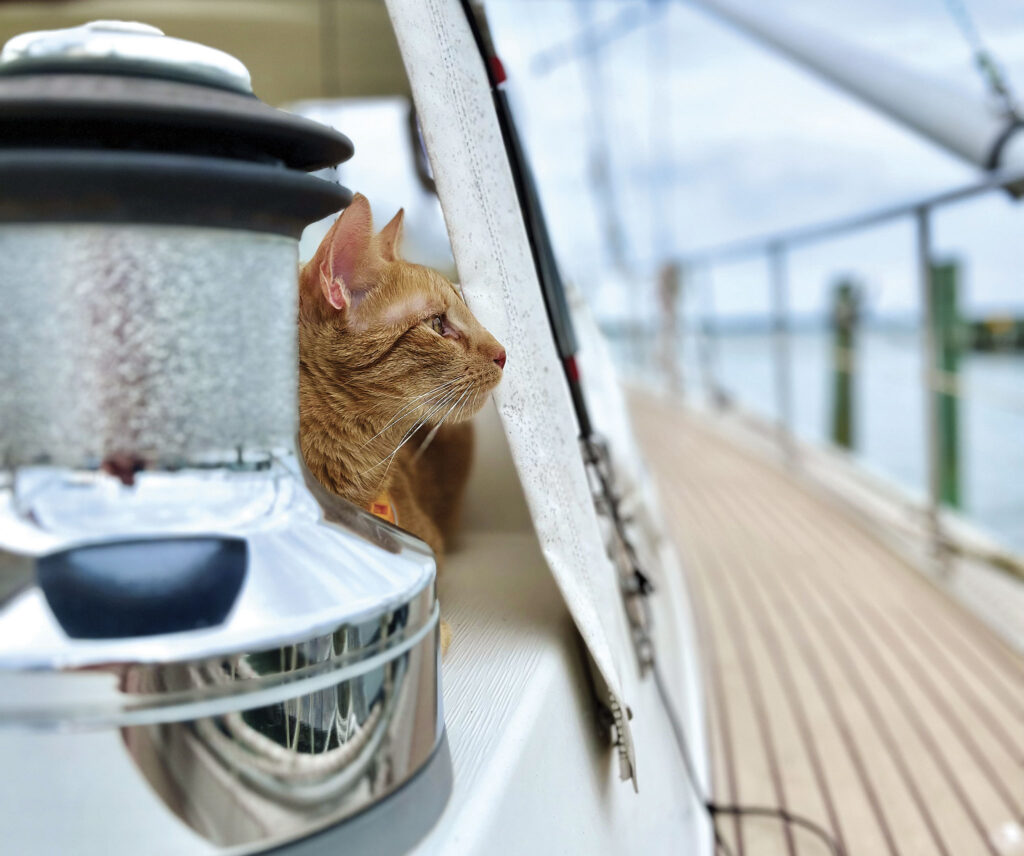
A weather furcast you can trust. You might also want to consider putting your moggy in charge of your weather routing. If you notice your small furry sailor grooming behind their ears, looking more fluffy, or trying to find a place to hide, it might be time to batten down the hatches (it could also just be Tuesday). Their inner ear as well as their whiskers are particularly sensitive to changes in barometric pressure. They can also smell rain and even lighting from great distances with up to 200 million scent receptors in their nose (compared to 10 million for humans and 300 million for dogs), as well as having their own special scent organ in the roof of their mouth (the vomeronasal organ).
Sea legs with paws. The fine motor control required to navigate rolling decks isn’t just about fluffy ears. The area of the brain indispensable for movement and balance, the cerebellum, is larger in proportion to a cat’s body weight than ours. Combine their superior proprioception with a more flexible spine, and their ability to change their moment of inertia with a flick of their tail or a stretch of a paw, and the result is their famously impressive righting reflex. If they do fall from a height, odds are they’ll land on all four paws and still be ready for their next watch.
Cats and pirates, both rulers of small territories. Cats are often thought of as less adaptable than dogs because of their sensitivity to change, preference for routine, and strong territorial instincts. But all of these things also make felines comfortable in a small territory like your boat. A cat’s limbic system—areas of the brain that regulate fear and stress—are intimately connected to their senses, specifically scent. A cat might rub their face pheromones not only on you, but also all over the surfaces of your boat. Your cat “sees” your boat as their territory through the use of a giant sensory map. The lack of territory overlap as well as the consistent rhythms of life at sea can create a stable familiar world for a budding boat kitty.
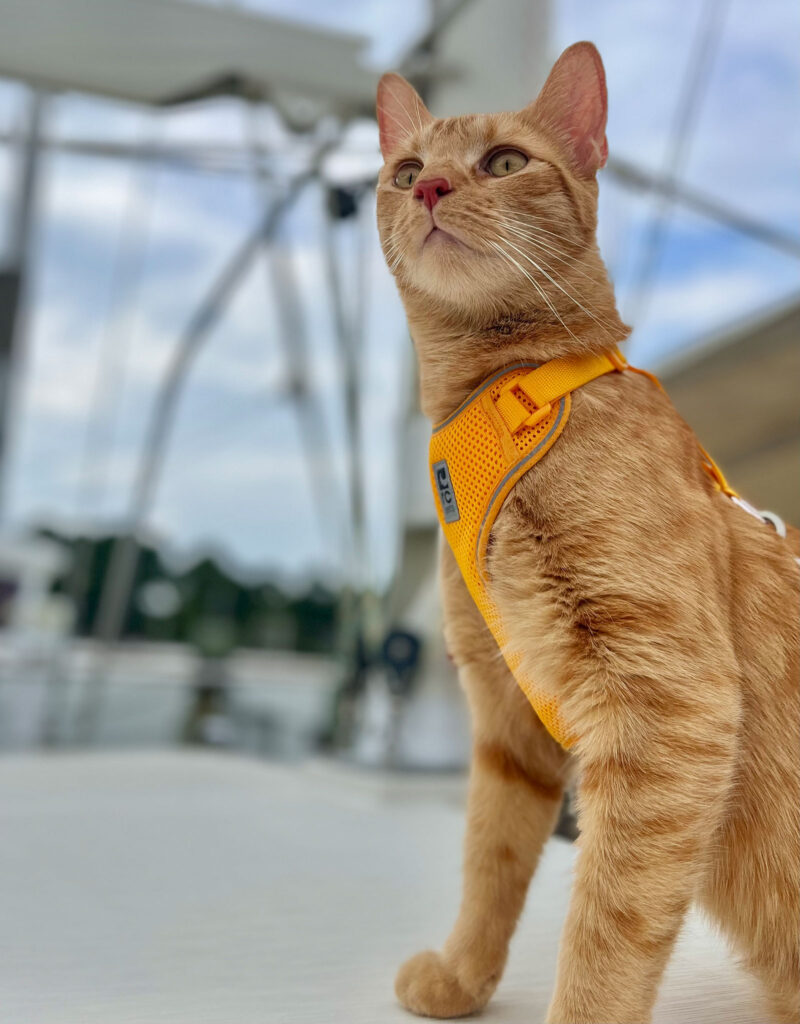
Purrfect symbiosis: human health and cats onboard. The usefulness of cats hunting ships’ vermin may be less relevant today, but never underestimate the utility of the ultimate predator keeping a cockroach population at bay. Cats see in ultraviolet ranges, letting them pick out prey from a similarly colored background. Their night vision (six to eight times better than ours) comes from their increase in retinal rod cells, also responsible for a higher “refresh rate” allowing them to identify movement incredibly fast. Combined with a larger visual field, all of this means they can hunt efficiently in small dark boat corners.
Not to mention the benefits of furry companionship. Petting your cat releases oxytocin, dopamine, and serotonin, and reduces cortisol, all associated with stress reduction, lowered blood pressure, positive mental health, and fewer general health complaints. And, the low-frequency vibrations from purring help promote bone healing and are at a frequency used therapeutically for pain, oedema, and shortness of breath.
So, whether you believe the superstition that a cat approaching a sailor brings good luck or not, it cannot be a coincidence that both do not want to be around bananas, have a checkered history with citrus fruits, and would rather stay afloat than find themselves in the water.
June/July 2025