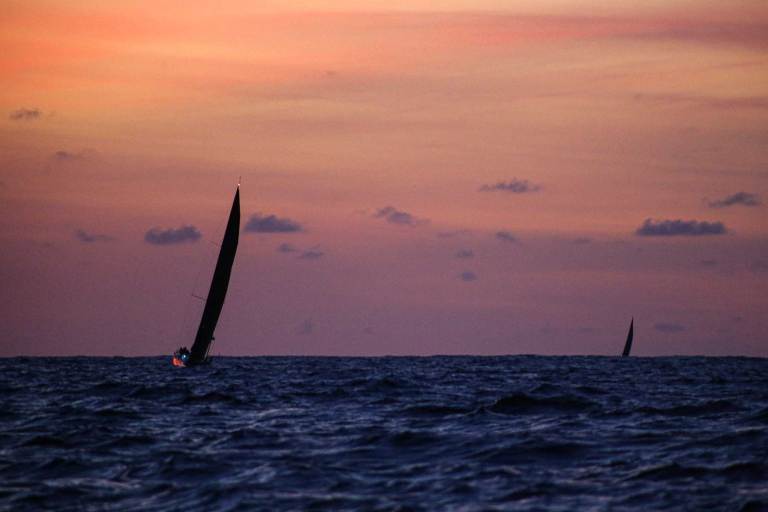
I knew there was going to be a big blow. I just didn’t know how dangerous it was going to be.
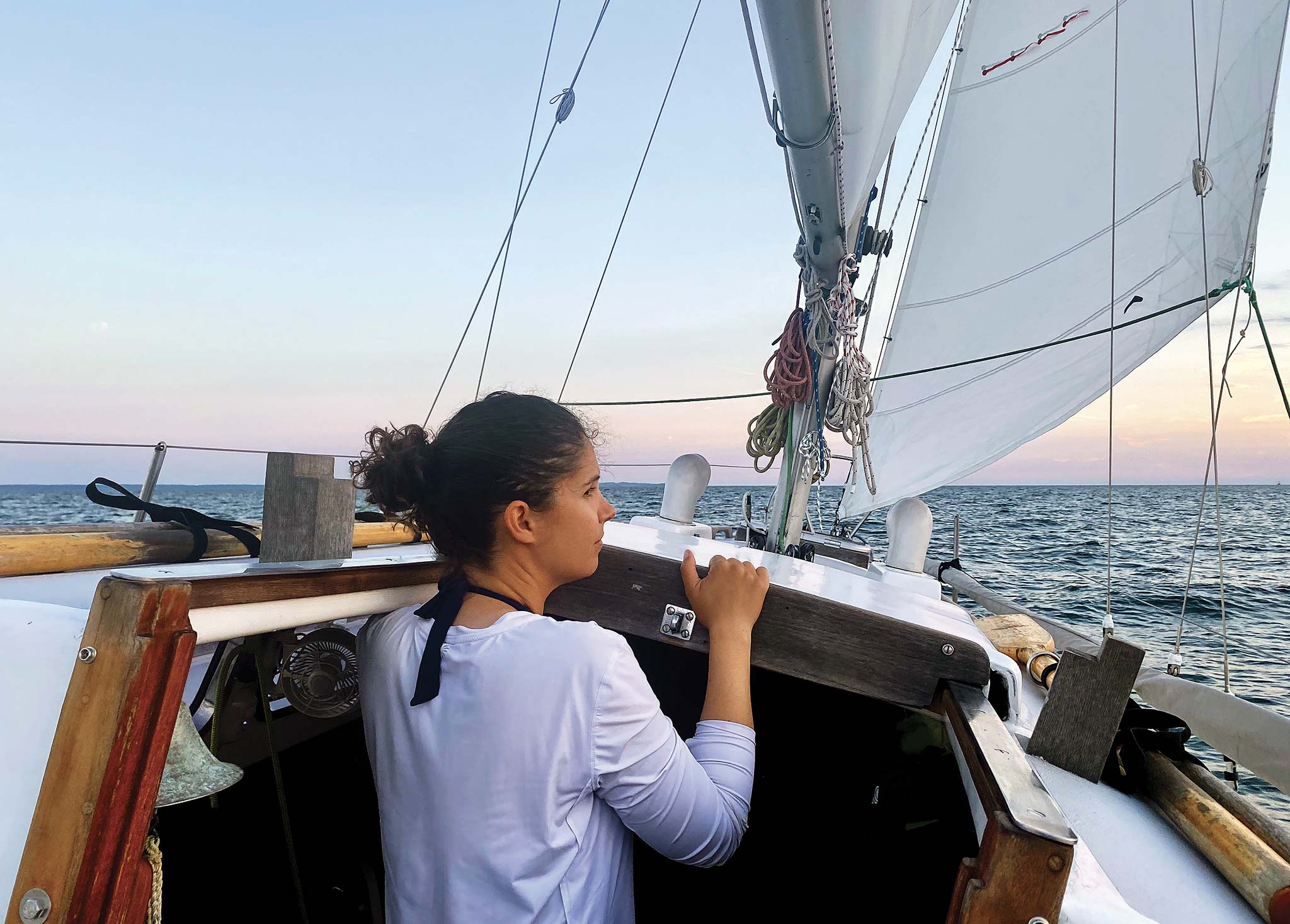
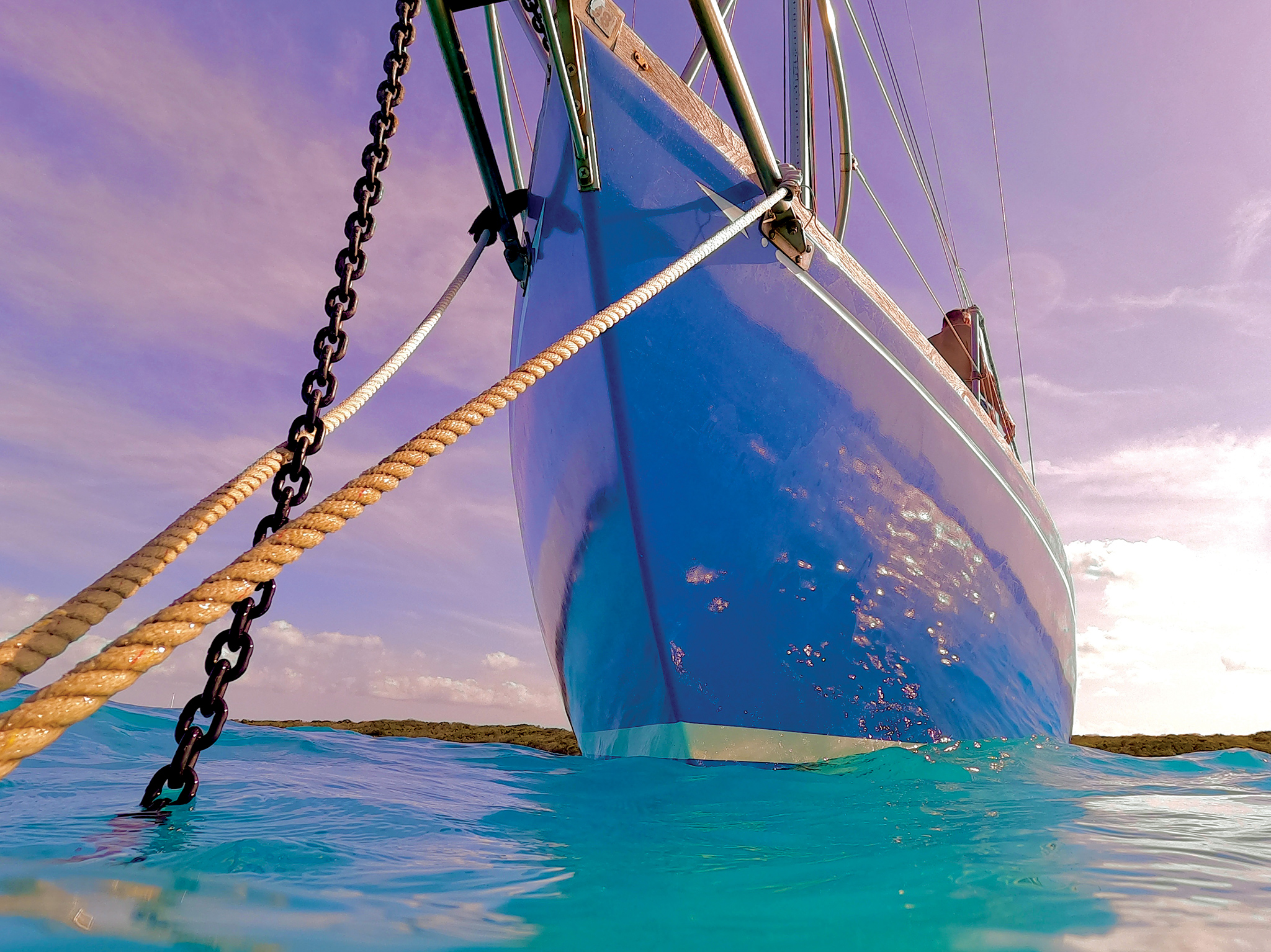
I had been cruising the Florida Keys in my Herb Stewart-designed West Wight Potter 19, Shorty, for nearly a month. The Potter is a trailerable sailboat, designed and built for cruising. With the lifting keel extended, the boat draws three and a half feet, but with the keel raised and the rudder removed or raised, it only draws 6 inches—perfect for the shallow waters surrounding more isolated anchorages.
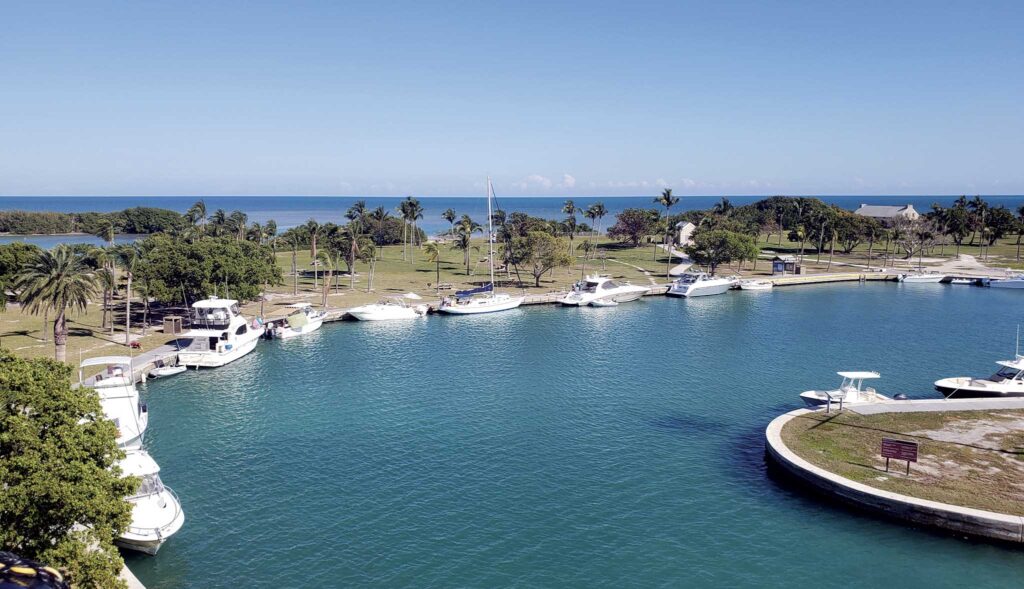
The storm had been predicted for days, and it was going to be complicated. The wind was going to start strong from the west, then clock around to the north and get even stronger, and finally come out of the east, still blowing hard. That’s why I chose a bay that was enclosed on three sides. The fourth side was open to the south and the Straits of Florida with only a long bridge separating me from Cuba. The wind was not going to come from that direction, so no problem. I had lifted the keel but left the rudder attached, leaving me with about a 2-foot draft. That would mean plenty of spare water in case the wind blew the anchorage shallower than usual.
I pulled into the bay and set the anchor well. It was a lovely spot. Not private but well protected, as it had appeared to be on the charts. I made dinner, set an anchor alarm, and went to bed.
At about 4 a.m. the rain started, and it really poured. The noise of the rain on the cabin trunk woke me up. I kept checking the anchor alarm. The wind was already strong from the west. Reassuringly, I had not moved.
Over the next hour and half, the wind shifted to the north and really picked up. It was about 5:30 a.m., still dark without a moon. I got out of bed, dressed, ate, and began cleaning up, of course checking the anchor alarm every few minutes. The wind was now howling from the north. Exactly as predicted. And, as I had predicted, I didn’t feel any waves at all. I certainly felt the wind, though; it felt like the 30-40 knots that the GFS model had forecast, with higher gusts but no waves, so it was comfortable to sleep, eat, and clean up.
About halfway through shaving, the anchor alarm went off; I was adrift.
I ran outside, and thankfully the rain had slackened, but it was pitch black. I could see the lights that I had taken bearings on before going to bed and confirmed I was dragging. I was heading towards the bridge.
I immediately ran to the foredeck and let out another 100 feet of anchor rode. This paid out very quickly, another confirmation that I was dragging towards that bridge and the rocks that surrounded its supports. I let out all the anchor rode that I had but kept dragging. I had already moved nearly half a mile, and the wind was still howling. I started to notice higher waves as well. I was leaving the bay! I threw out a second anchor.
For a moment, I thought the second anchor had found the bottom, but less than a minute later it ripped out. I was now nearly a mile from my protected cove and getting closer to the rocks, which I couldn’t see because it was still pitch black. With every few hundred feet that I exited the cove, the waves grew. They were building to the point that it was starting to get difficult to work on deck. I reached inside from the cockpit and got on my lifejacket and with a PLB. Even if the boat was lost and I was headed for a vacation in Cuba, at least I could signal with my personal locator beacon.
Next, I tried starting the engine. I figured I could motor against the wind and waves to at least take some of the pressure off the anchor and slow down my drift towards the rocks. The engine wouldn’t start. It took me at least 15 minutes to figure out that when I had switched to the new gas tank the night before, I had lost the prime. Finally, I got the engine running and began motoring against the wind. This was very difficult. Shorty has a small engine and a lot of windage. I could hold him into the wind for a few seconds, then the boat would veer off in another direction. I added more throttle and was slowly moving forward—until the engine stopped suddenly. I had wrapped the anchor rode around the propeller.
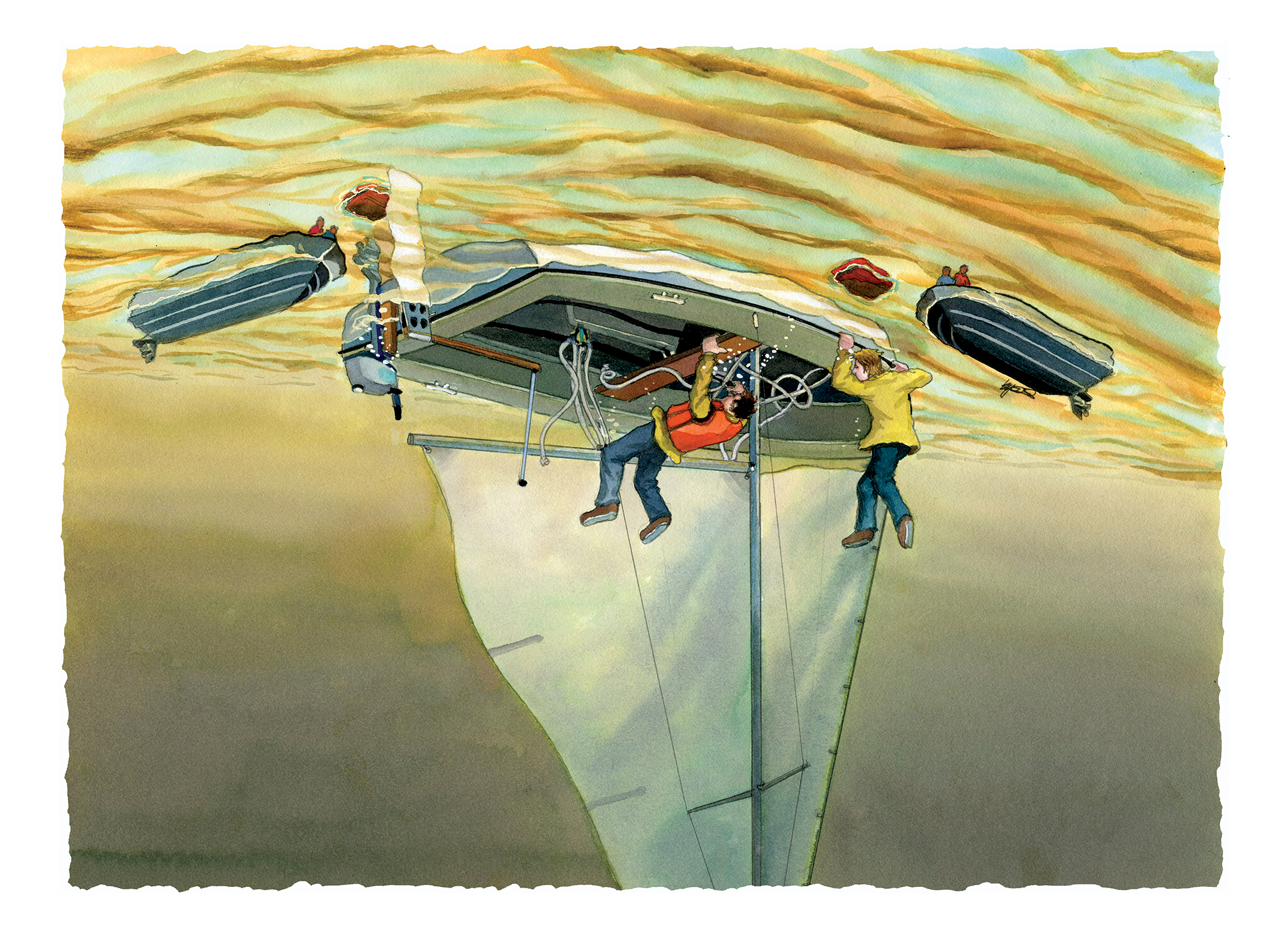
It was still around two hours before sunrise, and I was now drifting with one anchor pulling on the engine shaft and one dragging the bow. If I didn’t do something quickly, the outboard engine was going to be damaged. I was lucky enough to be able to pull the wrapped anchor into the cockpit using a headlamp and a boathook, hanging precariously over the stern with my body bouncing up and down off the transom in the building waves. I cut the rode, taking the pressure off the engine (and leaving the cockpit full of anchor, chain, and rope bits). But, the remaining part of the rode was still wrapped around the propeller. As long as the rope was there, I couldn’t use the engine. I tried to pull the rope free but it was stuck. I tried to reach it, but it was too far aft. I considered climbing on top of the outboard (a near certain swimming event) or removing the engine from its mounts (a near impossibility in the waves I was experiencing).
No engine, no effective anchor, increasing waves, and I was quickly approaching rocks somewhere in the darkness. This was the first time I thought I might need to call the Coast Guard with a Pan-Pan.
Instead, using the boathook I slowly unwrapped the line and cleared the engine. I lowered the outboard back into the water, and the engine started right up. I was pretty sure now that if I tried motoring against the remaining anchor, I would wrap the second rode around the prop and might not be so lucky. I was on the foredeck with large waves all around, but I was able to get the second anchor out of the water and into its mount and put the rode away. The mount is pretty small and has a thin slot where the anchor slides into place. With the waves, it was like threading a needle while riding a bull.
One effect of raising the second anchor was to speed the rate of my drift. I was now seriously far from my starting spot. The lights that I saw of the neighboring houses were now distant dots and indistinguishable from any other houses. But I knew exactly where I was. Turning towards the direction I was drifting and using my spotlight, I could clearly see a huge pile of something approaching very quickly. I had drifted miles downwind and was in real danger of being wrecked on the rocks.
I put the engine in gear and quickly motored away. But, it was dark and the spotlight had disoriented me. When I grabbed my backup chartplotter, I found out that I was actually motoring parallel to the piles of rocks, not away from them. I swung the boat around and got back on track. I had remembered a small canal where residents had been coming and going all day. So, I figured I could motor into the canal and find any dock until the storm passed.
As I approached the canal, the waves began to subside because I was getting back into the protected cove. The wind was still very strong so the little engine struggled, and I struggled to control the boat because for some reason the rudder was ineffective. But, it was getting easier. I could now see a house’s lights that I thought I remembered being near the canal. I only needed to make it one more mile. Then the engine died again.
I took out my spotlight and found that the propeller was totally fouled with weeds and the rudder was covered in a clump of the floating stuff. I cleared them both with the boathook. This was much easier than the anchor rode now that the waves were more tame. With the prop clear, the engine started making progress again towards a faint red light that I was hoping was the entrance to the canal.
As I got closer, it was about an hour before sunrise and I could just barely begin to make out shapes on shore. That was good news because the canal had a rock jetty protecting the south side and a shoal that I thought I remembered on the charts to the north. I got very lucky, and as I got close was able to confirm that the red light was indeed on the right side of the canal. I was nearly there. Within 15 yards of the entrance, the engine died again.
This time, I knew it had to be weeds and quickly cleared the prop, started up the engine again. Even with the spotlight, it was very difficult to get oriented in the canal, which was lined with mangroves and rocks. I was going very slowly and knew I was not going to be able to navigate far without hitting something. I was right. I pretty quickly hit the bottom and the engine died again. I was safe from the waves but stuck up against some mangroves. I might have been able to stay there but the wind was still strong enough to damage the rudder—almost certainly the thing meeting the bottom. I tried and tried to get the engine started again but it would stall as soon as I put it in gear.
If I raised the rudder, I would drift off the bottom, but with no engine and no rudder, I would drift whichever way the wind blew. If I left the rudder down, it might damage the rudder, also leaving me with no easy way to steer the boat. The sunrise was only about 30 minutes away now, and I could make out a dock about 20 feet behind me. So, I lifted the rudder and grabbed onto the mangroves in hopes that I could pull myself towards the dock. But, after a few seconds and about 10 feet of progress, I lost my grip in the wind.
I was now adrift in the canal with no way to steer or move the boat. I had a paddle and a pole but they were no match for the wind. I was probably not going to blow out of the canal, but I could certainly have collided with something else or gotten stuck somewhere else.
As fate would have it, the wind blew me near someone’s dock, and I was able to grab onto their electrical conduit, which twisted the boat with enough momentum to drift me into the basin of a private residence (somehow missing their million-dollar boat) and right onto their dock. I jumped out quickly and tied off the stern and then the bow.
The boat was safe, and I was safe. The sun was rising and I could see that I was bleeding in several spots. My ankle was sore from some slip I didn’t remember, and weeds and debris were hopelessly wrapped around the prop. That’s why it stalled every time I put it in gear.
Within two hours I was able to put the anchors back together, put the rudder back in place, clear the propeller, talk to the owner (apologize profusely for docking without permission—he was OK about it but didn’t offer to let me stay) and make my way back out of the canal.
It turns out that I was really fortunate to make it into the canal at all. The canal was only just a bit wider than my boat in spots, and the markings I thought were entrance markers were only sort of near the entrance. I could easily have wandered into the shoal or the jetty.
After leaving the canal, it was still blowing strongly, now from the east. I tried to anchor again but just dragged with the wind. So, I ran the boat aground, intentionally, into some mangroves. Not very elegant, but I knew that the depths next to mangrove clumps are typically about 1 foot. Shorty can float with just a few inches at the bow, a unique advantage of some trailerable sailboats. So, if I could get some lines on the mangroves the boat would be secure. It took a few attempts, but I got two lines on two different mangrove roots.
I shut off the engine and took a big breath. I could sit here for as long as I needed until the wind stopped blowing. I’d missed the rocks of the bridge, the jetty of the canal, and someone’s expensive toy. With that kind of luck, I was pretty sure the wind would pass.
After a few hours, the blow had mostly subsided, so I went back out and anchored again. The wind was only predicted to come from the east for the next day. So, there were lots of small islands where I could safely anchor. When I reached a pretty place with crystal clear water and a sandy bottom, well protected from the consistent winds, I backed down on the anchor to double and triple check that it was really well set. Then, I went for a swim.
What I Did Right
I set an anchor alarm. I was surprised that I didn’t feel anything different when I started dragging. Without the alarm, it could have been a disaster.
I took bearings on nearby houses before going to bed so that I could quickly confirm that I had dragged without relaying solely on the electronics.
I had emergency gear near the cockpit (knife, headlamp, emergency plotter, spotlight, VHF radio, lifejacket with PLB).
I followed a progressive protocol to solve the problem: letting out more scope, setting a second anchor, motoring against into the wind, finding shelter, and finally running aground.
What I Did Wrong
The initial anchor I used was not able to turn and reset. I should have considered this and set two anchors. The wind would have shifted the load between the two anchors instead of forcing the one anchor to twist and reset.
Entering the canal was risky. I probably should have run the boat aground first.
October 2025