With just a flashlight and a stack of firewood we set out into the bay. The chop from the afternoon southwesterly had faded and the water’s surface danced with shoreside reflections. Maneuvering through the faint outlines of familiar boats led us to the edge of the mooring field.
Ahead was only darkness. Waters that seemed endlessly known, ones I had covered hundreds of times in daylight, were now a bit of a mystery.
I kept the wind on my right cheek, hoping that it would help me hold a steady course. Glancing back, the porch lights all began to look the same, but two streetlights stood out with their warmer glow—I’d keep that in mind for the way home.
Our twelve-foot boat felt smaller than ever before. The distances also stretched farther than I could recall, even while the ocean rushed past the leeward rail. The no-wake buoy, the last of a sequence of harbor entrance markers, and our final breadcrumb back to where we started, emerged and then quickly faded into the backdrop. There wouldn’t be any other waypoints until we arrived at the sand bar.
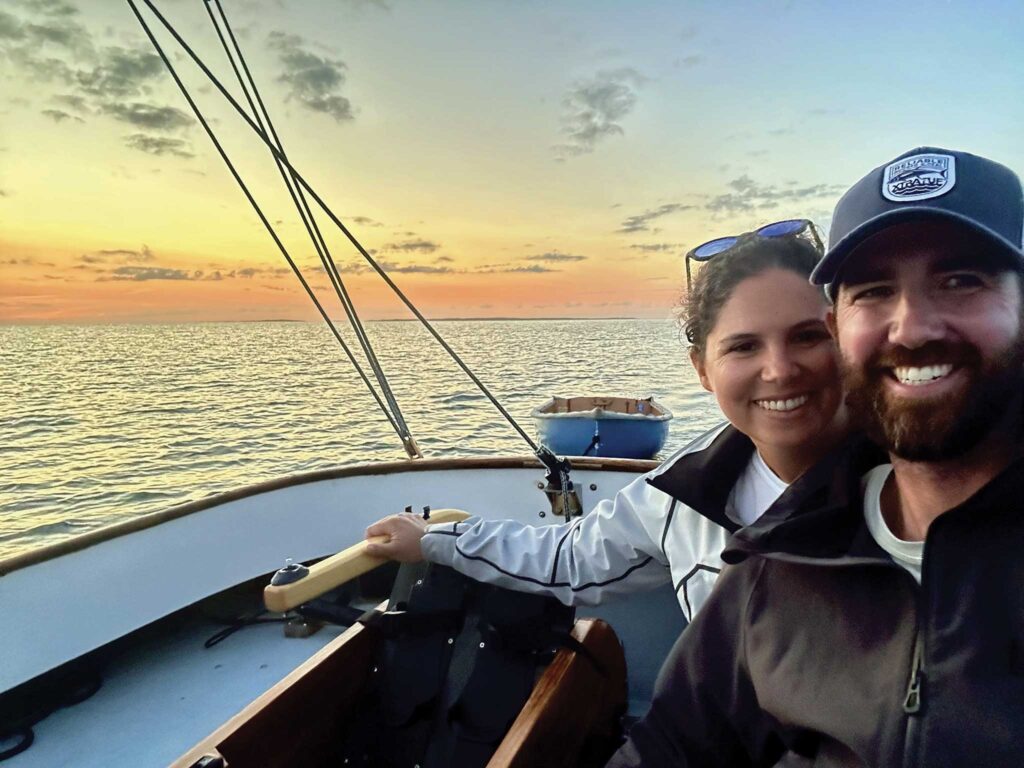
The bay was peaceful. Not just the weather, but as far as I could tell, it was entirely ours. Every other boat had been tucked in for the night. Wildlife called out from the nearby forest and marsh, dampened only by the light rustle of leaves and the lapping of small waves against the hull.
Our friends would be out here soon too, but for now we were left to navigate on our own.
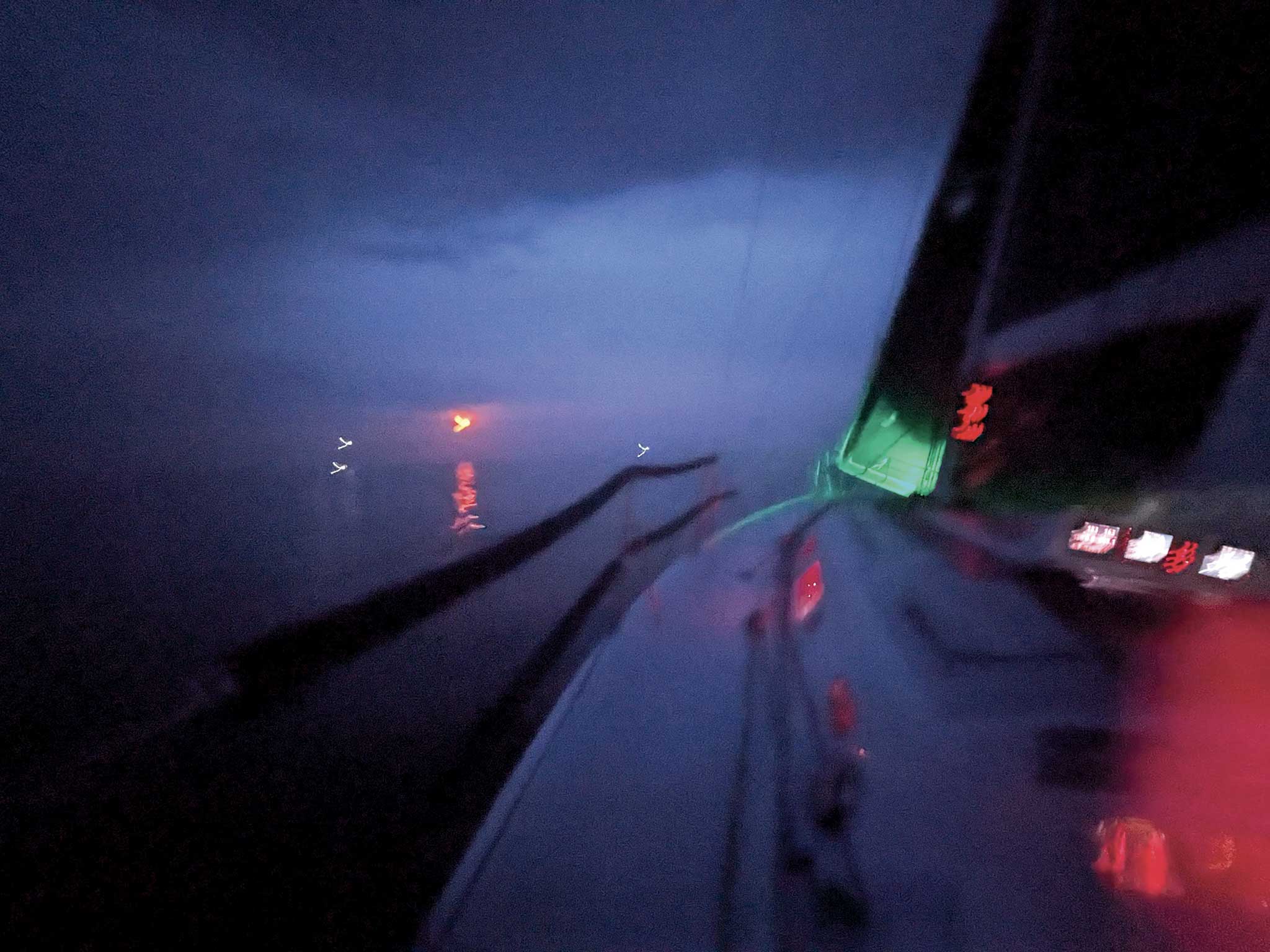
My eyes wandered upwards; the darkness seemed to lift. Stars covered the entire sky. With each boat length forward, more emerged, and the shore separated itself from this speckled canvas under a gentle outline. Our wake was aglow with bright green swirls surrounded by darting flickers. A quick thrust of the tiller made the bioluminescence even more pronounced. Familiarity flooded back into our journey, but with a twist of awe.
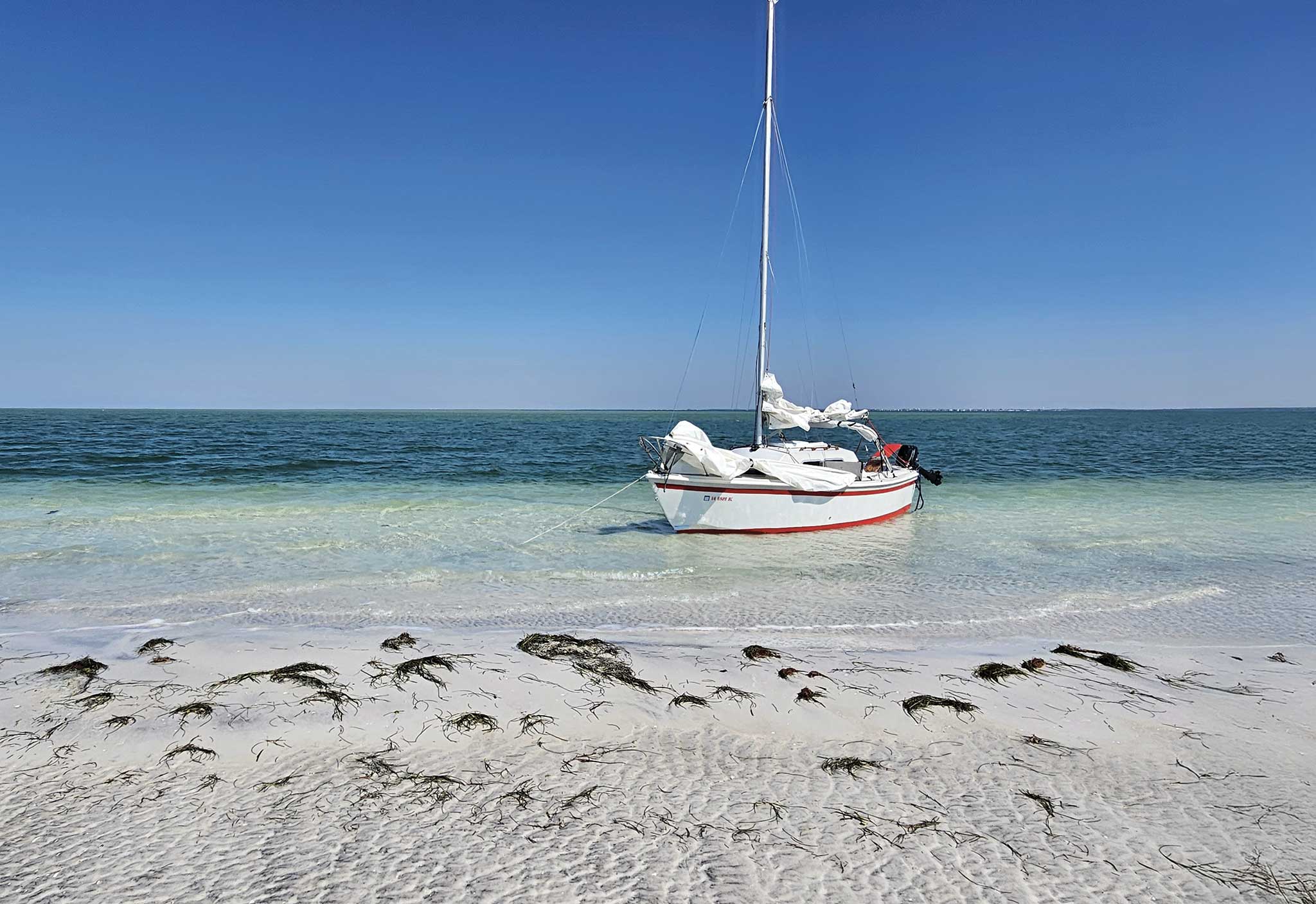
As the waves pattern changed, I swung the centerboard up. My brother luffed the jib, and I eased the main as the bow pressed into the sand. Working my way forward, I jumped off the bow, anchor rode in hand. The August night was cool enough to make the ocean feel warm on my feet. I retrieved the anchor and set it deep into the dry sand to windward. We both went about unloading the firewood.
Before long, a few other boats stretched out their anchor rodes in succession. The plan was coming together.
With a little effort, a fire began to flicker in the middle of the sandbar, surrounded by a collection of young sailors setting down towels in the sand. A couple of us wandered off, digging up clams with our feet to roast over the fire for a late-night snack. Hours passed, even though time seemed to hold still, as our laughs and smiles warmed the night air with the enchanting flames.
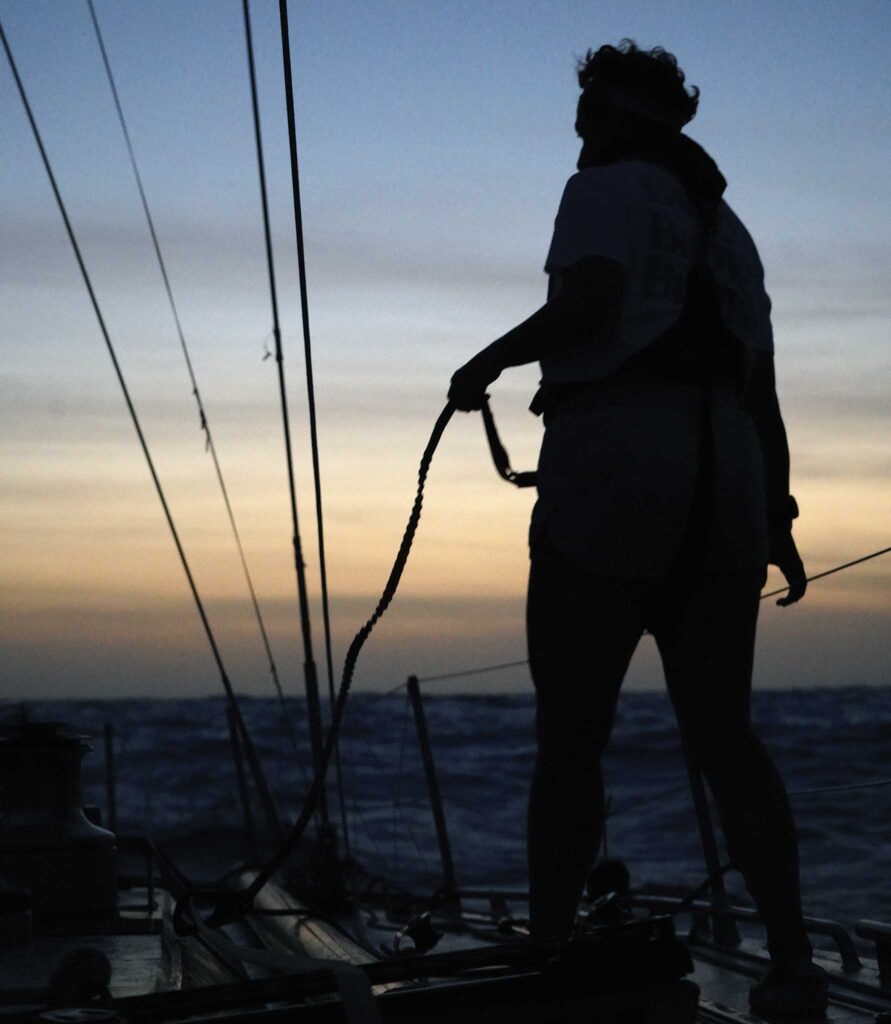
The moon pierced the horizon, and we huddled closer around the last of the embers. Once the rising tide touched our heels, we jumped back in our boats, and a puff of smoke rose from where we had gathered. My brother and I sailed the mile back, with a little more confidence, letting those streetlights guide us to the harbor.
I don’t recall exactly how old I was, not that it matters anyway. This sort of found freedom and new experience gets us excited at any age. It was my first time sailing at night, and you bet we did it again the following evening.
Night sailing is a unique experience, and I still treasure each opportunity. Perhaps, it’s simply not having to put on sunscreen, but I’ve grown to prefer sailing at night. It’s an opportunity to dial in my senses and feel the boat. The night sky brings a sense of calm, perspective, and connection to anyone that has ever sailed or will sail underneath it. The stars help keep us on course and time is reflected in their slow movement. The miles count differently and feel almost like a secret advantage as days are stretched to their fullest potential.
Whether taking guests out for the first time at night or easing into it yourself, keeping it fun for everyone aboard should be at the forefront of any decisions. Since my childhood experiences in Lewis Bay on Cape Cod, I’ve been in plenty of far from ideal evening conditions: once no more than 40 miles to the east-northeast of that same protected bay on the Cape, heaving-to all night in a gale. These are situations to avoid, especially initially. With a little forethought and some light preparation, missteps can remain the theme in someone else’s stories.
A smooth approach to building skills is through incremental steps. Pushing the edge of sunrise or sunset with a harbor burn is a great place to begin. That can be stretched to a couple hours into the evening as confidence develops. Keep in mind that sailing at night doesn’t need to imply an overnight. It could just mean departing after work on a Friday and arriving at a favorite harbor that evening, instead of delaying departure until the next morning, leaving even more time to explore and relax.
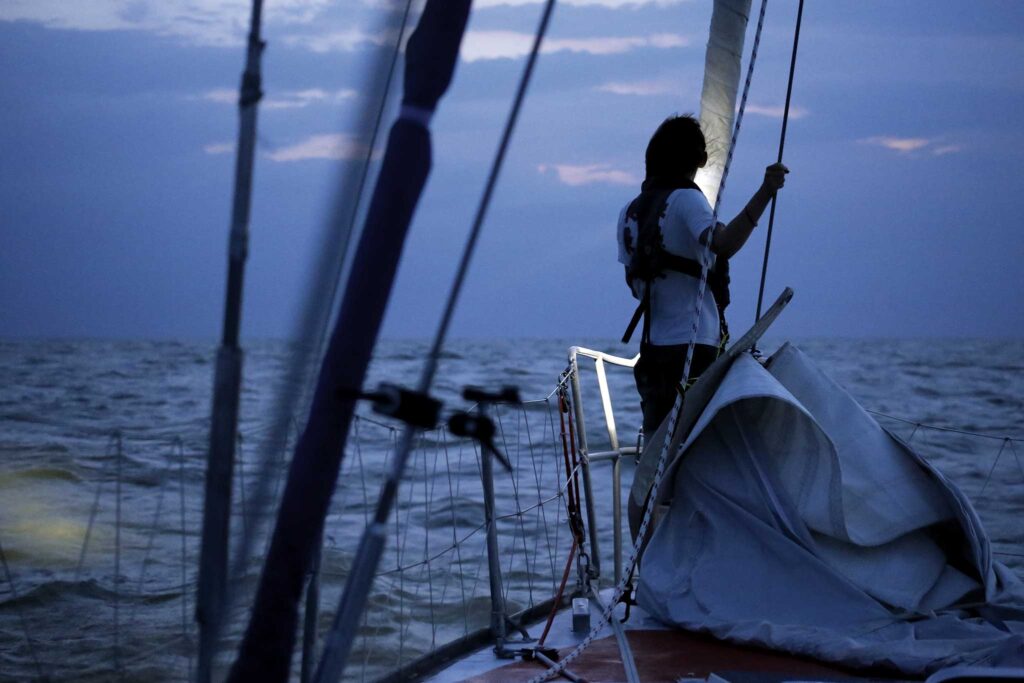
At any level of experience, it’s preferable to avoid unfamiliar waters in the dark. My wife and I often joke that lobster pots and rocks hibernate at night, but the reality is that they represent an even larger risk when the sun isn’t out to aid in getting out of a bad spot. Knowing a body of water means that obstructions are understood, especially those that don’t show up on a chartplotter. It also adds an understanding of commercial shipping patterns and insight to discern navigation lights from onshore illuminations.
The same can be said for unfamiliar boats. Being accustomed to a boat allows us to react properly when distances are disguised by the night. Muscle memory aids in locating and easing the mainsheet in a gust or putting the transmission in reverse to slow an approach to the dock.
Good organization provides quick and reliable access to resources, like spotlights and air horns. Aside from an onboard collection of safety gear, I make sure to have an LED headlamp in one pocket, and in many climates, a winter hat in the other (it’s an easy layer to add that makes a large impact on warmth). Fleece blankets are a nice touch for cozy evenings and spare layers are smart to bring along. Good preparation also calls for adding waypoints to a plotter or chart. Note the position of your mooring or dock, or where you intend to drop anchor.
Remember that weather and tides don’t care about shore-based schedules. There will always be pressure to prioritize schedules over safety, but we need to make the hard calls and adjust our plans, especially when one of our key senses is compromised. We’re more connected with information than ever before—check forecasts before departing and get updates underway. We’ve experienced plenty of beautiful places and made interesting friends because of a change of plans. Consider that when alternative transportation home exists, the right call may be to leave the boat on a mooring or dock for the week and come back the following weekend when conditions have improved. Don’t shy away from exercising some creativity in solving these dilemmas.
This pursuit of adventure also requires us to remain curious. Channel that to learn more about staying safe in a challenging environment: from navigation light patterns to tuning up radio communications, there is always more knowledge to take in. This carries to our time on board too. Wondering what else is moving around in the dark is essential to keeping a sharp lookout, and may lead to fascinating discoveries of sea life, like whales or dolphins holding course with you (note you will almost always hear them before you see them at night).
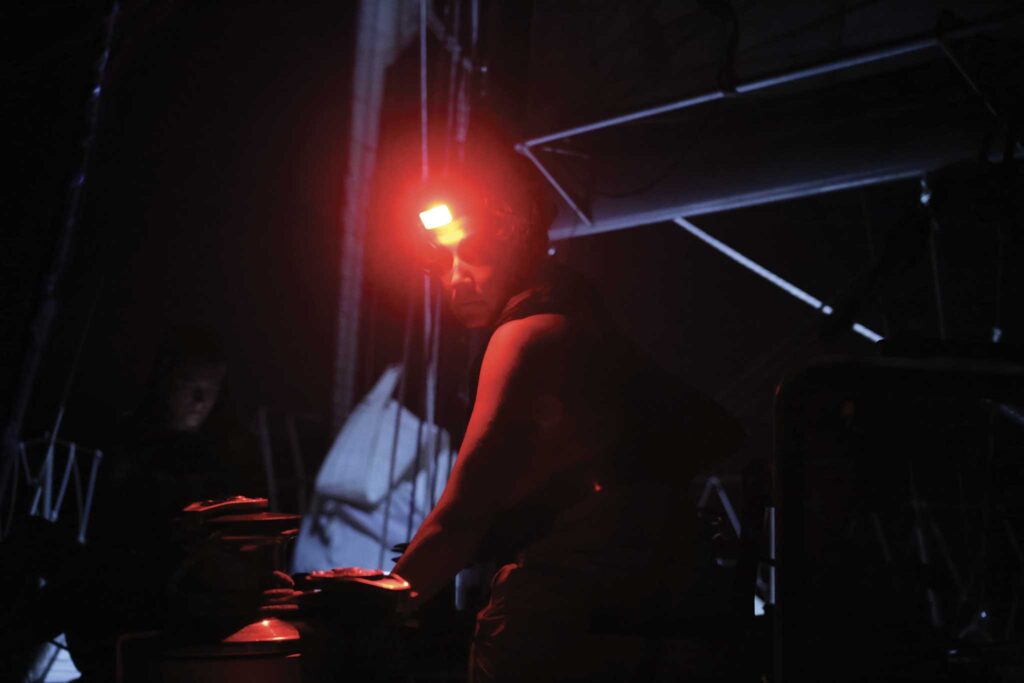
Above almost all else, move along at your own pace. If needed, slow it down—give yourself time to observe, take action, and breathe in the experience.
Night sailing continues to fill my life with special moments. This past summer, closing in on Bermuda, we found ourselves entirely becalmed, under millions of glimmering stars. Despite that not being ideal for racing, the nighttime magic had us captivated: the water was so calm that I couldn’t tell where the sea ended and the sky began. It felt as if we were drifting through space. It’s these moments that keep us all fascinated with the sea, and it would be a shame to miss out on half of them, just because we stuck to only sailing during the daylight hours.
January/February 2026