Part 1: The Canaries and Western Sahara
It was a simple concept. Not an easy one, but a simple one. After all, people have been crossing the Atlantic by boat for hundreds, if not thousands, of years.
In fact, Adélaïde Charlier herself had done it before. It wasn’t pleasant and there was a lot of puking involved, but she’d managed as a passenger aboard a ship bound for the previous United Nations Climate Conference (COP). So when the young Belgian climate activist started looking into going to 2025’s COP30 in Belem, Brazil, she also started looking for a boat.
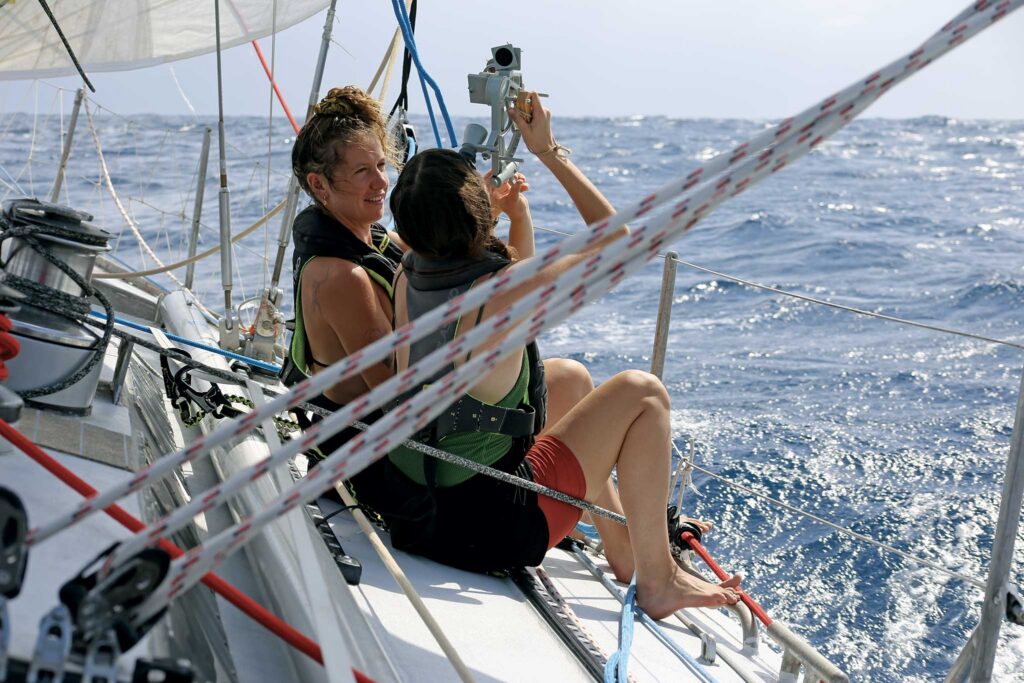
It didn’t take long to assemble a team of five other activists to help put the project together: Lucie Morauw, Camille Étienne, Coline Balfroid, Miriam Toure, and Maïté Meeus. They each represented a different campaign, spanning from human rights to PFAs, but their sailing experience was minimal. Maïté, a women’s rights activist, was brought on with the simple question, “Do you want to go to the COP with us?” By the time she realized the plan was to sail there, it seemed too late to back out. When she saw a utilitarian marine head for the first time…well, in for a penny, in for a pound.
Fortunately, if there’s one thing these young women excel at, it’s networking, and it didn’t take long to procure a project manager in the form of Sandra Marichal. The French Clipper Round the World Race veteran cannot resist a long shot project with a great mission. Plus, the crossing would be done on L’Esprit d’equipe, the 1985-1986 Whitbread Round the World Race winner. Who could resist?
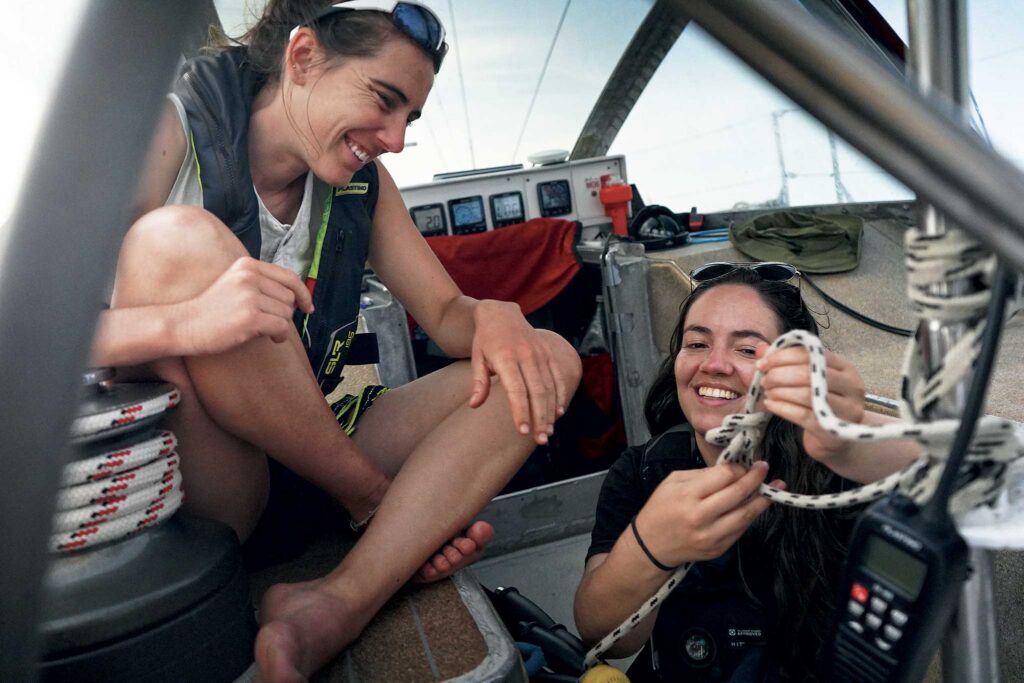
“What a cool idea, I’d love to write a story about it,” I told her over coffee one grey afternoon last spring.
“Oh, no, you have to come with us,” she said.
And so that’s how I found myself casting off from Lanzarote for my first transatlantic crossing one early morning last autumn.
• • •
10/22/25
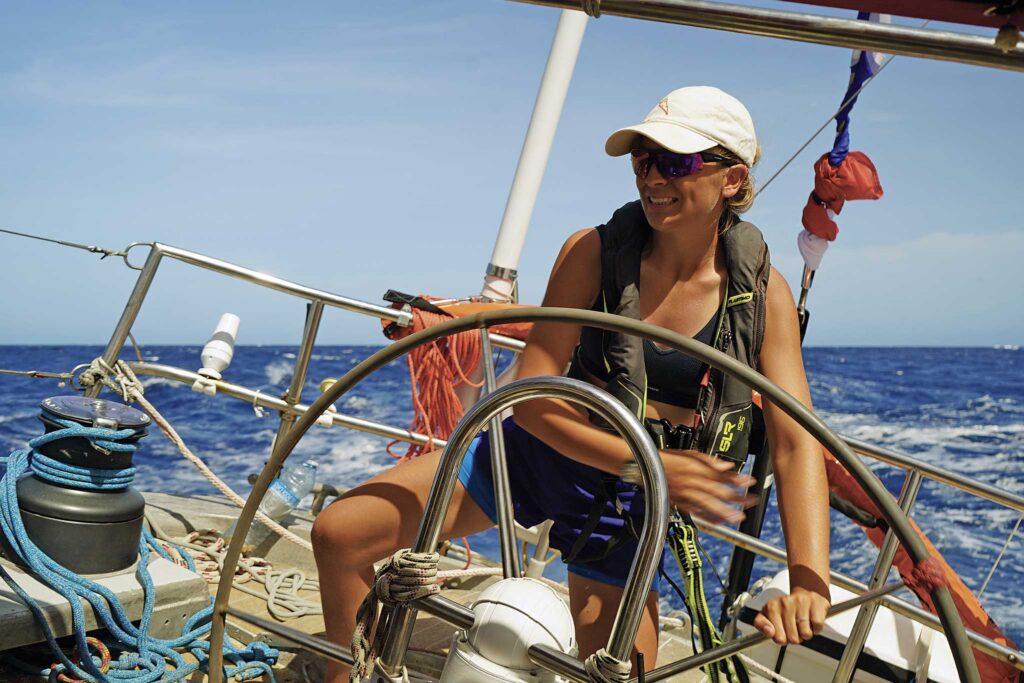
We docked out this morning under the cover of dark. I had the first watch and took the helm as soon as we were clear of the harbor. Finally something familiar after two days surrounded by new people and foreign tongues in the craggy, alien moonscape that is Lanzarote.
Despite this being my first ocean crossing, the sailing is the thing I’m least worried about. That’s the part I know.
I was joined by Lucie and Camille for my first watch. They’ve had the delivery from Cherbourg to Lanzarote to learn the basics of helming, so we’re not starting from scratch. Actually, Lucie is a competent and focused driver, which seems fitting given what I know of her personality so far. Camille is still learning, but she believes she cannot do it more than she actually lacks the ability. Perhaps foolishly, I believe this is something I can fix.
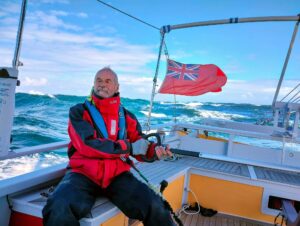
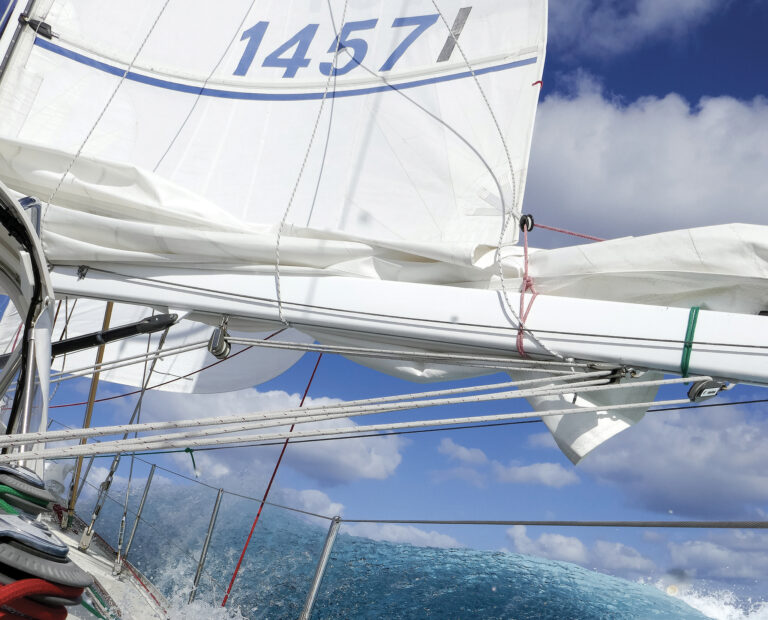
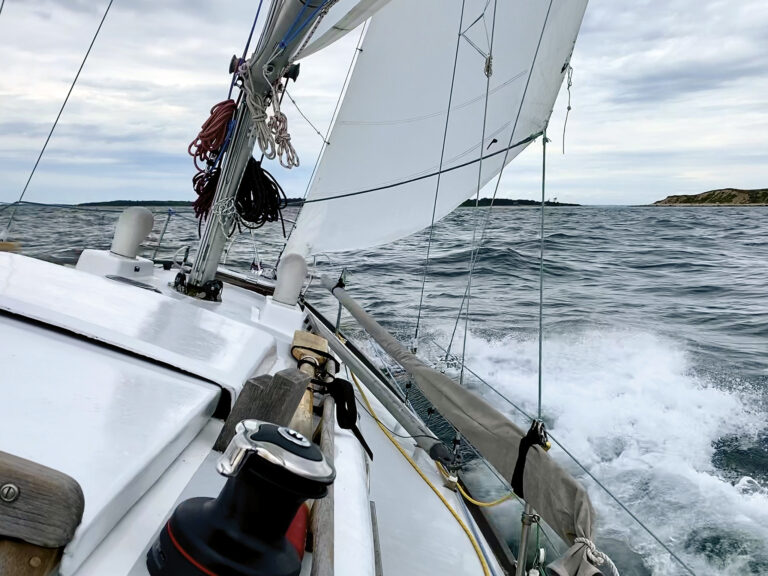
I’ve never sailed in an aluminum boat before, and I am continually surprised by how close to the water we are. You can hear it gurgling and gushing everywhere, and there’s no real feeling of outside versus in, except in matters of sea sickness, which I definitely feel more acutely down below. So far, I haven’t puked, but I did spend a few humiliating minutes dry heaving and making such a revolting gagging sound that it’s a wonder it didn’t make anyone else sick. Still, we’re cruising along at a good clip of around 7.5 knots with waves on the beam. The driving is good and energy is high. It’s hard to believe we are all settled in and will be here for three weeks.
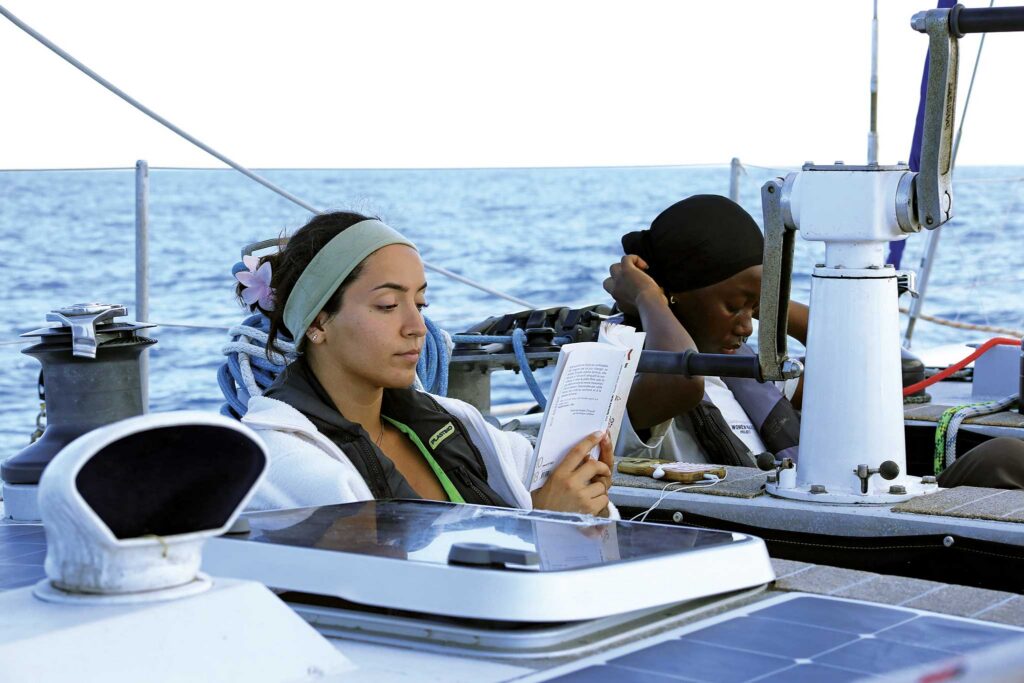
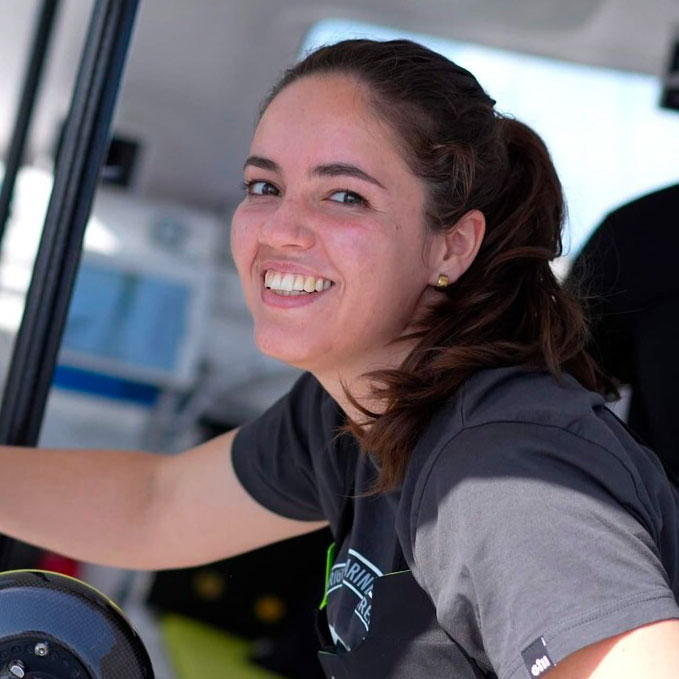
I really like our captain, Capucine. Despite brusque mannerisms, she prefers a collaborative approach to managing the boat. She’s just 30 but has an extraordinary number of miles behind her, including aboard Maiden during the winning 2023-2024 Ocean Globe Race campaign. It’s good that we get along as we sleep just inches apart, with me in the pipe berth above hers. No matter how many times I adjust the pitch of mine, I always seem to be right in her space. The girls call this “the most terrifying place to sleep on the whole boat.”
We’re only going to have internet access for one hour every five days during the crossing, which is a bit of a daunting prospect. We’re really in our own little bubble out here, and not knowing most of these people at all…well, who knows. Before leaving, I got one last good luck text from a friend, which will be my final outside contact for a while. I can’t bring myself to clear the notification.
10/23/25
The first night watches went well. I wish I had more to report, but it’s all blurring together in a wash of French and giggles. Almost everyone on the boat speaks French with English as a second or third language. They’re trying their best to include me, but I’m definitely on the outside. In fairness, though, I’ve learned nothing of their language so far other than “bastaque” for “backstay” and something that’s a cognate for “shock” that means “let out.”
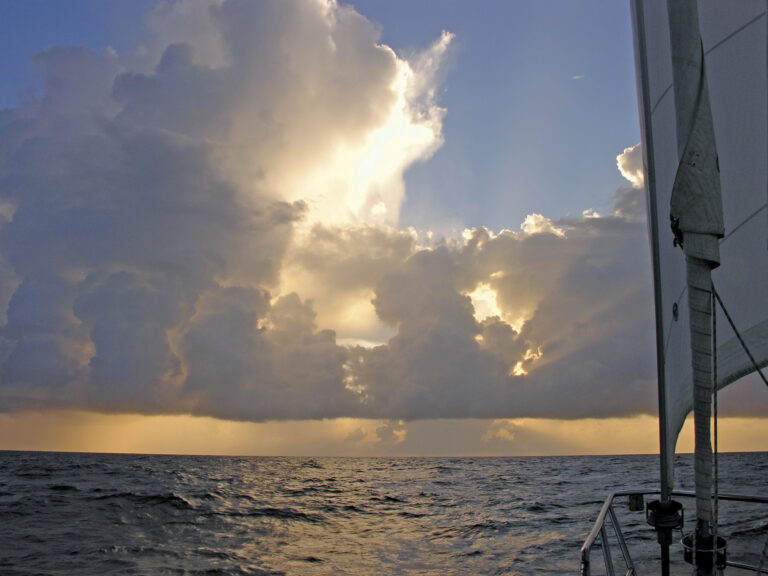
Last night we had very little wind and were subsequently outrunning and then getting run over by the edge of Gran Canaria’s wind shadow as it shifted west all night. We were also in and out of cloud cover. But when we had stars, you could see the whole Milky Way.
10/24/25
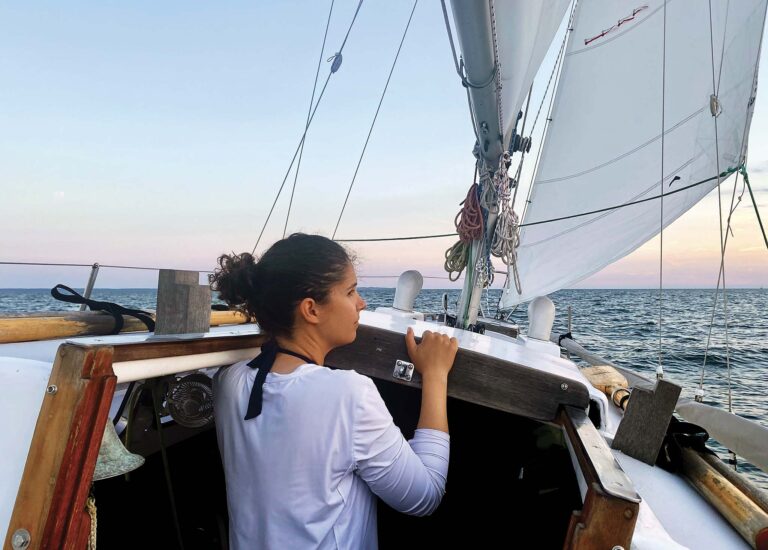
“Do you believe in God?” It’s 2:30 a.m., and Adélaïde—Ade to her friends—and I are alone in the cockpit, watching meteors shower down around us from heaven. It’s dark, and there’s almost no breeze, and I tell her that I believe in an interconnectedness of the universe.
10/24/25 (later)
Capucine and Camille are in a desperate struggle for power. Camille, the PFAs expert, has brought along equipment for testing the water quality in various places that the boat will stop, but since it requires the boat to be still, it’s useless until we arrive in Belem. Useless, that is, unless they can re-wire the battery to charge our portable speaker…Capucine is turning out to be a bit of a maverick, but she has the skills to back it up. It takes about 10 minutes to have the little red charging light blinking to life. You’ve never seen such unadulterated joy.
We’re off the coast of Western Sahara, and we have little seabirds to mark how close to shore we are. There’s some concern about pirates, especially since we’re all young women and realistically wouldn’t have a good outcome if we were to encounter them. We’re monitoring the AIS very closely.
10/25/25 (?)
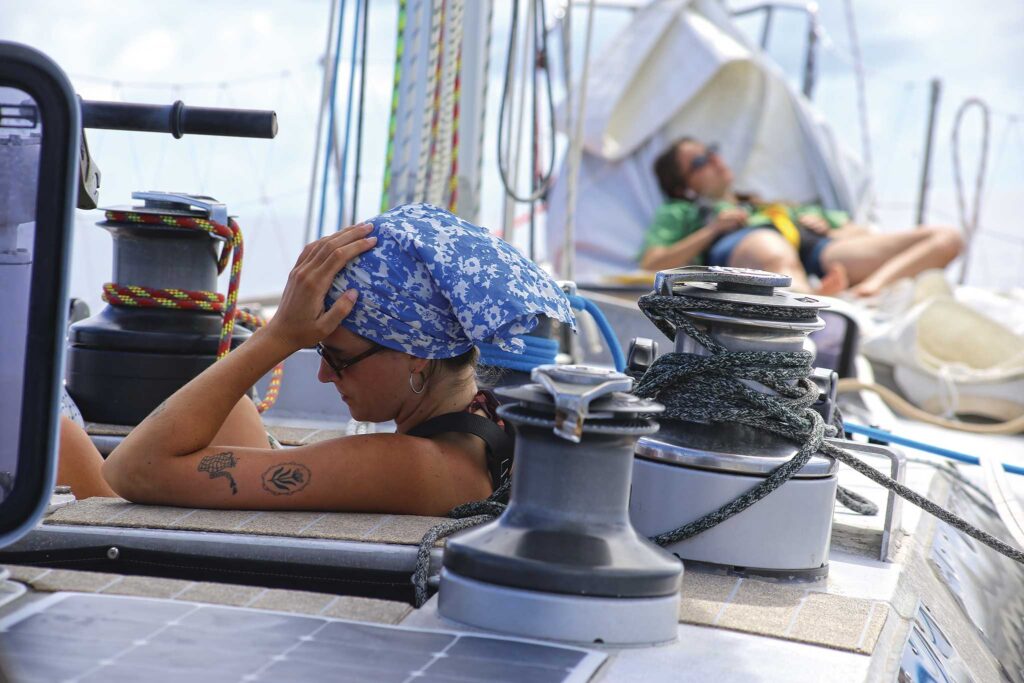
I washed my hair, and the seawater on my scalp is a baptism. Ade is fast asleep near me on the side deck, and I’m finally lounging in the forward working cockpit, which I’ve been dreaming of since the first night I saw the boat back in Lanzarote. Forward of the dodger, there are two deep wells on either side of a grinding pedestal, perfect for curling up in. I have shade and a cool breeze, and all is well
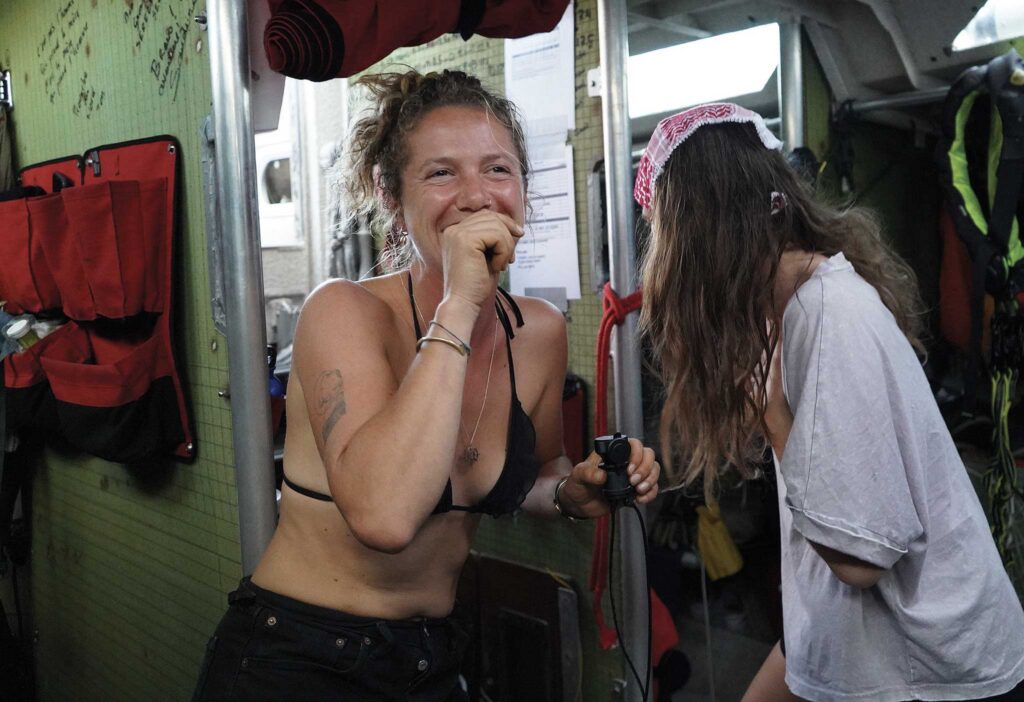
We are off the coast of Africa, maybe even Western Sahara still, but far enough out that the pirate concern has diminished. The girls have taken a leaf from my book and are washing up on the foredeck, giggling and splashing. Sandra’s teasing them by catcalling and saying that we should have funded the trip by making a calendar instead of writing grant proposals.
Despite the summer camp antics, the activists are serious about their work, and an impassioned discussion of climate policy or human rights is just as likely to dominate a watch as pop music or teasing about lovers back home.
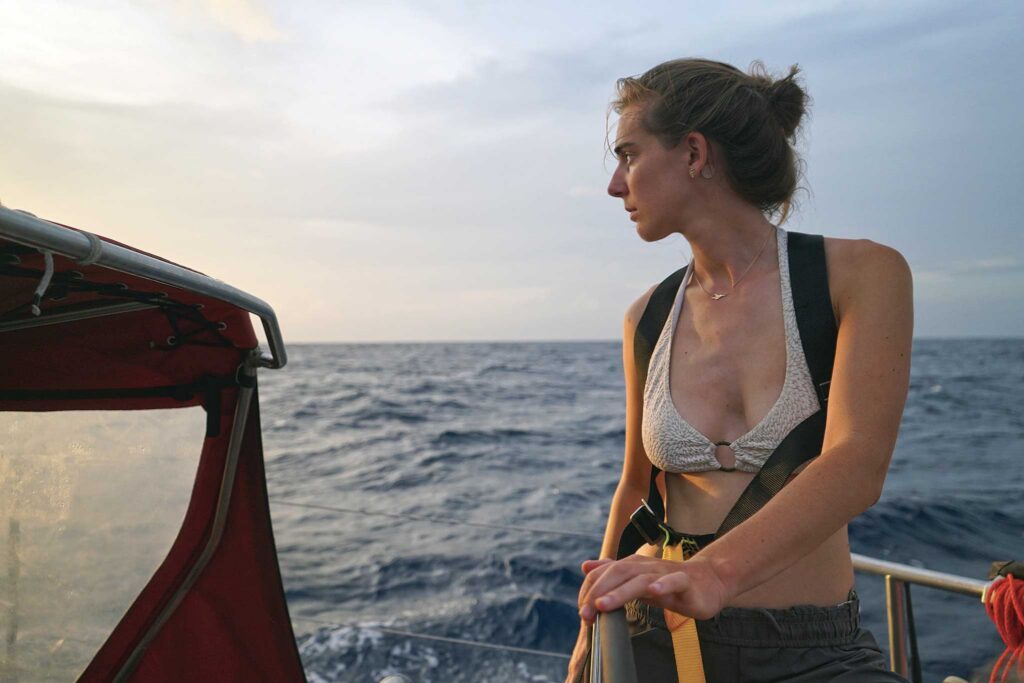
They are under no illusions about this trip. The planes they could’ve taken to Belem are still going to use just as much fuel without them onboard. They know they’re going to get flak for their flights home and nitpicked for the carbon footprint of the diesel we’re sure to use in the doldrums. That’s not the point. The point is being in concert with nature out here and communicating about the impact of the long range transportation options available to us. Most people can’t afford to take three weeks off and charter a yacht every time they need to cross the pond. Ade, who’s been avoiding air travel since high school, puts it nicely: “I know leaving my seat empty doesn’t change the carbon footprint of a plane that’s going somewhere anyways, but an empty seat can start a conversation.”
We’ve been wing on wing for a day now, with a gybe to the opposite wing on wing during my morning watch. I’m not entirely satisfied with my helming. At this angle and sea state, the boat rolls with every wave, and I don’t have the focus for what she needs today. I’m finding it frustrating. I hope we’ll be far enough south for the weather to allow us to go west soon.
10/Something/25
We’re doing our best to teach the girls to drive since it’s going to be a long crossing if 60% of the helming rotation can’t hold a compass heading within 10 degrees of the course. I think it’s going well. Lucie continues to be our golden child, but Camille is fearless and an enthusiastic study.
Between the language barrier and all the sailing terminology, though, it can be a little difficult to get results when I’m coaching them. When the compass needle starts to wander and I say “come up, come up, come up,” they’re not sure if that means left or right, up on the compass or up on the wind. We’re translating both between sailor and land-speak as well as from French to English, which takes processing time and exacerbates the over steering lag that beginners tend to have.
I try skipping the middlemen and going directly for “a gauche, a gauche, a gauche,” which does make sense to them but is still not very effective because they think my accent is so cute (read: stupid) that it makes them laugh instead drive the boat.
Lucie and Miriam spent the afternoon trying to expand my meager French vocabulary, and by the time I got to asking for a sail change with, “je voudrais le petit foc parce que il y a trop de vent,” they were so pleased with themselves that the captain had to be called so they could show off my new trick.
Last night, I made some headway on teaching them as well. I pointed out some stars before handing off the helm to Miriam, and like magic we were dead on target. When she handed off to Maïté with the same advice, Maïté rolled her eyes at the woo-woo concept of steering by the stars. It took her about five minutes to realize that having something to look at was actually a game changer.
After two days of wing on wing and moderate to severe slatting courtesy of the rough waves and learners’ helmsmanship, we gave up at 3:30 this morning and gybed the main. Immediate relief.
Laura, our fourth sailor, is not feeling well, and Capucine has been filling in for her, which means she’s exhausted too. The rolling is pretty intense, and no one is sleeping well. I’m feeling fatigued for the first time this whole trip, but it’ll be okay. My only real superpower is being okay when things start to suck.
We’re reaching that point in the trip where the early romance is wearing off. Time to strap in and make the best of it. I heard we’re meant to have more breeze on the 29th. God knows when that is, though. I have completely lost track of the days.
Something/Something/25
Last night, the girls threw me a 5000th offshore mile party. They were not at all subtle with the surprise, but the language barrier ultimately saved their secret since I’ve gotten quite used to understanding very little of the chatter around me and just kind of ignoring it. It’s maybe a bit lonely, but sitting in the cockpit with a warm slice of cake while a French pop song blares, I certainly can’t feel sorry for myself. They’ve been incredibly sweet to me.
I brought a temporary tattoo pen to do an honorary swallow to mark the occasion, but it turns out no one on this boat knows how to draw.
10/29/25 (I finally checked the logbook)
I’ve been a bit out of sorts all day for no reason. I tried to sleep. I had some chocolate. I’ll wash my hair when it’s light out, and maybe that will fix me. We’ve had more wind, so the driving is active and sleep is hard. Plus, my hands and face feel sticky no matter how many times I wash, wipe, or sanitize them, so maybe it’s normal to be uncomfortable. The truth that I don’t really want to acknowledge is that I think I might be a bit lonely, isolated on a boat full of people by my own inability to understand them.
I taught someone the expression “a few sandwiches short of a picnic,” yesterday and it’s spread like wildfire through the boat. The only problem is they cannot seem to get it right, grinning at me and saying “she needs a sandwich!” or “she didn’t pack a picnic!” every time anyone does something dumb. It always cracks me up, and I feel better for a while.
10/29/25 (later)
“Do you believe in God?” Capucine asks. It’s 2:30 a.m., and Coline is at the helm. It’s a long, dark night, and the waves are coming on strong from behind and occasionally from abeam, splashing up on deck when they get the best of our intrepid driver. There’s something soothingly, maddeningly cyclical about life out here.
It’s been over 20 knots for three days, and all of our budding sailors have taken to driving in the swell remarkably well.
10/30/25 (I think)
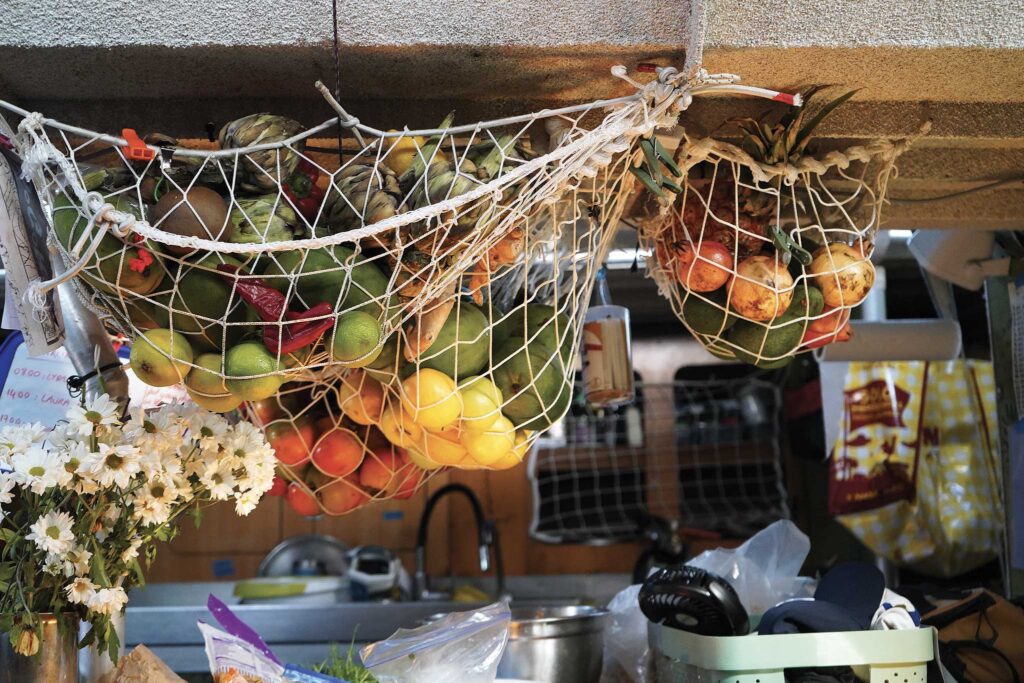
“All of our vegetables smell like fish,” Coline frowns as I peel up a slimy, disintegrating outer leaf from a head of cabbage. Inventorying our produce is one of my daily (sometimes twice daily) tasks, and I still have yesterday’s rotten zucchini phlegm dried under my fingernails.
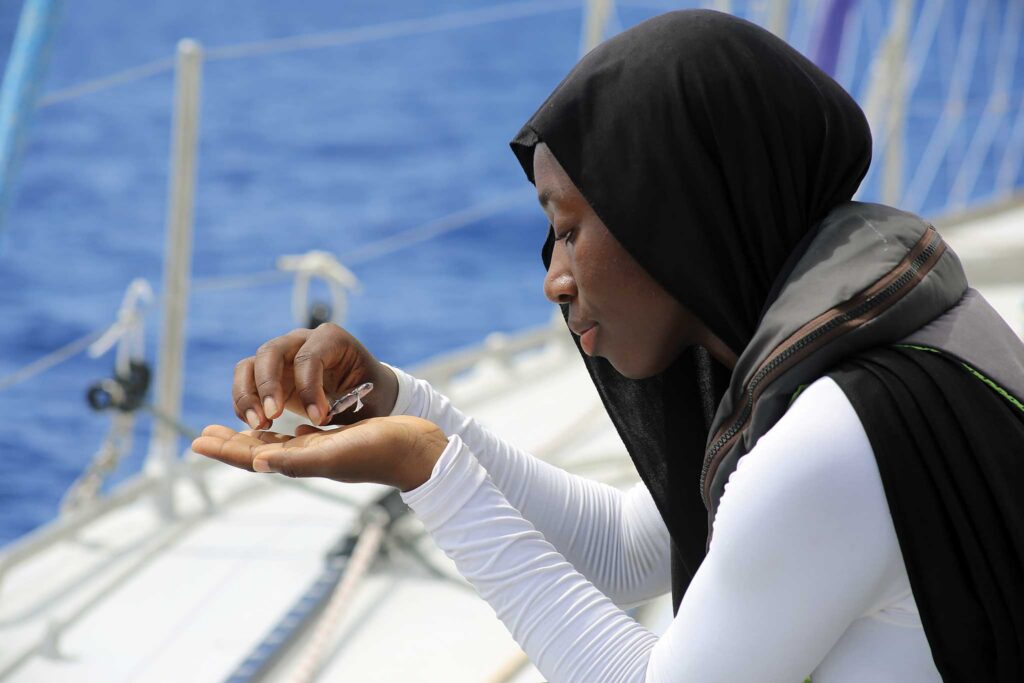
And though the vegetables may smell like fish, the fish smell like seaweed. Les poisson volants visit us often, throwing themselves on deck and thrashing about. When we hear them, we rush to push them back overboard. When we don’t, we spend the dawn dock walk kicking their bodies back into the sea.
The first time I saw one on deck, I panicked and scooped her up in my bare hands. She beat me with her tiny wings, struggling for freedom and slipping from my grip. It took two more tries to get her back in the water. She left me coated in a smelly mucus and the iridescent purple scales that she had thrashed off.
We’re in a comfortable three on-six off watch schedule for the sailors, with the activists rotating through in shorter intervals. Truth be told, I’ve been operating without time since my phone died three days ago. My only marker is whether it’s Sandra or Laura’s voice floating in through the hatch, denoting whether it’s inside or outside of three hours to my next watch. It’s a rudimentary clock, but that’s all I really need to know out here. Anyway, a regular clock isn’t much use as we move through unmarked time zones and the sun rises later and later in the day. Eventually the dawn watch will be at noon.
Tonight before bed, Camille and I were brushing our teeth in the galley. I spat for the drain hole of the sink—we’re avoiding wasting water, and I hate to leave a mess. The sink is big and deep, and in the swell it’s a challenge, but I’ve been practicing my marksmanship all week. After a perfect bullseye, I turned to Camille to say something smug. It’s funny what feels like an accomplishment after a week at sea.
But then to our horror the boat rolls and the pipe backfills. The drain spits back up my toothpaste plus a brownish dishwater slurry. We stared in disgusted surprise for a moment. Then—after all the long, sleep deprived days—it tipped us into hysterics. We gasped in silent laughter, clinging to the counter and each other.
For once, there is no need for translation. Irony is, apparently, a universal language.
When we resurfaced teary-eyed, Ade was watching in concern from the nav desk. She asked Camille if she’d broken me.
Actually, I think she fixed me.
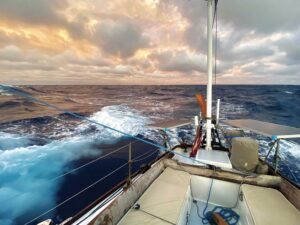
Overnight, a shift we’d been waiting three days for finally arrived, and we gybed eastward out of the rolly waves. We’re about halfway across, with the doldrums, the equator crossing, and the Amazon River all to look forward to (or maybe to dread). But finally we’re reaching and laughing, and for now, life is good.
Stay tuned for part 2 in the next issue of SAIL.
This article was originally published in the March 2026 issue.