“Frighteningly impressive” is a phrase that could describe many aspects of French ocean racer Alexia Barrier’s current project: the speed potential of her 103-foot trimaran, the nonstop round-the-world record she is trying to break, or the number of nautical miles collectively sailed by her crew…In this case, the phrase is bestowed on Alexia by teammate and co-skipper Dee Caffari (herself a six-time circumnavigator and Member of the Order of the British Empire) who is certainly an expert on both “frightening” and “impressive” in her own right.
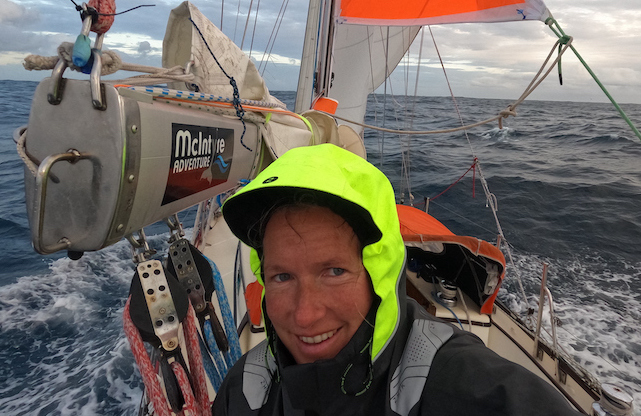
Alexia shrugs this off, focusing instead on how she could possibly come up with an equally appropriate description of Dee. But her humility belies decades of sailing experience, with thousands of miles sailed including 18 transatlantic crossings, not to mention that she is one of only 14 women to have competed in the grueling solo, nonstop around the world Vendée Globe Race. Of course, one of those other fourteen women is Dee.
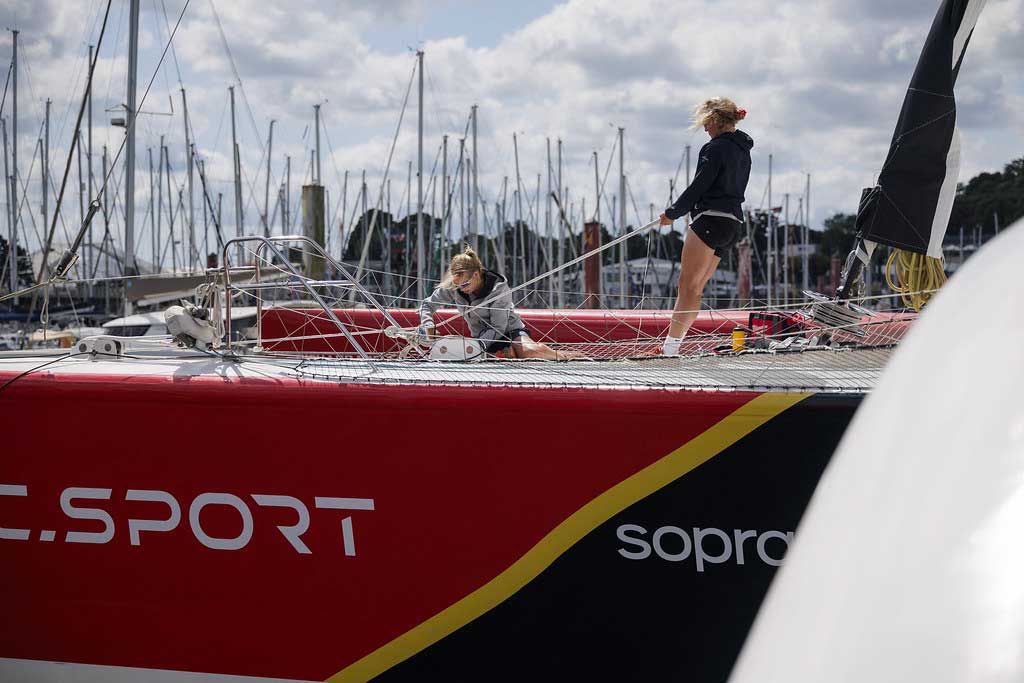
Alexia and Dee sit shoulder to shoulder in the crew house in Brest, France, after returning from an overnight training session to talk to me about The Famous Project CIC, Alexia’s all-female bid to pursue the Jules Verne Trophy for the fastest global circumnavigation under sail. As a teenager in the 1990s, Alexia followed the early record attempts, noting the names of the intrepid racers.
“I was looking on the TV at famous sailors doing this kind of challenge, but I never really dreamed of doing it,” Alexia remembers. She set her sights on the Mini Transat and other transoceanic races, finally building to the Vendée Globe in 2020-2021. But after conquering a solo, non-stop lap of the planet, where can a sailor find their next peak? If the Vendée Globe is sailing’s Mount Everest, then the Jules Verne Trophy is the moon landing.
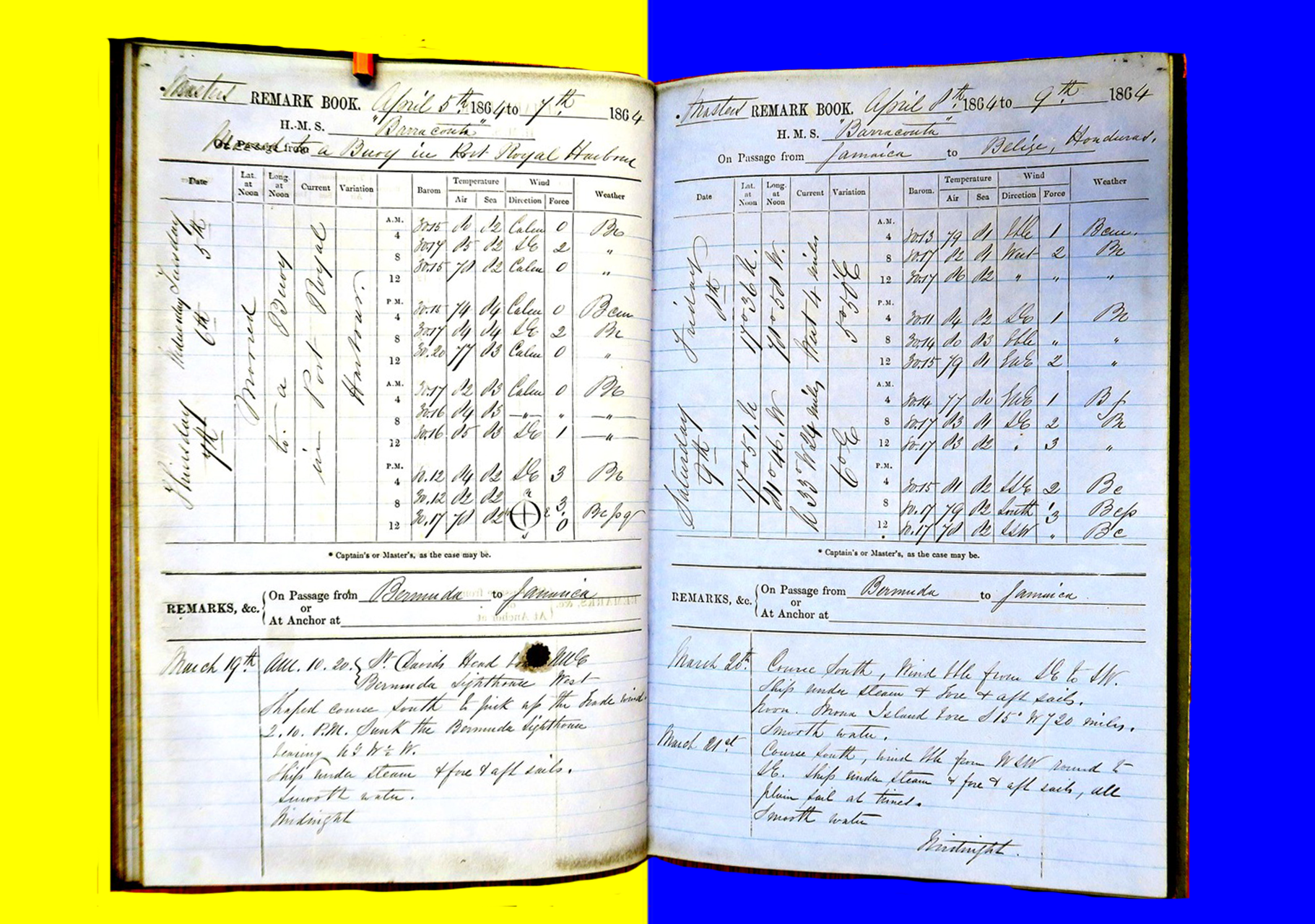
Officially open for entries in 1992, the Jules Verne Trophy takes inspiration from the fictional tale by Jules Verne, in which Phileas Fogg makes it “Around the World in 80 Days.” The Trophy is open to any yacht with any number of crew, as long as the skipper registers and pays the required entry fee for that year. Starting between the Créac’h lighthouse on France’s Ushant Island and the UK’s Lizard Lighthouse, racers must leave the three Great Capes (Good Hope, Leeuwin, and Horn), to port before crossing the same line to finish. An asynchronous race, the Trophy resides with whichever entry holds the fastest non-stop, unassisted time for the course.
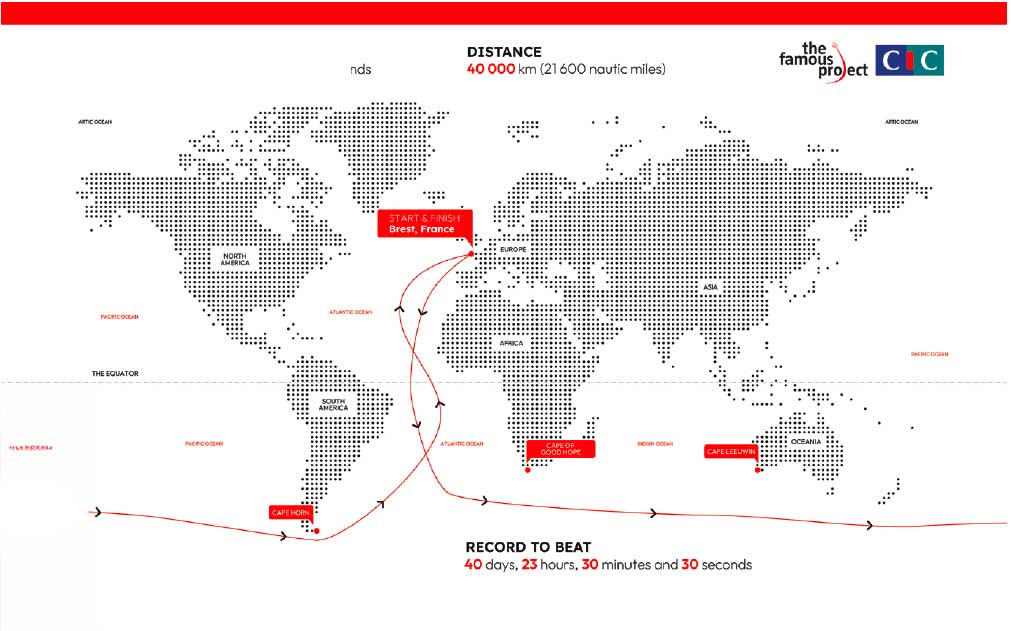
When the challenge was first conceived in 1985, the goal was to break the 80-day mark, and a boat would need to average around 13 knots over the 21,600 nm journey to do it, a cutthroat pace for ocean-crossing monohulls at the time. While monohulls today could break this threshold (Charlie Dalin’s 2024-25 Vendée Globe victory in a foiling IMOCA 60 averaged 17.8 knots), the Jules Verne Trophy has always been ruled by multihulls. The catamaran Commodore Explorer with its five-man crew first broke the 80 days barrier in 1993, with a time of 79 days, 6 hours, 15 minutes, and 56 seconds.
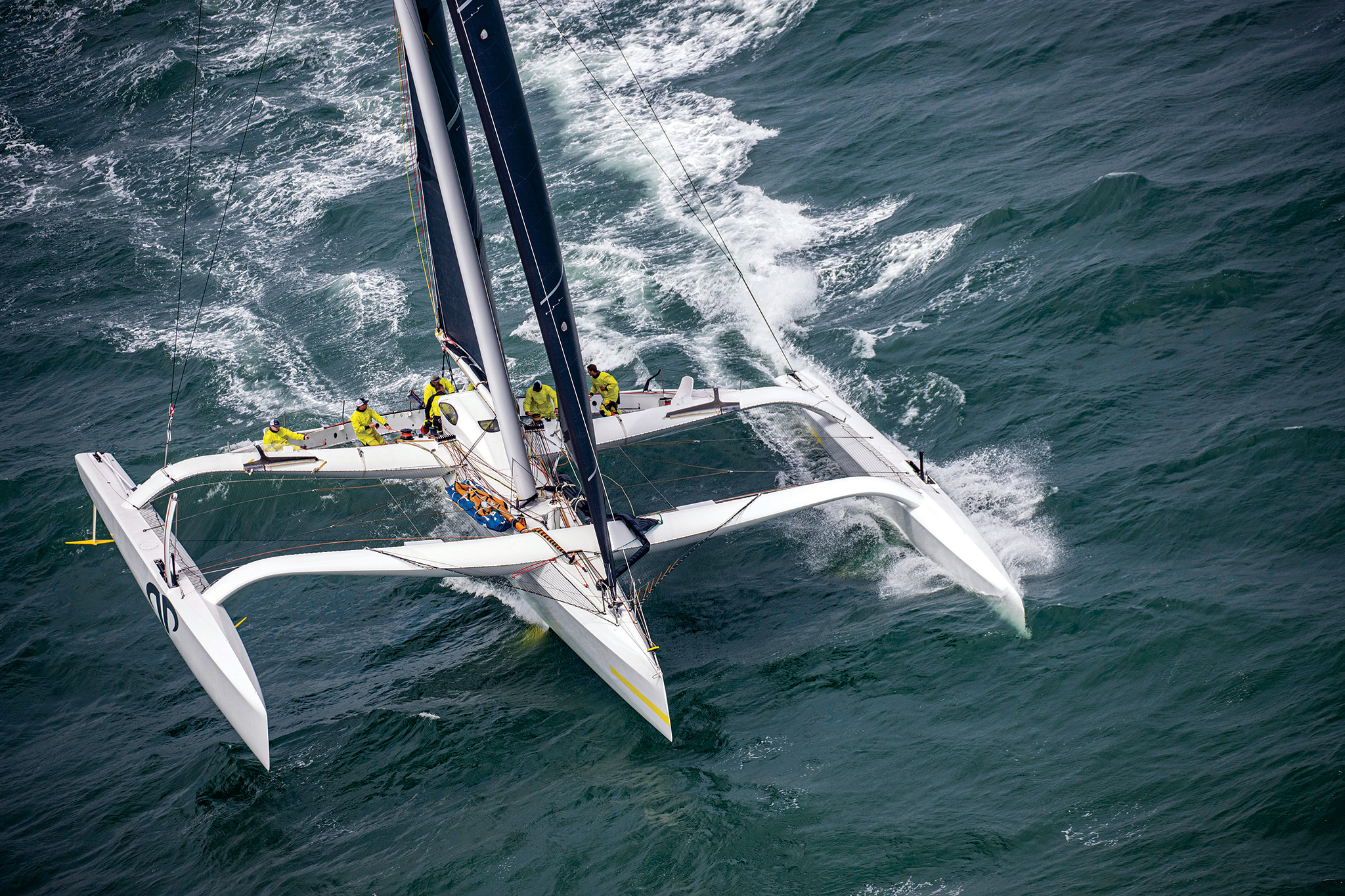
Now the record stands at half that figure—40 days, 23 hours, 30 minutes, and 30 seconds—set in 2017 by Francis Joyon’s six-man crew aboard the maxi-trimaran IDEC Sport.
Only one all-female team has previously started an attempt for the Jules Verne Trophy. Another famous sailing name of the 1990s, Tracy Edwards sailed 43 days with her 11-woman crew, on pace to break the record before her 92-foot catamaran dismasted in the Southern Ocean short of Cape Horn, ending the attempt. Though Edwards announced her intentions to try again, none of her attempts came to fruition, leaving a blank space next to the all-female Jules Verne Trophy record. It’s a blank that Alexia and Dee intend to fill.
“It’s only because I finished the Vendée Globe that I dared to start thinking of this dream as something that I could reach,” says Alexia. “I decided to put together a team to try to break the record. The first names that came to me were the names of women, so I called them.”
The first person she called was Dee, who was delighted to be involved with an ambitious new project. “When Alexia offered me this opportunity for another lap around the world—you know, for me to do another lap, it needed to be a pretty good one. And this ticked all the boxes, but it’s so much more than the sporting challenge. This can change the narrative of our sport and people’s perception of women in the sailing industry.”
Alexia is clear that Dee’s ocean-racing experience, especially as a leader of fully-crewed round-the-world campaigns (Turn the Tide on Plastic, 2017-18 Volvo Ocean Race), made her an obvious choice to supplement Alexia’s solo sailing background. Beyond Dee’s technical and leadership skills, her personality sealed the partnership.
“She’s like a sunshine,” says Alexia, “a really positive person with her light. She brings everyone all together with a smile and a very good energy.”
“Thanks, buddy!” Dee bumps Alexia’s shoulder affably with her own.
Both agree that a positive attitude is a central component to their team, so they trialled many sailors to find the right blend of skills and personalities. One goal of The Famous Project CIC is to amplify the names of female sailing talent to the wider community, so the team was open to new blood, as long as they had a strong willingness to learn. Dee points out that publicly sharing about The Famous Project CIC has netted them some of their crew: “As much as we look for people, people find us as well, who want to be involved. If you really want something, you can try to make it happen; you can see people’s enthusiasm and excitement and passion. That’s worth a lot.”
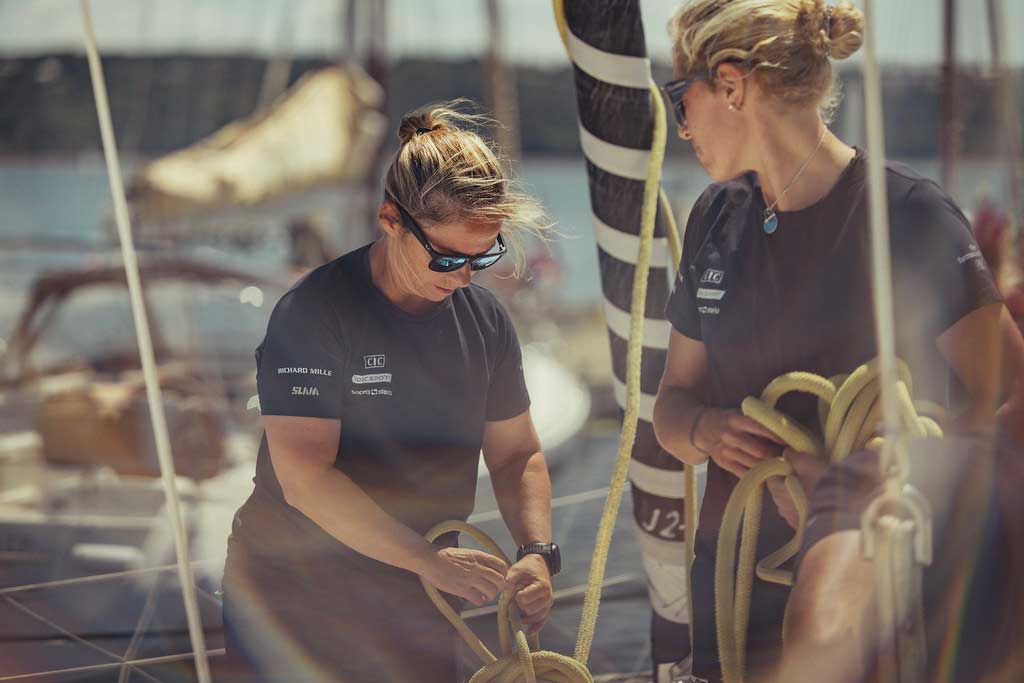
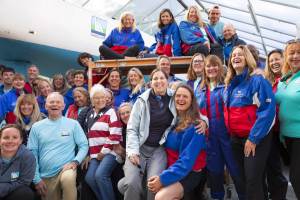
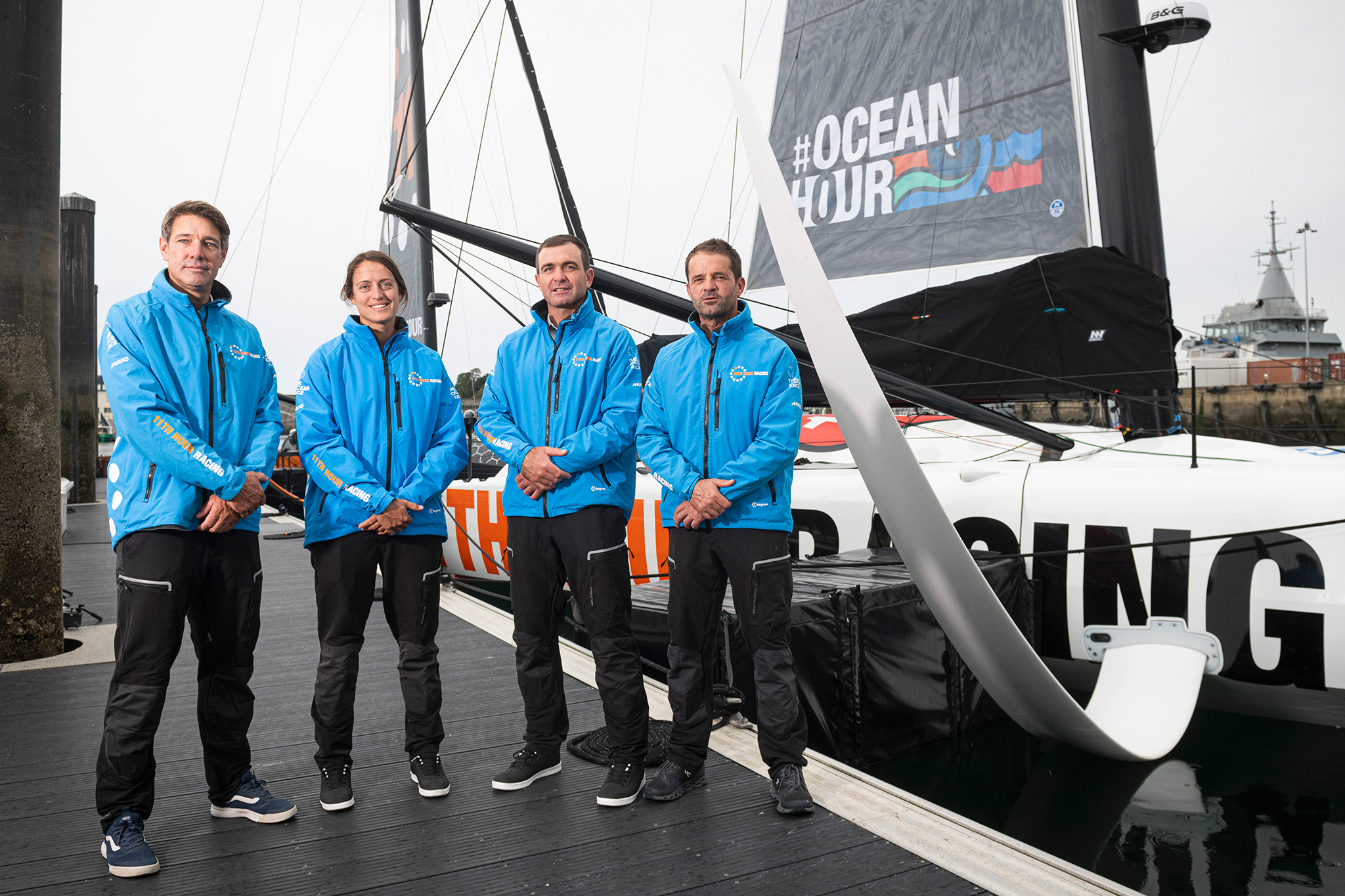
Their roster at press time included Ocean Globe winning skipper Marie Tabarly (FR), and Annemieke Bes (ND) and Támara Echegoyen (ESP) who each have both Olympic and Volvo Ocean Race credits on their resumes. True to their mission, the team also boasts rising names in ocean racing Deborah Blair (UK), Rebecca Gmuer Hornell (NZ/SUI), and Molly Lambert LaPointe (US/IT). A final crew roster was announced in September.
Most of these sailors are accustomed to the challenges of ocean racing, but a heightened ability to learn is no casual trait for the team; many were new to the high-speed, high-stakes multihull world, including the skippers.
“We had to learn everything back from zero,” recounts Alexia, “Most of the things you did learn on a monohull, you have to forget it and do exactly the reverse on a multihull.” To get up to speed, The Famous Project CIC acquired the MOD70 trimaran Limosa to serve as a training platform.
“We started racing on the MOD70 because there were other boats, similar boats, to race and compare ourselves [to]. We had to learn really quickly because they were not waiting for us!” Alexia laughs.
Describing the change over from monohulls to multihulls, Dee explains “It’s a very different sensation, a different motion. There’s no give-and-take. You’re on the edge all the time, and you’ve got to recognize that edge.”
According to Dee, honing that multihull sixth-sense is a huge part of the record attempt’s allure. “I just feel like I’ve learned to sail again. It is so exciting. To remember that buzz you get, and you can’t help but come off the water smiling, because, you know, we’ve just spent 48 hours cruising around the Atlantic at 30 knots, and it’s just, it’s crazy. Both of us thrive in that environment, and it’s really cool to continue to learn and develop.”
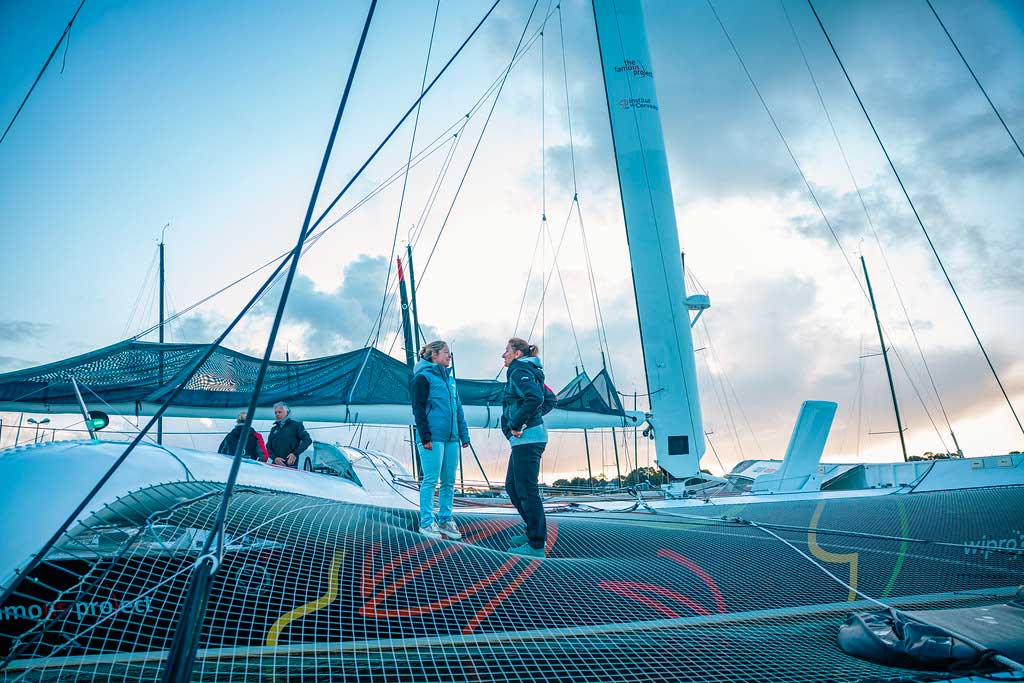
With very few women holding extensive maxi trimaran knowledge to serve as mentors, Dee and Alexia called in multihull round-the-world experts like Brian Thompson and Jonny Malbon to impart their knowledge while they train on Limosa. Jonny also acts as the Team Director, heading a small but versatile shore team to prepare the boat that the team will sail during the record attempt.
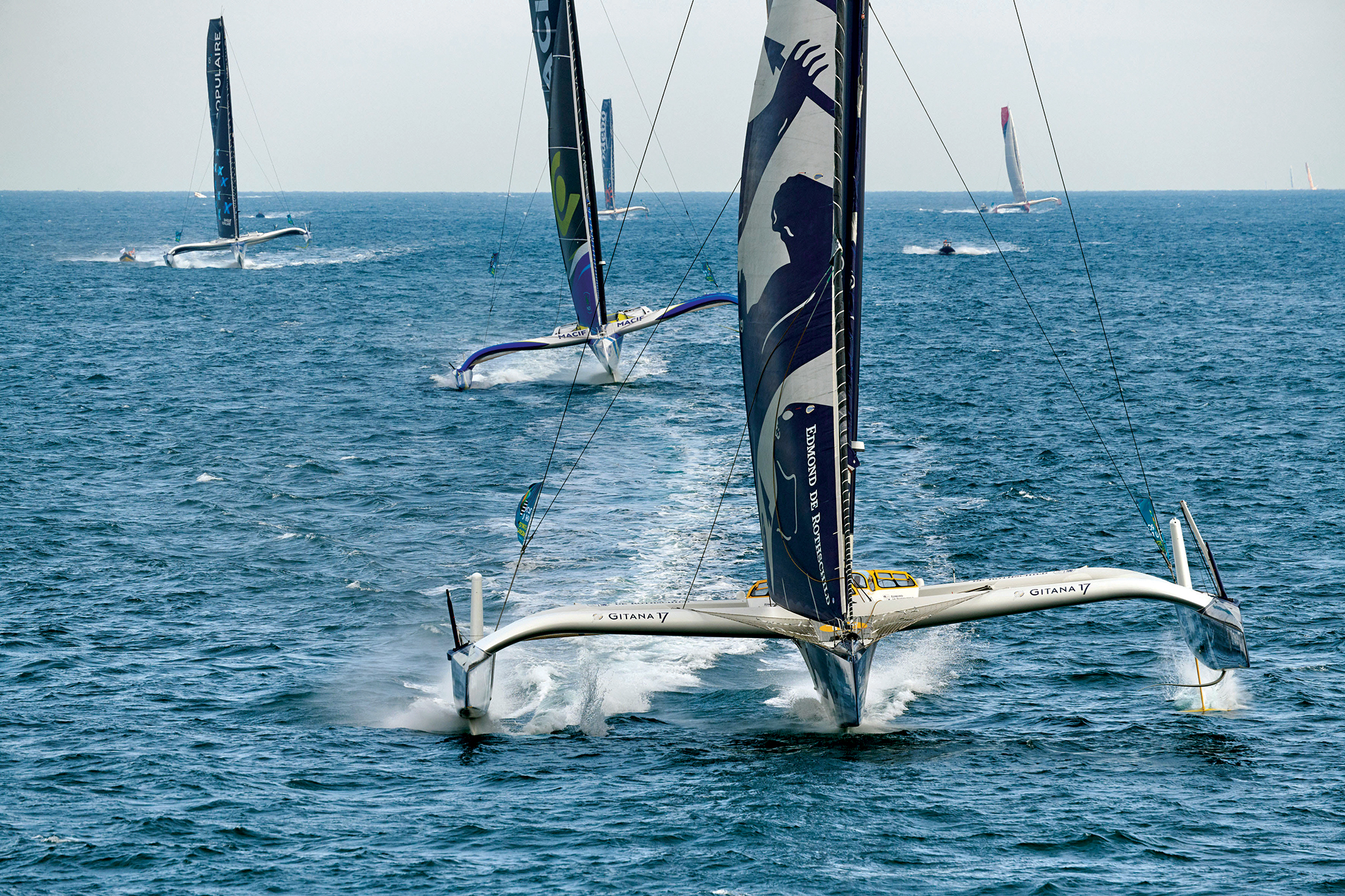
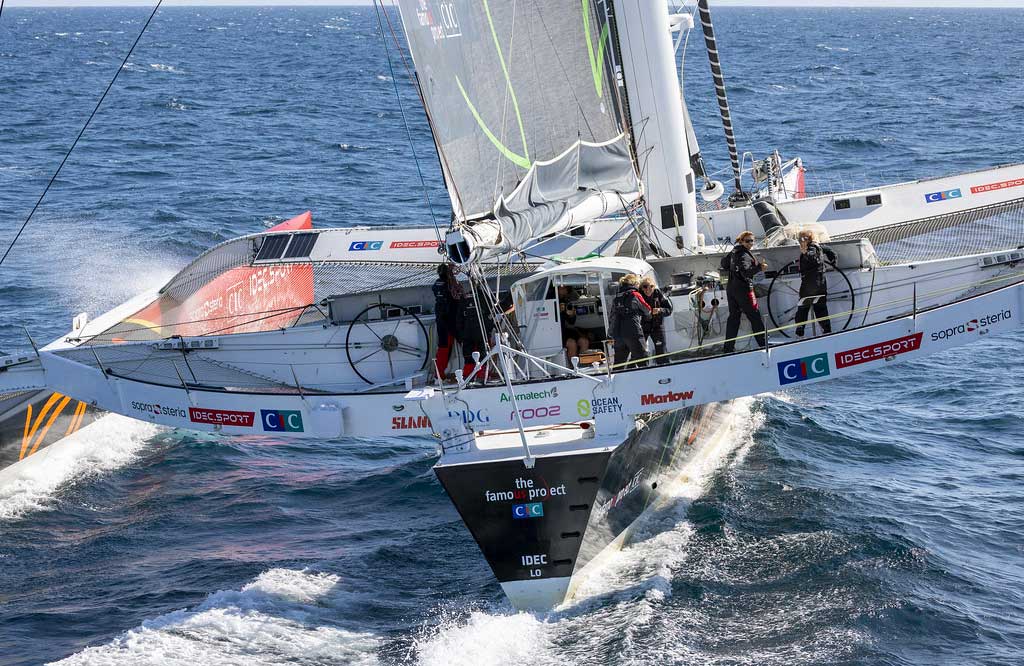
The race boat is the 103-foot maxi-trimaran IDEC Sport, the very same vessel that holds the current Jules Verne record, albeit under a different crew. Originally launched in 2006 and sailed under the name Groupama 3, the boat was purpose-built for record breaking, winning the Jules Verne Trophy twice and the transatlantic Route du Rhum three times. The number of miles on the boat is a positive to Alexia and Dee, who note that having something “tried and tested” provides a sense of security for their endeavor. While a new boat might be nice, attempts on more recent designs have ended in mechanical failures. As Alexia puts it, “If you want to win, you have to finish.”
The team has undertaken a refit to make sure the nearly 20-year-old trimaran is in circumnavigating shape. Despite the upgrades, there is one historic piece of equipment Alexia will miss—the grinding bicycle installed in 2010 for Franck Cammas to manage the heavy loads onboard while sailing the boat short-handed. An unfortunate loss, she jokes, given that some of the crew love cycling. “In case we’re getting bored during this trip, we [could have] put them on the cycle to go for some watts!” Instead, the crew will manage hoisting and trimming with two traditional grinding pedestals, and find other ways to stave off boredom.
Beyond a well trained crew with a dependably speedy vessel, the team will need to plan the timing of their attempt perfectly to have a chance at breaking the overall Jules Verne record. The season for Jules Verne attempts is roughly October to March, when the weather patterns around the globe are more likely to favor a quick passage. IDEC Sport will be on standby at the end of November, consulting daily with a forecasting specialist in Brittany to advise on the best weather window.
Even though weather prediction technology has improved massively since the early days of the trophy, Alexia and Dee know that it’s “a bit of the luck of the gods” after the first week or so. Some Jules Verne record attempts abort the course and return to port after falling behind the record pace, but Alexia offers a different philosophy.
“Once we leave a harbor with the window we think is the best, even if there is another window coming a week after, we are not coming back. We just carry on because we want to establish this first time for women, first time ever around the planet, non-stop, and unassisted team sailing on a multihull.”
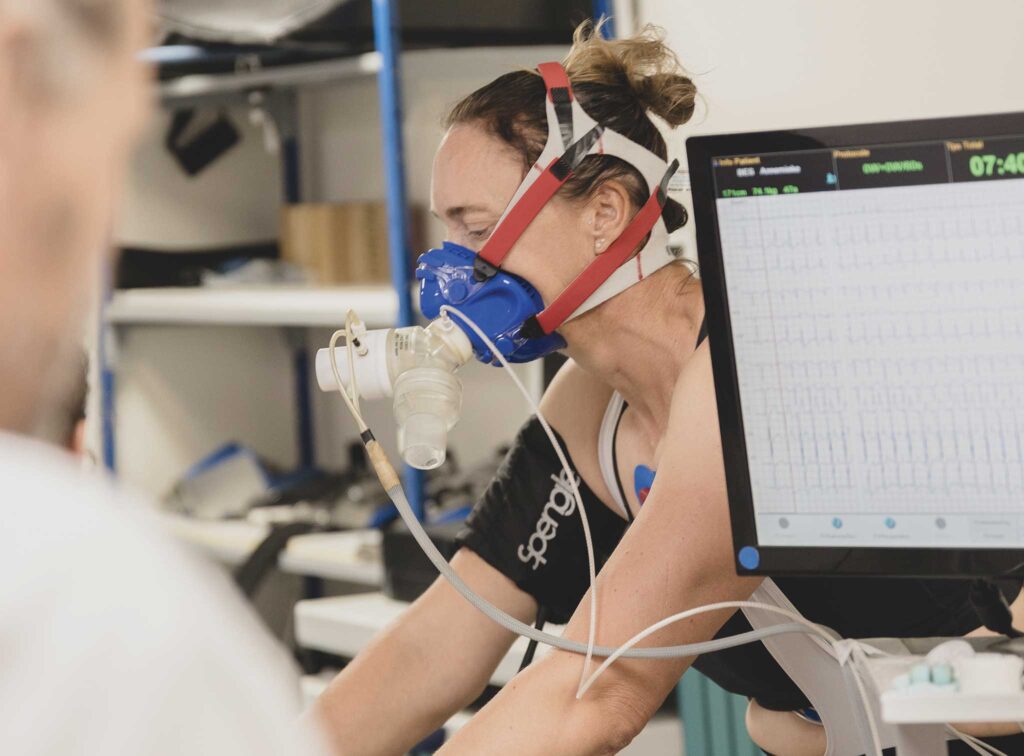
But making it around the globe in under 80 days will establish more than the all-female record. The Famous Project CIC is incorporating environmental and physical studies into their voyage to enrich knowledge about ocean health and the impacts of ocean racing on women’s health. IDEC Sport is equipped with atmospheric sensors and deployable buoys that will be dropped at strategic points along the route. The environmental work is coordinated with Ifremer, a French ocean research institute, providing data that Alexia says is “rare and precious” for researchers due to the difficulty of reaching the remote patches of sea. Similarly, the team has engaged researchers to monitor the crew’s physical health before, during, at the conclusion of the attempt. Eventually, they want their data to be useful for other women training for extreme sports.
“A little niggle after 40 days of grinding every day is going to be a major problem, and we can’t afford for anybody to be a passenger. People have got to contribute and deliver,” Dee says seriously. “That training [matters], that physical training, everyday, regardless how you’re feeling, of looking after your body, making sure you’ve got the mobility, making sure you’re stretching, making sure you’re strengthening, and your feeding and fueling right, that’s an indication to somebody’s mental strength as well, of whether they’re willing to go out there in the dark, cold, wet, miserable, scary Southern Ocean.”
But despite its reputation, neither Dee nor Alexia find the Southern Ocean to be the most daunting part of the voyage. “After you exit the Southern Ocean and you’ve got the Atlantic left, psychologically you’re kind of like, ‘oh, we’re on the home straight, we’re nearly done.’ But actually, that 7,000 miles in the Atlantic can be the most difficult. You’ve still got the equator and the doldrums to go through,” Dee explains, “And then who knows? In the winter in the northern hemisphere, there can be a sting in the tail before you get to the finish line.”
Asked what will get them through the toughest parts of their record attempt, Dee and Alexia exchange looks.
“A sense of humor?” offers Dee.
“A Haribo?” counters Alexia.
“Haribo sweets, yeah, and a sensible spares list,” agrees Dee.
That matter settled, Alexia focuses on the bigger picture, “Once we are on our way, it’s just enjoying the fact that we’re there and not forgetting that we are lucky to do that.”
“It’s important to deliver on what we’re saying we’re doing and then we can get faster and faster each attempt. It doesn’t have to be one attempt and over and done,” Dee adds. “I’m convinced that if we’re still laughing and joking how we are now by the time we’ve finished, there’ll be more to come.”
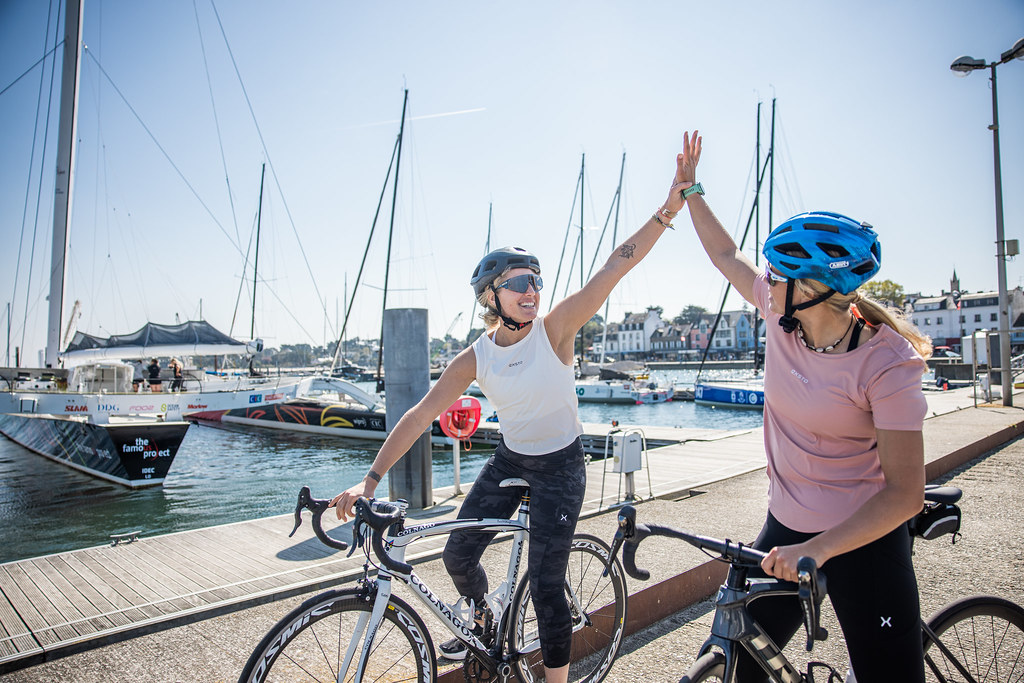
Pick Your Crew like the Pros
Whether you’re planning a circumnavigation, a race team, or a charter vacation, who you bring along for the ride makes all the difference. Here’s some advice from the pros on picking a crew that’s right for the job.
Value Diversity – The Famous Project CIC has an international crew with a range of skills and experiences. “You can have the best sailor in the world in your team, but if this person is not able to share [their strengths] then it is not useful when you try to build a team,” says Alexia.
Stress Test Early – How do you know if your team will come together in difficult moments? Try an on-shore team-building exercise first. “When we first started the relationship for the project, we went up into the mountains,” Dee says. “Took ourselves into a completely different environment to see when we’re kind of outside our comfort zone, made to feel a little bit uncomfortable, how do we still communicate? Are we still on the same page? Are we still aligned? Can we speak nicely to each other? I think that was a really strong thing to do that now, when we’re sailing, when we’re in our happy place, it’s pretty simple.”
Leave Room for Growth – Alexia found that choosing people who were motivated to learn led to a team with more skills to offer. “It’s nice to have people who able to be in their role but also creative in other roles that I didn’t imagine at first when I invited them to work with us.”
Attitude is Everything – When in doubt, consider how your crew makes you feel. “I would never have done something like this with someone who is not able to smile and laugh about every single thing, little things or big, even some big problems we have.” Alexia is adamant, “That’s really important.”
MHPS Winter 2026