About five years after his last boat splashed, Sir Lindsay Owen-Jones was already dreaming about the next one. But Magic Carpet3, the first WallyCento, was a tough act to follow. It took seven years and the expertise of some of the industry’s best minds, but this year, Magic Carpete finally took center stage.
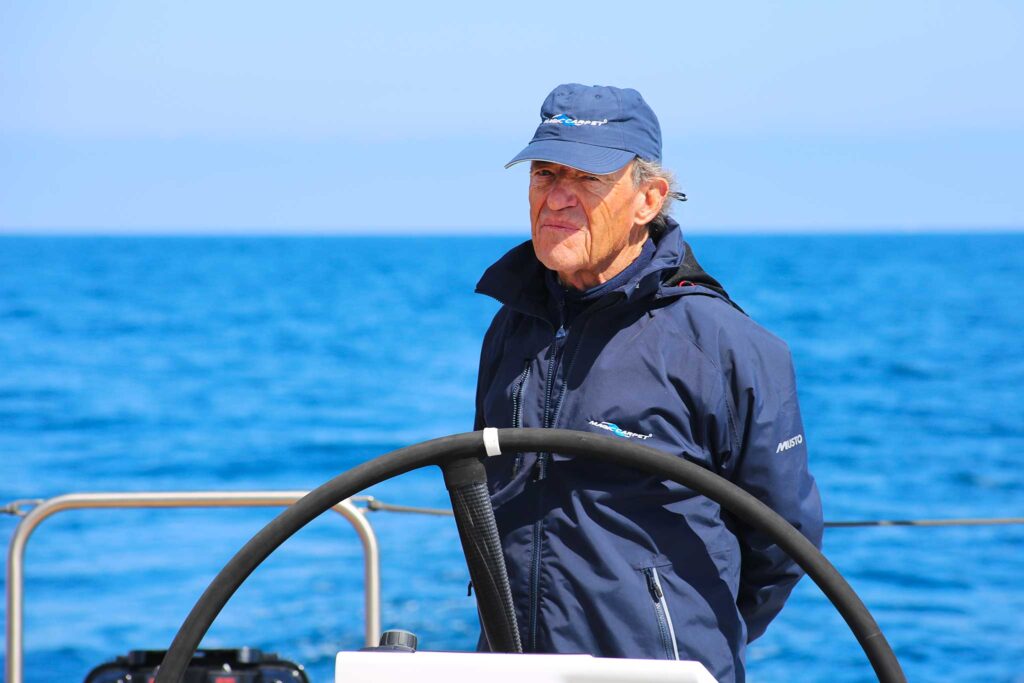
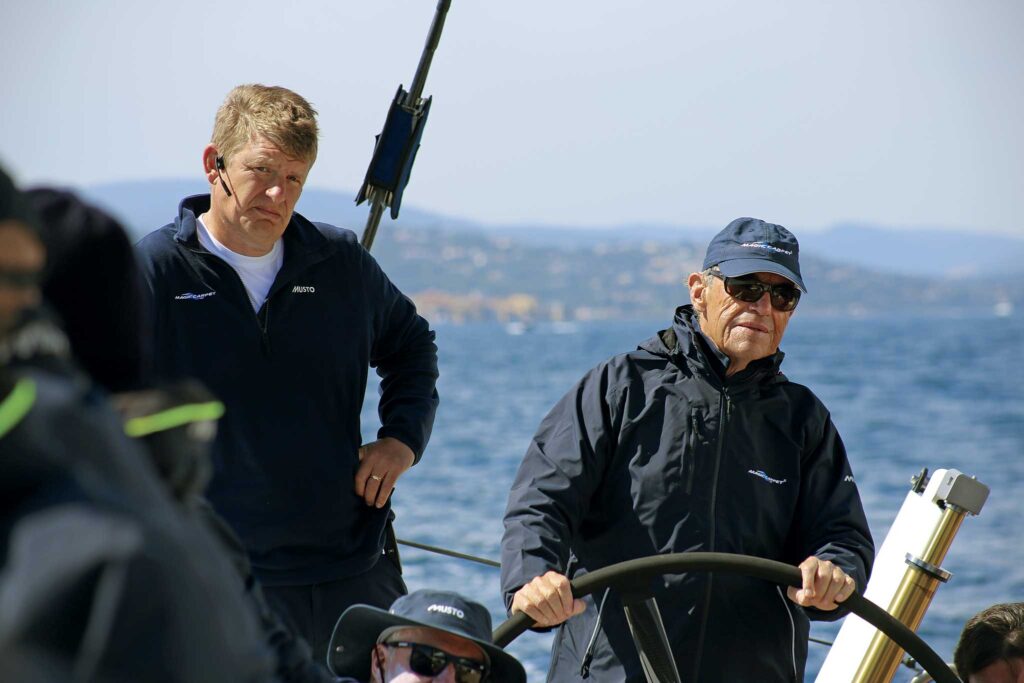
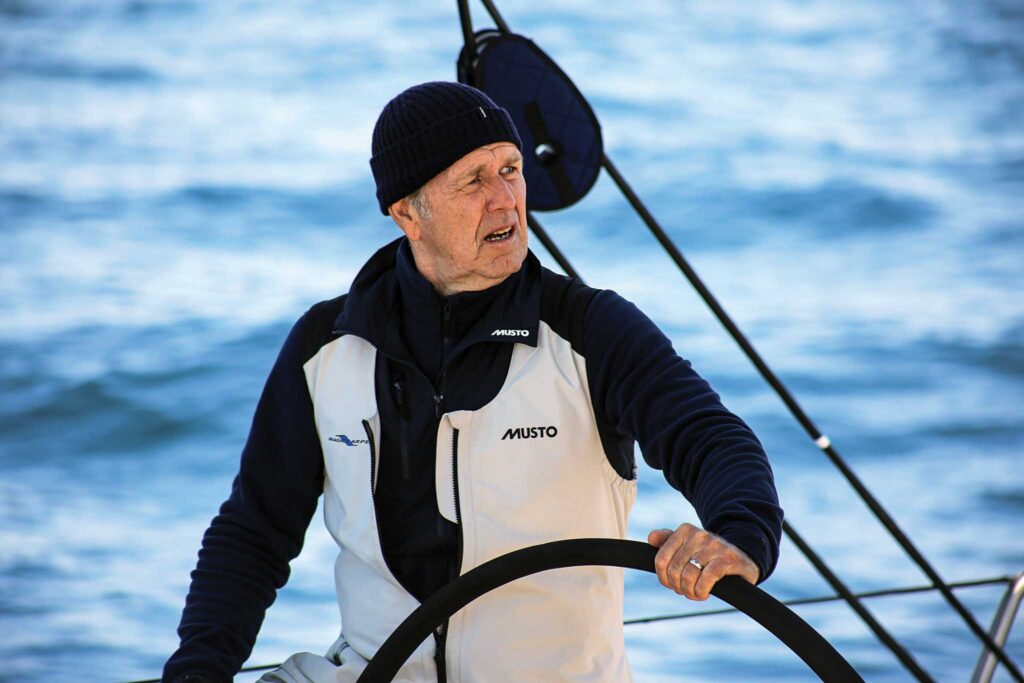
Even a brief conversation with Sir Lindsay reveals him to be a genial, conscientious man, proud of his boat and quick to give credit to all those who made it happen. On a warm spring evening, in his unplacably European accent—a combination of English, Italian, and French—he talks of St Tropez, the sea, and his philosophy on running both a boat and a business. And having been the CEO of L’Oreal for 23 years, he has no shortage of experience to share.
“When hard-working people rely on you, I think you owe it to them to be the first person in and the last person out in the evening,” he says. Though it’s been fourteen years since he stepped down from running the company, that dedication and pace of life hasn’t slowed: The boat is more than a full-time job. “I was working hard for 40 years, and this takes up even more time than that.”
“He knows everyone on the boat,” says Ed Bell, the project manager for Magic Carpete. “The previous boat needed 28 to race, but 28 is too many crew to really have a relationship with everyone. So part of the design was that this had to be able to race with fewer.” It was just one of the unique inspirations in a truly innovative design brief.
Design and Build
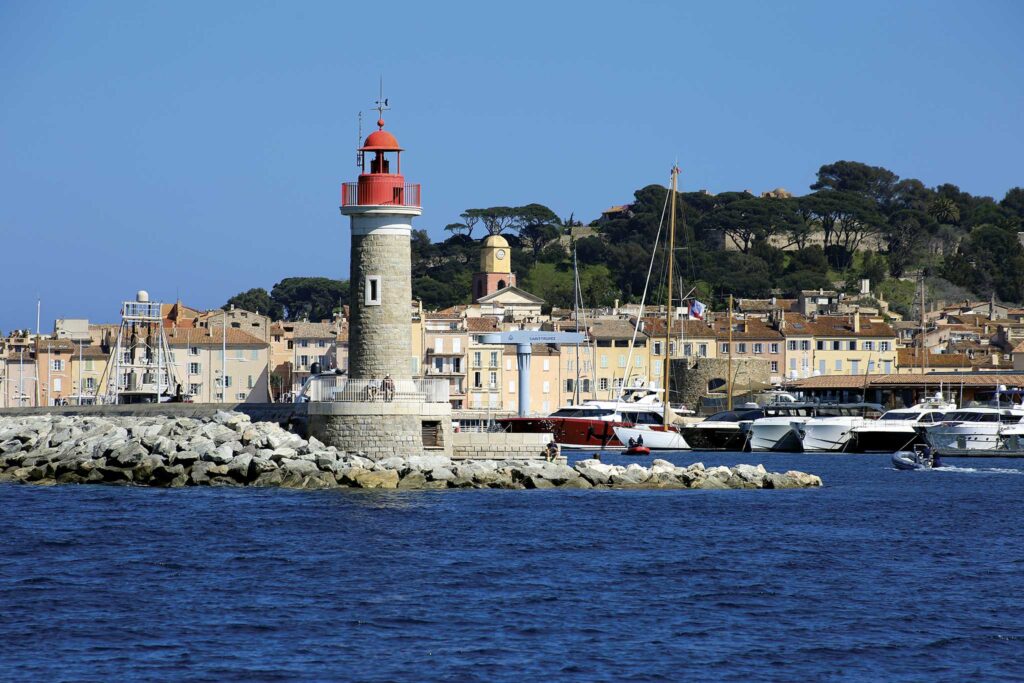
“St Tropez was our box rule,” Sir Lindsay says with a wry smile. The city where he and his wife Cristina have made their home is a nostalgic seaside gem that sketched an outline of the parameters for the new boat. It couldn’t draw too much to get through the harbor or be too big to fit at the dock, it had to excel in the area’s typical wind conditions… plus convert to a cruising boat when not racing on the maxi circuit so that they could enjoy the surrounding French Riviera by sea.
Beyond the location’s necessities, two other design priorities also took shape. Sir Lindsay wanted the world’s fastest 100ft yacht in 8-12 knots of breeze and the first hybrid powered maxi that could complete an entire day’s racing without using an engine. He knew he was after something really different and went to Magic Carpet3’s designer Reichel/Pugh—but their proposal didn’t go far enough from the previous concept.
Meanwhile Wally, which had built all three of the previous Magic Carpets had been sold and switched their focus to series boats. “We would’ve been glad to work with them again, but under the new ownership they didn’t have a risky one-off in their business model anymore,” Sir Lindsay recalls. Still, the boat has a touch of Wally-founder Luca Bassani in it. According to Sir Lindsay, all of the high end racer-cruiers of this day and age are, in some way, descendants of those visionary Wallies.
So, the Magic Carpet team was in the market for both a new designer and builder, and Guillaume Verdier threw his name in the hat. Verdier will be a familiar name to SAIL readers as the mind behind some of today’s most cutting edge modern yachts, including everything from Vendee Globe and Ocean Race winning IMOCA 60s to America’s Cup champions, maxis like Comanche, and Ultims like Gitana 17, just to name a few. It was a perfect fit.
“Sure, he can do computers, but you ask Guillaume a question and he gets his pencil and draws it for you. It’s fantastic.” Sir Lindsay recalls one particular conundrum with the keel. In order to get the necessary righting moment for a boat of this size, it would need to be deeper than St Tropez’s harbor allows for. “He x’s out the old one and draws a whole new one. ‘Voila!’ and he’s bent it backwards.”
“The draft is 7.1 meters, which helps to minimise the weight of the keel bulb while still being able to generate a high righting moment,” explains Verdier. “We needed to be able to reduce the draft to 4.6 meters to ensure Magic Carpete can get into the harbor. But we wanted to avoid a vertically lifting fin as this would require a heavy structure that would have a high center of gravity, which in turn would compromise performance. The solution was to create a keel that reduces its draft by swinging 60 degrees aft like a centreboard, but where the keel bulb remains parallel to the waterline.”
The twin rudders faced a similar dilemma. With a beam of over 23 feet, there was some calculus to be done to get rudders long enough to remain grippy when the boat is on its ear, while still shallow enough to fit into port. Verdier’s first instinct was kick-up rudders, which have become immensely popular on high octane racing yachts, but they would have had to be massive and would have ruined the lines of the transom. Instead, the team designed a retractable rudder in a rotating barrel housing that can be raised or lowered directly through the deck.
When it came to those two key design principles, being fast in light air and running a full day without needing the engine, Verdier was more than up to the challenge. “All we needed with Guillaume was to convince him that we didn’t want another Comanche, which we admire immensely, but it’s so wide that you need quite a lot of wind for it to move,” says Sir Lindsay. This boat wasn’t chasing the same offshore gales that Comanche does. In fact, the maxi circuit won’t start a race in more than 25 knots. Besides, he wanted a boat that was still fun for casual cruising. “We needed a boat that could move in light air. In the summer it’s so hot here, you need that apparent wind to make it more comfortable.”
Bell and Danny Gallichan, the boat captain and friend who has been running Sir Lindsay’s boats for thirty years, had been discussing electric propulsion and how it might translate up to maxi yachts before this project even began, and soon enough the team was exploring how to turn the hypothetical into a reality.
Sir Lindsay, a former motorsport driver, turned to the world of sports cars for ideas: “What do you do when every kilo counts? You ask the experts.” They partnered with Helix, a company that specializes in electric drivetrains produced for motorsports as well as Formula E and E1 Series powerboat racing. “There’s a lot in common [between motorsport and sailing]. When you’re driving either, it’s just you and the machine,” says Sir Lindsay. In fact, he cites car racing with priming him for the adrenaline of yacht racing starts.
Together, Fortescue Zero and Helix reimagined the power system.The plan for three electric motors (two for the hydraulic system, one for the propulsion system) was a departure from the typical maxi setup in which a diesel engine running power take-off pumps for the hydraulics constantly runs. But they wanted quiet, clean sailing and three motors was the way to do it.
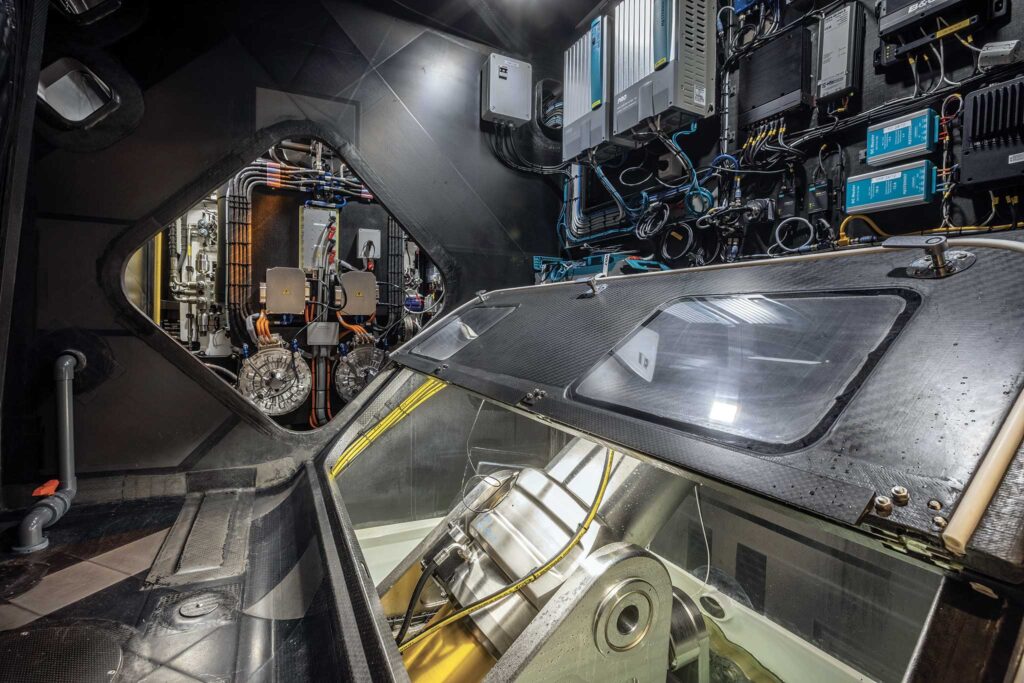
Persico Marine was decided upon as the builder, a relationship that Sir Lindsay put his full trust in. “Every spoonful of glue was weighed on a kitchen scale. They’re very good at what they do.”
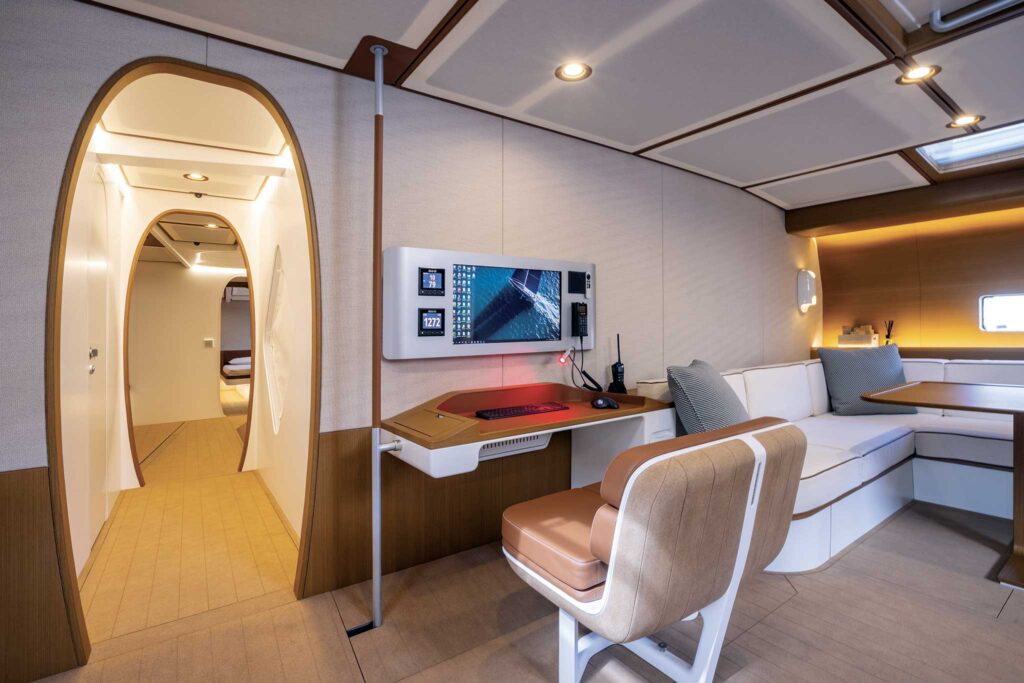
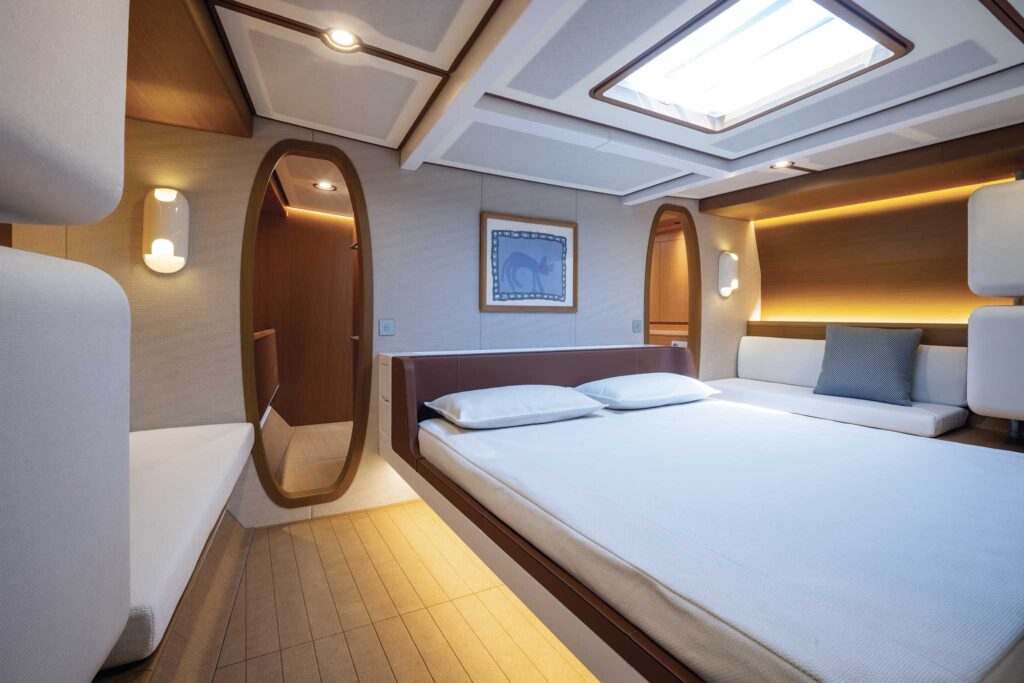
Axel Le Beaufort, naval architect and former professional sailor turned designer was responsible for the interior as well as deckshape, steering wheel, and console design. The result is a warm, stylishly retro look with inventive swappable features to convert from racing-mode to cruising-mode. “Axel’s other job is working for Hermes, and [the boat] looks like it,” quips Sir Lindsay. “It took some time, but Persico found the local artisans to create exactly what had been designed, and I love it.”
On the Water
When it comes to how Magic Carpete stacks up against the competition, Sir Lindsay isn’t going to speculate. “I’m superstitious, I learned that from my Italian wife, so I won’t make any predictions,” he says, and Cristina laughs. Though much of the team has been racing together for years, having new systems and different numbers of crew onboard complicates the transition to a new boat, and they’re not under any illusions about the fact that it might take some time to get their footing.
The team’s racing season comprises five events with a cruising break in the middle (during which Sir Lindsay will take the boat on excursions with family and friends remarkably similar to what a boat a quarter of its size would embark upon—day sails, overnights, tours about the area).
“We’re pretty happy with how the boat’s gotten on so far,” says Gallichan with characteristic measuredness. The truth is it’s been an eventful first season, starting out with the very first regatta, PalmaVela.
“As the regatta started, we had two races and won both of them, line honors and handicap, a great start,” he recalls. “The second day there was a start line incident where a smaller boat shut the door on us, and we had nowhere to go.”
The result didn’t look too bad initially, but the collision cracked Magic Carpete’s lower cap shroud and required a significant repair. “We had to unstep the rig and get new rigging built in a hurry. It’s continuous rigging—V1, V2, V3—so the whole thing needed to be replaced.”
Fortunately, close relationships with their suppliers made quick work of it, and their rigging manufacturer, Future Fibers, was able to get the replacement made and in France from their factory in Sri Lanka in about a week. “It was a fantastic effort on their part.”
They made it just in time to get back out on the course for their next event in Sorrento, a 150-mile overnight followed by short course racing. With little time to practice, the results weren’t what they’d hoped for, but Gallichan says they were happy just to have made the event since, for a new boat, any time you’re out on the course competing is a valuable opportunity for learning. “Then we did the Giraglia which was long. There was a lot of tacking, and we finished 50 meters behind Scallywag 100 and line honors after 30 hours, which was pretty heart wrenching.”
With so many new systems and innovative ideas at play onboard, it’s no wonder there’s a bit of a shake down period to get it all sorted. But the team reports the new systems have been remarkably well behaved. “The canard, the raking keel, it’s all worked well, and the battery and electrical side of the boat have been a roaring success,” Gallichan says. The days spent on the water without the generator running are one of the best benefits. “There’s been a lot of interest. I think it’s early for other people to be adopting the technology, but a lot of owners have come to look at the boat and been impressed by it.”
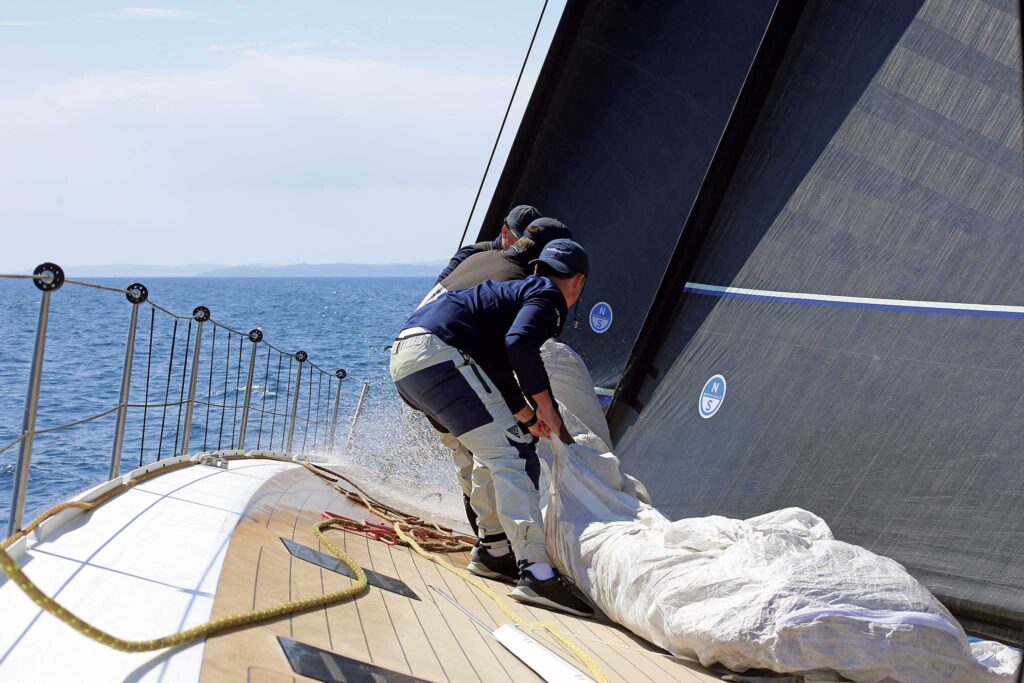
Still, like any boat, there are a few gremlins. “The boat shows good flashes of speed, and then it gets sticky. There are a lot of new systems, and there’s a lot to learn,” he says. One of those works in progress is the sailplan. Originally, they’d hoped to use entirely furling headsails, but on short courses, those are turning out to be a bit of a hindrance.
“With furled sails we’re handicapped in terms of maneuverability and moding. You get quite flat sails on a furler, and they struggle at high angles as well as deep ones,” says Gallichan. “We’re swapping out for string drops like we used to have because, in fact, they’re faster. That will help with both speed and position.”
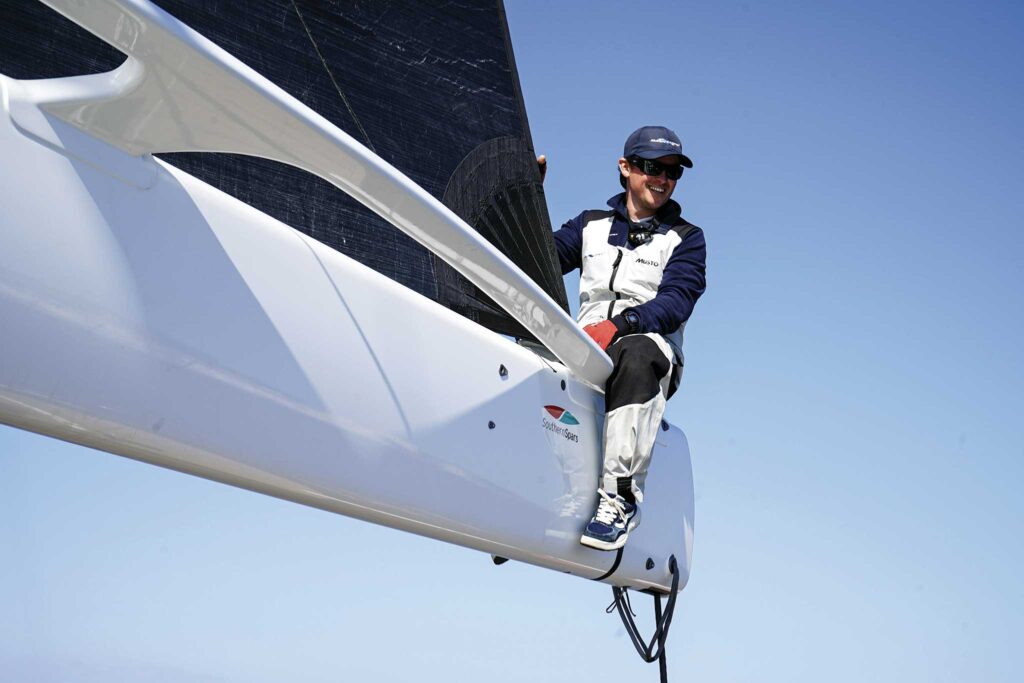
They remain undaunted. “Lindsay’s super, he’s enjoying the whole process,” Gallichan says. “There’s a whole team of people working with us in helping develop the boat, and he’s super proud of what we’ve achieved.”
Sir Lindsay is also hoping that Magic Carpete will inspire people and encourage investment in the class. “I want to have more 100-foot boats out there,” he says. “Even if they beat me, I want them out there.”
And it’s not just the Magic Carpet team that’s excited about the boat. After all the hard work, Magic Carpete is a proud addition to the St Tropez waterfront, its own landmark in a city full of notable places and historic destinations.
It’s no surprise that tour boats follow along during practice days and crowds linger to watch the boat dock in and out. “We love having a boat that other people love,” Sir Lindsay says. “We want to be good neighbors to St Tropez.”
It’s a relationship meant to last. After all, it was this lovely city that inspired so much of the boat’s very DNA.
November/December 2025