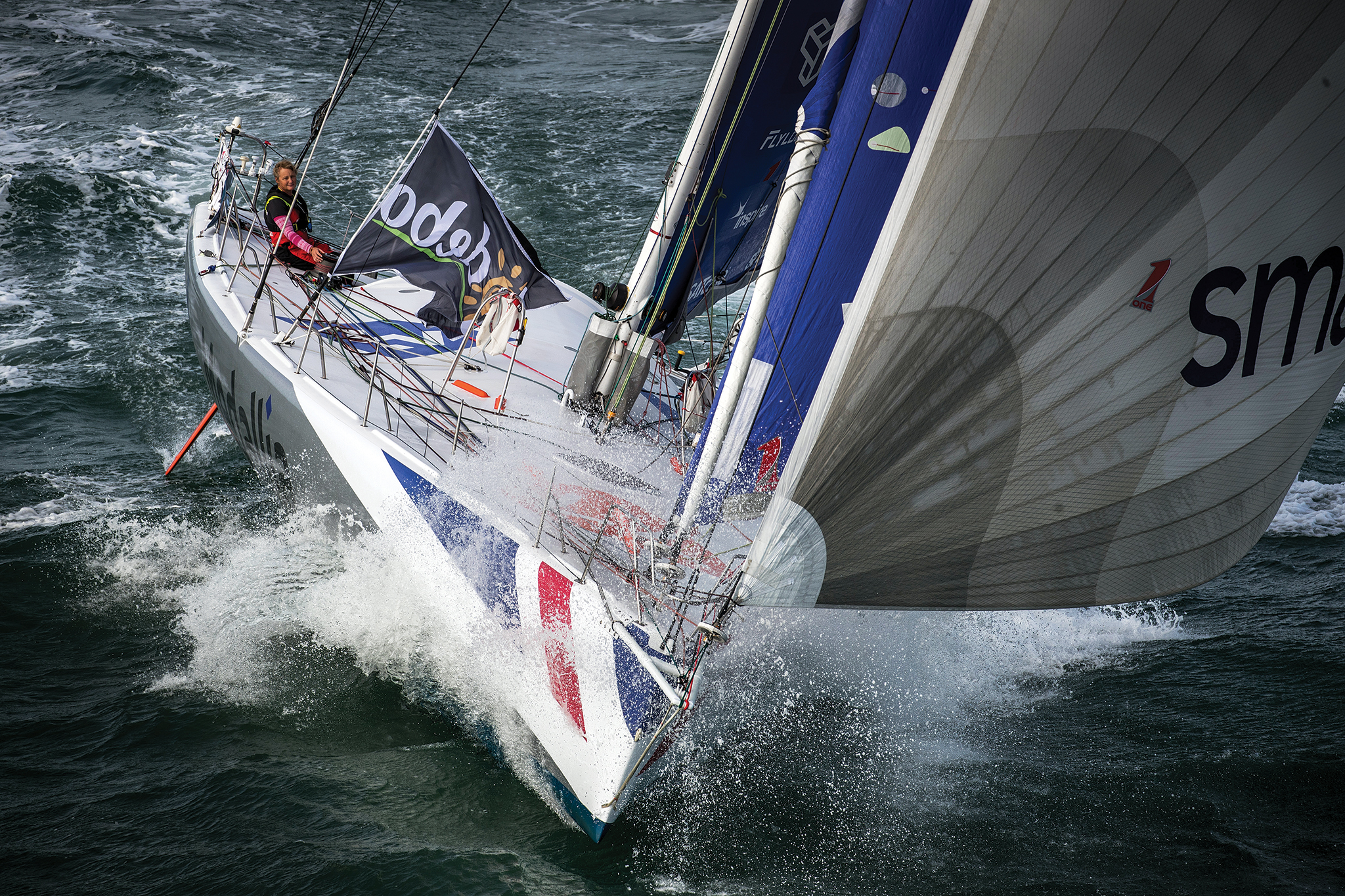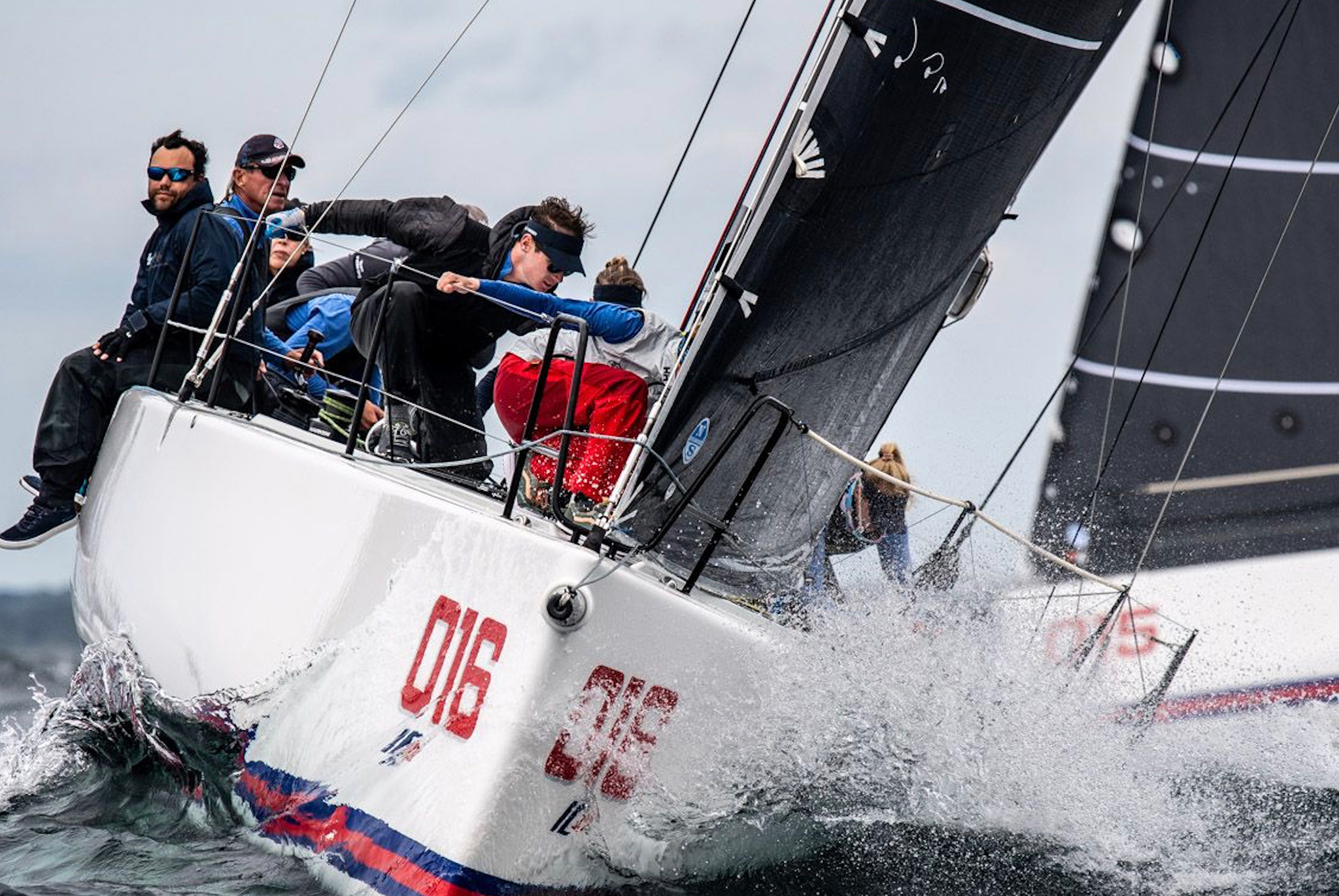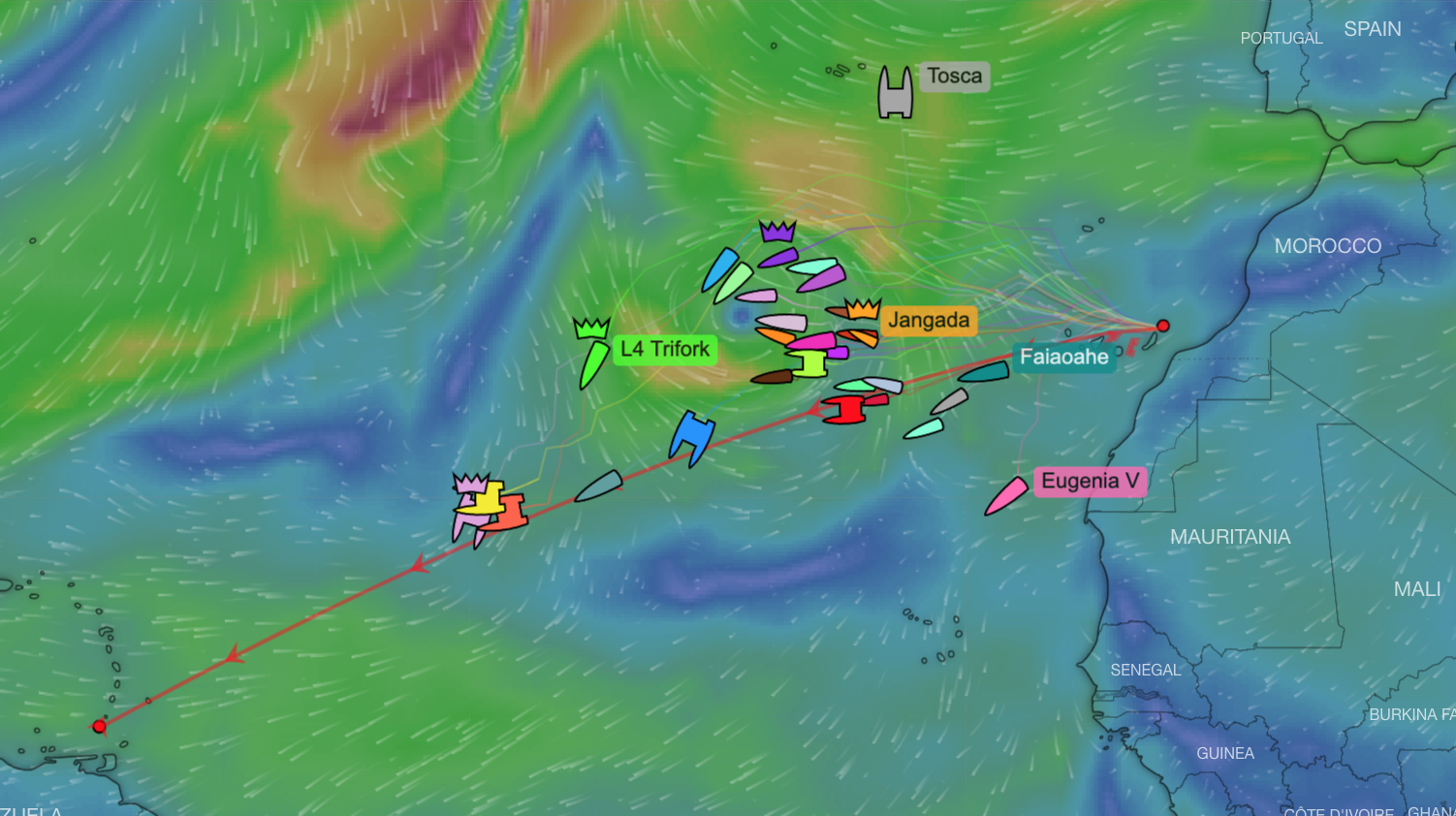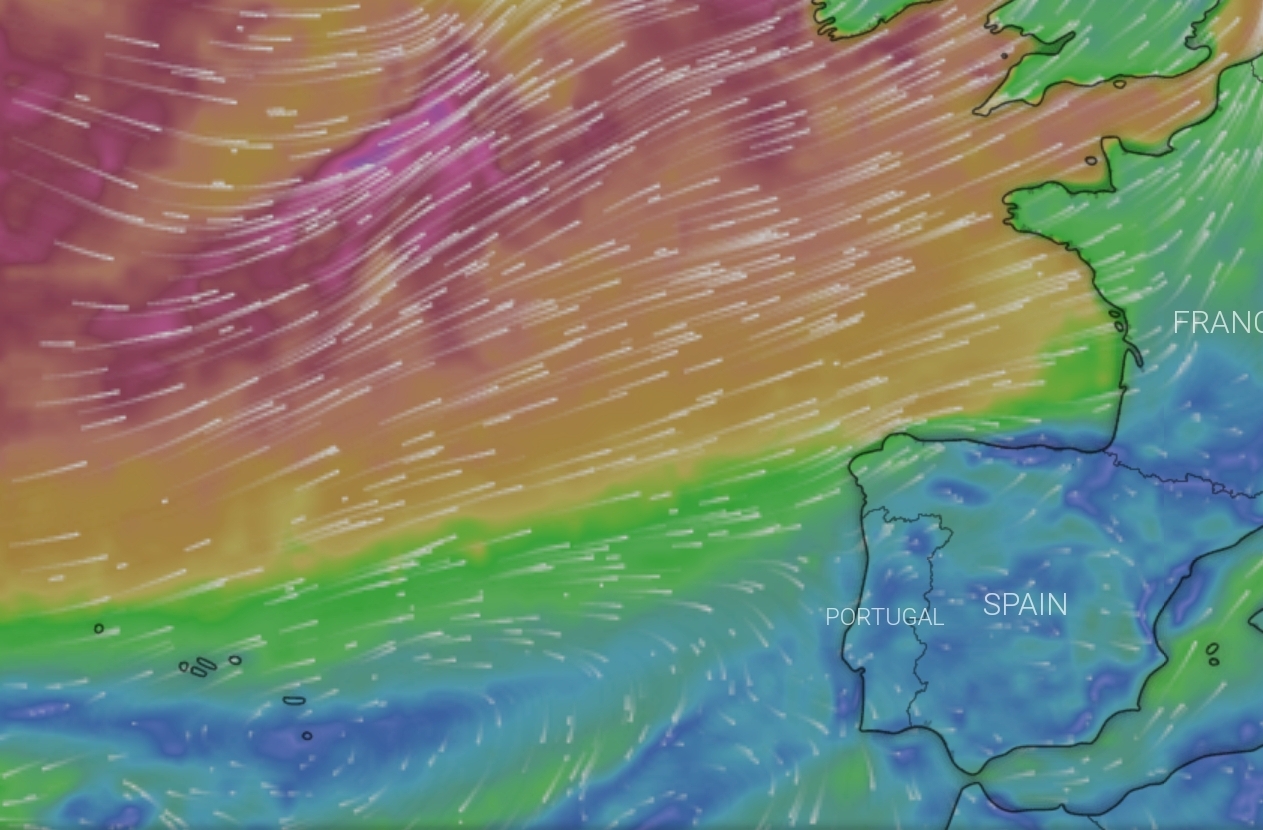
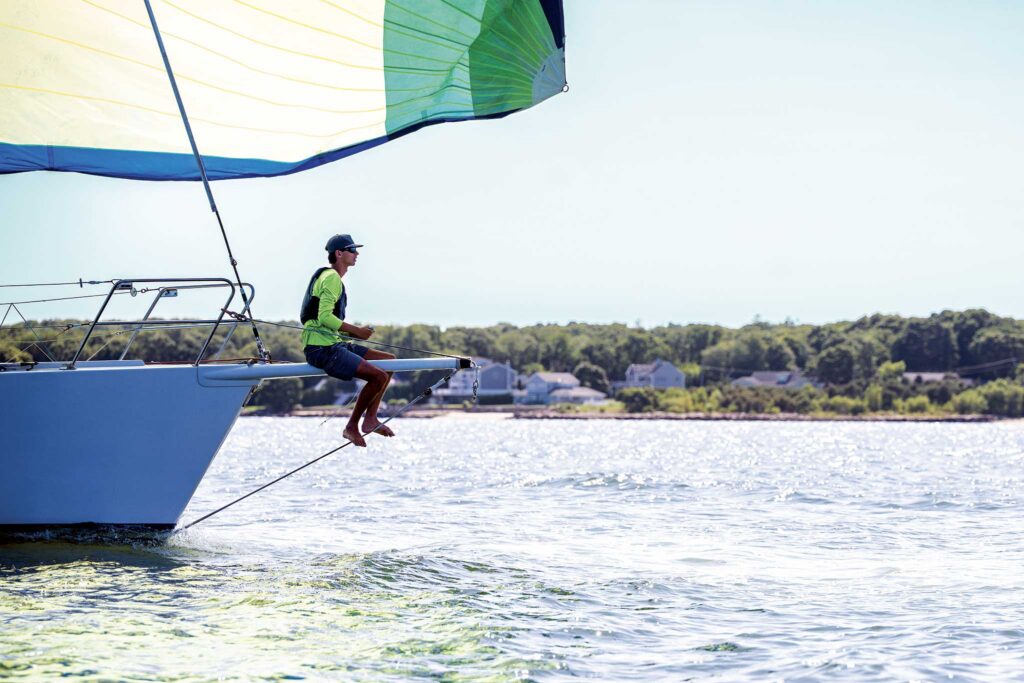
The sun had yet to set on the first day of racing, and Crazy Horse had already put 90 miles behind her. It was a downwind sled ride; she was blasting along at double-digit boat speeds with a red A3 spinnaker. Kites had been tearing around her and boats were rounding up, but hot on the heels of modern race sleds—including a Reichel-Pugh 66, Kernan 47, Class40, and a Judel/Vrolijk 66—her crew wasn’t about to strike any canvas. They worked each wave to keep Crazy Horse on her feet and the bow pointing eastward. 16 knots of boat speed. Then 17 while surfing down another wave. It quickly became a competition onboard of who could hit the next top speed. 20 knots!
This was the 2025 Marblehead to Halifax Race, a 363-mile offshore race across the Gulf of Maine and along the coast of Nova Scotia. Crazy Horse, a 1990 Baltic 50, was crewed by the youth offshore team from New Bedford, MA’s Community Boating Center (CBC). For all but the coaches and one crew, this was the farthest this crew had ever been offshore.
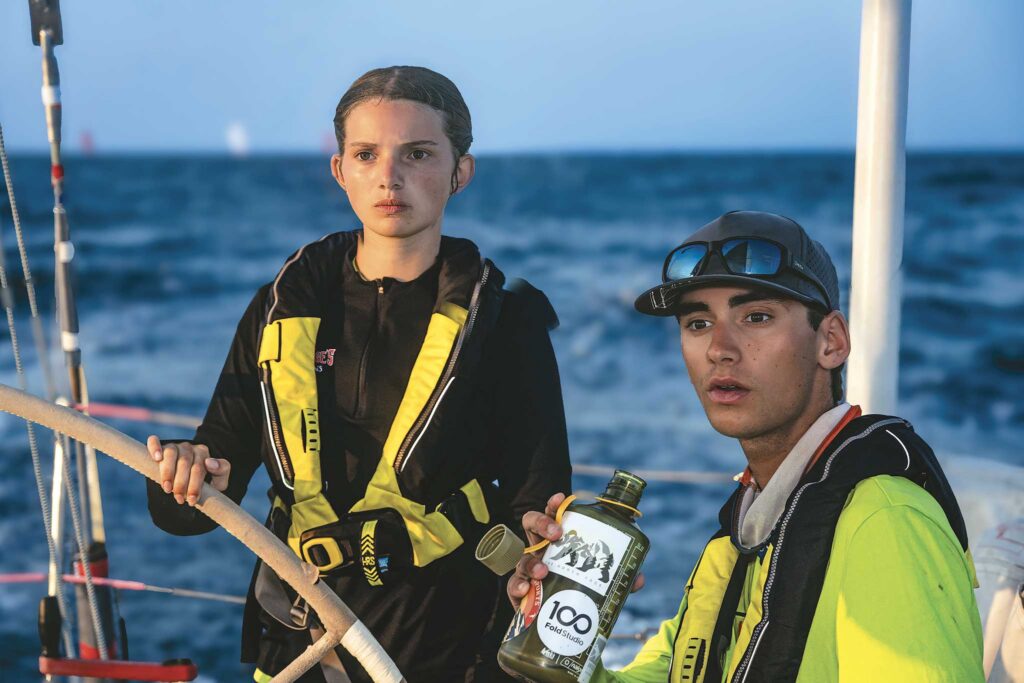
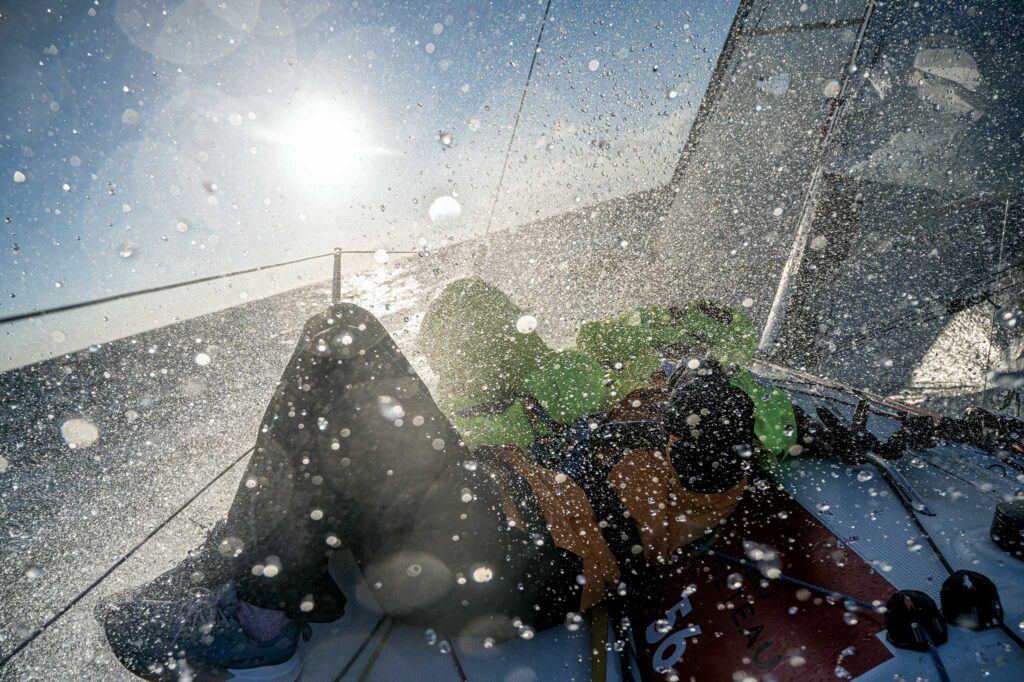
The first evening watch change came, and a pair of boots hit the cabin sole with a splash. 50 to 60 gallons were sloshing about the cabin. “We are going to manage this,” the off watch thought and quickly went to work. It had to be more than the slow leak already dripping from the lazarette hatches. Cushions were lifted and tossed, access hatches opened. As Crazy Horse surged down the next wave, and the rudder came hard over to keep her on track, a stream of water ran forward from the steering compartment. On the next wave, eyes were on the rudder post’s stuffing box. Water rose up from it like a natural spring. A slow leak, fortunately. It was manageable. Any request to dial it back was either lost in the breeze or in the fun that was being had on deck. The water was pumped out and sponged—Crazy Horse pressed on, slightly drier.
Night gave way to the rising sun and another challenge. “Something looked weird at the front of the boat,” one of the more experienced team members noted. “We went to check it out and our bobstay was loose. With bumpy seas and a kite up, this was a serious issue. The breeze had dropped and veered aft and the boat was pausing more on each wave; the sprit was bouncing each time the spinnaker loaded and unloaded. It was only a matter of time before the sprit gave up.”
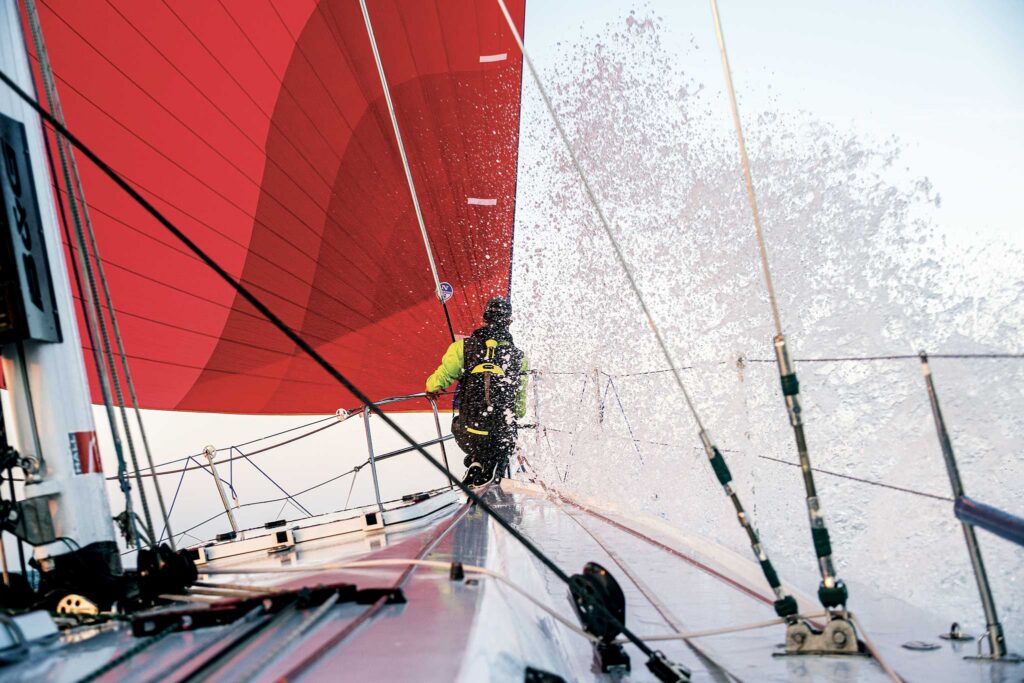
Quick thinking led to securing a spare spinnaker sheet to the eye near the bow knuckle, a task that required dangling over the bow and getting drenched by the cool Canadian waters. The line was then run through the front of the sprit and back to a winch via the jib cars. Crazy Horse, expecting at least twenty more hours of downwind sailing, was now fit out with an adjustable bobstay.
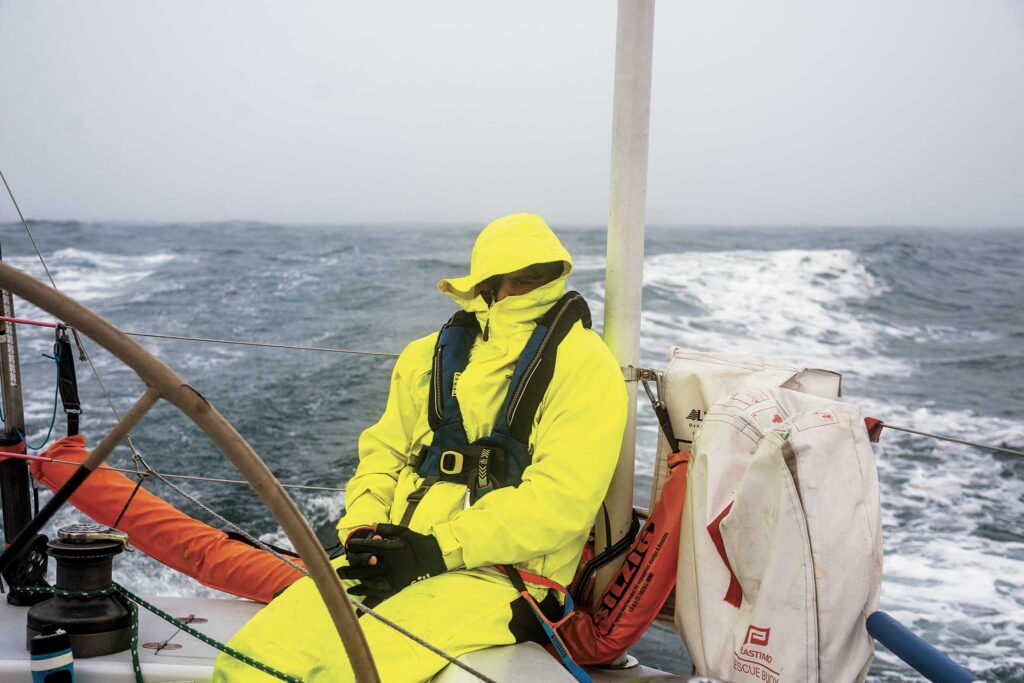
Morning was quickly eclipsed by thick fog: a game of pure boat speed had transformed into a match of wits, right as the CBC team rounded the southern tip of Nova Scotia. The A3 came down and the big runner went up—the team was in downwind VMG mode. Dodging container ships and timing jibes, Crazy Horse worked her way north and east.
The youth CBC team crossed the finish line outside of Halifax after only 39 hours, 21 minutes, and 39 seconds. The mention of seconds may seem overly specific until you realize that they won the ORR2 class by only 34 seconds, beating out the venerable Sparkman & Stephens-designed Black Watch.
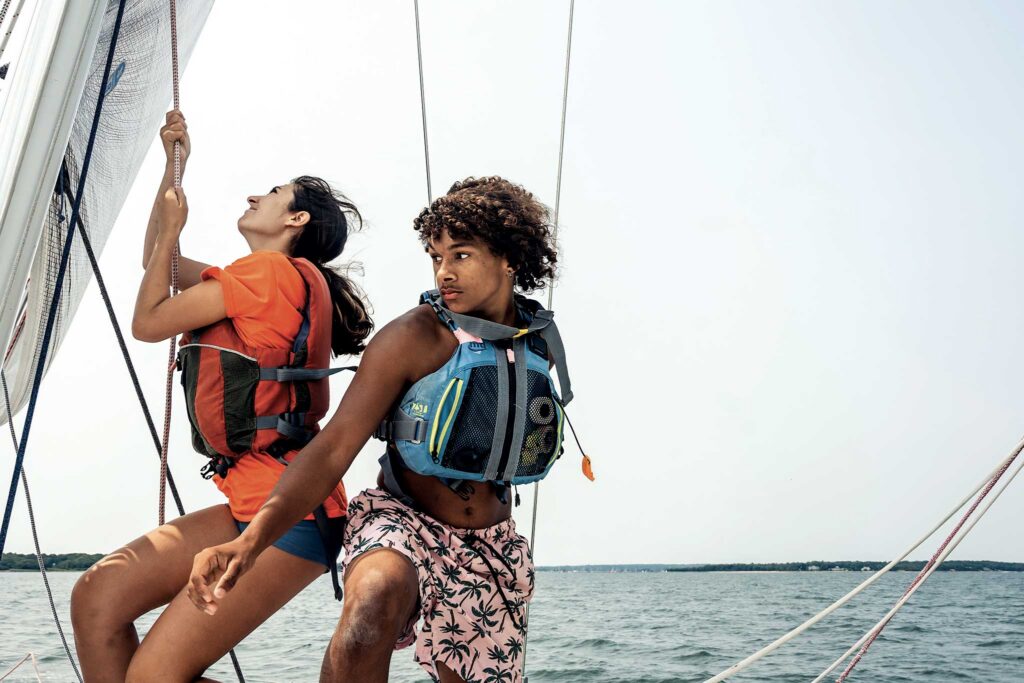
The mission was never to win. And while it’s hard to deny their competitiveness, the objective was to deliver valuable life lessons in teamwork, problem-solving, and leadership, all of which will benefit these sailors well off the racecourse. Emphasizing that, some of the crew weren’t even aware of their victory until they were called onto the stage at the awards ceremony (the only hint came from one clever crewmate who managed to hack their onboard Starlink router and access the race tracker).
I met up with the offshore team, along with coaches Richard Feeney, Andy Herlihy, and Andy Chin, to discuss the program and its bright future. New Bedford’s CBC offshore program has logged over 7,500 nautical miles in four seasons with 150 participants. Crazy Horse was donated in 2025, but most training and racing has been on a pair of Figaro 2’s—33-foot Beneteau one-design builds dedicated to short-handed offshore racing, but easily adapted to fully-crewed youth adventures. This is an inclusive endeavor, welcoming youth participants of all ages, abilities, and backgrounds through affordable and subsidized sailing programs. CBC ensures cost is never a hindrance to participation, opening up new opportunities and transforming lives regardless of background or socioeconomic status.
Local events, like the Whaler’s Race, have been an important part of their program. While they may not be as dramatic as entering a foreign country for the first time, such as in the Marblehead to Halifax Race, the team revels in the stories alike. Take their light air triumph in an Ida Lewis Distance Race, for example. After a tedious morning working ephemeral zephyrs up the west side of Block Island, they were becalmed north of the island. Other boats had spinnakers up, but none were full. A calm approach, aided by some breakfast and hot drinks, helped lay a solid strategy: working in towards a light seabreeze along the coast. Protecting the shore side all the way to Castel Hill, they passed four boats and landed a solid mid-class finish: the best result of a CBC Figaro team in this challenging race.
Or take the Vineyard Race, two weeks later, where they were a little late on the tide heading back into Long Island Sound. They shot Plum Gut, but no more than an hour later, the boats along the Connecticut shoreline began to lift in the forecast northerly. Thinking they may have been in the wrong place on the course, the crew set about studying and discussing the situation, and determined the inshore competitors had far less wind than them. They worked the remaining sea breeze for lefties and were back in the lead again by dusk, reaching for the finish line.
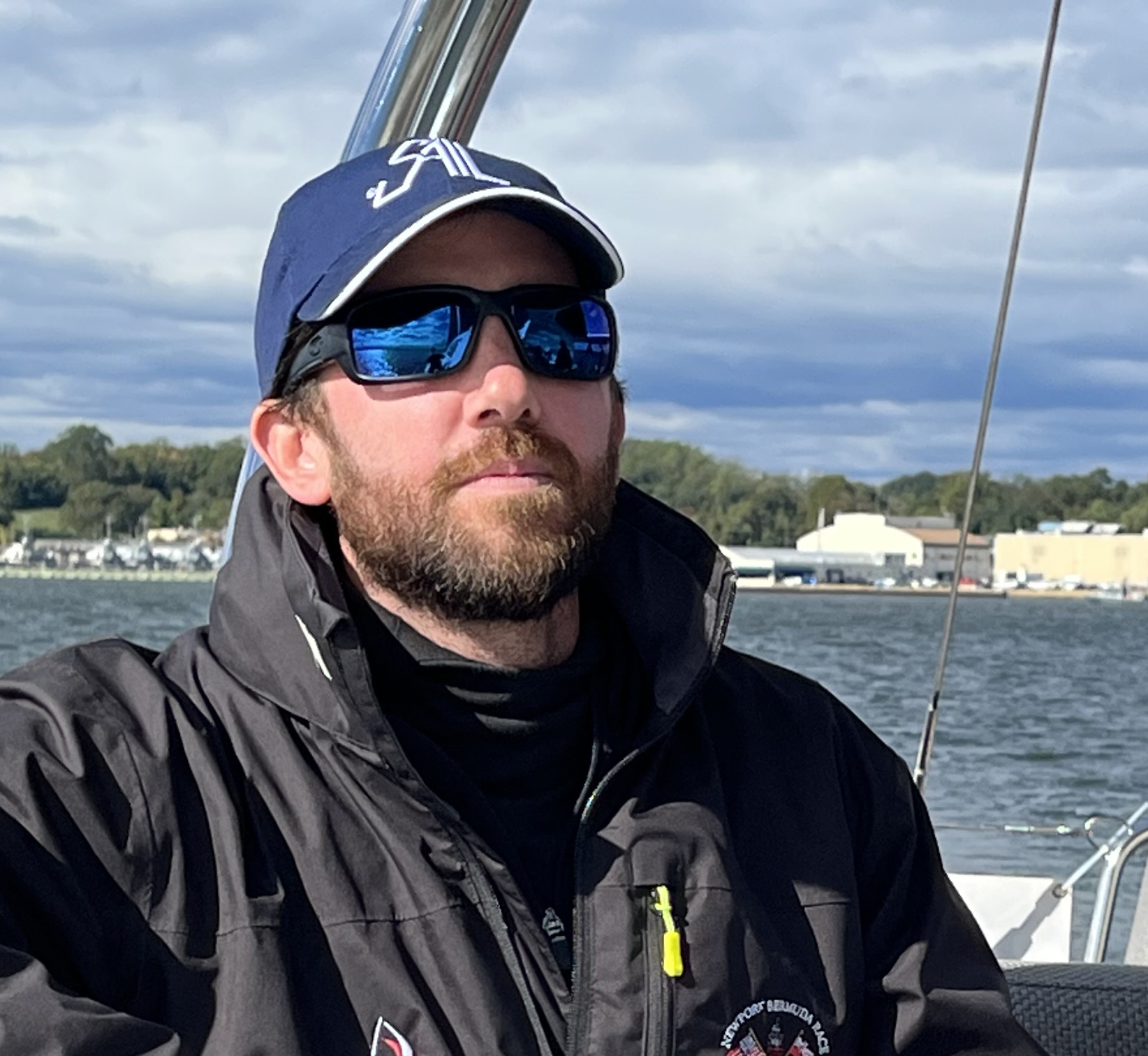
The CBC’s Youth Offshore Team now sets its sights on the 2026 Newport-Bermuda Race, kicking off June 19th. Their minds are spinning with unease about the Gulf Stream and the effects of the warmer temperatures near Bermuda on their endurance. How tired will they be after multiple days at sea? How much upwind work will the course throw at them? Will they be able to complete all the projects onboard before the start?
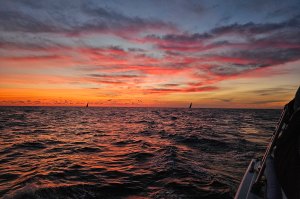
This is normal for any of us and a part of the adventure—their goals and the building excitement will keep them driving forward. The finish line is a universal focus, but visions of building patience and problem-solving skills also float about the crew. They reminded me of how thrilled they are for the offshore magic: “It’s a night out. It’s an evening with the stars, the sunset, and fun people. Whenever I feel that this is stressful or I’m tired, I just remember that the sun is going to rise and it’s going to be beautiful and we’re all going to celebrate and cheer and eat breakfast.” It’s a way to step away from life on shore: to disconnect from technology and genuinely connect with people. They want to experience more overnights at sea and be surrounded by nature. The shared experience is something treasured. General curiosity and desire to pass knowledge on to others is among many altruistic traits in this team’s culture. They recognize that everyone brings a different set of skills and knowledge and that it’s fun to see it all come together.
In the meantime, it’s back to race preparation. As I write, Crazy Horse’s freshwater water system is receiving a complete overhaul and the rudder bearings are being serviced, as other teammates work to track down fittings for older hardware. The team is becoming deeply familiar with every aspect of their ride to Bermuda. A Safety at Sea course is compulsory, and so are practice sessions as the New England waters thaw. And making it all possible, fundraising is a responsibility shared by all, but driven by CBC’s leadership.
“While our youth offshore team is racing to Bermuda, the finish line is only part of the story,” says Herlihy who serves as Executive Director. “The real goal is to prove to young people everywhere that no dream is too big when you have the opportunity, support, and determination to pursue it. By raising appropriate funds, we will train and equip our team—and tell their journey in a way that inspires others to see that anything is possible. Together, we can transform this race into a story of courage, growth, and leadership that resonates far beyond the sailing world.”
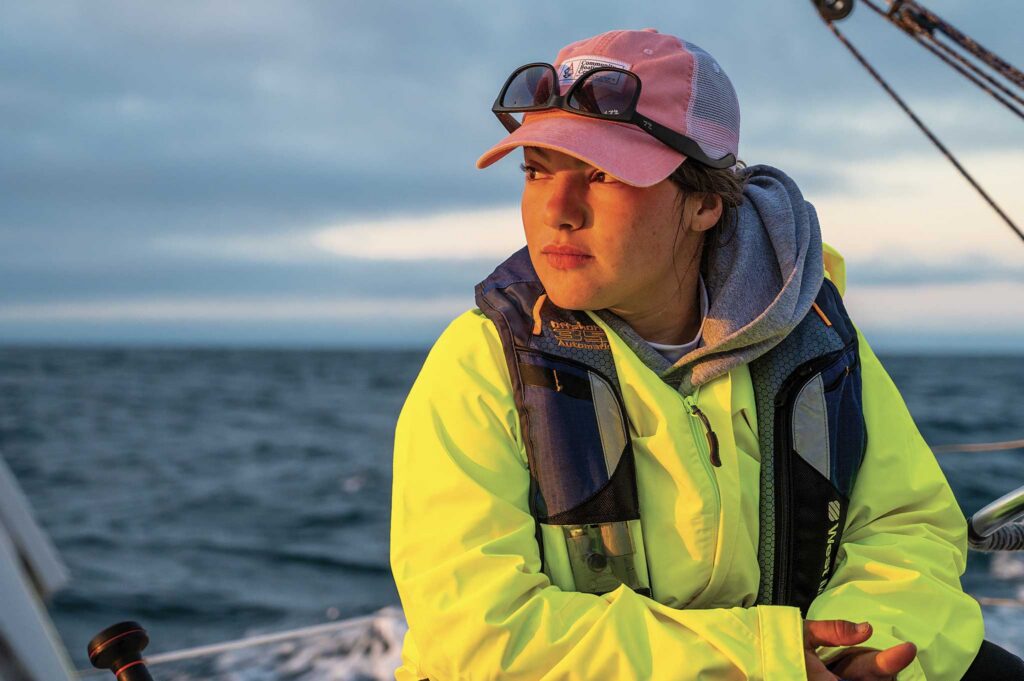
Each teammate has a different story of how they became involved. In one case it was a class for building skateboards that led to a subsequent class in boatbuilding, and then windsurfing lessons. Others jumped right into sailing classes, through scholastic partnerships, before becoming junior instructors. There are also tales of following in the footsteps of older siblings. The offshore team has a bit of gravity about it and has pulled in a wide range of backgrounds; the multi-disciplinary nature of offshore racing encourages this diversity. It also allows kids to be kids, like when the giggling off-watch spoiled the spinnaker trimmer by hand-serving her bites of food between surfing waves on the way to Halifax.
This is just the start of CBC’s offshore program. Imagine the impact this and similar programs could have on the sport of sailing. Do you remember your first time sailing? How about your first time offshore? What made you come back to do it again? More importantly, does a similar avenue still exist? As we look across boatyards, sailing clubs, regattas, or cruising rendezvous, have we not all wondered where the future of sailing resides? Efforts like this by CBC are helping to answer that for us with another path.
Perhaps the average age is a complement to retention in sailing, but it’s also a warning. Sailing has often been a sport handed down, not well-advertised or made easily accessible. Many of us learned it because someone put a tiller in our hand and let us meander across the bay. If we want busy starting lines and cruising camaraderie decades from now, our youth need to breathe in sailing experiences today. The future of sailing isn’t hiding in foiling boats, a new rating rule, or the latest chartplotters. It’s in breaking down barriers to sailing: organizations like CBC empowering our youth to explore oceans and lakes and unlock their full potential.
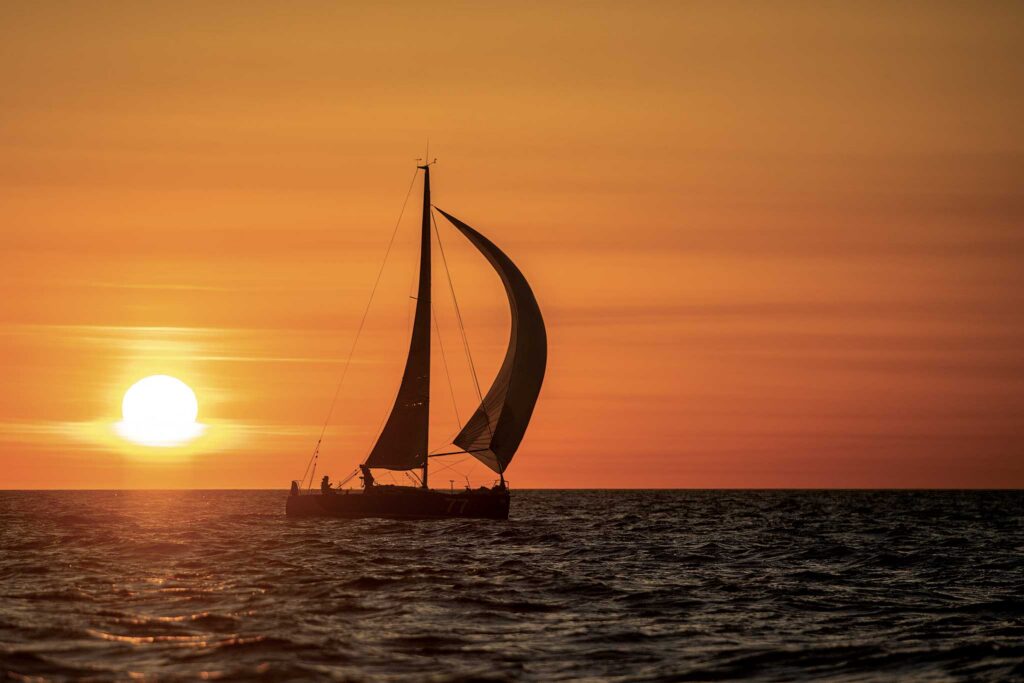
There’s something uniquely durable about the education sailing provides, and that is something we can leverage. The wind does not care about anyone’s background. The tide doesn’t check a social media follower count. The ocean is unforgiving of mistakes, but often provides second chances for those who are prepared. A child who learns to read puffs marching across the water is unlocking pattern recognition. A teen who calls a layline is practicing consequence-based decision-making. These are not abstract concepts, they’re practical skills earned in one of the most dynamic and beautiful environments on the planet. In a culture increasingly buffered from friction, sailing still offers honest feedback and builds teams through adversity.
As the name “Community Boating Center” suggests, it takes a village to make this happen. From mentorship to sanding bottoms to financial support, we sailors need to show up for this to work. And we’re not just discussing the future of the sport, but also the future of our communities. This isn’t nostalgia, it’s strategy. Getting more youth into sailing is about keeping harbors alive with curiosity and ambition. It’s about ensuring that the next generation sees the water not as a backdrop, but as a proving ground; letting them carry these skills off the water and driving our world forward.
The CBC’s offshore team is changing sailing. There’s no going back. They wouldn’t give us that option anyway.
This article was originally published in the May 2026 issue.