You’ve probably seen the clips online. During the first day of racing in SailGP’s New Zealand series, the worst crash in the league’s six seasons left two sailors hospitalized.
“The New Zealand F50 lost control approaching mark one at speed before sliding sharply into the path of the French F50 catamaran,” the league said in an incident report. “Both boats sustained significant damage and two athletes were injured in the crash.” At the time, team New Zealand was in the middle of the pack and going over 55mph. When the boat tripped on the leeward foil, there was no time or space for the oncoming French team to avoid them.
In the wake of such an event, I think it’s natural to ask questions, both about the crash itself and about the wider implications. Fault and responsibility are complicated things, especially in an incident where there’s no mechanical failure or tactical misstep to point fingers at.
Sailors always bear responsibility for their own safety, from due diligence before joining a team to the risks they take on the racecourse. That’s not to say that the league doesn’t also have a responsibility to protect its athletes, but all of these sailors joined SailGP to be on the cutting edge of the sport, and there have been too many near misses to believe that these sailors didn’t know what they were getting themselves into.
Still, shrugging and saying, “they signed up for this” seems unfair. After all, the race organizers are responsible for an event that has a pattern of collisions. SailGP is purpose-built for the spectator, with a broadcast television friendly format and wall to wall drama. They’ve garnered an enormous following on social media by posting clips of high octane foiling—and in particular the wipeouts. The inevitable and uncomfortable truth is that when boats or people are damaged, it improves the league’s reach. Algorithms endlessly promote disaster and—though it’s a bad look for SailGP to capitalize on harm to sailors—it’s also not their fault that these are the things that go viral.
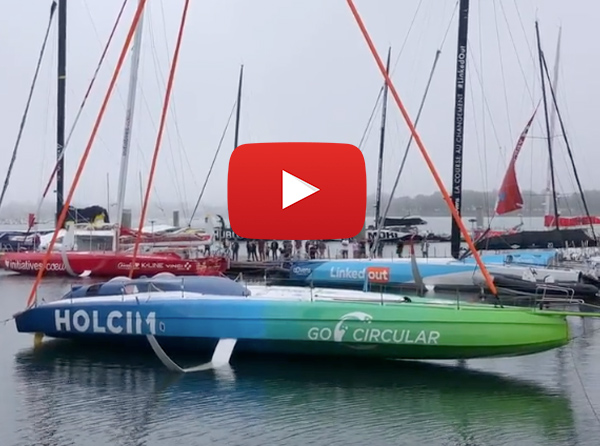
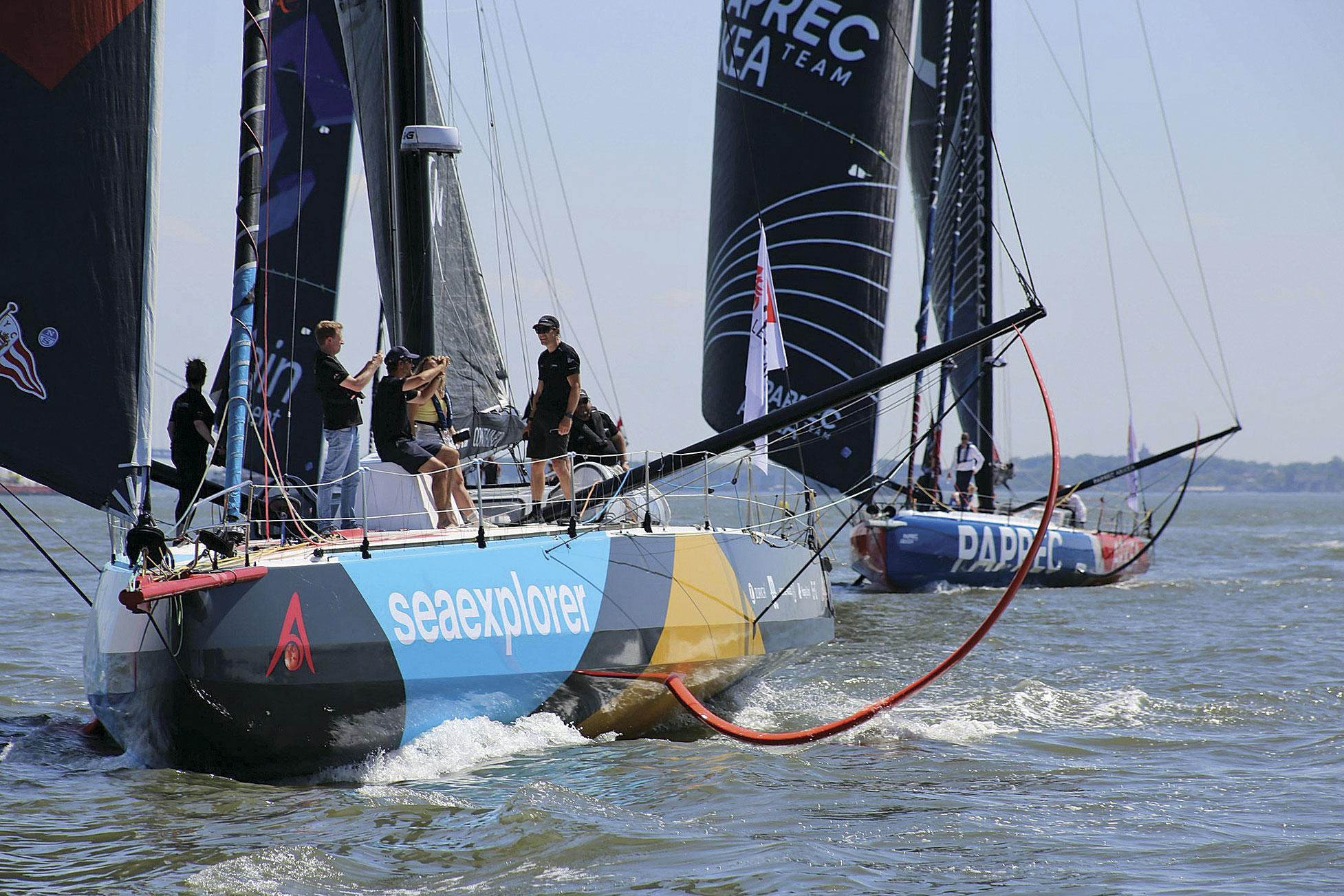
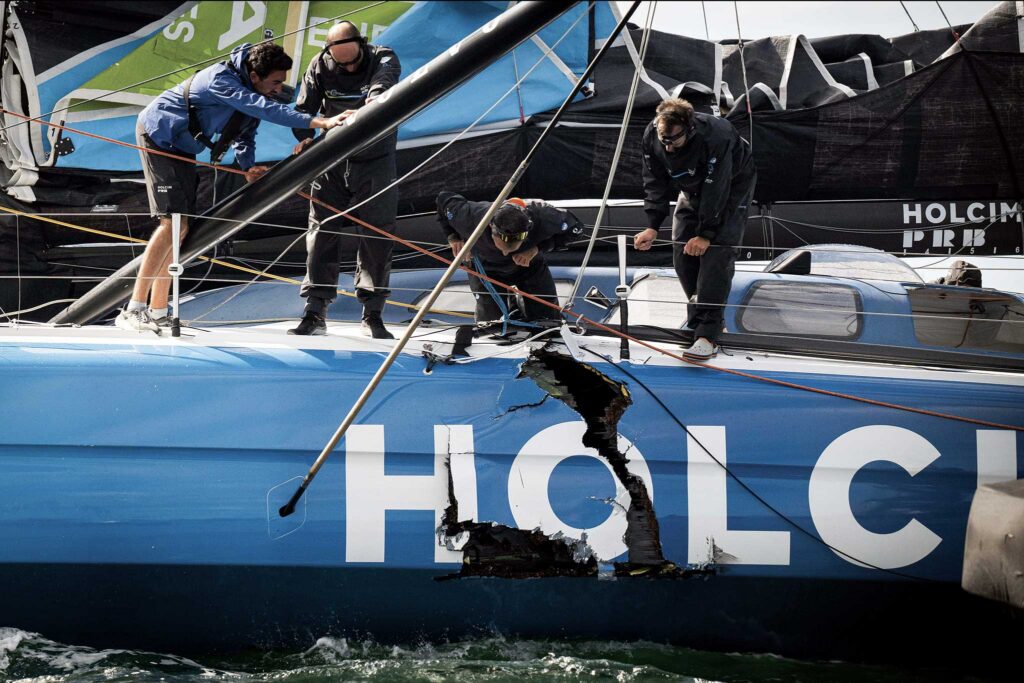
We can look to the IMOCA class for a parallel into what’s going wrong, as it has also been grappling with collisions in recent years. 11th Hour Racing Team and Guyot Environment collided during the 2023 Ocean Race as did Holcim PRB and Allagrande Mapei Racing in the 2025 Ocean Race Europe. Both of these crashes happened shortly after the start of the race—the only time these ocean-going boats have any reason to be operating in close quarters with each other. It would be extremely unlikely for two IMOCAs to collide once they reached open ocean. But offshore racing is notoriously difficult to watch, and in an effort to put in more spectator-friendly, near shore sailing for fans to enjoy, race organizers inadvertently also put in an additional risk for the teams (not to mention their maintenance budgets).
SailGP, which is all about being spectator-friendly and near shore, has doubled in fleet size from six to twelve teams since its inception. And unlike the IMOCAs, the one design F50s are so closely matched jibing angle for jibing angle and sailplan for sailplan, that they are constantly in each other’s space when racing.
SailGP seems to acknowledge that crowding contributes to the crash risk, pivoting to a split fleet format for the events following the collision. This halved the number of boats on the course in the immediate aftermath. Russell Coutts, SailGP’s chief executive officer, says that they are also considering further amendments to the safety protocol, including air bags or kevlar straps to prevent hulls from being pierced. (The current protocol is already extensive with emergency training, tethers, helmets, supplemental oxygen, and more.) Athletes on advisory committees say that the changes enacted immediately after the crash were a good first step but that the conversation needs to continue and include their input as the league approaches season seven.
Sailing has always been a sport of calculated risks, as evidenced by tragedies in dinghy sailing all the way up to America’s Cup teams over the years. Both sailors hospitalized in the SailGP collision are expected to make full recoveries, but as these professional leagues grow and wrestle with how to accommodate the modern spectator era, the risk calculation has added variables.
This article was originally published in the May 2026 issue.