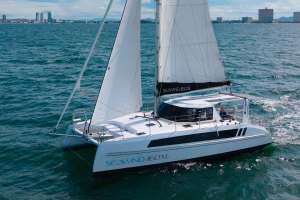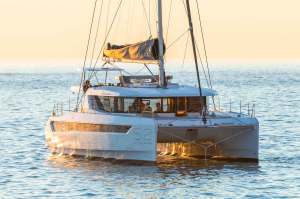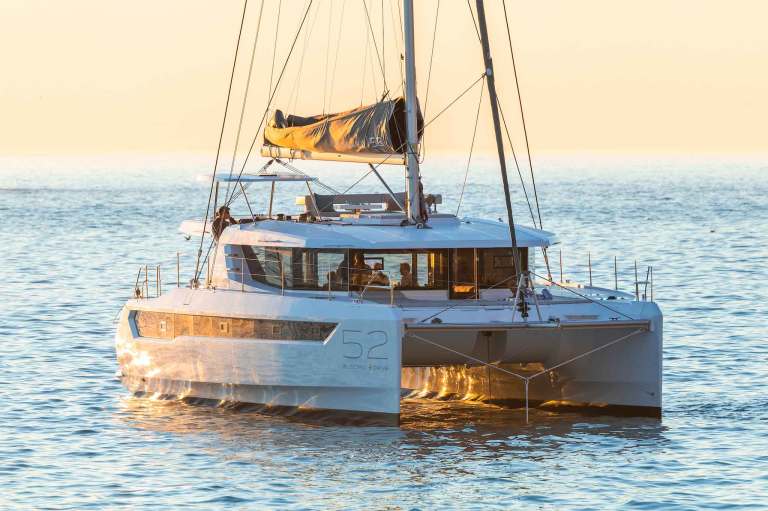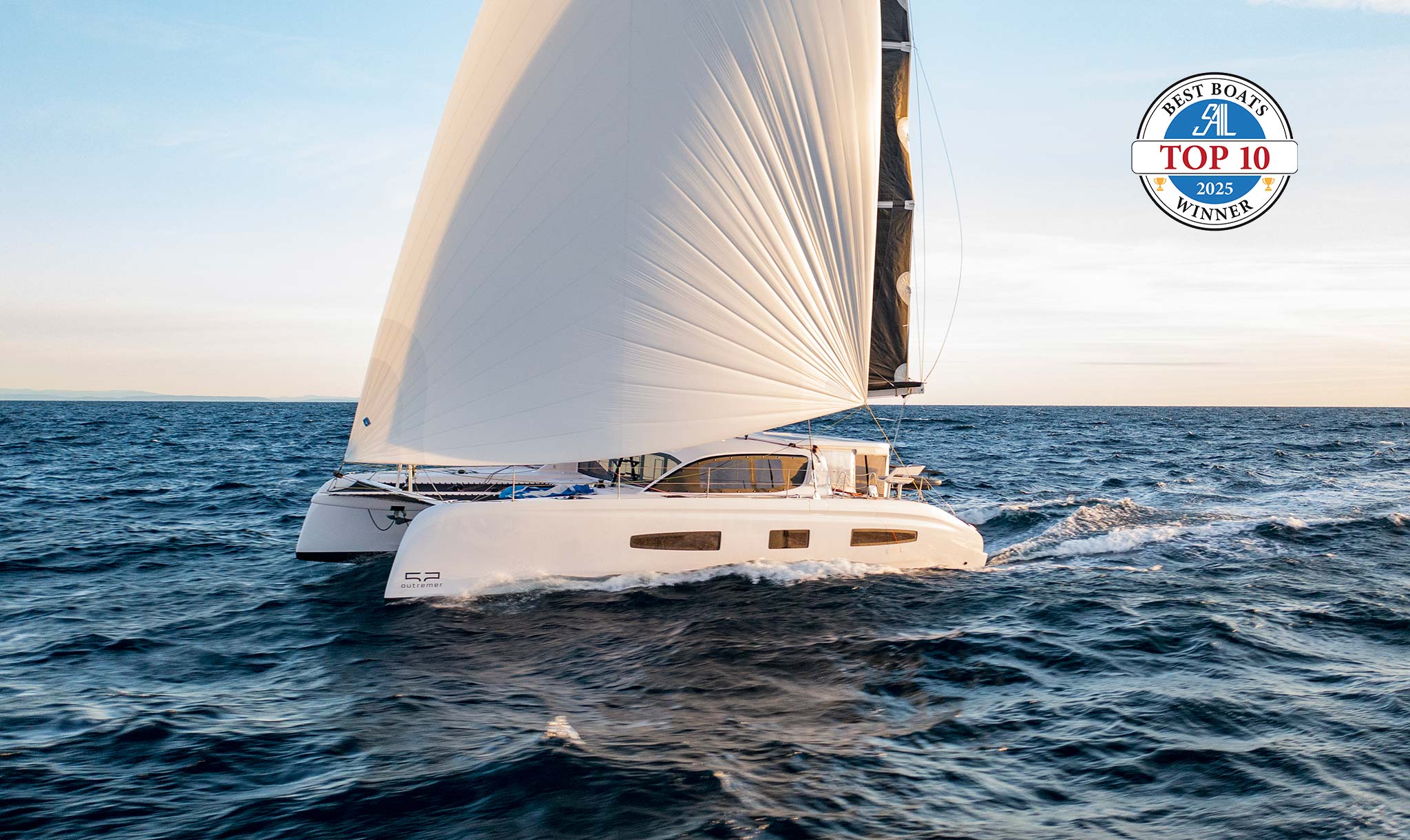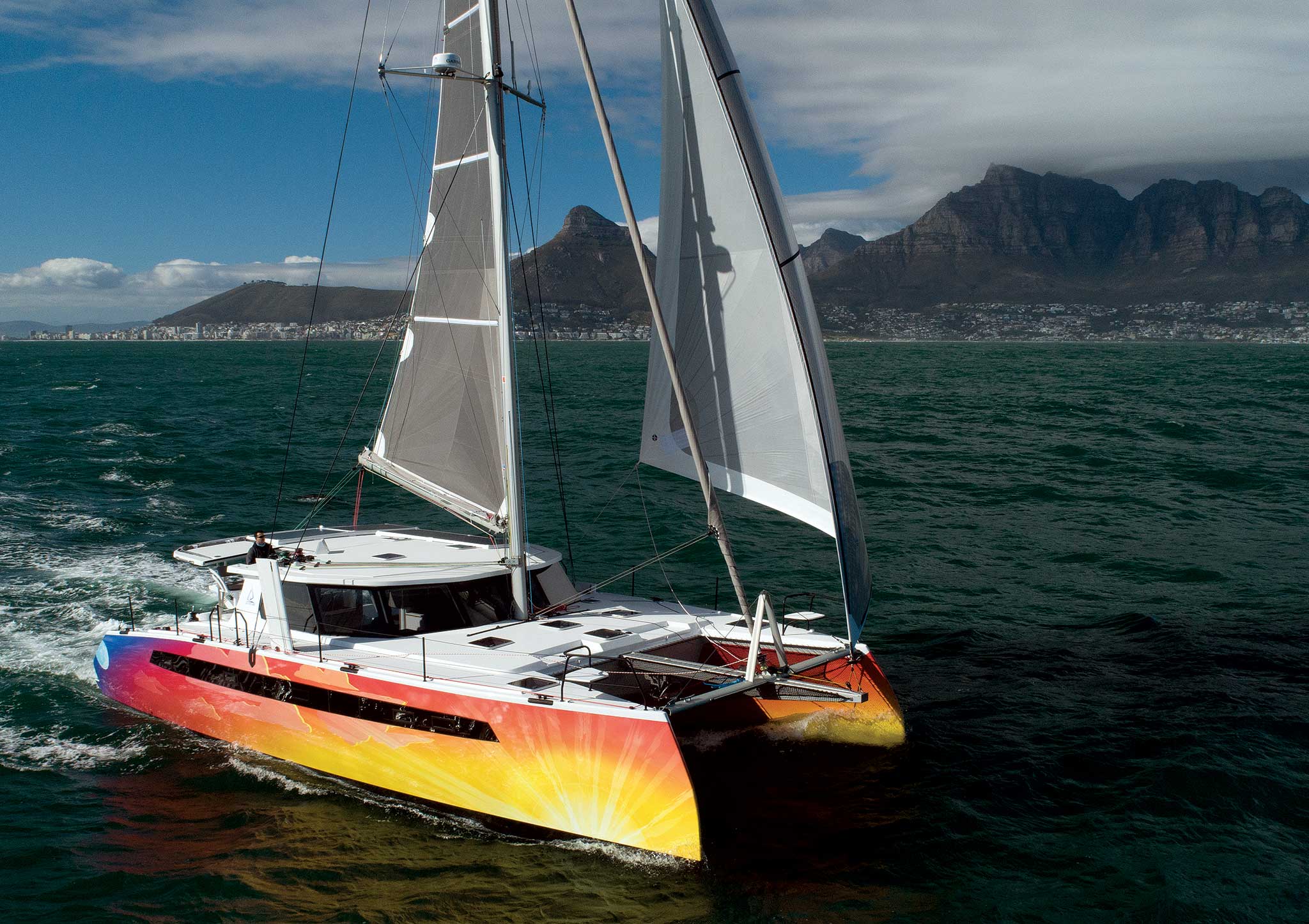
The HH52 is a head-turner, from the massive, edgy profile to the driver hanging off the transom steering a nearly 30,000lb boat by tiller.
A variation on the HH50 concept that’s been designed for hybrid usage, the 52 is offered in four main versions: “Ocean Cruising” or “Sport Cruising” modes that each can be modeled with dual aft helms or just the forward helm option. (Ocean Cruising is 50/50 e-glass and carbon construction, while sport means all carbon.)
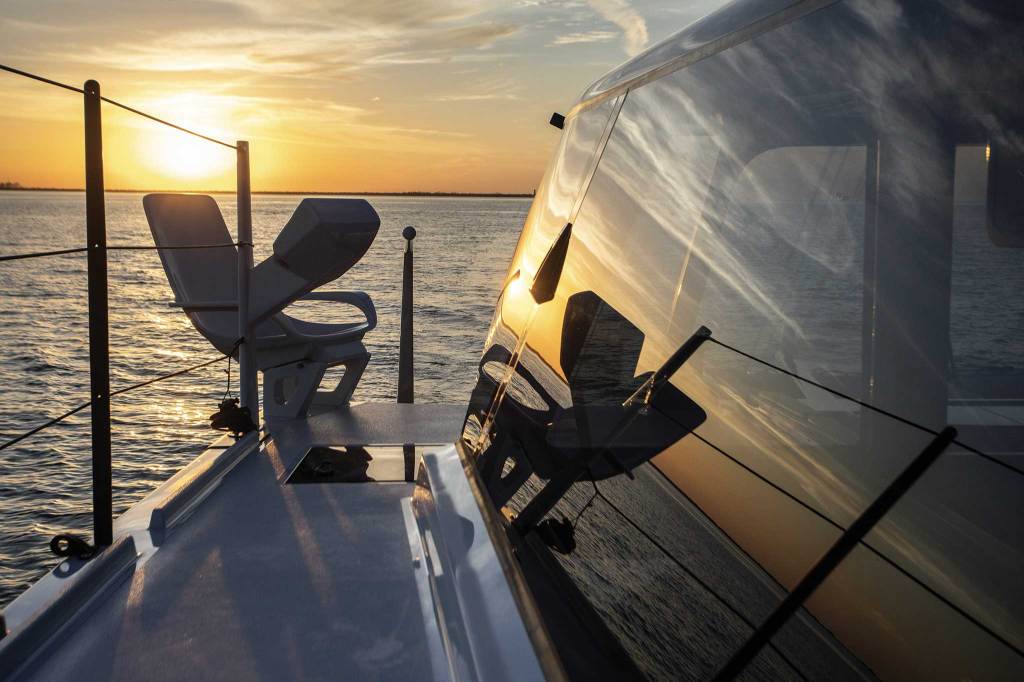
If owners opt for it, the outboard steering will be the first thing you notice about this cat when it’s parked at the dock. The seats lean out over the water, and a brawny tiller arm reaches up to them for a driving experience you just don’t usually get on a 50-foot catamaran that’s spacious enough to live on. The visibility is excellent, and these helm seats have a sporty, slightly “out on the trapeze” feeling I recognized from my dinghy days. It was just plain fun. As a major differentiator between this boat and its competitors, I suspect that prospective owners will be very tempted by them.
During our test sail, we had 15-18 knots of breeze and maxed out at a SOG of 16.5 knots. The tiller steering was a little heavy at that point, and that certainly won’t be the main mode of steering for passagemaking, but those outboard seats will be gorgeous for a gentle sunset cruise. The trim can be adjusted directly from the helm via a control panel connected to electric winches (on our test boat all of the winches were 3-speed 60s to make maintenance and carrying spare parts easier). Deep, svelte daggerboards kept the boat on track, and it was a very comfortable ride despite the gusts and spitting rain on our test day.
The HH52’s predecessor, the HH50, also offered outboard helm stations, but they were placed higher up, which necessitated raising the main and boom as well. On the 52, they are on the level of the side decks, so the boom has been brought back down, adding sail area and making for a better balanced sailplan. We put up the gennaker for our sail, which is on a halyard that locks into place and is tensioned from tack, one of several performance features built into this cruiser.
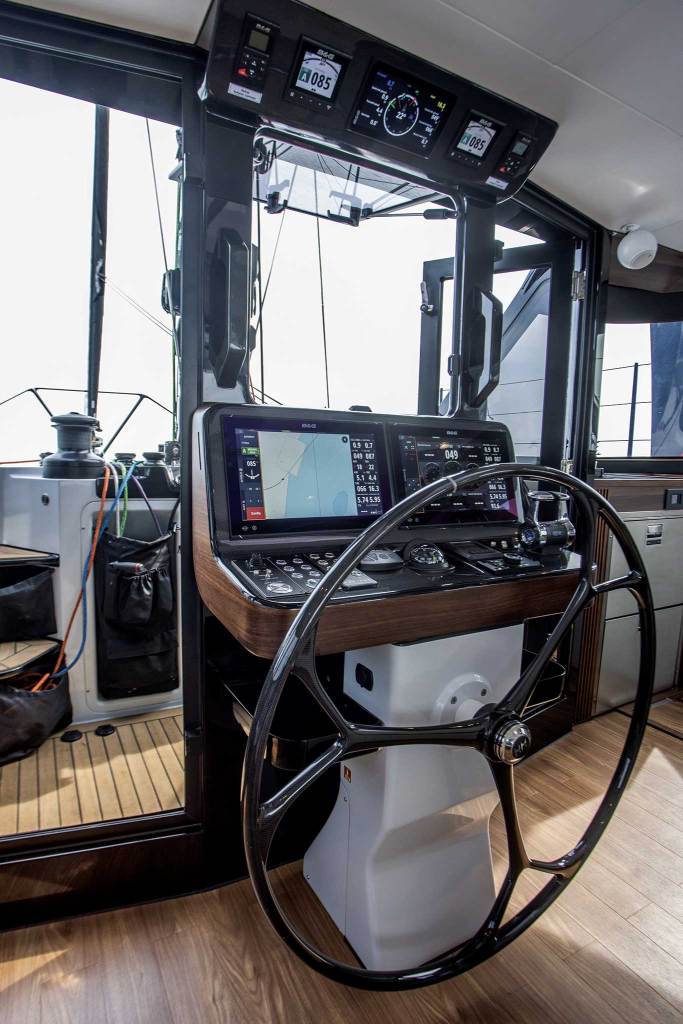
Whether or not you opt for the dual aft helms, the everyday center of operations for sailing is going to be the interior helm station, which has every control and monitor you could possibly want on two panels: one directly in front of the wheel and one mounted above the “windshield” so as not to obstruct the sight lines. The 360° view from the inner helm station offers a fairly unobstructed view (other than the mast directly ahead, of course) and keeps the driver close to the living space.
Moving forward, full sized doors on either side of the helm lead out into the forward working cockpit, which is where the magic happens. This carefully and intentionally laid out space is big enough for two to work in while still keeping everything centrally located. Some cleats are mounted up the mast, which will be a tough reach for those on the smaller side, but a few easy steps up to the deck level will put everything well within a comfortable reach. Having the cockpit recessed to the interior level also means it’s more protected in bad weather and easy to step out and make a quick adjustment.
Around the working cockpit, tulip sheaves have been built into the deck to give sailors the flexibility to reconfigure which lines run to which winches. However, the highest load lines run at direct angles to the two primary winches, making it unlikely that you’ll accidentally overload the sheaves when redirecting them. This kind of consideration for real world usage will be appreciated by sailors. Another useful feature of the forward cockpit is a B&G display that allows those working up front to see what the helmsperson can see while they raise or trim sails.
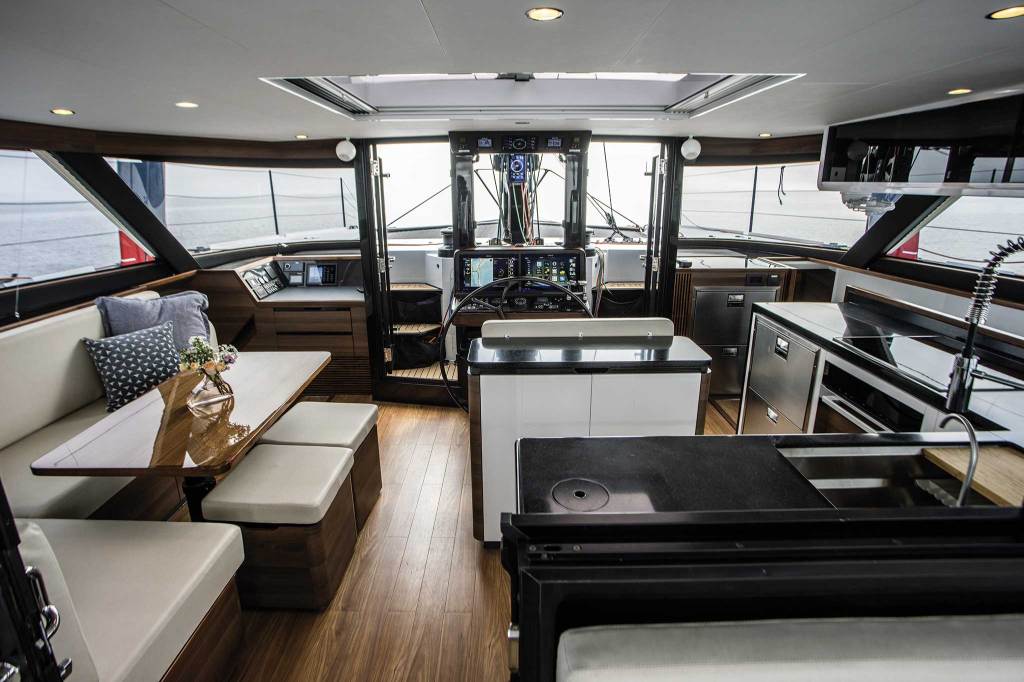
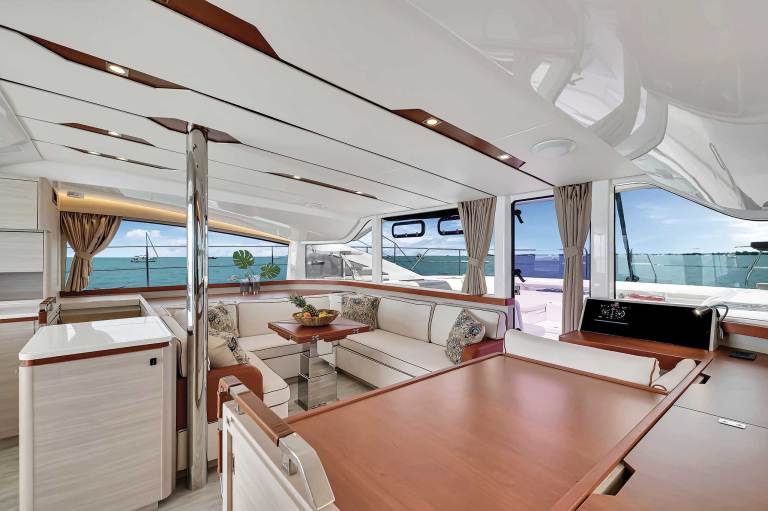
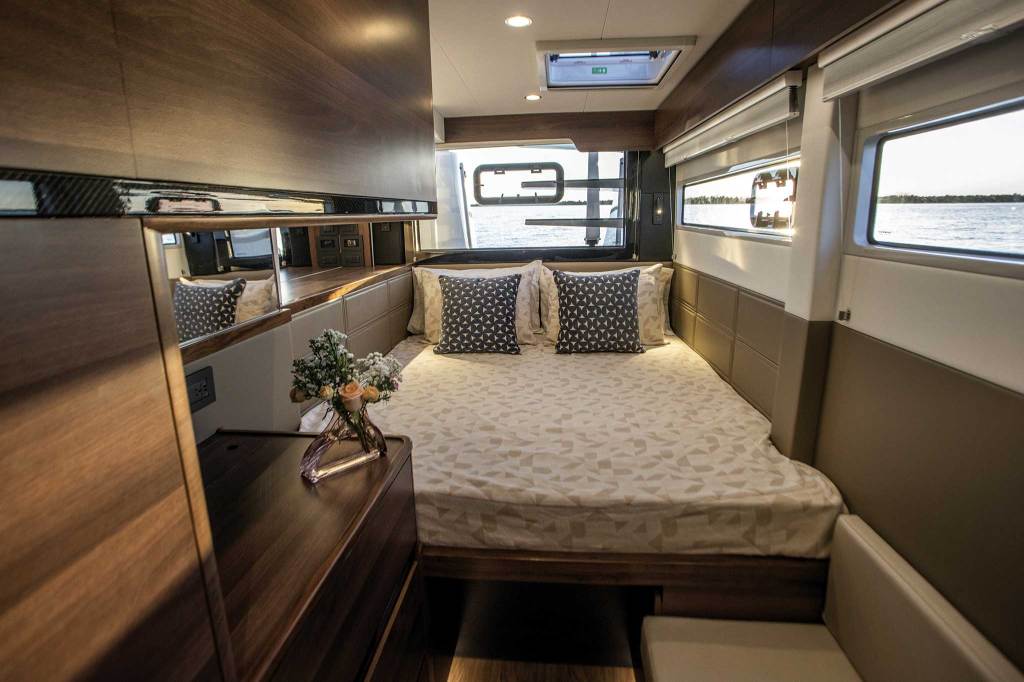
Below deck, I was impressed by the light and airiness down in the hulls. It truly feels like a luxury living experience. The standard set up is a three cabin version with an entire owner’s hull to port (berth aft, head forward) that leaves nothing to be desired space-wise.
Access to the bank of LiFeP0 batteries is through a hatch in the forward guest cabin, big enough for a person on the smaller side to climb into for any necessary maintenance. Which brings me to the other big talking point for this boat: the power package. After all, the whole design brief for this boat was to do a hybrid variation on a popular previous model. To that end, a solar array is built into the coachroof, and hydrogeneration recharges about 1kw per 10 knots of boat speed while underway. This slows the boat down by a knot or two. During our test sail, at 16.5 knots of boat speed, we were generating 36 amps at 48 volts per shaft.
HH’s parallel electric/diesel system, called EcoDrive, aims to combine the noise and fume benefits of electric propulsion with the reliability of diesel, offering a couple hours of electric motoring per charge. At 43.2kW, the power bank seems a bit undersized for true hybrid usage, but each owner’s power consumption habits will dictate when and how they make use of the system. A standard diesel package is also an option.
In sum, the HH52 is an innovative model that has taken hulls we’ve seen before and reimagined everything from there up for more sail area, greener propulsion, and thoughtful working touches. It’s an upmarket boat at an upmarket price point, but you’re paying for expertise from the design brief all the way to the finishing touches.
- LOA 55’ 10”
- LWL 49’ 6”
- Beam 24’ 5”
- Draft 5’ 5” (board up) 11’ 8” (board down)
- Displacement 28,660 lbs (light)
- Air Draft 79’ 9”
- Sail Area 958 sq ft (main) 657 sq ft (overlapping solent)
- Fuel 2x 79 gal
- Water 2x 66 gal
- Power 2x BETA 38hp
- Designer Morelli Melvin
This article was originally published in the August/September 2026 issue.