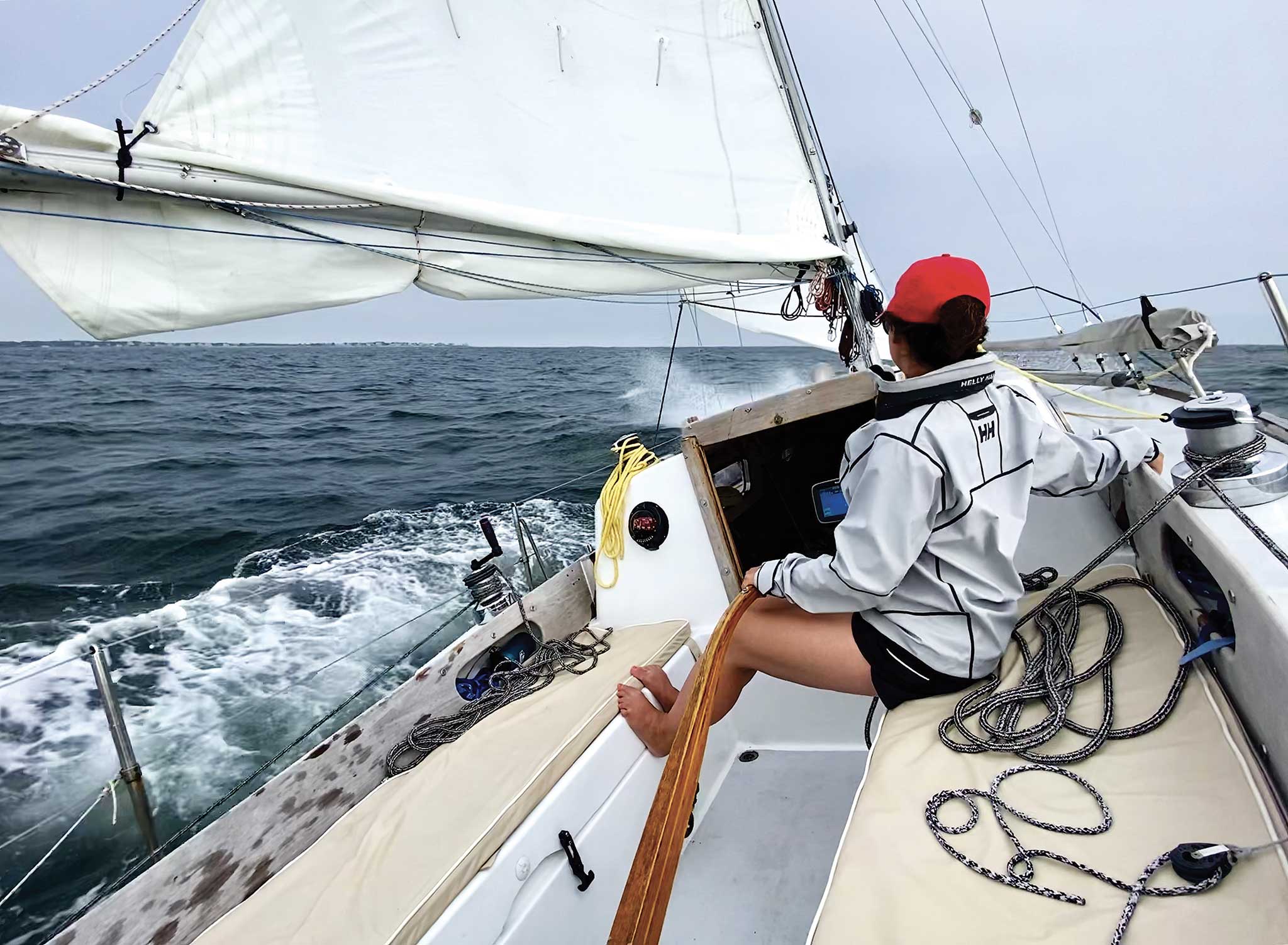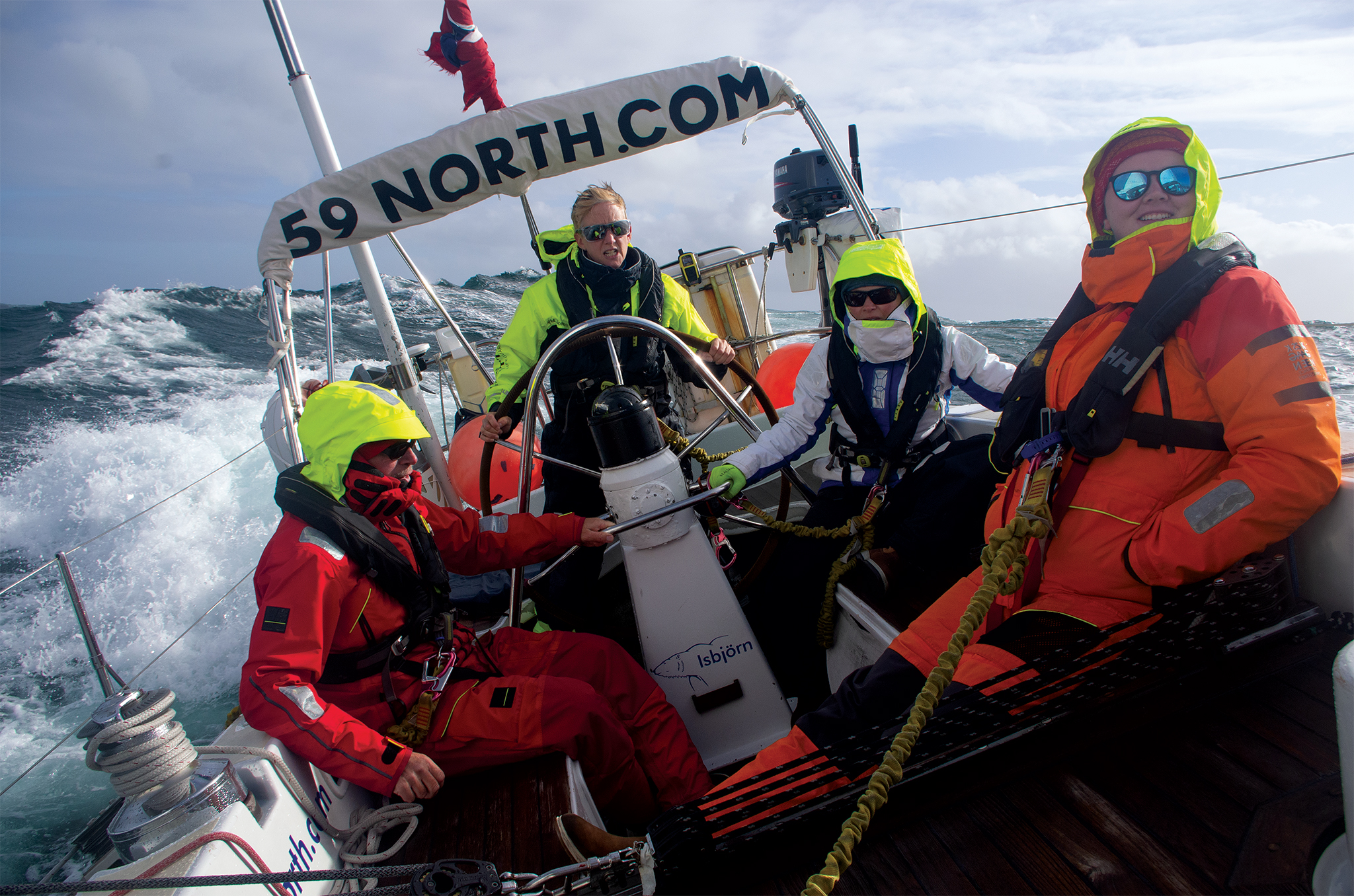
I recently had the pleasure of doing a long passage with a number of new sailors (more on this in an upcoming issue of SAIL). The boat didn’t have an autopilot, so we were hand-steering by compass continuously for over two weeks. Plenty of time to turn our new friends into proficient drivers, right?
Some of them took to it like ducks to water—fearless, enthusiastic, and reliable from the get-go. Others took longer to figure it out. Coaching them as they swung through 20 degrees or let a wave carry them off course had me thinking about the backstops I relied on for keeping the boat on course when I was first learning—and still go back to when I’m a little too tired to be firing on all cylinders.
The truth is helming is a skill that requires the ability to process constantly changing information from multiple sources and react instantaneously. Add on the fun house mirror of a compass that lags a little or turns right when the boat turns left, plus the lack of scenery offshore to get your bearings and more than a little fatigue? It’s no surprise that some people struggle with it.
It can also be a hard thing to teach because it’s difficult to explain something that feels intuitive. But like any other skill, a little practice and a few good tricks can go a long way.
Here are some ideas for bowling with the bumpers up, so to speak. Whether you have a tendency to overcorrect and swing through your desired heading or you’re trying to coach someone who just cannot seem to keep the boat moving in a straight line, here are a few things to think about:

Steer by the Shadows
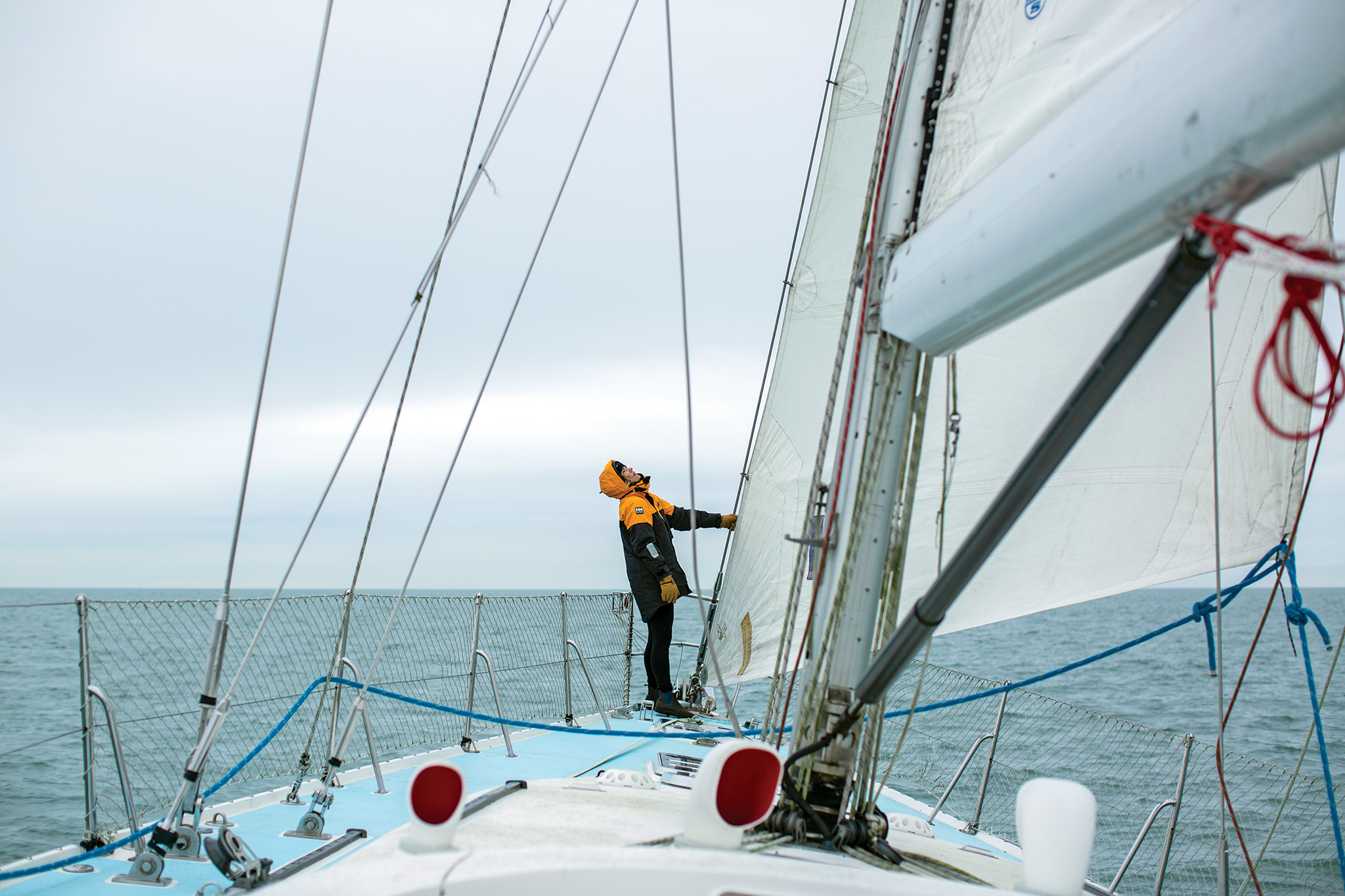
Every time I take the helm, I line the boat up right on course and have a good look around, not just at the horizon but onboard too. Even if you’re out of sight of shore, there are usually environmental factors that can help. Note where the sun is. Does the mast’s shadow line up with anything particular? Do you get blinded every time you’re a little low on your course? Does keeping the starboard side deck in full sun equal approximately the right bearing?
When I need to know instantly whether I’m off and by how much, I try to opt for an indicator that 1) doesn’t have lag and 2) doesn’t require my brain to do any numerical processing. Knowing which way I have to turn to move a shadow is instantaneous for me, and for those visual learners in the crowd, I suspect it will be for you as well.
This won’t always work (night, fog, midday…) and it’s not an exact science, but it can help a lot with the disorientation. Get the shadows settled back where they belong, then return to the compass to fine tune your course.
Steer by the Stars
If you can’t steer by the shadows because it’s night, look up at the moon and stars. You don’t need to memorize any constellations to line up a bright one with your headstay and head for it, straight and true. Nothing distinct on the bow? No problem, line a star up with a spreader or side stay instead. Just be sure that you’re choosing an actual star, not a satellite. Note the moon’s reflection on the water. If it was abeam a second ago and now it’s moved forward, you’re off course.
Despite the intimidation factor of sailing in the dark, as long as it’s clear out I find night to be one of the easiest times to helm offshore.
Keep Track of the Seastate
The seastate changes wave to wave and hour to hour, so this one certainly isn’t an exact science, but if you’ve been taking waves on the port quarter all afternoon and then unexpectedly the boat’s rolling instead of surfing, it’s a good indicator that you’re either off course or your navigator needs to be consulted.
Be Skeptical of the Clouds
Clouds are an easy thing for beginners to spot and aim for, but they can move deceptively quickly. As long as you know which direction they’re headed and are regularly checking in with the compass to make sure that that little cumulous puff is still supposed to be dead ahead, go for it. For this, a best practice is to have a companion watching the compass while the driver watches the cloud, so that when the boat inevitably starts to trend off course, it can be flagged immediately.
Split the Job
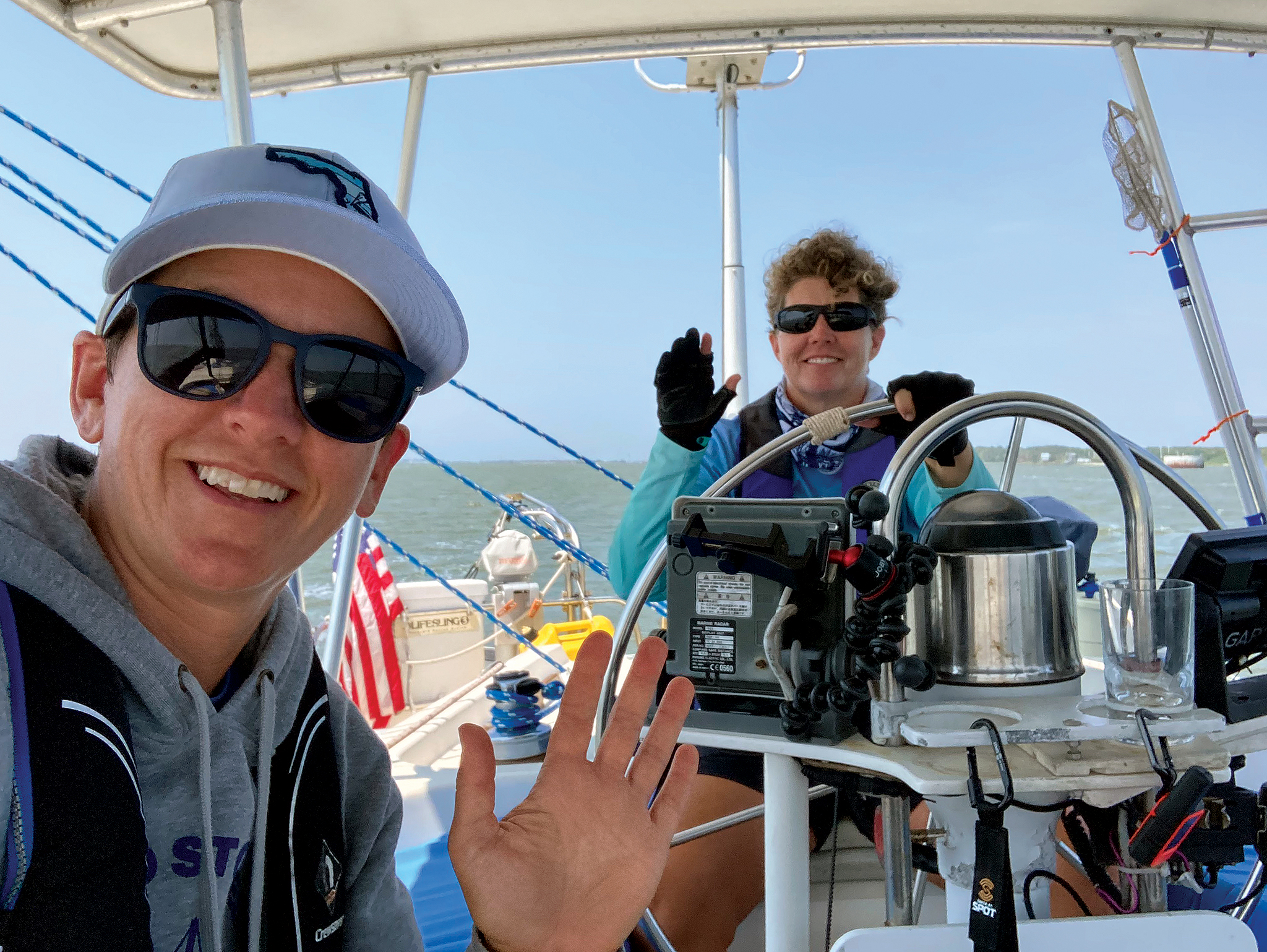
This one requires putting aside the ego, but it’s worked wonders for those late night watches when my crew is dead on their feet. Split the task of driving in two distinct pieces: steering and thinking. One person just watches the compass and says “up” or “down,” and the other person turns the wheel accordingly. It’s not going to be the most interesting watch you’ll ever have, but it’ll keep you on course when you’re feeling like a zombie. Have a conversation about this strategy beforehand so it doesn’t come across as micromanaging, and it’ll be a godsend when you need it.
All of this really boils down to one piece of advice: if you’re struggling with the compass, look elsewhere for help. Nothing will replace it, but having other ways to get your bearings can really improve your results.
There’s probably a neurologist out there that can explain why some people just get it and others struggle, but just because it doesn’t come naturally doesn’t mean you can’t be an excellent driver with practice. The more you do it, the more intuitive it will become. Until then, there are worse thing to look at than stars and sunbeams.