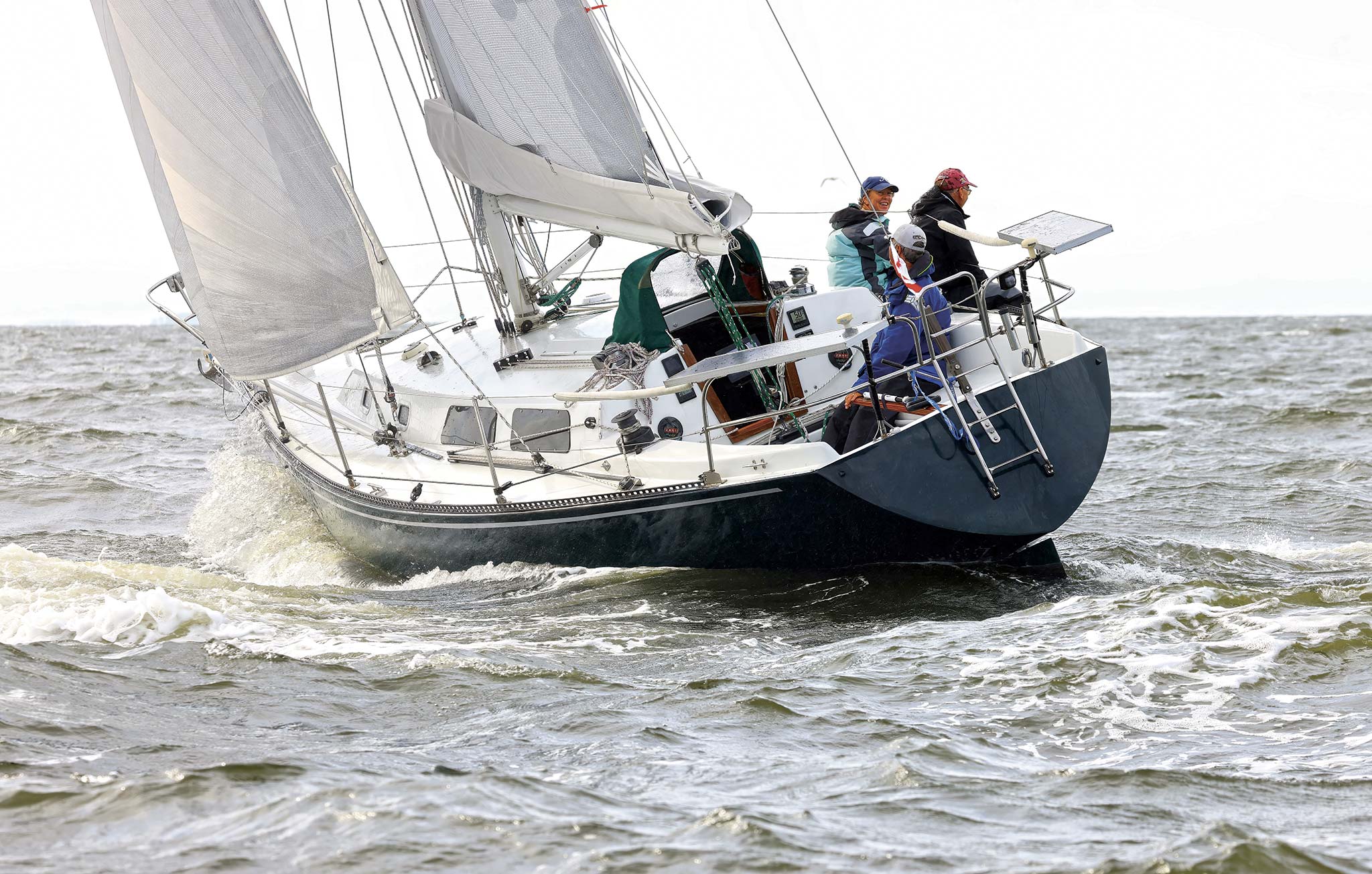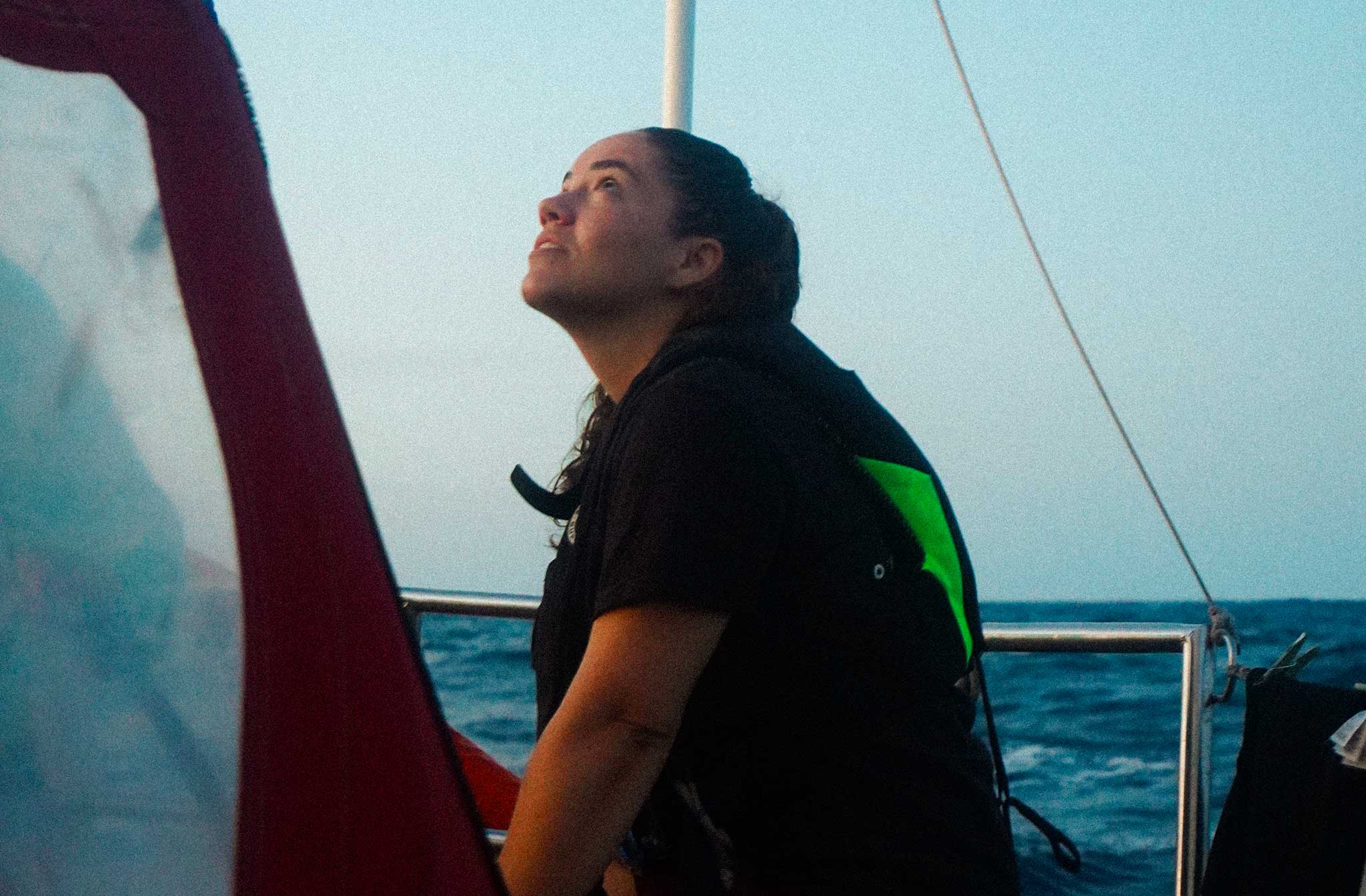
Earlier this season, one of the crew (aka customers) on Falken tried to bribe the apprentice to get the Starlink password. There are myriad situations that we prepare for before setting forth on an ocean crossing, but this was not one of them. Zoe, thinking fast, declined. So began our first season with Starlink…
Starlink was always inevitable. Now that it’s a fact of life on Falken, what do we actually gain, what do we risk losing, and how are we trying to hold the line?
I’ve been meaning to write about my thoughts on this for a while now, but it wasn’t until we actually installed it on Falken that I felt like I had a skin-in-the-game perspective from which to preach.
If we zoom out a bit, superficially Starlink is just an evolution of offshore satcoms that we’ve used for years. Until this year, actually, we’d still been using the same Iridium 9555 sat phone handset that Mia and I took across the Atlantic on Arcturus in 2011. It was simple, robust, and reliable. When Iridium Go came about, it offered an easier way to connect external devices to download weather files and emails, albeit at dial-up speeds, and we quickly adapted to it. I argued back then that Iridium Go wasn’t enough in a real emergency—it was a black brick that required an additional paired device to send or receive messages or calls, and this just wasn’t robust enough for true emergency comms, say if you wound up in the liferaft. So we carried the Go for day-to-day at-sea comms, and kept the 9555 in a Pelican case in the ditch bag, fully charged and with an active SIM card in case the worst happened.
When the offshore sailing community rushed to adopt Starlink, we resisted. We didn’t need comms beyond GRIBs and emails at sea, and frankly we didn’t want them. Disconnectivity was, and remains, a feature of 59º North passages, not a bug.
Lately, that calculus has changed. We tested a Starlink Mini that a crew member had brought along in the Pacific in April 2025 and fired it up halfway between the Galapagos and the Marquesas. It worked. The smaller, simpler hardware and cheaper data plans made us rethink our stance. But most importantly, as we’re a commercial operator sailing with paying crew, it was becoming harder to justify choosing not to have Starlink for the safety factor.
The most likely emergency scenario offshore is medical. Someone gets sick or injured. Our sailing staff are required to be trained in emergency medicine, and we carry an extensive med kit onboard to cover most eventualities. But it all still must be directed by a doctor ashore, and there’s nothing like a high-res video call to help a remote doctor evaluate a patient and take the emotional stress level down for both the patient and the staff caring for them. Starlink suddenly seemed required.
Now that we have it, we must manage it. Being disconnected at sea is now a choice, not a necessity, and the temptation to turn it on and start scrolling Instagram or checking email is constant. That same crew member who tried to bribe Zoe later hacked onto the network anyway. Adam (bosun and first mate) discovered an unknown device eating up data on the network and promptly booted it.
At its core, Starlink fundamentally changes offshore comms and dramatically alters the philosophical nature of a voyage. Unlike dial-up Iridium Go, “always-on” internet removes you from the present, and the desire to experience the present is why I go to sea. Of course we’ve made a protocol to keep this at bay. In a letter sent out to all crew at the start of 2026, I wrote that Starlink was added as safety equipment, not for crew use, and I thanked everyone for “keeping offshore sailing offline.”
As I write this, I’m sitting in Sweden with our six-year-old son, Axel, while Mia, my wife and his mom, is literally halfway across the planet wrapping up a seven-week stint on the boat. You’d think Starlink would be a blessing to the dual-reality nature of our lives now, where we could FaceTime Mia from home while she’s on the high seas.
On the contrary. This newfound power makes our double life harder. In fact we’ve flat-out resisted that temptation altogether. Instead, we write daily email updates to each other when she’s at sea, saving the video calls for the times in port between trips.
There will come a time when Starlink is just in your phone, and you won’t need any external antenna hardware. When that time comes, we’ll have less power to control it. For my part, Mia and I will continue writing email letters to each other at sea, remain in the present. I sincerely hope that’s enough to inspire others to follow. You’ll be missing the point if you don’t.
This article was originally published in the August/September 2026 issue.