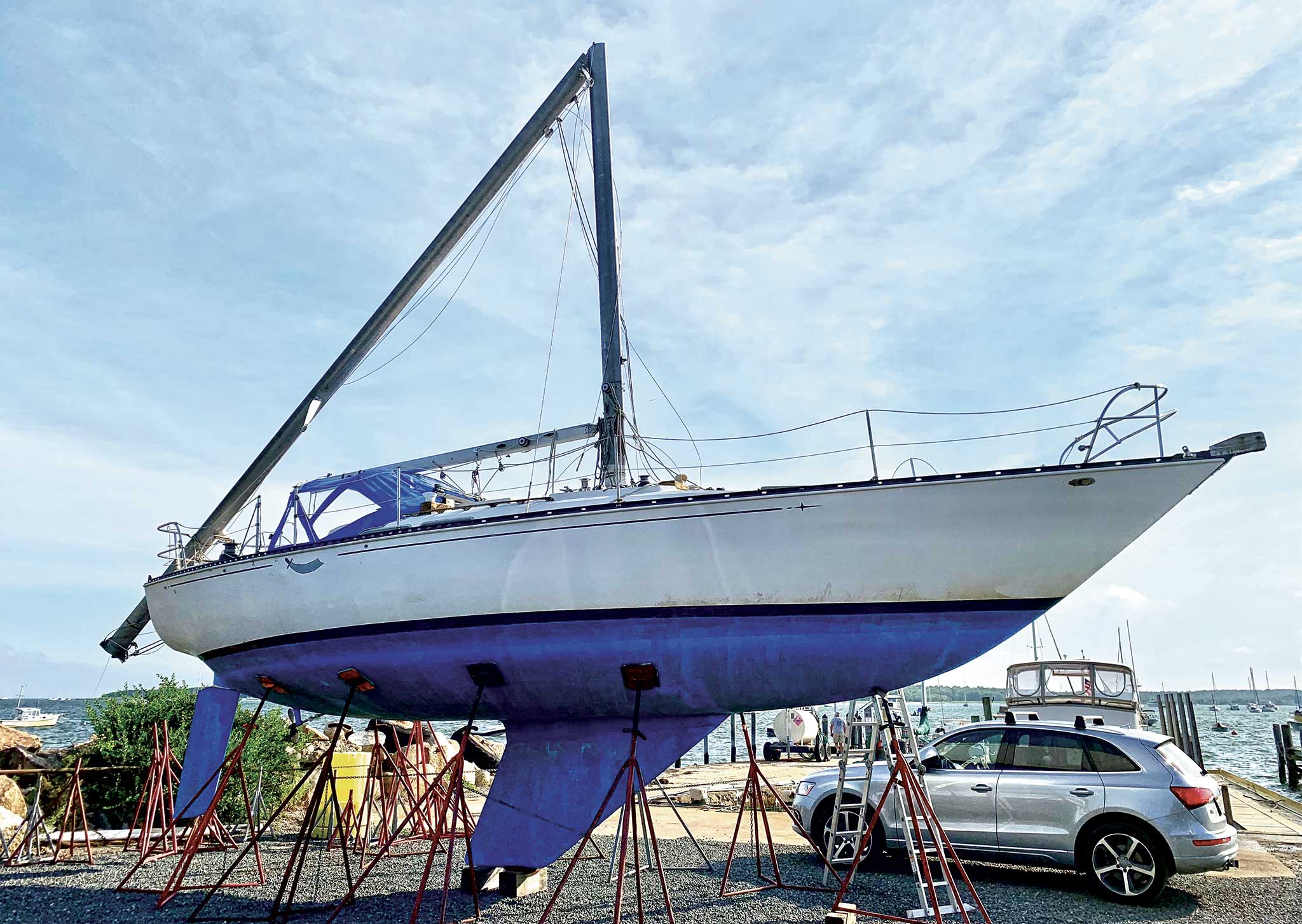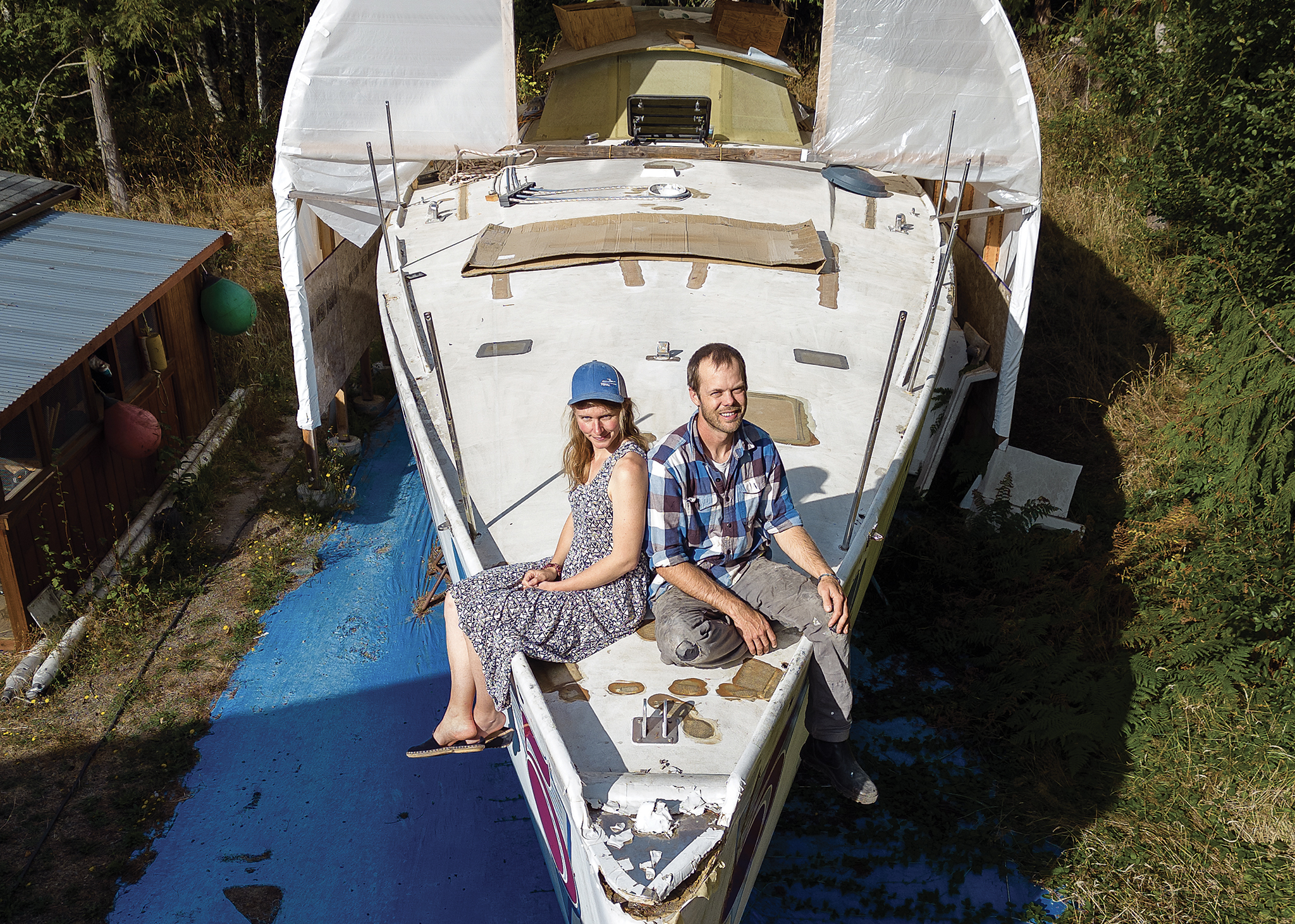
As part of the refit of our project boat, Ostara, a 1973 Norlin 34, I decided to scrap its vintage hydraulic system for tensioning the backstay, boomvang, and babystay, along with the control panel in the cockpit. In its new role as a coastal cruiser and occasional racer, the boat had no need for such powerful trimming gear or for hoses full of hydraulic oil leading throughout the boat to control it.
Removing the 15′ x 6′ hydraulic panel doubled the number of gaping holes in the cockpit. There already was a 12′ square opening (from the original engine panel) that the previous owner had covered with a piece of plywood. I filled in both holes with patches cut from ‘ fiberglass panels, leaving me with the problem of painting the new fiberglass surfaces. Shiny new paint over the patches would stand out against the scuffed, faded 35-year-old gelcoat covering the remainder of the cockpit. If I painted just the cockpit, the deck and cabintop sides would look even dowdier in contrast. There was no way around it; I would have to paint everything above the hull-to-deck joint. See how one thing leads to another? I should have let the hydraulics be.
Paint Choices
The kind of paint you use will depend on (a) your budget and (b) your aesthetic standards. If the boat is an old beater and you don’t intend to keep it long, you won’t want to spend a fortune on paint. In this case, you could use semigloss oil-based house paint or, preferably, an oil-based yacht enamel (Pettit, Kirby, Interlux, and Epifanes all make well-regarded enamels). These yacht enamels will look fantastic at first but will lose a good part of their gloss in a couple of years.
You’ll get more life out of a single-part polyurethane like Interlux Brightside or Pettit Easypoxy; these paints flow sweetly off the brush and will look good for years. They’re only a little more expensive than the oil-based enamels, and the preparation time is the same for either paint, so I think it’s worth spending a little more for a better finish.
In terms of the luster of the finish, it’s hard to tell a single-part polyurethane from more-expensive two-part paints. The two-part paints are tougher and more durable. They set rock-hard and shrug off the daily wear and tear of onboard traffic. I had no intention of taking on this project again, so I settled on Interlux’s Perfection two-part polyurethane. I had never used two-part paint before, so I decided to go by the book and use only the recommended products for preparation and finishing.
Nearly two years later, the Perfection still looks great. I’m glad I used the flattening agent; the paint also cured with a slight eggshell finish, which further cuts down on reflected glare. The paint has been bashed with winch handles, scraped with anchor chains, and walked on in street shoes, and shows no sign of abuse. Professionals armed with spray guns would have done a better job, but the cost would have been dramatically higher.
Painting the antiskid
There are many options for painting the antiskid sections of a deck. You can sprinkle sand or crushed walnut shells over wet paint and then apply a second coat of paint over the top. You can add a proprietary compound like Intergrip to the paint, or you can buy a purpose-made paint that incorporates an antiskid additive. Or you can try something else entirely.
We’d already tried Interdeck one-part paint on Ostara’s deck. It was nice and grippy underfoot, but I had found it hard to keep clean and hot underfoot (well, it was a rather loud blue). Nor did it do anything to conceal the scars of a lifetime’s racing or the badly patched holes from old deck hardware. This is why I was intrigued by the pitch for Kiwigrip, a water-based acrylic polymer compound that was allegedly not only clean and quick to apply but would also go on thickly enough to disguise unsightly deck blemishes. It is nontoxic, and cleanup would be easy. Best of all, it would go on over existing deck paint with no more preparation than a good scrubbing. It sounded promising, so I ordered some.
The before-and-after shots tell the story. The new-look deck drew admiring looks and comments from everyone who laid eyes on it; two seasons later, the Kiwigrip has proven to be nice and grippy underfoot and still looks great. Two thumbs up.
Resources
Epifanes North America, Interlux Yacht Finishes, Kirby Paints, Kiwigrip, Pettit Paint, West Marine