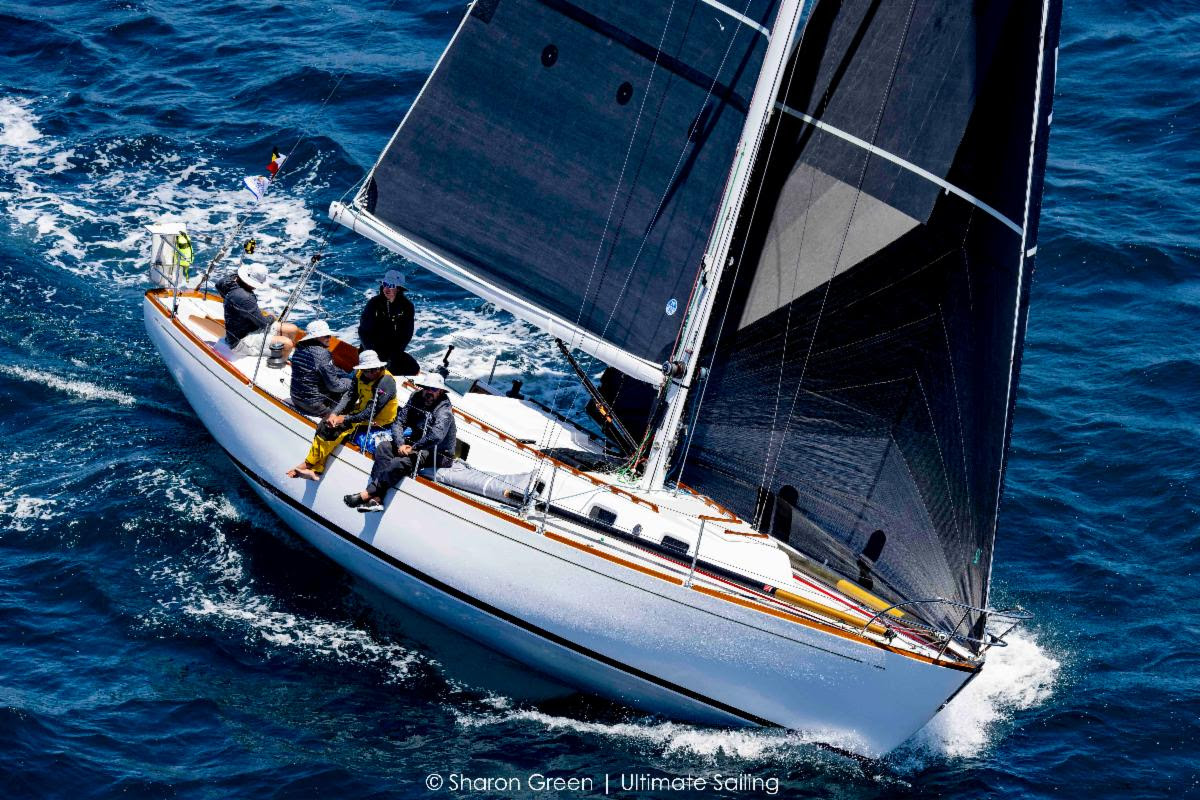
We set out for Bermuda one lovely Friday in June. The breeze was up, the sun was shining, and I was in a rancid mood.
Regular readers may recall my disastrous 2024 Newport Bermuda Race where, about halfway through, our boat struck a submerged object. It was dark. We never saw it coming. The object ripped the rudder post from the hull, a fatal blow. Our pumps couldn’t keep up. An hour later, we abandoned the boat.
Nearby, our friends on Banter heard the mayday call and made for our position. A family boat in its first racing season, Banter was skippered by Matt “Cap” Gimple and crewed by his wife Tori; adult children, Lindsay, Eric, and Megan; and friends of the family.
In previous years Lindsay and Megan had sailed with Alliance, logging several hundred miles alongside me my first offshore racing season in 2023. The ties between the two crews ran deep.
There were three boats named “Alliance” in the Bermuda Race that year, and Banter anxiously tried to hail us and confirm whether it was their Alliance foundering in the steep Gulf Stream swells. Our navigator’s unmistakable Boston twang over the radio confirmed it.
It was a J/121 called Ceilidh that arrived first on the scene, shortly followed by Banter and Capella who stood by while Ceilidh’s crew pulled us from our life raft. The plan was to split our crew of nine between Ceilidh and Banter so that neither boat’s resources would be stretched too thin, but during the maneuver one of the tubes on our life raft tore. Putting anyone back in it to make the transfer was off the table.
For over two days, we imposed upon the crew of Ceilidh as they graciously shared limited space, provisions, and dry clothing with us. Banter stood by as a buddy boat, within sight the whole way to Bermuda.
Remarkably, we made it without any serious injuries, and the evacuation and rescue were conducted with calmness and professionalism. Still, the incident affected me deeply.
In the months following the wreck, I experienced lapses in memory and dissociation. Travel became extremely difficult. I spent months contemplating leaving my job. I loved working for SAIL, but how could I move forward in a career that’s all about sailing when that was the very thing that had turned my life upside down?
Slowly, though, things returned to normal. Two years passed by, and when my friends aboard Banter invited me to do the race again, I said yes. There had never really been a doubt in my mind that I would go back someday. In some ways it was closing the loop, but in more practical terms it was a big race in my backyard and I was a sailor. Of course I’d be back.
Still, the practice races leading up to the Bermuda Race were difficult for me. It’s often the case that after a traumatic event, people struggle with self-doubt, and I was tortured with insecurity as we prepared for the race. I’d sailed some 4,000 miles since the wreck, but the looming prospect of going back to Bermuda made these miles feel different. It turned out I wasn’t quite as over the sinking as I’d thought.
• • •
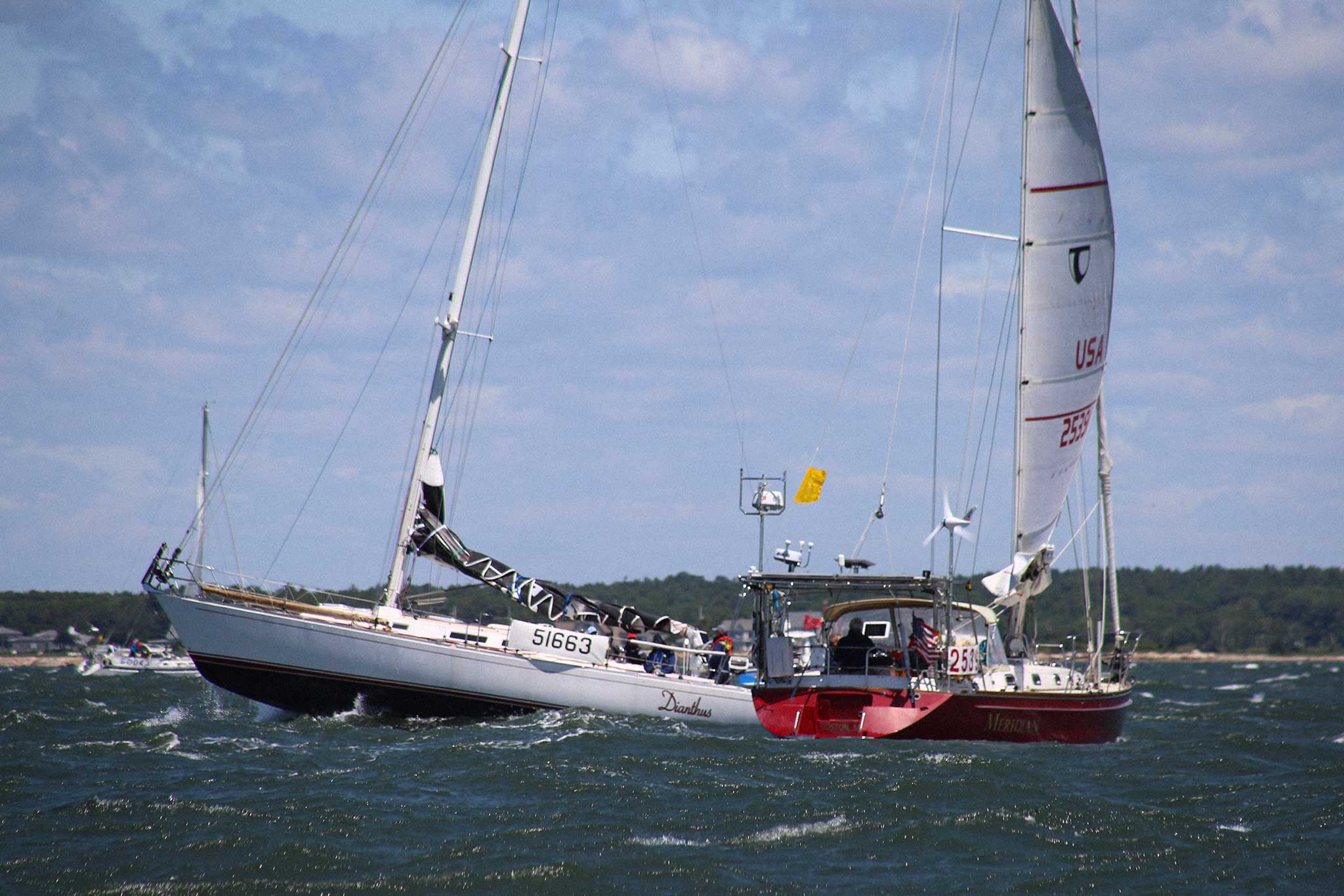
The start for the Newport Bermuda Race has been moved up Narraganset Bay in recent years, keeping the fleet in close quarters for a while before funneling out onto the open Atlantic. This extends the drama of the starting box, complete with the dance of dodging starboard boats all the way out. (See page 10.)
We expected to switch head sails at the mouth of the bay as our wind angle relaxed a little, but it came to nothing. Little did we know that this was the first of many, many conversations about sail changes that would come to nothing over the coming days. We did fewer headsail changes in the 636 miles than you’d do during a single Wednesday night race. As the bow person, I was purely ornamental.
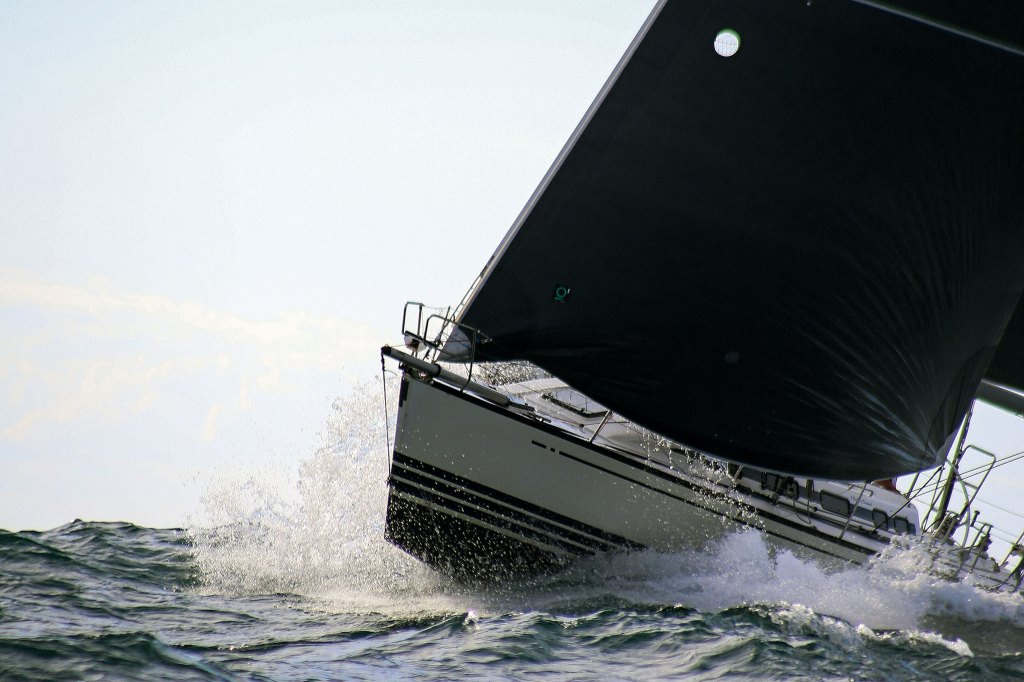
Instead of better wind, we got seastate slop as we took to the ocean. Waves exploded out from the bow as we cut through them, dousing those of us on the rail. Our fixed GoPro up front didn’t stand a chance. It was destroyed after about two hours of pounding into the waves. The vomiting started not long after.
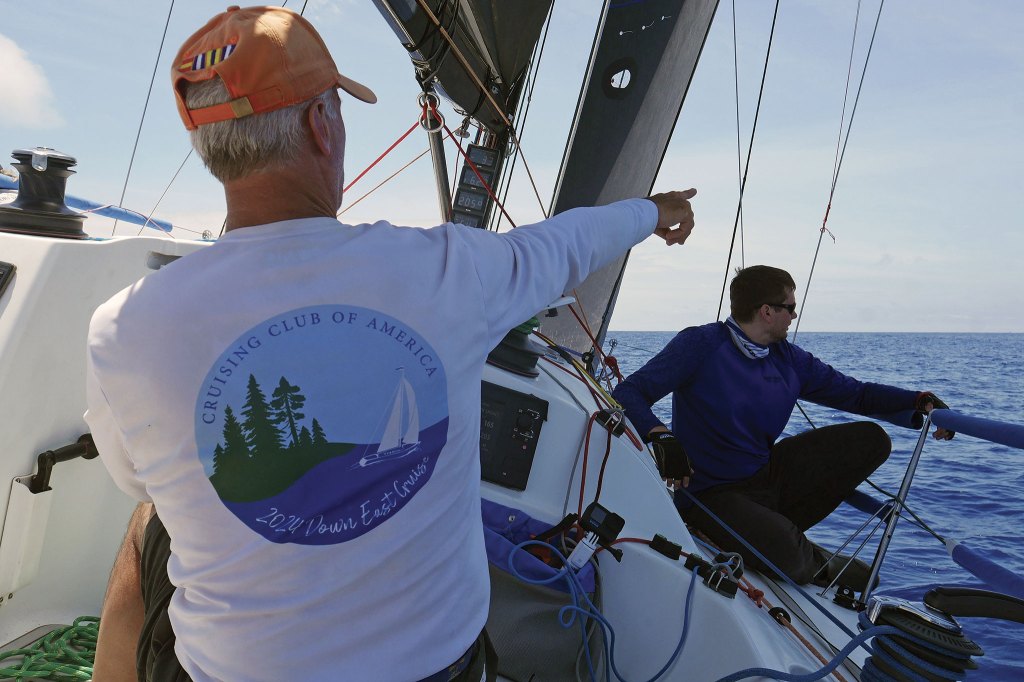
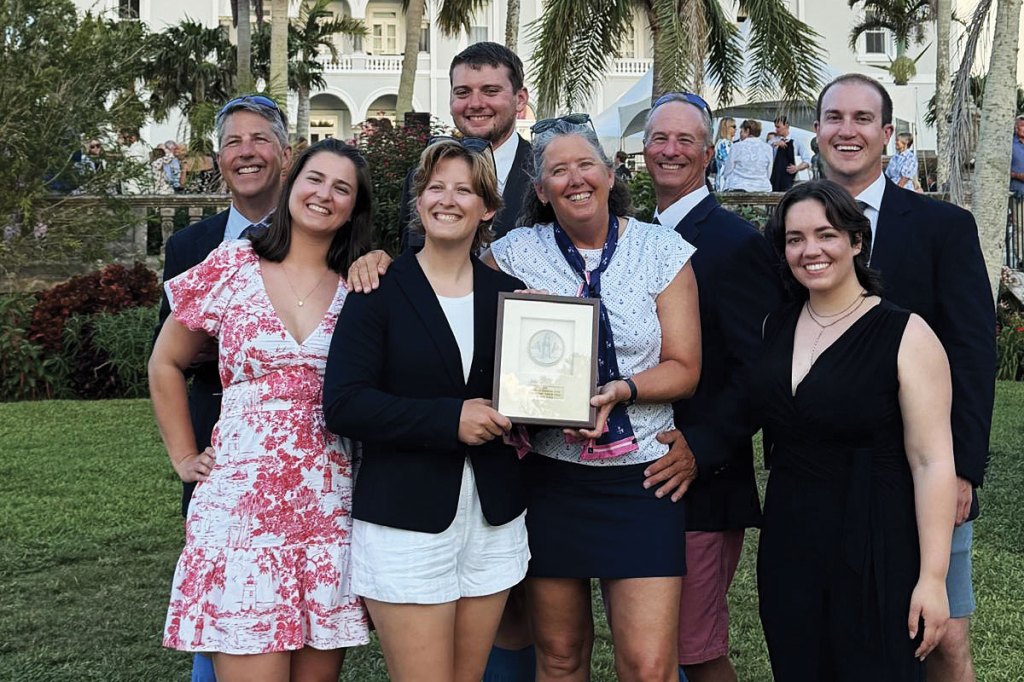
Our 2026 crew was made up of eight returning members of the Banter squad—Cap, Tori, Lindsay, and Megan plus Mackenzie Fraser, Bryan Fulton, Peter Bacon, and Jonathan Roussin (who’d moved from delivery crew to race crew since the previous edition)—plus Sam Webster and I from Alliance. As you may have guessed from the appropriately named boat, Banter’s crew is a gregarious lot, quick with a laugh and full of old friends constantly ribbing each other. When it’s time to race, though, they become a competitive bunch, and it took no time at all to settle into our routine.
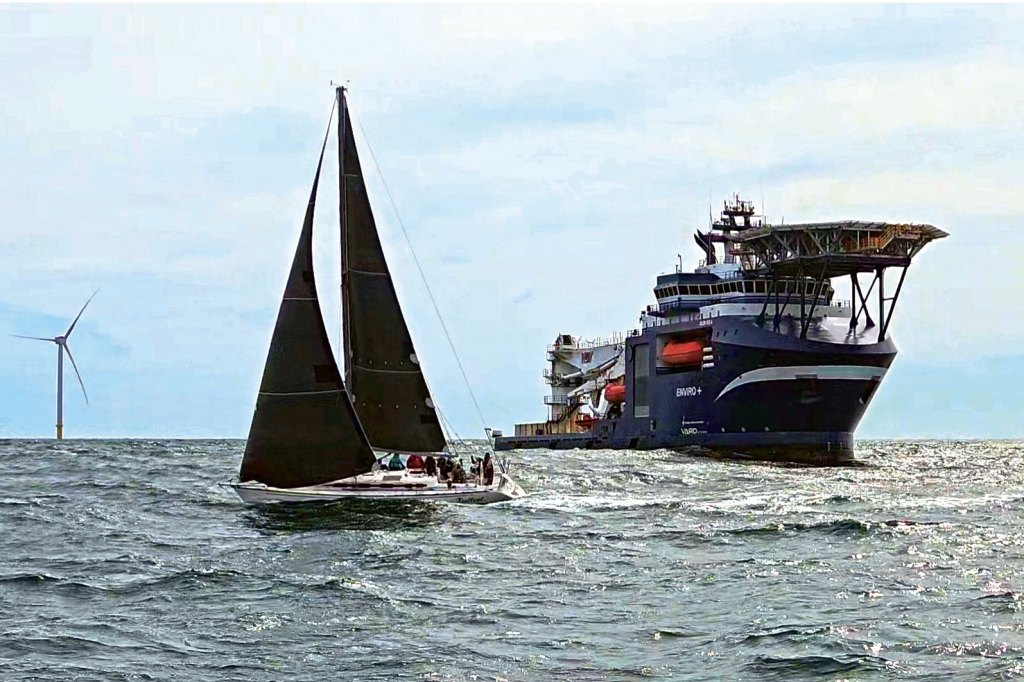
One much-discussed feature on the Newport Bermuda course was a new wind farm just off the coast. The slalom through the massive towers was an interesting challenge, and not just because it was the last view of something other than ocean we’d have for awhile. There were construction vessels and other course obstructions in addition to the regularly placed towers, plus the ominous windshadows trailing from them. We were a pretty near speed match for an X-Yacht to windward of us during those miles, and through the whole matrix of the farm and beyond we stayed in close quarters.
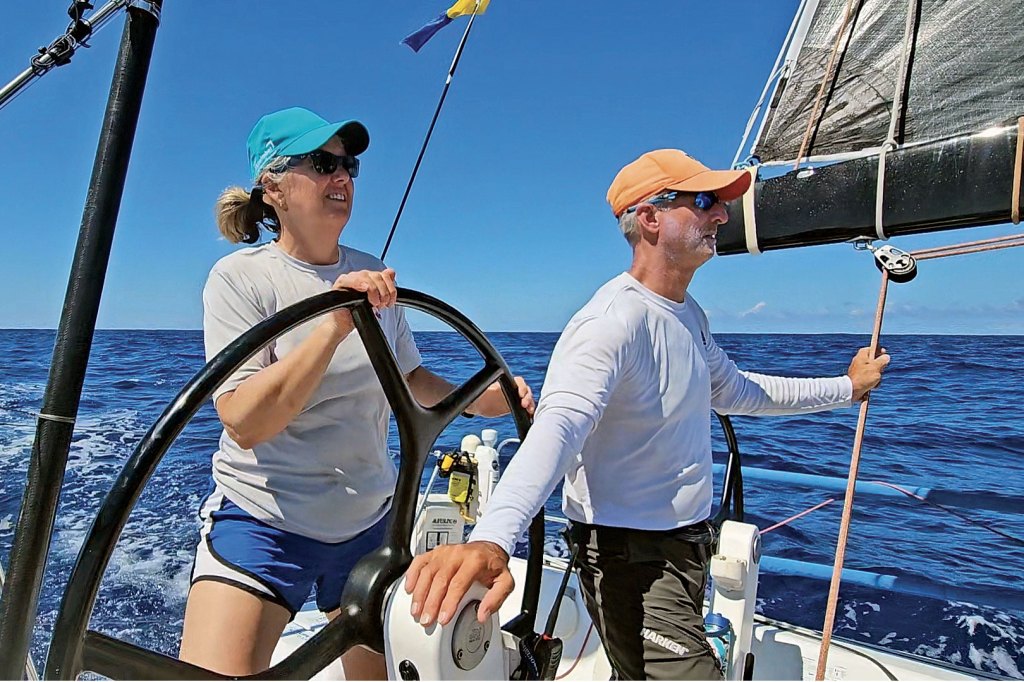
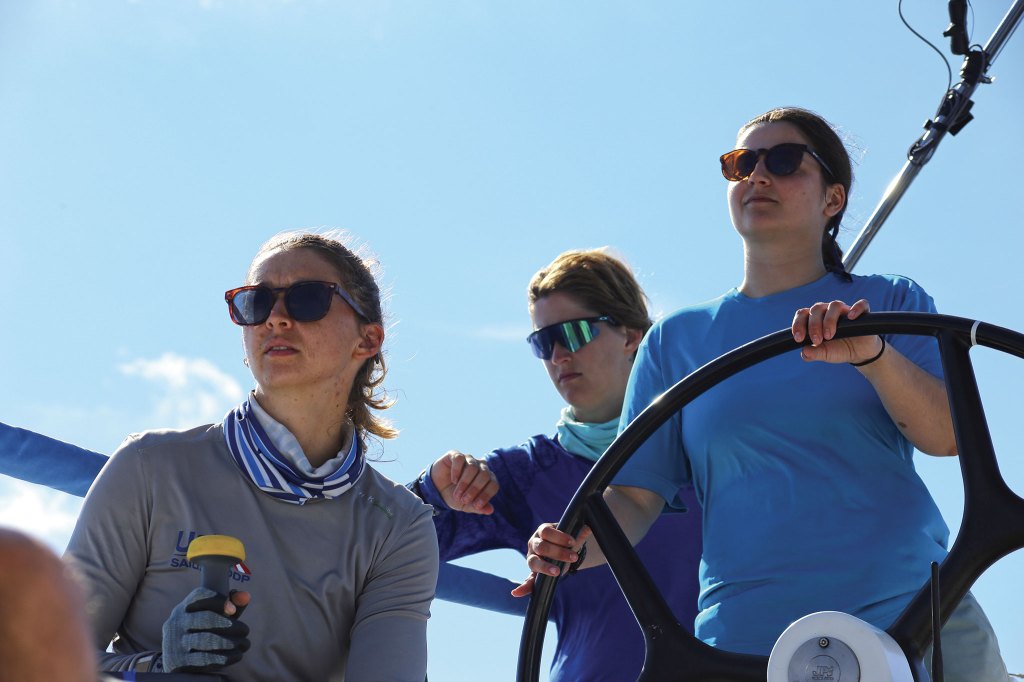
“Let me know what that X is doing,” Lindsay said from the helm, eyes trained on the mast instruments and a tiny white pinprick off the bow that was helping her stay oriented. Twilight had set in, and the waves had picked up to an aggressive slosh.
I stared at the red glint of their masthead light. It stared back at me. Banter twisted in the waves, and the light swung. I tried looking away and then back a few minutes later, hoping more time would make the relative position changes more perceptible. It didn’t.
It seemed that the light was, on average, getting a little closer. Then a little farther. Then closer but more aft. Then farther but higher. Farther and lower. About the same. Closer. Farther. Up. Down…
I blinked into the night as two blurry hours slipped by. The red light was moving in imperceptible increments on a dark horizon. I tried to update Lindsay as things changed, but having been just to leeward of them for the better part of six hours, there wasn’t much meaningful to report, always changing just enough to worry me before swinging back an equal part in our favor.
When midnight rolled around, I’ll admit I was glad for my watch to be over, exhausted ocularly and, somehow, emotionally.
For someone who often gets seasick, I considered it a major coup that I was doing okay in the sloshing. Still, I was going to take another Dramamine before I sacked out. I grabbed my water bottle just as another crewmate joined me below. She was shucking off her foulies when the nausea hit her hard and fast.
“Where’s the bucket?!” She asked.
“Port berth!” Megan called from up on deck.
I moved to get it for her, assuming “port berth” meant the aft cabin. It did not. I scrambled back to the port settee.
Too slow by half.
In that split second, two things happened at once. I dropped my water bottle in the sink to free up a hand for bucket-passing, and the sink became the best alternative to a bucket that had not yet materialized. I was suddenly forearm-deep in vomit.
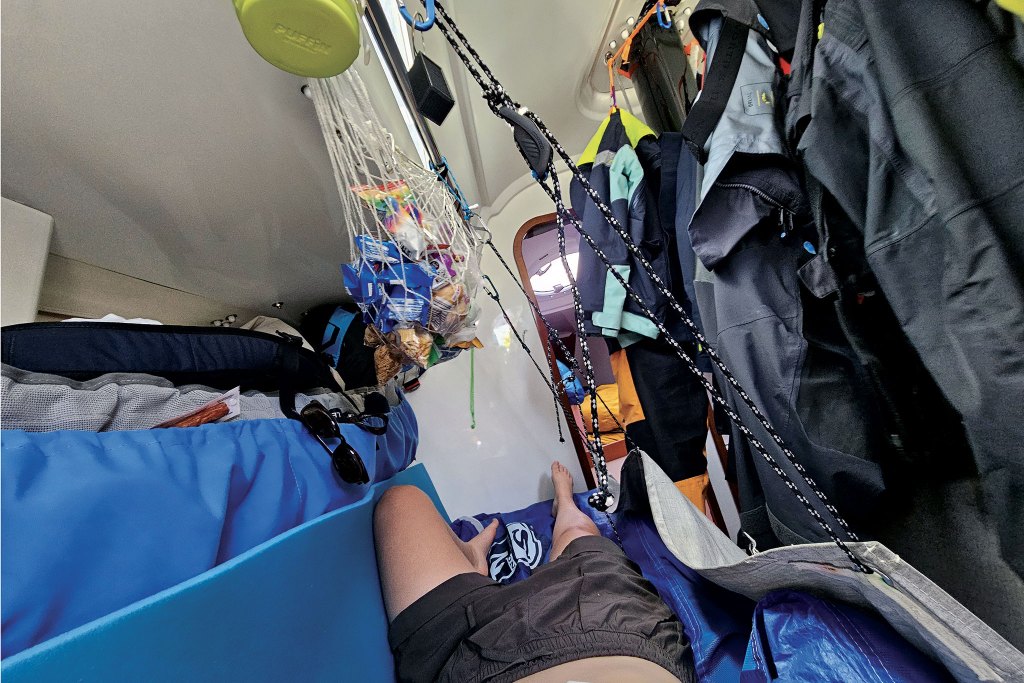
After a moment of horror, I was rummaging in my bag with my clean hand for a baby wipe to squeegee my arm off. Megan tried to help our ailing crewmate while I got started on wiping down the things that had been in the splash zone. Between the vomit smell and the motion of the boat, my fresh Dramamine didn’t stand a chance.
Unlike my unlucky crewmate, I was still suited up, so I climbed out, tethered in, and said a quick hello to the on deck crew before spewing mac and cheese off the low side.
The ocean spray was refreshing on my heated face, and at some point I hauled myself up and said, “Have you guys seen these phosphorescence? So scenic!”
“Scenic, she says!” Peter laughed at me, but I just nodded with a grin, eyes still wet and nose stuffed. The flecks of blue-white light churned in our wake, a storm of stars in the glossy black water. It was, as it always is, magical.
And then my head was back under the lifeline. Soon Brian was by my side: the next domino to fall in a chain of sympathetic pukers. We exchanged a laugh. There’s a point somewhere—about halfway between the initial misery and the concern over long term dehydration—that you have to laugh at the comedy of errors.
In all, five out of 10 of us were sick that first 24 hours, and I was not the only one to receive a direct hit, though the others bore it with more fortitude than I did. Then again, given that a couple of us are serial yakers, I think we actually made out pretty well. Barf often enough, and nothing phases you anymore. Boot and rally was our creed. By day two, we were mostly back in action.
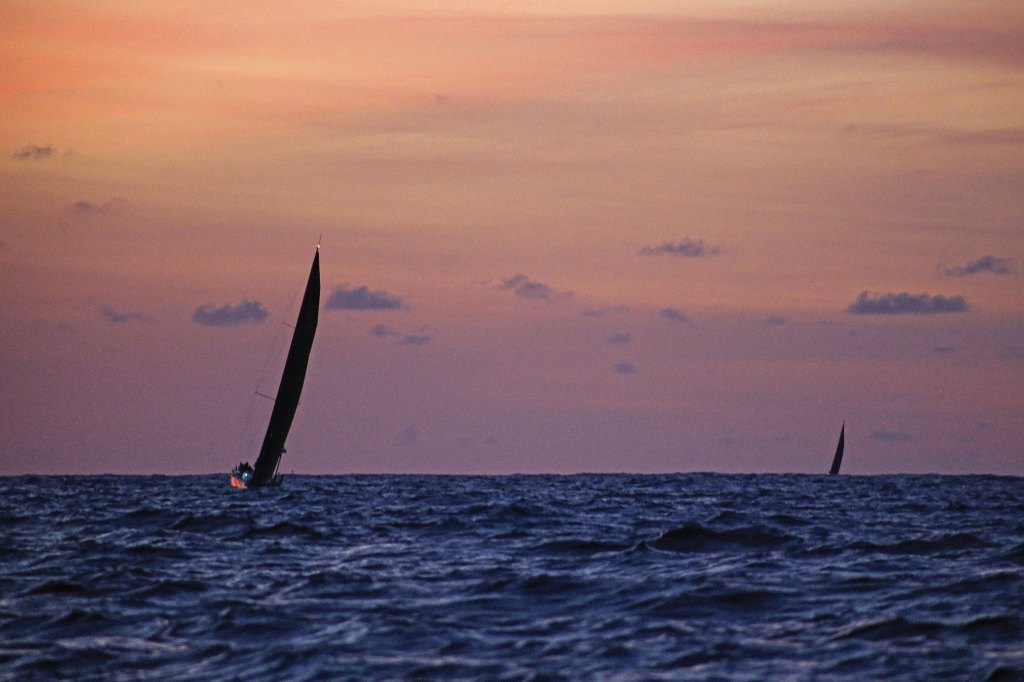
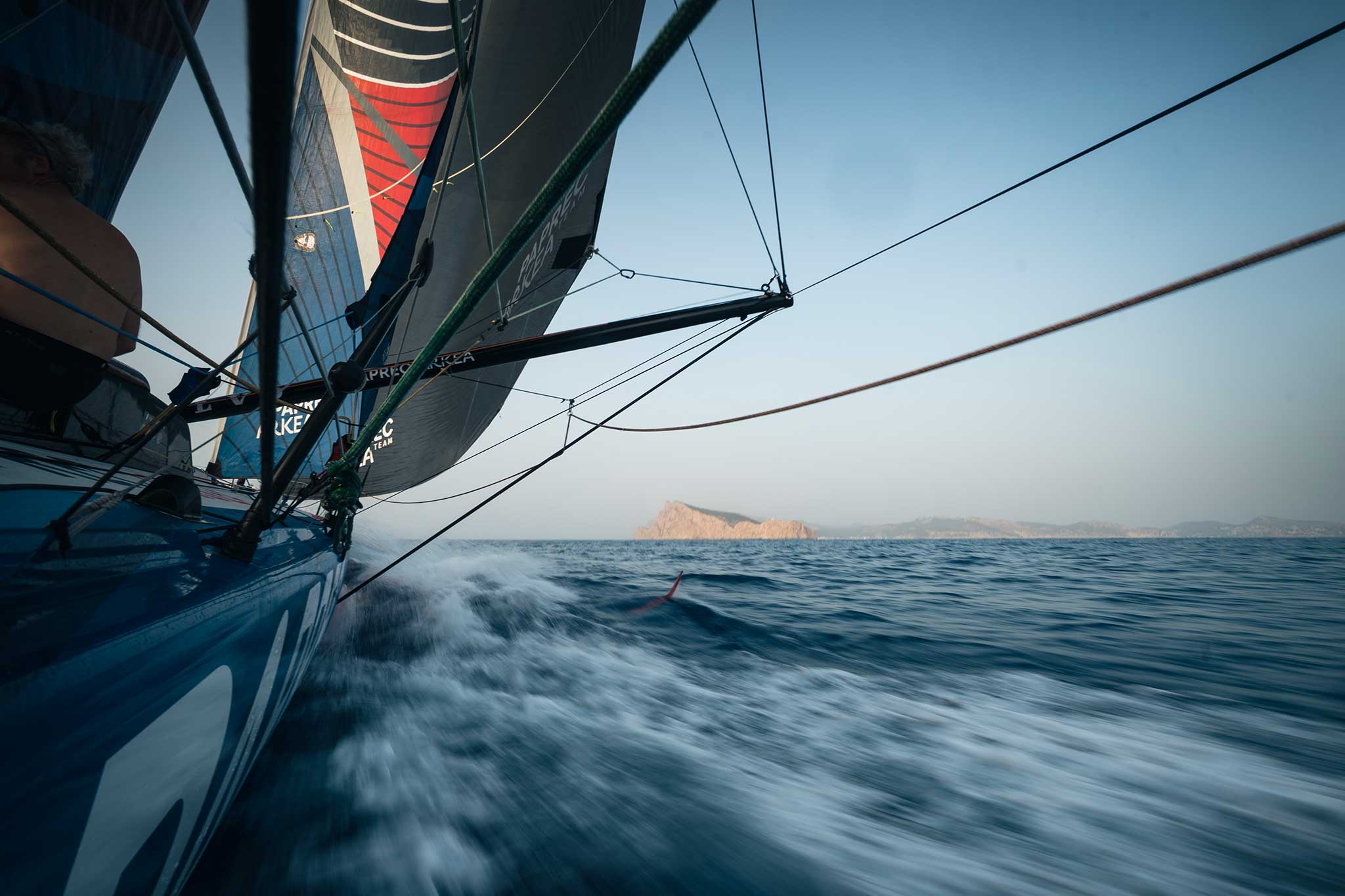
Day two also brought with it a long musing about whether the Code 0 would be preferable to the jib that we had up. In flat water, it’d be the obvious choice, but the seastate complicated things. A boat nearby had attempted to put up a kite, and though they were spinning out every 10 minutes between the tight wind angle and the rotation of the steep waves, they were hauling. We watched them fly by over top of us and decided to go for it.
Lindsay, Megan, and I went forward to make the swap, but it was quickly apparent that Banter wasn’t much happier with the Code than our neighbor was with its kite. Almost as soon as the sail was up, the call came to bring it back down.
The operation wasn’t so simple in reverse. The wind unraveled the top of the furled sail before we could get it down. The web of my left hand got sucked into the prefeeder as the jib went back up, so I was down an opposable thumb as we tried to wrestle the Code to the deck. The on-watch crew manually rewrapped it, and I saw to my hand, which was fortunately just a nasty pinch that peeled my skin raw, not anything more serious. I should’ve been wearing gloves.
More sail problems plagued us through the night as the main jammed in its track. Banter had lost its mast in a warehouse fire a year and a half earlier, and the replacement mast was new enough that it was still being tinkered with. The track had been a particularly thorny problem that spring, needing to be adjusted, filed, and fitted with a prefeeder, none of which had been right when the rig arrived.
So, unable to raise the sail, we were stuck with a reef in, and it would require a full take down and rehoist mid-Gulf Stream to fix it. The whole night was spent going a knot slower than we wanted while agonizing over whether it was time to tackle the problem. We couldn’t safely strip the sail in the rolling waves, and the forecasted calmer conditions were taking their sweet time getting to us. Finally, in the small hours of the morning, the seastate began to abate and the on watch went for it. It was as difficult as predicted, confirming that waiting was the right call.
I came on watch at 4am to a new day and Banter’s brand new raspberry kite hoisted. The seastate was down, the main was up, and spirits were high. True champaign sailing, who could ask for more? This was the “enjoy it while it lasts” day of the race. The next dawn would break on a completely different scene.
The change was actually apparent before dawn when I came on watch in the pitch dark. Instead of the ocean, we were drifting in the Milkyway, surrounded by hundreds of stars. As the sun grazed the horizon, the illusion broke, revealing some 40 boats all within sight, their masthead lights doubled in numbers when reflecting off the glassy ocean surface. The wind had shut off, and we’d all sailed into the same dead zone, backing up the fleet into one single mid-ocean parking lot. I wasn’t driving, so I was at liberty to be awed instead of frustrated.
“We’re serving as characters in the increasing delusion of our skipper,” Peter said wryly as Cap sent us to sit to leeward as if it was the heel angle not the zero knots of wind that was slowing us down. Cap had been diligent at the helm for hours, trying to encourage the boat to drift in the preferred direction, but there really wasn’t much to be done.
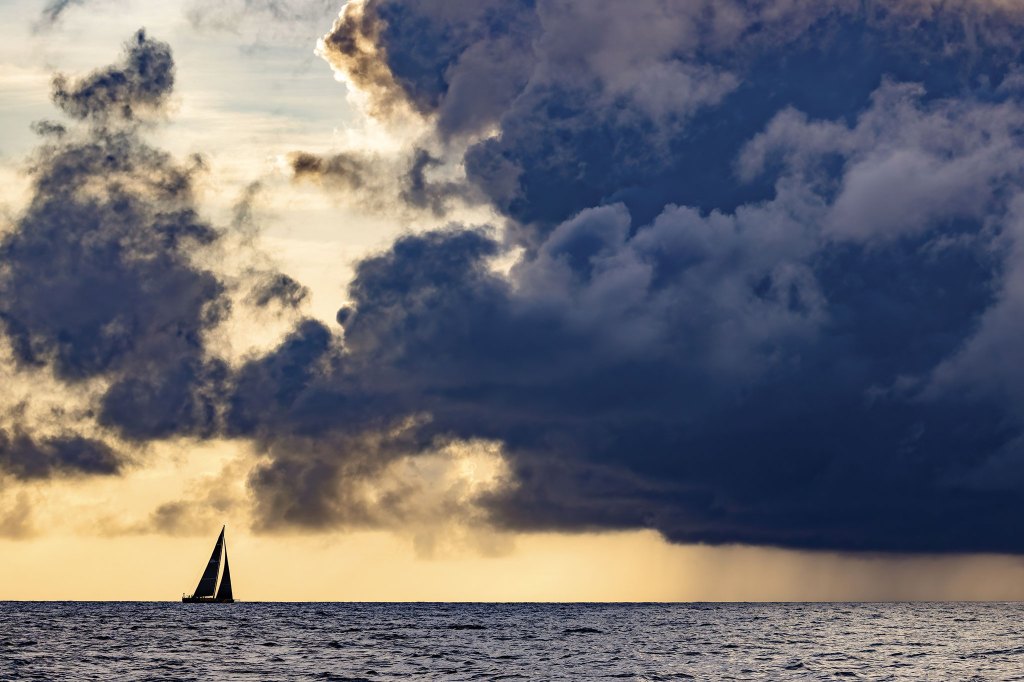
The breeze slowly began to fill that afternoon, and the lottery winners were revealed. We made out okay, picking up a few boats in the debacle and closing the gap on others. Unfortunately for us, the fleet shuffling was far from done. South of the Gulf Stream slop and the parking lot, the wind was light and flukey. The weather was ultra localized, and we could see boats all around us in completely different conditions—one getting headed, one getting rained on, one in a dead calm, and all wishing they were a few hundred yards in any direction.
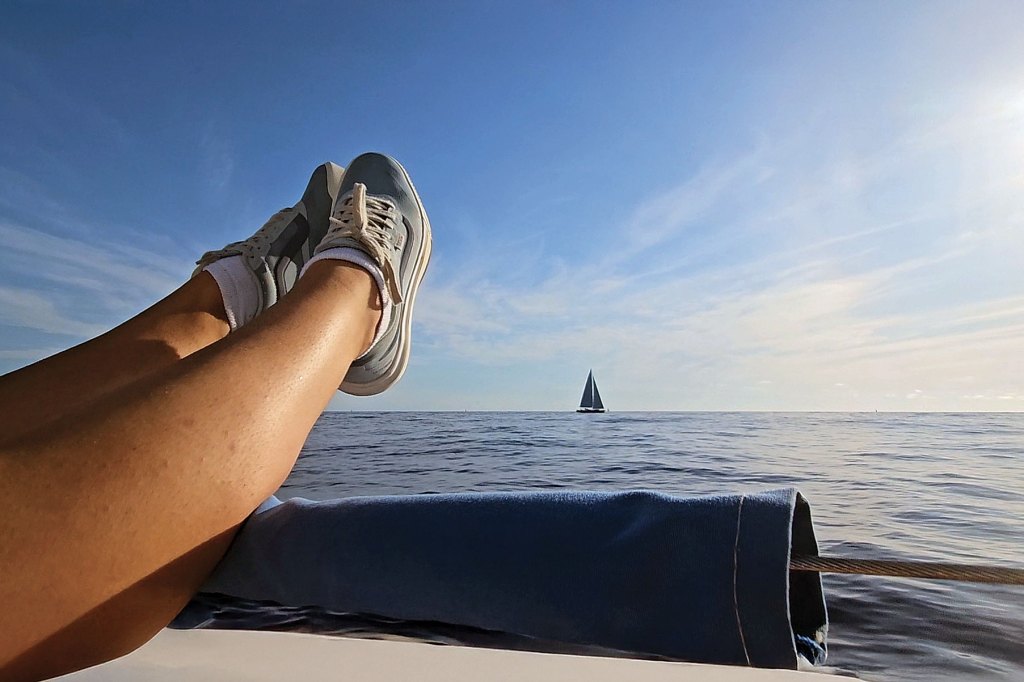
One afternoon a few of us spent an hour on the rail naming foods that ended in the last letter of the previously named food. Apple. Everything bagel. Lettuce. Endive…After all, there were no state license plates to count or roadside attractions to spot in alphabetical order. Somehow iSpy isn’t that fun when you’ve been staring at the same thing for four days.
Suddenly, though, there was something, right beneath my feet. I shouted and everyone craned to get a look at the 50 gallon drum, low in the water and missing the hull by a few feet. Peter called the boats behind us on the same line to warn them. We’d heard similar VHF calls earlier that day, including one about an industrial refrigerator, presumably sealed with air inside and floating around until it washed ashore or holed some unsuspecting boat.
After Alliance’s collision, you’d think that would be upsetting, but strangely there was something reassuring in seeing the debris in the light of day. Instead of being a one in a million freak accident, there was a context and a logic to having hit something out here. It was only a numbers game, and we drew the short straw. I’d always known that whatever we hit had been impossible to see in the dark and waves, and that it hadn’t been any negligence on the part of myself or the rest of the on deck crew. Still, I’d always felt shame about having been at the helm when it happened.
Now, though, listening to the VHF warning calls from across the fleet, it was clear it could happen to anyone and that our cautionary tale was being taken seriously.
By Tuesday morning, land was in sight. In the hot Bermuda sun as the wind shut off and we struggled to find a suitable approach angle, a shower had never seemed so close, and yet so far away.
I want to tell you that crossing the finish line was a moment of triumph, that I finally closed the loop on a voyage I’d started two years earlier. I want to say that it was full of relief and joy and closure.
For me, it wasn’t.
It was more like a marathoner’s post-race blues. I felt empty as I pulled down the jib and coiled spaghetti. Empty, as drinks were passed around and music cranked up. And then, with no warning at all, I was ugly crying. I couldn’t articulate why any more than I could stop. It was just big and hollow and utterly overwhelming.
It seemed unfair, somehow. I think I had really started to believe that getting back out there and refusing to give up meant that I was owed closure at the end. Everyone told me I was doing the right thing. The honest truth is that it wasn’t a storybook ending. It was just me and my friends and a historic regatta through one of the world’s most complicated straight-line courses.
I guess what I’m saying is that when life’s not perfect, you just have to find your own beauty in that. Sometimes it’s not some grand Hollywood ending. Sometimes all you get is the most scenic midnight barf you’ll ever have and a few good friends to laugh with you while you do it.
This article was originally published in the October 2026 issue.