Note: This story is excerpted from SAIL Contributing Editor Christopher Birch’s recently released book, The Four Seasons of Boat Maintenance—a compendium of lessons learned during his 40-year career maintaining boats as the founder of Birch Marine Inc. in Boston. In this latest excerpt in SAIL Magazine, Chris explains one of the work items on his 31 step fall boat decommissioning checklist.
Sunlight is the number one killer of running rigging on a sailboat. Stripping all sail control lines off the boat during the offseason will reduce their UV exposure and increase their usable lifespan. Removing running rigging from the boat will also enable laundering of the lines, which will further improve their longevity. Washing helps to maintain the integrity of the fibers by minimizing internal chafe caused by abrasive salt crystals and grime. A fabric softener will help restore a neutral bias to the weave, which will minimize twist and lessen the chance of hockling (kinking within the braid). Together, the washing and softening process help to maintain the strength of lines and make them easier to work with in the sailing season ahead.
Once the sails have been removed from the rig for winter, much of the running rigging will be relatively easy to strip from the deck. To remove lines that run to the masthead or through a boom, you’ll need to rig winter mouse lines so that you can easily rerig the in-service lines come spring. Old halyards and sheets work well as winter mouse lines. Alternatively, you can build dedicated, undersized, and inexpensive winter lines from new rope.
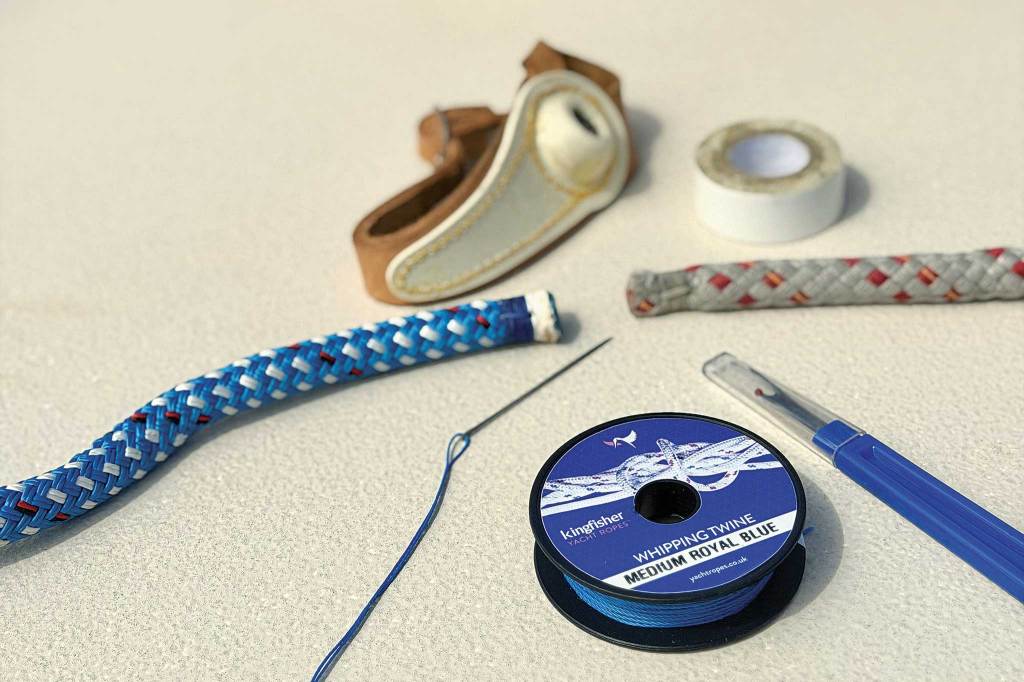
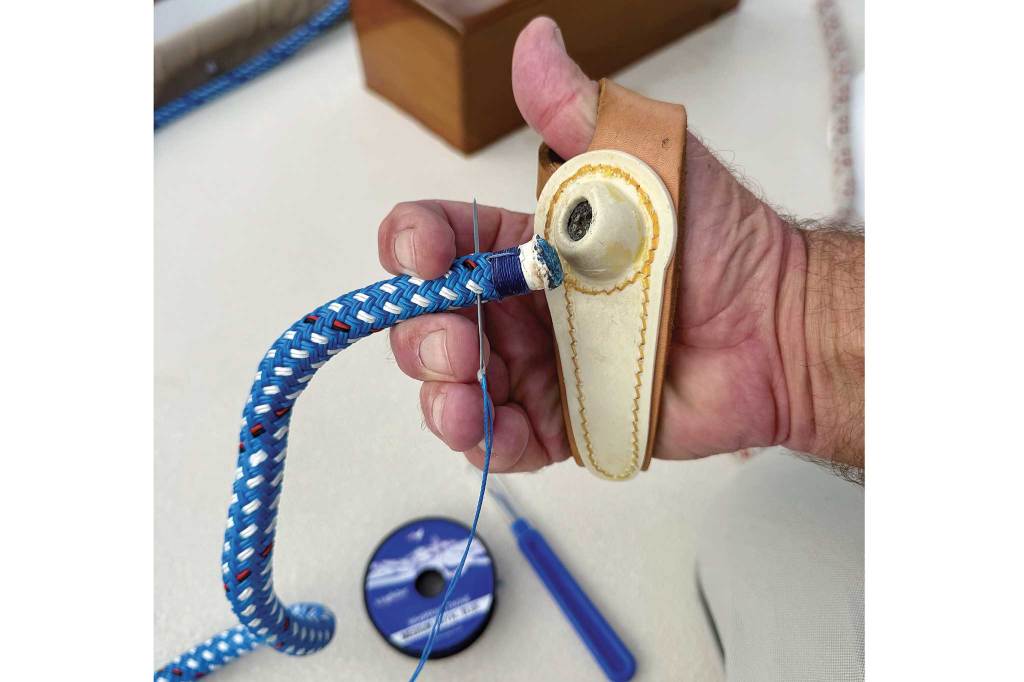
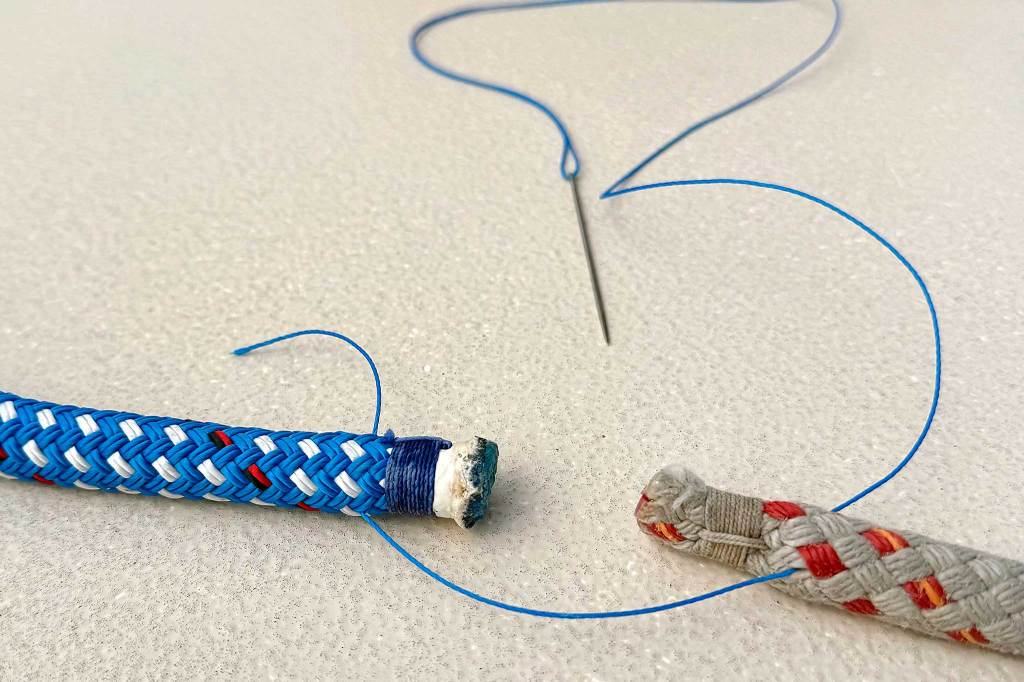
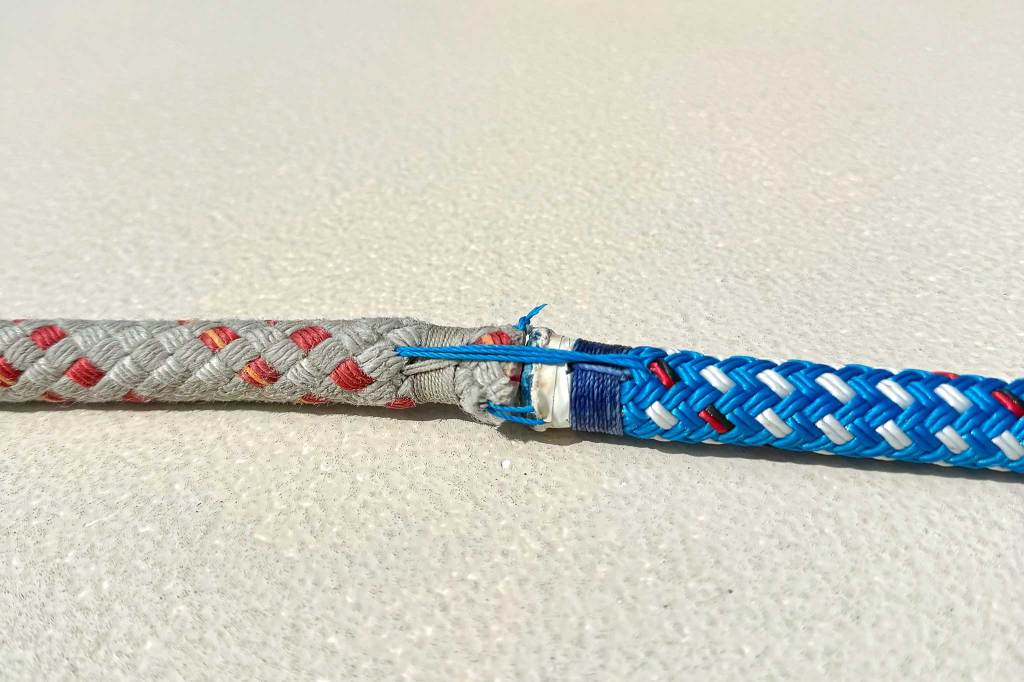
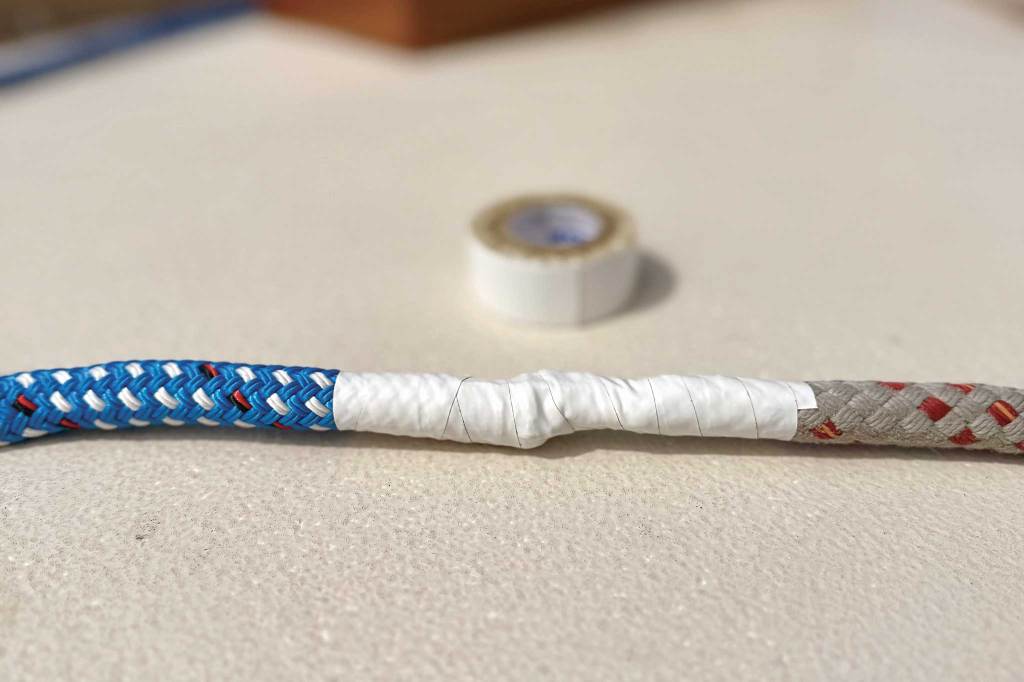
When swapping your good lines for winter replacements, you’ll want to stitch them end to end so you can pull the winter lines through with ease. Then, you’ll be ready to wash your summer lines before stowing them for the season. In the spring, just do it in reverse.
To rig a winter line, use whipping twine to sew it end-to-end with the matching summer line. As you pull the summer line out, the winter line will be reeved into position in the rig for a lazy winter of waiting. When sewing lines together, aim to create a joint that is both strong and smooth. Avoid a sistered overlap joint and instead sew butt-end to butt-end to create a joint that can easily pass through a masthead or boom-end sheave box. During spring commissioning, reverse the process to get the summer lines back into place.
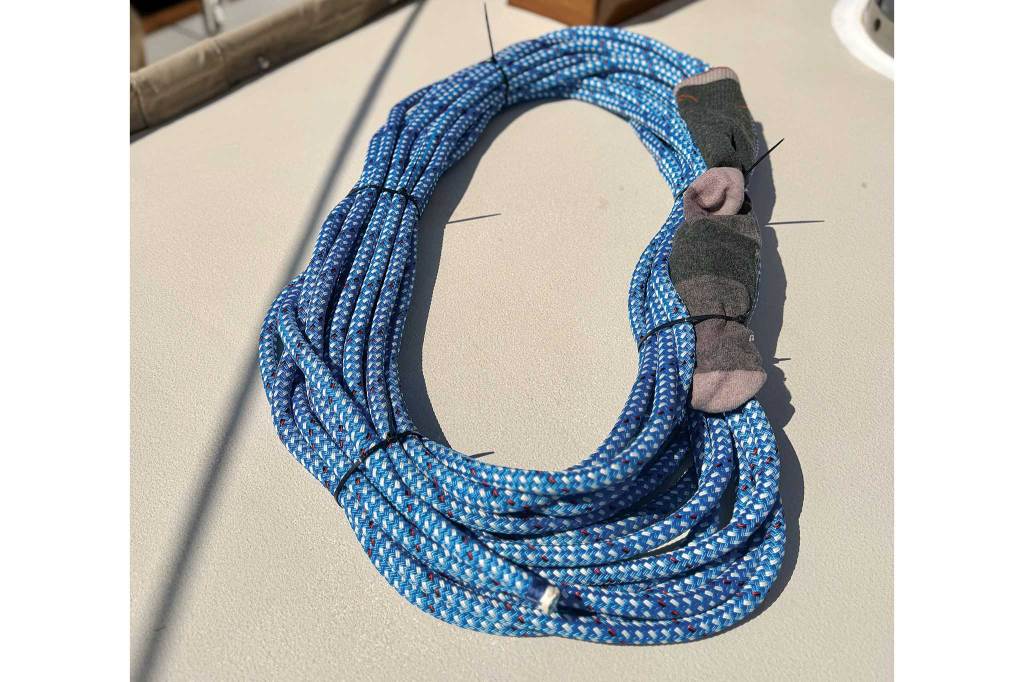
Once you have all the summer running rigging off the boat, wash the lines in a household clothes washer using warm water and bleach-free laundry detergent. Then wash them a second time using a mild dose of Downy fabric softener. Before loading into the washer, coil each line loosely and secure said coil with a few plastic wire ties. Alternatively, lines can be segregated in mesh bags for laundering. Either strategy should keep them loose enough for washing and neat enough to avoid a tangled spaghetti mess in the washing machine. Add a sock secured with a wire tie over all metal shackles to minimize wear and tear on the machine and to keep the noise down when agitating. After washing and softening, allow the lines to air dry thoroughly before stowing them.
Some will suggest they are eligible to skip this task because their boat is protected by a cover or a shed roof in the off-season. In practice, the UV protection offered by those shelters is limited. The order of operations in the decommissioning and recommissioning process mandates that boat covers be installed late in the fall and removed early in the spring. The keen observer will also note that many boats are covered with the mast up and with halyards exposed to weather. Leaving summer lines rigged all winter also fails to address the need to launder those lines.
For those sailors lucky enough to keep their boats in use year-round, annual laundering of running rigging is recommended maintenance. For those who sail their boats in the summer and store them for the winter, stripping and laundering the summer lines early in the fall and then rerigging them late in the spring is the recommended schedule. For the same reason you cover your sails when not in use, it is also smart to keep your running rigging out of the sun for as much of the year as you can.
Info
Time Estimate: 10 hours for one experienced worker on a roughly 40-foot boat
Supplies and Tools:
- Sailmaker’s needle, thread, and sewing palm
- Winter lines
- Clothes washing detergent containing no bleach
- Downy fabric softener
- One sock per shackle
- Wire ties
Notes of Caution:
Work carefully to avoid losing halyards within the mast and/or boom. Add stopper knots on summer and winter lines whenever practical to do so.
SAIL Contributing Editor Christopher Birch is the founder of Birch Marine Inc. in Boston. He and his wife, Alex, cruise full-time aboard their 36-foot Morris Justine. Follow their voyage at eaglesevensailing.com. Learn more about Chris’ new book at that same website.
This article was originally published in the November/December 2026 issue.